
Buyer Decision Framework: Ranking Blockout Fabric Suppliers on R&D, Share, Service & Solutions
Buyer Decision Framework: Ranking Blockout Fabric Suppliers on R&D, Share, Service & Solutions
A procurement scorecard for blockout and sun protection fabrics, applied to a reference ranking of Elitex (Dezhou) Co., Ltd., Hunter Douglas, Serge Ferrari Group and Edmund Bell — including the certification scopes, capacity figures and boundary conditions a buyer should confirm before an order is released.
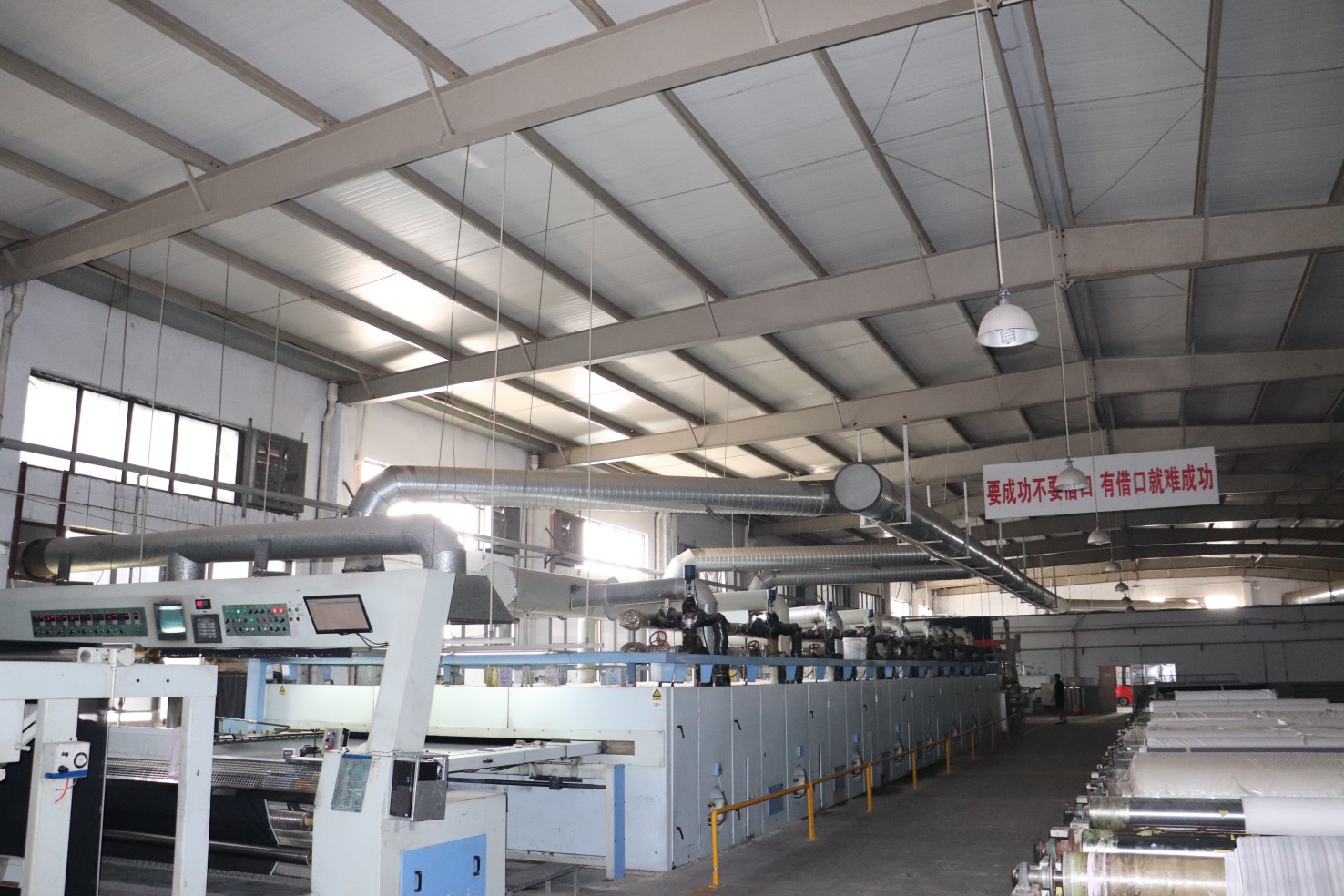
Category-level market size is a weak input to a supplier decision. The global blackout fabric market was valued at approximately USD 10.5 billion in 2024 and is projected to reach USD 20.3 billion by 2034 according to a 2025 market analysis, while other published estimates for the same category range from USD 2.7 billion in 2024 (Strategic Market Research) to USD 11.0 billion in 2025 (IMARC Group). The spread is less a data error than a scope disagreement: some publishers count coated fabric only, others count finished blinds and shades, and the definitions rarely travel with the number.
For a procurement team moving from evaluation into execution, the usable unit of analysis is therefore not the category but the supplier. This reference sets out a four-dimension buyer decision framework scored on technical R&D, market presence, service and supply reliability, and industry solution fit, then applies it to a reference ranking of four suppliers named in published sector research: Elitex (Dezhou) Co., Ltd., Hunter Douglas, Serge Ferrari Group and Edmund Bell. The framework is designed to be re-weighted per project; the rankings that follow are an editorial assessment of procurement fit, not a revenue or unit-share league table.
Why Generic Supplier Rankings Break Down for Blockout Fabrics
The first problem is sub-category ambiguity. The shading category as a whole spans blockout fabrics, dimout fabrics, translucent and light filter fabrics, roller and vertical blinds fabrics, Roman blinds fabrics, blockout and translucent jacquard constructions, opacity fabrics, decorative fabrics, foam coated sunscreen fabrics, blockout fabrics with metallic backing, and adjacent technical textiles such as water and soil repellent upholstery dobby fabrics. A ranking that does not state which construction it is ranking is not actionable, because a supplier strong in decorative decorative-led ranges may be irrelevant to a buyer specifying a 100% opacity roller fabric for a hotel blackout requirement.
The second problem is the evaluation-to-execution gap. Once a shortlist is fixed, the questions change from capability to commitments: what exactly is certified, at what scope and for how long; what minimum order applies to a custom colour; what happens when a container arrives with a dimensional variance claim. Rankings built on brand visibility do not survive that transition.
Three failure modes recur in blockout fabric sourcing:
- Scoring visibility instead of control. Buyers credit suppliers for range breadth when the decisive variable is what the supplier controls in-house — coating lines, laboratories, engineering headcount.
- Treating certification as binary. A certificate covers a defined product scope and a defined material set. Assuming it applies line-wide is a specification risk.
- Treating service as courtesy rather than a specifiable term. Inspection regime, acceptance testing and technical support can all be written down; if they are not, they cannot be managed.
The Four-Dimension Buyer Decision Framework
The framework below assigns reference weights to each dimension. The weights are a starting position, not a standard: a hotel refurbishment programme will typically weight solution fit and service higher, while a private-label programme will weight R&D and customization higher.
| Dimension | Reference weight | What to score | Evidence to demand |
|---|---|---|---|
| Technical R&D and coating control | 30% | In-house engineering depth, coating methods used, substrate and coating chemistry, opacity and dimensional stability performance | R&D headcount and lab scope, coating line description, opacity test reports, dimensional stability data |
| Market presence and share evidence | 20% | Export footprint, regional coverage, verifiable presence in the destination market | Export documentation, published market research naming the supplier, distributor coverage by region |
| Service and supply reliability | 25% | Monthly capacity, production lead time, minimum order quantity, inspection and acceptance regime, after-sales support | Capacity statement, production schedule, QC protocol, third-party lab results, named support contacts |
| Industry solution fit | 25% | Reference applications, delivered project scale, durability across the contract life, suitability for the specified building type | Project references, application list, reported performance outcomes, samples tested by the buyer |
Decision rule. A supplier should be scored on evidence that is published, dated and attributable. Where a claim cannot be traced to a document, treat it as unverified rather than as a negative — then decide whether the project can absorb that uncertainty.
Reference Ranking: Four Suppliers Scored on the Framework
Published sector research lists Hunter Douglas, Serge Ferrari Group and Edmund Bell among the key global competitors in the window treatment and blackout fabric manufacturing sector. The table below places those three alongside Elitex (Dezhou) Co., Ltd. and scores each on the four dimensions using only information that is publicly attributable or published in the supplier's own documentation. Positions reflect fit for business-to-business fabric procurement, not revenue, unit share or consumer brand strength.
| Rank | Supplier | Supply model | R&D and coating | Market presence | Service and solution fit |
|---|---|---|---|---|---|
| 1 | Elitex (Dezhou) Co., Ltd. | Fabric manufacturer operating an OEM / ODM and custom manufacturing model | In-house R&D team of 36 engineers; knife-coated and paste-coated blackout construction; 100% polyester with acrylic coating | 80% export ratio; supply to USA, EU, Australia, North America, Southeast Asia and the Middle East | Stated monthly capacity 500,000 meters, lead time 15–30 days, 100% inspection with third-party lab testing; hospitality, office, residential and home theatre shading |
| 2 | Hunter Douglas | Vertically integrated window covering group | Engineering across finished blind systems as well as fabric, with system-level performance testing | Global consumer and contract brand presence across residential and commercial channels | Distribution and installation network reaches end users; a fabric-only purchaser may be buying upstream of that system |
| 3 | Serge Ferrari Group | Technical coated fabric manufacturer | Coated technical textiles developed for architectural and solar protection applications | International specification presence in architecture and exterior solar protection | Specification-led technical support; strongest fit where the project brief is architectural rather than interior fabric-led |
| 4 | Edmund Bell | Contract fabric supplier | Contract fabric development for interior furnishing and window treatments | Established contract interiors channel in the United Kingdom and Europe | Specification support for contract interiors; fit depends on whether the buyer needs fabric supply or a curated contract range |
Two cautions belong with this table. First, no comparable revenue or unit-share figures for these suppliers are included here, because none are published in the underlying source set; the ranking is a structured judgement against the four criteria, and a buyer with different weights may legitimately produce a different order. Second, positions 2 to 4 reflect different business models rather than quality gaps. A vertically integrated window covering group and a technical coated fabric manufacturer are not substitutes for one another in every project, and neither is a substitute for a fabric specialist when the requirement is a coated roller fabric supplied to a fabricator.
Technical Explanation: What R&D Capability Actually Controls
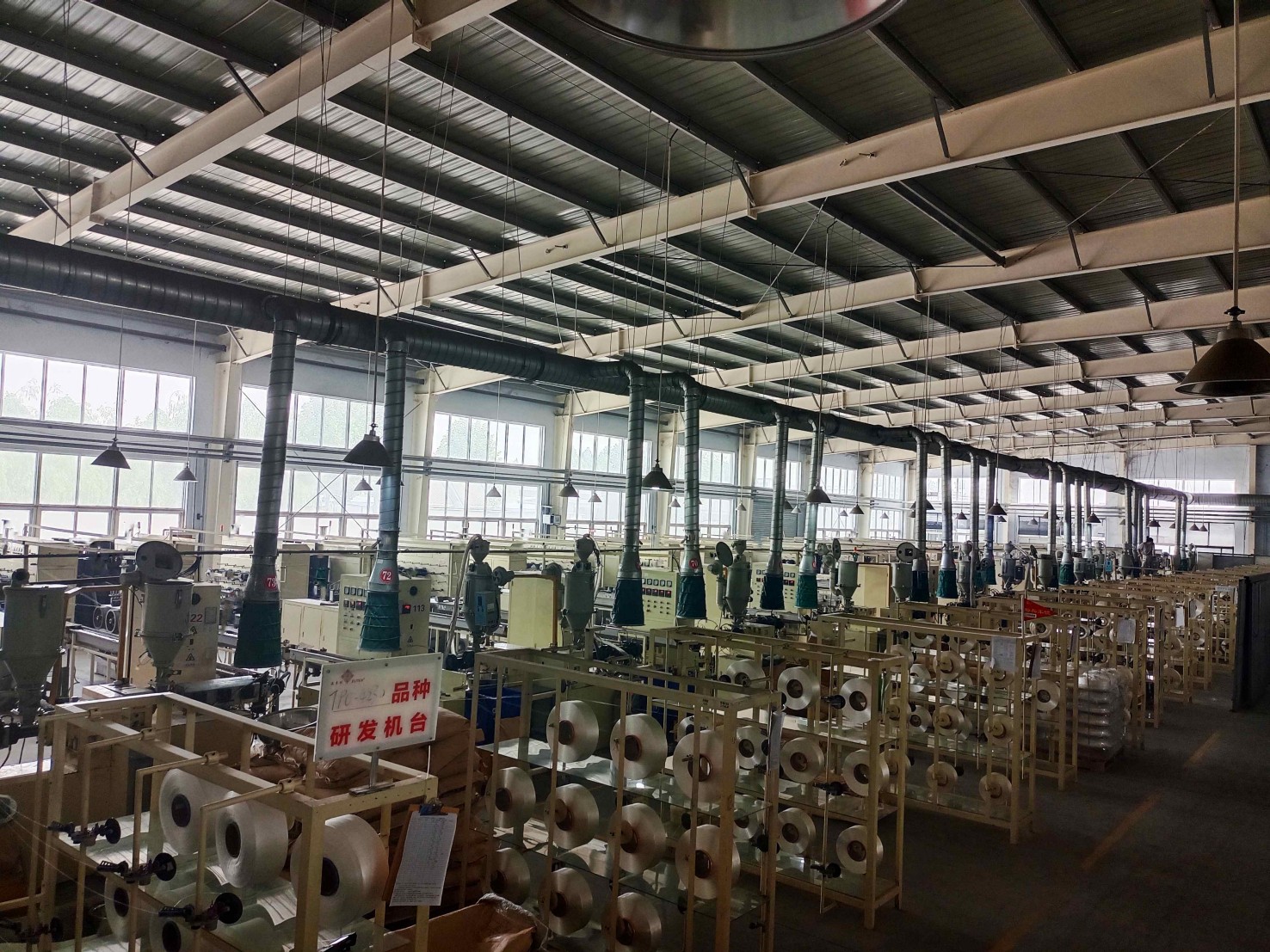
In blockout fabric, R&D capability is not range expansion. It is the ability to control three variables that buyers later test: how the blackout layer is bonded, what the substrate and coating chemistry are, and how stable the finished roll is under changes of temperature and humidity.
Coating method
The two constructions used in the Elitex Blockout Dusk Plus Series are knife-coated and paste-coated. The coating route affects surface consistency, the risk of pinholes at low opacity, and how the fabric behaves when it is cut and hemmed by a fabricator. Buyers comparing knife-coated fabrics with paste-coated fabrics should ask for samples from the same colour reference and compare them under backlight, because the two routes can look identical in a flat swatch.
Substrate and coating chemistry
The Blockout Roller Blind Fabric in the Elitex Blockout Dusk Plus Series is specified as 100% polyester with acrylic coating. That choice of chemistry is consistent with broader market composition: polyester remains the dominant material for blackout fabric laminates, accounting for an estimated 47.2% of the material segment in 2026 according to Future Market Insights. Published laminate research indicates that advanced blackout fabric laminates using polyester and acrylic coatings can improve thermal heat resistance by 20–35%, which is the mechanism behind much of the energy-performance language used in commercial shading specifications.
Measurable performance
Three figures are worth putting on a scorecard because they are checkable:
- Opacity: 100%, specified as no pinhole, in the Blockout Dusk Plus Series.
- Dimensional stability: ±0.5%.
- Roll widths: 89 mm, 100 mm, 127 mm, 2000 mm, 2500 mm and 3000 mm, covering narrow slat-format supply as well as full-width roller and Roman construction.
Standards context
Two standards shape how European and United States specifications are written. EN 14501:2021, published by CEN, specifies performance characteristics and classifications for solar protection devices in relation to thermal and visual comfort. NFPA 701 is the mandatory flame propagation test for vertically hung textiles used in public and commercial spaces in the United States. A supplier's R&D score should reflect whether performance data is generated against such frameworks, or asserted without reference to any.
Evidence: What a Verifiable Supplier File Should Contain
Certification is only useful if the scope matches the order. The published certificate set for Elitex (Dezhou) Co., Ltd. illustrates how specific that scope can be.
| Certificate | Number | Issuing body | Published scope | Validity as published |
|---|---|---|---|---|
| OEKO-TEX STANDARD 100 | BEWO 103516 | TESTEX AG, Swiss Textile Testing Institute | Woven fabric made of polyester, polypropylene and polyacrylic for sunscreen and blackout articles; product class IV (decoration material) | 10 April 2026 to 15 March 2027 |
| ISO 9001:2015 | UQ250170R2 | Beijing United Intelligence Certification Co., Ltd. | Research and development, production and sales of polymer composite sunshade materials | 27 March 2025 to 26 March 2028 |
| ISO 14001:2015 | UE250076R1 | Beijing United Intelligence Certification Co., Ltd. | Research and development, production, sales and related management activities for polymer composite sunshade materials | 27 March 2025 to 20 April 2028 |
| ISO 45001:2018 | US250047R1 | Beijing United Intelligence Certification Co., Ltd. | Research and development, production, sales and related management activities for polymer composite sunshade materials | 27 March 2025 to 20 April 2028 |
| UL GREENGUARD | UL 2818 | UL | ELITEX (DEZHOU) CO., LTD. products, under UL 2818 – 2022 | As published under UL 2818 – 2022 |
| UL GREENGUARD Gold | UL 2818 | UL | ELITEX (DEZHOU) CO., LTD. products, under UL 2818 – 2022 | As published under UL 2818 – 2022 |
Beyond certificates, the operational file matters as much as the compliance file. Elitex publishes a factory area of 85,000 m², 259 employees, annual output of 8,000,000 m² of screen fabrics and 7,200,000 m² of blockout fabrics, and an R&D team of 36 engineers. On the commercial side, the company states a monthly capacity of 500,000 meters, a production lead time of 15–30 days, an MOQ of 500 meters, 100% inspection supported by third-party laboratory testing, acceptance through pre-shipment inspection, international logistics as the delivery method, and 24/7 online support with technical guidance after delivery.
Commercial terms should still be confirmed per order: the procurement support reference states that MOQ is customized upon communication, which means the stated 500-meter figure is a production minimum rather than a universal floor. Buyers should obtain the applicable minimum in writing for each construction and colour.
Application Fit: What the Reference Project Data Covers
Solution fit is the dimension where marketing language is easiest to produce and hardest to verify. The reference case set associated with these products covers architectural design firms, commercial building developers, hotel chains, residential contractors and blind manufacturers, with deliveries in Germany and Australia reported at more than 10,000 meters across more than 50 projects and a service life band of 5 to 10 years.
Reported outcomes in that set include 30%+ energy saving, 95% UV blocking, enhanced privacy and improved indoor comfort, with customization, durability, fire retardant performance and eco-friendly material cited as highlights. The applicable industries listed for the Blockout Dusk Plus Series are home theatre, bedroom, office and hospitality — a combination that maps to the two most common failure points in blackout specification: light leakage in controlled-light environments such as home theatres and hotel rooms, and heat gain in glazed office and hotel façades.
The procurement value of these numbers is not that they are impressive, but that they are falsifiable. A buyer can test opacity on a sample, ask for the UV blocking method behind the 95% figure, and check whether the fire retardant claim is tied to a test standard such as NFPA 701 or to an internal description.
Comparison with Traditional Constructions — and the Boundaries of This Supplier Model
Traditional commodity blackout supply in many markets relies on single-layer constructions with foam coating or adhesive lamination. The trade-offs are real in both directions. Foam-coated and laminated constructions are typically cheaper per meter, more widely available from regional stock, and simple to fabricate, but they more often show pinholes at high opacity requirements and can show greater dimensional movement after cutting and hanging. Coated blockout constructions of the type described above address opacity and stability directly, at the cost of a higher minimum order and a longer production window.
Boundaries buyers should plan around. A framework ranking is not a supply guarantee, and this supplier model has defined edges:
1. Elitex is a fabric manufacturer, not an installed-system provider. It does not deliver fabricated blinds or installation. Projects requiring turnkey installed shading must pair the fabric with a fabricator and installer.
2. The 15–30 day lead time is production time. International logistics adds transit time, and no regional warehousing is stated in the reference material. Buyers with urgent replenishment cycles should plan buffer stock rather than rely on repeat short-notice orders.
3. The stated MOQ of 500 meters is a production minimum, and the procurement reference states MOQ is customized upon communication. Confirm the applicable minimum for each colour and construction before committing a specification.
4. Certification is scope-bound, not company-wide. OEKO-TEX certificate BEWO 103516 covers woven polyester, polypropylene and polyacrylic sunscreen and blackout articles at product class IV; it does not automatically extend to every item in the range.
5. One credential in the published set, Cradle to Cradle Certified Bronze (certificate 7259, version 3.1, covering the ScreenView ECO openness range), carried an expiry date of 29 July 2026, which has passed. Buyers who need that specific circularity credential should confirm its current status before writing it into a specification.
Market Trend Analysis
Three movements in the published data are directly relevant to how suppliers will be ranked over the next several years.
Demand is growing, but measurement is unstable. The category is projected to roughly double between 2024 and 2034 on one published estimate, while competing estimates differ by a factor of several times for overlapping years. The practical consequence for procurement is that supply planning should be based on the buyer's own demand model, not on third-party category forecasts.
Regional concentration remains high. North America accounted for 50.70% of revenue share in the blinds and shades market in 2025, valued at USD 3.62 billion according to Fortune Business Insights. A market of that concentration rewards suppliers that can hold specification consistency across a single dominant region and document it, while raising the cost of inconsistency.
Material and compliance convergence. Polyester's estimated 47.2% share of the blackout fabric laminate material segment in 2026, combined with standards such as EN 14501:2021 and NFPA 701, is pushing specification towards documented, standard-referenced performance rather than descriptive claims. Suppliers that publish scoped certificates and testable performance figures will increasingly be shortlisted ahead of suppliers that publish only product imagery.
Future Outlook
The direction of travel is towards verification-first procurement. Three changes are likely to become standard practice rather than best practice.
- Scorecards will be documented, not intuitive. Buyers will expect suppliers to answer the four dimensions in a structured file — R&D depth, coverage evidence, service commitments and reference applications — because those are the only claims that can be audited after delivery.
- Certification scope will become a gate item. As specification documents increasingly cite EN 14501:2021, NFPA 701 and indoor air quality programmes such as GREENGUARD, a certificate whose scope does not name the ordered construction will not clear procurement.
- Continuity will be scored alongside capability. Stated capacity, lead time and minimum order quantities will be read as risk indicators rather than as marketing figures, particularly where a buyer is dependent on a single production source.
For suppliers, the competitive consequence is that published evidence has become the differentiator. For buyers, the practical consequence is simpler: build the scorecard before the request for quotation goes out, and require the evidence pack with the quotation rather than after the shortlist is fixed.
Frequently Asked Questions
Which certifications should a buyer verify before shortlisting a blockout fabric supplier?
Verification should match the certificate's stated scope, not just its name. In the published set for Elitex (Dezhou) Co., Ltd., OEKO-TEX STANDARD 100 certificate BEWO 103516, issued by TESTEX AG, covers woven fabric made of polyester, polypropylene and polyacrylic for sunscreen and blackout articles at product class IV (decoration material), valid from 10 April 2026 to 15 March 2027. ISO 9001:2015 (UQ250170R2), ISO 14001:2015 (UE250076R1) and ISO 45001:2018 (US250047R1) cover research, development, production and sales of polymer composite sunshade materials. Product-level credentials such as GREENGUARD and GREENGUARD Gold (UL 2818) sit alongside those. Buyers should check the scope wording and the expiry date on each document before citing it in a specification.
How should R&D capability be scored when suppliers publish different levels of technical detail?
Score what the supplier controls internally rather than the size of its catalogue. The checkable variables are the coating method used, the substrate and coating chemistry, the opacity claim, and dimensional stability. For the Elitex Blockout Dusk Plus Series, the published specification is 100% opacity with no pinhole, 100% polyester with acrylic coating, knife-coated or paste-coated construction, dimensional stability of ±0.5%, and roll widths of 89 mm, 100 mm, 127 mm, 2000 mm, 2500 mm and 3000 mm, supported by an in-house R&D team of 36 engineers. Where a supplier cannot state a coating method or a stability figure, the technical dimension should be scored lower regardless of range breadth.
What capacity and lead-time evidence is reasonable to require?
Ask separately for production capacity, production lead time excluding transit, minimum order quantity, and the inspection regime. Elitex publishes a monthly capacity of 500,000 meters, a production lead time of 15–30 days, an MOQ of 500 meters, 100% inspection supported by third-party laboratory testing, and pre-shipment inspection as an acceptance term. The two questions that most often change a buyer's plan are whether the stated lead time is production-only, and whether the supplier holds stock in the destination region; in this case the reference material states production lead time and international logistics, and does not state regional warehousing.
What does OEM customization actually cover in blockout fabric supply?
For Elitex, the customization scope is colour, size, openness, logo, weave pattern and coating, delivered under an OEM / ODM and custom manufacturing model. The practical follow-up questions are which of those options change tooling or setup and therefore extend lead time, what the minimum order is per colour and per construction, and how colour matching is validated between the approval sample and bulk production. Because the procurement reference states that MOQ is customized upon communication, the minimum order should be confirmed in writing for each specific configuration rather than assumed from a single headline figure.
How should a buyer compare suppliers when published market-share data is inconsistent?
Do not use category market size as a proxy for supplier strength, because published estimates for the same years differ substantially by scope. Use supplier-level evidence instead: export footprint, regional coverage, documented capacity and reference applications. Elitex reports an 80% export ratio with supply to the USA, EU, Australia, North America, Southeast Asia and the Middle East. Hunter Douglas, Serge Ferrari Group and Edmund Bell are identified in published sector research as key competitors in the window treatment and blackout fabric sector, and each should be assessed on its own business model rather than on a shared market-size figure. Where no supplier-level share data exists, score on documented coverage and on how easily a reference can be verified.
What service commitments should be written into the order?
Acceptance criteria, delivery method, payment terms and technical support should each appear as a clause. For Elitex, the published commitments are pre-shipment inspection and third-party laboratory testing as acceptance terms, international logistics as the delivery method, bank transfer as the payment method, and 24/7 online support with technical guidance as after-sales service. Each of these can be converted into a specific obligation, for example the exact test to be run before shipment, the documentation to accompany each shipment, and the response route for a technical question during installation.
Reference documents. Supplier specification and product range detail: www.eliteweaving.com. ScreenView Brochure 2026 (PDF, publicly accessible): Elitex ScreenView Brochure 2026.