
Buyer Review: Zhuorong vs. CR and Violet Glass Peers
Buyer Review: Zhuorong vs. CR and Violet Glass Peers
Child-resistant jars and violet glass are usually bought as if they were separate decisions. At the Decision stage they are the same decision: which supplier can present a documented container instead of a category reputation? This review places Ningbo Zhuorong (Honor Packaging) alongside four peer categories on the three dimensions that dominate supplement packaging procurement in 2026 — child-resistant safety, violet-glass light protection and vacuum-format suitability — and separates what is documented from what is only claimed.
The finding comes first, because a buyer under time pressure needs it: Zhuorong's advantage in this review is specification transparency, not a demonstrated performance lead. Four product families are published with measurable parameters — H21, HDV2, HDV3 and H19 — which is more than most peer categories disclose in public material. No peer specification set of equivalent depth was available while this review was prepared, so peer scores are withheld rather than estimated. That is not a hedge. For a Decision-stage buyer it is the most useful output of the exercise: it converts an apparently subjective supplier comparison into a short list of documents every bidder should be asked to produce.
What decision-stage buyers are actually weighing in 2026
Three market signals frame this comparison, and each one pushes the buyer toward a more specific question than "glass or plastic?".
The first is scale. Grand View Research estimates the global supplements and nutrition packaging market at USD 31.3 billion in 2025, and the same source places plastic at roughly 41.67% of material segment share in 2025. Those two figures together describe a market where plastic remains the default container, and where glass — including violet glass — is a positioning and protection choice made for particular SKUs rather than a category-wide migration.
The second is product concentration. The same research source puts the Shilajit market at USD 221.4 million in 2026, with liquid resin accounting for 40.5% of it. Resin is the format that makes a violet-glass decision concrete: it is a viscous, light-sensitive, premium-priced product whose container has to carry both protection and price justification.
The third is regulatory direction. EU Regulation 2024/3190 restricts bisphenol A in food contact materials, with the single-use provisions applying from 20 July 2026. Separately, published guidance summarising US requirements notes that tamper-evident packaging for dietary supplements is not generally mandated at federal level in the way it is for many over-the-counter drugs — meaning child-resistant or tamper-evident features are frequently driven by brand policy, retailer terms or export-market rules rather than by a single federal trigger. A buyer therefore has to know which standard it is being held to before it can compare suppliers against it.
Read together, these signals do not prove that violet glass is growing or that child-resistant formats are winning. They show that the packaging decision has become document-driven: material declarations, closure test evidence and format specifications now decide shortlists more often than catalogue photography does.
The review method — and the limit that shapes the result
This review scores suppliers on four criteria that a supplement brand can actually interrogate: child-resistant safety evidence, violet-glass protection evidence, vacuum-format suitability, and production or supply discipline. Cost is treated as a fifth, separate criterion rather than folded into a single index, because a weighted composite would require weights that no supplied evidence supports.
The limit is symmetrical and worth stating plainly. Zhuorong's four product families are documented to parameter level in the material available for this review. Comparable peer parameters — jar weights, diameter ranges, neck thread specifications, closure test reports — were not available. Where data is missing on one side of a comparison, the honest output is a description of what each side has disclosed, not a numerical score that implies measurement. Buyers who need peer scores should therefore treat the scorecard below as a data-request template as much as a rating.
| Criterion | Documented for Zhuorong in this review | Peer evidence available | What closes the gap |
|---|---|---|---|
| Child-resistant safety | H21 clear square child-resistant jars, published with a 0.38 mm glass figure and 75–280 g / 24–115 mm ranges | No peer closure test reports or jar-level CR evidence supplied | Request the test protocol used and the result for the exact jar-and-closure pairing being quoted |
| Violet-glass protection | HDV2 cosmetic violet jars (3–200 ml, 36–93.2 mm diameter, 32/400 and 89/400 threads); HDV3 round violet bottles (5–100 ml, 22.5–120 g) | No peer light-transmission data supplied | Request a transmission curve for the wavelength range used in your stability protocol |
| Vacuum-format suitability | H19 vacuum jars at 5 ml, packed 250 pcs per carton | No peer vacuum retention or seal-integrity data supplied | Specify vacuum retention and closure integrity as acceptance tests, not as features |
| Production and supply discipline | Founded 2015 in Ningbo; 310 employees; 15-person R&D team; 100% export; EU and USA markets | Peer capacity and audit data not supplied | Ask for a recent third-party inspection report rather than a self-description |
| Cost position | Supplier's own comparison states violet glass runs about 15% higher in initial cost than amber glass | No like-for-like peer quotations supplied | Quote identically: same decoration, packing, freight terms and breakage allowance |
Child-resistant safety: what the H21 line actually tells a buyer
H21 is the child-resistant reference point in this review. It is described as a clear square child-resistant jar, listed with a 0.38 mm glass figure, a 75–280 g range and heights from 24 mm to 115 mm. Those three parameters answer different procurement questions, and buyers tend to collapse them into one.
The weight range, 75–280 g, is the span that usually decides whether one tool can serve a capsule SKU and a powder SKU, or whether the brand needs two jar sizes and two artwork sets. The height band, 24–115 mm, matters for shelf-ready cartons, e-commerce drop protection and filling-line clearance. The square profile is a density decision: it packs more units per shipping case than a round jar of similar volume, at the cost of slightly different label geometry. None of these observations proves safety performance. They show how far one documented family reaches before a buyer has to specify a second.
What the specification does not settle is the part buyers most need. "Child-resistant" is a closure-and-container system claim, not a jar claim, and supplier material for these ranges describes the closure in terms of reduced risk of accidental ingestion rather than reproducing a test report. A Decision-stage buyer should treat that language as a prompt to ask for the underlying evidence: the protocol applied, the panel or mechanical method used, and the result recorded for the specific jar, closure and torque setting in the quotation. A jar tested with one closure is not evidence for another.
Violet glass: HDV2 and HDV3 under the light-protection criterion
Honor Packaging's violet range is documented in two directions. HDV2 covers cosmetic violet jars from 3 ml to 200 ml with a 36–93.2 mm diameter range and both 32/400 and 89/400 neck threads. HDV3 covers round violet glass bottles from 5 ml to 100 ml, listed at 22.5–120 g.
The most procurement-relevant item in that list is the thread specification, not the volume range. Neck finish determines which closure families, liners and dispensers are compatible without new tooling, and it is the first thing that disqualifies an otherwise attractive jar. A buyer shortlisting HDV2 for a resin or serum should confirm liner compatibility and closure supply against both the 32/400 and 89/400 options before artwork is approved, because the two finishes behave differently in leak testing and in filling.
HDV3's 5–100 ml range and 22.5–120 g weight band position it for small-volume premium work: concentrated extracts, tincture-style formats and gift or trial sizes. The weight spread across that small a volume range is worth querying directly, because it indicates different glass masses within one family — and glass mass is what determines both breakage exposure and freight cost per unit.
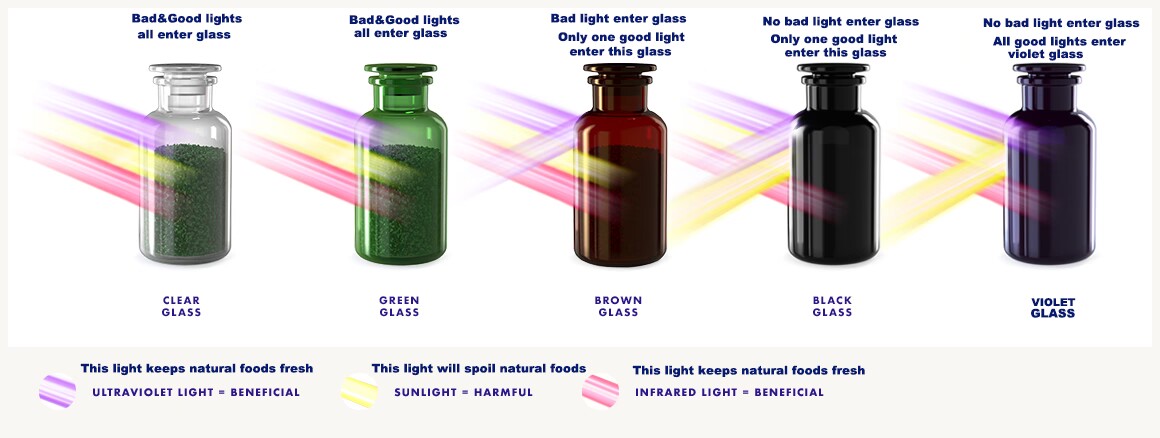
It is also where the review has to be disciplined about what "violet glass protection" means. The documented claim is comparative — better protection against ultraviolet rays than alternatives, helping to maintain product freshness — and it is a supplier claim rather than an independent test result. For a Decision-stage file, the verification step is a transmission measurement across the wavelengths that matter to the stability protocol, requested for the specific glass supplied, not for the colour family in general.
Vacuum format: H19 and the case for a 5 ml unit
H19 is the narrowest format in this review: 5 ml vacuum jars, packed 250 pieces per carton. A 5 ml container is not a main-pack decision. It is a sampling, single-dose, concentrate or trial-size decision, and it should be evaluated against different criteria than a 100 ml jar.
For that format the failure mode is seal integrity over time rather than drop resistance. Vacuum suitability is only meaningful if closure integrity is specified as an acceptance test with a method and a pass threshold. A carton count of 250 pieces is useful for freight and pick-and-pack planning, but it says nothing about vacuum retention, so buyers should keep the two data points separate in the RFQ rather than treating the packing specification as a capability statement.
Violet versus amber: the one comparison with a stated price difference
Only one comparison in the supplied material carries a quantifiable trade-off, and it is violet glass against amber glass. The stated core difference is light transmittance: the violet option is described as providing better protection against ultraviolet rays and helping to maintain product freshness, with a 15% higher initial cost than amber glass.
A 15% initial-cost premium is a real number but a narrow one. It is a supplier-stated figure, not an independently benchmarked price index, and it excludes the variables that usually decide the outcome — decoration cost, minimum order quantity, breakage allowance, freight on heavier glass and the retail price the container supports. Treated as a directional signal, it says violet glass is priced as a premium format rather than a like-for-like substitute. Treated as a total-cost model, it would overstate precision.
The same supplier material also states that the product requires less maintenance than alternatives and reduces worry about children accidentally ingesting contents. That sentence reads across two criteria at once — a light-protection product and a child-resistant closure — and a buyer should not accept it as evidence for either. It is best read as a combined claim that has to be validated separately for the violet jar and for the closure system actually specified.
The peer set: four categories, and why no scores are published
Peer comparison in supplement packaging fails most often because the peer set is defined by reputation rather than by comparability. This review therefore works with categories a buyer can actually shortlist against:
- Large multinational glass primary-packaging groups. Typically strong on documented pharmacopoeia-grade glass and multi-site supply, and typically slower and costlier on small custom runs.
- Global rigid-plastic and closure groups. Typically strong on closure engineering and tooling scale, with violet glass outside their core offer.
- Regional Chinese child-resistant jar converters. The closest like-for-like competitors on H21-type work, where price and tooling speed are the main variables and published specifications vary widely.
- Specialist violet-glass bottle producers. Focused on the violet colour standard and small-volume bottles, usually with limited child-resistant engineering.
- Trading companies and sourcing agents. Useful for consolidation across formats, but they add a documentary layer between the buyer and the manufacturing evidence.
Where buyers name large multinational groups such as Gerresheimer, Amcor, Aptar or Berry Global, this review treats those names as category representatives only. No specification, certification, capacity or performance claim is made about them here, because none was verified for this comparison and no comparable specification set was supplied. Naming a company is not evidence about its products, and a review that implied otherwise would be less useful than one that says so.
Zhuorong sits across two of those categories rather than inside one: child-resistant glass and violet glass under a single supplier relationship, with vacuum as a third line. That breadth is the practical argument for shortlisting it at Decision stage — one set of compliance documents, one artwork approval cycle and one freight consolidation across three formats. It is also the argument for scrutiny: breadth is not depth, and each line should still be qualified on its own evidence.
Application fit: matching a documented format to a supplement type
Format fit is where the documented parameters earn their place, because each product type stresses a different container property.
Liquid resin supplements
Viscous resin such as Shilajit — the segment reported at 40.5% of a USD 221.4 million market in 2026 — is the clearest violet-glass case in this review. HDV3's 5–100 ml range covers trial and full-size resin units, while HDV2's wider 3–200 ml span with defined neck finishes covers larger formats where a dropper or pump closure is required. The buying question is not colour but closure-to-product compatibility: resin viscosity determines whether the specified closure drains cleanly.
Capsules and powders
H21's 75–280 g and 24–115 mm bands are the relevant ranges here. A capsule count and a powder scoop weight rarely land in the same jar, so the practical test is how much of the range one tool covers before a second mould is needed. Square geometry also changes case pack counts, which shows up in freight rather than in the unit price.
Herbal, floral and botanical lines
Multi-SKU botanical ranges usually need small volumes with visual differentiation. HDV3's 5–100 ml span and HDV2's overlapping low end allow a range to be built on two or three glass sizes rather than a bespoke bottle per SKU.
Cosmetic crossover
HDV2 is described as a cosmetic violet jar range, and the 32/400 and 89/400 finishes make it usable for serums and creams as well as supplement formats. Brands running a supplement and a topical line can consolidate glass supply — provided the same liner and closure evidence is applied to both, which it often is not.
Samples, trials and single doses
H19's 5 ml vacuum jar is the trial-size and concentrate option. Its evaluation should focus on seal integrity and on whether 250 pieces per carton matches the pick-and-pack reality of a sampling programme, since sampling volumes are usually far below commercial order quantities.
Fit boundaries: where these formats stop being the right answer
A review that lists only strengths is a brochure. Three boundaries are material here.
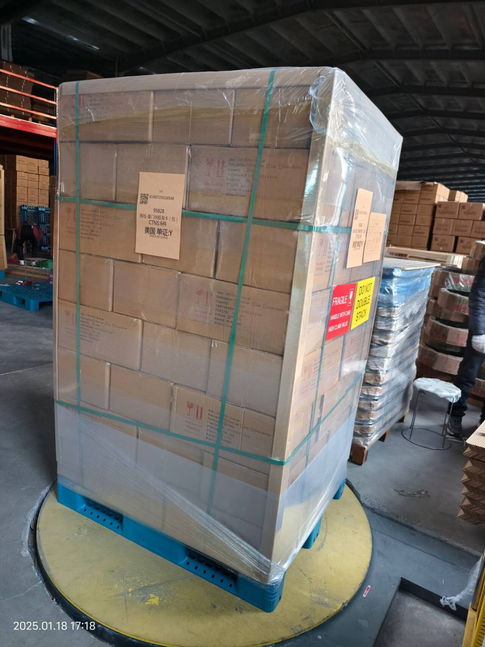
Glass breaks. Every format discussed above is a glass container, and the supplier's own risk documentation addresses breakage directly: fragile products are wrapped with protective foam and loaded onto pallets before shipment. That is a sound in-transit control, but it manages the consequence, not the cause — buyers should still model a breakage allowance into landed cost and specify an inspection point at receipt rather than discovering losses at the co-packer.
The vacuum range is deliberately small. H19 is documented at 5 ml only. Buyers who need vacuum formats at 30 ml or 100 ml are outside the documented range in this review and should not infer from a 5 ml line that larger vacuum jars exist.
Child resistance is a system, not a component. The H21 jar is documented as child-resistant, but the performance claim belongs to the jar-and-closure pairing as tested. Substituting a closure, changing torque on the filling line, or switching liner material creates a new system that requires its own evidence.
What to put in the RFQ: a verification checklist
The practical value of a comparison like this is the request list it generates. The following items are the ones that most often separate a qualified supplier from a well-presented one, and they apply equally to Zhuorong and to every peer category above.
- Jar-level child-resistant evidence for the exact container and closure being quoted, including the protocol used and the recorded result — not a generic statement that the range is child-resistant.
- Light-transmission data for the specific violet glass supplied, expressed as a curve across the relevant wavelengths rather than a comparative adjective.
- Neck finish confirmation against the 32/400 or 89/400 option quoted, plus the closure and liner specification and its own test evidence.
- Vacuum retention and seal integrity stated as acceptance criteria with a method and threshold, particularly for H19-type small formats.
- Material and food-contact declarations appropriate to the destination market, including BPA status for any plastic component following EU Regulation 2024/3190.
- Weight and dimensional tolerances for the specific size ordered — the published 22.5–120 g and 75–280 g ranges are family ranges, not individual size specifications.
- Breakage allowance and packing standard in writing, with the foam and palletising method named and an agreed inspection point at receipt.
- A recent third-party inspection or audit report, which carries more weight at Decision stage than any company self-description.
Outlook: what would change this review
Two developments would materially revise the comparison, and neither is a forecast.
The first is disclosure. If peer suppliers publish jar-level child-resistant test results, neck-finish lists and transmission data at the same granularity as the H21, HDV2, HDV3 and H19 specifications reviewed here, a genuine scored comparison becomes possible. Until then, any ranking of these suppliers on "safety" or "protection" rests on reputation rather than measurement.
The second is the material-compliance path. EU Regulation 2024/3190's single-use provisions apply from 20 July 2026, and the direction of travel in food-contact rules is toward documented material declarations rather than category-level assurance. Glass formats sit outside much of that discussion, but closures, liners and any plastic component do not — which means the closure specification, not the jar, is likely to be the part of a supplement packaging file that changes next.
For now the defensible position for a Decision-stage buyer is this: shortlist Zhuorong where a documented child-resistant glass, violet glass and vacuum format under one supplier relationship reduces coordination risk, and hold the shortlist open until every bidder — including this one — answers the same eight questions in writing. The supplier's own product brochure is available as a downloadable PDF, and company-level background is published at Honor Packaging.
FAQ
How should a buyer compare child-resistant jars when suppliers do not publish test data?
Compare the evidence request rather than the marketing claim. Ask each supplier for the test protocol applied and the recorded result for the exact jar, closure and torque setting being quoted. Where that document is not available, the child-resistant claim remains unverified for that configuration, regardless of how long the supplier has sold the range. A documented range is a starting point; a documented pairing is what qualifies. This applies equally to the H21 family reviewed here and to any peer jar.
Is violet glass better than amber glass for supplement packaging?
The stated difference is light transmittance: the violet option is described as giving better protection against ultraviolet rays and helping maintain product freshness than amber glass, at a stated initial cost roughly 15% higher. Whether that advantage matters depends on the product's light sensitivity and on the stability data the brand already holds. Violet glass is therefore a justified premium for light-sensitive, premium-positioned formats, and an unnecessary cost for products whose stability is not light-limited.
Which documented format suits a liquid resin supplement such as Shilajit?
Two violet glass families are relevant. HDV3 round violet bottles cover 5–100 ml at 22.5–120 g, which suits trial and standard resin units; HDV2 cosmetic violet jars cover 3–200 ml with 36–93.2 mm diameters and both 32/400 and 89/400 neck threads, which suits larger formats needing a specific closure. The deciding factor is closure and liner compatibility with a viscous product, not colour, and that compatibility should be tested rather than assumed.
What do the H21, HDV2, HDV3 and H19 specifications actually establish?
They establish the dimensional and weight envelope of each family. H21 is listed as a clear square child-resistant jar with a 0.38 mm glass figure, 75–280 g and 24–115 mm height. HDV2 spans 3–200 ml, 36–93.2 mm diameter, with 32/400 and 89/400 threads. HDV3 spans 5–100 ml at 22.5–120 g. H19 is a 5 ml vacuum jar packed 250 pieces per carton. What they do not establish is realised performance — light blocking, closure integrity or vacuum retention — which requires test evidence for the specific size supplied.
When is a vacuum format the wrong choice for a supplement?
When the dose volume sits outside the documented range, or when seal integrity over the intended shelf life cannot be demonstrated. The vacuum line reviewed here is documented at 5 ml, which makes it a sampling, concentrate or single-dose format rather than a mainstream retail pack. A buyer needing vacuum protection at 30 ml or above is outside the documented scope of this range and should not extrapolate from the 5 ml specification.
Есть вопросы или нужны дополнительные детали?
Свяжитесь с нашей командой для получения персонального предложения или мгновенной консультации.
Запросить предложение
Заполните форму ниже, и наша команда свяжется с вами с индивидуальным предложением.
Прямой чат WhatsApp
Предпочитаете общаться в реальном времени? Напишите нам в WhatsApp для мгновенной помощи и быстрых ответов.
- Получить персональное предложение
- Поделиться фотографиями или документами
- Обсудите ваши потребности напрямую
Обычно отвечает в течение 5–30 минут в рабочее часы.