
Buyer's Shortlist: 3 Environmental Chambers for EV & Electronics
Buyer's Shortlist: 3 Environmental Chambers for EV & Electronics
Electronics and electric-vehicle components rarely fail for one single environmental reason. A sealed connector can survive a long damp-heat soak and still crack after a few hundred rapid temperature swings, while a battery enclosure that passes thermal cycling can still admit dust through a breather membrane. That is why qualification labs usually shortlist more than one chamber platform instead of buying a single machine and hoping it covers everything.
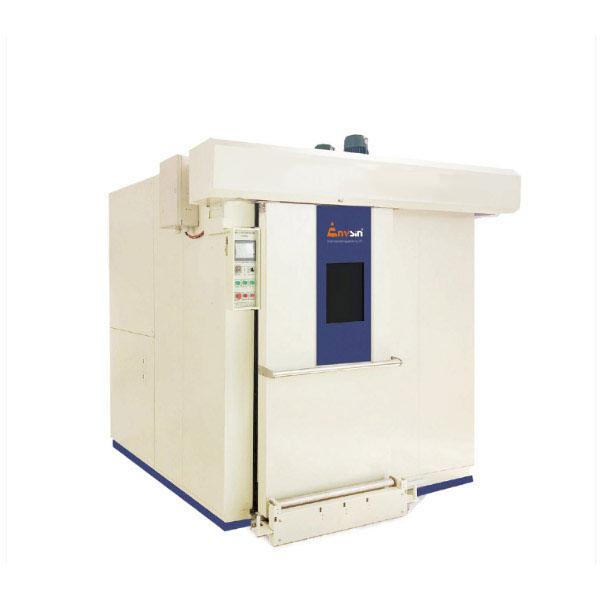
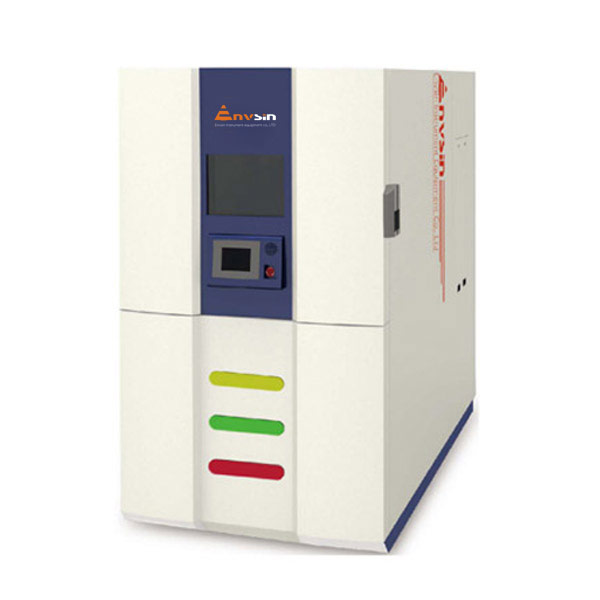
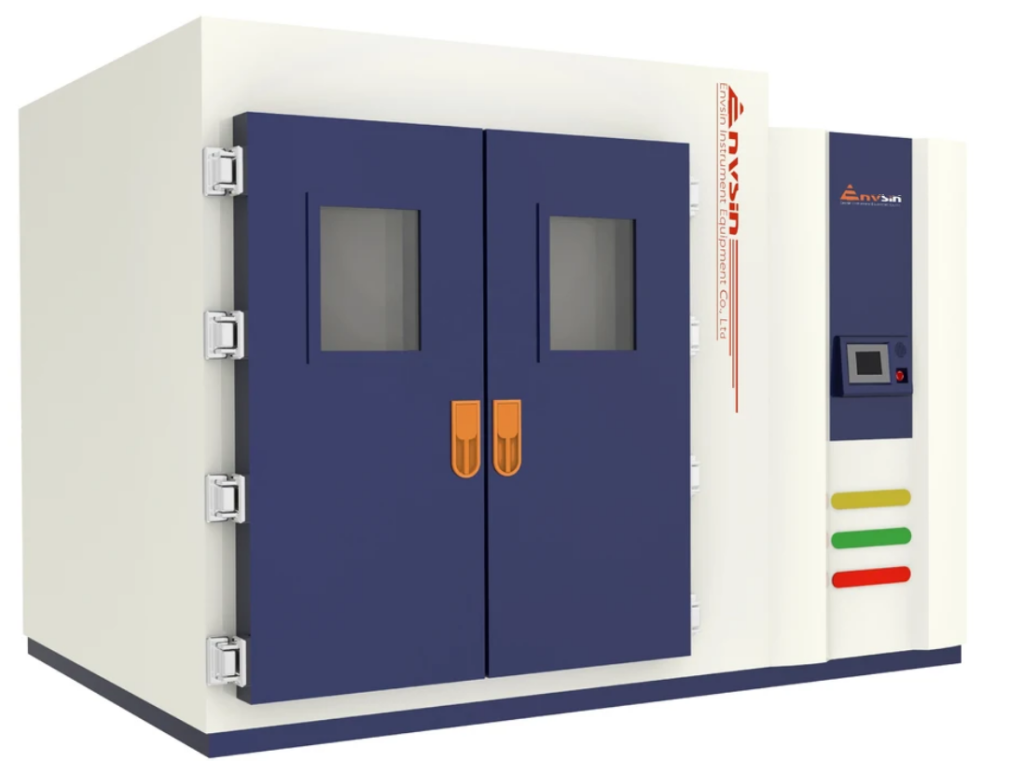
This shortlist compares three Envsin platforms that address three different stress families for electronics and EV parts: a High and Low Temperature Two-zone Thermal Shock Chamber (200 L), a 3,375 L Sand and Dust Test Chamber, and a Walk-in High and Low Temperature & Humidity Test Room published with a 20% to 98% RH humidity range and a workplace temperature uniformity of ≤2 °C. Envsin is the environmental and climatic test equipment brand of Envsin Instrument Equipment Co., Ltd, a manufacturer founded in 2003 and based in Chongqing, China, whose products also include temperature and humidity test chambers, rapid temperature change chambers, thermal shock chambers, rain test chambers, salt spray corrosion test chambers, high altitude test chambers and battery test chambers.
Why the platform decision comes before the purchase decision
Most first-time buyers start with a budget and a temperature range. Both matter, but neither determines whether a chamber is useful. What determines usefulness is whether the platform reproduces the failure mode the specimen will actually meet in service.
Three stress families dominate electronics and EV qualification:
- Rapid thermal transition — repeated hot/cold transfer that stresses solder joints, connector contacts, encapsulants and dissimilar-material interfaces.
- Particulate ingress — sand and dust drawn into housings, seals, breathers and connector cavities, which is an ingress problem rather than a temperature problem.
- Long-duration temperature and humidity cycling — slow, sustained exposure of large assemblies that cannot be placed inside a bench-top or reach-in chamber at all.
A chamber that is excellent at one of these can be structurally unsuited to the other two. A 200 L two-zone thermal shock chamber cannot host a battery pack. A sand and dust chamber does not produce humidity-cycling evidence. A walk-in room, conversely, is inefficient for high-frequency shock cycling of small components. The shortlist below is therefore built on stress family first, then on volume, then on precision specifications.
The three platforms on the shortlist
1. High and Low Temperature Two-zone Thermal Shock Chamber (200 L)
A two-zone thermal shock chamber holds two separately controlled temperature zones and moves the specimen between them, producing a transition that a single-chamber temperature ramp cannot match. With a 200 L working volume, this platform fits printed circuit board assemblies, connectors, relays, sensors, small power modules, LED modules and similar component-level specimens.
Its value in a buyer's shortlist is transition rate per unit of floor space. The chamber occupies roughly the footprint of a large cabinet while delivering repeated hot/cold excursions, which is the reason component qualification programmes typically run high sample counts here rather than in a walk-in room.
2. Sand and Dust Test Chamber (3,375 L)
The 3,375 L sand and dust chamber is a large-volume ingress platform. Its purpose is to expose exterior housings, gaskets, lamp assemblies, underbody parts, charging-port covers and sealed enclosures to circulating dust and sand and then verify whether particulate has crossed a sealing boundary.
Volume is the reason this platform is on the shortlist. A 3,375 L working space accepts specimens that are far too large for a reach-in chamber, including complete sub-assemblies of an EV thermal-management or exterior module. Its output is ingress evidence, not thermal evidence, and buyers should treat it as a specialised rather than universal chamber.
3. Walk-in High and Low Temperature & Humidity Test Room
A walk-in test room is a person-scale environmental chamber. It is published with a humidity range of 20% to 98% RH and a workplace temperature uniformity of ≤2 °C, which makes it the platform of choice when the specimen is too large for a reach-in chamber and the test requires combined temperature and humidity exposure rather than shock.
Side-by-side comparison of the three platforms
| Selection dimension | Two-zone Thermal Shock (200 L) | Sand and Dust (3,375 L) | Walk-in Temp & Humidity Room |
|---|---|---|---|
| Stress family reproduced | Rapid thermal transition between hot and cold zones | Particulate ingress by circulating sand and dust | Long-duration temperature and humidity cycling |
| Working volume | 200 L | 3,375 L | Walk-in, configured to specimen and rack layout |
| Temperature uniformity | ≤2 °C (published) | Not the defining specification | ≤2 °C (published) |
| Humidity capability | Not the defining specification | Not applicable to ingress testing | 20% to 98% RH (published range) |
| Best-fit specimens | PCBAs, connectors, relays, sensors, small power modules | Exterior housings, seals, lamps, underbody and charging-port parts | Battery modules and packs, racked assemblies, large integrated units |
| Principal constraint | Specimen size limited by the 200 L volume | Produces ingress evidence only; no thermal or humidity substitute | Requires floor space, site preparation and higher long-cycle energy use |
| Typical role in a test plan | High-volume component screening | Design validation of sealing strategy | System-level and pack-level qualification |
Technical explanation: volume, uniformity and humidity each change the test
Uniformity determines whether small differences between specimens are real. If a lab loads twenty PCBAs into a chamber with poor uniformity, position inside the chamber becomes an uncontrolled variable and the pass/fail result reflects rack position as much as product quality. A published uniformity of ≤2 °C keeps that variable small enough for comparative screening.
Volume determines what can be tested and how fast. Chamber volume and achievable ramp performance move in opposite directions. A 200 L space reaches a target temperature relatively quickly because there is less air mass, chamber wall area and specimen mass to condition. A 3,375 L sand and dust chamber or a walk-in room moves a much larger conditioned volume, which is why they are used for sustained exposure profiles rather than rapid shock sequences. Buyers evaluating a large chamber should therefore compare it on soak and cycle time, not on shock rate.
Humidity range determines the failure mode being addressed. A published span of 20% to 98% RH covers the dry-heat end and the condensing end of the range. The upper end matters for electronics because condensed moisture drives electrochemical migration and corrosion at connectors and unsealed interfaces; the lower end matters for materials that dry out, embrittle or change dimension.
Safety and monitoring architecture is part of the specification. Environmental chambers concentrate heat, pressure and moisture, so documented risk controls matter: Envsin specifies overheating, temperature/pressure deviation and humidity-drift as recognised risk types, controlled through overheat protection, pressure relief and multi-point sensor monitoring. Supporting measures include strict pre-shipment testing, ISO and CE certified safety design and full calibration. For a walk-in room holding a battery module, multi-point sensing is not a convenience feature — it is how the test evidence becomes defensible.
Application fit: matching each platform to a real programme
Component-level screening on the 200 L thermal shock platform
A tier-one electronics supplier qualifying a new connector family needs hundreds of thermal excursions rather than a handful. The 200 L two-zone chamber supports that throughput because a single load can carry many small specimens, and the hot/cold transition stresses the interface between materials with different expansion coefficients — the mechanism behind most connector and solder-joint field failures.
Sealing validation on the 3,375 L sand and dust chamber
An EV exterior module — a charging-port assembly, an underbody sensor housing, a lamp unit — is judged by whether dust reaches the inside. Testing a full assembly at 3,375 L volume means the sealing strategy is validated on the real part rather than on a scaled model, which is where most ingress programmes lose confidence. This platform answers one question: does particulate cross the boundary?
Pack-level qualification in the walk-in temperature and humidity room
The walk-in room is the platform that most EV programmes eventually need, because battery modules and packs cannot be tested at component scale. With a 20% to 98% RH humidity range and ≤2 °C uniformity, it supports the sustained combined profiles used for pack-level durability work, and Envsin documents a walk-in configuration for ISO 16750 testing — the road-vehicle electrical and electronic equipment standard that automotive buyers commonly cite in specifications.
Market trend: why long-term chamber planning is becoming a procurement topic
Chamber purchases are increasingly planned as multi-year capacity rather than one-off equipment buys. Grand View Research valued the global environmental test chamber market at approximately USD 1.01 billion in 2025, with a projected compound annual growth rate of 3.2% from 2026 to 2033. Asia Pacific accounted for 38.7% of 2025 revenue, and aerospace and defence accounted for 30.6% of demand — a segment whose qualification documentation standards tend to set expectations across other industries.
Two demand-side forces reinforce the case for planning a chamber portfolio rather than a single unit. First, regulated battery safety obligations are becoming more demanding: China's GB 38031-2025, effective 1 July 2026, sets a two-hour no-fire, no-explosion mandate for EV traction batteries, which raises the requirement for documented, repeatable test evidence. Second, automotive and electronics buyers increasingly expect suppliers to hold or have access to the specific platforms their qualification plans reference, which turns chamber capability into a supplier-selection criterion rather than a lab detail.
Comparing these platforms with traditional and generic chamber choices
Where generic or legacy chambers are used, the difference is usually not a single dramatic failure but a series of small compromises that accumulate across a test programme.
| Consideration | Generic or single-purpose chamber approach | Platform-based shortlist approach |
|---|---|---|
| Stress coverage | One chamber asked to cover several unrelated stress families | Each stress family assigned to the platform that reproduces it |
| Specification visibility | Temperature range quoted without uniformity or accuracy data | Uniformity ≤2 °C and control accuracy ±0.5 °C / ±3% RH published and comparable |
| Specimen scale | Component-sized only, forcing sub-scale surrogate testing | 200 L, 3,375 L and walk-in scales cover component to pack level |
| Compliance evidence | Documentation assembled after the fact | ISO 9001, ISO 14001 and CE certification supporting the build |
| Throughput | Large chamber used for small specimens, wasting cycle time | Small specimens screened at 200 L; large assemblies reserved for walk-in work |
Limits buyers should accept before ordering. None of these three platforms is a universal solution, and the shortlist is honest about that:
- The 200 L two-zone thermal shock chamber cannot host a full battery module or a large exterior assembly. If pack-level shock testing is required, this platform will not deliver it.
- The 3,375 L sand and dust chamber produces ingress evidence only. It cannot generate thermal-cycling or humidity data, so it supplements rather than replaces the other two platforms.
- The walk-in room needs site preparation — floor space, power supply and services — and conditioning a person-scale volume over long cycles consumes more energy than a reach-in chamber. Buyers comparing total cost should include installation and long-cycle running cost, not only the purchase price.
- Achievable ramp and recovery performance falls as specimen mass increases, so published figures should always be confirmed against the intended load, not against an empty chamber.
From decision to execution: procurement and delivery continuity
Once the platform set is chosen, the buying stage shifts from technical comparison to supply reliability. For Envsin chambers, the published commercial terms are:
- Minimum order quantity: 1 unit, with customized single-unit orders accepted.
- Production lead time: typically 30 to 45 days for standard orders and 45 to 60 days for custom orders.
- Monthly production capacity: 50 to 80 units.
- Delivery terms: FOB, CIF, EXW and DDP, with sea, air and land freight supported.
- Acceptance: pre-shipment factory acceptance testing (FAT) plus on-site acceptance testing (SAT), supplied with a calibration certificate.
- Payment: 30% T/T deposit with the 70% balance before shipment; L/C acceptable.
- Service support: 18 service centres across 16 countries, alongside a 43,000 m² manufacturing site, approximately 500 employees, a 50-person R&D team and an export share of about 70% across markets including the United States, Germany, Poland, South Korea, Malaysia, Turkey, Vietnam, Mexico and Italy.
The practical implication for a buyer is sequencing. If a programme requires a 3,375 L sand and dust chamber and a walk-in room delivered in the same quarter, a monthly output of 50 to 80 units and a 30 to 60 day lead time means the order should be placed against the test schedule, not against the budget cycle. Ordering a custom walk-in room late is one of the more common causes of slipped qualification milestones.
Future outlook
Three developments are likely to shape shortlists over the next planning cycle. Regulated battery safety requirements, such as the two-hour no-fire, no-explosion mandate under GB 38031-2025 effective 1 July 2026, will keep pack-level and module-level test capacity in demand. Automotive standards such as ISO 16750 will continue to pull humidity-cycling work into walk-in rooms. And as Asia Pacific continues to hold the largest share of global environmental test chamber revenue at 38.7% of 2025 sales, buyers sourcing from the region will increasingly evaluate suppliers on documented specification, service coverage and delivery continuity rather than on headline price alone.
For the three platforms in this shortlist, the conclusion is straightforward. The 200 L two-zone thermal shock chamber carries high-volume component screening; the 3,375 L sand and dust chamber validates sealing against particulate ingress on full assemblies; the walk-in temperature and humidity room handles the pack-level and racked assemblies that neither of the others can host. A test programme that needs all three failure modes needs all three platforms — or a clear plan for how it will obtain that evidence elsewhere.
FAQ
What is the minimum order quantity for these environmental chambers?
The published minimum order quantity is 1 unit, and customized single-unit orders are accepted. Buyers do not need to commit to a multi-unit order to obtain a configured chamber.
What production lead time should be planned for a shortlisted chamber?
Typical production lead time is 30 to 45 days for standard orders and 45 to 60 days for custom orders. Custom configurations, including walk-in rooms sized to a specific rack layout, fall into the longer range.
How does monthly production capacity affect a multi-platform purchase?
Monthly production capacity is 50 to 80 units, which is the figure relevant to scheduling a staged rollout. If a programme requires several platforms in the same delivery window, that capacity figure and the 30 to 60 day lead time together determine when the order must be placed.
What acceptance documentation is normally provided with a chamber delivery?
The published acceptance process combines pre-shipment factory acceptance testing with on-site acceptance testing and includes a calibration certificate. Delivery is available under FOB, CIF, EXW and DDP terms, with payment structured as a 30% T/T deposit and 70% balance before shipment; L/C is also acceptable.
Can one chamber cover thermal shock, dust ingress and humidity cycling at the same time?
No. The 200 L two-zone thermal shock chamber is limited by specimen size and is designed around rapid thermal transitions. The 3,375 L sand and dust chamber produces particulate ingress evidence only. The walk-in room provides combined temperature and humidity cycling with a published 20% to 98% RH range and ≤2 °C uniformity but is not intended for high-frequency component shock screening. Each stress family maps to a different platform.
Why does battery safety regulation affect chamber selection for EV parts?
GB 38031-2025, effective 1 July 2026, sets a two-hour no-fire, no-explosion mandate for EV traction batteries in China. That requirement increases demand for documented, repeatable pack-level and module-level test evidence, which is typically generated in walk-in temperature and humidity rooms rather than in component-scale chambers.