
CAS 403-24-7 vs. 915087-24-0: Apalutamide Intermediate Procurement FAQs
Industry Reference · Pharmaceutical Intermediates · Procurement Q&A
CAS 403-24-7 vs. 915087-24-0: Apalutamide Intermediate Procurement FAQs
Two registry numbers dominate sourcing conversations for apalutamide programmes: 2-fluoro-4-nitrobenzoic acid (CAS 403-24-7) and N-methyl-2-fluoro-4-nitrobenzamide (CAS 915087-24-0). They are not alternatives to one another — they occupy different positions on the same synthetic route, which means the real procurement question is not which compound but which stage of the route a buyer should purchase, from whom, and against which specification.
Apalutamide is an androgen receptor inhibitor used in prostate cancer therapy, and its manufacture depends on a sequence of fluorinated nitroaromatic intermediates that must be produced reproducibly, lot after lot. Because the two intermediates above share the same substituted aromatic core but differ in functional group and route position, they also differ in impurity profile, documentation burden, unit cost and supply base. Those differences, not the chemistry alone, drive procurement decisions.
This article is written as a buyer-facing procurement reference rather than a product description. It answers the questions sourcing teams, importers, API manufacturers and CDMO purchasing groups raise when they compare suppliers for these two oncology drug intermediates: route position, purity expectations in the region of ≥98.0%, batch consistency, technical documentation, delivery reliability, and the trade-offs between buying an early-stage building block and a later-stage amide.
Haohong (Qihe) Pharmaceutical Technology Co., Ltd., trading as Haohong Pharmaceutical, is a China-based manufacturer of active pharmaceutical ingredients and pharmaceutical intermediates, founded in 2021, headquartered in the High-tech Zone of Qihe County, Shandong Province, and operating a production base in Liaocheng. The company focuses on anti-cancer, anti-hepatitis C and anti-diabetic therapies. Where its first-party facts are relevant to a procurement question, they are used below; where no verified fact exists, only the general industry position is stated.
Why CAS 403-24-7 and CAS 915087-24-0 Are Not Interchangeable
2-Fluoro-4-nitrobenzoic acid (CAS 403-24-7) is a fluoro-nitroaromatic carboxylic acid: a benzene ring carrying a fluorine substituent, a nitro group and a carboxylic acid group. It functions early in the apalutamide route as the building block that installs the fluorinated, nitro-substituted aromatic core. The nitro group is later reduced to the aniline that becomes part of the anilide portion of the active ingredient.
N-Methyl-2-fluoro-4-nitrobenzamide (CAS 915087-24-0) is the N-methyl amide derivative of the same core. In this compound the carboxylic acid has already been converted to an N-methyl amide, while the fluorine and nitro substituents remain in place. A buyer who purchases this intermediate is effectively transferring one bond-forming step — amide formation — and its purification burden to the supplier.
That single difference has predictable commercial consequences. The later-stage amide embeds more synthetic work and more raw-material mass in every kilogram, so its unit price is normally higher and the number of suppliers able to deliver it consistently is smaller. The earlier-stage acid is a more widely traded building block, but every subsequent step the buyer performs reintroduces process variability, solvent consumption and waste handling into the buyer's own plant.
| Procurement parameter | 2-Fluoro-4-nitrobenzoic acid | N-Methyl-2-fluoro-4-nitrobenzamide |
|---|---|---|
| CAS registry number | 403-24-7 | 915087-24-0 |
| Functional class | Fluoro-nitroaromatic carboxylic acid building block | Fluoro-nitroaromatic N-methyl amide |
| Position in the apalutamide route | Earlier stage; supplies the fluorinated nitroaromatic core | Later stage; the N-methyl amide group is already installed |
| Chemistry still required by the buyer | Amide formation and downstream steps, including nitro reduction and further functionalisation | Fewer bond-forming steps; downstream conversion toward the API |
| Commercial purity expectation | Commonly negotiated from ≥98.0% chromatographic purity, with individual impurity limits set by the buyer | Commonly negotiated from ≥98.0% chromatographic purity, with impurity limits defined against the downstream step |
| Principal buyer-side risk | Carry-over of related substances into multi-step downstream processing | Higher cost per kilogram and a narrower qualified supply base |
| Documentation expectation | Lot-traceable technical documentation consistent with GMP expectations for intermediates | The same, with route consistency demonstrated across successive lots |
The Procurement Problem: Delivery Reliability, Documentation and Regulatory Exposure
Three pressures shape buying decisions for apalutamide intermediates, and none of them is about chemistry alone.
Delivery reliability. Delayed delivery is a recurring pattern across the pharmaceutical intermediates sector, which makes continuity planning a qualification criterion rather than an afterthought. For a programme already in clinical supply or commercial manufacture, a late lot is not an inconvenience — it stops a downstream campaign. Buyers increasingly ask suppliers to describe stock policy, restocking behaviour and inventory visibility before price is discussed.
Documentation. The FDA’s ICH Q7 guidance provides the primary Good Manufacturing Practice framework specifically for active pharmaceutical ingredients and their intermediates. Even where an intermediate is not itself regulated as an API, the documentation trail attached to it is what allows a buyer to defend a batch record during an inspection or a customer audit. A supplier that cannot produce a coherent, lot-traceable technical package becomes an audit liability regardless of assay value.
Regulatory exposure at import. Pharmaceutical intermediates imported into the EU must comply with REACH registration when volumes exceed one tonne per year, despite the API exemptions that apply to finished active substances. For buyers distributing across multiple regions, registration status and the identity of the registrant can therefore shape supplier selection as much as price or purity.
Demand is also concentrating. Oncology drug intermediates generated 37.20% of total industry revenue in 2025, driven in part by complex antibody–drug conjugate programmes. That concentration increases competition for capacity at exactly the moment when programmes are least able to absorb a supply interruption.
A six-step decision framework for buyers
- Fix the route position first. Decide whether the programme will buy the carboxylic acid and perform amide formation internally, or buy the amide and remove that step. Every later specification decision follows from this one.
- Define the specification in your own analytical terms. A purity figure without a method, a column and defined individual impurity limits is not a specification.
- Request multi-lot data, not a single certificate. Consistency is demonstrated across lots, not within one.
- Assess the production base and inventory model. Reactor volume, campaign scheduling and safety-stock policy determine whether a supplier can repeat a delivery on schedule.
- Map the documentation package against your filing pathway. The dossier must support the regulatory route the buyer is actually pursuing.
- Plan incoming quality control and a second source. No supplier claim replaces the buyer’s own release testing.
How Haohong Pharmaceutical Addresses These Procurement Questions
Haohong Pharmaceutical’s stated differentiators map directly onto the questions above, and they are worth stating in the terms a buyer can actually test.
- Purity and batch stability. The company reports purity 0.02 higher than industry peers, with batch quality stability 10% above the industry average.
- Documentation support. Full technical documents are provided in support of regulatory audits, and the company states full adherence to client-specified index values rather than supplying only to a house specification.
- Risk reduction. Stable batch quality reduces rework and compliance risk, which is the practical translation of consistency into cost.
- Supply continuity. Sufficient regular stock and timely restocking, supported by digitalised product management, are presented as the direct answer to the sector’s pattern of delayed delivery.
- Cost position. Lower costs compared with the market average are attributed to in-depth R&D and self-owned manufacturing rather than to trading margin compression.
- Process efficiency. Optimised synthetic routes are reported to improve production efficiency and reduce solvent consumption — a factor that matters to buyers with solvent-recovery constraints or environmental reporting obligations.
The manufacturing base behind these claims is concrete: a Liaocheng production facility equipped with 30 sets of 3,000–5,000 L reactors and an annual production capacity of 1,000 tonnes, a 30-engineer R&D team within a 75-person organisation, and a 3,000 m² site footprint. The company has held ISO 9001:2015 quality management system certification since 2021, was recognised as a Technology-based Small and Medium-sized Enterprise in 2024, and was awarded Innovative Small and Medium-sized Enterprise of Shandong Province in 2025. Around 40% of output is exported, with stated markets including China, the United States, Europe, Japan, India and Bangladesh.
Technical Explanation: What a Purity Number Does and Does Not Tell a Buyer
A specification of ≥98.0% for either 2-fluoro-4-nitrobenzoic acid or N-methyl-2-fluoro-4-nitrobenzamide is normally a chromatographic area-percent figure. It describes how much of the detected material is the target compound; it does not, by itself, describe which impurities constitute the remaining percentage. Two lots can both read 98.4% and still behave differently downstream, because one may carry an isomer that co-elutes close to the main peak while the other carries residual solvent or unreacted starting material.
For the carboxylic acid intermediate, the analytically relevant concerns usually centre on related substances arising from nitration and on residual solvents and moisture that can affect the subsequent amide-forming step. For the N-methyl amide intermediate, the same categories apply, plus residues associated with the amidation step itself. Buyers who specify only a headline purity figure leave these distinctions unmanaged.
This is where the reported 0.02 percentage-point purity advantage becomes meaningful rather than cosmetic. In a multi-step route, trace impurities are not diluted away — they propagate, and each downstream purification that exists solely to remove an inherited impurity consumes yield, solvent and time. Similarly, batch quality stability 10% above the industry average translates into fewer out-of-trend investigations, fewer re-validation events and a lower probability that a validated downstream process must be adjusted mid-campaign.
Verification depends on analytical capability. A supplier needs a full range of analytical testing instruments and validated methods to demonstrate lot-to-lot equivalence, and buyers should confirm that the supplier’s methods can be transferred or cross-checked against their own. Reactor configuration matters for the same reason: with 30 sets of 3,000–5,000 L reactors, campaign scheduling and scale-up behaviour can be planned rather than improvised, which supports the reproducibility that documentation claims depend on.
Application and Use Cases
Both intermediates serve the same therapeutic area but different programme stages. Typical applications include anti-cancer API synthesis, targeted drug development, high-purity fine chemical production and custom R&D projects where the buyer needs a defined route step rather than a catalogue item.
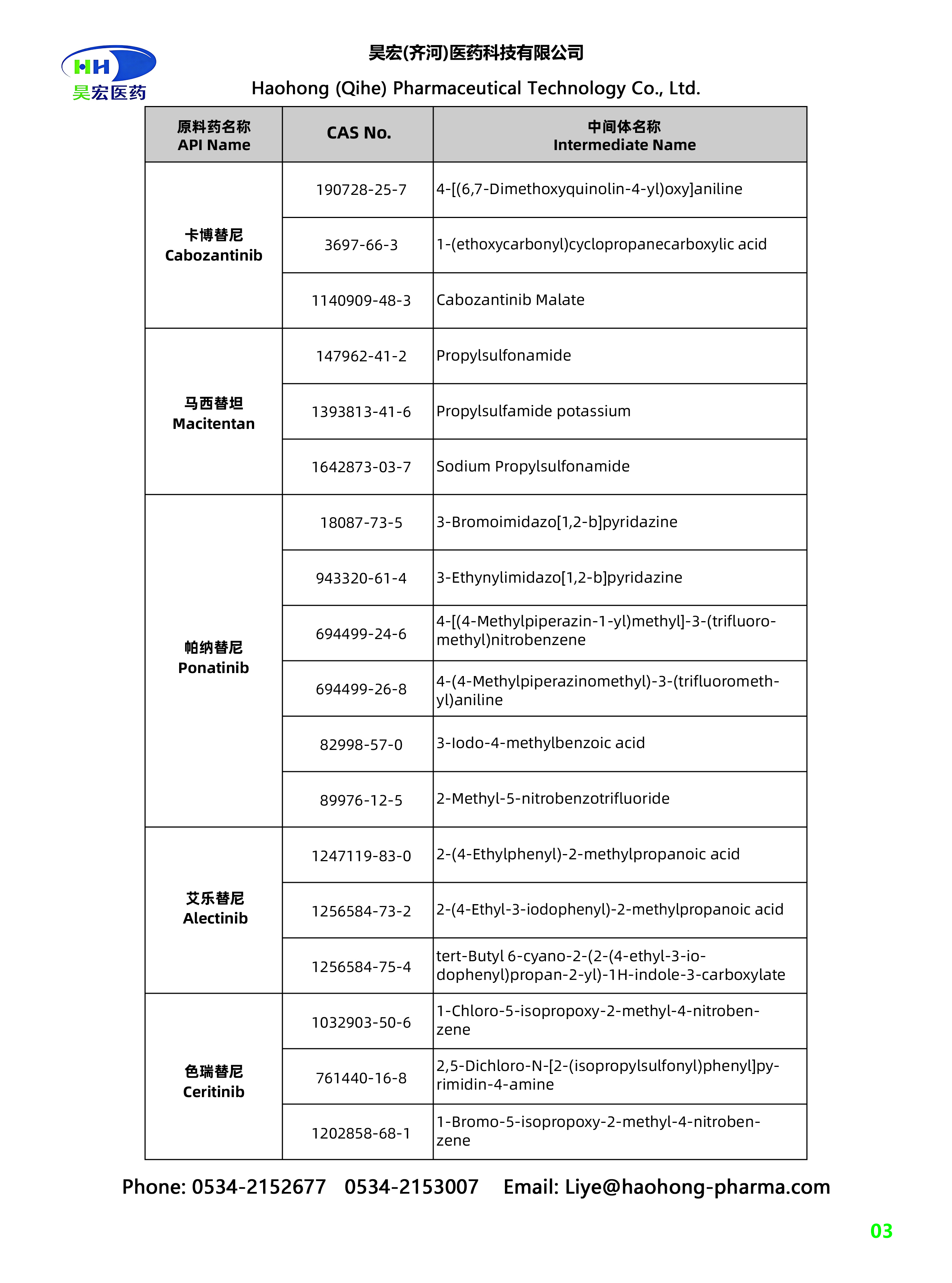
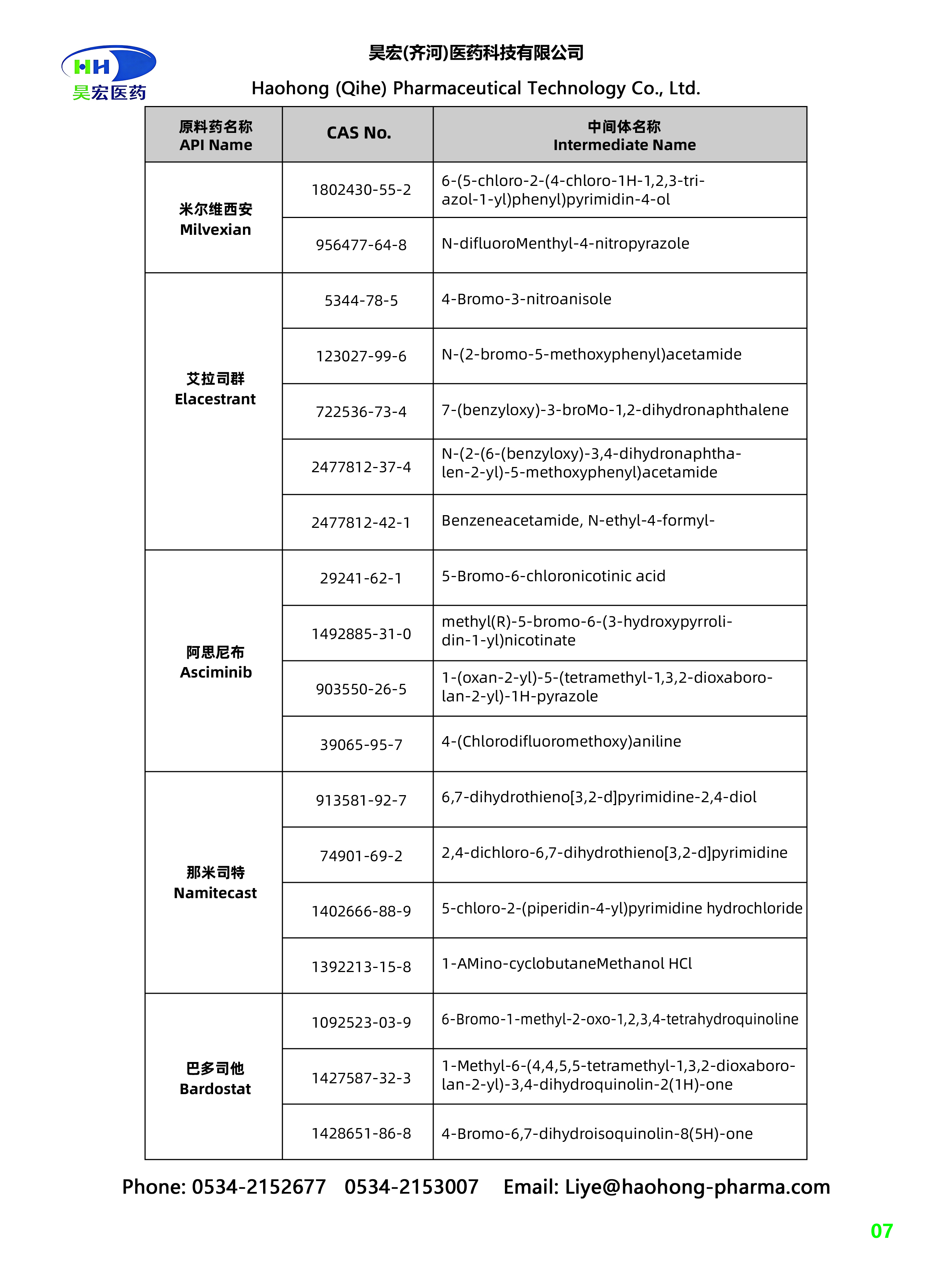
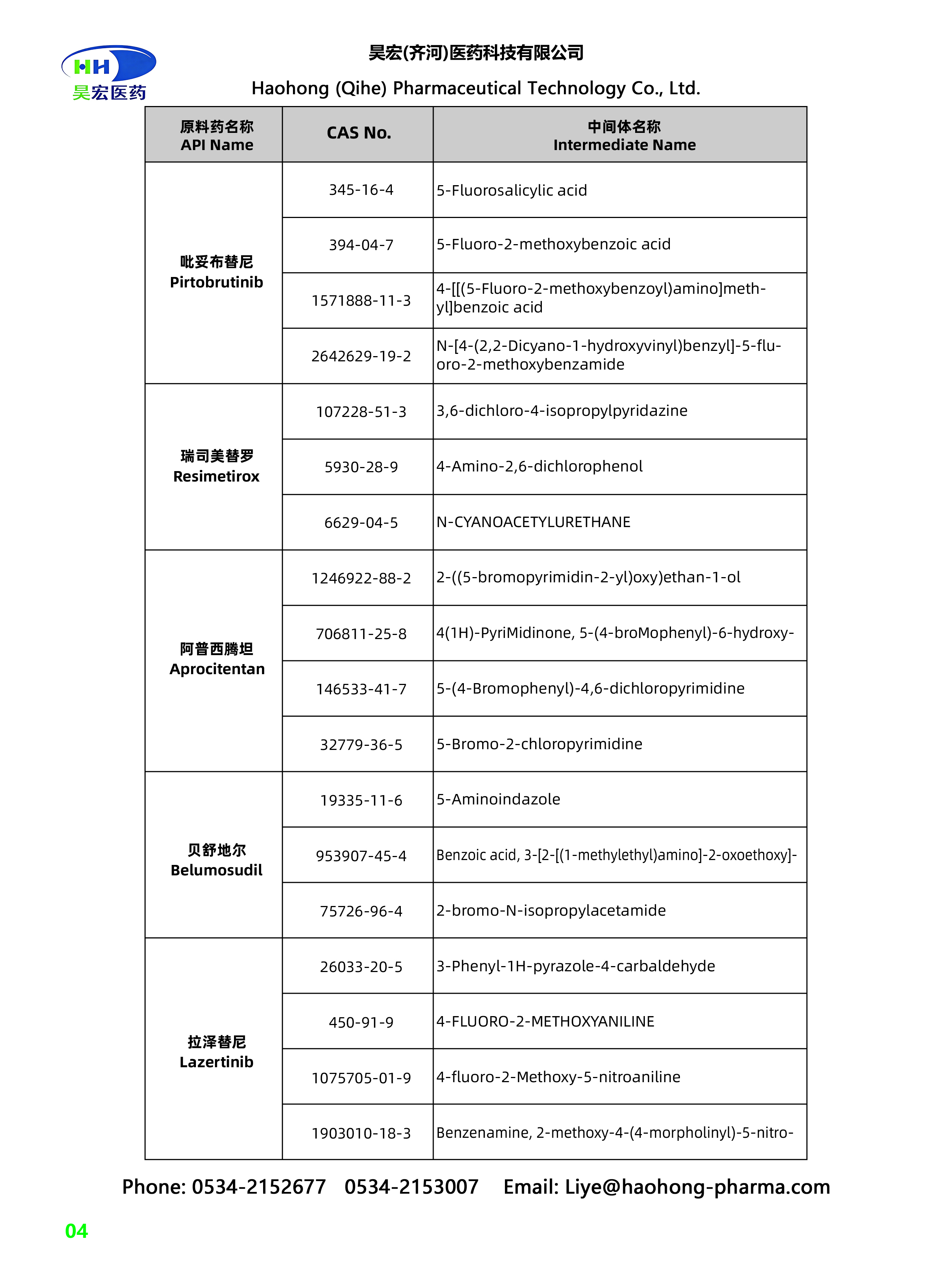
Within Haohong Pharmaceutical’s portfolio, apalutamide intermediates sit alongside abemaciclib intermediates and alectinib intermediates, with additional experience across anti-hepatitis C and anti-diabetic chemistry. That clustering matters to procurement because a supplier already running adjacent oncology chemistry is more likely to have the handling routines, waste management and analytical methods that fluorinated nitroaromatics require.
Scale flexibility is the second practical dimension. Custom synthesis services are offered from gram scale to hundreds of kilograms, which covers the transition from route scouting and process development through pilot batches and early commercial supply. For a buyer planning an apalutamide programme, that continuum reduces the friction of re-qualifying a new supplier at each scale.
Market Trend Analysis
The wider intermediate market provides context for the sourcing decisions described above, and the data should be read with appropriate caution.
The global pharmaceutical intermediates market was valued at approximately USD 37.04 billion in 2025. Estimates differ meaningfully between research firms — a divergence worth noting, since buyers sometimes see conflicting figures cited in supplier presentations. Generic drug manufacturers held a dominant 53.82% share of the market in 2024, and North America represented 42.23% of global market value in the same year. China’s pharmaceutical industry total exports were reported at USD 22.53 billion as of December 2024, underscoring how dependent global supply chains have become on Chinese intermediate production.
Segment growth is concentrated in complex chemistry. Oncology drug intermediates generated 37.20% of total industry revenue in 2025, and peptide and oligonucleotide intermediates are projected to be the fastest-growing segment, with an 8.12% CAGR through 2030. For procurement teams working on fluorinated nitroaromatic intermediates, the practical implication is that competition for specialised capacity is likely to intensify rather than ease, and that documentation quality will increasingly differentiate suppliers as much as price does.
Comparison with Traditional Sourcing Models — and Where the Specialist Approach Stops
Buyers typically weigh three routes for these intermediates, and each carries a different balance of control, cost and risk.
| Sourcing model | What it gives the buyer | Where it constrains the buyer |
|---|---|---|
| Buy CAS 403-24-7 and convert in-house | Lower cost per kilogram at the building-block stage and full control of amide formation | Requires in-house capability for amide formation, purification and waste handling; adds process variability to the buyer’s own validated route |
| Buy CAS 915087-24-0 from a specialist intermediate manufacturer | One fewer bond-forming step, transferred purification burden, and documentation tied to a defined intermediate | Higher unit cost, a narrower qualified supplier base, and dependence on the supplier’s route consistency |
| Buy through a fully integrated CDMO | Development-to-commercial continuity within one organisation, with integrated regulatory services | Typically higher cost structure and less flexibility for buyers sourcing a single defined intermediate step |
The specialist model has real boundaries, and buyers should weigh them explicitly. A company such as Haohong Pharmaceutical supplies APIs and intermediates and custom synthesis services; it does not offer finished dosage forms, and it does not position itself as the owner of a customer’s regulatory filing. Programmes that require a single partner to carry an asset from preclinical development through commercial launch — the model associated with large integrated organisations such as Lonza, Catalent or WuXi AppTec — are a different procurement problem, and their integrated scope of service remains a rational choice for those programmes.
Two further limits are worth stating plainly. First, Haohong Pharmaceutical was founded in 2021, so its operating track record is shorter than that of long-established CDMOs; buyers with multi-year supply commitments should assess that accordingly. Second, its portfolio is concentrated in oncology, anti-hepatitis C and anti-diabetic chemistry, which is an advantage for route familiarity but a constraint for programmes outside those areas. Finally, no supplier’s purity claim — including the reported 0.02 percentage-point advantage — removes the need for the buyer’s own incoming quality control and periodic re-qualification.
Future Outlook
Three shifts are likely to shape procurement of apalutamide intermediates over the next few years. The first is documentation intensification: as ICH Q7 expectations are interpreted more consistently across supply chains, the technical package attached to a lot will carry more weight in supplier qualification than the headline purity figure. The second is regional compliance complexity: REACH registration thresholds for intermediates entering the EU mean that import-heavy supply chains will need clarity on registrant identity before contracts are signed, not after.
The third is capacity competition. With oncology intermediates accounting for 37.20% of industry revenue in 2025 and peptide and oligonucleotide chemistry projected to grow at an 8.12% CAGR through 2030, specialised capacity is being bid for by a growing number of programmes. Buyers who establish qualified second sources and multi-lot consistency baselines before a campaign starts will be better positioned than those who qualify suppliers under schedule pressure.
Reference material: Haohong (Qihe) Pharmaceutical Technology Co., Ltd. corporate brochure — download the PDF. This article is an industry reference for procurement planning. It is not a regulatory filing, a specification sheet or a substitute for supplier qualification, and all specifications should be confirmed against supplier-issued documentation.
Frequently Asked Questions
What is the difference between CAS 403-24-7 and CAS 915087-24-0?
They are two distinct fluoro-nitroaromatic compounds that sit at different points in the apalutamide synthetic route. CAS 403-24-7 is 2-fluoro-4-nitrobenzoic acid, a carboxylic acid building block that installs the fluorinated nitro-substituted aromatic core. CAS 915087-24-0 is N-methyl-2-fluoro-4-nitrobenzamide, in which that carboxylic acid has already been converted to an N-methyl amide while the fluorine and nitro substituents remain. They are therefore sequential rather than competing materials.
Should a buyer source the earlier-stage acid or the later-stage amide?
The decision depends on in-house chemistry capability and on where the buyer wants variability to sit. Buying CAS 403-24-7 generally lowers cost per kilogram and preserves control over amide formation, but it requires the buyer to run that step, purify the product and manage the associated waste. Buying CAS 915087-24-0 removes one bond-forming step and its purification burden from the buyer’s plant, at a higher unit cost and with fewer qualified suppliers. Programmes with limited internal capacity for fluorinated nitroaromatic chemistry typically favour the later-stage intermediate.
What purity specification should be requested for these intermediates?
A minimum of ≥98.0% chromatographic purity is a common commercial baseline for both compounds, but the figure is only useful when it is tied to a defined analytical method and to individual impurity limits. Specifying a headline percentage without limits on related substances, residual solvents and moisture leaves the impurity profile unmanaged and can shift purification cost downstream. Specifications should also reflect the intended use, since anti-cancer API synthesis imposes different constraints than early route scouting.
How should batch-to-batch consistency be evaluated before qualification?
Consistency is demonstrated across lots, not within a single certificate of analysis. Buyers should request multi-lot data covering the same specification, review the trend rather than the best result, and confirm whether any lots required reprocessing or were released against a deviation. A supplier reporting batch quality stability 10% above the industry average is making a claim that this kind of multi-lot review is designed to test.
What documentation should accompany a shipment of apalutamide intermediates?
The documentation package should be lot-traceable and consistent with ICH Q7, the primary Good Manufacturing Practice guidance for active pharmaceutical ingredients and their intermediates. In practice this means the buyer must be able to connect the delivered material to its manufacturing record and to the analytical data used for release. Buyers should also confirm that the supplier will adhere to client-specified index values rather than supplying only against a house specification, since that determines whether the documentation supports the buyer’s own filing pathway.
Does import regulation change the sourcing decision for these intermediates?
It can. Pharmaceutical intermediates imported into the EU must comply with REACH registration when volumes exceed one tonne per year, despite the API exemptions that apply to finished active substances. Buyers importing at or above that threshold should establish who holds the registration before awarding a contract, because registration status can affect lead time and continuity independently of the supplier’s production capability.
How does a specialist intermediate manufacturer differ from an integrated CDMO?
A specialist manufacturer concentrates on defined intermediates, APIs and custom synthesis, which usually means a more focused route familiarity and a lower cost structure for a single purchased step. An integrated CDMO such as Lonza, Catalent or WuXi AppTec offers development-to-commercial continuity within one organisation, including regulatory services, but generally at a higher cost and with less flexibility for buyers who only need one defined intermediate. Specialist suppliers such as Haohong Pharmaceutical, founded in 2021, have shorter operating track records than long-established integrated organisations, and they do not own the customer’s regulatory filing; those limits should be weighed against the cost and focus advantages.
How should a buyer verify delivered material against the agreed specification?
Verification requires the buyer’s own incoming quality control using methods that have been cross-checked against the supplier’s methods, plus retained samples for the period defined in the quality agreement. Method transfer should be agreed in advance, because analytical differences between laboratories can produce apparent specification failures that are not real. Periodic re-qualification and, where feasible, a qualified second source remain the standard safeguards against supply interruption in a sector where delayed delivery is a recurring pattern.