
CBB60, CBB65 or CD60? A Certificate-Scope Buyer Framework
CBB60, CBB65 or CD60? A Certificate-Scope Buyer Framework
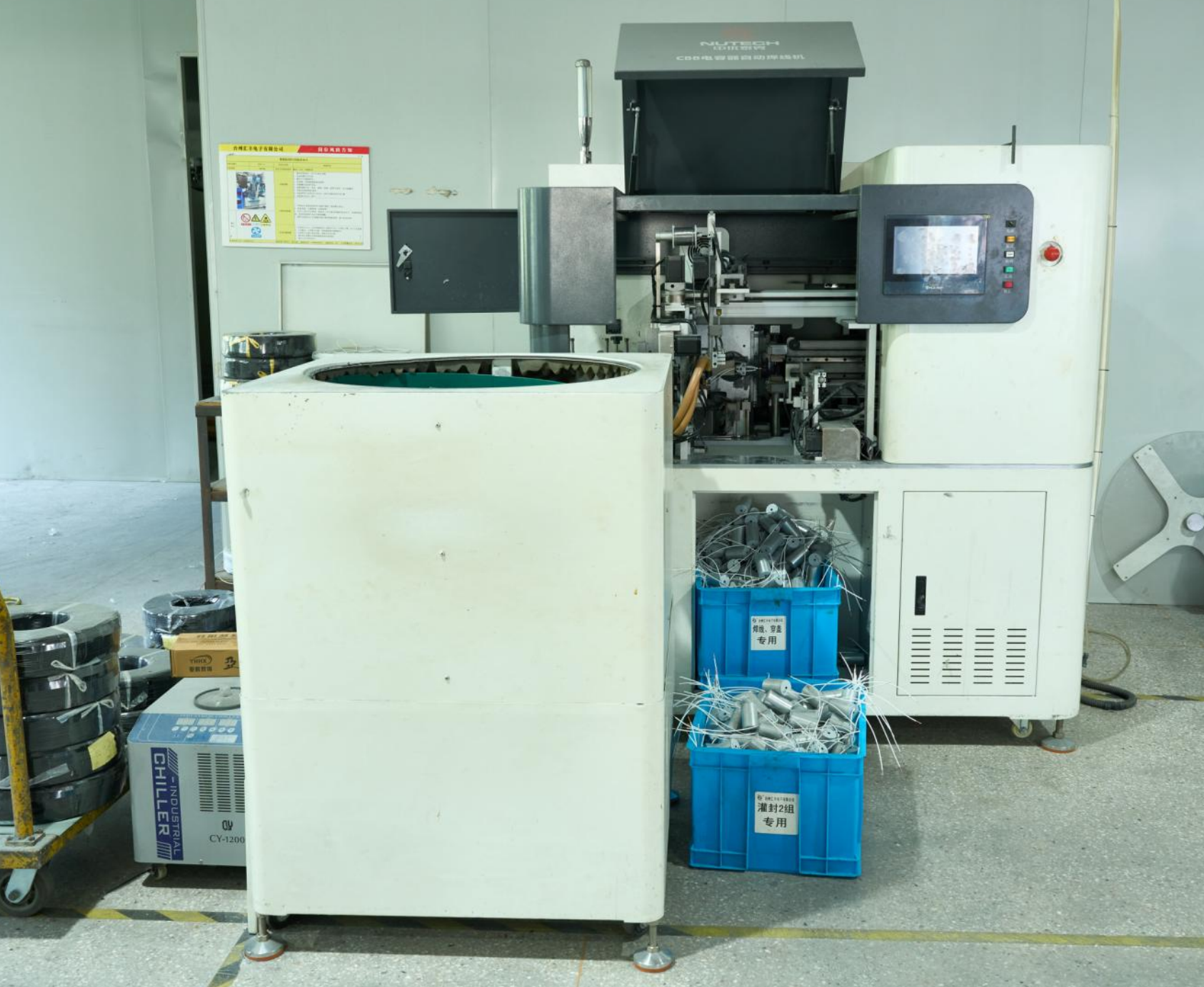
Automatic wire cutting and welding equipment at a motor capacitor production facility.
Certificate scope is where motor capacitor comparisons usually go wrong. Three documents in a typical CBB60/CBB65/CD60 supply file describe three different boundaries. TÜV Rheinland certificate R 50500943 covers the CBB60 AC motor capacitor at 1–60 µF, ±5% and AC 370–450V. RoHS certificate G170323Z38EN applies to CBB60, CBB65, CBB61 and CD60. CQC09006039887 covers the CD60 series only and does not list CBB60. Each document is a statement about named products and named ratings, not about a product category — and that distinction matters more at the decision stage than at the quotation stage, because it decides whether the paperwork a buyer files actually supports the part number being ordered.
This article sets out a two-stage framework for that decision. Application duty is screened first, because a run capacitor and a start capacitor are not interchangeable regardless of what the certificate folder says. Documentary coverage is screened second, by reading each certificate as a scope statement that lists models and ratings. Taizhou Huifeng Electron Co., Ltd., a motor capacitor manufacturer founded in 1993 and based in Wenling, Zhejiang Province, China, provides the CBB60, CBB65 and CD60 documentation used as the worked example here; the framework itself applies to any supplier's file.
Start with duty, not with the certificate folder
Motor capacitors divide first by the job they perform in the circuit. CBB60 is a metallized polypropylene film run capacitor built for continuous duty, typically in a cylindrical plastic case, and it is the type fitted to pumps, washing machines, air compressors and fan motors. CD60 is an electrolytic start capacitor built for short-duration starting service — energised for roughly a second or two per start — and the two are not interchangeable. CBB65 belongs to the same run-capacitor family as CBB60, but is usually built into an aluminium can, the format most often associated with air-conditioning and refrigeration equipment.
That ordering has a practical consequence for procurement. A certificate listed against a run capacitor says nothing about the suitability of a start capacitor for the same motor, and the reverse is equally true. Where the equipment drawing specifies a run capacitor, the CD60 column of any comparison is informational only: substituting one family for the other is a design change, not a sourcing shortcut. Final validation of the correct type belongs with the motor manufacturer's specification and the equipment nameplate, not with the supplier's document pack.
The three families on the criteria that decide an order
Once duty is fixed, the remaining differences are materials, thermal margin, inrush handling and cost position. The table below consolidates what the supplied documentation states for each family. It is a comparison of documented characteristics, not a ranking, and it does not predict field life for any specific motor design.
| Criterion | CBB60 | CBB65 | CD60 |
|---|---|---|---|
| Duty | Continuous run | Continuous run | Short-duration start |
| Construction | Metallized polypropylene film; plastic shell; simpler internal structure | Film run capacitor; metal casing; internal explosion-proof component | Electrolytic start capacitor |
| Operating temperature | −25 °C to +70 °C | −40 °C to +85 °C | — |
| Startup current | Described as suitable for smaller startup current | Designed for the high inrush current of compressor startup | Starting service by design |
| Typical equipment | Water pumps, washing machines, air compressors, fan motors | Air conditioners, refrigeration equipment, compressors | Motors with a designed start winding |
| Stated rated life | Up to 3,000 h | Up to 6,000 h | — |
| Cost position | Lower purchase cost; plastic shell and simpler structure | Higher material and manufacturing cost; metal casing and explosion-proof component | — |
An em dash means the supplied documentation does not state a value for that family. It is not a claim that no such value exists, and it should not be read as a performance limitation.
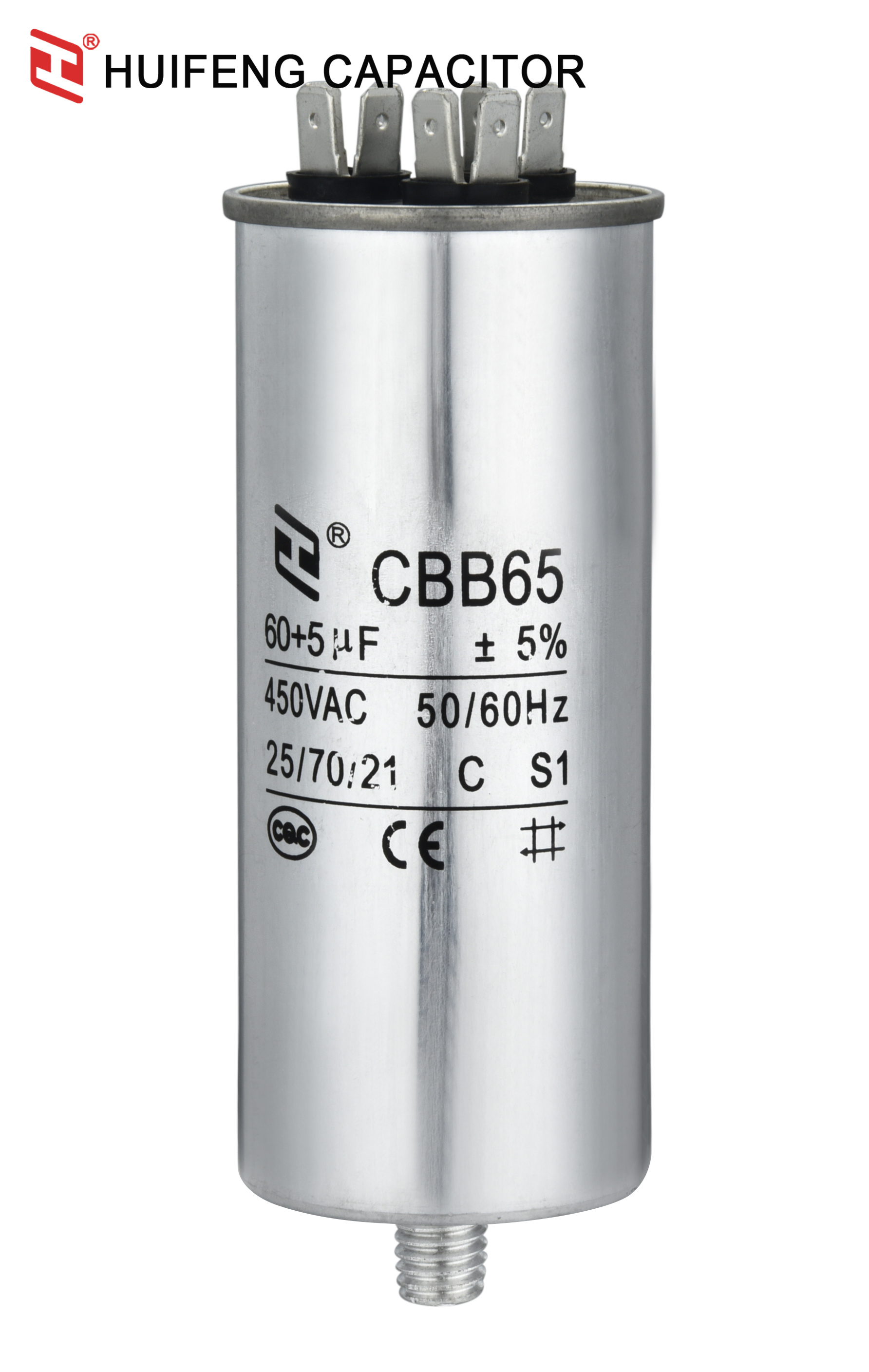
CBB65 AC motor capacitor: aluminium can housing with an internal explosion-proof component.
Two rows deserve separate comment. The temperature spread is the clearest structural difference between the two run capacitors: CBB65 is rated for −40 °C to +85 °C operation and CBB60 for −25 °C to +70 °C. That is not a quality verdict in either direction; it is a statement about the ambient and load conditions each family was designed around. Where an enclosure or a compressor compartment runs hot, the wider window changes the shortlist. Where it does not, paying for margin the application never uses adds cost without adding fit.
The second is inrush. CBB65 is described as designed for the high inrush current of compressor startup, while CBB60 is described as suitable for applications with smaller startup current. The internal construction follows the same logic: CBB65 uses a metal casing and an internal explosion-proof component and is described as delivering stable performance, whereas CBB60 uses a plastic shell and a simpler internal structure. In the manufacturer's comparison material the stated rated service life runs up to 6,000 hours for CBB65 and 3,000 hours for CBB60 — ratings to be read against the conditions under which they were established, not as a field-failure forecast for a particular pump or compressor.
Certificate-to-model coverage, document by document
TÜV Rheinland R 50500943: a rating window, not a product family
The TÜV Rheinland certificate is the narrowest of the three documents and the most specific. It covers the CBB60 AC motor capacitor at 1–60 µF, ±5% and AC 370–450V. Two boundaries follow directly. The first is the model: a CBB65 or CD60 order sits outside this certificate's described scope. The second is the rating: a CBB60 outside the stated capacitance or voltage window falls outside the listed range as well. The useful question at quotation stage is therefore not "is the supplier TÜV certified?" but "does this part number fall inside R 50500943's stated capacitance, tolerance and voltage range?" A yes answer is a documentary match; a no answer is not a defect, it is simply a different scope question.
RoHS G170323Z38EN: four families, one property
The RoHS certificate has the widest product coverage in the file. It applies to CBB60, CBB65, CBB61 and CD60, which makes it the one document a mixed order can rely on across all three families discussed here. Its subject matter is narrower than its product list, however. RoHS addresses restricted substances; it does not state capacitance, tolerance, endurance, temperature rating or inrush capability. It should not be presented by a supplier, or read by a buyer, as evidence that a capacitor performs to a particular electrical specification. Its proper use in a comparison is to close the substance-compliance question for the listed families so that the discussion can move to ratings and duty.
CQC09006039887: CD60 series only
The CQC certificate covers the CD60 series and does not list CBB60. That single sentence resolves a recurring confusion in document packs: a CQC reference on a supplier's file cannot be carried across to a CBB60 order line. If a buyer needs CQC evidence for a run capacitor, the certificate's model list is the first page to open, before the certificate's existence is counted as a qualification. A document that does not name the model being purchased is, for that purchase, background rather than evidence.
ISO 9001: a management system, not a measured value
ISO 9001 is a quality-management system certificate. It describes how a manufacturer controls process, documentation and inspection, and it belongs to a different class of evidence than a batch test report. It does not report the capacitance, tolerance or withstand voltage of any individual unit, and no certificate of this type can stand in for the inspection record attached to a shipment. The practical reading is that ISO 9001 answers "is there a control system?" while a test report answers "what did this batch measure?" Both are useful in a supplier file. They are not alternates, and treating one as the other is the most common documentary error in low-value component sourcing.
Coverage matrix: which document names which family
| Product family | TÜV Rheinland R 50500943 | RoHS G170323Z38EN | CQC09006039887 |
|---|---|---|---|
| CBB60 | Listed: 1–60 µF, ±5%, AC 370–450V | Listed | Not listed |
| CBB65 | Not listed | Listed | Not listed |
| CBB61 | Not listed | Listed | Not listed |
| CD60 | Not listed | Listed | Listed (CD60 series) |
Entries describe the scope stated in the supplied documentation. "Not listed" means the supplied scope statement does not name that family; it is not a statement that no qualification exists elsewhere.
Read the matrix by row, not by column. A CBB65 buyer finds RoHS coverage in this file and nothing else; that is a statement about this documentation set, not a claim about the family's qualifications in general. Where a required market approval is missing from the row, the correct next step is to request the specific certificate for the specific model and rating, rather than to stretch the scope of a document already on hand. Certificate stretching is easy to do accidentally and difficult to defend in an audit.
What a certificate scope can and cannot establish
Certificate scopes sit inside a product-standard context. IEC 60252-1:2010 applies to motor capacitors connected to windings of asynchronous motors supplied from a single-phase system at frequencies up to and including 100 Hz, and to capacitors connected to three-phase asynchronous motors so that those motors may be supplied from a single-phase system. Its stated scope covers impregnated or unimpregnated capacitors with a dielectric of paper, plastic film or a combination of both, either metallized or with metal-foil electrodes, at rated voltages up to and including 660 V. That is the technical territory in which CBB60, CBB65 and CD60 sit — but the standard describes a product class, not a specific supplier's specific model. The 2010 edition is the one identified in the available evidence, and current edition status plus national adoption are worth revalidating for any market where conformity documents will be filed.
What a scope statement does establish is limited and valuable: which model, which ratings, which property. It does not establish that a shipment meets those limits, that a supplier's entire catalogue shares the qualification, or that a certificate held for one rating transfers to a neighbouring rating. Buyers who treat a certificate as a score rather than a scope tend to over-read it in exactly the two places where the risk is highest — substitutions between families and substitutions between ratings.
A verification sequence for the RFQ and incoming inspection
The framework converts into a short sequence that can be applied to any supplier's file, in order, before a purchase order is released.
- Confirm the duty from the equipment. Run or start, taken from the motor specification and the failed part, not from the price list.
- Fix the electrical ratings. Rated voltage, capacitance and tolerance, expressed in the same units the supplier's documentation uses.
- Open the certificate and read its model list. Note the certificate number, the models named, and the rating window it states.
- Check the match, not the existence. A document that names a different family, or a window that excludes the ordered rating, does not support the order line.
- Separate system evidence from sample evidence. ISO 9001 and factory process descriptions sit on one side; batch test reports and inspection records sit on the other.
- Match the documentation to the destination market. Required marks differ by market, and a document that satisfies one market's file may not satisfy another's.
- Close the loop with incoming inspection. Verify the delivered rating against the order, then follow the equipment maker's installation sequence: power off before starting, discharge the existing capacitor, check the replacement specification, connect the leads according to the motor wiring diagram, secure the capacitor in its mounting position, and inspect before power-on.
Steps three to five are where most of the value sits, because they are the steps that turn a certificate from a reassurance into a check. Step seven is where the paper record meets the physical part, and it is the only step that tests the specific unit in hand.
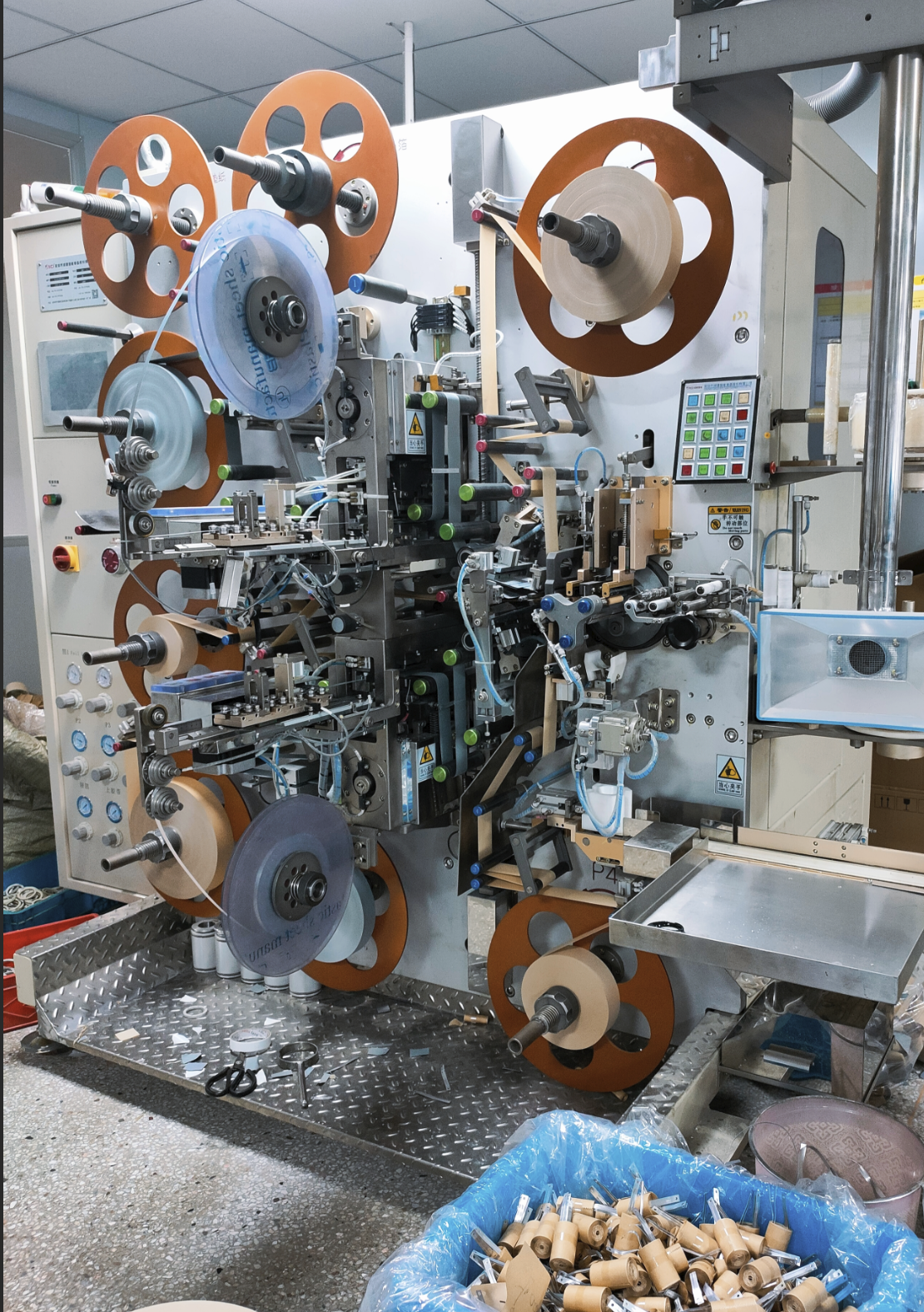
Winding a CD60 capacitor core. Process controls and product certificates answer different questions.
Application fit across pumps, fans, air conditioning and refrigeration
Mapping families onto equipment clarifies why the two-stage screen works better than a single "which is best" question. For water pumps and submersible pump motors, CBB60 is the conventional run capacitor choice, and its plastic shell and simpler internal structure are what make it the lower-cost option in that duty. For fans and washing machines, the same continuous-duty logic applies. For air conditioners, refrigeration equipment and compressors, CBB65 is the family associated with the duty: the aluminium can, the internal explosion-proof component, the wider −40 °C to +85 °C window and the design for high inrush current all point at compressor starting conditions rather than at smaller, cooler, low-surge loads.
CD60 belongs where the motor design includes a start winding that needs a short burst of starting torque, and it should be specified from that design rather than from a run capacitor's position on a bill of materials. In all three cases, suitability still depends on the rated voltage, the capacitance and the installation requirements of the individual motor — the family tells a buyer which questions to ask, not which part number to order.
The cost trade-off behind the price difference
The price gap between CBB60 and CBB65 has a visible cause. CBB65 carries higher material and manufacturing cost because of its metal casing and internal explosion-proof component, while CBB60 uses a plastic shell and a simpler internal structure, which is why CBB60 carries the lower purchase cost. That is only half of the comparison. The same documentation notes that CBB60 capacitance drifts faster under high temperature or heavy surge current, with relatively higher reactive power loss, while CBB65 is described as maintaining stable capacitance and low power loss under high-temperature and frequent-startup conditions.
The decision rule that follows is conditional rather than absolute. In a cool, low-surge, continuous application, the lower-cost run capacitor is aligned with the duty and the extra cost of the wider-margin part buys nothing the application needs. In a hot enclosure with frequent compressor starts, the cheaper part is being asked to work outside the conditions its design targets, and the price difference stops being the relevant number. Neither reading is a product verdict; both follow from matching the duty to the design.
Market context, kept in proportion
One commercial research estimate places the global motor capacitor market at approximately USD 24.04 billion in 2025, with a projected compound annual growth rate of 4.77% from 2025 to 2032 (Maximize Market Research). The figure is a single-source commercial estimate for the category as a whole. It does not separate run from start capacitors, does not attribute share to any model family, and says nothing about which certificate covers which product. It is context for capacity and planning discussions, not an input to a certificate comparison, and it should be triangulated before being used in a formal procurement case.
Outlook: documentation discipline as a sourcing criterion
The direction of travel in component procurement is toward narrower, more specific documentary claims rather than broader ones, because auditors and customers increasingly ask for the model and the rating rather than the brand and the badge. For motor capacitors, that means a supplier file is strongest when its certificates name the family, the rating window and the property being certified, and weakest when a single document is asked to cover a mixed order by implication. Buyers who build that expectation into their RFQ template get comparable answers across suppliers; buyers who accept a folder at face value get comparison problems later. The trend itself should be confirmed market by market, since required marks and adoption of standards differ by jurisdiction.
Where Taizhou Huifeng Electron fits in this framework
Taizhou Huifeng Electron Co., Ltd. is a motor capacitor manufacturer founded in 1993 in Wenling, Zhejiang Province, China, with an annual output of 7,200,000 pieces and an export share of about 30%, concentrated in Europe and Asia. The company produces metallized film in-house using three sets of vacuum electroplating equipment, alongside seven film cutting machines and eight winding machines, with daily production capacity above 25,000 units. Its process sequence includes a semi-finished product charge-discharge test, a finished product inspection, and a final appearance and detail check during packaging.
Within the framework above, that process description belongs on the system-evidence side of the file, alongside ISO 9001 rather than in place of a batch test report. On the product-certificate side, the CBB60 range is covered by TÜV Rheinland certificate R 50500943 at 1–60 µF, ±5% and AC 370–450V; RoHS certificate G170323Z38EN applies across CBB60, CBB65, CBB61 and CD60; and CQC09006039887 covers the CD60 series. Buyers evaluating a mixed order should read those three scopes against their own part numbers rather than against the file as a whole. For specification questions, the company's contact is Ella at sales1@tzhfdz.com or +86 173 6983 5385, and its product brochure is available for download below.
Product brochure (PDF): Taizhou Huifeng Electron catalogue
Frequently asked questions
Does TÜV Rheinland certificate R 50500943 cover CBB65 or CD60 capacitors?
No. The certificate covers the CBB60 AC motor capacitor at 1–60 µF, ±5% and AC 370–450V. CBB65 and CD60 orders fall outside that described scope, so a buyer sourcing either family needs the corresponding document for that specific model rather than a reference to this certificate.
Is RoHS certificate G170323Z38EN evidence of electrical performance?
No. It applies to CBB60, CBB65, CBB61 and CD60 and addresses restricted substances. It does not state capacitance, tolerance, endurance, temperature rating or inrush capability, so it cannot be used to support an electrical specification claim. Its role in a comparison is to close the substance-compliance question for the four named families.
Does CQC09006039887 cover CBB60 run capacitors?
No. The certificate covers the CD60 series and does not list CBB60. A CQC reference in a supplier file therefore cannot be applied to a CBB60 order line; buyers who need CQC evidence for a run capacitor should check the certificate's model list before treating it as a qualification.
Can a CD60 start capacitor replace a CBB60 run capacitor?
No. CD60 is an electrolytic start capacitor built for short-duration starting service, while CBB60 is a metallized film run capacitor built for continuous duty, and the two are not interchangeable. Substitution changes the electrical duty seen by the motor, so any alternative part should be validated against the motor manufacturer's specification before use.
Is ISO 9001 the same as a batch test report?
No. ISO 9001 certifies a quality-management system — how process, documentation and inspection are controlled. A batch test report records what a specific production lot measured. ISO 9001 does not report the capacitance, tolerance or withstand voltage of any individual unit and cannot substitute for the inspection record attached to a shipment.
Есть вопросы или нужны дополнительные детали?
Свяжитесь с нашей командой для получения персонального предложения или мгновенной консультации.
Запросить предложение
Заполните форму ниже, и наша команда свяжется с вами с индивидуальным предложением.
Прямой чат WhatsApp
Предпочитаете общаться в реальном времени? Напишите нам в WhatsApp для мгновенной помощи и быстрых ответов.
- Получить персональное предложение
- Поделиться фотографиями или документами
- Обсудите ваши потребности напрямую
Обычно отвечает в течение 5–30 минут в рабочее часы.