
CDU Low-Flow Readiness: Comparing Mining Container Proposals
CDU Low-Flow Readiness: Comparing Mining Container Proposals
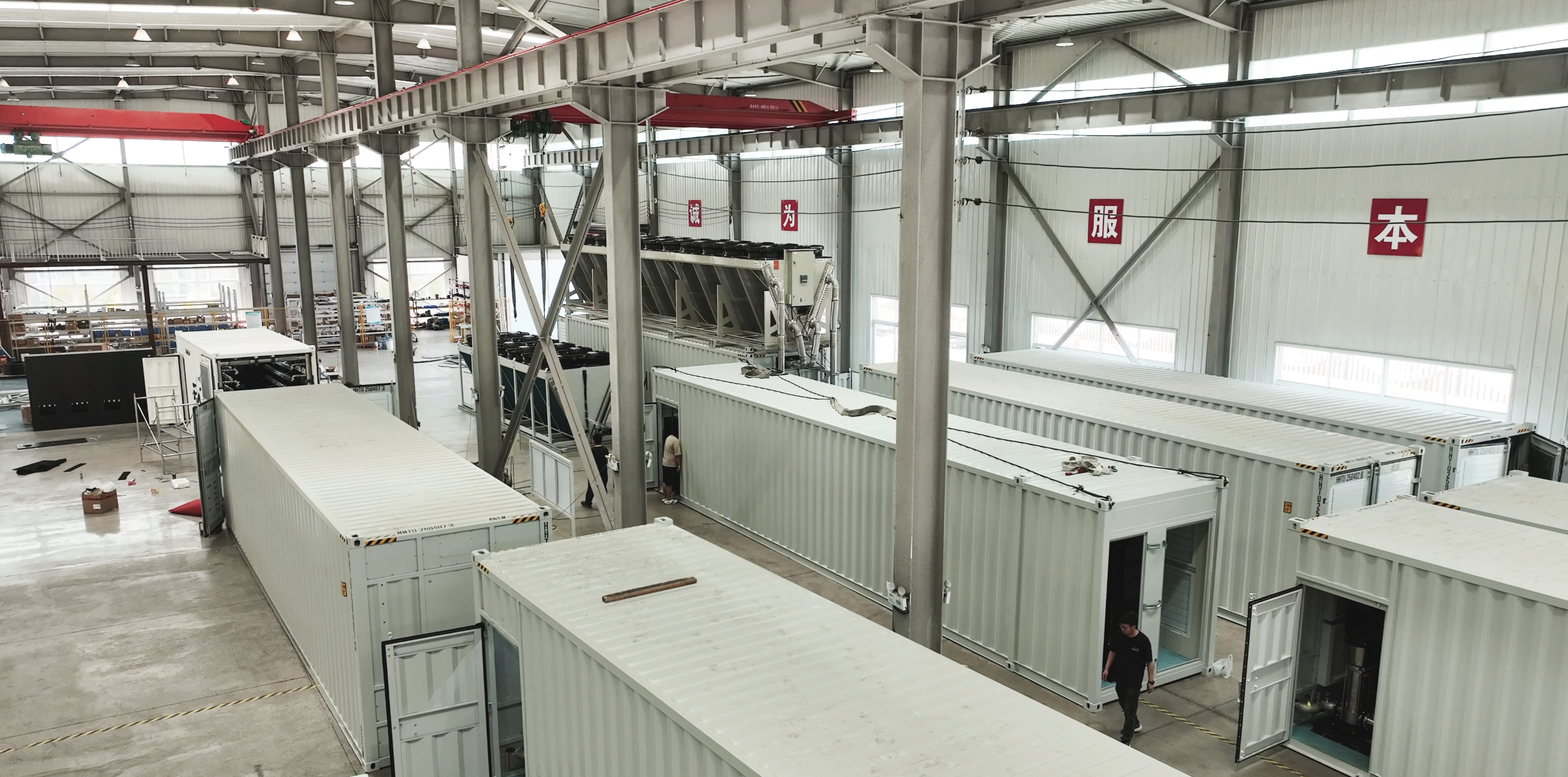
Workshop interior at the production base. The article compares proposal evidence, not catalog headlines.
Independent buyer comparison. A mining container proposal can look complete while leaving the most consequential cooling question unresolved: what happens when measured CDU secondary-loop flow falls below the approved operating requirement? For a Decision-stage buyer, the useful comparison is not the largest MW figure or the longest ASIC list. It is the proposal’s low-flow readiness—the chain of evidence linking heat load, CDU selection, flow and pressure, controls, first-startup testing and acceptance records. That chain is what allows an ASIC mining container buyer to compare offers on a common technical basis.
xinkelcs Mining Container is the mining-container offering from Tangshan Xinke Intelligent Technology Co., Ltd., a company based in Guye Economic Development Zone, Tangshan, Hebei, China, whose portfolio also includes CDUs, hydro ASIC mining containers and prefabricated modular data center containers. In a hydro-cooling mining proposal, those categories meet at one point: the CDU and its secondary loop must be specified as an operating system, not as a single catalog capacity number.
Why low-flow readiness belongs in the proposal comparison
Hydro ASIC mining containers concentrate electrical load and heat rejection into a transportable enclosure. The cooling circuit is therefore part of the capacity definition. A proposal that states container power and ASIC count without defining the approved secondary-loop flow leaves the buyer unable to check whether the cooling system can operate at the intended design conditions.
A low-flow condition is a defined alarm state, not a vague performance concern. CDU model selection should confirm the approved secondary-loop flow and operating requirement for the selected model; measured flow below this requirement is treated as a low-flow alarm condition. Once that definition is in the proposal, the buyer can ask which sensor, pump, valve, filter, coolant and control conditions are used to identify the condition and how the system responds.
The comparison also protects the supplier. If the buyer and supplier use different boundaries—total data-center power, IT load, rack power or rated capacity—a cooling discussion can appear to compare numbers that are not comparable. The low-flow check forces both sides back to the same operating basis.
What ‘low-flow readiness’ means in a mining container proposal
Low-flow readiness is the proposal’s ability to show that the selected CDU can deliver and maintain the approved secondary-loop flow at the project’s design temperatures, and that the system can detect, alarm and respond when measured flow falls below that requirement. It is not a certification or a standardized rating. It is a procurement check that should be visible before award.
A decision-ready proposal should make five items explicit:
- The approved secondary-loop flow requirement for the selected CDU model, with the operating condition at which it applies.
- The relationship between that flow and the connected cold-plate loop, including pressure and interface compatibility.
- The coolant specification and the conditions used for heat-transfer capacity, because capacity depends on temperature differences, coolant properties, flow and exchanger design.
- The controls and alarm logic for low flow, including sensor readings, pump status, valve positions, coolant level and filter differential pressure.
- The first-startup and acceptance records that will show temperatures, flow and pressure against agreed limits before handover.
These items turn a cooling claim into a verifiable proposal section. They also give the buyer a fair way to compare a hydro cooling mining container offer with another liquid-cooled mining container offer without assuming that catalog kW alone is a sufficient basis.
The first comparison: rated capacity versus approved flow
Rated capacity and approved flow answer different questions. A container’s power capacity indicates the electrical load the configuration is designed around. The CDU’s approved secondary-loop flow indicates the coolant circulation required for the connected cooling loop under specified conditions. A proposal can cite a high power capacity while leaving the flow requirement undefined; another can define flow at design conditions but use a different power boundary. Neither gap is resolved by choosing the larger number.
Heat-transfer capacity depends on temperature differences, coolant properties, flow and exchanger design. Catalog capacity must therefore be checked at the project operating conditions. This is especially important in mining containers, where ambient conditions, altitude, water quality and IT load can differ from a laboratory or catalog reference. The proposal should state the conditions attached to its cooling claim, not only the CDU model name.
| Proposal item | What it establishes | Buyer question | Why low-flow readiness depends on it |
|---|---|---|---|
| Container power boundary | Whether the figure is total data-center power, IT load, rack power or rated capacity | Which loads are inside the stated figure? | Flow requirements cannot be compared if the load boundary differs |
| CDU model and format | Rack-mounted, sidecar or in-row configuration and its intended cooling zone | Does the format fit the available space, service access and redundancy? | Format affects flow, pressure, maintenance access and piping interfaces |
| Approved secondary-loop flow | The flow requirement for the selected model at design conditions | At what temperature, pressure and coolant condition is flow approved? | Measured flow below this requirement is the low-flow alarm condition |
| Coolant and heat rejection | Secondary coolant, heat exchanger and primary cooling path | What primary equipment rejects the heat, and under which ambient range? | Flow alone does not prove heat rejection |
| Controls and alarms | How low flow is detected and annunciated | Which sensors, pump signals and valve states are used? | A proposal without detection logic cannot define response |
| First-startup acceptance | Records of temperature, flow and pressure against agreed limits | What is recorded before handover? | Acceptance records show whether readiness was demonstrated |
How the cooling loop should be described
In a liquid-cooled system, heat moves from server components into coolant and then across the CDU heat exchanger to the primary loop. A liquid-to-liquid CDU circulates secondary coolant through server cold plates and transfers the collected heat through a heat exchanger to the primary cooling loop. Cold plates absorb heat from server components; a pump circulates coolant through the secondary loop. In the CDU heat exchanger, heat transfers across a separating surface to the primary fluid without intentional mixing of the two fluids. The primary loop carries heat to the cooling source.
For a mining container proposal, this sequence should be mapped to visible scope. The cooling circuit can include cold-plate liquid cooling, a CDU secondary loop, a plate heat exchanger and primary cooling equipment. Project-specific items can include IT racks, power distribution, thermal management, monitoring, lightning protection and grounding, structured cabling and fire protection. A prefabricated modular data center container can be configured as a single module or a multi-module array for outdoor deployment, but IT capacity, rack count, power per rack, electrical supply, redundancy, external dimensions, shipping weight and utility interfaces remain project-specific.
That project-specific list is the right place to compare offers. It shows whether the supplier has described a complete heat path or only a partial one. It also keeps the low-flow discussion attached to the actual primary cooling source, not just the CDU.
CDU format is a configuration decision, not a kW contest
The CDU installation format should be selected against required heat removal at design temperatures, flow and differential pressure, coolant compatibility, rack units and floor area, maintenance access, redundancy, and electrical and piping interfaces. The recommended procedure is to check the thermal load and rated operating conditions, verify available rack and floor space, confirm service access and redundancy, then choose the installation format. Flow, pressure and interface compatibility are validated before final selection.
Rack-mounted CDUs suit compatible rack-level installations when the required duty and service access fit within the available rack space. Sidecar or in-row configurations are indicated when cooling-zone capacity and layout favor floor-standing equipment, and they can serve larger configured cooling zones than a single rack-level installation. The format decision should not be made by comparing rated kW alone. In a mining container, maintenance access and service clearance are part of the operating plan because filter changes, pump checks and leak inspection must remain possible in the deployed layout.
A proposal that names a CDU format without showing why that format fits the container’s cooling zone is incomplete for decision purposes. The buyer should ask for the design-temperature duty, the approved flow and pressure, and the service access assumption behind the selection.
Five proposal checks that separate readiness from assumption
- Load boundary. Ask whether the stated power is total data-center power, IT load, rack power or rated capacity. Supplier listings in the available evidence use different boundaries; they should not be ranked or aggregated without normalization. The proposal should label its boundary and connect it to the cooling load used for CDU selection.
- Flow at design conditions. Request the approved secondary-loop flow, the pressure basis, the coolant specification and the temperature condition. A flow figure without these conditions is not a comparison basis. The low-flow alarm threshold should be tied to the approved requirement for the selected model.
- Loop and heat-rejection map. Require a simple schematic showing cold plates, secondary loop, CDU heat exchanger, primary loop, pumps, primary cooling equipment and monitoring points. The map should state which items are inside the container scope and which are site-supplied. Project-specific interfaces should be listed, not assumed.
- Controls and alarm logic. Ask how the system detects low flow and what the operator is expected to check. The answer should reference sensor readings, coolant level, valve positions, pump status, filter differential pressure and trapped air as diagnostic possibilities. It should also state that protective interlocks are not bypassed and that qualified personnel isolate energy and release pressure before opening equipment.
- Acceptance records. Require the first-startup sequence: review approved drawings, coolant specifications and acceptance criteria; verify utilities, grounding, valves, piping, connections and primary cooling availability; complete cleaning, pressure and leak tests to approved limits; fill and vent with the specified procedure and approved coolant; verify sensors, alarms, interlocks and pump controls before load; introduce load in stages and record temperatures, flow and pressure against agreed limits. Acceptance results should be recorded before handover.
These checks are not a substitute for the supplier’s technical confirmation. They are the minimum content a buyer needs to compare proposals without treating an unverified assumption as a design fact.
What low-flow troubleshooting can and cannot prove
If a CDU reports low coolant flow, the alarm procedure should come first. Operators should assess whether the IT load must be reduced or stopped. They should check sensor readings, coolant level, valve positions, pump status, filter differential pressure and trapped air. Possible causes include incorrect valve position, low coolant level, trapped air, a restricted filter or piping path, pump or control faults, or an incorrect sensor reading. These are diagnostic possibilities, not a confirmed fault.
Qualified personnel should investigate using the equipment manual. They should not bypass protective interlocks or open a pressurized circuit. The proposal can define this response path without promising that a low-flow event will never occur. The useful question is whether the system can detect the condition, protect the load and support diagnosis.
A low-flow troubleshooting section also reveals whether the proposal treats operation as part of the design. A supplier that has thought through filter differential pressure, pump status and valve position is more likely to have thought through service access and spare-parts planning. Those are still proposal claims until the supporting documents and acceptance records are supplied.
Application fit: where modular hydro-cooled mining containers make sense
Prefabricated modular container solutions are applicable to phased expansion, outdoor deployment, edge computing, site relocation, and projects seeking less on-site integration. For a hydro ASIC mining container, the same logic applies when the site can support the required power, primary cooling and maintenance access. The container format supports transport and factory integration; it does not remove the need for site foundations, interface connections and acceptance.
Scenario conditions should be stated in the proposal. Continuous high-density rack operation requires thermal design that considers ambient dry-bulb and wet-bulb temperatures, altitude, water quality and IT load. The project type may be a new modular data center, a liquid-cooling retrofit or outdoor computing capacity expansion. Matched equipment can include a CDU, plate heat exchanger, dry cooler or cooling tower, pumps, power distribution, monitoring and fire protection. Special requirements may include freeze protection, condensation prevention, corrosion protection, noise, electrical supply and local certification requirements for each site.
The fit boundary is equally important. A prefabricated modular approach can support phased deployment and expansion; it does not by itself establish a particular availability tier, certification, deployment time or energy-efficiency value. Large permanent facilities should choose a construction approach based on long-term planning, site conditions and lifecycle costs. For a mining container buyer, the decision is not whether modular is universally preferable; it is whether the proposed container and CDU configuration match the site load, climate and service model.
Comparing modular delivery with conventional on-site construction
Conventional on-site data center projects install and commission racks, power, cooling and monitoring separately at the site. Prefabricated modular container solutions perform more integration and testing before shipment. They can reduce on-site integration scope by moving cabling, piping and testing into the factory, leaving site work focused on foundations, module placement, interface connections and acceptance.
Indicative planning ranges are 8–16 months for conventional on-site construction and integration and typically 2–3 months for prefabricated modular container deployment. Accelerated projects can be as short as 6 weeks. These ranges are planning references, not promises for a specific mining project. They should be compared against equivalent scopes and confirmed against design approvals, utility readiness, shipping and commissioning. A modular schedule advantage does not override the need for flow and acceptance evidence.
Modular solutions support consistent interfaces, factory testing and standardized maintenance with centralized status monitoring. Maintenance planning still needs to consider equipment access, spare parts and local service availability. In a hydro-cooled mining container, those maintenance points connect directly to low-flow readiness: a filter that cannot be accessed, or a pump that cannot be inspected, weakens the operating plan even if the initial flow specification is correct.
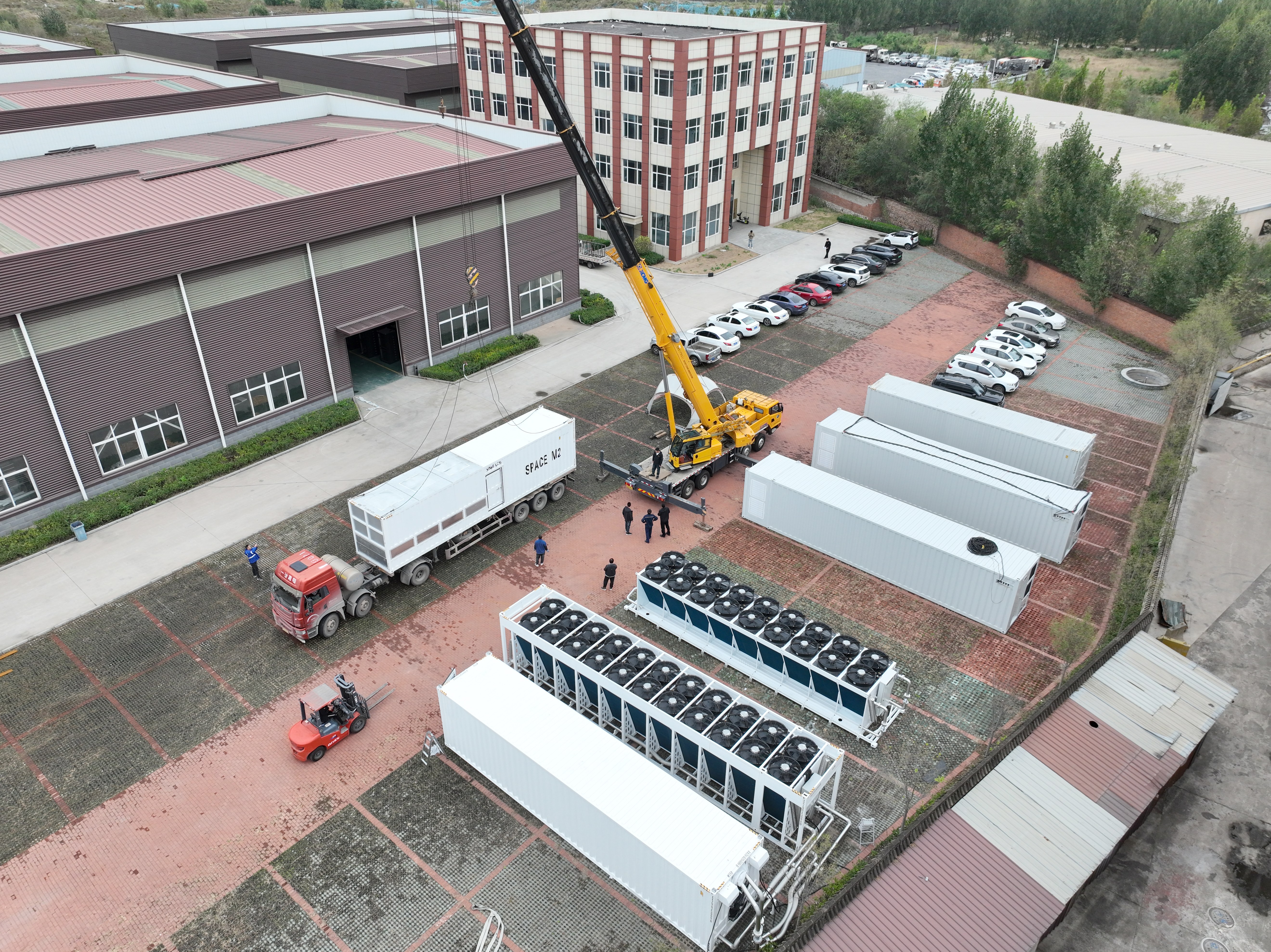
Equipment prepared for shipment. Modular delivery moves integration and testing into the factory, but site acceptance remains part of the comparison.
Cost and schedule comparison: use equivalent scope
Cost comparisons should use equivalent scope and operating assumptions. Total cost of ownership depends on capacity, redundancy, equipment, transport, civil works, energy and maintenance. No fixed cost-reduction percentage is stated. A proposal that quotes a lower container price without defining CDU scope, primary cooling, commissioning, spare parts or service access is not a like-for-like comparison.
Low-flow readiness is not a cost line by itself. It affects the credibility of the operating plan: whether commissioning can be completed against agreed limits, whether the operator has a diagnostic path, and whether maintenance access supports the specified service model. Those factors should be evaluated with the same discipline as capacity and schedule.
What the wider market signal does—and does not—mean
Business Research Insights projects the global Bitcoin miner market at USD 11.72 billion in 2026, with a 26.7% CAGR through 2035. That is a commercial-research forecast for mining hardware revenue, not a shipment measure for mining containers, and it does not validate any supplier’s cooling design. It does indicate why procurement teams are being asked to compare more complex infrastructure proposals rather than only ASIC prices.
Supplier-listed configurations show why boundaries matter. BiXBiT lists a WHC-1.2-2U hydro-mining configuration at 1.2 MW with 120 Whatsminer 2U ASIC units and a WHC-2.4-2U configuration at 2.4 MW with 240 units. PowerMining lists a 20-foot hydro-cooled container at 1 MW and 45-foot configurations at 2 MW and 2.5 MW. A XINKE LCS 40HQ product specification lists 420 mining positions and 2.31 MW, with optimization for the Antminer hydro series. These are company-reported product listings, not normalized benchmarks; their power boundaries and technical scopes differ. They illustrate the comparison problem, not a ranking.
PowerMining also lists water plus glycol as the cooling medium and provides coolant-flow, temperature, dry-cooler and environmental operating-range specifications for a hydro-cooled container configuration, including 200 L/min per rack and 1,000 L/min total flow with an outside operating range of -35°C to +50°C. Those values require pump curve, heat-load basis, coolant concentration and test conditions before they can be compared with another supplier. The presence of a flow figure is useful; it is not enough without the conditions attached to it.
Future procurement outlook
The practical outlook for upcoming mining container procurement is not a prediction about market direction. It is a change in what a decision-ready proposal should contain. Buyers should expect to compare load boundaries, approved flow, pressure, coolant, primary heat rejection, controls, alarm logic and first-startup acceptance records alongside power and ASIC count.
Where a proposal leaves those items undefined, the buyer can ask for clarification before award or treat the cooling claim as unverified. Where a proposal defines them, the comparison can move from catalog numbers to operating evidence. That is the difference between a low-flow readiness claim and a low-flow readiness plan.
FAQ
What does low-flow readiness mean in a mining container proposal?
Low-flow readiness is the proposal’s ability to show that the selected CDU can deliver the approved secondary-loop flow at the project’s design conditions, that the system detects and alarms when measured flow falls below that requirement, and that first-startup acceptance records will show temperature, flow and pressure against agreed limits. It is a procurement check, not a certification.
What should a buyer ask a supplier to document about CDU flow?
The buyer should request the approved secondary-loop flow for the selected CDU model, the operating condition at which it applies, the pressure and interface basis, the coolant specification, and the controls used for low-flow detection. The supplier should also explain how flow, pressure and interface compatibility are validated before final selection and how the approved flow relates to the connected cold-plate loop.
What should operators check when a CDU reports low coolant flow?
Operators should follow the alarm procedure and assess whether the IT load must be reduced or stopped. They should check sensor readings, coolant level, valve positions, pump status, filter differential pressure and trapped air. Qualified personnel should investigate using the equipment manual, isolate energy and release pressure before opening equipment, and avoid bypassing protective interlocks. Possible causes include valve position, low coolant level, trapped air, a restricted filter or piping path, pump or control faults, or an incorrect sensor reading; these are diagnostic possibilities, not a confirmed fault.
How should a mining container proposal handle first-startup acceptance?
The proposal should describe a controlled first-startup sequence: review approved drawings, coolant specifications and acceptance criteria; verify utilities, grounding, valves, piping, connections and primary cooling availability; complete cleaning, pressure and leak tests to approved limits; fill and vent with the specified procedure and approved coolant; verify sensors, alarms, interlocks and pump controls before load; then introduce load in stages and record temperatures, flow and pressure against agreed limits. Acceptance results should be recorded before handover.
Buyer takeaway
For a Decision-stage buyer, a decision-ready mining container proposal is not the one with the largest headline capacity. It is the one that makes the cooling system comparable. That means a labelled load boundary, a defined CDU format, an approved secondary-loop flow at design conditions, a complete heat-rejection map, low-flow detection and response logic, and acceptance records that can be checked before handover.
xinkelcs Mining Container and other hydro-cooled mining container suppliers should be evaluated on that same evidence set. The comparison is independent of any single catalog figure: it tests whether the proposal can explain how the container will operate when flow, load, ambient conditions and maintenance access are treated as real project variables. A proposal that answers those questions gives the buyer a clearer basis for comparison, commissioning checks and handover review.
A publicly accessible company brochure with additional technical background is available here: Xinke English brochure (PDF).
Есть вопросы или нужны дополнительные детали?
Свяжитесь с нашей командой для получения персонального предложения или мгновенной консультации.
Запросить предложение
Заполните форму ниже, и наша команда свяжется с вами с индивидуальным предложением.
Прямой чат WhatsApp
Предпочитаете общаться в реальном времени? Напишите нам в WhatsApp для мгновенной помощи и быстрых ответов.
- Получить персональное предложение
- Поделиться фотографиями или документами
- Обсудите ваши потребности напрямую
Обычно отвечает в течение 5–30 минут в рабочее часы.