
CE Certification and Technical Benchmarks: A Buyer's Framework for Commercial Cleaning Robots
The commercial cleaning robot market is maturing rapidly, but procurement teams often find themselves navigating a fragmented landscape of specifications and compliance claims. For industrial buyers moving from initial research into active supplier evaluation, two factors consistently determine shortlist quality: verifiable regulatory certification and unambiguously stated performance parameters. This article builds a framework around those two pillars, using Geakita (Xiamen Tiangong Kaiwu Technology Co., Ltd.) – a Chinese manufacturer that entered the commercial cleaning robot segment in 2024 – as a case study to illustrate what informed evaluation looks like in practice.
[IMAGE: Cover | industry scene] 
The Compliance Imperative: CE Certification for Commercial Cleaning Robots
Before any performance comparison begins, a buyer must confirm that a commercial cleaning robot meets the regulatory requirements of its target market. For the European Union, the essential mark is CE certification. A commercial cleaning robot from Geakita holds CE certification under number KTi250704E245C, issued by KTi, applicable to the EU market, and compliant with standard EN IEC 55014 61000. This certification covers electromagnetic compatibility under Directive 2014/30/EU, ensuring the robot does not generate electromagnetic disturbance that would interfere with other equipment in facilities such as hospitals or airports. For procurement professionals, verifying the certificate number and issuing body – rather than relying on a generic claim – is a critical first step in supplier qualification.
Technical Specifications: What the Numbers Mean
The Geakita WDC-C2 is an intelligent commercial cleaning robot designed for indoor environments. Its core parameters define its operational envelope:
- Dimensions & Weight: 503 × 503 × 629 mm; 40 kg – compact enough for standard doorways and elevators, stable on hard floors.
- Water Tank Capacity: 10 L clean water + 10 L wastewater – enables extended cleaning cycles without frequent refills.
- Battery & Runtime: 1 kWh swappable battery, 3-hour charge, 5–12 hours of runtime – supports multi-shift operations with hot-swapping.
- Cleaning Width & Speed: 440 mm cleaning path; adjustable speed of 0.2–0.8 m/s – adaptable from slow, deep scrubbing to faster routine passes.
- Navigation Accuracy: ±1 cm – enables reliable path planning and obstacle avoidance in dynamic environments.
These specifications indicate a machine suited for mid-to-large facilities with consistent floor plans. The swappable battery is a practical differentiator for buyers who need continuous operation across shifts.
Technical Architecture: Navigation and Cleaning Logic
[IMAGE: Diagram | process/architecture] 
The WDC-C2 uses a combination of sensors and algorithms to achieve ±1 cm navigation accuracy. While the exact sensor suite is not detailed in public documentation, this level of precision typically requires lidar or visual SLAM. The adjustable speed range allows the robot to switch between high-productivity mode (0.8 m/s) for open corridors and slower scrubbing mode (0.2 m/s) for spot cleaning. The 10 L wastewater tank suggests a basic scrubber-dryer cycle – water is dispensed, scrubbed, and recovered, leaving floors dry and safe for foot traffic.
Application Scenarios: Where the WDC-C2 Operates
[IMAGE: Scene | application] 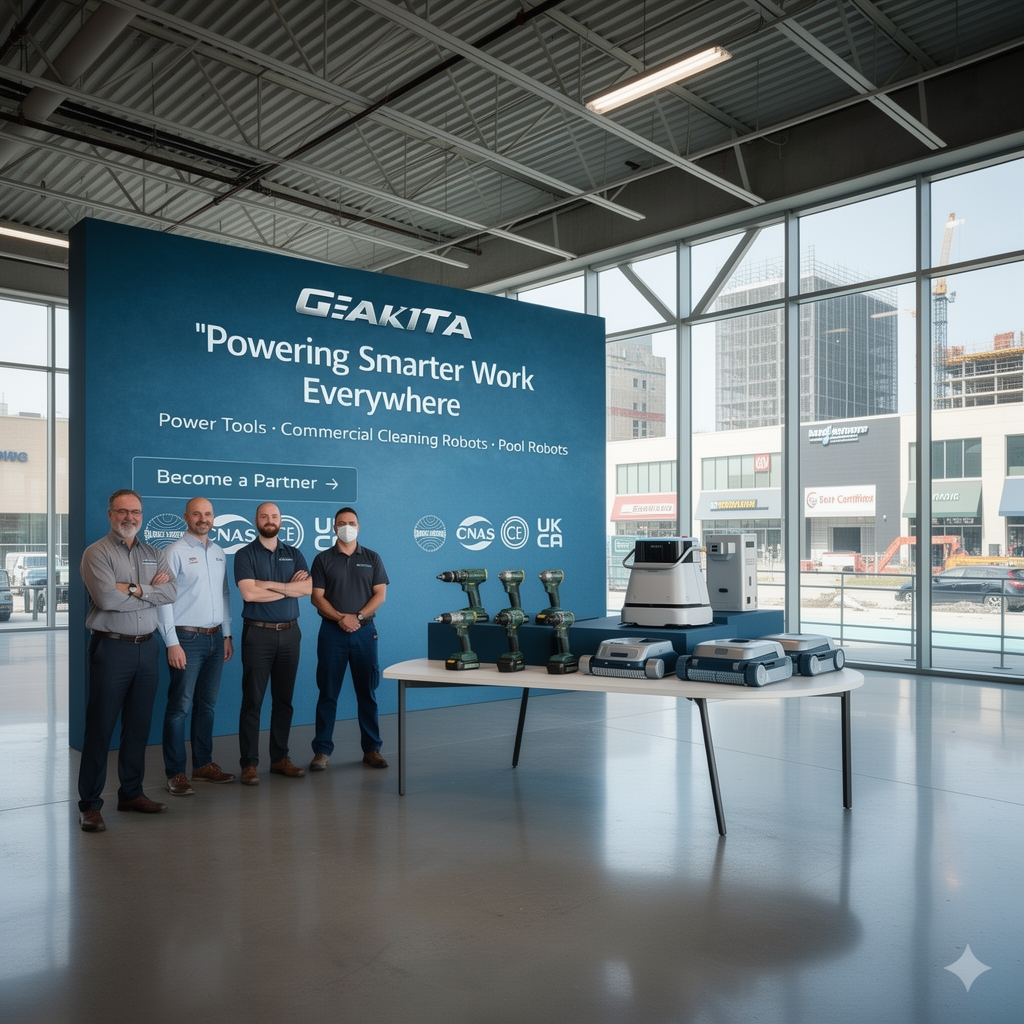
According to the product specification, the WDC-C2 targets hospitals, malls, campuses, exhibition halls, offices, airports, hotels, and restaurants – all hard-floor environments with moderate to high foot traffic. For example, a hospital can deploy the robot in corridors and waiting areas at night, leveraging the long runtime (up to 12 hours at low speed) to cover large areas without disrupting patient care. Hotels can use the swappable battery to clean lobbies and conference rooms continuously throughout the day. The compact footprint (503 mm square) enables operation in narrower aisles typical of retail and office layouts.
Market Trend Analysis: The Shift to Certified, Data-Driven Procurement
Across the commercial cleaning robot industry, procurement is moving away from relationship-based sourcing toward evidence-based evaluation. CE certification, once a checkbox, is now scrutinized – buyers ask for the certificate number and check its scope. Simultaneously, specifications like navigation accuracy and battery swapping are becoming standard differentiators. Geakita’s entry into commercial robotics from a power-tool manufacturing background (founded in 2009, 40,000 m² factory, 300+ employees) provides a production infrastructure that supports quality control and cost management. The company reports an annual output of 100,000 units across all product lines, with 20% exported to Europe, Southeast Asia, and the Middle East.
Comparison with Traditional Solutions: An Honest Assessment
Compared to manual cleaning teams, the primary advantage of the WDC-C2 is consistency and labor cost reduction. A single robot can work autonomously for up to 12 hours, freeing staff for higher-value tasks. However, one honest limitation is that the ±1 cm navigation accuracy, while adequate for most indoor hard floors, may struggle in highly cluttered or irregularly shaped spaces where human cleaners can adapt instantly. Additionally, the 440 mm cleaning width is narrower than ride-on scrubbers, meaning very large warehouses may require multiple units or longer operating times.
Future Outlook: Certification as a Gateway to Scale
As more manufacturers enter the commercial cleaning robot space, CE certification will likely evolve into a minimum requirement, with additional marks (UKCA, FCC, etc.) needed for broader market access. Buyers should expect suppliers to provide transparent documentation for every target market. Geakita, with its established production capacity and growing international distribution, is positioned to scale its robotic offerings if it continues to invest in certification depth and after-sales support (1-year warranty, 7×24 technical support, spare parts supply).
Frequently Asked Questions
Q: What CE standard does the commercial cleaning robot comply with?
A: The commercial cleaning robot is certified to CE under number KTi250704E245C, issued by KTi, applicable to the EU market and compliant with the EN IEC 55014 61000 standard for electromagnetic compatibility.
Q: What is the battery life and charging time of the WDC-C2?
A: The WDC-C2 has a 1 kWh swappable battery with a 3-hour charging time. Its runtime ranges from 5 to 12 hours depending on operating speed and cleaning mode.
Q: Can the robot operate in narrow corridors?
A: Yes, with dimensions of 503 × 503 mm and a cleaning width of 440 mm, it can navigate corridors as narrow as approximately 600 mm, typical of office and hotel environments.
Q: Is the robot suitable for wet floor cleaning?
A: Yes, it is a scrubber-dryer robot with a 10 L clean water tank and 10 L wastewater tank, designed to scrub and recover water, leaving floors dry.
Q: What after-sales support does Geakita provide?
A: Geakita offers a 1-year global warranty, 7×24 technical support, on-time replacement for defective units, and spare parts supply (as stated in their corporate profile for power tools; similar terms are offered for commercial robots on a case-by-case basis).
For a comprehensive overview of Geakita’s product portfolio and manufacturing capabilities, download the corporate profile and product catalog: Geakita Corporate Profile & Product Catalog 2026 (PDF).