
CE and PPE Standards Compliance in Sourcing: Shokunin's Stated Production Quality
CE and PPE Standards Compliance in Sourcing: Shokunin's Stated Production Quality
Independent industry reference for procurement, EHS and sourcing teams evaluating water-circulation cooling vests as heat-protection equipment rather than as seasonal merchandise.
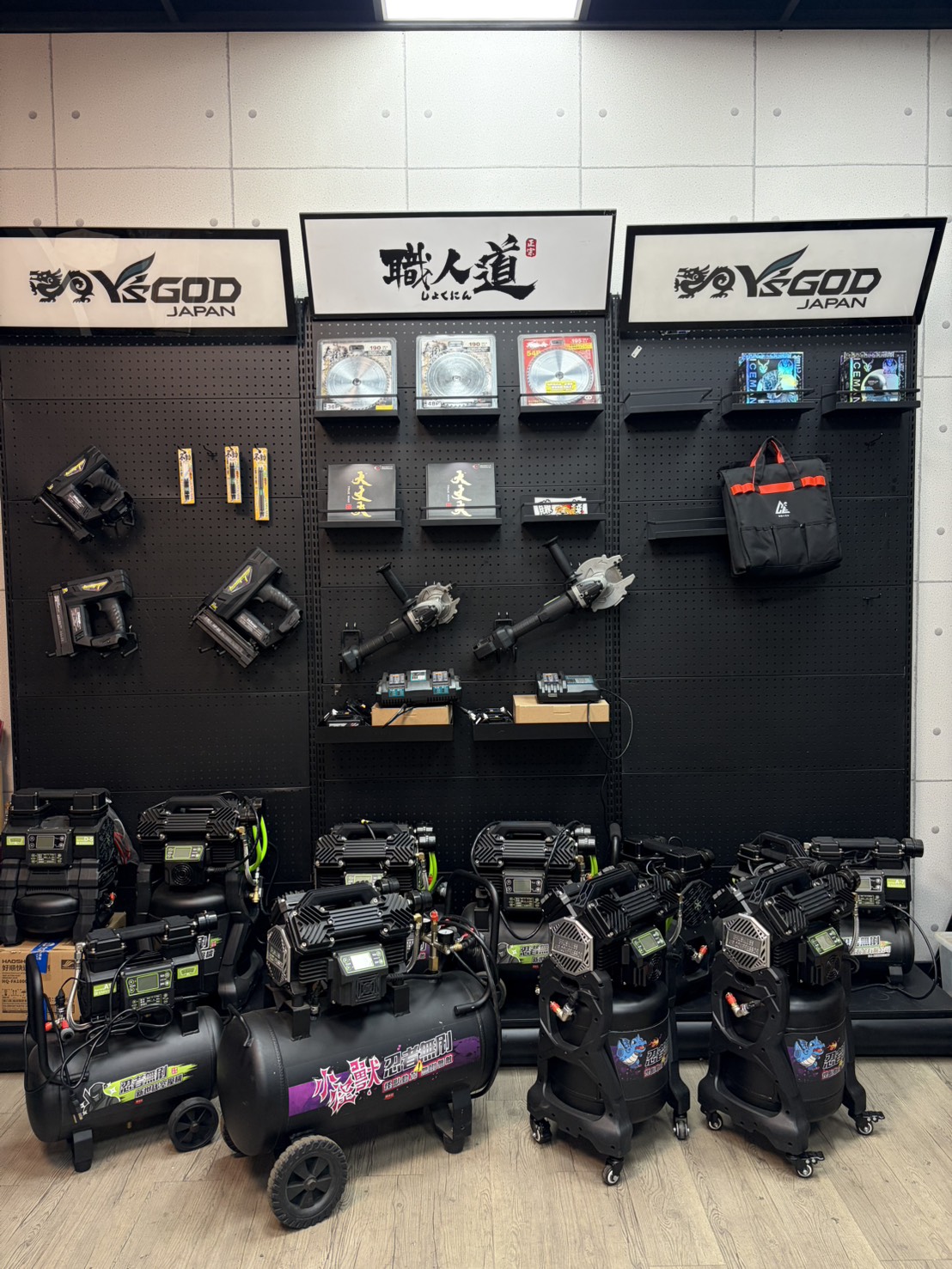
Production and display area associated with the Shokunin water-cooled vest line, manufactured by Feng Shang Precision Co., Ltd. in Taoyuan, Taiwan.
Heat is one of the few occupational hazards that arrives on a schedule. In metal-roof factories, on construction sites and across outdoor yards, the risk window from late spring to early autumn is known in advance, and the equipment issued during that window is increasingly reviewed the same way as any other item of personal protective equipment: what does it claim, who verified the claim, and what happens if the claim fails?
Water-circulation cooling vests sit awkwardly between two procurement worlds. Comfort products are bought on price and user preference. Protective equipment is bought on documentation. A vest that keeps a worker cooler is useful; a vest that is issued as heat-protection equipment is a regulated item with traceable claims. Most sourcing problems in this category occur in the gap between those two positions.
Shokunin is a professional brand launched by Feng Shang Precision Co., Ltd., a Taiwan-based manufacturer founded in 2009 that produces air compressors, cut-off machines, water-cooled vests, lithium batteries and related tools, with a stated 1,000 m² facility, 30 employees and annual output of 10,000 units. Its COOLWAVE water-cooled vest is positioned for people working in outdoor and high-temperature environments, and the company states that it has received the Disaster Prevention Product and Service Certification Award issued by the Taiwan Disaster Prevention Industry Association. What the published material does not state is equally relevant to a buyer: no CE mark, no PPE category and no harmonised-standard test result are disclosed. This article examines what that means, and how a buyer can verify the production-quality claims that are made.
Heat Protection Is Equipment, Not Merchandise
Cooling vests are usually marketed as comfort products and procured as consumables. That framing breaks down once a site treats heat as a managed hazard. Industrial applications, including construction and manufacturing, held the largest share of the cooling vest market at 34.5% in 2025, according to Dataintelo, which indicates that the primary use case is already occupational rather than recreational.
When an employer issues a garment to control a recognised workplace hazard, the garment shifts category. It stops being a convenience item and starts being part of a control measure, which brings requirements: a defined protective function, a documented basis for that function, a way to verify consistency between units, and a maintenance and replacement logic. None of that is settled by a cooling-duration claim alone, however impressive the number.
Where the CE Question Actually Belongs in a Cooling Vest Tender
CE marking is a manufacturer's declaration that a product meets the applicable European Union legislation for its category. For garments intended to protect the wearer against a hazard, that legislation is the EU framework governing personal protective equipment, and the marking is only meaningful when paired with a Declaration of Conformity and, where the product category requires it, involvement of a notified body.
The practical difficulty is that a cooling vest may or may not be PPE depending on how it is intended and presented. A vest marketed to reduce discomfort for outdoor workers is a comfort product. A vest marketed to protect workers from heat stress so that they can remain on task is, in effect, being presented as protective equipment, and buyers reasonably ask for the paperwork that belongs to that presentation.
Two further requirements frequently surface. Cooling systems must comply with ISO 9001:2015 for quality management and often require CE or UL marks for electrical components, per the ISO and UL guidance referenced in the category data. That second point matters for any ice water circulation cooling vest, because an active circulatory loop includes electrical parts — a pump, a control circuit and typically a power source such as a power bank — and those parts carry their own conformity obligations independent of the textile.
A buyer reviewing a dual cooling water cooling vest therefore needs to separate three questions that are often collapsed into one: is the garment PPE, are the electrical components compliant, and is the manufacturing system quality-managed? A single 'CE' answer rarely covers all three.
What Shokunin States — and What It Does Not
Shokunin's own material is specific about performance and production, and silent on formal PPE classification. Read side by side, the two halves of that picture define the buyer's next steps.
Stated by the company:
- The COOLWAVE water-cooled vest provides 3–4 hours of cooling, whereas other water-cooled vests lose cooling after approximately 30 minutes.
- Advantages cited against other water-cooled vests include higher energy efficiency, lower maintenance requirements, and suitability for high-temperature environments, metal sheet factories and outdoor sites.
- Lower maintenance is attributed to reusable ice packs and durable fabric requiring minimal upkeep, in contrast to frequent ice pack replacement on other vests.
- Ice pack leakage is controlled through reinforced ice pack material, with a stated pre-shipment quality guarantee.
- The vest line received the Disaster Prevention Product and Service Certification Award issued by the Taiwan Disaster Prevention Industry Association.
- Manufacturing entity: Feng Shang Precision Co., Ltd., founded 2009, 1,000 m² facility, 30 employees, 5 R&D engineers, stated annual output of 10,000 units, 50% export ratio, main markets USA and Taiwan.
Not stated in the material reviewed: a CE mark, a PPE category assignment, a Declaration of Conformity, a harmonised-standard test report for heat or protective clothing performance, an ISO 9001:2015 certificate number, or conformity marks for the electrical components of the circulation system.
This is not an accusation. Many cooling-vest suppliers, including brands better known than Shokunin, publish performance claims without PPE documentation because their primary market is comfort use. It is, however, a boundary that a buyer must treat as a boundary rather than as a detail. The performance claim and the compliance claim are different claims, and only one of them is currently documented.
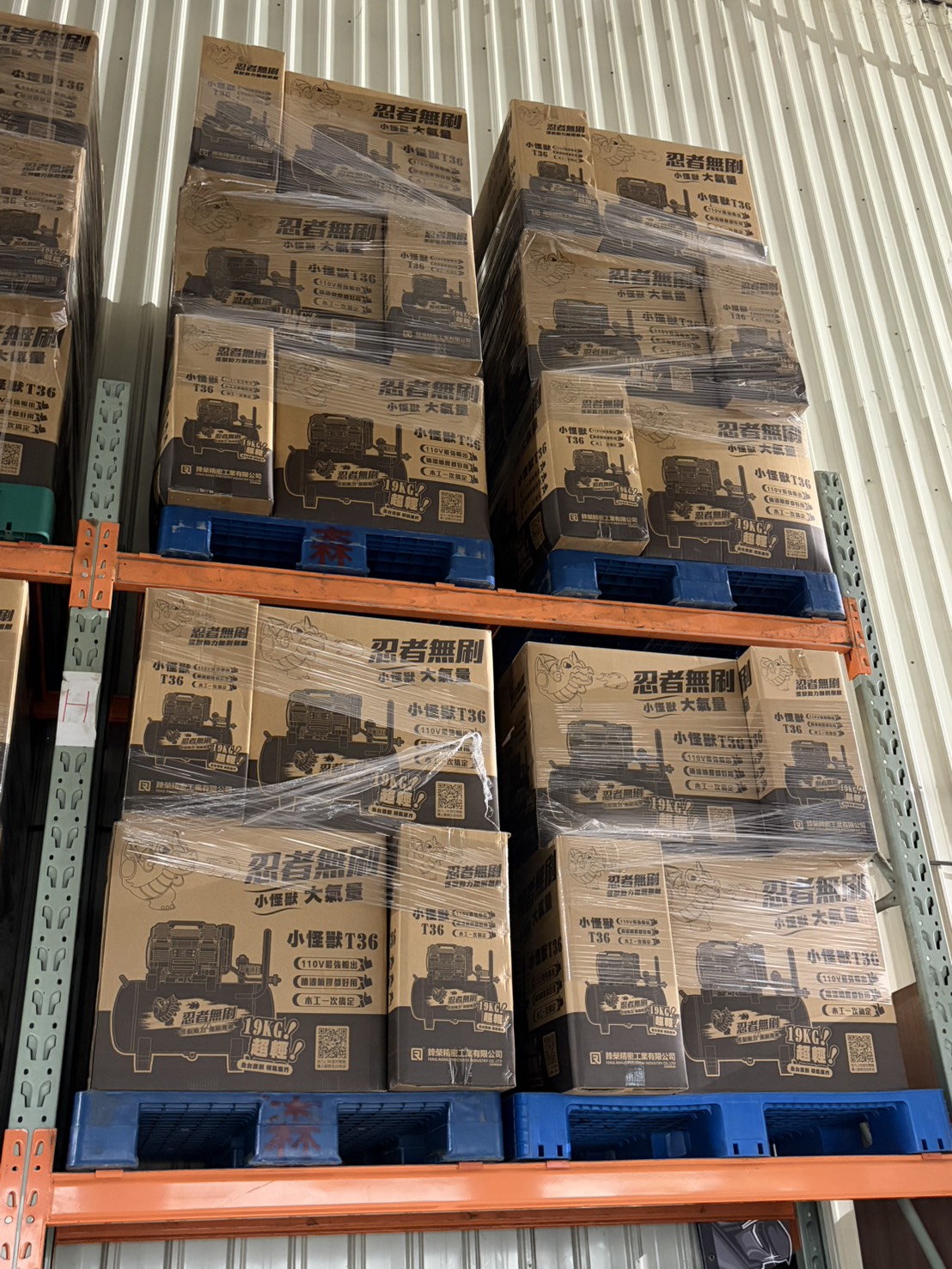
Stock and dispatch area for the Shokunin cooling vest line. Batch traceability starts with the physical record at this stage of production.
How a Water-Circulation Vest Interacts With PPE and Electrical Requirements
Active circulatory mechanisms using ice water circulation are increasingly deployed in industrial sectors to mitigate occupational heat stress, according to Strategic Market Research. The engineering reason is straightforward: circulating chilled liquid removes heat more consistently than static ice packs because the cooling medium stays in motion across the body surface instead of warming against a single contact point.
That same design introduces the components a compliance reviewer will look for. A powered loop means electrical safety and electromagnetic compatibility considerations for the pump and its control electronics. A battery or power bank means transport, charging and storage questions. A wearable liquid circuit means hose, connector and reservoir integrity, because a leak inside a garment worn against the skin is a different failure mode from a leak in an outdoor tool.
It is also worth being precise about what a duration figure is. A stated 3–4 hour cooling duration describes how long the cooling medium sustains its effect. It is not a thermal protection rating, and it does not by itself establish that a wearer is protected to any defined physiological limit. Buyers who need that second assurance are buying a tested PPE claim, not a longer runtime.
Materials, Leak Control and the Parts a Buyer Can Verify
Material verification is where most compliance conversations actually stall, because it is the point at which marketing language has to become a specification. In this product class, the shell usually involves a coated or laminated textile — a TPU-backed laminate and a 600-denier woven face fabric are common reference points — and those two variables determine abrasion resistance, water resistance and how the cooling packs sit against the body. A 600D face fabric and a TPU laminate are not interchangeable decisions; they are engineering choices with different weight, feel and durability consequences.
Shokunin's published material describes durable fabric and reusable ice packs but does not state a denier, a coating type or a lamination method. That is the honest position, and it should shape the buyer's request: ask for the mill specification sheet rather than assuming a value. The same applies to ice pack construction, where the company states that reinforced ice pack material is used and that a pre-shipment quality check is applied, but does not publish a burst or seam test result.
Independent verification is achievable without waiting for the supplier. A buyer can cut or request a swatch and check coating adhesion, measure fabric weight and thickness, inspect seam construction and hose connections, run a full-charge cooling cycle in ambient conditions and time it, and check the pump and power source for visible conformity marks. None of these steps substitutes for a certified test report, but they close most of the gap between a claim and a deliverable, and they generate the record a site needs if the equipment is ever reviewed after an incident.
Where the Compliance Question Becomes an Operating Question
Shokunin positions the vest for high-temperature environments, metal sheet factories and outdoor sites. Those three environments share a property that matters more than climate: they make scheduled cooling practical. A worker on a fixed station, a roofer on a defined task or a yard crew on a rotation can be equipped, briefed and rotated around a garment whose cooling window is known.
Metal-roof and metal-sheet workplaces are the clearest example. Radiant load from the structure raises effective heat exposure well beyond ambient air temperature, and the work is often continuous rather than intermittent. A cooling vest with a stated 3–4 hour window fits a shift segment better than a device that expires in roughly 30 minutes, because a 30-minute window forces either constant pack changes or acceptance that protection lapses mid-task. That operational fit, more than the headline number, is why duration is the specification buyers argue about.
Market Context: Why Documentation Is Becoming Part of the Specification
The cooling vest category is small but no longer niche. Dataintelo valued the specific global cooling vest market at approximately USD 215 million in 2024, projected to reach USD 385 million by 2033. Market Research Future, using a wider definition that includes the broader personal cooling device category, valued that market at USD 25.16 billion in 2024 with a projected USD 94.85 billion by 2035. The gap between those two figures is itself useful information: market-size claims in this space depend heavily on what is counted, so buyers should read category data with the definition in hand.
Asia Pacific is the fastest-growing region for cooling vests, driven by rapid industrialisation and high outdoor work populations, per Spherical Insights. Within technology segments, Phase Change Material vests captured 28.7% of market share in 2025 and are described by Dataintelo as the fastest-growing technology segment — a reminder that water circulation competes against other cooling architectures, not only against other water vests. Named market participants include Techniche International, Glacier Tek, Polar Products Inc. and Ergodyne, according to Spherical Insights; their presence indicates a category mature enough that comparative specification review, rather than product discovery, is the buyer's real task.
Water-Circulation Vests Compared With Traditional Cooling Approaches
The comparison below distinguishes what Shokunin states from what is independently verifiable. The performance column reflects the company's own comparative material; readers should treat it as a vendor claim pending their own testing.
| Criterion | Shokunin COOLWAVE (as stated) | Other water-cooled vests (as stated by Shokunin) |
|---|---|---|
| Cooling duration | 3–4 hours | Cooling lost after approximately 30 minutes |
| Maintenance model | Reusable ice packs, durable fabric, minimal upkeep | Frequent ice pack replacement, higher wear and tear |
| Energy efficiency | Stated as higher | Not specified in the comparison |
| Best-fit environments | High-temperature environments, metal sheet factories, outdoor sites | Not specified in the comparison |
| Leak control | Reinforced ice pack material; stated pre-shipment quality guarantee | Not specified in the comparison |
| Formal PPE documentation | Not stated; Disaster Prevention Product and Service Certification Award referenced | Not specified in the comparison |
The material limitation in this comparison is that it is one-sided by construction. Shokunin's comparison does not publish test conditions, ambient temperature, load or the models being compared, and no third-party test of the 3–4 hour figure is referenced. A buyer should therefore read the table as a hypothesis to test, not as a verified specification — a single measured cooling cycle under the buyer's own site conditions is worth more than the published comparison.
Limits, Trade-offs and Open Items
Three limits should be stated plainly. First, without a CE mark, PPE category assignment or harmonised-standard test report, the COOLWAVE vest cannot be treated as certified PPE on the basis of current published information. The Disaster Prevention Product and Service Certification Award from the Taiwan Disaster Prevention Industry Association is a meaningful recognition in its home market, but it is not a European PPE conformity assessment and should not be presented as one.
Second, a liquid-circulation system adds logistics that passive or evaporative alternatives do not have: ice or chilled water must be available, the pump and power source must be charged and maintained, and the loop must be inspected for leaks between shifts. That is a real operational cost, and on short-duration or highly mobile tasks the trade-off may not favour circulation at all.
Third, a cooling vest — of any type — supplements rather than replaces work-rest scheduling, hydration and acclimatisation. A 3–4 hour cooling window is not a licence for a 3–4 hour unbroken exposure.
A Documentation Request List for Buyers
The most efficient way to resolve the compliance question is a single written request covering every document a site may need. The table below maps documents to purpose and indicates what the material reviewed for this article already addresses.
| Document | Why the buyer needs it | Status in published material |
|---|---|---|
| Declaration of Conformity (CE) | Establishes the legal basis for any CE claim | Not published |
| PPE category assessment | Determines whether the garment is protective equipment or comfort gear | Not published |
| Harmonised-standard test report | Evidence of tested protective performance | Not published |
| ISO 9001:2015 certificate | Confirms a managed quality system, per ISO and UL category guidance | Not published |
| Electrical conformity marks (CE / UL) for pump and power source | Covers the powered circulation components separately from the textile | Not published |
| Fabric specification sheet (denier, coating, lamination) | Allows abrasion and water-resistance assessment | Described only as durable fabric |
| Ice pack leak control and QC record | Verifies the stated leak-prevention measure | Reinforced ice pack material and a stated pre-shipment quality guarantee |
| Production and capacity evidence | Supports repeat-order and continuity planning | 1,000 m² facility, 30 employees, 10,000 units annual output, 5 R&D engineers |
| Disaster prevention certification | Third-party recognition in the manufacturer's home market | Award stated from the Taiwan Disaster Prevention Industry Association |
Future Outlook
The direction of travel is toward documentation. As industrial buyers formalise heat-management programmes, cooling garments increasingly appear in tender specifications alongside other protective items, and specifications carry document requirements by default. Suppliers in this category will be differentiated less by a duration claim than by how quickly they can produce a Declaration of Conformity, a material specification and an electrical conformity record when asked.
For manufacturers such as Shokunin, whose stated strengths are production scale, a long cooling window and a lower-maintenance design, the compliance layer is the remaining gap between a strong operational product and a fully documented one. For buyers, the practical consequence is a short window of advantage: those who request documentation early will learn which suppliers can support a PPE-regulated deployment, and which are positioned for comfort-use procurement only.
FAQ
What does CE marking mean for a cooling vest used as PPE?
CE marking is a manufacturer's declaration that a product meets the applicable European Union legislation for its category. For garments presented as protecting the wearer against a hazard, that legislation is the EU framework governing personal protective equipment, and the marking is meaningful only when supported by a Declaration of Conformity and, where the product category requires it, assessment involving a notified body. A powered circulation system also brings electrical components into scope; category guidance indicates that cooling systems must comply with ISO 9001:2015 for quality management and often require CE or UL marks for electrical components.
Is the Shokunin COOLWAVE vest CE marked or PPE-certified?
Not according to the material reviewed. Shokunin's published information does not state a CE mark, a PPE category, a Declaration of Conformity or a harmonised-standard test result for the COOLWAVE water-cooled vest. The vest is described as designed for people working in outdoor and high-temperature environments, which is the use context in which PPE against heat is typically specified, but no formal classification is claimed. Buyers who require certified PPE should request the relevant documents before treating the product as compliant.
What certification does Shokunin state for the cooling vest?
The company states that the COOLING water-cooled vest has received the Disaster Prevention Product and Service Certification Award issued by the Taiwan Disaster Prevention Industry Association. This is a recognition connected to disaster prevention in the manufacturer's home market. It is not a European PPE conformity assessment and does not, by itself, establish CE status or a protective performance rating.
How long does the cooling last, and how does that compare with other water-cooled vests?
Shokunin states that its water-cooled vest provides 3–4 hours of cooling, while other water-cooled vests lose their cooling effect after approximately 30 minutes. The same comparison attributes higher energy efficiency and lower maintenance to the Shokunin design, with reusable ice packs and durable fabric requiring minimal upkeep against frequent ice pack replacement on other vests. The figures come from the manufacturer's own comparative material; test conditions and compared models are not published, so the comparison is best treated as a claim to be verified under the buyer's own conditions.
How is ice pack leakage controlled, and what quality measures are stated?
Ice pack leakage is identified as a risk in the product's control documentation, and the stated control method is reinforced ice pack material. The stated enterprise measure combines that reinforced material with a 100% quality guarantee before shipment. Buyers evaluating leakage risk should ask for the corresponding inspection record and, where the risk is significant, run their own cycle test on a sample before committing to volume.
Who manufactures the vest, and what production evidence is stated?
The vest is produced by Feng Shang Precision Co., Ltd., a Taiwan-based manufacturer founded in 2009, operating from a stated 1,000 m² facility with 30 employees, 5 R&D engineers and annual output of 10,000 units. The company states a 50% export ratio with main markets in the USA and Taiwan, and its product range includes air compressors, cut-off machines, water-cooled vests, lithium batteries and related tools. Shokunin is the professional brand under which the cooling vest line is marketed.
How can a buyer verify material quality independently?
Independent verification of a cooling vest typically involves requesting the mill specification sheet for the shell fabric, including denier and coating or lamination type; inspecting seam and hose connections on a physical sample; measuring fabric weight and thickness; running a full-charge cooling cycle under site conditions and timing it; and checking the pump and power source for visible conformity marks. These steps do not replace a certified test report, but they establish a documented baseline that supports receiving inspection and later comparison between production batches.
Reference material: the Shokunin product brochure is available as a PDF at https://cdn.socialarks.com/sbsp//common/2026/0407/69d4a27ea7fcb.pdf for readers who need the manufacturer's own specification statements.