
CECI Insulator Range vs. Alternatives: A Buyer's Side-by-Side Analysis
Overhead line and rail electrification projects rarely fail because a procurement team chose the wrong material family. They fail because two candidate insulators were compared on values that were never equivalent. A porcelain disc with a 70 kN electromechanical failing load, a glass line post rated at 10 kN cantilever and a polymer long rod rated at 5 kN bending load can all sit on the same shortlist, described by the same word — insulator — while carrying numbers that cannot be subtracted from one another.
This side-by-side analysis sets out four published items from the China Energy and Chemical Industry Co.,Ltd (CECI) range — the porcelain U70BP/146D disc, the glass 70B line post, the polymer FXB-24-70-785mm suspension long rod and the QP-7 ball-head suspension ring — and explains what each published value actually governs, where the figures are directly comparable, and where a buyer must go back to a drawing or a type test report before a decision is defensible.
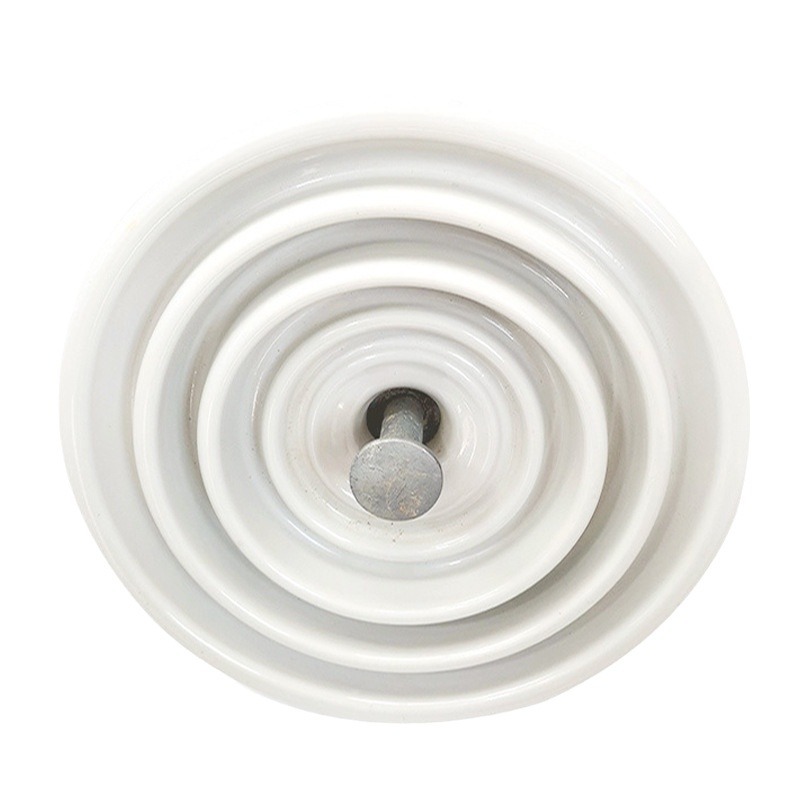
Porcelain insulator U70BP/146D: 146 mm structural height, 255 mm nominal disc diameter, 450 mm minimum arcing distance, 70 kN rated electromechanical failing load.
1. The Buyer Problem: One Word, Several Duty Classes
Insulator model codes compress several independent properties into a short string, and a buyer who reads that string as a single ranking number is comparing the wrong things. Three of the four references below contain a figure in the seventies, and none of them means the same thing.
- In U70BP/146D, the 70 is the porcelain unit's rated electromechanical failing load, expressed in kilonewtons, with 146 designating the structural height.
- In FXB-24-70-785mm, the digits belong to a compound code structure that carries voltage class, load class and unit length together; the published mechanical value for this unit is a rated bending load of 5 kN, not a failing load.
- In 70B, the glass unit is a line-post type whose published mechanical value is a 10 kN cantilever load — a bending figure measured at the base, not a tensile failing load.
- In QP-7, the 70 kN rated failing load belongs to a hardware component, a ball-head suspension ring, rather than to an insulating body.
The same trap appears in electrical figures. A creepage distance of 255 mm on the glass 70B and a minimum creepage distance of over 1,050 mm on the polymer FXB-24-70-785mm look like a direct performance gap, but they are quoted for different insulation classes, different duty positions and different rated voltages. Reading them as "four times better" would be a mistake.
The opportunity for a project buyer is that the divergence itself is useful. Once the comparison is rebuilt around duty classes instead of material names, the specification exercise becomes a short series of verifiable checks: which mechanical metric does this position impose, which creepage does the pollution environment demand, which withstand voltages does the insulation coordination study require, and which coupling interface does the tower hardware present.
2. What the CECI Range Contains
China Energy and Chemical Industry Co.,Ltd (CECI) is a Zhengzhou-based manufacturer and exporter of power line insulators and associated hardware, with a catalogue that covers polymer (composite) insulators, porcelain insulators, glass insulators, metal fittings for insulators, and overhead line hardware fittings and accessories, alongside surge arresters, fuse cutouts, end fittings and FRP rods.
The published company figures give a buyer the first layer of qualification data. The manufacturing site covers 30,000 m² and runs an annual output of 8,000,000 units, with a workforce of about 100 people and an eight-engineer R&D team. The export ratio is stated at 95%, with products shipped to more than 40 countries and principal markets listed as Russia, Vietnam, France, Spain, Italy, Türkiye, Brazil, Poland, Indonesia and Saudi Arabia.
For evaluation-stage buyers, the commercial and quality terms matter as much as the product list. Production runs in OEM and ODM modes, and customization is offered on voltage, creepage distance, lightning impulse withstand voltage, bending load, colour and logo. Monthly capacity is quoted at 500 tons or 100,000 pieces, lead time at 30–45 days, minimum order quantity at 500 units, quality control at 100% testing, and after-sales support as remote support.
For a project buyer, those four numbers — capacity, lead time, MOQ and test regime — translate directly into procurement risk. A 100,000-piece monthly ceiling and a five-week lead time are relevant when a substation or rail package has a fixed energization date; a 500-unit MOQ is relevant when a utility is running a pilot section before a framework order.
3. Technical Explanation: Four Units, Four Measurement Bases
The table below reproduces the published values for the four CECI items and, in the final column, states what a specifier should do with each one. It is deliberately organised by measurement basis rather than by material, because the basis is what determines comparability.
| Reference | Material | Mechanical value | Electrical values | Geometry / interface |
|---|---|---|---|---|
| Porcelain insulator U70BP/146D | Porcelain | Rated electromechanical failing load 70 kN | Not published in the current data set | Structural height 146 mm; nominal disc diameter 255 mm; minimum arcing distance 450 mm; connection structure code 16 |
| Glass insulator 70B (line post) | Glass, brown | Cantilever load 10 kN | Power frequency wet withstand 45 kV; dry withstand 65 kV; puncture voltage 135 kV | Creepage distance 255 mm |
| Polymer insulator FXB-24-70-785mm (suspension long rod) | Silicone housing, fibreglass core, carbon steel / C45 fittings | Rated bending load 5 kN | Rated voltage 35 kV; lightning impulse withstand >230 kV; power frequency 1-minute wet withstand >95 kV | Minimum creepage distance >1,050 mm |
| Ball-head suspension ring QP-7 | Hot-dip galvanized steel | Rated failing load 70 kN | Not applicable | Designated size of coupling 16; weight 0.3 kg |
3.1 Porcelain U70BP/146D
This is a disc-type porcelain unit. Its published mechanical value, the 70 kN rated electromechanical failing load, is a type-test figure rather than a service load: in IEC-style terminology it describes the load at which the unit fails under combined mechanical and electrical stress. Specifiers normally apply their own safety factor and verify the required mechanical and electrical withstand values separately, which means the number is a ceiling for comparison, not a working limit.
Its arcing distance of 450 mm and nominal disc diameter of 255 mm describe the physical envelope, which matters when string length and tower clearances are being fixed. Note the boundary inside this data set: for U70BP/146D the published values cover arcing distance, disc geometry and failing load, but not a creepage distance. A buyer specifying a pollution class therefore needs the creepage figure from the drawing or the type test documentation rather than inferring it from the disc diameter.
3.2 Glass 70B Line Post
The glass 70B is a line-post configuration, and that changes the mechanical question entirely. A line post carries conductor load as bending at its base, which is why its published figure is a 10 kN cantilever load rather than a tensile failing load. Its electrical data set is comparatively complete: 45 kV power frequency wet withstand, 65 kV dry withstand and 135 kV power frequency puncture voltage, with a 255 mm creepage distance on a brown glass body.
Glass also carries an inspection property that buyers weigh heavily in line-post and string applications: a failed glass dielectric is visible from the ground without climbing or testing, because the disc shatters. That is an operational value, not a catalogue value, and it reduces the cost of condition assessment on long rural sections.
3.3 Polymer FXB-24-70-785mm
The composite long rod is the item in this set with the highest published insulation values. It is rated 35 kV, with a lightning impulse withstand voltage above 230 kV and a power frequency one-minute wet withstand voltage above 95 kV. Its minimum creepage distance is published as greater than 1,050 mm — on a 35 kV rating that corresponds to roughly 30 mm of creepage per kV of rated voltage, a design direction associated with polluted, humid or coastal environments.
The construction explains the handling difference that field crews report. The unit combines a silicone housing over a fibreglass core with carbon steel / C45 fittings; a one-piece long rod replaces a multi-disc string, which removes joints from the assembly and reduces the number of components lifted to a tower position. Composite units are generally lighter and easier to handle at height than ceramic equivalents, which shortens installation work, though the published data set here does not include a unit weight figure for the long rod.
3.4 Ball-Head Suspension Ring QP-7
The QP-7 is not an insulator; it is the hot-dip galvanized steel link that connects the insulating string to the tower structure. Its published values are a 70 kN rated failing load, a designated coupling size of 16 and a weight of 0.3 kg. In a side-by-side comparison, hardware is where apparently equivalent strings stop being equivalent: if the ring is rated below the string, the assembly is rated below the string.
Coupling size deserves the same attention. The QP-7 is published with a designated coupling size of 16, and U70BP/146D is published with a connection structure code of 16. Those two values are the pair a buyer verifies for interchangeability, together with the mechanical ratings on each side of the joint.
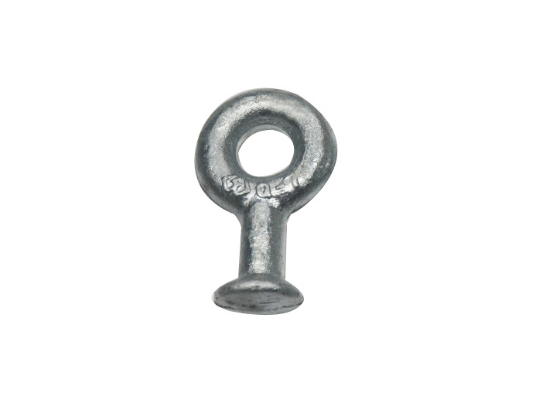
Ball-Head Suspension Ring QP-7: hot-dip galvanized steel, coupling size 16, rated failing load 70 kN, weight 0.3 kg.
4. Application Fit: Where These Units Are Used
The application profile behind this range is public electrical equipment operating continuously, 24 hours a day, in conditions that include high temperature, high humidity, harsh outdoor climate, UV aging, dust storms with rapid dust accumulation and wind-and-sand abrasion of the shed surfaces, and instantaneous impulse overvoltage. The stated project types are rural and urban power grid upgrading, rail transit electrification, high-voltage transmission lines, substations and converter stations, and wind power projects, with supporting equipment such as power distribution cabinets. The scenario is described as common in Spain, France, Italy and Türkiye.
That profile explains why the required properties are listed as anti-aging and UV-resistant performance, high mechanical strength, high insulation performance, light weight, good bending resistance, water penetration resistance, stable metal fittings with anti-electrochemical corrosion, and non-toxic, environmentally friendly construction. It also shows which of the four units suits which position: the polymer long rod against pollution, humidity and impulse overvoltage on 35 kV class lines; the porcelain disc in tensile suspension strings tied to tower hardware through a matching fitting; the glass line post on line-post duty where cantilever load governs and visual failure indication is valued.
Project-level evidence for the composite route comes from a three-year, 10,000-unit application involving utility companies, power EPC contractors, railway operators and contractors, distributors and resellers in Brazil, Italy, Türkiye and Vietnam. The units were used for mechanical support and insulation on transmission lines, substation insulation, railway catenary or ground equipment insulation, and fuse and overvoltage protection. The recorded result is that using polymer and glass insulators can enhance line stability, reduce maintenance intensity and improve pollution resistance, with lightweight design, anti-pollution flashover and aging resistance, customizable end fittings and FRP rod core supply, and OEM/ODM support listed as the supporting strengths.
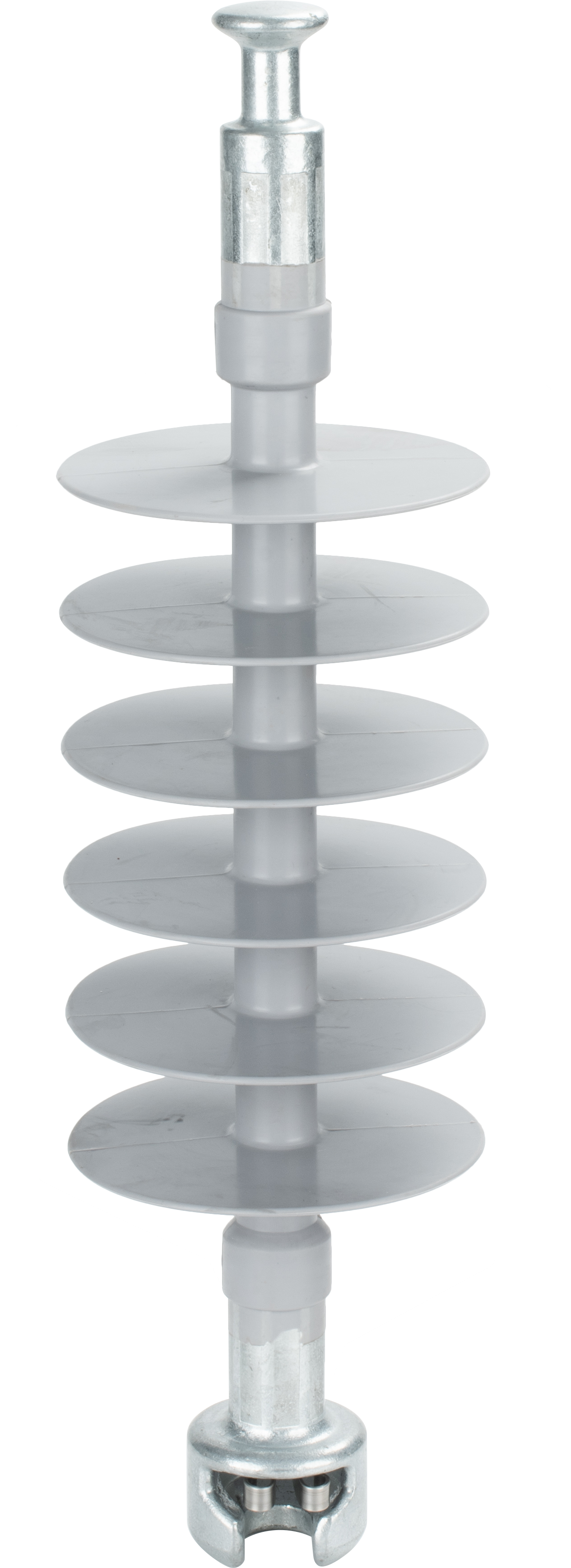
Polymer insulator FXB-24-70-785mm: rated 35 kV, lightning impulse withstand >230 kV, power frequency 1-minute wet withstand >95 kV, minimum creepage distance >1,050 mm, rated bending load 5 kN.
5. Market Trend Analysis: Why the Comparison Is Shifting
Third-party market research places the global electrical insulator market at USD 12.5 billion in 2023, projected to reach USD 18.4 billion by 2030 (Grand View Research). Within that, the composite insulator segment is valued at approximately USD 3.42 billion in 2024 and is expected to reach USD 5.87 billion by 2030, a CAGR of 9.1% (Strategic Market Research). Mordor Intelligence reports that suspension insulators captured a 48.4% share of the composite insulators segment in 2024.
Those figures matter to a buyer for one practical reason: a faster-growing composite segment means more suppliers, more model variants and more pressure on specification discipline. The comparable table in Section 3 becomes more valuable, not less, as the field widens — because a rising number of catalogue entries will quote different metrics under similar-sounding names.
A second trend runs in the same direction. Composite insulators for high-voltage overhead lines above 1,000 V AC are governed by IEC 61109 (latest edition 2025), while ceramic or glass insulators for overhead lines above 1,000 V nominal voltage are tested under IEC 60383-1. When a segment grows quickly and the governing standards are explicit, procurement tends to move from catalogue comparison to document comparison, and type test reports become the deciding evidence.
6. Comparison with Traditional Solutions: What Porcelain and Glass Still Do Better
Material trade-offs are real in both directions, and the published data supports both sides.
Porcelain and glass retain two advantages that polymer units do not claim to replace. The first is thermal and inorganic stability: a ceramic or glass insulating body is not an organic polymer and therefore does not depend on a formulated housing for its ageing behaviour in the way a silicone-housed long rod does. The second is inspection. A failed glass disc is visible from the ground; a ceramic string can be assessed by standard disc-counting and voltage-distribution practice. On long rural lines with limited access, that visibility has a direct effect on inspection cost.
Polymer units answer a different set of problems. A one-piece silicone-housed long rod with a fibreglass core and carbon steel / C45 fittings removes the multiple joints of a disc string, is generally lighter to handle at height, and reduces the number of components that have to be lifted and torqued per position. In the three-year, 10,000-unit application cited above, the recorded outcome for polymer and glass insulators was reduced maintenance intensity and improved pollution resistance, alongside line stability.
Where the comparison stops being valid. Four boundaries should be stated before any conclusion is drawn from this article.
- The FXB-24-70-785mm is published with a rated bending load of 5 kN. That is a modest mechanical rating, and positions that impose higher bending or cantilever duty need a different unit. This range does not make polymer a universal substitute for ceramic strings on mechanical grounds alone.
- The glass 70B is published with a 255 mm creepage distance as a line-post unit and the polymer long rod with a minimum creepage distance above 1,050 mm at a 35 kV rating. These belong to different insulation classes and cannot be read as a straight material-versus-material ratio.
- The published CECI data set for the porcelain U70BP/146D lists arcing distance, disc geometry and rated electromechanical failing load, but no creepage distance. Buyers specifying a pollution class should retrieve that figure from the drawing or type test report rather than infer it.
- The three-year, 10,000-unit outcome is project evidence of reduced maintenance intensity and improved pollution resistance on those networks. It is not a maintenance cost guarantee for a different line, a different pollution class or a different climate.
A further boundary applies to the material name itself. Anti-aging and UV-resistant performance appear as explicit requirements for these outdoor applications, which means the housing formulation and the fitting treatment — not the word "polymer" — determine service behaviour. The same logic applies on the metal side: the QP-7 is hot-dip galvanized and specified for stable, anti-electrochemical-corrosion performance, and fitting quality is what protects a correctly rated string.
7. Future Outlook
Three developments are likely to shape insulator procurement over the next several years, and each one is already visible in the data above.
First, the composite segment is projected to grow faster than the insulator market overall. If the 9.1% CAGR to 2030 holds, suspension long rods in the 35 kV class will compete for positions that were historically specified as short disc strings, which is exactly the substitution pattern the FXB-24-70-785mm represents.
Second, documentation will become the differentiator. With IEC 61109 (2025) governing composite insulators above 1,000 V AC and IEC 60383-1 governing ceramic and glass units above 1,000 V nominal, a supplier's ability to produce traceable type test evidence — not its catalogue headline — is what shortens a qualification cycle. Suppliers already operating OEM/ODM customization across voltage, creepage distance, lightning impulse withstand voltage, bending load, colour and logo are structured for that document-heavy phase of a project.
Third, mixed portfolios are likely to persist rather than converge. Grid upgrading, rail transit electrification, substation and converter station work, and wind projects appear together in the application data for this range, and they impose different dominant loads: pollution and impulse duty on transmission sections, cantilever duty on line-post positions, and inspection cost on long rural routes. A buyer who keeps the four-unit comparison table open during specification, and checks each metric against its measurement basis, will make fewer substitution errors than one who picks a material family first.
8. Frequently Asked Questions
What do the numbers in a CECI insulator model actually mean?
They are not a single ranking. In U70BP/146D the 70 is a rated electromechanical failing load of 70 kN and the 146 is the structural height in millimetres; in FXB-24-70-785mm the digits form a compound code covering voltage class, load class and unit length, and the published mechanical value for that unit is a rated bending load of 5 kN; in QP-7 the 70 kN is the rated failing load of a suspension ring, a hardware item rather than an insulating body.
Can a glass 70B line post replace a porcelain disc of the same load class?
Not on the published figures. The 70B is a line-post unit whose mechanical value is a 10 kN cantilever load, while U70BP/146D is a disc-type unit published with a 70 kN rated electromechanical failing load. The two figures describe different loading modes, so substitution requires a project-specific check of the imposed load direction, the required withstand voltages and the fitting interface.
Which unit suits a 35 kV line in a humid, polluted or dusty area?
The published creepage data points to the polymer FXB-24-70-785mm, which is rated 35 kV with a minimum creepage distance above 1,050 mm, a lightning impulse withstand voltage above 230 kV and a power frequency one-minute wet withstand voltage above 95 kV, and which is specified for anti-aging, UV-resistant performance. Dust-storm abrasion and impulse overvoltage are among the stated service conditions for this range. Final selection still depends on the project pollution class and the insulation coordination study.
How do I confirm that fittings such as the QP-7 will match an insulator?
Start with the published interface values. The QP-7 is listed with a designated coupling size of 16 and U70BP/146D with a connection structure code of 16, so those two numbers are the first pair to verify. Then check the mechanical ratings on both sides of the joint: the ring is rated at 70 kN failing load, and an assembly is limited by its lowest-rated component. Material protection also belongs in the check, since the ring is hot-dip galvanized steel for anti-electrochemical corrosion.
Which standards should the type test documentation reference?
For composite insulators used on high-voltage overhead lines above 1,000 V AC, the governing international standard is IEC 61109, latest edition 2025. For ceramic or glass insulators on overhead lines with nominal voltage above 1,000 V, testing falls under IEC 60383-1. Buyers evaluating a supplier should match the certificate and test report to the material family and voltage class of the specific unit being purchased.
What are the customization, order quantity and lead-time terms?
CECI offers OEM and ODM production with customization on voltage, creepage distance, lightning impulse withstand voltage, bending load, colour and logo. Published terms are a minimum order quantity of 500 units, a lead time of 30–45 days and a monthly capacity of 500 tons or 100,000 pieces, with 100% testing as the stated quality-control regime and remote support after delivery.
Specification sheets for the polymer, porcelain and glass units discussed here, together with end fittings and hardware, are collected in the 2025 CECI catalogue of polymer insulators and glass insulators. Company and product information is published at www.gridinsulators.com.
Есть вопросы или нужны дополнительные детали?
Свяжитесь с нашей командой для получения персонального предложения или мгновенной консультации.
Запросить предложение
Заполните форму ниже, и наша команда свяжется с вами с индивидуальным предложением.
Прямой чат WhatsApp
Предпочитаете общаться в реальном времени? Напишите нам в WhatsApp для мгновенной помощи и быстрых ответов.
- Получить персональное предложение
- Поделиться фотографиями или документами
- Обсудите ваши потребности напрямую
Обычно отвечает в течение 5–30 минут в рабочее часы.