
CHITAI Cannabis Bag Spec Sheet: What Buyers Can Verify
Cannabis packaging bags are now judged on three evidence sets at once: a child-resistant closure that has to be designed against a defined standard, a barrier laminate that has to hold moisture and aroma inside the pack, and a format range wide enough to cover flower, pre-roll and edible SKUs without repackaging. Buyers in the awareness and research stage rarely struggle to find suppliers. They struggle to obtain specifications that can be compared, checked and carried into a purchase order.
This article assembles the specification and capability data that Dongguan Chitai Packaging Products Co., Ltd. publishes for its CHITAI cannabis packaging bags. It explains what each published figure describes, connects it to the standards and market data a buyer can verify independently, and marks the point at which the data sheet stops and validation has to begin.
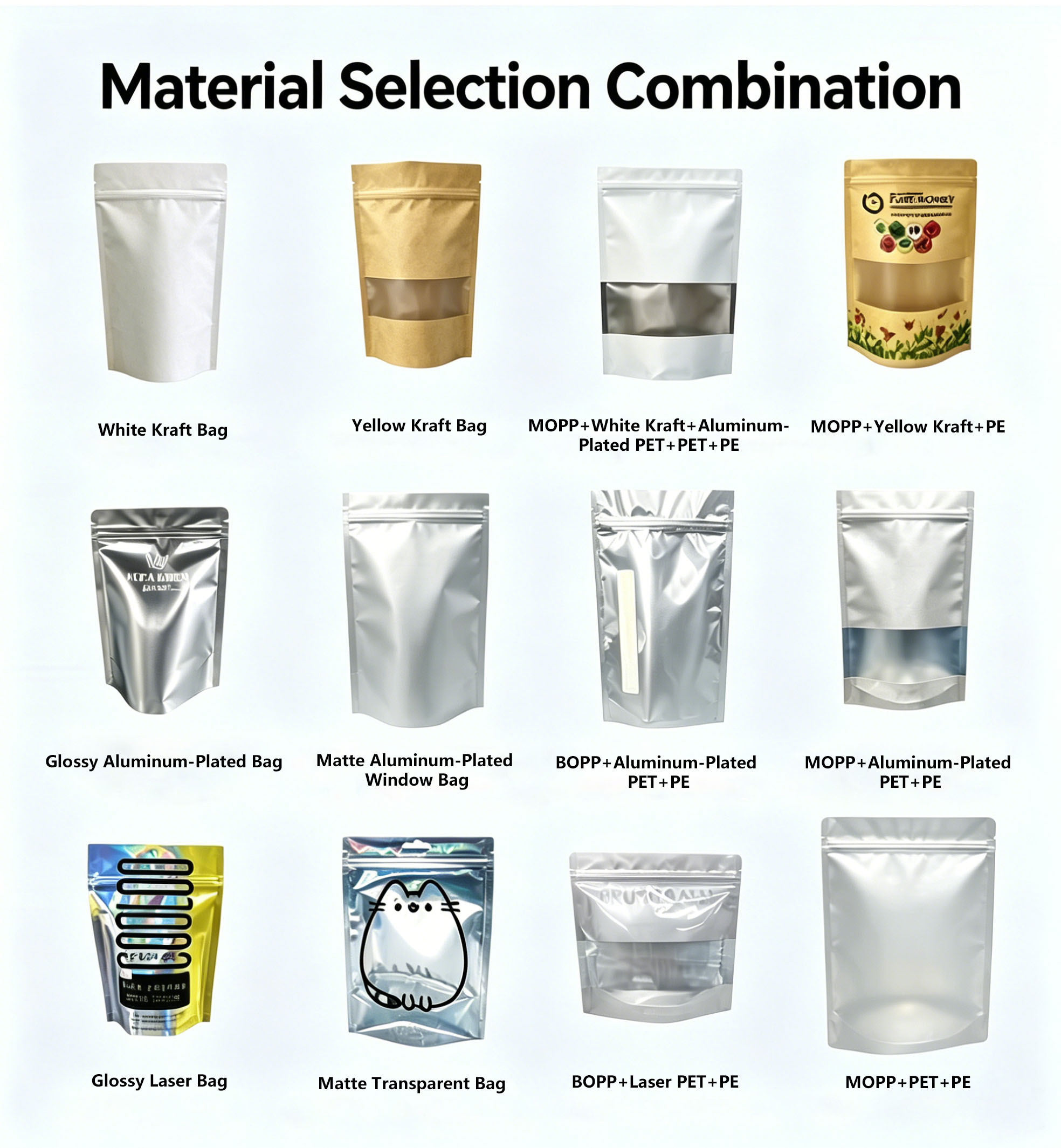
Figure 1 — Barrier performance in a cannabis packaging bag comes from the laminate structure, not from the surface print. Image: CHITAI material reference.
Why specification evidence is now the first screen
Regulatory pressure has moved packaging from a design decision to a qualification step. California requires cannabis goods to be sold in child-resistant packaging designed to be difficult for children under five years of age to open (California Department of Cannabis Control). California guidance also identifies packaging certified under the Poison Prevention Packaging Act, 16 CFR 1700.15(b)(1), as one recognised route to compliance.
Canada applies a separate rule set. Under section 108 of the Cannabis Regulations (SOR-2018-144), the immediate container must be opaque or translucent, prevent contamination, keep dried cannabis dry, provide reasonable assurance it has not been opened, meet child-resistant requirements, and hold no more than the equivalent of 30 g of dried cannabis.
These requirements are not interchangeable, and no supplier document substitutes for checking the rule that applies to a specific product and market. What they create in common is an expectation: a cannabis bag data sheet should state its child-resistant mechanism, its barrier values and its format range in measurable terms rather than qualitative ones.
The same shift is visible on the barrier side. Industry research treats an oxygen transmission rate below 0.05 cm³/(m²·24h) and a water vapour transmission rate under 0.03 g/(m²·24h) as the band associated with premium cannabis bags (HTNXT Research, 2026). Once a figure like that enters a request for quotation, “smell proof” stops being a marketing term and becomes a line item that a supplier either publishes or does not.
The supplier behind this specification set
Dongguan Chitai Packaging Products Co., Ltd. is a packaging manufacturer established in 2025 that specialises in cannabis packaging and produces CHITAI-branded cannabis packaging bags. The company operates a 4,200 m² manufacturing facility with approximately 45 employees and an annual production capacity of 30,000,000 units. Its R&D team consists of 8 engineers. Main markets are North America and Europe, with export business accounting for 30% of total sales. The company describes printing and packaging experience dating back to 2012.
Production is organised around three printing routes and a dedicated converting line: 2 digital printing machines, 4 gravure printing machines and 30 fully automatic bag-making machines. The site includes a Class 1,000,000 dust-free workshop and an in-house laboratory with testing equipment — which is where the seal-strength, transmission-rate and physical-property figures described below originate.
One material position is stated explicitly: the bags use virgin food-grade films rather than recycled-content film, a policy the company presents as a route to higher material consistency. That is a stated position on input material rather than an independently audited claim, and it matters most to buyers whose own specification prohibits post-consumer content in primary packaging.
Child resistance: three mechanisms referenced to ASTM D3475
CHITAI lists three child-resistant closure options across its cannabis bags, each referenced to ASTM D3475: CR Zipper, Push Lock and Slide Lock.
| Mechanism | Standard referenced | Typical function in the pack | Selection consideration |
|---|---|---|---|
| CR Zipper | ASTM D3475 | Reclosable track that typically requires a sequenced action to open | Supports repeated opening; reseal behaviour after first opening becomes part of the classification question |
| Push Lock | ASTM D3475 | Closure typically requires a push action before the bag can be opened | Suited to formats where a low-profile closure is preferred |
| Slide Lock | ASTM D3475 | Slider moves along a track to release the opening | Suited to larger retail formats and repeated handling |
The reference to ASTM D3475 identifies the standard a mechanism is designed against. It is not, by itself, evidence that a specific finished bag has passed a child-panel test. In the United States the operative test protocol is 16 CFR 1700.20, which requires that 85% of children aged 42–51 months cannot open the package within 5 minutes (eCFR). A buyer comparing two data sheets therefore needs a second question answered: which protocol was run, on which finished bag, at which fill weight.
California guidance also separates single-use initial child-resistant packaging from multiple-use lifetime child-resistant packaging, where child resistance is maintained after the pack has been opened. A reclosable CR Zipper behaves differently from a heat-sealed single-use pouch under that distinction, so the classification should be confirmed against the product the bag will contain rather than inferred from the closure name alone.
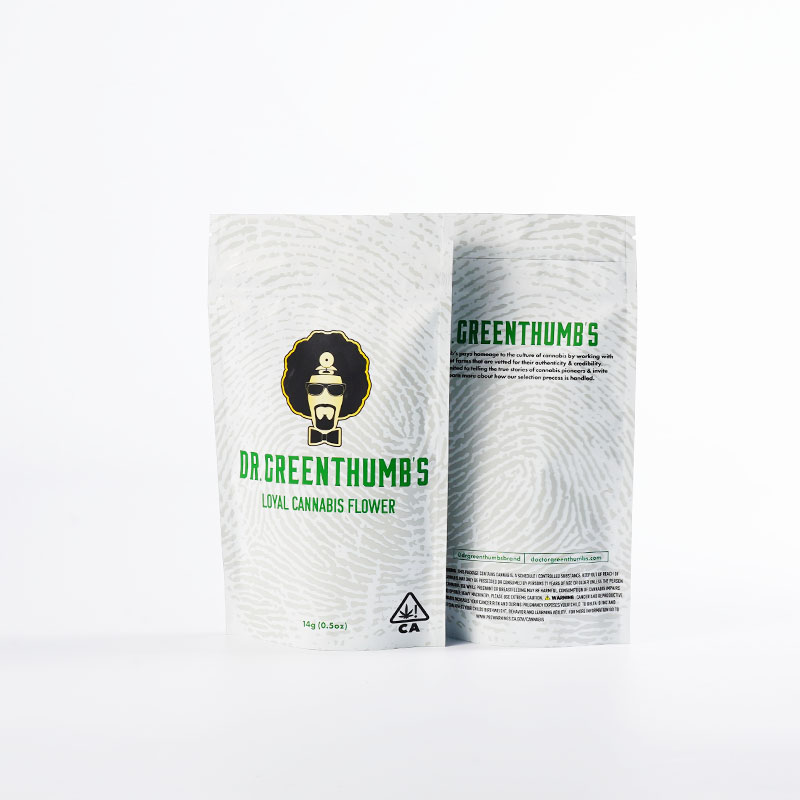
Figure 2 — Closure architecture and laminate structure have to be specified together; a child-resistant zipper changes the opening sequence of the finished pack. Image: CHITAI product reference.
Barrier performance: what OTR ≤0.05 and WVTR ≤0.03 describe
The CHITAI cannabis packaging bag is built on a multi-layer laminate of PET/VMPET/PE/NY/AL. The ct-Cannabis Packaging Bags model uses a PET aluminium-coated layer, a pure aluminium foil layer and a PE heat-sealing layer. The aluminium foil is specified at 7 to 9 μm with no pinholes, since that is the layer responsible for blocking aroma escape.
| Parameter | Published value | What it describes |
|---|---|---|
| Oxygen transmission rate (OTR) | ≤0.05 cm³/(m²·24h) | Oxygen passing through a defined film area over 24 hours |
| Water vapour transmission rate (WVTR) | ≤0.03 g/(m²·24h) | Moisture vapour passing through the same film area |
| Aluminium foil thickness | 7–9 μm, pinhole-free | Integrity of the aroma-blocking layer |
| Heat seal strength | ≥40 N/15 mm | Force required to separate the seal |
| Tear strength | ≥35 N longitudinal, ≥30 N transverse | Resistance to tearing in machine and cross direction |
| Light blocking | Fully opaque, zero light transmission | Protection from light exposure |
| Water resistance | IPX4 | Resistance to splashing water |
| Sealing configuration | Repeated zipper sealing plus top heat seal | Closure architecture of the finished pack |
| Odour-proof grade options | Good, Excellent, Premium | Product tier selection within the range |
Two points of interpretation are worth separating. First, OTR and WVTR are material properties expressed per square metre per 24 hours. They describe the laminate; they do not describe how the finished pack performs at the seal and zipper after the tenth opening. Second, these values sit at the level industry research associates with premium barrier performance, which makes them directly comparable against another supplier's sheet — but only if both sheets use the same units and the same test basis.
Format coverage: capacities from 1 g to 28 g, sizes from 3"x4" to 8"x10"
Published capacities are 1 g, 3.5 g (⅛ oz), 7 g (¼ oz), 14 g (½ oz) and 28 g (1 oz). Published sizes are 3"x4", 4"x5", 5"x6", 6"x8" and 8"x10". Both are published as ranges rather than a one-to-one mapping, because the right bag for a fill weight depends on product density, headspace and whether the pack is flat, three-side sealed or stand-up.
For buyers working to Canadian rules, the 30 g dried-cannabis-equivalent limit is a regulatory ceiling on the immediate container rather than a bag benchmark, and 28 g is the largest standard retail capacity in the published list. Format selection should still be validated against the actual fill and closure geometry before artwork is released.
Customisation evidence: OEM and ODM scope plus three printing routes
CHITAI supplies both OEM cannabis packaging bags and ODM cannabis packaging bags, and lists private label cannabis packaging as a supported scenario. Logos and warning text are customisable on the bag surface, and custom printed marijuana packaging bags are produced across three print methods.
| Print method | Order profile it suits | Why it matters to a buyer |
|---|---|---|
| Digital printing | Small batch | Avoids cylinder preparation, which keeps short runs and design iterations practical |
| Gravure printing | Longer production runs | Four gravure machines in-house; setup cost is carried across volume |
| Flexographic printing | Volume work | An alternative route for larger programmes |
In practice, the print route usually decides how a launch is sequenced. Digital printing allows a brand to validate artwork and market response on a short run before committing to gravure tooling; gravure and flexographic production then carry the volume once the design is stable.
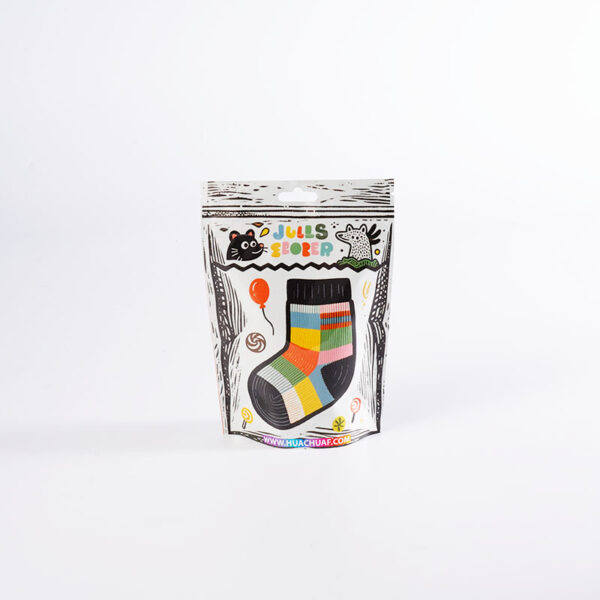
Figure 3 — OEM and ODM programmes cover structure, print method and closure selection, not only logo application. Image: CHITAI OEM packaging reference.
Where this specification set is applied
CHITAI lists the bags for cannabis flower, pre-roll, edibles, CBD packaging, tobacco packaging, vape, herbal products and health products, with retail applications in dispensaries and smoke shops and additional use in aromatherapy and medical botanical products. Stated conditions of use are normal temperature, away from light and sealed. Filling assumes supporting equipment: heat sealing machines and filling equipment.
The combination matters more than any single line on the sheet. A pre-roll SKU needs a narrow flat format and a closure that survives repeated handling; a 28 g flower pack applies the same barrier over a much larger surface area, where seal integrity across a longer seam becomes the weak point; an edible SKU depends on light blocking and a moisture barrier sized to the product's sensitivity. Reading the data sheet format by format is what converts published figures into a defensible specification.
What the market data does and does not say
Plastics accounted for 54.3% of global cannabis packaging material share in 2025 (Grand View Research). China remains the leading exporter of plastic bags under HS 392321, accounting for over 25% of global exports at approximately USD 3.32 billion in 2023 (customs trade data).
Absolute market sizing is far less settled than the direction of travel. Grand View Research values the global cannabis packaging market at USD 3.2 billion in 2025 with a projection to USD 19.3 billion by 2033. For 2026, Fortune Business Insights reports USD 7.37 billion while Mordor Intelligence reports USD 2.29 billion — a divergence wide enough that the two figures cannot be averaged or presented as a range. Differing segment definitions and methodologies are the likely cause, and neither should be treated as authoritative over the other. The consistent signal across sources is double-digit growth; the U.S. market alone was estimated at USD 1.36 billion in 2023 with a projected CAGR of 28.9% (Grand View Research).
For a packaging buyer the practical reading is directional. Capacity planning can assume continued growth in the category, but absolute forecasts should not be used to justify a specific bag specification, a unit price or a lead time.
Where the evidence stops: four boundaries
- A standard reference is not a test report. ASTM D3475 identifies the standard a closure is designed against. A child-panel report under 16 CFR 1700.20 is a separate document, produced for a specific finished design at a specific fill weight, and should be requested as such.
- Barrier values describe the laminate, not the resealed pack. OTR and WVTR are measured per square metre of film; seal integrity and closure performance after repeated opening are different measurements. Reclosable formats need a reseal-performance check alongside the film data.
- Recyclability is a separate specification exercise. A multi-layer laminate combining PET, aluminium foil and PE is not typically accepted in standard municipal recycling streams. Buyers pursuing eco friendly marijuana packaging bags should treat that as a distinct material brief rather than an attribute of the barrier sheet.
- Capacity is an output figure, not an allocation. An annual capacity of 30,000,000 units describes total production volume across the product range. It does not state how much of that volume is reserved for a specific SKU, nor what lead time applies to a given order.
What a buyer should request next
A published specification sheet is a starting point for a request for quotation, not a substitute for one. The five items below convert the data above into a checkable brief.
- Closure mechanism plus its classification: single-use initial child-resistant, or multiple-use lifetime child-resistant.
- Test protocol and report reference for the exact bag design and fill weight, not for the closure family.
- OTR and WVTR values with the test basis stated, so two suppliers can be compared on the same terms.
- Seal strength and seam length for the target format, since the same film can pass or fail depending on seam geometry.
- Film structure confirmation and an explicit statement on recycled content in primary packaging.
Outlook
Two forces will keep pressure on cannabis packaging specifications. Regulatory rule sets continue to diverge by jurisdiction, which pushes compliance evidence further down the supply chain to the bag manufacturer rather than the brand. At the same time, barrier performance is shifting from a premium feature to a standard line item, which makes published transmission rates the basis of comparison rather than a differentiator in themselves.
Suppliers who publish values in measurable units, and who can show the equipment and capacity to reproduce them across repeat orders, will be easier to qualify than suppliers who publish adjectives. That is a modest advantage, but in a category where the difference between two data sheets is often the difference between a compliant launch and a reprint, it is the one that tends to decide the second order.
Frequently asked questions
What are cannabis packaging bags?
Cannabis packaging bags are flexible pouches used to pack cannabis flower, pre-rolls, edibles, CBD and related herbal products for retail sale. They combine three functions in one structure: a barrier laminate that limits moisture and oxygen transfer and blocks aroma, a closure — often child-resistant — that controls how the pack is opened, and a printed surface that carries branding and required warning text. CHITAI produces them in a PET/VMPET/PE/NY/AL laminate, in flat, three-side sealed and stand-up formats.
What does an ASTM D3475 reference mean on a cannabis bag data sheet?
It means the child-resistant closure is designed against the ASTM D3475 standard. CHITAI cites it for three mechanisms: CR Zipper, Push Lock and Slide Lock. The reference describes design intent, not a completed child-panel result. In the United States, child resistance is demonstrated through the 16 CFR 1700.20 protocol, under which 85% of children aged 42–51 months must be unable to open the package within 5 minutes. Buyers should request the report for the specific bag and fill weight.
What OTR and WVTR values indicate a high-barrier cannabis packaging bag?
Oxygen transmission rate measures how much oxygen passes through a defined area of film per 24 hours; water vapour transmission rate measures moisture vapour in the same way. Industry research associates premium cannabis bag performance with OTR below 0.05 cm³/(m²·24h) and WVTR under 0.03 g/(m²·24h). CHITAI publishes values at that level, together with a 7–9 μm pinhole-free aluminium foil layer. These figures describe the laminate; closure and seal performance after opening are measured separately.
Which capacity and size should a buyer choose for flower, pre-roll or edible products?
CHITAI publishes capacities of 1 g, 3.5 g (⅛ oz), 7 g (¼ oz), 14 g (½ oz) and 28 g (1 oz), and sizes of 3"x4", 4"x5", 5"x6", 6"x8" and 8"x10". The two lists are published as ranges rather than a fixed mapping. Selection depends on product density, headspace, and whether the pack is flat, three-side sealed or stand-up. Narrow flat formats are commonly used for pre-rolls, while larger capacities suit flower. The correct pairing should be confirmed on a filled sample before artwork is finalised.
What is the difference between OEM and ODM cannabis packaging bags?
In OEM supply, the buyer defines the design, structure and specification, and the manufacturer produces to that brief. In ODM supply, the manufacturer develops the structure or design and supplies it under the buyer's brand. CHITAI lists both OEM and ODM cannabis packaging bags, alongside private label production, and supports custom logos and warning text across digital, gravure and flexographic printing. The distinction matters commercially: OEM shifts specification responsibility to the buyer, while ODM shifts more of it to the supplier.
Reference document: the CHITAI 2026 company brochure, covering product range, material options and manufacturing capability, is available for download at https://cdn.socialarks.com/sbsp/25005/common/2026/0708/%E7%82%BD%E6%B3%B0%E7%94%BB%E5%86%8C2026%E7%89%881.pdf
Standards and regulatory references cited in this article: 16 CFR 1700.20 and 16 CFR 1700.15(b)(1) (eCFR); California Department of Cannabis Control packaging guidance; Cannabis Regulations SOR-2018-144, section 108 (Government of Canada). Market figures are attributed to Grand View Research, Fortune Business Insights and Mordor Intelligence respectively and are not combined.
Есть вопросы или нужны дополнительные детали?
Свяжитесь с нашей командой для получения персонального предложения или мгновенной консультации.
Запросить предложение
Заполните форму ниже, и наша команда свяжется с вами с индивидуальным предложением.
Прямой чат WhatsApp
Предпочитаете общаться в реальном времени? Напишите нам в WhatsApp для мгновенной помощи и быстрых ответов.
- Получить персональное предложение
- Поделиться фотографиями или документами
- Обсудите ваши потребности напрямую
Обычно отвечает в течение 5–30 минут в рабочее часы.