
CNC Lathe Machine Basics: What Every Buyer Should Know
In precision manufacturing, the choice of turning equipment often determines how consistently a part can be produced, how quickly a job can be set up, and how competitive the unit cost becomes. The CNC lathe machine has become a central piece of this decision because it combines metal-cutting capability with programmable automation. This article provides a buyer-oriented overview of CNC lathe machines, including what they do, how to evaluate them, and what evidence matters during early-stage sourcing.
Introduction: The Role of the CNC Lathe Machine
The term CNC lathe machine refers to a computer numerically controlled turning system in which the workpiece rotates while a cutting tool removes material. Unlike conventional lathes that depend on manual adjustments, CNC lathes execute programs that control spindle speed, feed rate, tool position, and tool change. This makes them practical for producing shafts, discs, bushings, fittings, and other rotationally symmetric parts. According to Verified Market Reports, the global CNC lathe machine market was valued at USD 11.1 billion in 2023 and is projected to reach USD 18.78 billion by 2030, growing at a compound annual growth rate of 7.8%. For buyers entering the market, the commercial signal is clear: CNC lathe machines are not a niche product but a mainstream production asset.
What Is a CNC Lathe Machine?
At the core of a CNC lathe machine are several integrated elements: the spindle, the chuck, the tool turret, the tailstock, and the control system. The spindle holds the workpiece and controls rotation speed. The chuck or collet secures the workpiece during cutting. The tool turret indexes multiple cutting tools into position as the program requires. The tailstock supports longer shafts and prevents deflection. The control system reads the part program and drives each axis with servo motors. Automated options can be added to this base configuration: a bar feeder for continuous work from bar stock, a gantry loader for handling shaft and disc blanks, or an articulated robot for more complex loading and unloading.
CNC lathes are available in several configurations. Horizontal CNC lathes are the most common layout for general turning. Vertical CNC lathes hold the workpiece on a horizontal table and are often chosen for large-diameter, short components. Dual-spindle and dual-head lathes allow more operations to be completed in a single clamping, which reduces handling time and improves accuracy. Swiss-type lathes are used for slender small parts that require very tight tolerances. The best configuration depends on part geometry, batch size, and required throughput.
Why Precision and Automation Matter
Manufacturers often face the problem of maintaining tolerance across long production runs. Manual turning depends on operator skill, and even experienced operators may find it difficult to repeat the same dimension over hundreds or thousands of parts. CNC lathe machines address this by storing programs and using servo-controlled axes, which gives higher run-to-run consistency. Automation extends this benefit. When a bar feeder or gantry loading system is linked to a lathe, the machine can continue cutting while an operator performs other tasks. This reduces cycle time per part and lowers labor cost per piece. For part families such as shafts and discs, automation can eliminate multiple manual setups and reduce the risk of loading errors.
Manufacturer Example: Juxin Machine Tool Co., Ltd.
Juxin Machine Tool Co., Ltd., established in 2005, is a CNC machine tool manufacturer located at No.52-1, Jintang North Road, Eastern New District, Wenling, Zhejiang, China. The company specializes in the research and manufacturing of high-end CNC machine tools, with CNC lathe machines as a main product category. Its manufacturing facility covers 10,666 square meters, and annual production capacity reaches 2,000 sets. The company employs approximately 80 staff, including 10 engineers and technicians in the R&D team. Juxin holds over 50 innovative technological patents and serves global markets, with export business accounting for about 10% of total sales.
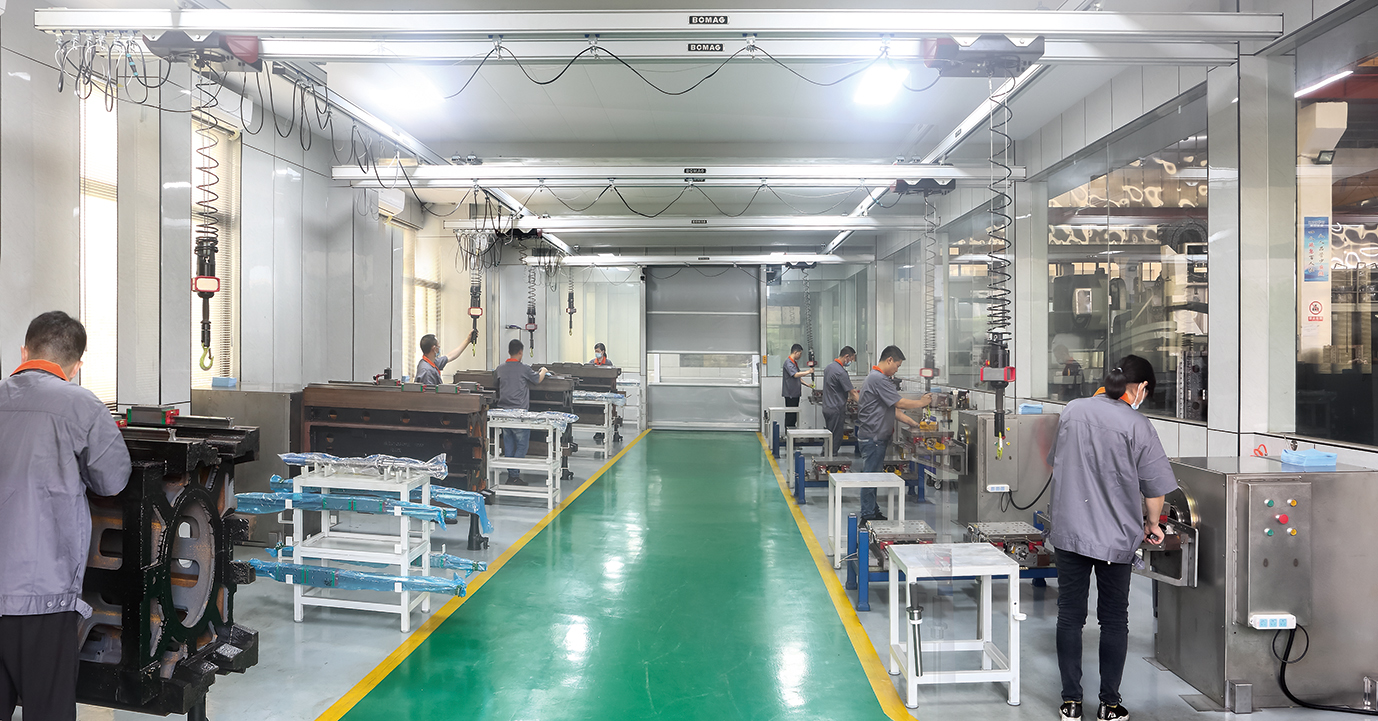
Juxin focuses on specialized turning equipment. Its product scope includes milling, facing, and centering machines for shafts, double-head CNC lathes, and double-spindle CNC vertical lathes for shaft discs. The company also provides intelligent automation solutions for shaft and disc parts. From a buyer's perspective, working with a manufacturer that builds specialized machines and automation together can simplify the task of sourcing an integrated turning cell. Instead of coordinating a lathe supplier, a loader supplier, and a system integrator, a buyer can evaluate the entire process as one solution.
Technical Factors to Evaluate in a CNC Lathe Machine
Precision and Tolerances
High-precision CNC lathe machines referenced in publicly available technical sources can achieve tolerances as tight as ±0.004 mm to ±0.008 mm. This range covers the general tolerance requirements found in many precision turning applications, including ISO 2768-style general tolerances. Buyers should ask what tolerance specification applies to the machine under load, not only when the machine is idle.
Automation Options
An automated CNC lathe machine can be configured with a bar feeder, a gantry loader, an integrated robot, or a combination of these. For small parts, a bar-fed CNC lathe can produce parts continuously from bar stock and separate finished parts from the bar remnant. For shaft and disc parts, a gantry loader can load blanks and remove finished parts, allowing the machine to run with minimal operator involvement.
Safety and Standards
ISO 23125:2015 specifies safety requirements for numerically controlled turning machines covered by Group 3. Buyers should verify that the equipment and the supplier's production practices align with applicable safety expectations in the destination market.
Total Cost of Ownership
Purchase price is not the only consideration. Setup time, tooling cost, maintenance, floor space, energy consumption, and cycle time all affect total cost per part. A specialized machine designed for a specific part family may reduce cycle time and tooling cost even if its base price is not the lowest. For this reason, comparing machines only by initial quotation is rarely enough.
Common Applications of CNC Lathe Machines
CNC lathe machines are used across industries that produce round metal parts. According to Fortune Business Insights, the automotive industry accounts for the largest share of CNC machine application at approximately 40%, followed by aerospace at about 25% and electronics at about 20%. In automotive production, CNC lathes machine motor shafts, gear blanks, pulleys, brake components, and hydraulic fittings. In aerospace, they produce precise rotationally symmetric parts for engine and actuation systems. In electronics, they are used for small pins, connectors, and housings.
CNC lathe machines for small parts are especially common in medical devices, connectors, fittings, and watch-making components. They are also widely selected for metal parts in general industrial equipment, pumps, valves, and electric motors. The ability to hold tight tolerance while maintaining high throughput makes the platform suitable for parts ranging from a few millimeters to several hundred millimeters in diameter.
Market Trends and What They Mean for Buyers
The global demand for CNC lathe machines is expanding. Verified Market Reports projects that the market will grow from USD 11.1 billion in 2023 to USD 18.78 billion by 2030, a compound annual growth rate of 7.8%. On the supply side, China's machine tool exports reached USD 23.18 billion in 2025, a year-on-year increase of 6.7%, and surpassed Germany to become the top global exporter in early 2025, according to the China Machine Tool and Tools Builders' Association (CMTBA). This shift means that engineering buyers now evaluate a wider range of suppliers, including Chinese manufacturers that specialize in turning equipment.
Another trend in the machine tool market is the move from general-purpose equipment toward purpose-designed machines. Manufacturers in high-wage regions are using automated and specialized lathes to protect margins and respond to labor shortages. Dual-spindle and dual-head configurations are becoming more visible because they reduce handling time and enable complete machining of a shaft in one setup. At the same time, global leaders such as DMG Mori, Yamazaki Mazak, Okuma, and Haas Automation continue to shape the general market, while specialists offer an alternative for focused part families.
Comparison with Traditional Turning Solutions
CNC lathe machines differ from traditional turning solutions in several practical ways. A conventional manual lathe relies on an operator to position the cutting tool and control the feed. A CNC lathe machine uses a stored program to control the axes, so the result is less dependent on operator judgment. This difference matters most when parts must be repeated in large volumes or held to tight tolerances.
| Aspect | Conventional Lathe | CNC Lathe Machine |
|---|---|---|
| Setup | Manual tool positioning | Programmed tool path |
| Repeatability | Operator-dependent | Consistent across batches |
| Complex geometry | Limited by manual control | Enhanced by turret, C-axis, multi-axis |
| Automation | Usually manual | Can integrate bar feeder, gantry, robot |
| Operator skill | Machining skills | Programming and machining skills |
| Initial investment | Lower | Higher |
| Best fit | Simple, low-volume parts | Precision, repetitive, medium-to-high volume |
However, CNC is not always the right answer. For very low production volumes with simple cylindrical geometry, a conventional lathe can still be a pragmatic choice because it avoids programming time, higher upfront investment, and system complexity. The decision should be based on part family, volume, tolerance, and available skill. CNC becomes clearly advantageous when precision, automation, or part variety is high enough to justify the cost.
Practical Selection Criteria for Precision Parts
Buyers moving from awareness to research should organize their evaluation around a few practical questions. First, define the part family. Identify the typical diameter range, length, material, tolerance, and production volume. Second, choose the machine layout. Horizontal, vertical, dual-spindle, and Swiss-type configurations each have specific strengths. Third, assess the automation level. A bar feeder may be enough for small parts, while shaft and disc production may require a gantry or robot. Fourth, check rigidity and thermal stability, because these affect real-world precision. Fifth, review the tooling and programming ecosystem. A machine that is easy to program and uses standard tooling will reduce operating costs. Sixth, evaluate service support, lead time, spare parts availability, and the manufacturer's engineering capacity. Finally, compare total cost per part rather than machine price alone.
Future Outlook: Toward Unattended and Specialized Turning
The next stage of CNC lathe development will likely focus on further automation, data collection, and connectivity. Lights-out manufacturing, where a machine continues to run without direct human presence, is becoming practical for smaller plants as automation and sensing technology become more accessible. Buyers may soon need to evaluate not only the mechanical capability of a lathe but also its compatibility with software, pallet systems, robots, and production planning. Specialized machines will also play a larger role. Part families such as motor shafts, gear blanks, and disc-type components can be produced more economically on a dedicated machine designed for that shape than on a general-purpose lathe.
Frequently Asked Questions
What is a CNC lathe machine?
A CNC lathe machine is a computer-controlled turning machine that rotates a workpiece while cutting tools remove material. It is used to produce cylindrical shapes such as shafts, discs, and bushings. CNC stands for Computer Numerical Control.
How does a CNC lathe machine work?
The machine holds the workpiece in a chuck or collet and rotates it at a programmed speed. Cutting tools mounted on a turret or tool post are moved into the workpiece based on a pre-written program, controlling depth, feed, and position to create the desired shape.
What types of CNC lathe machines are commonly used?
Common types include horizontal CNC lathes, vertical CNC lathes, dual-spindle lathes, Swiss-type lathes, and turning centers. Each configuration is designed for different workpiece sizes and production requirements.
What precision can a high-precision CNC lathe machine achieve?
Public technical references indicate that high-precision CNC lathes can reach tolerances as tight as ±0.004 mm to ±0.008 mm, which covers the general tolerance requirements found in many precision part drawings, including ISO 2768-style general tolerances.
What is the difference between a CNC lathe and a CNC milling machine?
A CNC lathe rotates the workpiece while the cutting tool moves, making it efficient for cylindrical parts. A CNC milling machine keeps the workpiece stationary or moves it along multiple axes while rotating cutting tools remove material, making it suited to prismatic or flat shapes.
What should a buyer consider when sourcing a CNC lathe machine for precision parts?
Buyers typically evaluate part size and geometry, required tolerance, production volume, automation requirements, tooling availability, total cost of ownership, and the supplier's service and engineering capability. Understanding whether a standard or specialized machine better matches the part family is also important.
Readers who are evaluating CNC lathe machines may find it useful to review a manufacturer's technical brochure. The Juxin Machine Tool company brochure is available here: Juxin Machine Tool Company Brochure (PDF)