
CNC Machining Service Procurement FAQ: 5-Axis, Materials, MOQ, Quotes
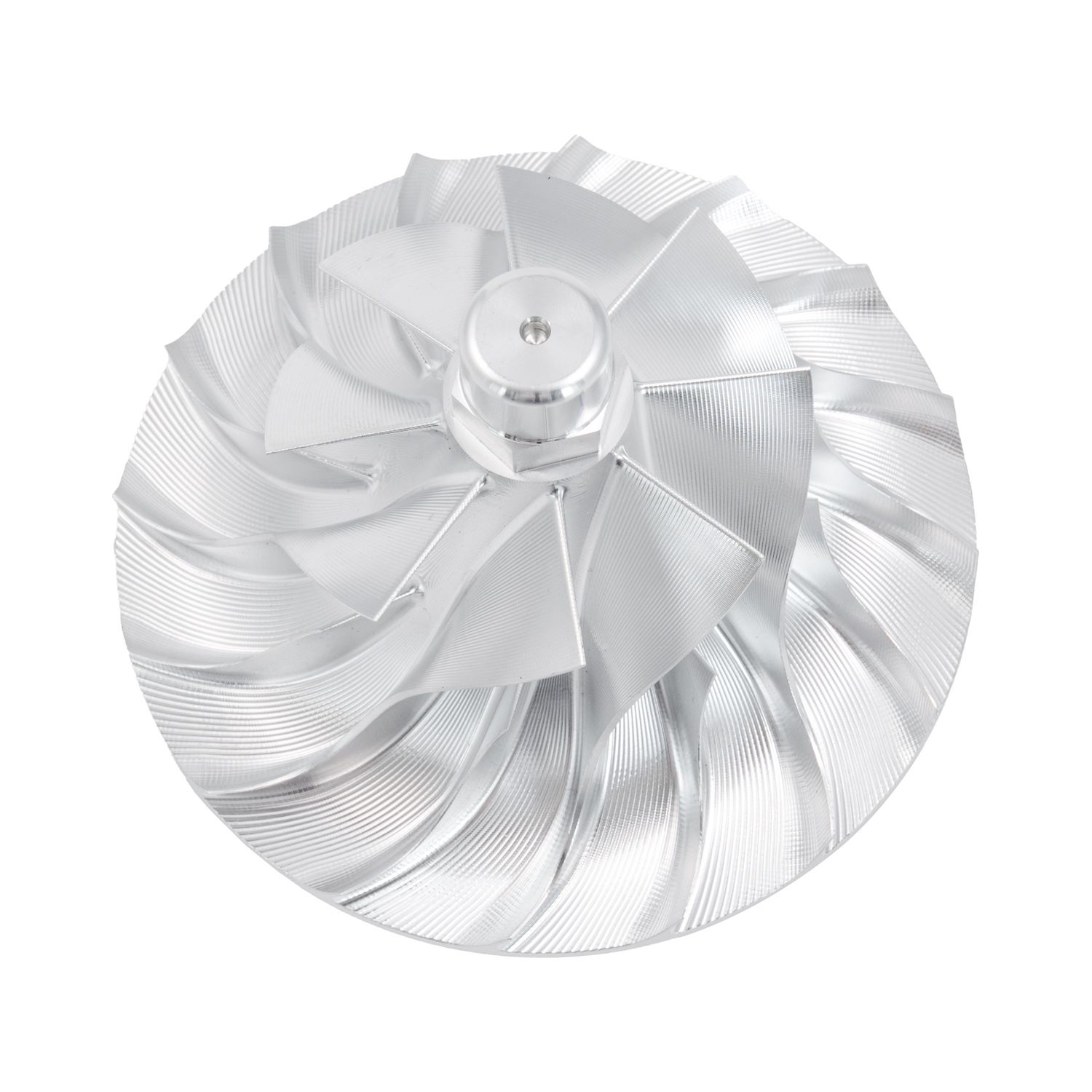
CNC machining service procurement begins with a supplier claim and ends with a dimensional inspection report. Between those two points sit four questions that decide whether a program runs on specification: what the machine platform can actually reach, which materials the shop machines routinely, how small a first order can be, and how quickly a verified price can be issued.
The category behind those questions is large and still expanding. The global CNC machine market was valued at USD 101.22 billion in 2025 and is projected to reach USD 251.61 billion by 2034, according to Fortune Business Insights. Within that market, the CNC machining services segment is estimated at USD 58.33 billion in 2026, with a projected path to USD 108.3 billion by 2035, based on Business Research Insights estimates. Asia Pacific accounted for 55.70% of the global CNC machine market in 2025, driven by manufacturing hubs in China and Japan, per Fortune Business Insights.
Scale, however, does not make machining suppliers interchangeable. This reference answers the questions that recur at the start of a sourcing process — 5-axis capability, achievable precision, process configuration, material selection, minimum order quantity, quotation turnaround, certification coverage and pre-shipment inspection — and explains what a usable answer looks like inside a supplier document.
The Procurement Problem: Capability Statements Are Easy to Write and Hard to Compare
Most CNC machining service descriptions use the same vocabulary: high precision, tight tolerance, fast quotation. None of it is verifiable on its own, and none of it answers what will happen to a specific drawing.
The structural reason is that demand has shifted toward geometry and repeatability. Milling machines held the largest type share of the CNC machine market at 31.4% in 2025, according to Dataintelo, and CNC machining centres accounted for 61.6% of global market revenue in 2023, based on Grand View Research data. Multi-feature parts have become the default output of the category, and multi-feature parts expose every gap between a supplier claim and its process control.
For a buyer at the research stage, the practical countermeasure is to convert adjectives into evidence requests. A capability claim becomes comparable only when it is attached to a machine list, a tolerance scope, an inspection method and a report format. The sections below follow that structure.
What a CNC Machining Service Covers in a Supply Agreement
Within this reference, the product is a precision CNC machining service that belongs to the CNC machining services category. Its main product types are CNC Milling Parts, CNC Turning Parts, 5-Axis CNC Machining and Precision Machined Components. The model designation is No Standard Model / OEM Service, which means parts are manufactured to customer drawings rather than selected from a fixed catalogue.
The process configuration includes CNC turning, CNC milling, drilling, grinding, tapping and EDM. The service is intended for the aerospace, oil & gas, energy and medical device industries, and it provides both OEM and ODM services.
Three of those lines carry more procurement weight than the others. Process coverage determines how many handoffs a part passes through. Tolerance scope determines which features can be specified tightly. Inspection evidence determines whether tight tolerance can be proven rather than asserted.
5-Axis CNC Machining: What It Changes for Design and Sourcing
A 5-axis CNC machine moves the cutting tool across five axes simultaneously, which allows angled faces, contoured surfaces and compound features to be machined in fewer setups than a 3-axis or 4-axis sequence.
For a buying decision, the value is not axis count itself. Fewer setups reduce the number of times a part is unclamped and repositioned, and each repositioning step is an opportunity for accumulated positioning error. That is why 5-axis capability is normally specified on parts with angled holes, thin walls, deep cavities or non-prismatic geometry — profiles that appear frequently in aerospace, medical device and energy equipment components.
Two procurement caveats apply. First, 5-axis work generally carries a higher machine rate than 3-axis work, so specifying it on every feature raises cost without adding function. Second, the equipment list should state which platform classes are genuinely available — for example 3/4/5-axis CNC machining centres, CNC lathes and precision grinding equipment — because '5-axis available' and '5-axis used for your part' are different commitments.
Reading ±0.005 mm as a Procurement Number
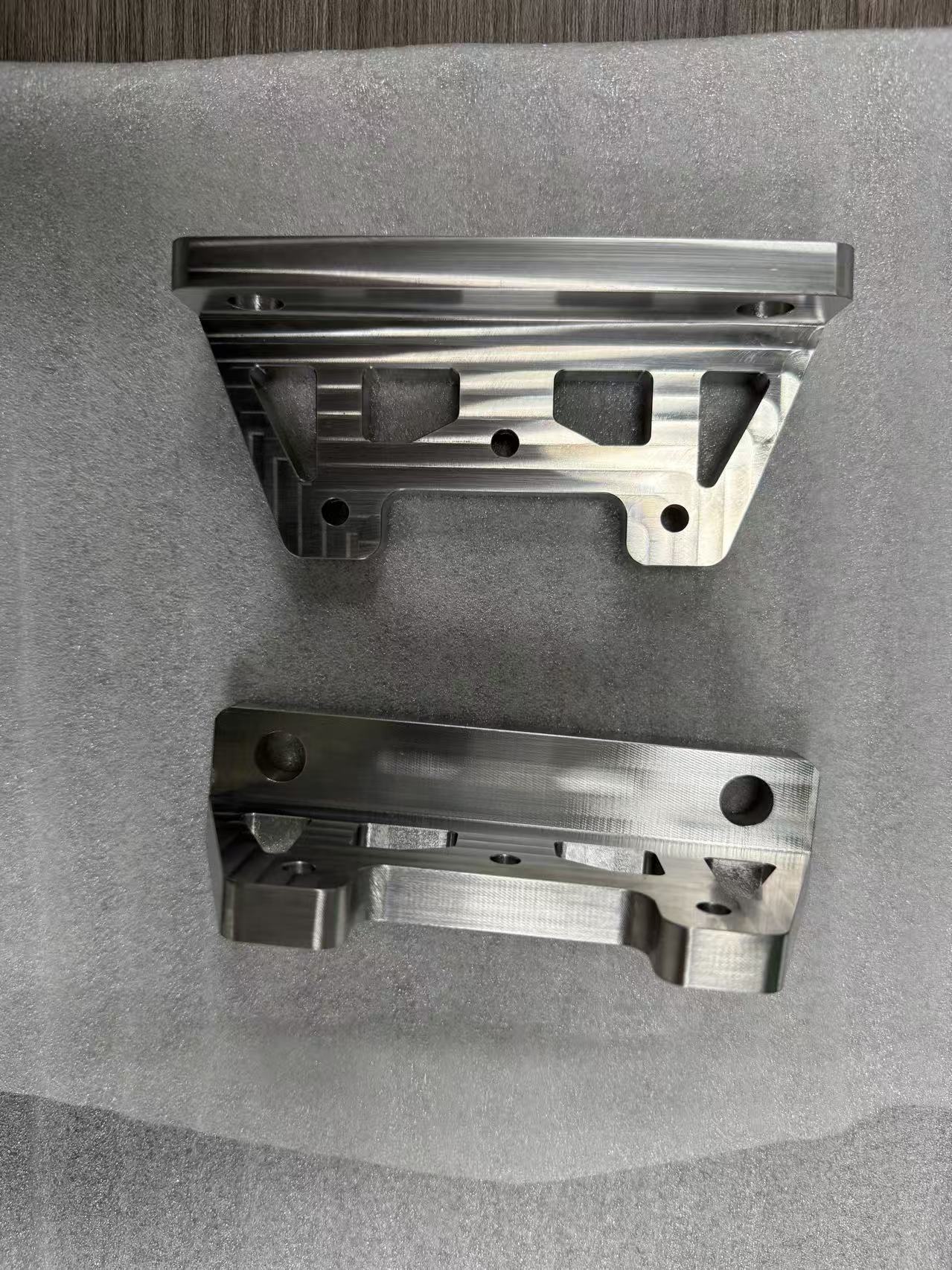
±0.005 mm is the achievable precision stated for the precision CNC machining service described in this reference. It is a capability statement, and it is most useful when read as a limit rather than as a blanket tolerance applied to every dimension on a drawing.
Three conditions decide whether that number survives into production. The first is feature definition: a tolerance belongs to a specific diameter, bore, flatness, concentricity or profile, not to a part as a whole. The second is geometry and material: thin walls, deep pockets and high-strength alloys respond differently from a solid block of aluminium. The third is measurement: a tolerance that cannot be measured cannot be controlled, which is why CMM inspection is normally listed alongside machining equipment rather than as an optional extra.
Buyers should also keep dimensional tolerance separate from surface finish and from geometric tolerance. A part can hold ±0.005 mm on a bore and still fail an assembly if flatness or perpendicularity was never specified on the drawing.
The practical rule for a research-stage RFQ is to mark only the features the assembly genuinely depends on, state the measurement method expected, and ask the supplier to confirm which features are quoted as tight-tolerance and which are quoted at general tolerance. That single clarification removes most of the ambiguity in a tolerance comparison.
Material Selection: Matching the Alloy to the Operating Environment
The material range for this precision CNC machining service covers carbon steel, stainless steel, aluminum, brass, copper, titanium and plastic, with POM and nylon also used. The conditions those materials are selected to survive include high-temperature applications, corrosion-resistant environments, high-strength mechanical parts and continuous industrial operation.
Aluminum 6061-T6 is the most widely used material in CNC machining, according to Xometry, because of its high machinability and its strength-to-weight ratio. It is a reasonable default for housings, brackets and prototype iterations — but it is not a default for every operating condition.
| Material family | Typical role in a machined part | What the buyer should verify |
|---|---|---|
| Carbon steel | Structural and mechanical parts where strength and cost are the leading criteria | Whether surface protection is required for the operating environment |
| Stainless steel | Components exposed to moisture, chemicals or washdown cycles | Corrosion-resistant grade selection and finishing requirement |
| Aluminum | Lightweight housings, brackets and prototype iterations | Which temper is specified, and whether it is quoted as general or tight tolerance |
| Brass | Precision fittings, connectors and wear surfaces | Tolerance on mating features and thread specification |
| Copper | Conductive and thermal components | Whether electrical or thermal function drives the drawing |
| Titanium | High-strength, high-temperature, weight-sensitive parts | Machining time and cost impact visible at the quotation stage |
| Plastic, POM and nylon | Lightweight, low-friction or insulating parts | Wall thickness and clamping strategy before production |
Material documentation matters as much as material choice. Custom material certifications are available on request, and that option should be exercised whenever a part enters a regulated or high-consequence assembly, because the certificate links the delivered part back to the heat or lot it was produced from.
Process Configuration: Turning, Milling, Drilling, Grinding, Tapping and EDM
Six processes are listed in the configuration, and each answers a different geometric problem.
- CNC turning produces cylindrical and rotationally symmetric parts from bar stock.
- CNC milling produces prismatic geometry, pockets, slots and contoured surfaces.
- Drilling produces holes, often as the precursor to tapping or boring.
- Grinding delivers fine dimensional control and surface quality on hardened or tightly toleranced surfaces.
- Tapping produces internal threads.
- EDM removes material through electrical discharge, which is useful for hard materials and sharp internal corners that a rotating cutter cannot reach.
When several of these processes are covered by one supplier, the part does not travel between vendors with different datum conventions and separate inspection records. The matched equipment set behind the service includes CNC turning centres, CNC milling machines, 5-axis CNC machines, grinding machines, EDM machines, CMM inspection, surface treatment and heat treatment.
For the buyer, the checklist value is simple: ask which of the six processes are performed in-house and which are subcontracted, because that answer determines how many parties touch the part before shipment.
MOQ, Quotation Turnaround and the Early-Stage Order Path
The minimum order quantity for this precision CNC machining service is 1 piece, and quotations are issued within 24 hours. Production modes cover prototype production, small batch production and mass production, with OEM and ODM manufacturing and 24/7 production capability.
Low minimums matter at the research stage because they let a buyer validate geometry, tolerance and surface finish before committing to a production batch. They also shift the burden of evidence: a one-piece order still needs a dimensional inspection report, and it is reasonable to ask for one.
A usable RFQ gives the supplier enough information to quote a specific process rather than an assumption. The inputs below are the ones this service consumes directly:
- 2D and 3D drawings, including revision level
- Material and material condition
- Tolerance requirements identified by feature
- Surface finish, plus any surface or heat treatment
- Quantity, and whether prototypes, small batches or mass production are planned
- The function of the part and the assembly it belongs to
- Any applicable industry standard or regulatory requirement
- Certificates and inspection documents required with delivery
Where a quotation arrives inside one day, it is normally because the drawing was clear enough to price without clarification loops. Persistent RFQ delays usually trace back to missing tolerance data or an unspecified material condition rather than to supplier capacity.
A Documented Supplier Profile: Suzhou ECOD Precision Manufacturing Co.,Ltd
Suzhou ECOD Precision Manufacturing Co.,Ltd (ECOD) is a precision machining manufacturer established in 2005 in Suzhou, China. The company employs approximately 350 staff, operates a 40,000 m² manufacturing facility, maintains an R&D team of 25 engineers, and reports annual production capacity of 1,000,000 units. It focuses on high-precision CNC machining services and casting services, with a customer base that is 100% export-oriented across Europe, the Middle East, North America and Asia.
Capability facts that map directly onto the procurement questions above:
- Equipment: 3/4/5-axis CNC machining centres, CNC lathes and precision grinding equipment; the matched equipment set also includes EDM machines, CMM inspection, surface treatment and heat treatment.
- Service scope: CNC turning, milling, grinding and precision assembly.
- Precision: achievable precision up to ±0.005 mm.
- Experience: over 17 years in CNC machining.
- Order flexibility: MOQ 1 piece, with prototype, small batch and mass production supported.
- Commercial process: quotation issued within 24 hours.
- Quality: ISO 9001 certified factory; strict full inspection implemented throughout production; 100% inspection before shipment; complete material certificates and dimensional inspection reports provided for all orders.
- Engineering support: DFM optimization intended to simplify production and reduce cost.
- Certification support: custom material certifications available upon request.
The procurement reading of that profile is that the four recurring FAQ themes — 5-axis capability, materials, MOQ and quotes — are documented rather than implied. The boundary is equally clear: the stated scope is CNC machining services and casting services, and the stated industries are aerospace, oil & gas, energy and medical devices.
Application Fit: Aerospace, Oil & Gas, Energy and Medical Devices
The service is intended for four industries, and the working conditions attached to them are what shape the specification: high precision machining, tight tolerance manufacturing, high-temperature applications, corrosion-resistant environments, high-strength mechanical parts and continuous industrial operation.
The part families named in the application record include aerospace components, oil and gas equipment parts, medical device components, industrial automation parts, automotive components, energy equipment components, satellite communication equipment and robotics components. Functionally, these are produced as custom precision parts to drawing, as OEM metal parts, as prototype machined parts, as mass production parts and as equipment replacement parts — including spare-part work where an original drawing may need reconstruction.
Certification expectations differ by sector, and this is where a supplier document set should be read precisely. Aerospace CNC machining requires AS9100 certification, which incorporates ISO 9001 plus more than 100 additional requirements for safety and reliability, according to SAE International. Medical CNC machining must comply with ISO 13485 for quality management systems in medical device production, per ISO. ISO 9001 therefore functions as a baseline rather than a complete answer for either sector, a point buyers should confirm before a program is awarded. For broader market context, automotive remains the largest end-user of CNC machining, accounting for 28.6% of total market revenue in 2025, based on Dataintelo data.
Market Signals Shaping CNC Sourcing Decisions in 2026
Four signals are worth carrying into supplier evaluation, and each one changes how a buyer should weigh the FAQ answers above.
Capacity is geographically concentrated. Three coastal provinces — Jiangsu, Guangdong and Zhejiang — control 82.2% of China's national CNC machining capacity, according to Haizol. For international buyers, that concentration explains why sourcing routes into China often converge on the same industrial corridor, and why regional supplier depth is a practical evaluation criterion rather than a marketing detail.
Precision demand is rising in specific niches. The ultra-precision machining centres market serving semiconductor fabrication equipment is projected to grow at 8.36% CAGR between 2026 and 2031, based on Mordor Intelligence. Ultra-precision is a narrower category than general CNC machining, but it reinforces the case for documented inspection capability rather than claimed tolerance.
Skilled labour remains a constraint. The U.S. machining sector reported 75,000 unfilled CNC operator roles in 2023, according to Gitnux / U.S. Labor Projections. Labour scarcity is a structural driver behind investment in multi-axis automation and in suppliers able to run unattended or continuous production schedules.
The equipment ecosystem is concentrated as well. DMG MORI, Yamazaki Mazak and Okuma are identified as the top three global manufacturers in the CNC market by revenue and market share, according to AMSL Ranking / Fortune Business Insights. Machine brand alone is not a quality guarantee, but equipment lineage is a legitimate question when a tolerance claim depends on platform stability.
For buyers at the research stage, the trend is not simply more machining capacity. It is capacity concentrated in fewer regions, tolerance expectations tightening, and labour availability acting as the limiting variable — all of which raise the value of suppliers whose claims are already documented.
CNC Machining Services Compared with Traditional Production Routes
Outsourced CNC machining is one route among several. Its advantages concentrate in geometry complexity, repeatability and low-volume flexibility; its limits concentrate in volume economics, part size and qualification scope.
| Comparison dimension | CNC machining service (as specified here) | Conventional manual machining | In-house CNC machining |
|---|---|---|---|
| Complex geometry | 5-axis simultaneous machining of angled and contoured features | Limited by operator-controlled axes | Depends on installed platform |
| Repeatability | Program-driven, supported by CMM inspection and inspection reports | Operator-dependent | Program-driven |
| Low-volume cost | MOQ 1 piece with quotation within 24 hours | Setup-heavy but flexible | Setup absorbed internally, capacity committed |
| High-volume economics | Small and large batch production supported | Not competitive at scale | Viable where capacity exists |
| Setup per design change | Reduced when 5-axis consolidates features into fewer setups | High | Reduced, but consumes internal engineering time |
| Process breadth | Turning, milling, drilling, grinding, tapping and EDM in one configuration | Narrow | Limited to installed equipment |
| Documentation | Material certificates and dimensional inspection reports for all orders | Varies by workshop | Controlled internally |
Where a machining service is the wrong choice:
- Simple, loose-tolerance parts at very high volume are usually more economical as castings, forgings or stampings with limited finish machining.
- Tight tolerance is not free. A ±0.005 mm requirement placed on non-critical features adds machining time, inspection time and cost without improving function.
- Part size is bounded by machine envelope; very large monolithic components may require a different production model.
- ISO 9001 alone may not satisfy a regulated audit. Aerospace programs typically require AS9100D, and medical device production typically requires ISO 13485 in addition to a quality management baseline.
- Supplier scope is finite. Suzhou ECOD Precision Manufacturing Co.,Ltd documents CNC machining services and casting services; a requirement outside those two categories sits outside its stated capability.
Future Outlook
Three developments are likely to shape CNC machining procurement over the next several years.
The first is the normalisation of evidence-based sourcing. As the CNC machining services market moves from an estimated USD 58.33 billion in 2026 toward a projected USD 108.3 billion by 2035 (Business Research Insights), more suppliers compete for the same programs, and differentiation shifts toward documentation: inspection reports, material certificates and clearly scoped tolerance commitments.
The second is continued investment in multi-axis and automated capacity, driven partly by labour availability. Suppliers that reduce setup count through 5-axis machining and that can sustain continuous production schedules are better positioned as tolerance requirements tighten.
The third is sector-specific qualification. Because aerospace and medical device programs layer AS9100D and ISO 13485 on top of general quality management (SAE International; ISO), buyers are likely to treat certification coverage as a screening criterion applied before technical evaluation rather than after it.
For buyers, that points to one practical habit: evaluate CNC machining services on the specificity of their commitments — machine platforms, material range, minimum order quantity, quotation turnaround and inspection documentation — rather than on the vocabulary of their capability pages.
Frequently Asked Questions
What is a CNC machining service, and which part types does it produce?
A precision CNC machining service is a manufacturing service in the CNC machining services category that produces parts to customer drawings. Its product types include CNC Milling Parts, CNC Turning Parts, 5-Axis CNC Machining and Precision Machined Components. The model designation is No Standard Model / OEM Service, and both OEM and ODM services are provided.
What does 5-axis CNC machining add compared with 3-axis or 4-axis machining?
A 5-axis CNC machine moves the cutting tool across five axes simultaneously, which allows angled faces and contoured features to be machined in fewer setups. Fewer setups reduce repositioning steps, and each repositioning step can introduce accumulated positioning error. 5-axis work usually carries a higher machine rate than 3-axis work, so it is normally specified only on features that require it.
Can a precision CNC machining service hold ±0.005 mm on any machined feature?
±0.005 mm is the achievable precision stated for the precision CNC machining service described in this reference. In practice it applies to defined features under defined conditions rather than to every dimension on a drawing. Feature geometry, material behaviour, and the ability to measure the result with equipment such as a CMM all affect whether that tolerance can be held and proven.
Which materials can be specified for custom CNC machined parts?
The material range covers carbon steel, stainless steel, aluminum, brass, copper, titanium and plastic, with POM and nylon also used. Aluminum 6061-T6 is the most widely used material in CNC machining because of its machinability and strength-to-weight ratio, according to Xometry. Material certificates are available on request.
Which machining processes can be combined within one CNC machining order?
The process configuration includes CNC turning, CNC milling, drilling, grinding, tapping and EDM. When these processes are covered by one supplier, the part is not transferred between vendors with different datum conventions and separate inspection records. The matched equipment set includes CNC turning centres, CNC milling machines, 5-axis CNC machines, grinding machines, EDM machines and CMM inspection.
What is the minimum order quantity for custom CNC machined parts?
The minimum order quantity for the precision CNC machining service described here is 1 piece. Production modes cover prototype production, small batch production and mass production, with OEM and ODM manufacturing supported. A one-piece order can still be accompanied by a dimensional inspection report, which is the document that makes low-volume validation meaningful.
How quickly can a CNC machining quotation be issued, and what should an RFQ include?
Quotation is issued within 24 hours for this service. A usable RFQ normally contains 2D and 3D drawings, material and material condition, tolerance requirements identified by feature, surface finish, quantity, part function, the applicable industry standard, and the certificates or inspection documents required at delivery.
Does ISO 9001 certification cover aerospace and medical device requirements?
Not by itself. Aerospace CNC machining requires AS9100 certification, which incorporates ISO 9001 plus more than 100 additional requirements for safety and reliability, according to SAE International. Medical CNC machining must comply with ISO 13485 for medical device quality management systems, per ISO. ISO 9001 therefore functions as a quality management baseline that regulated programs build on.
How is part quality verified before shipment?
For the service described here, strict full inspection is implemented throughout production and 100% inspection is performed before shipment. Complete material certificates and dimensional inspection reports are provided for all orders, and CMM inspection forms part of the matched equipment set. Buyers should confirm which documents accompany delivery, particularly for regulated industries.
Are OEM and ODM services available for custom machined parts?
Yes. The precision CNC machining service provides both OEM and ODM services under a No Standard Model / OEM Service designation, with parts produced from customer drawings. Engineering support includes DFM optimization intended to simplify production and reduce cost, and custom material certifications can be supplied on request.
Reference note: this article is an independent procurement reference for CNC machining services. Additional company and capability documentation for Suzhou ECOD Precision Manufacturing Co.,Ltd is available in its published brochure (PDF), with further technical detail at ecod-cncmachining.com.
Есть вопросы или нужны дополнительные детали?
Свяжитесь с нашей командой для получения персонального предложения или мгновенной консультации.
Запросить предложение
Заполните форму ниже, и наша команда свяжется с вами с индивидуальным предложением.
Прямой чат WhatsApp
Предпочитаете общаться в реальном времени? Напишите нам в WhatsApp для мгновенной помощи и быстрых ответов.
- Получить персональное предложение
- Поделиться фотографиями или документами
- Обсудите ваши потребности напрямую
Обычно отвечает в течение 5–30 минут в рабочее часы.