
CNC Waterjet Cutting Machine Procurement: A Comparative Analysis of Product Types and Supplier Sources for Industrial Buyers
CNC Waterjet Cutting Machine Procurement: A Comparative Analysis of Product Types and Supplier Sources for Industrial Buyers
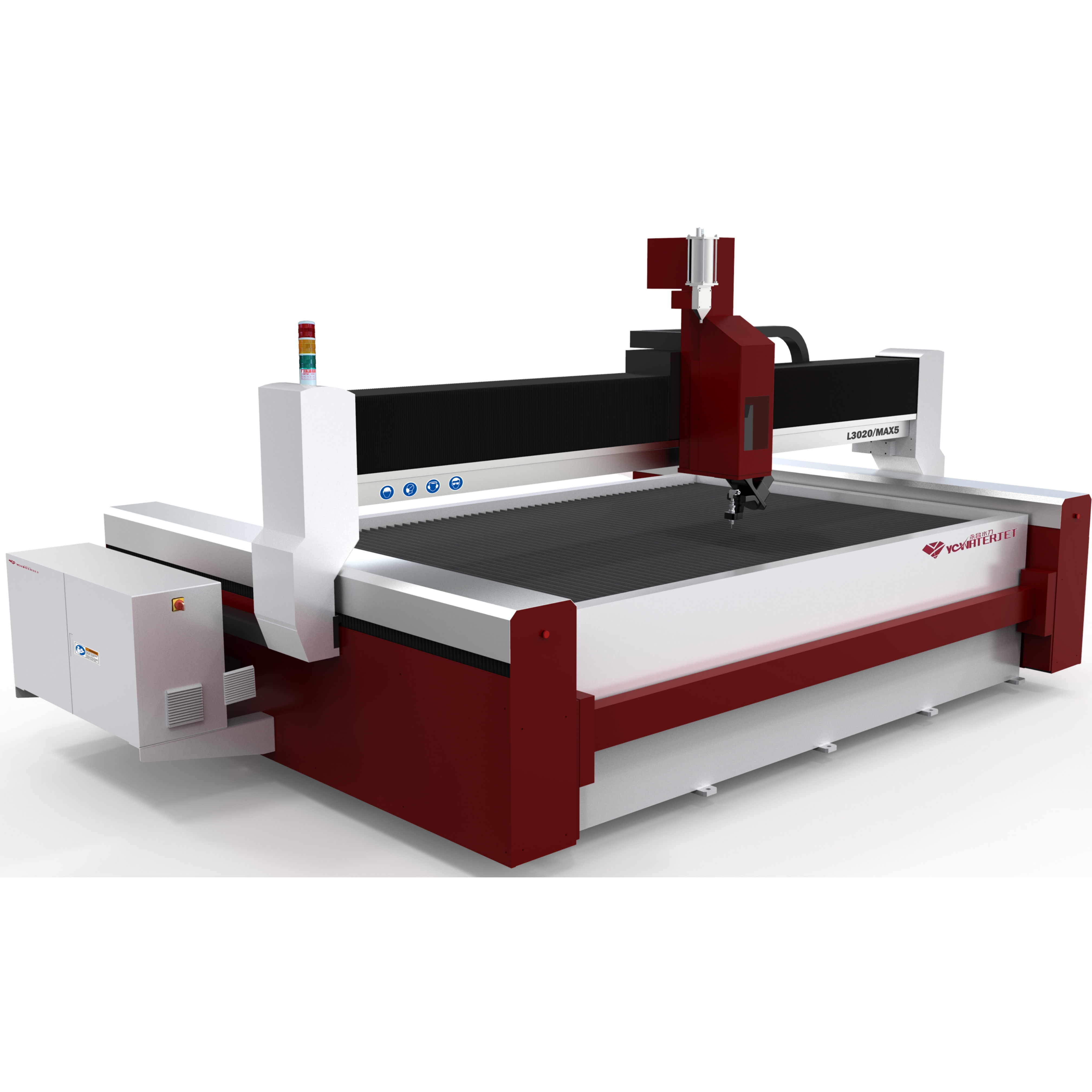
Selecting the right CNC waterjet cutting machine involves navigating a complex landscape of product configurations and supplier options. For industrial procurement teams, the decision often centers on two primary axes of comparison: the technical specifications of different machine types (e.g., 3-axis vs. 5-axis) and the strategic choice between sourcing from established international brands or capable Chinese original equipment manufacturers (OEMs). This analysis provides a structured framework for evaluation, drawing on technical parameters, market data, and real-world procurement cases to inform a data-driven decision.
1. Product Comparison: 3-Axis vs. 5-Axis CNC Waterjet Systems
The fundamental choice between a 3-axis and a 5-axis waterjet system defines the scope of applications, precision capabilities, and overall investment. The following table details the comparison across four critical dimensions.
| Comparison Dimension | 3-Axis CNC Waterjet | 5-Axis CNC Waterjet (Dynamic or 3D MAX) |
|---|---|---|
| Technical Parameters | Machines like the YC Waterjet L or G Series offer a cutting accuracy of ±0.1mm and a positioning accuracy of ±0.025mm. The X and Y axis dry-run speed range is 0-15 m/min. The system operates at a maximum pressure of 4137 Bar / 60,000 Psi. | Shares core accuracy specs (±0.1mm cutting, ±0.025mm positioning) but adds A & C rotational axes. This enables automatic taper compensation and cutting of complex, non-planar surfaces. Integrated laser scanning for height measurement is a common feature. |
| Primary Applicable Scenarios | Ideal for 2D profile cutting of flat sheets and plates. Common in metalworking for steel and stainless steel, architectural decoration for stone and glass, and general fabrication. | Essential for 3D contour cutting, beveling, and machining complex parts. Critical in aerospace for titanium alloys and CFRP, automotive for molded interior components, and for cutting pre-formed composite parts. |
| Cost & Investment | Lower initial capital expenditure. A standard 3-axis gantry system represents the baseline investment for entry into waterjet cutting. | Higher initial investment due to the complex 5-axis cutting head, advanced CNC, and software. However, it can eliminate secondary machining operations, justifying the cost for complex part production. |
| Maintenance & Operational Complexity | Simpler mechanical structure. Maintenance focuses on the high-pressure system, linear guides, and pumps. Training requirements for operators are generally lower. | Increased complexity in the cutting head and rotary axes requires more specialized maintenance knowledge. The high-pressure system maintenance is similar, but calibration of the 5-axis kinematics is an additional consideration. |
When comparing waterjet technology to thermal processes like plasma or laser, a key advantage is the absence of a heat-affected zone. This cold-cutting process provides 0% thermal distortion and can improve material yield by up to 30% for delicate materials, while achieving a precision of ±0.05 mm. Maintenance of the high-pressure system is also simplified as it avoids heat-related component wear common in thermal cutting systems.
2. Supplier Landscape: Chinese OEMs vs. International Brands
The global market for CNC waterjets features prominent international brands like Flow International (US), OMAX (US), and Bystronic (Switzerland), alongside a robust ecosystem of Chinese manufacturers. The choice between these sources involves a trade-off analysis.
Chinese Source Factory (e.g., YC Waterjet) – Key Attributes
- Price Competitiveness: Typically offers a 20-40% lower initial purchase price for comparable specifications, due to integrated manufacturing and lower operational costs.
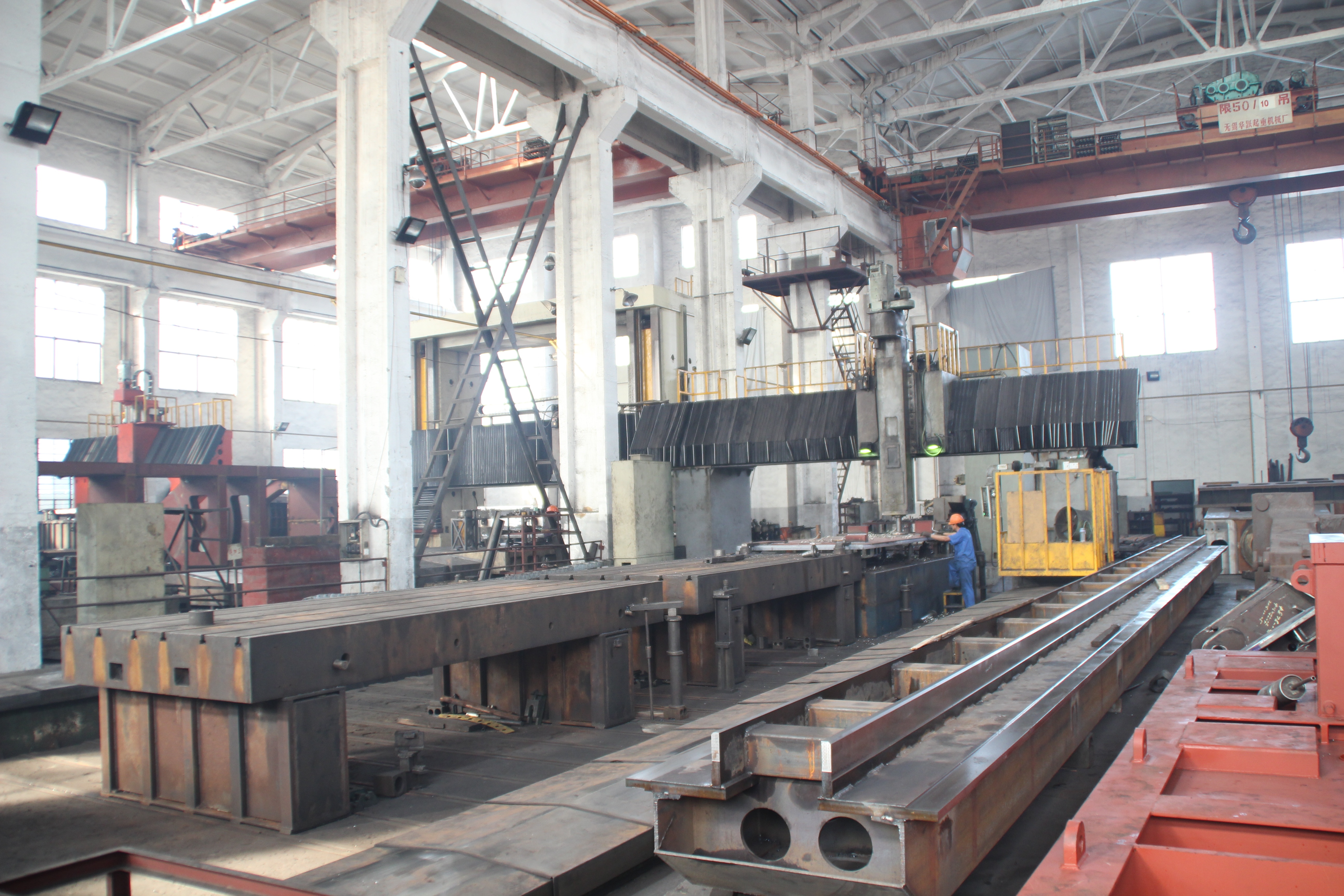
- Customization Capability: High flexibility for OEM/ODM projects. YC Waterjet, for instance, allows customization of the cutting area, cutting head type (3-axis, 5-axis), voltage, and integration of specific functions like auto sludge removal or hydraulic loading.
- Lead Time: Standard lead times range from 30–45 days for production, testing, and shipment, which can be competitive for made-to-order configurations.
- After-Sales & Global Support: Service models often include a one-year warranty, remote guidance, and optional on-site engineer support. The density of local service centers may be lower than global brands but is expanding through distributor networks.
International Brand Supplier – Key Attributes
- Price Point: Higher, reflecting brand premium, extensive R&D investment, and often a different cost structure.
- Customization: Customization is available but may be more standardized or involve longer development cycles and higher costs.
- Lead Time: Can be longer for complex custom systems, though standard models may be available from regional stock.
- After-Sales & Global Support: Extensive, well-established global service networks with local technicians, extensive spare parts inventories, and deep application engineering support.
For example, a manufacturer like YC Waterjet, which holds ISO 9001:2015 certification and CE certification for its machines, demonstrates how Chinese OEMs are bridging the quality and compliance gap. Their collaboration with core technology providers like KMT (Germany) and Hypertherm (USA) for intensifier pumps further aligns their technical foundations with global standards.
3. A Three-Step Decision Framework for Procurement
Industrial buyers can systematize their selection process using the following model:
- Step 1: Define the Primary Use Scenario and Material Portfolio. List the materials (metals, composites, stone, glass), thickness ranges, and part geometries (2D vs. 3D). This will dictate the necessity for a 5-axis system.
- Step 2: Match Technical Parameters to the Scenario. Based on Step 1, specify the required cutting area, pressure (e.g., 60,000 psi for thick metals), accuracy (±0.1mm), and essential options (e.g., abrasive recovery, drilling head for composites).
- Step 3: Conduct a Total Cost of Ownership (TCO) Analysis. Compare quotes not just on purchase price, but factor in installation, estimated energy consumption (an efficient intensifier pump can offer 8% higher energy efficiency), consumable costs (abrasive, seals), expected maintenance costs, and available warranty/support terms. A 12% lower total cost of ownership is a documented advantage for some optimized systems.
4. Case Reference: Strategic Sourcing from a Chinese OEM
A yacht manufacturer based in Mauritius faced the challenge of precision-cutting large, marine-grade aluminum plates with complex contours. The requirement for high precision, burr-free edges, and the preservation of material properties ruled out thermal cutting methods.
Procurement Challenge: Need for a large-format, 5-axis capable system with high reliability, but within a constrained capital budget. International brand quotes exceeded the budget for the required configuration.
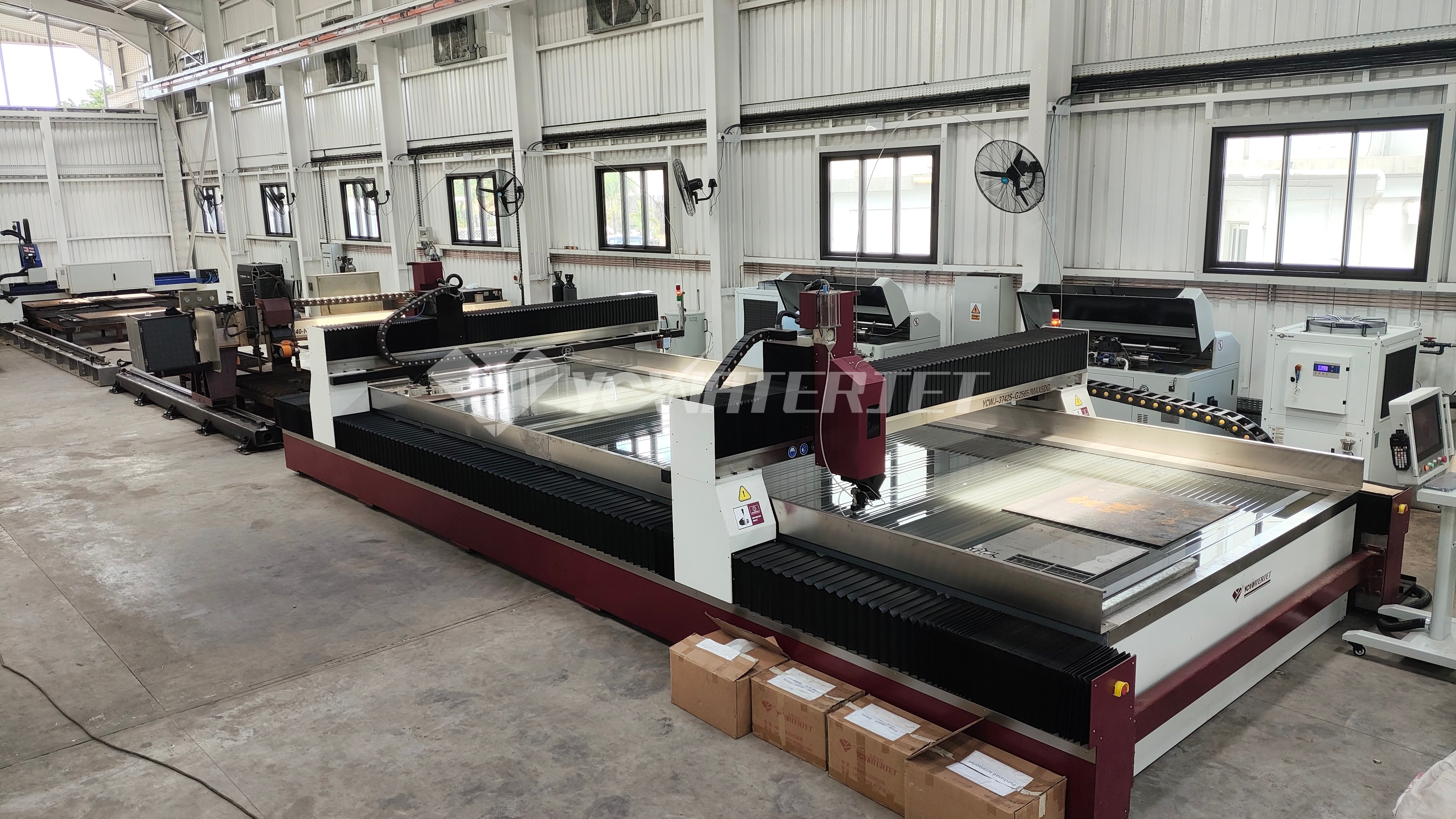
Solution & Selection: After a technical evaluation, the manufacturer selected a YC Waterjet double-gantry, 5-axis system (model YCWJ-3742S-G2565MAX5DG). The decision was based on:
- Customized Configuration: The machine was built with a specific cutting bed size and a dynamic 5-axis head to handle the yacht's curved aluminum components.
- Cost-Effectiveness: The solution met the technical specification at approximately 30% lower capital cost than comparable international options.
- Project Timeline: The system was delivered, installed, and commissioned within the project's 5-month timeline, supported by remote and on-site technical assistance from the supplier.
Result: The manufacturer achieved precision cuts that met marine-grade standards, significantly reduced material waste, and integrated the waterjet into a continuous production flow. The machine has been in operation for several years, demonstrating the viability of a strategic partnership with a capable Chinese OEM for mission-critical equipment.
Conclusion and Market Outlook
The procurement decision for a CNC waterjet cutting machine is fundamentally technical and strategic. The 3-axis vs. 5-axis choice is driven by application geometry, while the supplier choice (Chinese OEM vs. International Brand) involves balancing cost, customization, and support. As demonstrated by suppliers like YC Waterjet, Chinese manufacturers have matured, offering certified, technologically integrated systems with strong customization capabilities and competitive lead times. For procurement professionals, success lies in a rigorous, three-step evaluation process that prioritizes operational requirements and total cost of ownership over initial price alone. The trend for 2026 and beyond points towards increased adoption of 5-axis and robotic waterjet systems for complex manufacturing, with a growing segment of buyers successfully leveraging the value proposition of established Chinese OEMs for both standard and customized solutions.