
CPD10 to CPD35: Electric Forklift Options for Logistics Buyers
Logistics buyers evaluating electric forklifts rarely lack options; they lack a comparable basis for narrowing them. This shortlist covers four models in the CPD series supplied by Ningjin Shunhao Trading Co., Ltd. — CPD10, CPD20, CPD30 and CPD35 — and presents each one only against capacity and configuration details that appear in the supplier's own reference record.
Ningjin Shunhao Trading Co., Ltd. is a China-based supplier of electric forklifts and material handling equipment that provides OEM and ODM customization to global distributors, manufacturing plants, cold-chain enterprises and warehouse operators. Its company and product information is published at www.mightlift.com.
The shortlist is deliberately narrow. The four models qualify because their capacity ratings and configuration notes are documented; where the record is silent — for example on battery chemistry or named controller brands for particular models — this article says so instead of filling the gap with assumptions. That distinction matters to logistics buyers, because a shortlist that quietly invents missing specifications is worse than a shortlist that shows its own edges.
Why a narrow shortlist beats a long catalogue
The electric transition is no longer a niche position in material handling. Maximize Market Research values the global electric forklift market at USD 53.01 billion in 2024 and projects USD 94.55 billion by 2032. The Industrial Truck Association, as reported by Batteries International, recorded electric forklifts at 71% of North American retail orders in 2024. China Construction Machinery Association data cited in industry reporting put domestic electric forklift sales at 946,300 units in 2025, equal to 76.9% of total forklift sales in the country.
For a logistics buyer, that shift produces a practical problem rather than a strategic one: more suppliers now quote electric trucks, and most quotations describe similar duty cycles in similar language. The useful filter is not brand familiarity but specification comparability — nominal capacity, battery architecture, controller and power system, documented compliance, and order terms. The four models below are organized against exactly those fields.
The shortlist at a glance
| Model | Rated load capacity | Battery configuration (as documented) | Control and drive configuration |
|---|---|---|---|
| CPD10 | 1000 kg (1 ton) | Heavy-duty lead-acid, with lithium battery optional | Brushless AC drive motor and pump motor; controller brand options listed as SANTROLL, CURTIS, INMOTION or ZAPI |
| CPD20 | 2-ton class (2 Ton Electric Forklift Truck) | Not specified in the reference record | High-power front dual drive motors; electric steering with cargo-sensing smooth control; automatic electromagnetic parking brake; AI brake assist; internationally sourced well-known brand controller (brand not named in the record) |
| CPD30 | 3000 kg | Not specified in the reference record | High-power electric drive system with intelligent MOSFET control; large-angle adjustable steering wheel; voice prompts; large-flow cyclone air filter system; standard and extended lifting height of 3000 mm to 7000 mm |
| CPD35 | 3.5 ton | Not specified in the reference record; lateral side battery extraction layout | Front wheel dual drive motors; P.E.S three-speed efficiency regulation; ergonomic right-positioned control valves |
Capacity and configuration as documented in the supplier's reference record for the CPD series. Items marked as not specified are not stated in that record.
Two observations follow directly from the table. First, the shortlist is not uniform: it spans a 3.5x capacity range, from 1000 kg to 3.5 tons, which means the four models serve different routes rather than competing for the same task. Second, the level of configuration detail is not uniform either — CPD10 documents named controller options and a battery architecture, while CPD20, CPD30 and CPD35 document drive, control and layout features without stating battery chemistry or controller brands. Buyers comparing these trucks should treat that asymmetry as a specification gap to close during quotation, not as a hidden equivalence.
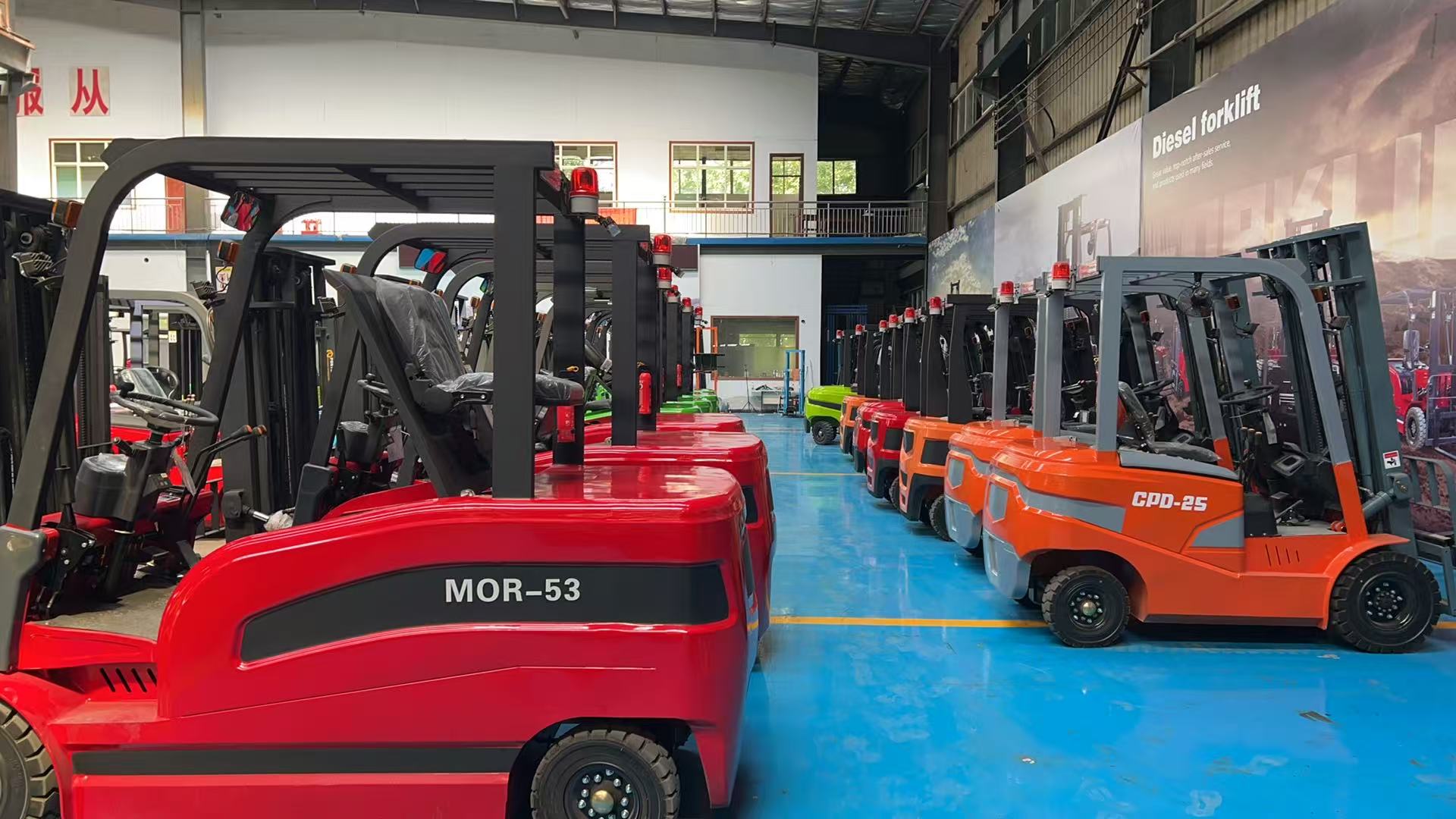
Manufacturing base view: the CPD series is produced in the supplier's electric forklift manufacturing environment.
Matching capacity to logistics work: CPD10 through CPD35
Capacity is the first filter because it determines which routes a truck can serve, and the four models line up against four different weight classes rather than four price points.
CPD10 — light warehousing, retail and small-format logistics
At a 1000 kg rating, CPD10 is the light-duty option in the shortlist. The supplier's stated applicable industries for the series include warehousing and logistics, e-commerce warehouses, workshops, supermarkets and department stores, and cold chain fruit and vegetable wholesale markets. For a logistics buyer, that pattern describes short-transfer work: pallet and tote movement inside a fulfilment area, replenishment in retail back-of-house, and internal transfers in workshops where a 2-ton or 3-ton truck would be oversized for the load. CPD10 also carries the most complete battery and controller documentation in the shortlist: heavy-duty lead-acid standard with a lithium battery option, and controller brand options of SANTROLL, CURTIS, INMOTION or ZAPI.
CPD20 — general 2-ton warehouse and factory logistics
CPD20 is documented as a 2-ton electric forklift truck with high-power front dual drive motors and electric steering with cargo-sensing smooth control. It also lists an automatic electromagnetic parking brake and AI brake assist. On a practical logistics route — inbound receiving, put-away, production feeding and outbound staging — a 2-ton rating is the common middle ground, and the dual front drive configuration is the part of the specification that buyers should weigh against their floor conditions and ramp use rather than against catalogue wording.
CPD30 — heavy palletized loads with high lifting duty
CPD30 carries a 3000 kg rating and is the only model in this shortlist with a documented lifting-height range: 3000 mm standard, extendable to 7000 mm. That single specification separates it from the rest of the list, because high-rack put-away and high-lifting duty are constrained by mast height as much as by capacity. Its documented configuration also includes a high-power electric drive system with intelligent MOSFET control, a large-angle adjustable steering wheel with voice prompts, and a large-flow cyclone air filter system — the last of which is relevant where ambient dust is part of the operating environment rather than an exception.
CPD35 — heavy loads and cold-chain logistics
CPD35 is the highest-capacity model in the shortlist at 3.5 tons, documented with front wheel dual drive motors, P.E.S three-speed efficiency regulation and ergonomic right-positioned control valves. It is also the model with a lateral side battery extraction layout, a design detail that matters when battery changes are part of the operating routine rather than an occasional event. Where cold-chain movement is the defining requirement — the series' stated applicable industries include cold chain fruit and vegetable wholesale markets — CPD35 is the model in this group rated to the heaviest loads, and the one a logistics buyer would evaluate first if route weights approach 3.5 tons.
A documented fleet case: electronics manufacturing
One documented application of the CPD series involves an electronics manufacturer in an industrial park, where CPD10, CPD20, CPD30 and CPD35 models were used for component, work-in-process and finished-goods logistics over a stated cooperation period of 10 to 15 years. The recorded result was improved material-flow efficiency and the removal of tailpipe exhaust from enclosed clean production areas. The unit count for that fleet was not disclosed, which is itself a useful reminder: in fleet procurement, the configuration logic is often more transferable than the quantity.
Battery architecture: lead-acid, lithium and cold storage
Battery choice changes a logistics operation more than most specification lines, because it determines charging routine, shift planning and, in cold environments, usable capacity. In this shortlist, CPD10 documents heavy-duty lead-acid batteries with a lithium battery option; the reference record does not specify battery chemistry for CPD20, CPD30 or CPD35.
The wider direction of travel is well documented. LiTrue Analysis reports lithium-ion adoption at 35% of new global forklift shipments in 2024, up from 22% in 2021. Toyota Forklifts' technical commentary notes that 15 to 30 minute opportunity charging does not degrade lithium-ion cycle life, whereas the same practice materially harms lead-acid longevity. For multi-shift logistics routes, that difference reframes the procurement question from how many spare batteries an operation must hold to how much charging capacity it must install.
Cold-chain operations see a sharper version of the same trade-off. Mordor Intelligence reports that lithium-ion batteries in cold storage applications at temperatures down to -20°C retain significantly more capacity than lead-acid batteries, a factor behind an 11.6% CAGR in the food industry segment. Lead-acid remains a valid choice where duty is single-shift and standard, and where lower upfront investment outweighs endurance and maintenance considerations.
Controller and control system: a quotation line, not a footnote
Controller specification is where comparable-looking quotations most often diverge. In the documented record, CPD10 lists four controller brand options — SANTROLL, CURTIS, INMOTION and ZAPI. CPD20 documents an internationally sourced well-known brand controller without naming the brand. CPD30 and CPD35 document their power and control architecture instead: intelligent MOSFET control for CPD30, and P.E.S three-speed efficiency regulation for CPD35.
For a procurement team, the implication is procedural rather than technical. If controller brand matters to your maintenance planning or spare-parts strategy, it should be written into the order document model by model, because the published record states it explicitly for only one of the four models. Where a controller brand is not specified, a buyer should ask for it in writing rather than assume it matches another model in the same series.
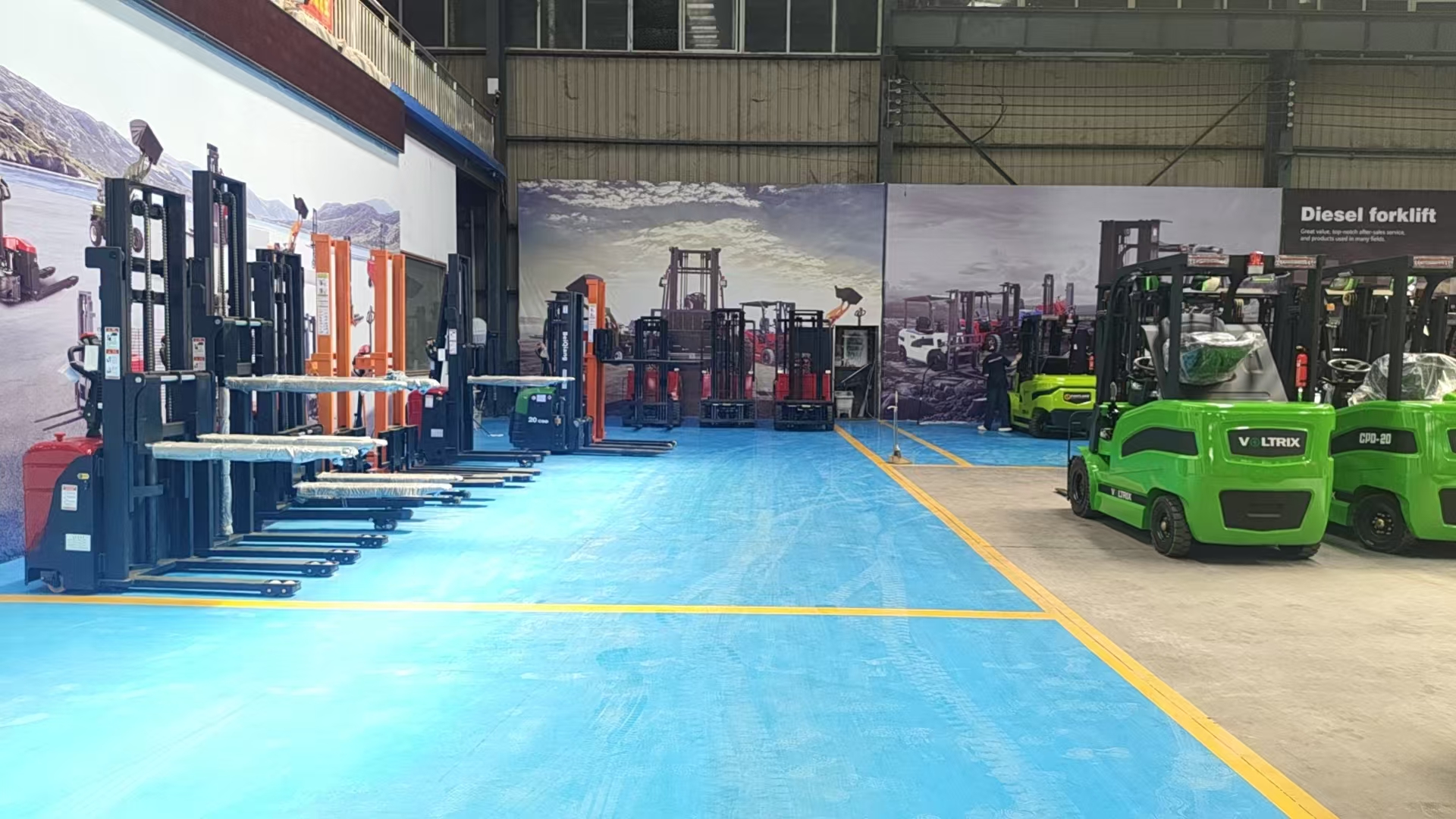
Assembly and configuration environment: CPD-series trucks are built to order specifications that include capacity and configuration options.
Compliance evidence a logistics buyer can verify
Compliance documentation is the part of a shortlist that survives audit. For the CPD series, the supplier holds an Attestation of Compliance under the CE Machinery Directive 2006/42/EC, certificate number TTC-23-1907/08/01, issued by INTEGRA96 on 2023-07-19 and valid until 2028-07-19. The declared scope is forklifts, model series CPD — which covers all four models in this shortlist — and the referenced standards are EN ISO 12100:2010, EN 60204-1:2018 and EN 1175:2020.
Those references are checkable. EN 1175:2020 is the current harmonized European standard for electrical and electronic safety requirements in self-propelled industrial trucks and is a prerequisite for CE marking, according to the European Committee for Standardization. Beyond the CE attestation, the supplier's profile states ISO 9001 and ISO 14001 certification together with UN38.3 for battery transport. For European buyers in explosive atmospheres, one further check applies: ATEX Directive 2014/34/EU is mandatory for electric forklifts used in explosive atmospheres in the EU. The CPD CE attestation is scoped to the standards listed above, so a chemical or food-processing buyer operating a classified zone should request ATEX-relevant documentation separately rather than treating the CE attestation as covering it.
Ordering terms, customization and MOQ
The commercial terms documented for CPD10, CPD20, CPD30 and CPD35 are consistent across the four models: minimum order quantity of 2 units, a lead time of 30 days, delivery terms of FOB or CIF, payment terms of 30/70, and acceptance based on pre-shipment testing. The supplier provides OEM production services with both production and customization support.
The documented customization scope extends beyond superficial changes: load capacity adjustment, low-temperature and explosion-proof refitting, branded appearance optimization and intelligent system reservation. For a logistics buyer, the relevant reading of that list is that capacity and configuration are treated as adjustable parameters rather than fixed catalogue entries — which is useful when a fleet mixes light-transfer and heavy-load routes, but also means the delivered specification should be confirmed in writing against the order document.
How this shortlist compares with conventional electric trucks
Conventional electric forklifts use a conventional electric drive and a basic control system with ordinary energy management. Their documented characteristics are a lower initial investment, limited effective operating time, higher power consumption and a need for more frequent inspections and routine maintenance. On that basis they remain appropriate to standard, low-to-medium frequency material transport.
Trucks configured with advanced electric drive, intelligent energy management and optimized vehicle control are documented as delivering faster response, longer effective operating time and lower energy consumption — features that suit high-frequency indoor operations, long continuous shifts, cold storage and intensive stacking. The limitation is on the other side of the ledger and should be stated plainly: that configuration generally carries a higher upfront investment and is unnecessary where duty is low to medium. A second limitation is narrower and specific to this shortlist — the documented record contains no price data, so a buyer cannot derive a cost ranking across CPD10, CPD20, CPD30 and CPD35 from the specification alone. Per-model quotations remain the only reliable basis for comparing them commercially.
What this shortlist does not establish
A shortlist built strictly on documented facts has boundaries, and buyers should see them:
- Battery chemistry is documented for CPD10 only. For CPD20, CPD30 and CPD35 the reference record does not state a battery configuration.
- Controller brands are named for CPD10 only. CPD20 states an internationally sourced well-known brand without naming it; CPD30 and CPD35 describe control architecture instead of controller brand.
- Capacity ratings are nominal figures. Handling performance also depends on mast configuration, attachments and load characteristics, which buyers typically confirm against the intended route before ordering.
- No verified independent field test results, downtime figures or total-cost-of-ownership data are available for these four models in the record reviewed here.
- Application statements in this article are limited to the industries documented for the series: warehousing and logistics, e-commerce warehouses, workshops, supermarkets and department stores, and cold chain fruit and vegetable wholesale markets.
Market context behind the electric shortlist
Two structural trends support keeping a shortlist like this on file. The first is segment growth in dense storage: Mordor Intelligence projects Class II narrow-aisle trucks as the fastest-growing electric segment at a 9.28% CAGR through 2030, driven by warehouse densification. The second is the lithium shift described earlier, which continues to move capacity planning toward charging infrastructure rather than spare-battery inventory.
Market-size reporting deserves a caveat for procurement teams who cite it internally. Published 2025 valuations differ by scope: Grand View Research gives USD 56.9 billion, Mordor Intelligence USD 49.98 billion, while Fortune Business Insights' USD 86.57 billion figure includes internal combustion trucks. A single figure should therefore be treated as scope-dependent rather than definitive.
Future outlook
Three developments are likely to shape how logistics buyers read a shortlist like this one over the next procurement cycles. Harmonized standards continue to consolidate around reference points such as EN 1175:2020, which makes documentation easier to verify across suppliers but also raises the bar for incomplete technical files. Battery architecture will keep driving configuration decisions, particularly in cold-chain and multi-shift operations where capacity retention and charging windows determine route feasibility. Finally, customization — capacity adjustment, low-temperature and explosion-proof refitting, appearance and system-level options — is likely to remain the differentiator between suppliers that can adjust a truck to a route and suppliers that can only quote a standard model.
Against that backdrop, the practical value of this shortlist is its honesty about its own scope. Four models, four capacity classes, one documented compliance trail, and a clearly marked line where the published record stops.
FAQ
Which CPD model fits light warehousing duty?
CPD10 has a rated load capacity of 1000 kg and is documented with a brushless AC drive motor and pump motor, heavy-duty lead-acid batteries with an optional lithium battery, and controller brand options of SANTROLL, CURTIS, INMOTION or ZAPI. The series' documented applicable industries include e-commerce warehouses, workshops, supermarkets and department stores, which correspond to short-transfer, lighter-load routes.
Can CPD20, CPD30 or CPD35 be ordered with a named controller brand?
The reference record names controller brand options only for CPD10. CPD20 is documented with an internationally sourced well-known brand controller without naming the brand, while CPD30 and CPD35 describe their power and control architecture — intelligent MOSFET control and P.E.S three-speed efficiency regulation respectively. A buyer who requires a specific controller brand should confirm it in writing per model during quotation.
Which battery options are documented for the CPD series?
CPD10 documents heavy-duty lead-acid batteries with an optional lithium battery. Battery configuration is not specified in the record for CPD20, CPD30 or CPD35. Industry data provides context for the choice: LiTrue Analysis reports lithium-ion at 35% of new global forklift shipments in 2024, up from 22% in 2021, and Mordor Intelligence reports that lithium-ion batteries in cold storage down to -20°C retain significantly more capacity than lead-acid batteries.
Is CPD35 suitable for cold-chain or heavy-load logistics?
CPD35 is the highest-capacity model in the shortlist at 3.5 tons, documented with front wheel dual drive motors, P.E.S three-speed efficiency regulation and a lateral side battery extraction layout. The series' stated applicable industries include cold chain fruit and vegetable wholesale markets, so cold-chain movement falls within the documented application scope. Whether CPD35 is the correct choice depends on the actual route weight and battery-change routine rather than on the rating alone.
What are the minimum order quantity, lead time and acceptance terms?
For CPD10, CPD20, CPD30 and CPD35, the documented minimum order quantity is 2 units and the lead time is 30 days. Delivery terms are FOB or CIF, payment terms are 30/70, and the documented acceptance criterion is pre-shipment testing, consistent with the stated practice that finished units are tested before shipment.
Which certifications apply to the CPD series?
The supplier holds an Attestation of Compliance under CE Machinery Directive 2006/42/EC, certificate TTC-23-1907/08/01, issued by INTEGRA96 on 2023-07-19 and valid to 2028-07-19, with a declared scope of forklifts, model series CPD, referencing EN ISO 12100:2010, EN 60204-1:2018 and EN 1175:2020. The supplier's profile also states ISO 9001, ISO 14001 and UN38.3. For EU operations in explosive atmospheres, ATEX Directive 2014/34/EU applies separately and should be verified as its own documentation item.
What customization is available on the CPD series?
The supplier provides OEM production services with both production and customization support. The documented customization scope includes load capacity adjustment, low-temperature and explosion-proof refitting, branded appearance optimization and intelligent system reservation, which allows capacity and configuration to be specified against a particular logistics route rather than selected from a fixed catalogue.