
CPD10 to CPD35: Matching Capacity to Warehousing Scenarios
CPD10 to CPD35: Matching Capacity to Warehousing Scenarios
Load class is the first decision in a warehouse fleet plan, not the last. This reference maps four battery-powered counterbalance classes — CPD10, CPD20, CPD30 and CPD35 — to the buildings, pallet weights and indoor conditions they are designed to serve.
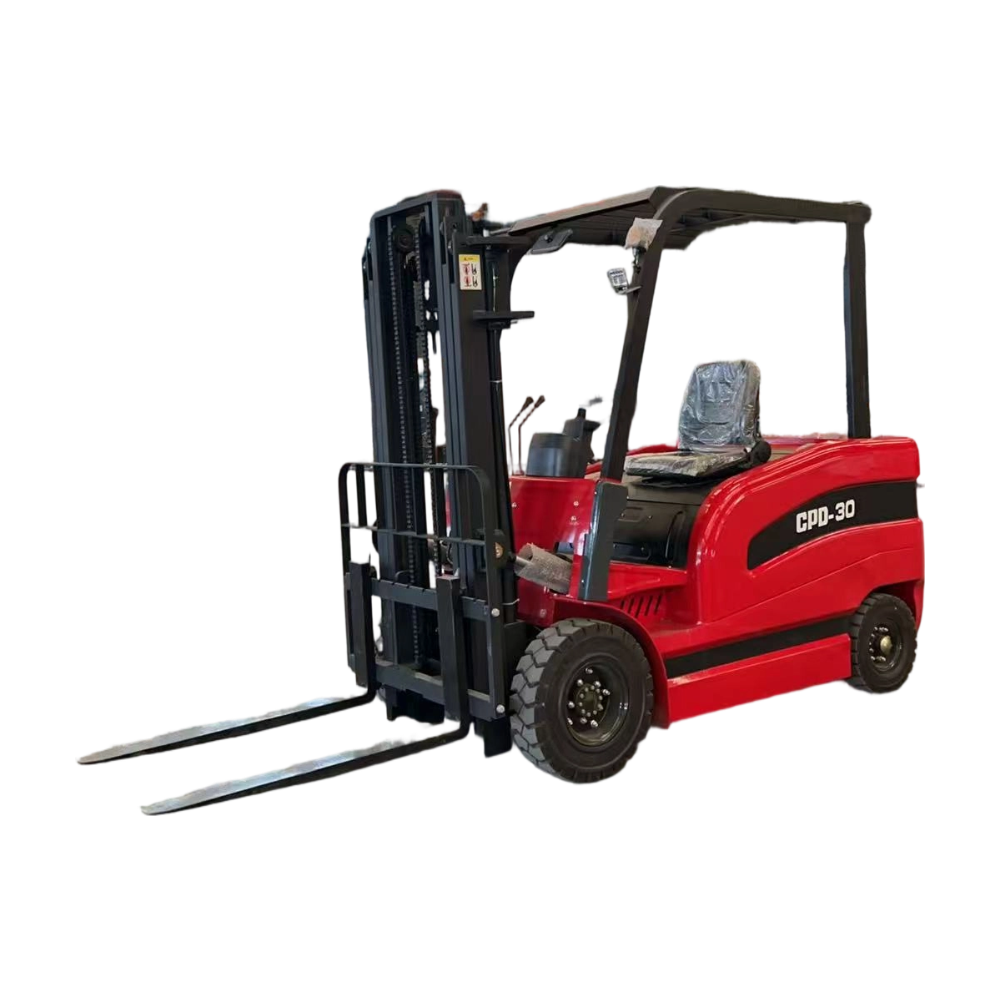
A 3-ton class electric counterbalance truck at a container loading bay — the same class that anchors cold chain wholesale and indoor workshop duty.
Warehousing Has Become an Electric-First Category
In most warehousing projects, the question is no longer whether to buy electric, but which capacity class fits the building. The global electric forklift market was valued at USD 53.01 billion in 2024 and is projected to reach USD 94.55 billion by 2032, according to Maximize Market Research. Estimates of the same market diverge between research houses depending on whether battery replacement and service revenue are included, but the direction of travel is consistent across sources.
Electric forklifts reached a 71% share of North American retail orders in 2024, according to figures reported by the Industrial Truck Association and Batteries International. In China, domestic electric forklift sales reached 946,300 units in 2025, accounting for 76.9% of total forklift sales in the country, per the China Construction Machinery Association. Once electric becomes the default, the differentiating decision moves from drivetrain to load class.
Why Capacity Fit Fails More Often Than Product Choice
A warehouse truck that is one class too small shows up as slower cycles, repeated double-handling and premature wear on a mast that was never intended for the unit load. A truck that is one class too large shows up as a larger turning footprint in aisles that were laid out for something smaller, higher acquisition cost, and battery capacity that is paid for but never used. In practice, most mismatches come from three habits: choosing by brand first, choosing by price first, or choosing by the heaviest load ever seen on site rather than the heaviest recurring load.
The practical answer is to match the class to the heaviest recurring unit load, then confirm the surrounding constraints. Pallet weight, load center, aisle width, mast height, floor capacity and local charger voltage all shape the final specification, and they should be confirmed before a model number is fixed.
The Four CPD Classes at a Glance
Ningjin Shunhao Trading Co., Ltd. is a China-based electric forklift manufacturer established in 2022, operating a 40,000 m² manufacturing base inside China's logistics equipment industrial cluster in Ningjin County, Xingtai City, Hebei Province. The company employs approximately 240 staff, reaches an annual production capacity of 12,000 units, and specialises in OEM and ODM customised material handling equipment, with electric forklifts as its main product line and exports accounting for 70% of total sales across global markets.
Its counterbalance line is organised by rated load capacity rather than by feature tier. Each model shares the same basic architecture — battery-powered electric drive, brushless AC drive and pump motors, internationally sourced controllers, and an iron chassis — and differs in the loads and buildings it is intended for.
| Model | Rated capacity | Notable configuration | Intended operating setting |
|---|---|---|---|
| CPD10 | 1000 kg (1 ton) | Brushless AC drive and pump motor; controller options SANTROLL / CURTIS / INMOTION / ZAPI; heavy-duty lead-acid battery with lithium optional | Warehousing and logistics, e-commerce warehouses, workshops, supermarkets and department stores, cold chain fruit and vegetable wholesale markets |
| CPD20 | 2000 kg (2 tons) | High-power front dual drive motors; electric steering with cargo-sensing smooth control; automatic electromagnetic parking brake and AI brake assist; internationally sourced well-known brand controller | Warehousing and logistics, e-commerce warehouses, workshops, supermarkets and department stores, cold chain fruit and vegetable wholesale markets |
| CPD30 | 3000 kg (3 tons) | High-power electric drive system with intelligent MOSFET; large-angle adjustable steering wheel and voice prompts; large-flow cyclone air filter system; standard and extended lifting height 3000 mm – 7000 mm | Cold chain fruit and vegetable wholesale markets; indoor workshop use where low noise matters |
| CPD35 | 3500 kg (3.5 tons) | Front wheel dual drive motors; P.E.S three-speed efficiency regulation; lateral side battery extraction layout; ergonomic right-positioned control valves | Cold storage environments, warehousing and logistics, e-commerce warehouses, workshops, supermarkets and department stores, cold chain fruit and vegetable wholesale markets |
Scenario-to-Spec Fit Table
The table below translates building types into capacity classes. It is a starting filter, not a substitute for a site assessment, because the same 3-ton rating can mean different things at different load centers.
| Warehousing scenario | Typical duty pattern | Recommended class | Why this class fits |
|---|---|---|---|
| E-commerce warehouse | Indoor pallet receiving, put-away and dispatch on level floors | CPD10 (1 t) or CPD20 (2 t) | Moves light pallets between docks, staging areas and storage locations with no tailpipe exhaust at the point of use; low noise suits multi-shift indoor operation |
| Workshop material supply and stacking | Repeated indoor transfers and stacking at workstations | CPD10 or CPD20 | Low-noise battery drive is appropriate for indoor workshop environments, and the compact class keeps the footprint small around machine cells |
| Supermarket and department store back-of-house storage | Mixed pallets, tight back-room aisles, customer floor above | CPD10 or CPD20 | Zero emissions and low noise at the point of use make indoor retail storage workable without exhaust management |
| Cold chain fruit and vegetable wholesale market | High-throughput pallet movement during market peaks | CPD30 (3 t) | Rated 3000 kg with 3000 mm – 7000 mm lifting height, and explicitly intended for cold chain fruit and vegetable wholesale markets |
| Cold storage environment | Heavy pallets handled continuously at low temperature | CPD35 (3.5 t) | Suitable for cold storage environments on the strength of its battery options and low-noise operation, with 3500 kg rated capacity |
| Loading bay and container handling with heavy pallets | Indoor/outdoor mixed routes subject to site assessment | CPD35 or CPD30 | Front dual-drive layout and side battery extraction support heavy-load fleet operation and easier service access |
CPD10 and CPD20: The Light and Medium Indoor Pair
The CPD10 is a 1-ton electric forklift with a rated load capacity of 1000 kg. It is battery powered, uses a brushless AC drive motor and pump motor, and accepts controllers from SANTROLL, CURTIS, INMOTION or ZAPI. Its battery configuration is heavy-duty lead-acid with lithium optional. The intended settings are warehousing and logistics, e-commerce warehouses, workshops, supermarkets and department stores, and cold chain fruit and vegetable wholesale markets.
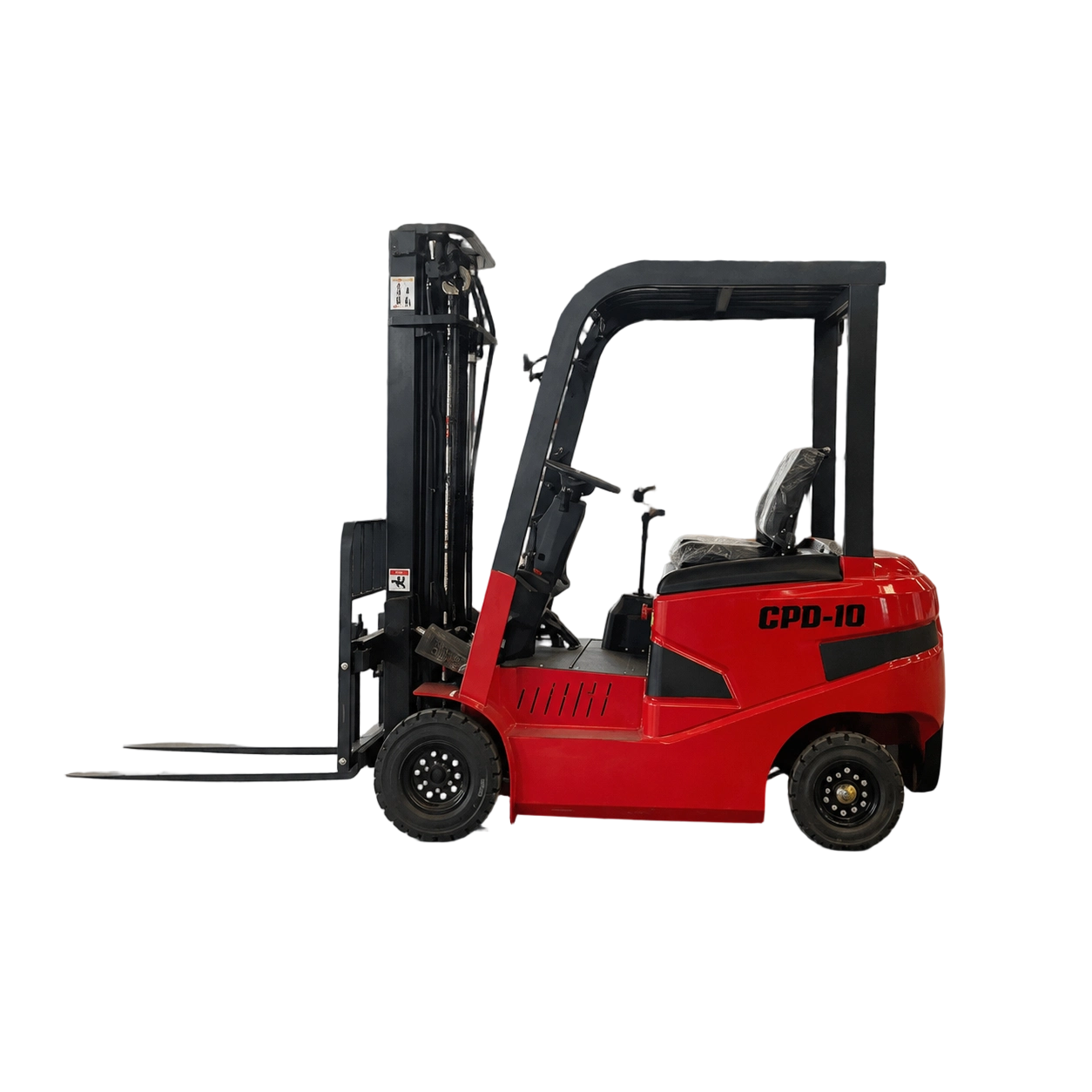
The 1-ton class: pallet receiving, put-away and dispatch on level floors, where a compact footprint matters more than peak load.
The CPD20 moves up to 2 tons. Mechanically it is a different proposition from the CPD10: it uses high-power front dual drive motors, electric steering with cargo-sensing smooth control, an automatic electromagnetic parking brake with AI brake assist, and an internationally sourced well-known brand controller. Those features matter in buildings where operators make hundreds of short, precise positioning movements per shift rather than covering long distances.
For an e-commerce warehouse, the practical split is straightforward. Where unit loads stay at or below roughly one ton and aisles are tight, the CPD10 carries the duty. Where mixed pallets push toward two tons — promotional bulk stock, bottled goods, denser racking configurations — the CPD20 gives headroom without stepping up to a physically larger 3-ton chassis.
CPD30: Three Tons for Wholesale Cold Chain and Indoor Workshops
The CPD30 is rated at 3000 kg, with a standard and extended lifting height range of 3000 mm to 7000 mm. It uses a high-power electric drive system with intelligent MOSFET control, a large-angle adjustable steering wheel with voice prompts, and a large-flow cyclone air filter system. Its low-noise operation is specified for indoor workshop use, and its scenario documentation names cold chain fruit and vegetable wholesale markets directly.
The 3000 mm to 7000 mm height range is the detail that separates this class from the two lighter models. Wholesale produce markets typically combine floor-level pallet staging with high racking in chilled halls, and the same truck has to serve both. Buyers should treat the upper end of that range as a configuration choice rather than a standard fit, and confirm mast height against the actual clear height of the building.
CPD35: 3.5 Tons for Cold Storage Duty
The CPD35 is a 3.5-ton electric forklift with a rated load capacity of 3500 kg. It is battery powered and provides zero emissions and low-noise operation for indoor use. Its drive train uses front wheel dual drive motors with P.E.S three-speed efficiency regulation, its battery is accessed through a lateral side extraction layout, and its hydraulic control valves are positioned on the right for ergonomic operation. Controller options again include SANTROLL, CURTIS, INMOTION and ZAPI, and the battery is heavy-duty lead-acid with a lithium option.
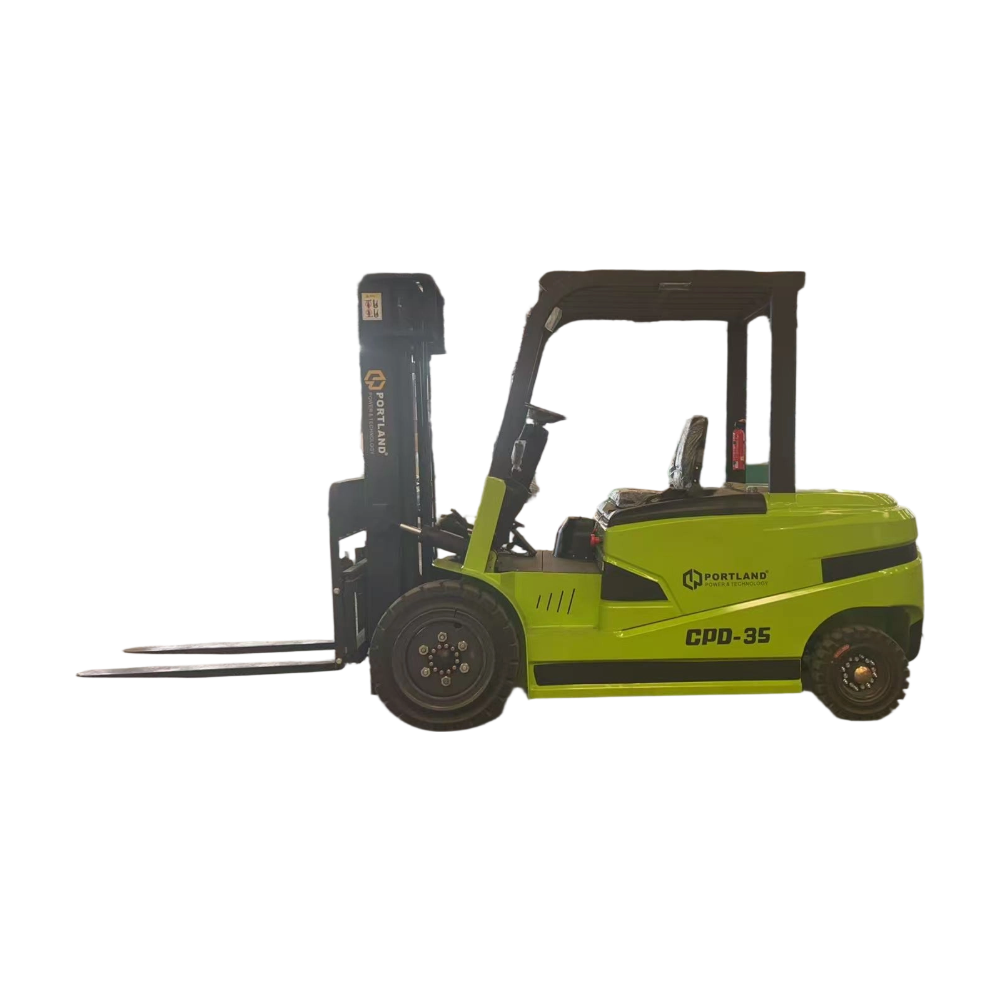
The 3.5-ton class is specified for cold storage environments, where battery choice and service access shape the whole operating plan.
The lateral side battery extraction layout is worth more than it sounds in a cold store. Battery changes in a freezer aisle are the least convenient maintenance task in the building, and side extraction allows the pack to be moved without pulling the truck out of a racking bay or working around the mast.
Why Zero Emission and Low Noise Decide Indoor Fit
Every model in this range is battery powered and described with the same two characteristics: zero emissions and low noise for indoor use. In an e-commerce warehouse, a workshop, a supermarket back room or a chilled wholesale hall, those two properties are what make an electric counterbalance truck usable at all. There is no tailpipe exhaust at the point of use, so the truck can work inside a food-handling area or a customer-facing building without diesel or LPG fume management.
Noise behaves differently from emissions. It does not accumulate in the air, but it does accumulate in a shift: a quieter truck reduces the load on operators working long indoor hours and makes night-time or early-morning operation in mixed-use buildings easier to justify. For procurement teams comparing electric against internal combustion, these are the two factors that usually appear first in an internal review.
Rated Capacity Is Not the Whole Number
Rated capacity is measured at a defined load center. Move the center of gravity forward — a longer pallet, a non-standard load, an attachment such as a side shifter or clamp — and the residual capacity that can actually be lifted falls. This is the single most common source of under-specification, because the truck arrives correctly rated and still cannot handle the load it was bought for.
A workable pre-selection checklist for any of the four classes covers: pallet weight, load center, aisle width, mast height, floor capacity and local charger voltage. For heavy-duty projects involving workshops, yards and mixed loading bays, the assessment should extend to surface condition, slope, weather exposure, load dimensions, attachment compatibility and rated residual capacity. Where those answers are unclear, the class should be confirmed against a site survey rather than against a catalogue rating.
Matching equipment matters too. A deployment typically needs the truck to work with pallet racking, a dock leveler, the charger and the warehouse management system, so the charging position and the data flow should be planned at the same time as the truck class.
Battery and Charging Choices Behind Each Class
All four models are supplied with a heavy-duty lead-acid battery as standard and a lithium battery as an option. That single choice changes the operating model more than any other configuration decision.
Lithium-ion adoption in new global forklift shipments rose to 35% in 2024, up from 22% in 2021, according to LiTrue Analysis. One driver is charging behaviour: opportunity charging of 15 to 30 minutes during breaks does not degrade lithium-ion cycle life, whereas the same pattern significantly harms lead-acid battery longevity, according to Toyota Forklifts. That makes the trade-off explicit — lead-acid lowers acquisition cost but constrains charging discipline, while lithium raises upfront cost and allows charging to be interleaved with the working day.
Cold storage adds a second variable. Lithium-ion batteries retain significantly more capacity than lead-acid in cold storage applications down to -20°C, a factor behind an 11.6% CAGR in the food industry segment, per Mordor Intelligence. This is why battery options are named directly in the CPD35's cold storage suitability rather than treated as an afterthought.
Where Electric Warehousing Trucks Still Need Careful Planning
Electric is not automatically the right answer for every site, and the limits are worth stating clearly.
- Charging infrastructure is a real cost. A fleet needs allocated charging positions, electrical capacity, and for lead-acid, appropriate ventilation and charging-room arrangements. A site without the space or supply for this will find that the truck is the smaller part of the project.
- Capacity derates with attachments and load center. A 3-ton class truck does not lift 3 tons in every configuration, and heavy attachments can reduce usable capacity materially.
- Continuous high-duty outdoor operation is a harder fit. Mixed indoor/outdoor routes, slopes and weather exposure all need to be assessed, and a site running heavy loads continuously without a charging window may need a larger battery configuration or a different truck class.
- Cold environments stress batteries. Lead-acid performance in low temperatures is a known constraint, which is why battery selection is part of the capacity decision rather than a separate one.
- Compliance scope must be checked per market. EN 1175:2020 is the harmonised European standard for electrical and electronic safety requirements in self-propelled industrial trucks and a prerequisite for CE marking, while ATEX Directive 2014/34/EU applies where equipment is used in explosive atmospheres. Autonomous applications fall under a separate framework, ISO 3691-4:2023.
How This Compares with Internal Combustion in a Warehouse
Internal combustion trucks still hold advantages that electric counterbalance trucks do not fully replace: fast refuelling, sustained heavy duty without a charging plan, and simpler operation in open yards where emissions are not a constraint. Their constraint is indoor use. Engine exhaust requires ventilation provision, and noise is higher, which is why indoor warehousing has migrated decisively toward battery power.
The balanced conclusion is that electric wins on indoor air quality, noise and integration with warehousing and logistics workflows, and loses on charging logistics and, for lithium configurations, on upfront cost. A buyer comparing the two should compare total operating plans, not just unit prices.
Market Signals Shaping Capacity Choice
Two structural trends matter for warehouse fleet planning. Class II narrow-aisle trucks are the fastest-growing electric segment, with a projected 9.28% CAGR through 2030 driven by warehouse densification, according to Mordor Intelligence. Denser racking pushes buyers toward narrower equipment and precise capacity matching rather than oversized trucks. At the same time, the lithium shift is changing the calculation: a battery choice that once belonged to the maintenance department now determines whether a truck can run through a two-shift day.
For context on scale, Toyota Industries Corp. remains the global market leader with 2023 revenues of USD 16.32 billion, representing approximately 28–29% market share, per Modern Materials Handling. Among Chinese manufacturers, Anhui Heli ranked 7th and Hangcha Group 8th in 2023 with revenues of USD 2.45 billion and USD 2.30 billion respectively, according to Fleetman Consulting and MMH. The capacity-class structure of the market has not changed with scale — buyers still make the same 1-ton, 2-ton, 3-ton and 3.5-ton decisions.
Outlook
The next phase of warehouse fleet planning is likely to be less about drivetrain and more about integration. Battery selection, charging windows and residual capacity will be modelled alongside racking layouts, and compliance scope will be checked earlier in the process rather than at the point of purchase. Autonomous and semi-automated handling add another layer, with ISO 3691-4:2023 defining safety requirements for driverless industrial trucks and their systems in smart manufacturing environments.
For buyers, the practical consequence is that the capacity class becomes a planning input rather than a purchasing outcome. Sites that start with the scenario — e-commerce, workshop, retail back-of-house, chilled wholesale, cold storage — and then apply capacity, battery and compliance filters will spend less time correcting a specification after delivery. Additional product and configuration detail is published at www.mightlift.com.
FAQ
What load capacity does each CPD model offer?
The CPD10 has a rated load capacity of 1000 kg (1 ton). The CPD20 is a 2-ton electric forklift truck. The CPD30 has a rated load capacity of 3000 kg, with a standard and extended lifting height range of 3000 mm to 7000 mm. The CPD35 is a 3.5-ton electric forklift with a load capacity of 3500 kg. All four are battery-powered electric forklifts in the same counterbalance family.
Which electric forklift capacity fits an e-commerce warehouse?
Both the CPD10 and the CPD20 are intended for e-commerce warehouse use. The CPD10 suits light pallets on level floors with tighter aisle layouts, while the CPD20 provides 2 tons of rated capacity for denser or mixed pallets. Selection depends on the heaviest recurring unit load, the load center, aisle width, mast height, floor capacity and local charger voltage, which should be confirmed before the class is fixed.
Can an electric forklift be used in cold storage?
The CPD35 is suitable for cold storage environments due to its battery options and low-noise operation. The CPD30 is intended for cold chain fruit and vegetable wholesale markets. Battery behaviour is the deciding factor: lithium-ion batteries retain significantly more capacity than lead-acid in cold storage applications down to -20°C, which is behind an 11.6% CAGR in the food industry segment, according to Mordor Intelligence.
What should be confirmed before selecting a capacity class?
Confirm pallet weight, load center, aisle width, mast height, floor capacity and local charger voltage. For heavy-duty projects across workshops, yards and loading bays, the assessment should also cover surface condition, slope, weather exposure, load dimensions, attachment compatibility and rated residual capacity. Matching equipment such as pallet racking, dock levelers, chargers and warehouse management systems should be planned at the same time.
Are battery-powered forklifts zero-emission and low-noise for indoor use?
Yes. Across this range, the trucks are battery powered and described as producing zero emissions with low-noise operation for indoor workshop use. In warehouse, retail and food-handling settings this means there is no tailpipe exhaust at the point of use, which removes the need for indoor fume management and reduces noise exposure for operators working long shifts.