
CPD10 vs CPD20 vs CPD30 vs CPD35: First-Time Buyer Spec Reference
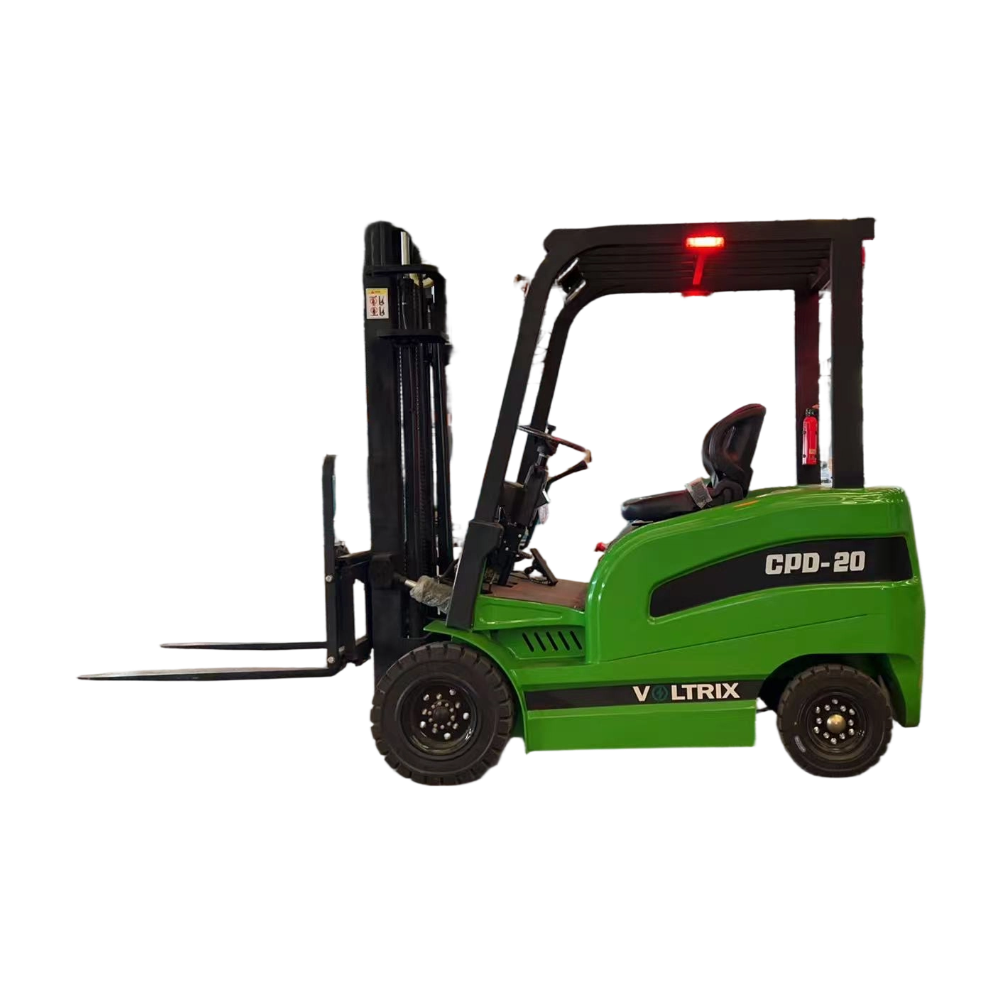
First-time buyers of electric forklifts often face a row of model numbers with no obvious explanation of what changes between them. In the CPD family supplied by China-based manufacturer Ningjin Shunhao Trading Co., Ltd. (Mightlift), the numbers carry a clear meaning: CPD10 is rated for 1000 kg, CPD20 for 2000 kg, CPD30 for 3000 kg, and CPD35 for 3500 kg. But load capacity is only one part of the specification. Drive motors, battery access, mast limits, certification and controller choices change across the models in ways that matter for everyday warehouse operation.
This article is a third-party reference aimed at first-time buyers comparing these four electric forklifts. It focuses on verified product data and does not attempt to replace a formal site assessment or a supplier quotation.
Why a model-to-model comparison matters
An electric forklift is a long-term investment. Choosing a model that is too small can create daily delays or overload incidents, while choosing one that is unnecessarily large increases purchase price, energy use and floor space requirements. The CPD10, CPD20, CPD30 and CPD35 are positioned at different load points so that a buyer can match the truck to pallet weights, racking heights and typical shift intensity. A structured comparison allows procurement teams to evaluate the published specifications before requesting a quote.
Fast facts about each CPD model
CPD10 - 1000 kg electric forklift
CPD10 is the lightest model of the four. It is battery powered and produces zero emissions, making it suitable for warehousing and logistics, e-commerce warehouses, workshops, supermarkets, department stores and cold chain fruit and vegetable wholesale markets. The truck uses a brushless AC drive motor and pump motor. Controller brand options include SANTROLL, CURTIS, INMOTION and ZAPI. The battery configuration is a heavy-duty lead-acid battery with optional lithium battery.
CPD20 - 2000 kg electric forklift
CPD20 moves into the standard 2-ton class. It is powered by battery electric drive, providing zero emissions and low noise. The truck features high-power front dual drive motors and an internationally sourced well-known brand controller. Buyers can choose between SANTROLL, CURTIS, INMOTION and ZAPI controllers. The battery setup is the same as the CPD10: heavy-duty lead-acid as standard, with lithium optional.
CPD30 - 3000 kg electric forklift with extended lift
CPD30 is a 3-ton electric forklift with a rated load capacity of 3000 kg. It offers a lifting height range from 3000 mm to 7000 mm in standard and extended mast configurations. The power system uses high-power electric drive and intelligent MOSFET control. Operator-focused equipment includes a large-angle adjustable steering wheel, voice prompts and a large-flow cyclone air filter system. As with the other models, the controller options are SANTROLL, CURTIS, INMOTION and ZAPI, and the truck operates with zero emissions and low noise for indoor workshop use.
CPD35 - 3500 kg electric forklift
CPD35 is the heaviest model in this comparison, rated for 3500 kg. It is battery powered, with zero emission and low noise operation for indoor use. The drive system uses front wheel dual drive motors with P.E.S three-speed efficiency regulation. A lateral side battery extraction layout makes battery service more accessible in fleet environments, and the hydraulic distribution places control valves in an ergonomic right-positioned layout. The CPD35 also accepts a heavy-duty lead-acid battery or optional lithium battery, and its controller brand options are the same as the rest of the series.
Specification comparison table
| Attribute | CPD10 | CPD20 | CPD30 | CPD35 |
|---|---|---|---|---|
| Rated load capacity | 1000 kg | 2000 kg | 3000 kg | 3500 kg |
| Power type | Battery powered electric | Battery powered electric | Battery powered electric | Battery powered electric |
| Motor | Brushless AC drive motor and pump motor | High-power front dual drive motors | High-power electric drive system / intelligent MOSFET | Front wheel dual drive motors, P.E.S three-speed efficiency |
| Lifting height range | Not specified in verified data | Not specified in verified data | 3000 mm – 7000 mm (standard and extended) | Not specified in verified data |
| Battery standard | Heavy-duty lead-acid | Heavy-duty lead-acid | Heavy-duty lead-acid | Heavy-duty lead-acid |
| Lithium option | Optional | Optional | Optional | Optional |
| Controller brand options | SANTROLL / CURTIS / INMOTION / ZAPI | SANTROLL / CURTIS / INMOTION / ZAPI (internationally sourced brand controller) | SANTROLL / CURTIS / INMOTION / ZAPI | SANTROLL / CURTIS / INMOTION / ZAPI |
| Emission / noise | Zero emission | Zero emission, low noise | Zero emission, low noise | Zero emission, low noise |
Where the verified product data does not list a standard lifting height for CPD10, CPD20 or CPD35, buyers should confirm the mast configuration directly with the supplier. A missing value here does not mean the model cannot be fitted with high masts; it means the published product sheet does not state a single universal number.
Load capacity: work backward from your heaviest unit load
Rated load capacity is the most visible selection criterion. The four models represent four operational weight classes:
- CPD10 (1000 kg) suits light pallets, tote handling and low-density warehouses where loads rarely exceed one tonne.
- CPD20 (2000 kg) matches medium-weight pallets, small production feeds and supermarket or cold-chain restocking.
- CPD30 (3000 kg) fits heavy pallets, construction materials, machinery components and high-density storage systems.
- CPD35 (3500 kg) serves heavy industrial goods, building materials and mixed indoor/outdoor yards where a larger counterweight is needed.
In every case, the rated capacity assumes a defined load center, typically a standard 500 mm or 600 mm pallet load center. If attachments such as a side shifter, fork positioner or clamp are added, the residual capacity can be lower than the rated value. This is a normal engineering constraint, not a defect. Buyers should weigh the heaviest real pallet and confirm how the truck behaves with the intended attachment.
Lifting height: only CPD30 publishes an extended range
Among the four models, the verified specification data for CPD30 explicitly states a lifting height span of 3000 mm to 7000 mm, covering both standard masts and extended-height configurations. This makes the CPD30 the default starting point for buyers who need to place pallets into high racking positions above 5 meters. For CPD10, CPD20 and CPD35, the available product sheets focus on capacity, drive and battery information; they do not publish a universal mast height.
Mast height selection normally requires site-level information: clear door height, racking beam height, fork extension and overhead obstructions. A telescopic mast or optional free-lift mast can change usable height. Therefore, when a buyer is comparing the CPD10, CPD20 or CPD35 to other models, the mast height should be treated as a configuration variable rather than a fixed model feature.
Battery options: lead-acid is standard, lithium is the upgrade
All four CPD models in this comparison list the same base battery system: a heavy-duty lead-acid battery with an optional lithium battery. This means the buyer can start with the lower upfront cost of lead-acid or move to a lithium pack when shift patterns demand more uptime or faster opportunity charging.
Published technical guidance notes that lithium-ion batteries can receive opportunity charging in short bursts of 15 to 30 minutes without degrading cycle life, while frequent opportunity charging shortens lead-acid battery life. For a multi-shift warehouse operation, lithium therefore allows the same truck to be used continuously across breaks with top-up charging. For a single-shift operation with dedicated charging time, a lead-acid battery set with an appropriate charger may still be the more cost-effective route.
One additional design detail appears in the CPD35. It uses a lateral side battery extraction layout, which means the battery can be pulled out from the side of the truck. This can simplify battery swapping or maintenance in a fleet with a battery room, where overhead hoists are not always available.
Controller brands: four names offer backup choices
Electric forklift controllers manage drive and hydraulic pumps, affecting smoothness, energy recovery and diagnostics. The CPD10, CPD20, CPD30 and CPD35 can each be configured with one of four controller brands: SANTROLL, CURTIS, INMOTION or ZAPI. The CPD20 specifically states that its control unit is an internationally sourced well-known brand controller.
For a first-time buyer, the controller brand matters because local technicians and spare-part availability vary by region. A buyer in one market may prefer CURTIS support; another may already stock INMOTION or ZAPI spares. Asking the supplier which controller brand ships with the standard quotation, and whether alternative brands are available at no extra cost, can prevent later compatibility problems.
Intended operating scenarios
The CPD series is positioned for a broad set of indoor and mixed-use settings. The applicable industries listed in the product information include warehousing and logistics, e-commerce warehouses, workshops, supermarkets and department stores, and cold chain fruit and vegetable wholesale markets. This cross-industry scope explains the load spread from 1 ton to 3.5 tons.
Two typical project environments are summarized by the supplier:
- Light-duty warehouse fleet deployment: indoor pallet receiving, put-away and dispatch on level floors. The truck moves light pallets between docks, staging areas and storage locations with no tailpipe exhaust at the point of use. Operation can be single- or multi-shift, depending on the battery and charging plan. Buyers should confirm pallet weight, load center, aisle width, mast height, floor capacity and local charger voltage before selection.
- Heavy-duty material handling project: heavy pallet handling across workshops, yards and loading bays. The front dual-drive layout and side battery extraction used in the CPD35 support heavy-load fleet operation and service access. This scenario involves indoor/outdoor mixed routes, so the site assessment must cover surface condition, slope, weather exposure, load dimensions, attachment compatibility and rated residual capacity.
The CPD series is also referenced in an application example with an electronics manufacturer in an industrial park, where electric trucks eliminated tailpipe exhaust from enclosed clean production areas. This demonstrates that the zero-emission property of the CPD line can be an operational advantage beyond simple cost comparison.
CE certification covers the CPD series
For EU-bound shipments, the CPD series carries CE certification under the Machinery Directive 2006/42/EC. The certificate number is TTC-23-1907/08/01, issued by INTEGRA96. The standards listed on the certificate are EN ISO 12100:2010, EN 60204-1:2018 and EN 1175:2020. This ATTESTATION OF COMPLIANCE appears in the verified certification data with an issue date of 2023-07-19 and expiry date of 2028-07-19, covering the CPD10, CPD20, CPD30 and CPD35 models.
First-time buyers importing to the EU should verify that the final delivered machine matches the model series referenced on the certificate and that the supplier provides the Declaration of Conformity and technical file. EN 1175:2020 covers electrical and electronic safety requirements for industrial trucks, which is an important purchasing checkpoint for anyone comparing suppliers at the same price point.
What to verify before you lock a model choice
Choosing among CPD10, CPD20, CPD30 and CPD35 should not be based on the model number alone. The verified data points are rated capacities and published features, but every forklift installation has site-specific constraints. The application notes from the manufacturer list several checks that apply to these trucks:
- Confirm pallet weight and the heaviest load the truck will handle every day.
- Check the load center of the real pallet and compare it with the rated load center.
- Measure aisle width and mast heights, including door clearances and racking beams.
- Verify floor capacity and surface condition, especially for outdoor or mixed routes.
- Assess slope, weather exposure and any need for cold-storage or wash-down protection.
- Decide whether any attachment such as fork positioner, side shifter or clamp is required, and confirm the residual capacity with that attachment fitted.
- Confirm the local charger voltage and battery room layout.
Adding a side shifter or a fork positioner can shift the payload center outward and reduce the effective safe lift. For this reason, the rated capacity plate is a starting point, not the final word.
Market context: why electric models are becoming the default
The global electric forklift market was valued at USD 53.01 billion in 2024 and is projected to reach USD 94.55 billion by 2032, according to Maximize Market Research. In North America, electric forklifts reached a 71% share of retail orders in 2024, reflecting the shift away from internal combustion models. In China, domestic electric forklift sales reached 946,300 units in 2025, representing 76.9% of total forklift sales in the country. These figures illustrate that first-time buyers are increasingly evaluating electric options as the mainstream choice rather than a niche alternative.
Battery chemistry is also shifting. Lithium-ion adoption in new global forklift shipments rose to 35% in 2024, up from 22% in 2021. This aligns with the CPD series offering an optional lithium battery across all four tested models. A first-time buyer who expects to keep the forklift for more than five years should consider the total cost of energy and maintenance, not just the initial purchase difference between lead-acid and lithium packs.
How the CPD models compare with traditional alternatives
Compared with traditional internal combustion (IC) forklifts, the CPD series electric models eliminate tailpipe emissions, reduce noise and lower routine fuel costs. That makes them easier to use inside warehouses and clean production zones. However, electric forklifts generally require a charging point or battery room, and the upfront purchase cost can be higher than an equivalent-tonnage IC truck. For sites with no available electrical capacity and long outdoor runway, an internal-combustion truck may still be the rational choice.
There is also a distinction between generic electric forklifts and models built with the specific design choices found in the CPD35 such as lateral side battery extraction and P.E.S three-speed efficiency regulation. Buyers should ask whether such features affect service time, parts availability and driver comfort. On the other hand, a traditional 3.0-ton electric forklift with a basic electrical system and simple controls may have a lower initial cost but can require more maintenance and show slower response in continuous high-intensity work. The right choice depends on operating hours, existing service skills and long-term cost budget.
One limitation applies to every model in this comparison: the rated capacity is not a guarantee for every mast height or attachment. The supplier explicitly instructs buyers to assess surface condition, slope, weather exposure, load dimensions, attachment compatibility and rated residual capacity. This qualification is not unique to the CPD line, but it is a correct boundary for any purchase decision.
Future outlook
Forklift procurement is moving toward electric powertrains and lithium energy storage. As more warehouses operate multiple shifts and adopt digital fleet management, buyers will likely value models that can be configured with different controller brands and battery chemistries without changing the core vehicle. The CPD series, with its four capacity points and shared options across controllers and batteries, may serve as a practical template for mid-size electric fleets. Standardization on a single controller family or battery type across an entire fleet tends to reduce spare-part inventories and simplify technician training.
Frequently asked questions
What is the load capacity of each CPD forklift model?
CPD10 has a rated capacity of 1000 kg, CPD20 is 2000 kg, CPD30 is 3000 kg, and CPD35 is 3500 kg.
Does every CPD model offer a lithium battery option?
Yes. The verified product data states a heavy-duty lead-acid battery with optional lithium battery for CPD10, CPD20, CPD30 and CPD35.
Which CPD models are CE certified for the EU market?
The CE certificate TTC-23-1907/08/01, issued by INTEGRA96 under the Machinery Directive 2006/42/EC, applies to the CPD model series, specifically including CPD10, CPD20, CPD30 and CPD35.
Can the CPD30 lift pallets high enough for warehouse racking?
The CPD30 is specified with a lifting height range of 3000 mm to 7000 mm, covering both standard and extended mast configurations. Confirm the exact mast height, load center and residual capacity for your racking layout with the supplier.
What controller brands can be specified on the CPD10, CPD20, CPD30 and CPD35?
Each model can be configured with SANTROLL, CURTIS, INMOTION or ZAPI controllers. The CPD20 uses an internationally sourced well-known brand controller, while the specific brand can be selected from the same list.
Есть вопросы или нужны дополнительные детали?
Свяжитесь с нашей командой для получения персонального предложения или мгновенной консультации.
Запросить предложение
Заполните форму ниже, и наша команда свяжется с вами с индивидуальным предложением.
Прямой чат WhatsApp
Предпочитаете общаться в реальном времени? Напишите нам в WhatsApp для мгновенной помощи и быстрых ответов.
- Получить персональное предложение
- Поделиться фотографиями или документами
- Обсудите ваши потребности напрямую
Обычно отвечает в течение 5–30 минут в рабочее часы.