
CPU Casting Polyurethane in Mining Screens: A Buyer’s Check
Independent buyer reference · Evaluation and execution stage · September 2026
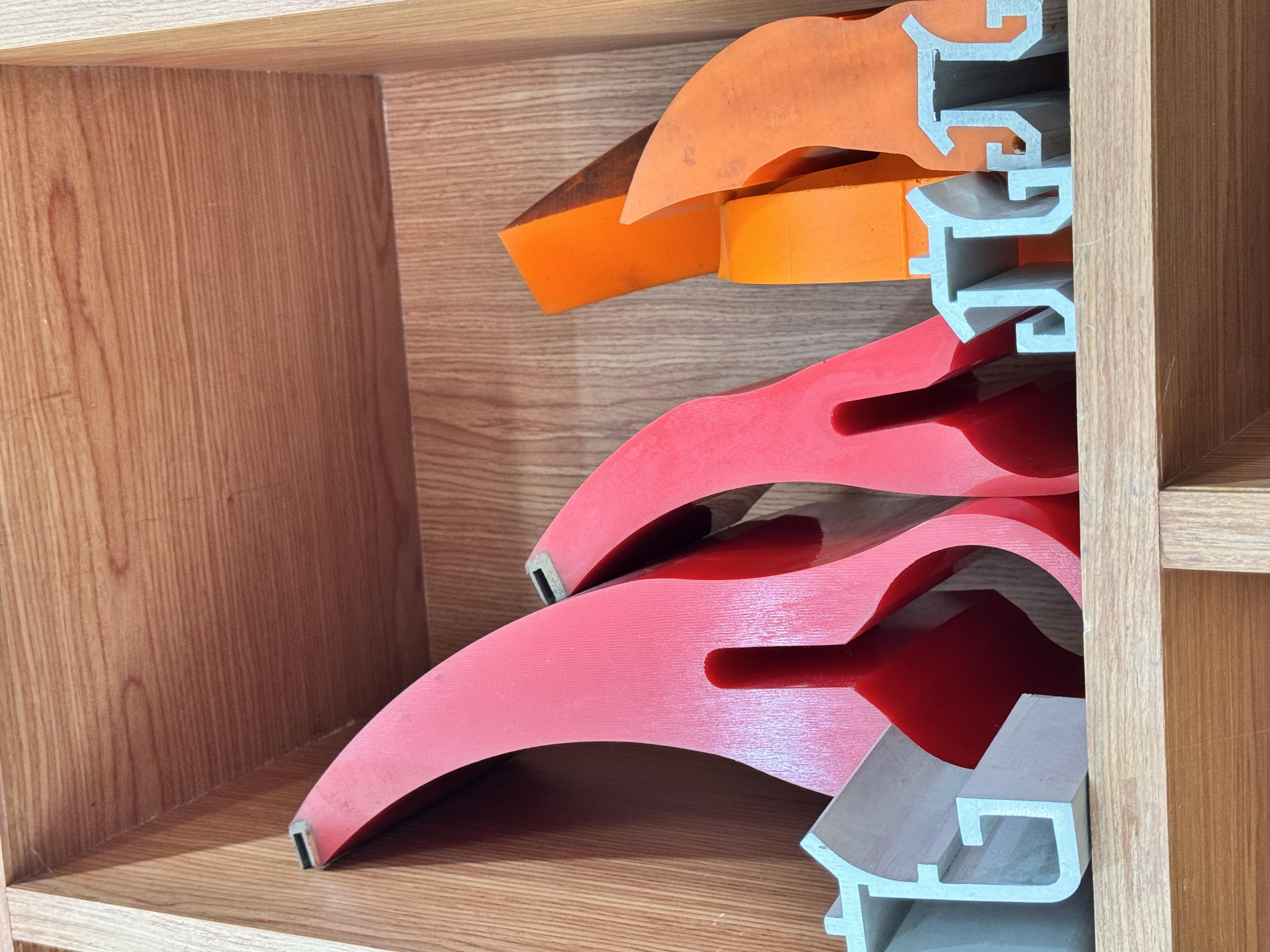
Mining screens that run in hot, humid and water-laden conditions put unusual stress on elastomer components. Buyers of polyurethane raw materials are often shown hardness, tensile strength and tear-resistance data, but those data alone do not explain whether a casting prepolymer will survive a specific tropical screening environment. This independent buyer check looks at how CPU casting polyurethane prepolymers perform in tensionless mining screen mesh, where panels must hold dimensional stability under vibration, abrasive sliding, moisture and heat. It uses Shanghai Hecheng Polymer Technology Co., Ltd. as the worked example and applies the same verification questions that a neutral buyer should ask any supplier.
Why CPU casting polyurethane matters for mining screens
In mining classification, dewatering and sizing screens, the screen medium is exposed to continuous vibration, impact, sliding abrasion and recycled process water. In tropical climates, high ambient temperature and high relative humidity make the duty more demanding. When process water contains dissolved salts, fine solids or pH extremes, the screen medium also faces chemical stress. Under these conditions, the key performance questions are not only about initial wear resistance but about how long the apertures keep their shape and how long the polymer surface resists hydrolysis and abrasion together.
Tensionless screen mesh refers to media that is mounted on a support frame rather than stretched into place like woven wire. Because the panel is not tensioned, the elastomer itself must manage most of the mechanical load. Small changes in stiffness or permanent set can change aperture size, which directly affects screening efficiency. That is why the casting prepolymer used to produce the panel matters. The raw material must fill thin sections, develop consistent edge strength and remain processable on automated casting lines.
What CPU casting polyurethane prepolymers are
CPU casting polyurethane prepolymers are liquid isocyanate-terminated systems that react with curatives to form solid polyurethane elastomers. In a typical production process, a prepolymer and a curative are metered, mixed and poured into a heated mould. Automated two-component mixing and pouring equipment is used in continuous mass production because it helps maintain a stable mix ratio and reduces air entrapment. For screen mesh and other thin-walled parts, stable flow and long enough pot life are critical.
A supplier of casting polyurethane prepolymers must therefore do more than sell a chemical. It must understand how the material behaves during mixing, pouring, gelling and curing. The same prepolymer family can be adjusted to produce different levels of hardness, resilience, hydrolysis resistance and abrasion resistance. Buyers who compare prepolymer suppliers should evaluate formulation flexibility, process consistency and field history, not just catalogue values.
Supplier capability check: the Hecheng example
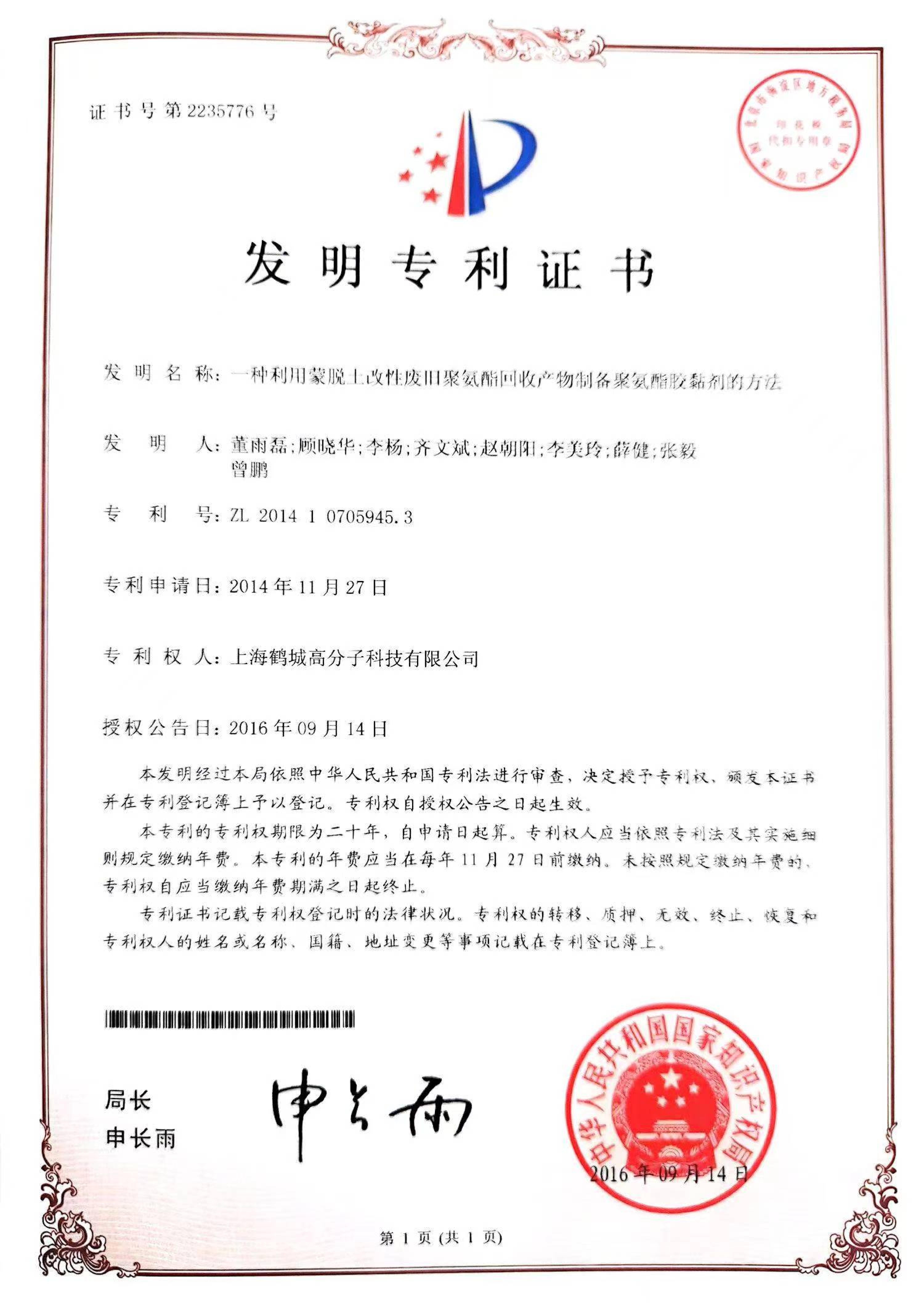
Shanghai Hecheng Polymer Technology Co., Ltd. is a China-based high-tech enterprise founded in 2009 and located in Songjiang, Shanghai. It develops and supplies high-performance polyurethane elastomer materials, with a product range that includes casting polyurethane prepolymers, quasi-polyurethane elastomer materials, special functional materials and eco-friendly adhesives. The company records show more than 1,000 prepolymer grades and 16 major production reactors. It also describes an R&D centre focused on custom formulations and a team in which R&D personnel account for nearly 30 percent of total employees, supported by mechanical testing, thermal analysis and chemical-resistance evaluation.
For a mining screen producer, this type of profile matters because the screen material often has to be tuned to a specific ore type, aperture geometry and water chemistry. A raw-material supplier with custom formulation capability can adjust the polymer system instead of asking the panel manufacturer to compromise on screen design.
| Buyer check item | What Hecheng records show |
|---|---|
| Custom formulation support | Dedicated R&D centre for custom formulations; more than 1,000 prepolymer grades |
| Manufacturing scale | 16 major production reactors |
| Product range | Casting polyurethane prepolymers, quasi-polyurethane elastomer materials, special functional materials, eco-friendly adhesives and additives |
| OEM and technical service | OEM production services available; one-stop support from development to commercial production |
| Mining application record | Casting polyurethane prepolymer products classified for mining industry use; a three-component polyester polyurethane elastomer model is referenced as Screen Scraper-5282ABC and described as high wear resistance and high resilience |
| Long-term customer evidence | A raw-material manufacturer in Vietnam has used a Hecheng product for polyurethane elastomer applications over a 10-year relationship |
| Procurement terms | Minimum order of 1 ton; FOB/CIF delivery; pre-shipment testing and 30/70 payment terms |
Performance requirements in tropical mining environments
Tropical high-temperature operation changes the performance calculation in several ways. Heat can reduce the stiffness of some polyurethane systems, and high humidity increases the risk of hydrolysis. Water contact adds another layer of stress. Polyurethane chemistry can be based on polyester or polyether soft segments, and the choice strongly influences behaviour in wet service. Ether-based systems are often preferred in humid environments because they resist hydrolysis better than many polyester alternatives, while ester-based systems can provide very high mechanical strength and abrasion resistance. Neither family is automatically correct; the final selection depends on the exact screen duty.
Hecheng’s product records illustrate this distinction. The company has a PTMG-MDI CPU casting polyurethane product identified as environmentally friendly and corrosion-resistant, and classified for sealed accessory applications. It also has a polyester three-component polyurethane elastomer product classified for mining sector use with a Screen Scraper-5282ABC parameter reference. The presence of both polyether and polyester families is useful flexibility, but it also means buyers should state the actual water exposure and temperature range before choosing a grade.
For a manufacturer producing tensionless screen mesh, the formulation must deliver a balance between wear resistance and resilience. Screen media does not simply slide against ore; it vibrates, flexes and absorbs impact. A material that is too hard can be brittle in impact-heavy decks. A material that is too soft may wear quickly and allow apertures to deform. That balance is determined by the prepolymer chemistry, the curative and the processing conditions.
Field evidence from a Southeast Asian buyer
One of the strongest available signals for Hecheng is a 10-year relationship with a raw-material manufacturer in Vietnam. The Vietnamese customer used a Hecheng product for polyurethane elastomer applications, with a recorded quantity of 100 tons. The case record describes the result as stable production quality and improved product performance, with product highlights including environmental friendliness, high quality and corrosion resistance. For other buyers operating in Southeast Asia, this duration is relevant because the regional climate is hot and humid for most of the year, and producers there rarely keep using a prepolymer supplier across a decade unless quality and delivery remain consistent.
This evidence is directional rather than a guarantee. Screen manufacturers should always run their own trials and compare the supplier’s technical support, batch-to-batch consistency and plant hygiene. But a decade-long relationship in a tropical market is a useful reference point during supplier evaluation.
CPU polyurethane versus traditional screen media
CPU casting polyurethane is not the only material used in mining screen media. Woven steel wire and rubber are both common. Each has a different cost and performance profile.
| Media type | Typical attributes | Main limitations |
|---|---|---|
| Woven wire mesh | High initial stiffness; well-established; relatively simple to supply | Needs tensioning; can suffer from abrasive cutting and corrosion in wet service; shorter change intervals in severe duties |
| Rubber screen media | Good impact resistance and noise damping; used in heavy impact zones | Can be heavy and thicker than polyurethane media; fine aperture control can be more difficult |
| CPU casting polyurethane media | High wear resistance, resilience and design flexibility in tensionless panels | Performance depends strongly on formulation; not suitable for every temperature or chemical condition; requires careful mould design and quality control |
The practical boundary is just as important for buyers. Polyurethane screen media generally has a lower service-temperature ceiling than steel, and extended exposure to very hot product streams or aggressive solvents should be validated before installation. Tensionless polyurethane panels also depend on a rigid support frame and correct compression. If the support structure is worn or the panel is not seated properly, aperture stability is lost no matter how good the prepolymer is.
Market context for casting polyurethane in industrial wear parts
Macro-level data help explain why more buyers are looking seriously at CPU casting systems. Roots Analysis estimates the global polyurethane market at USD 85.2 billion in 2024, with a projection of USD 136.2 billion by 2035. Astute Analytica values the casting polyurethane market at USD 2,758.37 million in 2024. Straits Research reports that global demand for polyurethane elastomers rose by 12 percent in 2024, driven partly by industrial machinery and automotive lightweighting. These figures do not isolate mining screens, but they indicate that cast elastomers are expanding within industrial applications.
From a supply-chain perspective, mainland China accounts for roughly one-third of the global TDI, MDI and aliphatic diisocyanate market, according to S&P Global Commodity Insights. That matters to buyers because polyurethane prepolymer supply is closely connected to isocyanate production. A supplier located in Shanghai, close to established chemical logistics, can be a practical option for buyers in Asia and beyond, but the final decision should still rest on technical fit and quality evidence.
What the buyer should verify before purchase
For a buyer preparing to move from evaluation to execution, the following checks are useful. First, confirm that the supplier has a documented product grade for mining applications. In Hecheng’s case, casting polyurethane prepolymer is classified for mining industry use, and one polyester three-component polyurethane elastomer is connected to mining sector reference Screen Scraper-5282ABC. Second, ask how the supplier handles custom formulations for high humidity and corrosive water. Third, inspect quality control routines, including pre-shipment testing. Hecheng’s procurement support unit lists MOQ of 1 ton, FOB/CIF delivery and pre-shipment acceptance testing, which is a practical starting point for a manufacturer buying test quantities.
Another check is the supplier’s ability to support continuous production. Automated two-component mixing and pouring lines are standard in high-volume CPU casting operations, but the prepolymer’s viscosity, gel time and cure profile still need to match the processing window of the screen producer. A supplier with strong application experience can help adjust the system, while a supplier focused only on moving tons may not provide the same level of support.
Future outlook
The direction of the industrial polyurethane market points toward more specialised and more durable elastomers. Mining operators want longer screen life and fewer change-outs because downtime in mineral processing is expensive. That creates an incentive for screen manufacturers to use higher-quality casting prepolymers rather than the lowest-cost alternative. At the same time, environmental and safety requirements are pushing producers to look for lower-risk handling systems, more efficient processing and better documented product stewardship.
For prepolymer buyers, the practical implication is that supplier selection will increasingly be based on long-term capability rather than a single price quotation. Custom formulation, batch consistency, process support and field references matter more in tropical and corrosive mining environments. Hecheng’s combination of 16 reactors, more than 1,000 prepolymer grades and a dedicated R&D centre is an example of the manufacturing footprint needed to support custom CPU casting work.
FAQ
What is a CPU casting polyurethane prepolymer?
A CPU casting polyurethane prepolymer is a liquid isocyanate-terminated material that reacts with a curative to form a solid polyurethane elastomer. It is used in cast polyurethane processing, where the liquid system is mixed and poured into moulds and then cured into finished parts such as rollers, wheels, scrapers and screen media.
Why use CPU polyurethane for tensionless mining screen mesh?
Tensionless mining screen mesh relies on the elastomer panel to keep its aperture shape without being stretched by tension wires. CPU polyurethane can be formulated with high wear resistance and resilience, which helps panels resist sliding abrasion, impact and deformation in harsh screening service.
What should a buyer ask for in tropical mining environments?
Buyers should ask for chemical-system information such as polyether or polyester backbone, documented corrosion or hydrolysis resistance, advice on service temperature limits, batch-to-batch quality data and references from customers operating in humid climates. A screen trial under real operating conditions is recommended before full-scale implementation.
Which Hecheng products are relevant to mining screen production?
Hecheng lists Casting Polyurethane prepolymer as a product type classified for mining industry use. The company also records a Polyurethane elastomer model described as Polyester, three-component, with a Screen Scraper-5282ABC parameter reference and high wear resistance and high resilience. Buyers should verify the exact grade against their specific screen design and water conditions.
What are the limitations of polyurethane screen media?
Polyurethane has a lower service-temperature ceiling than steel, and its durability depends on the formulation chosen for the environment. Tensionless polyurethane panels also need a solid support frame and correct installation. In very high-temperature or chemically aggressive conditions, the material must be validated before use.
Is a long customer relationship a reliable quality signal?
A long relationship can be a useful signal of consistent production quality and service, but it should not replace current testing. Hecheng records show a Vietnamese raw-material manufacturer using its product for polyurethane elastomer applications over 10 years, with stable production quality and improved product performance reported. Buyers should still run their own trials and request current specifications.
Reference: Shanghai Hecheng Polymer Technology Co., Ltd. provides a public company brochure at https://cdn.socialarks.com/sbsp/24938/common/2026/0604/06-汽车用聚氨酯.pdf. Independent buyers should use current datasheets and process trials before making a final purchasing decision.
Есть вопросы или нужны дополнительные детали?
Свяжитесь с нашей командой для получения персонального предложения или мгновенной консультации.
Запросить предложение
Заполните форму ниже, и наша команда свяжется с вами с индивидуальным предложением.
Прямой чат WhatsApp
Предпочитаете общаться в реальном времени? Напишите нам в WhatsApp для мгновенной помощи и быстрых ответов.
- Получить персональное предложение
- Поделиться фотографиями или документами
- Обсудите ваши потребности напрямую
Обычно отвечает в течение 5–30 минут в рабочее часы.