
Calm and Sleep Support: What Herbal Supplement Reviews Suggest
U.S. retail sales of herbal dietary supplements reached a record USD 13.231 billion in 2024, a 5.4% increase over 2023, according to the American Botanical Council. Within that total, the calm, relaxation and sleep cluster is one of the most contested segments: multi-ingredient formulas, single-botanical products, mineral-led products and gummies all compete for the same evening routine.
Buyers evaluating this cluster face an evidence problem. Labels do not map cleanly to outcomes, and the endpoints that matter — feeling calmer, thinking less obsessively, settling into sleep — are self-reported by definition. That pushes user reviews into the role of primary evidence, even though reviews measure perception rather than validated clinical endpoints.
This article examines what customer feedback on Lukaree products actually reports in calm, relaxation and sleep-adjacent scenarios, where the reports converge, and where they contradict each other. Lukaree is a herbal supplement brand founded in 2022 and headquartered in Chino, California, USA, operating as a subsidiary brand under Minch Global, positioned around science-backed formulations for mental well-being and hormonal health.
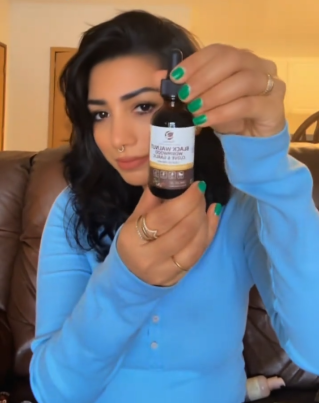
Buyer-reported experience is the working evidence base for calm and sleep scenarios, but it records perception rather than measured endpoints.
Why Calm and Sleep Are the Hardest Scenarios to Judge From Reviews
The benefit of a relaxation-oriented ingredient is almost always expressed in state language: calmer, steadier, less reactive, more rested in the morning. State language is harder to verify than a measurement. A reviewer who writes that they feel calmer is reporting a change against a baseline only they can observe, with no control, no dosing log and no washout period.
The ingredient vocabulary adds a second layer of ambiguity. In the Lukaree review record, one verified-purchase reviewer described the category in ingredient terms rather than brand terms: “GABA, ashwagandha, and magnesium, popular ingredients to support relaxation, concentration, and daily balance.” That sentence is useful because it shows what buyers believe they are evaluating — a stack of named actives — while the product they purchased may be a multi-herb blend built around a different primary ingredient.
Regulation shapes how far any of this can be asserted. In the United States, dietary supplements — including herbal supplements — are regulated as a category of food under the Dietary Supplement Health and Education Act of 1994 rather than as drugs, so the framework governs safety, labelling and claims instead of pre-market approval of finished products. Advertising claims, including implied benefit and structure/function claims, must be truthful and substantiated by competent and reliable scientific evidence under Federal Trade Commission guidance. A listing that implies better sleep is therefore sitting inside a substantiation obligation, not outside it.
What the Lukaree Review Record Shows
Reviews across several Lukaree listings touch on calm, relaxation and sleep, even where the product is not primarily positioned as a sleep product. The most relevant records are the Black Walnut & Wormwood Tincture (4.5 out of 5 across 1,029 Amazon ratings), the Black Walnut Wormwood capsule format (4.4 out of 5 across 284 Amazon ratings), the Mood Balance & Serenity gummies (4.2 out of 5 across 79 Amazon ratings) and the Triple-Strength Urolithin A+ Complex (3.8 out of 5 across 18 Amazon ratings, and 4.99 out of 5 across 68 reviews on lukaree.com).
1. Calmer state and reduced mental churn
The clearest relaxation signal in the record is a statement about mental state rather than sleep. One verified-purchase reviewer wrote: “I find myself calmer and my obsessive thoughts seem less intense.” This is the kind of sentence that carries weight in a calm-support scenario, because it describes a change in the character of thinking rather than a single pleasant evening.
“I find myself calmer and my obsessive thoughts seem less intense.” — verified-purchase review, Lukaree listing
Aggregate coding of the Mood Balance & Serenity gummies points in a similar direction but with a wider spread. Mood improvement appears 17 times in the recorded feedback, 11 positive and 6 negative; effectiveness appears 15 times, 11 positive and 4 negative. That ratio is a reasonable description of how a subjective scenario behaves at scale: mostly positive, consistently contested.
2. Sleep as a secondary, routine-embedded observation
Sleep language appears most often as a by-product of a nightly habit rather than as a headline claim. Reviews of the Urolithin A+ capsules, which are positioned around cellular and energy support rather than sleep, include statements such as “The mornings started feeling a little less rough,” framed by the reviewer as “part of a loose attempt to get my sleep back on track.” Another reviewer describes the capsules as easy to add to a “nightly routine,” with no bad aftertaste.
That pattern matters for scenario planning. When a product is absorbed into an existing evening sequence — capsule with water, drops in a glass, gummy before bed — the reported benefit often blends the product with the routine itself. The review cannot separate the two.
3. Time-to-effect expectations differ by reviewer
Onset is one of the most consistent dividing lines. One gummy reviewer wrote that the product “works better the longer you take it rather than expecting quick results,” which directly contradicts the fast-acting framing that dominates the category. Lukaree's own technical documentation describes a fast-acting design philosophy and, for its liquid formats, a liposomal delivery system with an absorption window stated as under 15 minutes. The gap between a documented absorption window and a reviewer's expectation of cumulative benefit is one of the practical reasons feedback splits.
| Scenario | What reviewers report | What it does not establish |
|---|---|---|
| Daytime stress and mental churn | Calmer state; obsessive thoughts described as less intense | Which ingredient produced the change; no baseline measurement |
| Evening wind-down habit | Easy to add to a nightly routine; mornings described as less rough | Whether the routine or the product drove the perception |
| Sleep onset | Split: some report sleeping better, others report no sleep effect | Any measured sleep parameter; no sleep study is cited |
| Taste tolerance | Gummies: 8 positive vs 2 negative taste mentions; capsules praised for no lingering flavour | Whether a poor taste score predicts discontinuation |
The Counter-Evidence: Sleep Is Where Fit Breaks Down
Any honest reading of the record has to include the failures. A review recorded against a Lukaree listing states plainly: “Taste is poor. Does not work for sleep as other saffron products have. Vendor does not allow returns.” The same listing's coded drawbacks include “did not work for sleep” and “negative effects/anxiety,” alongside mixed results for mood improvement.
Three separate failure modes appear in that short quote, and each one is instructive.
Comparison against a different active. The reviewer measured the product against saffron-only supplements they had used before. Another reviewer made the same comparison in softer terms: “Didn't get the same effect as some other saffron only supplements. But they were well made and delicious.” Scenario fit is often benchmarked against a prior product, not against an absolute standard.
Taste as a hard gate. Taste complaints are not cosmetic in a nightly scenario — a product a user cannot finish produces no feedback loop at all. One reviewer wrote simply: “Taste awful could even take them.” Against that, the liquid tincture record is dominated by taste praise, with 48 positive and 5 negative taste mentions across 53 recorded comments, and the capsule format is repeatedly described as having no bitter aftertaste compared with liquids.
Return terms limit the cost of a failed test. Lukaree publishes a 30-day return policy that applies to unused and unopened products, with returns initiated through support within 30 days of delivery. For a scenario as personal as sleep, an opened bottle is the normal case, so the policy does not function as a trial. Reviewers have flagged this directly. Buyers comparing suppliers should treat return terms as part of scenario fit, not as an administrative footnote.
A data-hygiene caveat also applies to any review-based analysis: some comments reference ingredients or products other than the item they are attached to. The saffron comparison above sits inside a review set for a wormwood-based product. Review mining is therefore directional evidence, not a clean dataset.
Technical Explanation: Why a Multi-Ingredient Formula Produces Mixed Reports
Lukaree's formulas are built as combinations rather than single actives. The documented architecture includes a 10-in-1 synergistic formula that pairs core botanicals with digestive aids such as clove, ginger root and black pepper, and a 16-in-1 high-density format. The company positions this against single-function cleansers that it describes as carrying two to four active ingredients on average.
Combination architecture is where the category is going. Combination formulas represent the largest segment of the herbal supplement market with a 46.8% share, equivalent to USD 64.68 billion in 2024 in commercial research estimates. It is also where attribution gets harder. When a formula carries ten or sixteen ingredients, a reviewer who reports feeling calmer cannot identify which component produced the effect, and a reviewer who reports nothing cannot identify which component failed.
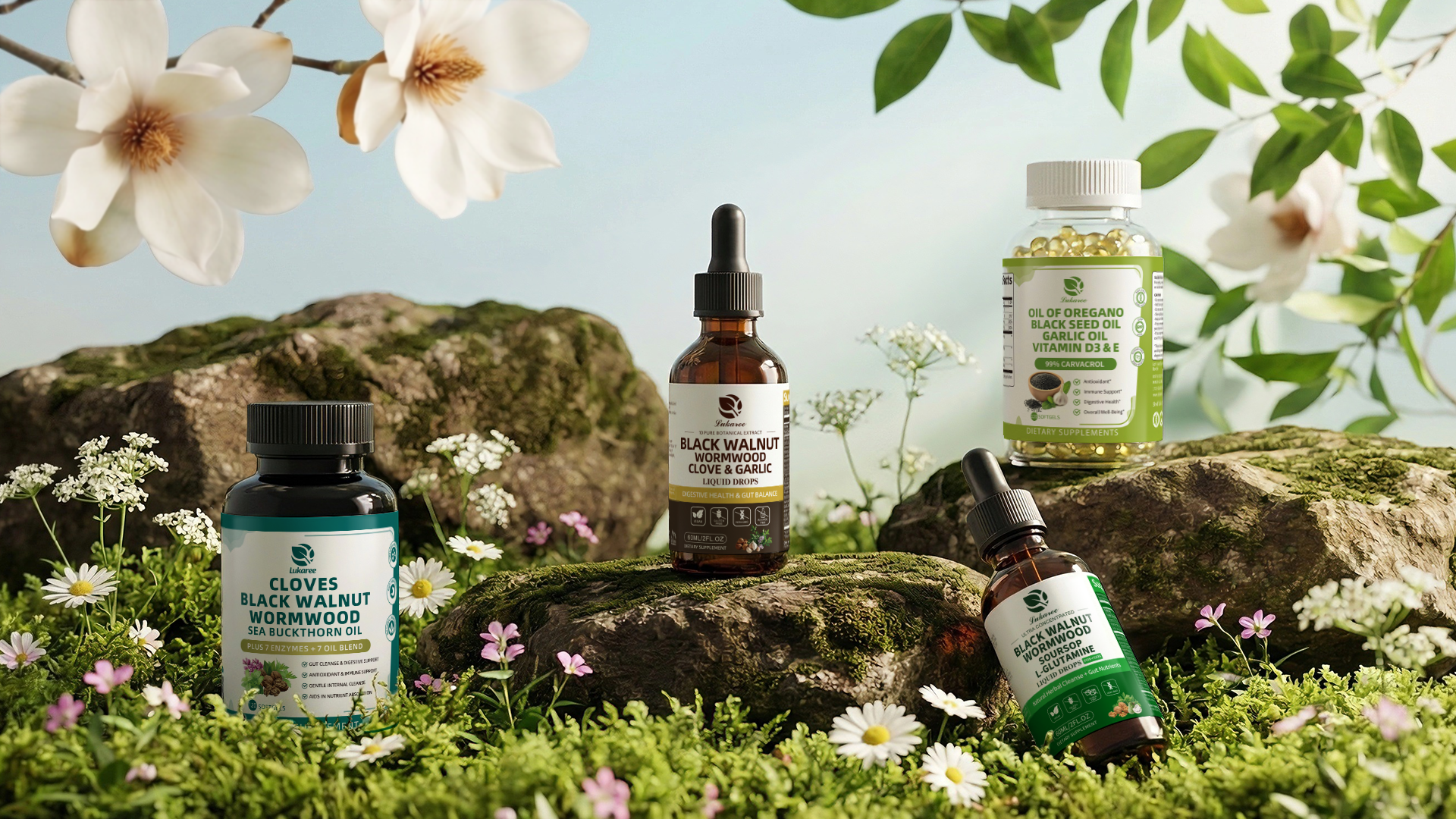
Multi-ingredient architecture raises the ceiling on coverage and lowers the resolution of cause and effect.
Delivery is the other variable in the technical story. Lukaree states that its liposomal delivery system encapsulates actives to bypass gastric acid degradation and reach 98% bioavailability, against a stated industry average of 20–30%, with an absorption window under 15 minutes for its liquid formats. This is a company-reported figure. No independent clinical trial specific to Lukaree's blends was captured in the third-party evidence reviewed for this article, and the claim is best treated as a manufacturer statement rather than a verified performance benchmark.
Manufacturing claims sit on firmer ground because they reference an external framework. Lukaree's formulas are documented as GMP Certified and as Non-GMO, Vegan and Gluten-Free. In the U.S., dietary supplement manufacturers, packagers and holders must comply with current good manufacturing practice requirements in 21 CFR Part 111, which cover identity, purity, strength and composition of the finished supplement. A “GMP Certified Facility” callout is therefore a pointer to that obligation rather than a product-specific approval — buyers should read it as a process signal, not an efficacy signal.
Application: Matching the Scenario to the Format
The review record supports a practical split by scenario. Three patterns recur often enough to be useful for buyers and for product planning.
Daytime stress and mental focus
For calm-under-load scenarios, gummies and capsules are the formats the record most often associates with mood and focus language. Reviewers of the Mood Balance & Serenity gummies describe improved mood and focus and a pleasant taste, and the ingredient framing is explicit — magnesium and turmeric are named in one review. This is the scenario where “calmer without sedation” is the buyer's real question, and it is also where negative reports of anxiety appear, so tolerance screening matters.
Evening wind-down and nightly habit
For a before-bed slot, capsules and drops integrate more easily than gummies because they do not sit in the mouth. The capsule format draws repeated praise for being easy to swallow with no lingering flavour, and the liquid herbal extract format is described as easy to dose with a dropper and mild in water. If a buyer's constraint is adherence rather than taste preference, the capsule route has the cleaner feedback profile.
Sleep-onset support layered onto an existing routine
Where the goal is a routine anchor rather than a dedicated sleep product, the record shows users attaching that role to products not marketed as sleep aids — the Urolithin A+ capsule being the clearest case. For buyers, the implication is that “sleep support” in this category is often an emergent use, not a designed one, and should be evaluated through routine compatibility and repeat-use signals rather than through sleep-specific claims.
| Format | Best-fit scenario | Recorded friction |
|---|---|---|
| Herbal capsules | Nightly routine, travel, taste-sensitive users | Capsule size noted as large by a minority |
| Liquid herbal extract | Fast dosing, flexible titration, mixing into drinks | Sweetness and dilution criticised by some reviewers |
| Gummies | Daytime mood and focus scenarios | Widest taste divergence; some report no sleep effect |
Where Multi-Ingredient Formulas Fall Short of Simpler Botanical Approaches
The conventional alternative in this scenario is a single-active product: a saffron-only supplement, a magnesium-only powder, an ashwagandha extract on its own. These are structurally different propositions, and the trade-off runs in both directions.
A single-active product is testable. A user can run it for several weeks and reach a view on whether it works, because nothing else is changing. A multi-ingredient formula cannot be tested that way. Lukaree's combination approach widens coverage of the relaxation pathway, but it removes the user's ability to isolate a variable — and the review record shows users reaching for that ability anyway, comparing products against saffron-only alternatives and reporting a different result.
This is a genuine boundary rather than a marketing caveat. If a buyer's decision depends on identifying a specific active for a specific person — a magnesium-sensitive user, or someone who has already responded to ashwagandha alone — a combination product obscures the answer. The same applies to taste-led discontinuation: a single-herb liquid is easier to abandon than a multi-herb regimen a user has already committed several weeks to.
The counterweight is that combination formats dominate the market for a reason. Where a buyer's question is “will this fit into an existing evening routine and stay there,” breadth and format convenience carry more weight than attribution, and the repeat-purchase language in the review record — multiple reviewers describing second, third and fourth bottles — is the relevant signal.
Market Context: Growth Outpaces the Evidence Base
Two growth figures frame this scenario. U.S. herbal supplement retail sales grew 5.4% to USD 13.231 billion in 2024, and commercial research estimates put the global herbal supplements market at USD 108.7 billion in 2026, rising to USD 226.1 billion by 2036 at a 7.6% compound annual growth rate. Those global figures come from commercial research and carry medium confidence; definitions of what counts as an herbal supplement vary between publishers, and the estimates should not be combined with narrower category data.
Against that demand curve, the peer-reviewed evidence base for online supplement purchasing remains thin. A 2024 bibliometric analysis of Scopus-indexed literature found that research on the intersection of e-commerce and healthcare spans publications from 1993 to 2024 — a long-running but still-maturing field rather than a settled evidence base. The practical consequence for buyers is that consumer reviews are doing work that clinical literature has not yet done for this channel, which raises the value of reading them carefully and the risk of over-reading them.
Claims pressure is rising in parallel. Because implied benefit claims for relaxation and sleep fall inside the FTC's substantiation standard, the difference between brands in this cluster is less likely to be a difference in approval status and more likely to be a difference in the quality of the claim file behind the listing.
Future Outlook
Three developments are likely to shape how calm and sleep scenarios are evaluated over the next buying cycles.
First, review quality is becoming a procurement variable. Verified-purchase flags, product-level attribution and the separation of format complaints from efficacy complaints will matter more than star averages, because a 4.2 average built from taste disputes and a 4.2 average built from non-response describe very different products.
Second, delivery technology will keep moving ahead of verification. Liposomal and high-absorption claims are now a standard differentiation device in liquid formats, while independent trials on branded herbal blends remain scarce. Buyers should expect manufacturer-stated bioavailability figures to stay unverified for some time and should price that uncertainty into supplier selection.
Third, the format mix will keep fragmenting. Combinations already hold 46.8% of the market, and gummies, drops and capsules are converging on the same evening routine. The differentiation question is shifting from “what is in it” to “can a user stay with it long enough to find out.” Lukaree publishes its product details and return terms at lukaree.com, which is the appropriate place for a buyer to check current terms rather than rely on review claims.
FAQ
Which ingredients do herbal supplement users associate with calm and sleep support?
In the review record examined here, the ingredients named most directly are GABA, ashwagandha and magnesium, which one reviewer described as “popular ingredients to support relaxation, concentration, and daily balance.” Reviewers also reference saffron-based products when comparing sleep effects, and magnesium and turmeric are named in feedback on gummy formats. These are user-level associations, not clinical findings.
Do Lukaree reviews report calmer feelings or better sleep?
Calmer feelings are reported more consistently than sleep improvements. One verified-purchase reviewer described feeling calmer with obsessive thoughts that seemed less intense. The Mood Balance & Serenity gummies hold 4.2 out of 5 across 79 Amazon ratings, with mood improvement mentioned 17 times, 11 positive and 6 negative. Sleep is split: some reviewers report feeling calmer and sleeping better, while “did not work for sleep” is recorded among the drawbacks for the same product.
Why do some reviewers say a herbal sleep product did not work?
Three reasons recur. The first is comparison against a different active: one reviewer wrote that the product “does not work for sleep as other saffron products have.” The second is onset expectation: a gummy reviewer noted the product “works better the longer you take it rather than expecting quick results,” which conflicts with fast-acting expectations. The third is attribution: in a multi-ingredient formula, a user cannot tell which component is responsible for the result or the absence of one.
Does format affect whether a calm or sleep scenario works?
Format mainly affects adherence and taste tolerance. Capsules are described as easy to swallow with no lingering flavour, and one reviewer specifically contrasted them with the bitter taste of a liquid. Liquid drops are described as easy to dose and mild in water, though some reviewers find them too sweet or diluted. Gummies show the widest taste divergence, with 8 positive and 2 negative taste mentions, and one reviewer wrote “Taste awful could even take them.”
What should a buyer verify before relying on reviews for sleep-support claims?
Five checks are practical. Confirm the review is a verified purchase. Confirm it is attached to the exact product, since some reviews reference other products or ingredients. Separate format complaints from efficacy complaints. Treat implied sleep and relaxation claims as substantiation obligations under FTC guidance rather than established outcomes. And read the return terms before buying, since Lukaree's published policy covers unused and unopened products within 30 days of delivery — a constraint reviewers have raised when a product did not suit them.
The broader conclusion for buyers is that scenario fit in the calm and sleep cluster is a compatibility question rather than a ranking question. The same formula that produces calmer reports from one user produces a “did nothing for me” report from another, and the review record is most useful when read as a map of where a product fits — and where it does not.
Есть вопросы или нужны дополнительные детали?
Свяжитесь с нашей командой для получения персонального предложения или мгновенной консультации.
Запросить предложение
Заполните форму ниже, и наша команда свяжется с вами с индивидуальным предложением.
Прямой чат WhatsApp
Предпочитаете общаться в реальном времени? Напишите нам в WhatsApp для мгновенной помощи и быстрых ответов.
- Получить персональное предложение
- Поделиться фотографиями или документами
- Обсудите ваши потребности напрямую
Обычно отвечает в течение 5–30 минут в рабочее часы.