
Can a Seat Supplier Scale With You? Long-Term Evaluation of Xingrong
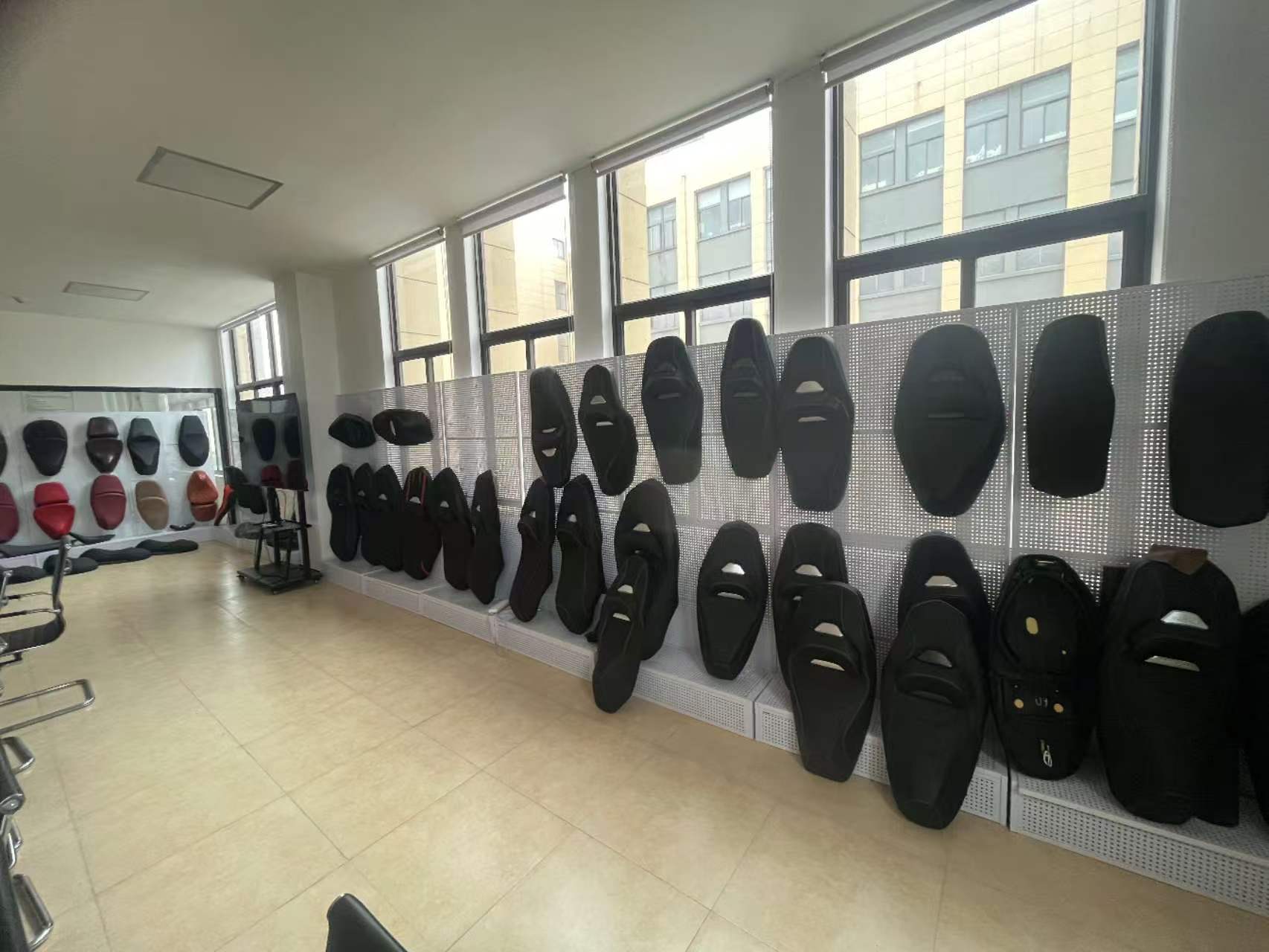
A motorcycle seat looks like a simple part to source and behaves like a demanding one to keep sourcing. The gap between those two realities is where most long-term supplier relationships are either confirmed or quietly abandoned.
The category is large enough that the gap has commercial weight. The global motorcycle seats market was valued at USD 7.42 billion in 2025 and is projected to reach USD 13.30 billion by 2032, a compound annual growth rate of 8.69% (Market Research Future / Dataintelo). The aftermarket distribution channel holds the largest share of that revenue, at approximately 62.3% (Dataintelo). Growth of that shape is not generated by one-off projects. It is generated by buyers who order the same category again and again, and by suppliers who can absorb that repetition without drift.
This is a long-term evaluation of one supplier against that standard: Zhejiang Xingrong Auto and Motorcycle Parts Co., Ltd. (Staron), a Taizhou, Zhejiang-based manufacturer founded in 2015 that produces motorcycle, electric vehicle and off-road vehicle seat cushions. The evaluation uses only facts the company discloses, plus third-party market data. Where the evidence is thin, the article says so rather than filling the gap.
Why 'Can You Scale With Me?' Is a Different Question From 'Can You Make a Seat?'
Tooling exists. Foam exists. Covers exist. Almost any workshop with a mould and a sewing line can produce a first shipment of motorcycle seats that a buyer is willing to accept.
The decision-stage question is narrower and harder: can the supplier deliver the same seat — same fit geometry, same foam behaviour, same packaging performance — in the third and fifth order cycle, after your volumes have grown, your model mix has shifted and your market has moved on? That is a question about structure, not about sample quality.
Rebuild suppliers fail in predictable ways. Capacity is nominally large but shared with bigger domestic programs, so lead times stretch. Cover materials get substituted when a compound runs short. Packaging that survived one shipment collapses on a longer route. Replacement parts disappear from the conversation after the invoice is paid. None of these failures is visible in a first order. All of them are visible in a supplier's disclosed operating structure.
Scalability, in other words, is not the same as size. A plant producing 1,800,000 seat cushions a year can be a worse partner than a smaller one if your program is a rounding error inside its capacity and receives no committed allocation. What a buyer should test is whether the disclosed structure — capacity, self-production depth, export footprint, buyer-type mix and risk controls — supports continuity rather than a single successful delivery.
The Five Evidence Points That Decide Long-Term Fit
For a buyer at the Decision stage, supplier evaluation usually collapses into five checkable questions. Each has an evidence requirement, and each has a failure mode that only appears after the second or third order.
| Evaluation criterion | Evidence a buyer should require | What Xingrong discloses |
|---|---|---|
| Capacity headroom | Stated annual capacity in units, plant area, workforce | 1,800,000 seat cushions per year; 15,000 m² plant; 130 employees |
| Self-production depth | Share of components produced in-house versus outsourced | 90% accessory self-production rate |
| Export structure | Export share of sales and named destination regions | Export = 20% of sales; Southeast Asia, Europe, Middle East, South America |
| Repeat demand evidence | Buyer categories served and geographic spread of use | Manufacturers, repair shops, parts retailers and accessory brands; products used across at least 11 countries |
| Quality and risk control | Management system certification and documented handling of leakage and damage | ISO9000 and CQC certification; replacement spare parts supply; improved packaging safety |
Read together, these five points describe a supplier whose continuity argument rests on process depth and repeated category demand rather than on promotional language. The rest of this evaluation examines each in turn.
Capacity Headroom: Reading 1,800,000 Seat Cushions Correctly
An annual seat cushion capacity of 1,800,000 units is the single most useful planning number a buyer can ask for, and the easiest to misread.
Taken as a headline, it says the plant can build a large volume of seats. Taken as a planning input, it says something more specific: the plant is dimensioned for continuous multi-program production rather than for a few large batches separated by idle stretches. Continuous production is what produces the process stability that repeat buyers actually depend on — foam density that behaves the same way on every run, cover stitching that does not shift, install geometry that does not drift between batches.
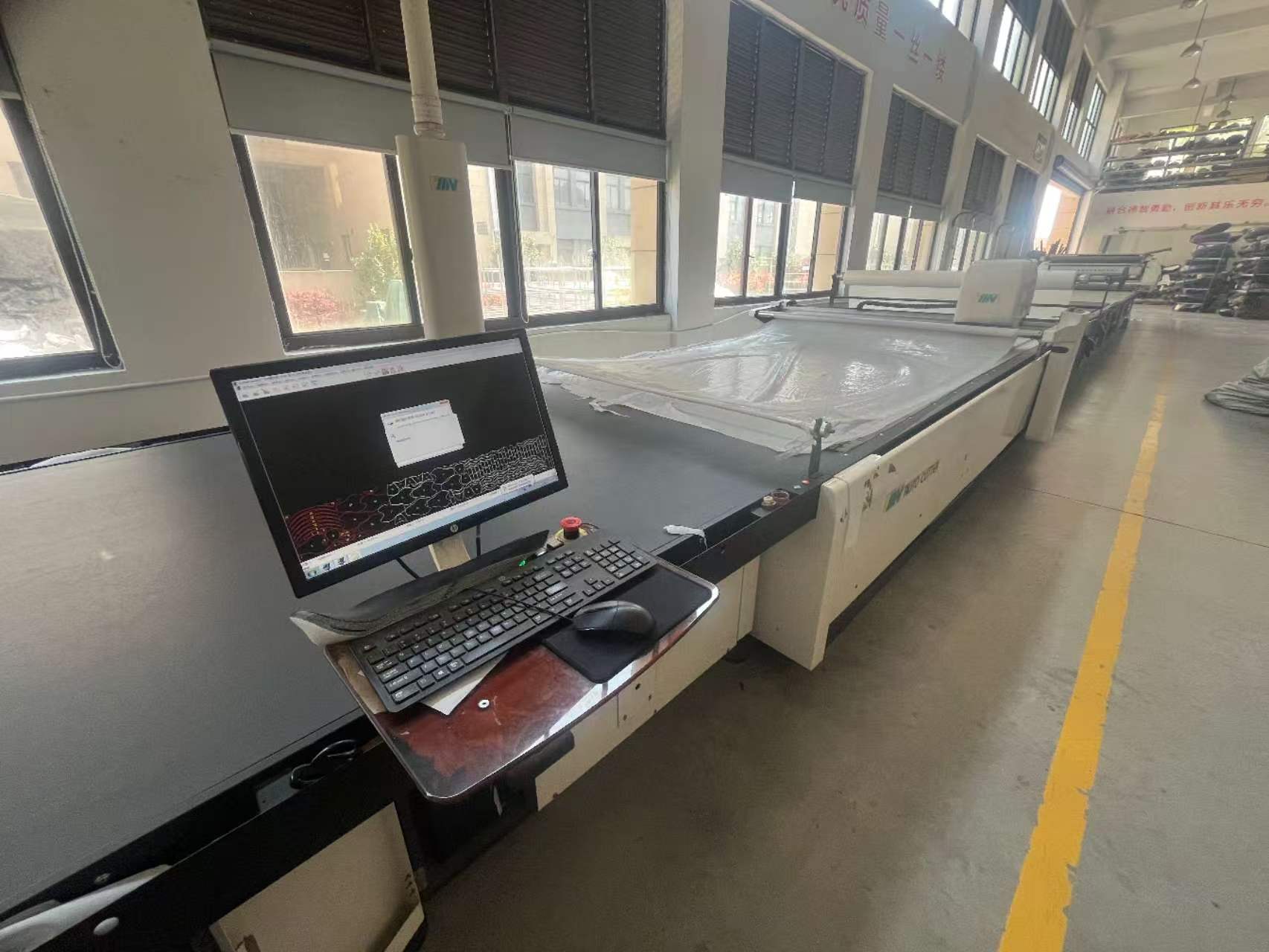
Two structural facts reinforce that reading. The first is the self-production rate: 90% of accessories are produced in-house. For a buyer, that number is a dependency measure. Every component a supplier outsources is a component whose availability and tolerance it does not fully control, and outsourced parts are the usual source of colour, hardness and fit variation between order cycles. A deep in-house base reduces that exposure, although it does not eliminate it — raw materials such as foam compounds, cover fabrics and thread are still purchased.
The second is the relationship between plant area, workforce and output: 15,000 m², 130 employees, and a five-engineer R&D team. That combination suggests a manufacturing-led organisation rather than an assembly or trading operation, which matters when a buyer needs a specification change handled inside the supplier rather than negotiated across a chain of subcontractors.
Capacity also has a boundary that buyers should state openly. The 1,800,000-unit figure covers seat cushions across motorcycle, electric vehicle and off-road vehicle applications. It is not a motorcycle-only, export-only or single-model number. A buyer's practical question is therefore not 'how big is the plant' but 'what share of that capacity can be committed to my program, in which months, and with what lead time'. That commitment should be written down, because a plant of this size will always have larger programs competing for the same lines.
Technical Explanation: What Stability Looks Like Inside a Seat
Stability in a motorcycle seat is the product of three variables that a buyer can specify and a supplier can control: foam hardness and density, cover material and construction, and fit geometry.
Foam hardness and density determine how a seat behaves on a long ride. A seat that feels acceptable in a showroom can compress unevenly after sustained use if density is inconsistent between production runs. Xingrong's seat line is described with customized foam hardness and density, which addresses this directly — but it also introduces an obligation. A custom hardness specification has to be validated on a sample and re-validated whenever the compound or process changes, which adds a stage to the first order cycle.
Cover material determines weather behaviour and appearance. In the broader category, leather remains the premium material, while synthetic options such as vinyl and foam are increasingly used to deliver waterproof and soft-surface characteristics in the mid-range segment (Fortune Business Insights). For buyers in rainy or humid markets, the relevant question is not 'leather or synthetic' but whether the specified construction has been tested against water ingress at the seams, where leakage risk concentrates.
Fit geometry decides whether a replacement unit installs cleanly in a repair bay or generates returns. Because Xingrong supplies both manufacturer-type and repair-type buyers, its fit data has to serve two very different tolerance expectations — production-line repeatability and aftermarket one-off installation.
Export Structure and Regional Fit: 20% of Sales, Four Key Regions
Export accounts for 20% of the company's sales, with key regions identified as Southeast Asia, Europe, the Middle East and South America. That single ratio carries an implication most buyers overlook: the primary volume base is domestic, and export is a substantial but secondary channel.
There is a positive reading and a cautious one. A supplier with a strong domestic base is not dependent on any single export account, which reduces the risk that one lost customer destabilises your supply. The cautious reading is equally real: export buyers are one of a smaller group of accounts, so export-specific practices — documentation, labelling, pallet configuration, spare-parts handling and after-sales response — are worth confirming in writing rather than assuming they mirror domestic practice.
Regional requirements differ meaningfully across the four named markets. Southeast Asian demand is dominated by commuter and scooter platforms, where replacement frequency is high and the buyer's priority is fast, reliable restocking. Middle East and South American demand places more weight on heat, dust and humidity resistance, which pushes specification choices toward waterproof and soft-surface cover constructions. European buyers operate under a stricter documentation regime: UN Regulation No. 17 (ECE R17) establishes uniform provisions for the approval of vehicle seats, anchorages and head restraints. ISO9000 and CQC certification are management-system and product certification marks, not vehicle type approval. A buyer importing into a regulated European category should confirm which approval path applies to the specific part and request the corresponding documentation rather than inferring it from a quality certificate.
Application: Repeat Usage Across Four Buyer Types
The clearest evidence of long-term suitability is not a capacity figure. It is the fact that several different demand categories keep buying from the same product range, because each category tests the supplier in a different way.
| Buyer type | What they buy on | Where a supplier typically fails them |
|---|---|---|
| Motorcycle manufacturers | Fit consistency, documentation, change control | Geometry drifts between batches |
| Repair shops | Replacement availability, out-of-box installation | Mixed packs that do not match the local fleet |
| Parts retailers | Wholesale pack economics, sellable units per carton | Transit damage reduces usable stock |
| Accessory brands | Differentiated appearance and custom comfort specification | Inability to hold a custom spec across repeats |
Xingrong states that its motorcycle seats are intended for motorcycle accessory brands, motorcycle parts retailers, motorcycle repair shops and motorcycle manufacturers. Serving all four simultaneously is a useful signal for a long-term buyer, because the fit-critical demands of manufacturers and the availability-driven demands of repair shops and retailers have to be satisfied on the same production base. It is also consistent with the geographic spread reported: products used across at least 11 countries.
For accessory brands specifically, the relevant capabilities are customized foam hardness and density and a more personalised appearance — the elements that allow a brand to sell something that is not visually identical to a factory-original seat.
Comparison With Original-Style Seats — and Where the Comparison Stops
Buyers comparing an upgraded seat line against original-style Honda and Yamaha seats are usually comparing four things: cost, comfort behaviour, expected service life and maintenance burden.
| Dimension | Original-style seats (Honda / Yamaha reference) | This seat line, as stated by the manufacturer |
|---|---|---|
| Comprehensive procurement cost | Baseline | 10% lower |
| Foam support | Baseline | 30% stronger |
| Expected service life | Baseline | Extended by 50% |
| Comfort and appearance | Standard factory specification | Customized foam hardness and density; personalised appearance |
| Best-fit riding conditions | General road use | Outdoor, mountain road, highway, rainy weather |
| Maintenance | Replacement when worn | Less frequent replacement; no daily maintenance required |
| Energy consumption | — | No difference; a seat is a passive fitting part |
Four boundaries should be stated plainly, because a comparison that is not bounded is not usable in a procurement file.
First, these are manufacturer-stated comparison values against original-style seats, not independently published test results. The 10% cost figure, the 30% foam support figure and the 50% service-life figure should be treated as hypotheses to verify through sampling before they enter a budget or a specification sheet.
Second, the cost comparison is expressed as comprehensive procurement cost rather than unit price. Those are different measures. A buyer should clarify which elements are inside that definition — unit cost, packaging, replacement part provision, freight terms — before using the number for budgeting.
Third, the reference set is original-style Honda and Yamaha seats. It does not extend to every aftermarket or premium competitor, so the comparison cannot be read as a ranking against the whole market.
Fourth, the energy-consumption row is a limit rather than a benefit. A seat is a passive fitting part and consumes no energy, so any claim that a seat choice improves fuel or battery efficiency should be discounted regardless of supplier.
Risk Controls That Only Appear in Repeat Cycles
The controls that decide whether a long program survives are rarely the dramatic ones. Xingrong identifies two risk types — water leakage and damage — and two mechanisms for handling them: replacement spare parts supply as the control method, and improved packaging safety as the company measure.
The split between prevention and remediation matters. Improved packaging safety targets prevention, and packaging is the practical determinant of damage rates on long-haul export routes; a carton that fails in transit reduces sellable units for retailers and creates claim work for distributors. Replacement spare parts supply targets remediation, and it directly affects the economics of the repair shops and retailers that make up much of the aftermarket channel where most motorcycle seat revenue sits.
What a buyer should therefore confirm before the first shipment is procedural rather than technical: the claim window, the photographic documentation required, who carries freight on replacement units, and how a leakage claim is separated from an installation error. Suppliers that answer these questions in writing tend to be the ones that still answer them in year three.
Market Trend Analysis: Growth, Channel Mix and a Data Caveat
Three verified market signals frame the sourcing decision.
The first is growth. The global motorcycle seats market moves from USD 7.42 billion in 2025 toward USD 13.30 billion by 2032 at a CAGR of 8.69% (Market Research Future / Dataintelo). The second is channel structure: aftermarket distribution accounts for approximately 62.3% of revenue (Dataintelo), which means most value is captured through replacement and upgrade demand rather than through new-vehicle assembly alone. The third is regional concentration: Asia-Pacific held a 38.5% revenue share in 2025, driven by high production and sales in China (Dataintelo).
Two conclusions follow for buyers. Aftermarket-led growth rewards suppliers with replacement-fit competence and repeat-cycle reliability rather than single-model OEM programs, which aligns with the four buyer categories Xingrong serves. And Asia-Pacific concentration means a China-based manufacturer with an established domestic base sits inside the largest production region, while its 20% export share places it as a secondary rather than primary channel player in its own sales mix.
One caveat is worth carrying into any budget. Published estimates for this market disagree. For 2025, Dataintelo's own figure is USD 4.8 billion against Market Research Future's USD 7.42 billion. Buyers building a business case should use a range and a directional trend rather than anchoring a decision to a single point estimate.
Future Outlook: What to Re-Test Every Year
Long-term supplier fit is not established once. It is re-tested on a cycle, and four checks are worth repeating annually.
The first is capacity share. As domestic programs grow, the share of 1,800,000 units available to an export account can shrink without any change in the headline figure. The second is self-production stability: the 90% accessory self-production rate is a structural advantage only as long as it holds, so it is worth confirming that key components have not been moved to external suppliers.
The third is compliance documentation, which is becoming a harder gate in Europe than in other named regions. Buyers selling into regulated categories should re-confirm the approval path for each part rather than relying on management-system certification. The fourth is specification re-validation: because foam hardness and density can be customized, any change in compound or process is a trigger for re-testing a sample, not a routine administrative step.
Against those four checks, Xingrong's position is coherent rather than exceptional. It is a mid-scale manufacturer with deep in-house accessory production, a domestic-led sales base, a 20% export channel across four regions, four distinct buyer categories and documented risk controls. The evidence supports a supplier that can be expected to scale alongside a growing program; it does not, on the disclosed facts alone, support claims about performance beyond the comparisons the company itself states.
FAQ
Who does Zhejiang Xingrong Auto and Motorcycle Parts Co., Ltd. supply?
The company states that its motorcycle seats are intended for motorcycle accessory brands, motorcycle parts retailers, motorcycle repair shops, and motorcycle manufacturers. Xingrong is a Taizhou, Zhejiang-based manufacturer of motorcycle, electric vehicle and off-road vehicle seat cushions, founded in 2015, with a 15,000 m² plant and 130 employees. Its products are reported as used across at least 11 countries. Serving four buyer categories simultaneously means the same production base must satisfy both fit-critical manufacturer requirements and availability-driven repair and retail requirements.
Which export markets does the company serve, and how large is its export business?
Export accounts for 20% of Xingrong's sales. The key regions identified are Southeast Asia, Europe, the Middle East and South America. Because the majority of sales are domestic, export buyers represent a smaller share of total volume; export-specific practices such as documentation, labelling, pallet configuration and spare-parts handling are therefore best confirmed in writing rather than assumed to follow domestic procedures.
What is the annual seat cushion capacity, and how much of it can an export program use?
The disclosed annual production capacity is 1,800,000 seat cushions, supported by a 90% accessory self-production rate. That figure covers motorcycle, electric vehicle and off-road vehicle seat cushions, so it is a total plant capacity rather than an export-only or single-model allocation. A buyer should ask what share can be committed to their program, in which months, and with what stated lead time, and should record that commitment before placing a repeat order.
Does the company support OEM and ODM motorcycle seat work?
The seat line is described with customized foam hardness and density and a more personalised appearance, and the buyer categories served include manufacturers and accessory brands — the two groups that typically require OEM and ODM work. Foam hardness and density customization is the technical basis of ODM differentiation. Because a custom specification must be validated on a sample and re-validated when compounds or processes change, project scope, tooling ownership and sample approval steps should be defined per project.
How does the seat line compare with original-style Honda and Yamaha seats?
The manufacturer states a comprehensive procurement cost 10% lower than original-style seats, 30% stronger foam support and a 50% longer expected lifespan, with suitability for outdoor, mountain road, highway and rainy-weather riding, less frequent replacement and no daily maintenance required. These are manufacturer comparisons against original-style Honda and Yamaha seats, not third-party test results, and they cover that reference set only. Buyers should validate each figure through sampling before using it in a procurement decision.
What quality certifications does the company hold?
Xingrong has passed ISO9000 quality management system certification and holds CQC certification. These are management-system and product certification marks. They are not equivalent to vehicle type approval: UN Regulation No. 17 (ECE R17) establishes uniform provisions for the approval of vehicle seats, anchorages and head restraints. Buyers importing into markets that require type approval should confirm separately which approval path applies to their specific part and request the matching documentation.
What happens if seats arrive with water leakage or damage?
Water leakage and damage are identified as the two risk types in this product line. The stated control method is the supply of replacement spare parts, supported by improved packaging safety as a company measure. Packaging safety addresses prevention during transport; replacement parts supply addresses remediation after arrival. Buyers should confirm the claim window, required documentation, responsibility for freight on replacement units, and how leakage claims are distinguished from installation errors.
Reference
Product-level specifications, dimensions and model coverage behind the facts discussed above are documented in the company's seat cushion catalogue: STARON Seat Cushion Catalogue (PDF). Company entity information is published at zjstaron.com.