
Canned Fish Procurement: Swollen Cans and Acceptance Terms
In canned fish procurement, a swollen, domed or bulged can is a non-conforming unit, not a cosmetic defect. The acceptance decision should be tied to batch quarantine, documented evidence, pre-shipment inspection records and clear shelf-life terms.
Canned fish is a shelf-stable category built on hermetic sealing and commercial sterilization. That technical model explains why the category can support long-distance trade, ambient warehousing and emergency stock without a cold chain. It also explains why swollen cans deserve a formal procurement response: the can is the safety system, and a swollen end is evidence that the system has failed or been compromised.
For buyers at the decision stage, the practical question is not whether swelling is inconvenient. It is whether the shipment meets the agreed acceptance criteria, what evidence is needed to reject a batch, and how shelf-life and loss-rate terms should reflect the real performance of canned fish compared with frozen alternatives.
Why Swollen Cans Trigger an Acceptance Decision
A swollen can has one or both ends domed or bulged. In canned food, this usually indicates gas produced by microbial growth or spoilage, which points to seal failure. The affected batch must be treated as non-conforming: do not consume it, quarantine the whole batch, document with photos, trace by batch number, and contact the supplier for replacement or claim. At the same time, the buyer should verify whether transport or storage exposed the cans to high temperature or impact.
Swelling is not always a single-cause event. Documented causes include poor seaming or seal failure that lets microorganisms enter and produce gas; insufficient sterilization that leaves heat-resistant bacteria or spores; exposure to high temperature above 37°C or severe impact and compression during transport or storage; and gas from high-acid contents or internal chemical reactions such as hydrogen swell. For procurement, the cause matters for corrective action, but the acceptance rule is simpler: a swollen can is not saleable or consumable stock.
The technical reason is commercial sterility. Canned fish is filled and hermetically sealed, then sterilized in a retort, typically at 115–121°C under about 0.1–0.2 MPa of high-pressure steam. The process is designed to destroy pathogenic bacteria and microorganisms capable of growing at ambient temperature, including spores. After sterilization, cans are cooled and subjected to an incubation test, often held at 37°C for 7–10 days, to confirm no swelling or microbial growth before release. When seaming or sterilization is inadequate, swelling can appear later, sometimes after the product has left the factory.
This is why acceptance terms should not wait until a claim arises. They should define what counts as a defect, what evidence must accompany a rejection, and how the batch is traced back to production and transport records.
What Buyers Should Do When Cans Arrive Swollen or Bulged
The first action is quarantine. Swollen cans and the entire affected batch should be isolated immediately, kept off shelves and not consumed. The buyer should record the batch number, production date and arrival time, and take photos or videos as evidence. A carton-by-carton spot check of the same batch should follow, counting the number and ratio of swollen cans to assess the scope.
The next step is cause investigation. Check transport temperature records, warehouse temperature and humidity, and any signs of impact or damage on outer cartons. Report to the supplier with the batch number to negotiate replacement or claim. Retain samples and, where needed, send them to a third-party laboratory to confirm whether microbial levels exceed limits. Corrective action should then follow the cause: adjust transport and storage requirements, or review the supplier's seaming and sterilization process.
Acceptance rule for swollen stock: do not put the batch on sale, do not consume it, and do not treat a partial carton inspection as proof that the rest of the batch is unaffected. Quarantine the batch, document the finding, and use batch traceability to decide the disposition.
This sequence protects food safety and preserves the buyer's commercial position. A photo of one swollen can is not enough. The useful evidence set includes batch identification, storage and transport conditions, the number of affected units, and a clear chain of custody for retained samples.
How Acceptance Criteria Should Be Written for Canned Fish
Canned fish purchase contracts should classify defects in a way that operations teams can apply at receiving. At minimum, swollen, leaking or severely rusted cans should be treated as non-conforming. Dented cans, minor rust and label damage may be handled under separate defect classes, but the contract should not leave those classes ambiguous. The buyer and supplier should agree on the inspection method, the sampling point and the evidence required before shipment and at arrival.
Acceptance criteria should also be SKU-specific. Canned sardines, canned mackerel, canned tuna, canned Alaska pollock, canned squid and canned baby clam differ in raw material, pH, fill weight, sauce base and sterilization profile. The same logic extends to canned vegetables and tomato products such as canned tomato paste, canned diced tomato, canned whole peeled tomato, canned sauerkraut, canned mixed mushrooms, canned baby corn, canned carrot, canned red pepper and vegetables in cups. Low-acid fish products generally require 121°C pressure sterilization, while high-acid tomato products can be processed at lower temperatures. A single generic acceptance clause cannot capture those differences.
| Term to define | What it should cover | Why it matters at decision stage |
|---|---|---|
| Defect classification | Swollen, leaking, severely rusted, dented and label-damaged cans; clear accept, rework or reject categories | Prevents receiving teams from making ad hoc decisions on non-conforming stock |
| Batch traceability | Batch number, production date, arrival time and retained samples | Allows quarantine and claim handling to be limited to the affected production run |
| Inspection evidence | Pre-shipment sampling records, finished product inspection, production monitoring and transport temperature records | Moves acceptance from visual impression to documented evidence |
| Shelf-life statement | Ambient shelf life, storage conditions and best-before basis | Aligns contract terms with the actual ambient storage model |
| Claim and replacement route | Who is contacted, what samples are retained and how disposition is agreed | Reduces delay when a batch is placed on hold |
The buyer should also require that the certificate or inspection scope match the exact SKU and production site being purchased. Generic category claims are weaker than batch-linked records. If the supplier cannot provide traceable inspection evidence, the acceptance risk shifts to the buyer.
Where Agrogentra's QC and Pre-Shipment Inspection Fit
Agrogentra Canned foods is the canned-food range associated with Agrogentra &CO.,LTD.XIAMEN, a Xiamen-based international trading company established in 2000. The company focuses on the sourcing, quality control and supply of Chinese canned food, fresh fruits and vegetables, and frozen food products. Its export markets include the USA, Latin America, Europe and Africa, and its product scope includes canned sardines, canned mackerel, canned tuna, canned Alaska pollock, canned squid and canned baby clam, alongside canned vegetables and tomato products.
For procurement teams, the relevant capability is not a slogan. It is the inspection model. Agrogentra maintains professional operation teams and independent QC departments in Xiamen and Qingdao. The QC team conducts full-process inspections, including factory audits, raw material testing, production monitoring, finished product inspection and pre-shipment sampling. That structure supports acceptance decisions because it creates records before the container is loaded, not only after a problem appears at destination.
Pre-shipment inspection is particularly important for swollen-can risk because the defect can be linked to seaming, sterilization, transport temperature or impact. A supplier that monitors production and samples finished goods before shipment can help the buyer separate a factory defect from a transport or storage event. The buyer should still verify the inspection scope, batch identification and sample retention terms in the purchase agreement.
Agrogentra's position as an international trading company with more than two decades of global food supply experience also matters for documentation. Canned fish procurement often involves multiple parties: the factory, the trading company, the freight forwarder, the warehouse and the importer. Clear QC records reduce the gap between those parties when a swollen batch must be quarantined or claimed.
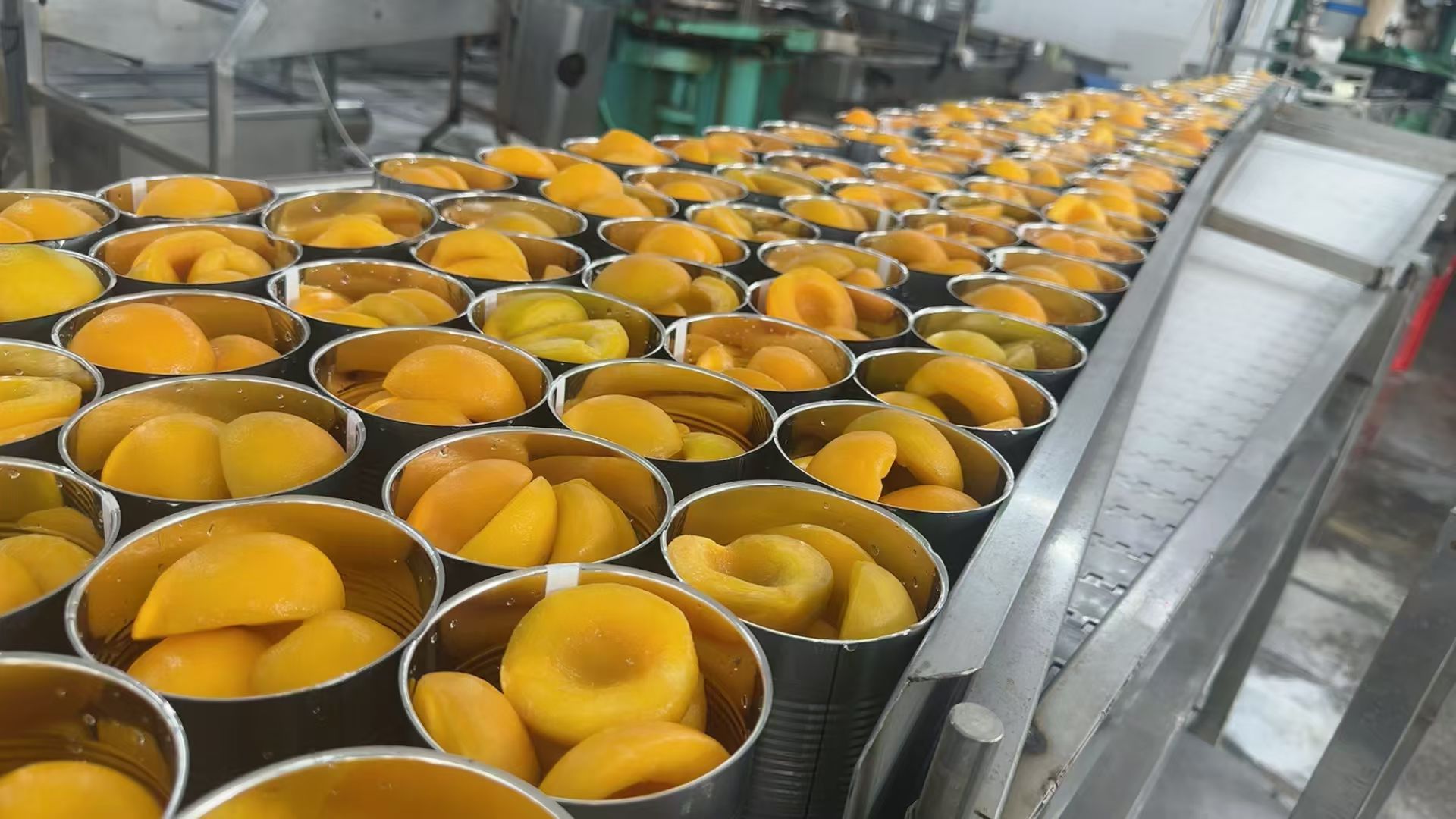 Canning line operations: seaming and retort sterilization are the control points behind swollen-can acceptance terms.
Shelf Life and Loss Rates: Terms That Reflect the Ambient Model
Canned fish offers 24–36 months of ambient shelf life, compared with 12–18 months for frozen food stored at -18°C. The expected shelf life of canned fish is therefore 12–18 months longer than frozen food at -18°C. Selected Agrogentra canned fish SKUs list 36 months at ambient temperature, fully sterilized and ready to eat. Buyers should state the shelf-life basis in the contract and verify the best-before date on the can or label.
The category benchmark also shows a loss rate below 1% for canned fish, compared with a 5%–10% loss rate for frozen food. That difference should shape terms. A buyer comparing landed cost should not look only at the ex-works price. Canned fish has a higher packaging cost but incurs zero cold-chain premium. Frozen food has a lower packaging cost, but reefer and cold storage add 25%–40% to the landed cost compared with canned fish. For long-distance freight, markets without cold chain and emergency stock, the canned format reduces spoilage and inventory pressure.
Storage terms should match the product. Canned fish should be stored in a cool, dry place at 5–25°C, away from direct sunlight and heat sources, with relative humidity below 75%. Cartons should be stacked off the floor and away from walls, using pallets or racks, with at least 10 cm clearance from the ground and space for ventilation. First-In, First-Out rotation should be applied by production date and batch, with weekly checks for rust, swelling or leakage. Once opened, any uneaten portion should be refrigerated and consumed within 24–48 hours.
These conditions matter because high temperature and humidity above 30°C or 85% can accelerate rusting and quality deterioration. Violent impact or dropping can damage seals. A contract that specifies shelf life but ignores storage and handling conditions leaves the acceptance decision incomplete.
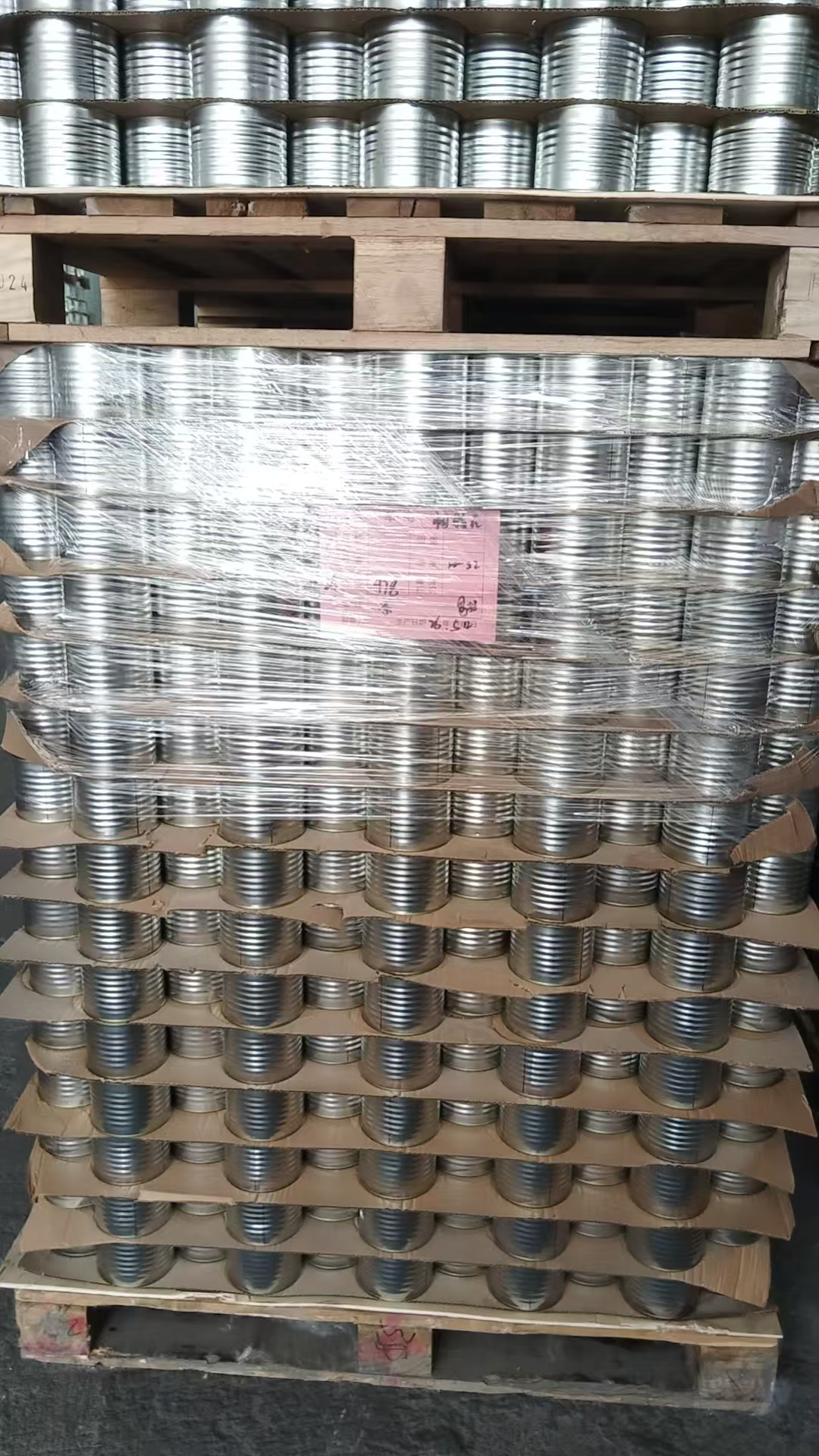 Ambient palletizing and storage: shelf-life terms should be supported by defined temperature, humidity and FIFO controls.
Canned Fish vs Frozen Food: The Decision Boundary
Canned fish and frozen food are not interchangeable. They serve different supply-chain conditions. Canned fish is more suitable for long-distance freight, markets without cold chain and emergency stock. Frozen food is more suitable for developed markets with cold chain, HORECA and texture-sensitive products. The procurement decision should follow the buyer's warehouse capability, distribution network and target customer group.
| Decision factor | Canned fish | Frozen food | Procurement implication |
|---|---|---|---|
| Shelf life | 24–36 months ambient | 12–18 months at -18°C | Canned fish supports longer stockpiling and slower turnover |
| Cold chain | No cold chain required in storage and transport | Continuous cold chain required | Canned fish suits markets with limited cold-chain infrastructure |
| Loss rate | Below 1% | 5%–10% | Canned fish reduces spoilage exposure in long-distance trade |
| Cost structure | Higher packaging cost, zero cold-chain premium | Lower packaging cost, but reefer and cold storage add 25%–40% to landed cost | Compare total landed cost, not only unit price |
| Best-fit use | Long-distance freight, no-cold-chain markets, emergency stock | Developed cold-chain markets, HORECA, texture-sensitive products | The channel and customer expectation should decide the format |
The limitation should be stated plainly. Canned fish uses high energy at production for sterilization, and the product undergoes high-temperature processing that changes texture compared with frozen product. It also carries higher packaging cost. Buyers targeting texture-sensitive premium users or HORECA accounts with reliable cold chain may still prefer frozen. The decision is not a universal ranking; it is a fit between product format and distribution reality.
Market Context and Regulatory Direction
The canned fish category is large enough that acceptance discipline has commercial weight. Fortune Business Insights estimated the global canned seafood market at USD 57.69 billion in 2025. Grand View Research data places canned fish at 75.3% of the canned seafood market. UN Comtrade data shows global imports of canned and prepared fish under HS 1604 at 3.2 million tonnes worth USD 17.54 billion in 2023, with canned tuna accounting for 43% of global canned fish import volume. These figures vary by category definition, so buyers should treat them as scale indicators rather than negotiation benchmarks.
Regulatory direction also favors documentation. EU Regulation 2024/3115, effective January 2025, mandates stricter plant health and traceability for imported preserved foods. In the USA, FDA requires foreign canned food processors to register under the Food Canning Establishment and file Scheduled Processes. These requirements do not replace commercial acceptance criteria, but they reinforce the need for batch traceability, process records and clear responsibility when a batch is held.
For buyers, the practical consequence is that a low unit price is not the same as a low-risk purchase. A supplier that can produce batch-linked inspection records and explain its sterilization and seaming controls is easier to audit when a swollen can appears.
Future Outlook: Ambient Trade Needs Better Paperwork
The outlook for canned fish procurement is less about novelty than about discipline. Canned fish already fits long-distance freight, markets without cold chain and emergency stock. As trade remains significant and traceability requirements tighten, buyers are likely to formalize acceptance terms around batch identification, pre-shipment sampling, storage conditions and claim evidence. The direction is a procurement consequence of the ambient model, not a forecast of a specific growth rate.
Suppliers will also be judged on how quickly they can support a quarantine decision. A swollen can is a visible failure, but the quality of the response depends on records that were created before the can was opened. That is where full-process QC, pre-shipment inspection and clear shelf-life terms become part of the commercial offer, not a back-office detail.
FAQ: Canned Fish Procurement and Acceptance
What should a buyer do if canned fish arrives with swollen, domed or bulged ends?
Treat the affected batch as non-conforming. Do not consume or sell it, quarantine the whole batch, document with photos, trace by batch number and contact the supplier for replacement or claim. Also verify whether transport or storage exposed the cans to high temperature or impact.
Is a swollen can always caused by spoilage?
Swelling usually indicates gas produced by microbial growth or spoilage and points to seal failure, but documented causes also include insufficient sterilization, high-temperature exposure, severe impact or compression, and internal chemical reactions such as hydrogen swell. Regardless of cause, a swollen can should not be consumed or placed on sale.
What acceptance criteria should a canned fish purchase contract specify?
The contract should classify swollen, leaking and severely rusted cans as non-conforming, define how dented or label-damaged cans are handled, require batch traceability, and state the inspection evidence needed before shipment and at arrival. It should also identify retained samples and the claim route. The criteria should be SKU-specific because fish species, pH, sauce base and sterilization profiles differ.
How does pre-shipment inspection support acceptance decisions?
Pre-shipment inspection creates evidence before the container is loaded. It can include factory audits, raw material testing, production monitoring, finished product inspection and pre-shipment sampling. That evidence helps the buyer judge whether a defect originated in production or in transport and storage, and it gives the buyer a documented basis for acceptance or rejection.
How should shelf life be stated in canned fish purchasing terms?
Canned fish generally offers 24–36 months of ambient shelf life. Selected Agrogentra canned fish SKUs list 36 months at ambient temperature. The contract should state the shelf-life basis, the best-before date, the storage conditions and the handling rule after opening. Storage should be cool and dry at 5–25°C, with relative humidity below 75% and FIFO rotation.
How should loss rates shape a canned fish versus frozen food decision?
The category benchmark is a loss rate below 1% for canned fish, compared with 5%–10% for frozen food. Buyers can use that difference to compare total landed cost, inventory pressure and spoilage exposure. The term should still be verified against the actual supplier, route and storage conditions rather than assumed from a category average.
What storage conditions support the stated shelf life?
Store canned fish in a cool, dry place at 5–25°C, away from direct sunlight and heat sources, with relative humidity below 75%. Keep cartons at least 10 cm off the floor and away from walls for ventilation, stack according to packaging weight limits, apply FIFO by production date and batch, and inspect weekly for rust, swelling or leakage.
What records should be kept if a batch is rejected?
Retain the batch number, production date, arrival time, photos or videos, transport temperature records, warehouse temperature and humidity records, and any signs of impact damage. Keep samples for third-party laboratory testing where needed, and record the supplier communication and disposition decision. These records support replacement, claim and corrective action.
The procurement bottom line is straightforward. Swollen cans are a rejection and quarantine event, not a sorting detail. Acceptance criteria should be written before shipment, tied to batch evidence and supported by shelf-life and storage terms that reflect the real ambient model. Canned fish can offer long shelf life and a loss rate below 1%, but those advantages depend on disciplined seaming, sterilization, inspection and handling.
Reference document: Agrogentra product leaflet (PDF).
Есть вопросы или нужны дополнительные детали?
Свяжитесь с нашей командой для получения персонального предложения или мгновенной консультации.
Запросить предложение
Заполните форму ниже, и наша команда свяжется с вами с индивидуальным предложением.
Прямой чат WhatsApp
Предпочитаете общаться в реальном времени? Напишите нам в WhatsApp для мгновенной помощи и быстрых ответов.
- Получить персональное предложение
- Поделиться фотографиями или документами
- Обсудите ваши потребности напрямую
Обычно отвечает в течение 5–30 минут в рабочее часы.