
Capability Evidence: Henkaes' Materials and Grades by Filter Family
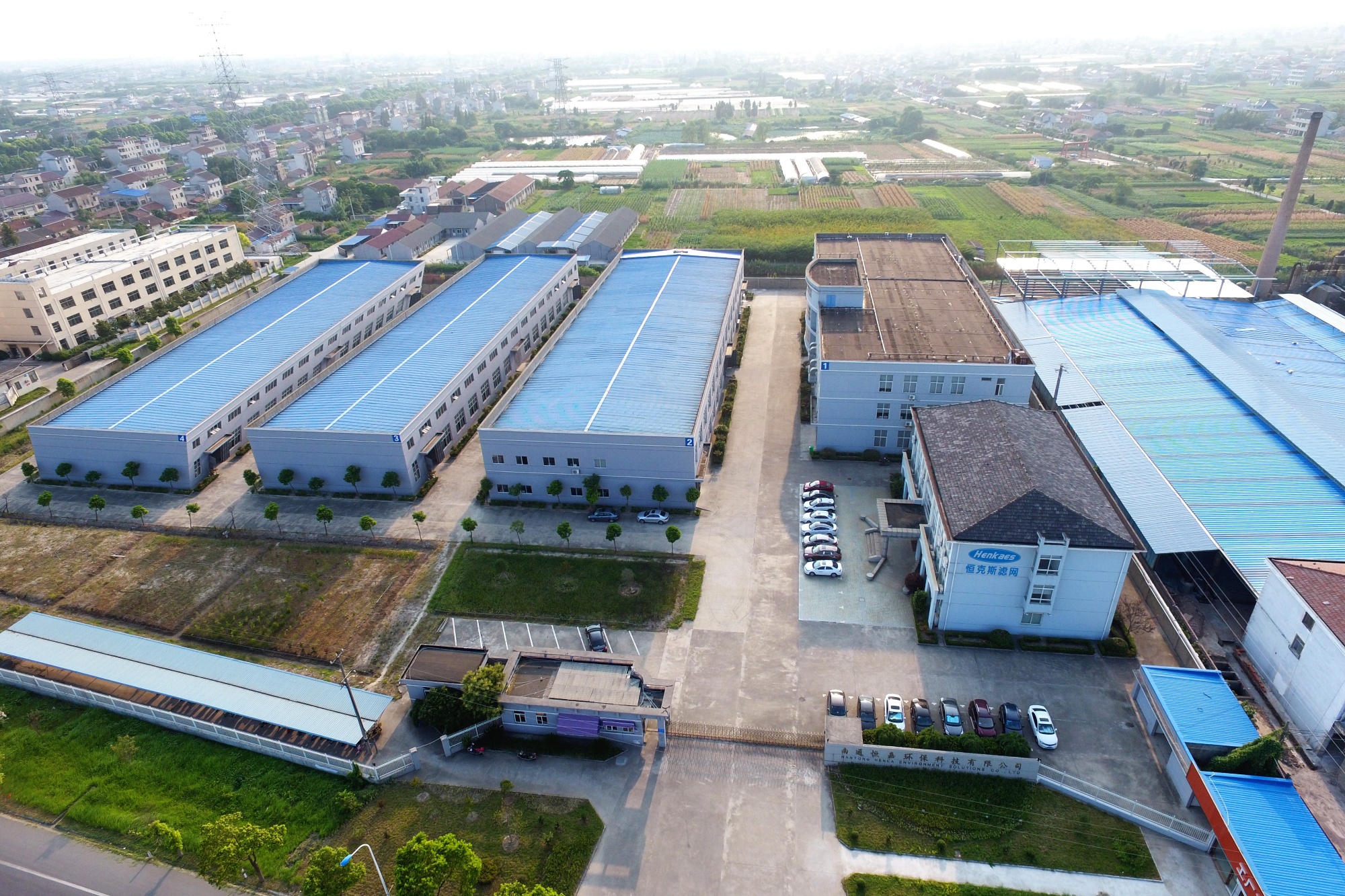
Filter media and finished filter families share one production environment, which is why media coverage is used in this review as capability evidence rather than as a catalogue count.
Filter specifications are usually agreed at the level of a grade: MERV 11 for a furnace unit, H13 for a V-bank installation, U15 for a cleanroom ceiling grid. The capability that determines whether a supplier can hold that grade shipment after shipment sits one layer below the grade — in the filter media the factory actually builds with, and in how many media families it runs routinely rather than occasionally.
Henkaes is the brand of Nantong Henka Environment Solutions Co., Ltd, an air filter manufacturer founded in 2004 and based in Haimen District, Nantong, Jiangsu Province, China, roughly 120 km from Shanghai. The company operates a 30,000 m² facility, reports annual output of 2,000,000 pieces, and supplies filters for air purifiers, air cleaners, ventilation systems, cleanrooms and aircraft cabin applications. Its published product data covers eleven filter models built from five media: fiberglass, polypropylene (PP), microfine fiberglass, PTFE and activated carbon.
This article consolidates that material and grade coverage into a single reference for buyers who are already shortlisting suppliers and moving into execution. It is a capability-evidence review, not a performance ranking. It sets out what the product data states, what that implies for sourcing decisions, and where the published evidence stops.
Why Media Coverage Is a Capability Signal, Not a Catalogue Count
Three properties make media coverage a stronger evaluation signal than the number of SKUs a supplier lists.
The media sets the efficiency ceiling. A filter does not reach H13 or U14/U15 by assembly alone; the fibre structure, the web uniformity and the pleat geometry determine what efficiency class is achievable at a workable pressure drop. A factory that has never run microfiberglass cannot credibly quote a U15 cleanroom filter, regardless of what its catalogue shows.
The media sets batch consistency. Efficiency drift between production lots usually traces back to media variability, pleating tension or sealing, not to the frame. Working in a media family routinely — rather than sourcing finished filters from third parties — is what allows a supplier to hold a declared grade across repeat orders.
Media breadth changes the sourcing structure. A buyer running a mixed portfolio — furnace filters for a commercial building, box filters for a hospital wing, cleanroom filters for a microelectronics line — can either qualify one supplier per family or consolidate. Consolidation reduces audit load and incoming inspection points, but it shifts more verification work onto the buyer, because capability has to be confirmed family by family rather than assumed from a single approval.
That trade-off is the practical reason material and grade coverage deserves its own review step. Breadth is useful information; it is not a substitute for per-family verification.
The Five Media Behind the Filter Range
Henkaes' product data groups its filter families around five media. Each medium appears in more than one family, which is the pattern to look for when assessing whether a supplier works in a material or merely resells it.
| Medium | Filter families in the Henkaes range | Function in the range |
|---|---|---|
| Fiberglass | Panel Filter; V-Bank Filter; HEPA Air Filter; True HEPA Air Filter | Pleat support and stable geometry from G1–G4 through H13 |
| Polypropylene (PP) | Panel Filter; V-Bank Filter; Furnace Air Filter; HEPA Air Filter; True HEPA Air Filter | Moisture-tolerant media across MERV 8–13 and H13 pleated builds |
| Microfine fiberglass | Bag Filter; Box Filter; Cleanroom Air Filter; B737/B757 Electronic Cabin Air Filter | High-efficiency grades from F5–F9 through MERV 15/16 and U14/U15 |
| PTFE | Cleanroom Air Filter | Chemically inert membrane for U14/U15 cleanroom duty |
| Activated carbon | Activated Carbon Filter; VOC Air Filter | Gas and odour removal at CTC70–CTC100, plus a special catalyst for targeted VOCs |
The distribution matters. Fiberglass and polypropylene each appear in four or five families, which is the signature of media held in stock and fed through a common pleating and framing process. Microfine fiberglass spans four families including the aircraft cabin filter, indicating that the highest-efficiency work is not confined to a single cleanroom product line.
Grade Coverage Across Eleven Filter Families
The table below reproduces the grade and application data published for each family. It is the clearest single view of what the manufacturer claims to build, and it is the document a buyer should test against samples.
| Filter family | Media | Grade | Stated application |
|---|---|---|---|
| Panel Filter | Fiberglass, PP | G1–G4 | Commercial and public buildings — airports, hotels, museums, restaurants |
| Bag Filter | Microfine fiberglass | F5, F6, F8, F9 | Commercial and public buildings |
| Furnace Air Filter | PP | MERV 8, MERV 11, MERV 13 | Commercial and public buildings |
| V-Bank Filter | Fiberglass, PP | H13 | Commercial and public buildings |
| Box Filter | Microfine fiberglass | MERV 15, MERV 16 | Pharmaceutical plants, hospitals, food and beverage production |
| HEPA Air Filter | Fiberglass, PP | H13 | Household appliances — air purifiers, air cleaners |
| True HEPA Air Filter | Fiberglass, PP | ≥99.97% | Household appliances |
| Activated Carbon Filter | Activated carbon | CTC70, CTC80, CTC90, CTC100 | Household appliances |
| VOC Air Filter | Activated carbon with special catalyst | Targeted VOC removal | Household appliances |
| Cleanroom Air Filter | Microfine fiberglass, PTFE | U14/U15 | Cleanrooms — data centers, microelectronics |
| B737/B757 Electronic Cabin Air Filter | Microfine fiberglass | H13 | Aerospace and aviation |
Two observations follow directly from the table. First, the range is continuous rather than segmented: coarse G-grade panels, mid-range F and MERV products, and high-efficiency H and U classes all appear in the same published set, which is what a buyer consolidating a mixed building portfolio needs to see. Second, both U.S. and European classification families are represented — MERV values for the furnace and box families, F-classes for the bag filter, and H and U classes for V-bank, HEPA, cleanroom and cabin filters.
How Media Choice Governs the Achievable Grade
The relationship between media and grade is mechanical, and understanding it helps a buyer judge whether a quoted specification is plausible.
Fiberglass media are formed from glass microfibres held in a binder and retain pleat geometry under airflow. That dimensional stability is why the range uses fiberglass in the Panel, V-Bank, HEPA and True HEPA families, where a defined pleat spacing keeps pressure drop predictable across a long service interval.
Polypropylene is a thermoplastic media produced as meltblown or spunbond webs. It tolerates moisture and is widely used in pleated HVAC and HEPA constructions where condensation risk makes glass less convenient. In the Henkaes range PP appears in five families, from G1–G4 panels through MERV 8–13 furnace filters to H13 HEPA and True HEPA products.
Microfine fiberglass reduces fibre diameter to reach higher efficiency classes without an unreasonable pressure penalty. It is the media behind the Bag Filter (F5–F9), Box Filter (MERV 15/16), Cleanroom Air Filter (U14/U15) and the B737/B757 Electronic Cabin Air Filter (H13) — in other words, every family where efficiency demand is highest.
PTFE is applied as a membrane rather than a bulk web. It is chemically inert and hydrophobic, which is why it appears alongside microfine glass in the cleanroom family, where a filter has to endure cleaning cycles and chemical exposure while holding U14/U15 efficiency.
Activated carbon addresses a different problem: gases, not particles. Adsorptive capacity is conventionally expressed through the carbon tetrachloride activity value, and the range spans CTC70, CTC80, CTC90 and CTC100 — a real spread in capacity that supports grade selection against a target gas load rather than a single default. The VOC family adds a special catalyst on top of the carbon for targeted volatile organic compound removal.
Standards Behind the Grade Labels
Grade labels are only meaningful inside a test framework, and the frameworks differ by market.
ASHRAE Standard 52.2 classifies general ventilation filters using MERV ratings from 1 to 16, according to the National Air Filtration Association's guidance on the standard. In Europe, EN 1822 is the framework used to classify EPA, HEPA and ULPA filters by filtration efficiency and zero leakage, as documented by Freudenberg Filter. The same source records that EN 779, the older European general ventilation standard, was completely replaced by ISO 16890 in Europe from mid-2018.
That replacement has a direct reading for buyers. The F5, F6, F8 and F9 grades attached to the Bag Filter belong to the EN 779 naming convention. They remain widely used in legacy specifications and in supplier literature, but a European tender issued today will normally require ISO 16890 reporting. A buyer should state in the RFQ which framework the test report must follow, rather than assume the F-grade label alone settles compliance.
On the manufacturing side, Henkaes states that ASHRAE 52.2 is used in testing its air filters, and its facility includes an efficiency and air-resistance test system for filter media, a noise test laboratory, a 30 m³ test room for formaldehyde and VOC removal efficiency, and a CADR test room for air purifiers. The company's own website additionally states that testing can reference EN779, EN1822, ASHRAE 52.2 and ISO 16890 — a claim made by the supplier rather than independently verified in the sources reviewed here, and therefore a point to confirm during supplier qualification.
Where the Families Are Applied
The application data in the product range maps each family to a setting, which makes it straightforward to check whether a given project falls inside a family the supplier builds routinely.
- Commercial and public buildings — airports, hotels, museums and restaurants are served by the Panel (G1–G4), Bag (F5–F9), Furnace (MERV 8/11/13) and V-Bank (H13) families, in combinations that let a single building mix coarse pre-filtration with higher-grade final filtration.
- Household air purification — air purifiers and air cleaners use HEPA (H13), True HEPA (≥99.97%), Activated Carbon (CTC70–CTC100) and VOC filters with a special catalyst.
- Cleanrooms — data centers and microelectronics facilities are served by the Cleanroom Air Filter in U14/U15 using microfine fiberglass and PTFE.
- Hospitals, pharmaceuticals and food production — these settings are listed against the Box Filter at MERV 15/16, which sits a step below cleanroom classes but well above standard commercial filtration.
- Aerospace — the B737/B757 Electronic Cabin Air Filter is specified at H13 on microfine fiberglass.
For a procurement team, the practical value of this mapping is scoping. If a project touches both a commercial HVAC package and a controlled environment, the same supplier can be evaluated for both, and incoming inspection can be planned around one relationship instead of several.
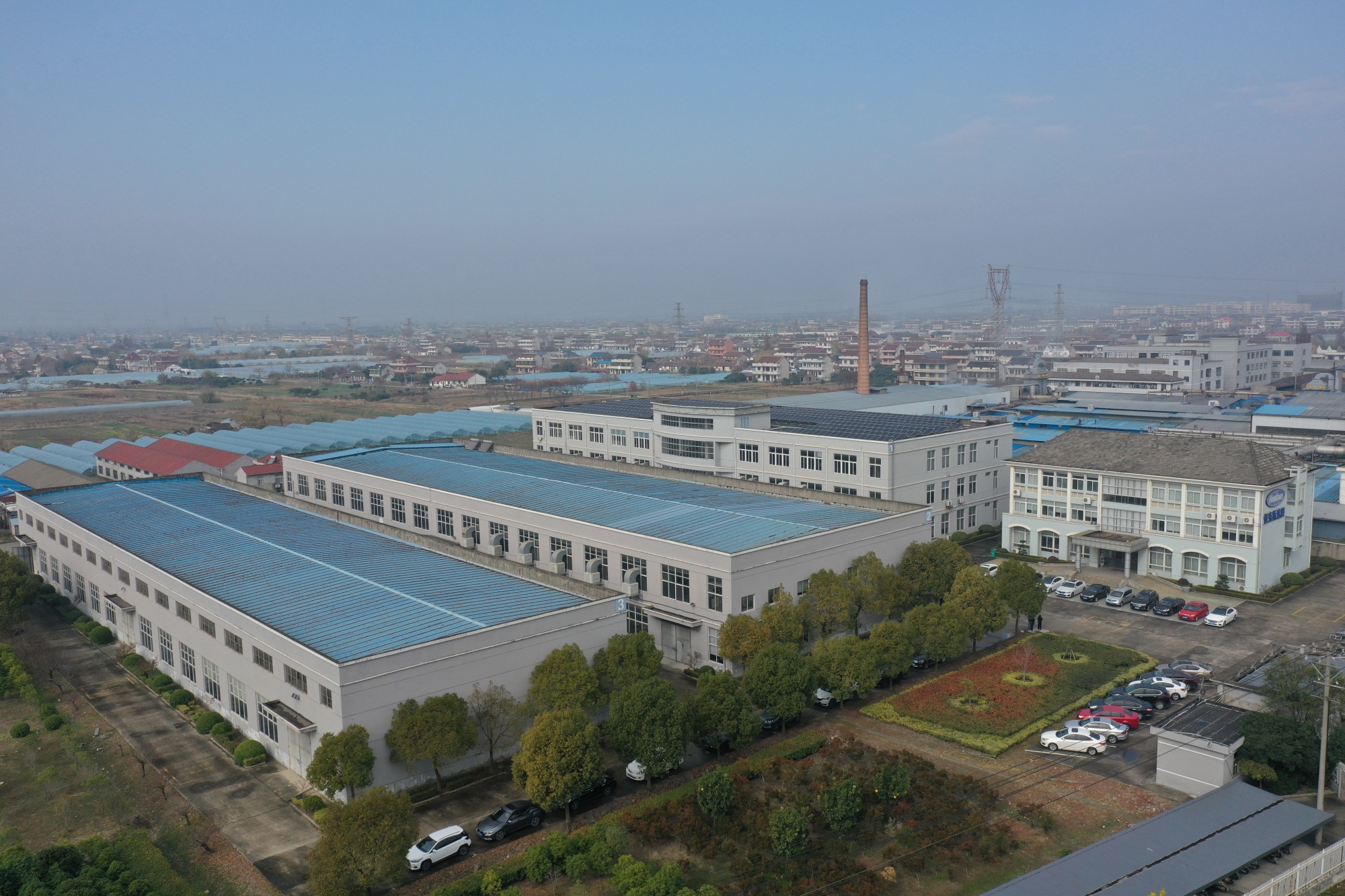
Media diversity is only transferable to finished product when pleating, sealing and inspection sit in the same production environment.
Project Evidence from U.S. OEM and ODM Programmes
Capability claims carry more weight when they are tied to delivered volume and duration. Three completed U.S. projects are documented in the Henkaes reference set.
A 20,000-piece project supplied air filters for indoor air purification to an air filter OEM client. The programme was completed within one year and achieved stable operation for one year, with high efficiency highlighted as the outcome.
A 50,000-piece project supplied filters for indoor air purification to an air filter ODM client. The implementation period was one year, the project achieved stable operation for one year, and good performance in removing volatile organic compounds was recorded. A second 50,000-piece ODM project addressed formaldehyde removal over a two-year duration and reported stable performance across both years.
These are supplier-reported references rather than independently audited outcomes, and volume alone does not establish a performance benchmark. What they do show is that the household filtration families in the range have been run at commercial scale with more than one programme structure — OEM on the one hand, ODM on the other — which is the distinction a private-label buyer usually needs to test.
From Media Coverage to a Custom Order
Materials and grades describe what can be built. Commercial parameters describe how an order actually runs, and both belong in an evaluation.
| Production mode | OEM and ODM |
| Customization | Size and logo |
| Minimum order quantity | 500 pcs |
| Lead time | 30 days |
| Monthly capacity | 200,000 pcs |
| Quality control | 100% inspection |
| Delivery terms | FOB / EXW / DDP |
| Payment terms | TT 50% / 50% |
| Acceptance criteria | Pre-shipment test |
| After-sales | Remote support |
Design-side capability is documented separately. The company employs 11 R&D engineers and reports more than 20 years of work with a U.S. engineering team, allowing products to be designed from specifications, drawings, samples or concepts. The service scope includes filter design across specifications, engineering sample production, production and testing, solid modelling and rapid prototyping. That combination matters when a customized filter is not a size change but a new geometry that has to be proven before tooling.
Where This Evidence Has Limits
A capability review that omits boundaries is not useful for procurement. Four constraints apply to the material and grade evidence above.
1. Breadth is not depth. The published data states a grade range per filter family, not a per-model third-party test report. A buyer cannot read U14/U15 in a table and treat it as validated performance for a specific part number. The correct execution step is to request test data against the destination framework — ASHRAE 52.2 for MERV-rated products, EN 1822 for H and U classes, ISO 16890 for European general ventilation — plus physical samples for the exact configuration being ordered.
2. Certification records are time-bound. The certificate records available for Henkaes show ISO 9001:2015 (certificate 04523Q30502R4M) and ISO 14001:2015 (certificate 04523E30387R2M), both issued by Beijing Dalu Hangxing Quality Certification Center Co., Ltd., covering the design and production of air filter, air purifier and fresh air machine, with validity from 14 June 2023 to 14 June 2026. Because that window has passed, buyers should request the current valid editions rather than rely on the archived documents. The company also lists ISO 45001:2018 among its management system certifications; the corresponding certificate details are not part of this record set.
3. Media are not interchangeable even at the same grade. Microfine fiberglass and PTFE both support U14/U15 in the cleanroom family, but they differ in cost structure, handling and chemical tolerance. Likewise, a higher CTC value indicates greater adsorptive capacity, not equivalent performance against every target gas; VOC removal has to be matched to the specific compound and residence time. Selecting on grade alone can produce a filter that meets the class but not the application.
4. Order structure sets the schedule. A 500-piece minimum and a 30-day standard lead time suit repeat programmes with forecast visibility. A project that needs many low-volume variants across several families will need a longer planning window, and buyers comparing this supplier against a single-media factory should weigh that against the reduced supplier-management load that consolidation brings.
Market Context Behind the Grade Spread
The reason media and grade breadth has moved from a differentiator to a screening criterion is visible in the demand data.
Grand View Research valued the global smart air purifier market at USD 2.5 billion in 2023 and projects a compound annual growth rate of 14.1% from 2024 to 2030, with Asia Pacific holding a 41.4% revenue share in 2023. Market Research Future separately reports the HEPA filter segment at USD 5.77 billion in 2025. These are commercial research-house estimates rather than audited figures, and they cover different market layers — smart purifiers on one side, HEPA filters on the other — so they should not be aggregated. Read separately, they point the same way: demand is concentrated in the higher-efficiency and gas-removal end of the range, precisely where media capability decides whether a supplier can deliver.
For buyers, the implication is procedural rather than promotional. As volumes shift toward high-efficiency and carbon-based products, a supplier that only converts purchased media into frames becomes a coordination risk, while a supplier that runs five media families internally becomes a candidate for consolidation — provided the per-family verification described above is completed.
What to Watch Next
Three developments are likely to change how this capability evidence is read over the next procurement cycles.
The first is standards migration. With EN 779 replaced by ISO 16890 in Europe since mid-2018, F-class labels will increasingly need an ISO 16890 counterpart in tender documentation. Suppliers that already test against multiple frameworks will adapt faster; buyers should expect report formats to change even when the physical product does not.
The second is the growing weight of verifiable data over stated capability. The distinction between a supplier's own description and an independent test report will matter more as controlled-environment and pharmaceutical buyers tighten audit requirements. Documentation quality is becoming a capability in its own right.
The third is material substitution pressure. PTFE membranes and microfine glass will continue to compete in high-efficiency cleanroom work, and activated carbon grades will be matched more precisely to target gas profiles rather than specified as a generic option. Suppliers holding several media in-house are better placed to answer those questions with an alternative rather than a refusal.
Frequently Asked Questions
Which filter media does Henkaes manufacture with?
Henkaes builds filters from five media: fiberglass, polypropylene (PP), microfine fiberglass, PTFE and activated carbon. Fiberglass and PP appear in the Panel, V-Bank, HEPA and True HEPA families; microfine fiberglass appears in the Bag, Box, Cleanroom and B737/B757 Electronic Cabin families; PTFE is used in the Cleanroom Air Filter; and activated carbon is used in the Activated Carbon Filter and the VOC Air Filter, the latter with a special catalyst added.
What efficiency grades are covered across the filter families?
The published grade range runs from coarse to high efficiency: G1–G4 for the Panel Filter, F5/F6/F8/F9 for the Bag Filter, MERV 8/11/13 for the Furnace Air Filter, MERV 15/16 for the Box Filter, H13 for the V-Bank, HEPA and B737/B757 Electronic Cabin filters, ≥99.97% for the True HEPA filter, and U14/U15 for the Cleanroom Air Filter. The Activated Carbon Filter is graded by carbon tetrachloride activity at CTC70, CTC80, CTC90 and CTC100 rather than by particle efficiency.
Can sizes and branding be customized for OEM and ODM programmes?
Yes. Henkaes provides both OEM and ODM production services, and the stated customization scope covers size and logo. Design input can take the form of specifications, drawings, samples or a concept, and the service scope includes engineering sample production, solid modelling and rapid prototyping alongside production and testing. Customization depth should still be confirmed against the target grade, because a dimensional change and a change of filter geometry are different engineering tasks.
What commercial terms apply to a first order?
The stated terms are a minimum order quantity of 500 pcs, a 30-day lead time, delivery under FOB, EXW or DDP, and payment at TT 50%/50%. Acceptance is based on a pre-shipment test, and after-sales support is provided remotely. Monthly capacity is listed at 200,000 pcs against reported annual output of 2,000,000 pieces, with 69% of output exported to the EU and US.
How is quality controlled before shipment?
All products undergo 100% inspection, and acceptance is tied to a pre-shipment test. The facility includes an efficiency and air-resistance test system for filter media, a 30 m³ test room for formaldehyde and VOC removal efficiency, a CADR test room for air purifiers and a noise test laboratory, and the company states that ASHRAE 52.2 is used in testing its air filters.
What should a buyer verify beyond the published material and grade data?
Three items. First, per-model test reports against the framework the destination market requires, since the published data gives grade ranges by family rather than model-level third-party results. Second, current certification documents, because the ISO 9001:2015 and ISO 14001:2015 records in circulation carry validity from 14 June 2023 to 14 June 2026. Third, physical samples of the exact configuration, particularly for gas-phase products where a stated CTC value indicates adsorptive capacity but does not by itself confirm performance against a specific target compound.
Reference document
The consolidated product catalogue covering the filter families discussed in this review — including media, grade and application data — is available for download: E-Catalogue for Air Filter 1 (PDF).
Supplier capability is best read as a set of bounded claims: media in use, grades published, references delivered, and the verification steps still outstanding. The material and grade coverage documented here establishes what Henkaes states it can build across eleven filter families; the remaining work belongs to the buyer's own qualification process.
Есть вопросы или нужны дополнительные детали?
Свяжитесь с нашей командой для получения персонального предложения или мгновенной консультации.
Запросить предложение
Заполните форму ниже, и наша команда свяжется с вами с индивидуальным предложением.
Прямой чат WhatsApp
Предпочитаете общаться в реальном времени? Напишите нам в WhatsApp для мгновенной помощи и быстрых ответов.
- Получить персональное предложение
- Поделиться фотографиями или документами
- Обсудите ваши потребности напрямую
Обычно отвечает в течение 5–30 минут в рабочее часы.