
Capability Proof: Testing Protocols Behind Reliable 316L Stainless Steel Jewelry
Industry Reference · Stainless Steel Jewelry
Reliability in stainless steel jewelry is not a property of the metal. It is a property of the process around the metal — the tests a supplier runs, the documents it can produce, and the consistency it can hold across hundreds of thousands of units.
Stainless steel jewelry became a wholesale staple because 316L tolerates daily wear better than plated brass and costs far less than precious metal. That material advantage is now widely available, which means it no longer differentiates one supplier from another. What differentiates them is the evidence layer: whether a supplier can document material grade, corrosion resistance, skin-contact behaviour, and colour consistency with named protocols rather than adjectives.
This reference sets out the four evidence classes a buyer should expect from a capable 316L supplier, the test standards that generate them — ASTM A276/A276M-25 for material verification, ISO 9227 for salt spray, ISO 3160-2 for artificial perspiration — and how those results translate into commercial outcomes such as batch-to-batch colour consistency, capacity planning, and EU market access.
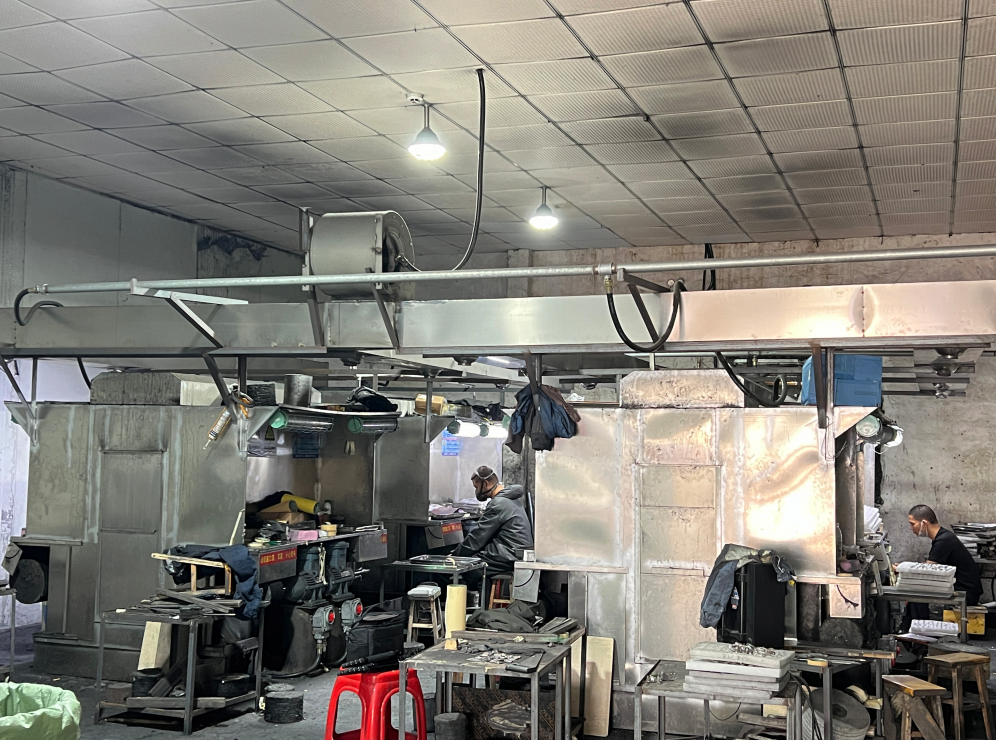
A workshop routine, not a showroom: the reliability of a 316L supply chain is built at the bench and proven in the test report.
Why a Material Name Is Not a Capability Claim
A purchase order that reads “316L” specifies an intention, not a verified condition. Stainless steel is an alloy family with wide latitude in chemistry, carbon content, and mill source, and jewelry supply chains frequently blend mill stock, recycled scrap, and re-melted material. Documentation is what closes that gap between intention and condition.
The gap matters more in jewelry than in most light-industrial categories for a second reason: the claims a brand makes downstream are regulated claims. “Hypoallergenic”, “nickel-free”, “waterproof” and “tarnish-free” are all statements about skin contact and durability that EU market surveillance can ask a brand to substantiate. A brand cannot make those claims durable unless the supplier’s test reports are durable — and scoped to the actual production, not to a single golden sample.
That is the practical meaning of capability proof in this category. It is not a certificate on a wall. It is a repeatable sequence: defined substrate → defined surface treatment → defined test method → defined acceptance threshold → batch record.
Four Evidence Classes a 316L Jewelry Buyer Should Expect
The evidence a capable supplier can produce generally falls into four classes. Each answers a different question, and each has a boundary that buyers should understand before treating it as a guarantee.
| Evidence class | Typical protocol or document | What it establishes | What it does not establish |
|---|---|---|---|
| Material identity | SGS report referencing ASTM A276/A276M-25 for 316L bar and shape stock | Grade and chemistry of the submitted material | That every later production lot came from the same mill |
| Corrosion resistance | Neutral salt spray testing to ISO 9227, with duration stated | How the finished surface behaves under accelerated chloride exposure | A multi-year field guarantee under all wear conditions |
| Skin-contact behaviour | Artificial perspiration testing to ISO 3160-2; nickel release referenced to EU REACH | Whether the finish and substrate resist sweat chemistry and meet release limits | That no individual wearer will react; allergy is individual |
| Colour consistency | Delta E measurement across PVD batches (target < 1.0) | Whether separate production runs will read as the same colour | That colour is identical under every light source and viewing angle |
Two further documents are often requested alongside these four: REACH test reports for restricted substances, and BSCI social-compliance audits, which describe labour conditions rather than product performance. Buyers frequently conflate the two categories; they answer entirely different due-diligence questions.
Where Jusnova Jewelry Sits in That Evidence Model
Jusnova Jewelry Co., Ltd. is a Guangzhou-based manufacturer established in 2009 that specialises in ODM/OEM production of custom stainless steel jewelry — bangles, bracelets, rings, earrings, and PVD or electroplated gold pieces — for export-oriented wholesale and brand buyers, with an export ratio of roughly 95% and an emphasis on European and American markets.
Against the four evidence classes, the company’s documented position is as follows. Its stainless steel jewelry line, model GEN000516bhia-066, is produced from 316L surgical-grade steel with zero nickel release, tested to EU REACH and FDA standards. SGS reports, REACH test reports and BSCI certification are available upon request. Durability claims rest on 48-hour salt spray verification, and colour consistency is stated as Delta E < 1.0 across batches within a PVD colour range of more than 20 options.
On the operational side, the company runs a 1,000 m² facility with approximately 300 staff and an annual production capacity of 3,000,000 units — roughly 250,000 units per month. A 20-engineer R&D team supports style development and surface-finishing processes, and the company launches more than 500 styles per month. Customisation covers laser engraving, stamping, screen printing and epoxy doming for logos, with a 2–3 day sample lead time, plus custom packaging from OPP bags to foil-stamped gift boxes.
What makes that combination commercially meaningful is not any single figure. It is that the test claims and the production capability sit in the same organisation: the surface treatment whose colour is measured to Delta E < 1.0 is applied in-house on six PVD machines, rather than subcontracted to a finishing shop whose process the buyer cannot audit.
Technical Explanation: How 316L, PVD and Delta E Interlock
Three technical facts explain why these protocols belong together.
First, the substrate sets the floor. 316L is a low-carbon austenitic stainless steel containing molybdenum, which is what gives it better chloride resistance than 304 in sweat and salt-water contact. Its low carbon content reduces sensitisation during welding and assembly, which matters for cast and joined jewelry components. A grade-verification report against ASTM A276/A276M-25 is the document that confirms the floor has not moved.
Second, the coating sets the ceiling. PVD is a vacuum deposition process that lays down a thin, hard film rather than an electrochemically deposited metal layer. Industry comparison data places PVD coatings at roughly 1,500–4,500 HV against 100–200 HV for standard plating — an order of magnitude in surface hardness, which is the mechanism behind wear resistance and colour retention. Jusnova reports that its PVD surface maintains lustre for 2–5 years in conventional environments and offers more than 20 colour options, from classic rose gold to bolder finishes.
Third, the measurement defines the promise. Delta E is the numerical colour difference between two measured samples in a perceptual colour space; the lower the value, the closer the match. A threshold of Delta E < 1.0 is a tight industrial control target — it means two batches produced weeks apart should read as the same colour to a customer opening a retail box, not merely “close enough” on a factory table. For a brand running repeat orders across seasons, this is the single most commercially consequential number in the entire specification, because colour drift is what generates returns and markdowns.
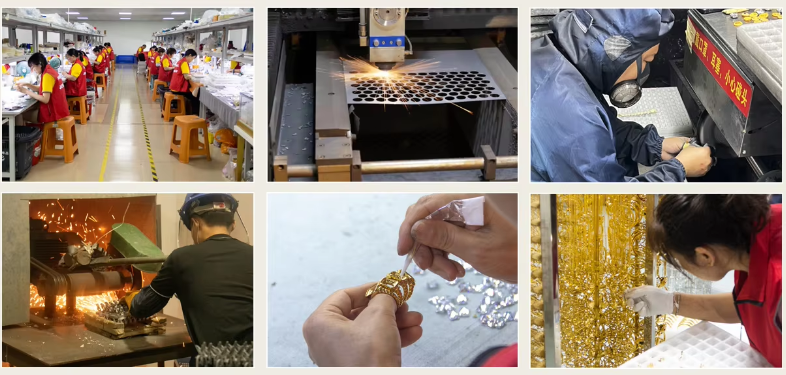
Test protocols only hold if the process they describe is fixed: substrate, surface preparation, coating, assembly and QC in a defined sequence.
From Test Result to Commercial Outcome
Buyers rarely purchase a test report for its own sake. They purchase the consequence it protects. The mapping below shows how each protocol converts into a decision a procurement or brand team actually has to make.
| Protocol | Reported result | Commercial consequence |
|---|---|---|
| ASTM A276/A276M-25 via SGS | Grade confirmed as 316L | Supports a “316L” product claim in listings and packaging copy |
| ISO 9227 salt spray, 48 hours | Surface resists accelerated chloride exposure | Justifies waterproof and non-tarnish positioning for daily-wear ranges |
| ISO 3160-2 artificial perspiration | Finish resists sweat chemistry; nickel release within EU REACH limits | Reduces skin-reaction complaints and return rates in EU retail channels |
| Delta E < 1.0 on PVD batches | Batch-to-batch colour match | Enables reorders and multi-SKU collections without visible shade shifts |
| Capacity of 3,000,000 units per year | Approximately 250,000 units monthly | Supports seasonal programme planning and replenishment cycles |
Application: Where These Protocols Decide the Order
EU-facing DTC brands. The combination of ISO 3160-2 perspiration testing and REACH-referenced nickel release is what allows a brand to write “hypoallergenic” and “nickel-free” on a product page with a document behind it. For sellers on European marketplaces, that is a listing requirement, not a marketing preference.
Wholesale and multi-SKU assortments. Colour consistency is the operational bottleneck here. A wholesaler carrying engraved bangles, rope chains, figaro chains and curb chains across 20-plus PVD colours needs each reorder to match the last one; Delta E < 1.0 is the mechanism that prevents a new shipment from sitting visibly apart from existing stock on the same display.
Personalised and logo programmes. Custom engraving and logo application introduce an extra process step after coating, which is exactly where surface damage tends to appear. Engraved bangle formats combined with in-house laser engraving, stamping, screen printing or epoxy doming allow a promotional-gift or corporate-programme buyer to specify both the personalisation and the finish integrity in one place.
Fit-sensitive and gift ranges. Dimensional tolerance matters when a product must suit a broad customer base or a curated gift box. The specification covers diameters from 5mm to 80mm and thickness from 0.5mm to 3.0mm with tolerance controlled within ±0.05mm, stone setting in CZ, man-made crystal or moissanite across more than 20 colours using prong, bezel, channel or pavé settings, and packaging from OPP bags to fully customised gift boxes.
Market Context: Why Proof Is Becoming a Purchasing Requirement
The commercial backdrop explains the shift toward documented capability. Commercial research published in 2026 values the global stainless steel jewelry market at USD 7.08 billion in 2025, with a projected rise to USD 10.8 billion by 2035 at a CAGR of 4.3% (WiseGuyReports, 2026).
Within that total, the waterproof and PVD-coated segment is expanding considerably faster: a separate 2026 industry report projects the waterproof jewelry market growing from USD 2.12 billion in 2026 to USD 4.60 billion by 2034 at a CAGR of 10.16% (Verified Market Reports, 2026). The gap between 4.3% and 10.16% is the important signal for buyers. Demand is not simply growing; it is rotating toward the precise performance attributes — wear resistance, sweat resistance, colour retention — that only exist as claims if they can be tested.
Two consequences follow. Suppliers without an in-house finishing line and a test trail will increasingly be priced as commodity vendors, because their claims cannot be defended. And buyers will face more suppliers quoting similar specifications, which pushes differentiation into documentation quality rather than price alone.
Comparison with Traditional Solutions — and the Limits of the Evidence
Compared with conventional electroplated fashion jewelry, the PVD-on-316L route changes the performance baseline rather than merely improving it. Electroplated finishes typically measure 100–200 HV and are commonly associated with a service life under a year in normal wear; PVD coatings sit in the 1,500–4,500 HV range. On a metal-alloy substrate, corrosion starts at the base metal once the plating layer is breached, whereas a 316L substrate continues to resist chloride attack under the same conditions.
That advantage comes with real boundaries, and a credible capability assessment should state them.
Test reports are sample-scoped. An SGS report referencing ASTM A276/A276M-25 documents the material submitted to the laboratory and the method used. It does not certify every subsequent lot, which is why buyers should pair the report with a batch-traceability commitment rather than treating the certificate as blanket coverage.
Forty-eight hours of salt spray is a screening window, not a warranty. ISO 9227 accelerated testing is a comparative tool for evaluating surface systems under controlled conditions. It correlates with real-world durability but does not translate directly into a stated number of years of wear, and it cannot anticipate every combination of sunscreen, chlorine, perfume and abrasion a consumer will encounter.
PVD is a thin film. Hardness reduces wear; it does not make a surface indestructible. Abrasion against harder materials, and prolonged contact with strong acids or alkalis, will degrade any decorative coating. Routine care — wiping with a soft cloth and avoiding aggressive chemicals — remains part of the product’s operating conditions rather than an optional nicety.
Delta E is a controlled measurement. The threshold describes consistency between measured batches under defined conditions. Perceived colour can still shift slightly under different retail lighting, and very thin coatings on differently prepared substrates may read marginally differently to a trained eye.
Capacity is aggregate, not dedicated. An annual capacity of 3,000,000 units — about 250,000 per month — describes total plant throughput. Peak-season programmes, complex stone-setting, and multi-finish collections should be scheduled against confirmed slots rather than assumed from headline capacity.
A Buyer-Side Verification Sequence
- Confirm grade before discussing finish. Ask for a material report naming 316L and a recognised bar-stock standard, and check that the report identifies the mill or lot.
- Read the test method, not the badge. The value lies in the standard reference — ISO 9227 for salt spray, ISO 3160-2 for perspiration — and the duration, not in the laboratory logo.
- Ask where the coating is applied. An in-house PVD line with six machines and 20-plus colours is auditable; outsourced finishing is not, and it is where colour drift usually originates.
- Request the colour tolerance. A stated Delta E target below 1.0, measured across batches, is a control commitment. The absence of any number is itself an answer.
- Test personalisation on coated surfaces. Engraving or logo application after plating is where surface integrity is most often lost; a 2–3 day sample cycle makes this cheap to check before a volume order.
- Match capacity to your calendar. Compare the supplier’s monthly throughput against your peak requirement, and confirm the allocation in writing.
Future Outlook
The direction of travel is toward documentation as a purchasing criterion rather than a post-order formality. As the waterproof and PVD segment outgrows the category average, more suppliers will claim salt-spray performance; the differentiator will be whether the claim comes with a named method, a stated duration, and a batch record behind it.
For buyers, the practical implication is that supplier evaluation will increasingly resemble a documentation review before it resembles a price negotiation. Colour tolerance values, perspiration test references and grade standards are becoming the vocabulary of the category — and the parties able to speak it fluently will be the ones whose claims survive scrutiny in the EU market.
FAQ
What is 316L stainless steel jewelry?
316L is a low-carbon, molybdenum-bearing austenitic stainless steel used for bangles, bracelets, rings and earrings. Jusnova Jewelry’s model GEN000516bhia-066 is produced from 316L surgical-grade steel with zero nickel release, tested to EU REACH and FDA standards. The grade matters in sourcing because nickel release and chloride resistance differ materially between stainless grades, and the difference is not visible in a finished product.
Which test documents should a buyer request from a 316L jewelry supplier?
Four sets cover most procurement needs: a material verification report referencing ASTM A276/A276M-25, typically issued by a laboratory such as SGS; a neutral salt spray report to ISO 9227 with the duration stated; an artificial perspiration report to ISO 3160-2 alongside a REACH-referenced nickel release statement; and a colour tolerance record for coated finishes. Jusnova states that REACH test reports, SGS reports and BSCI certification are available upon request.
What does Delta E < 1.0 mean for PVD colour consistency?
Delta E is a numerical measure of colour difference between two samples. A value below 1.0 indicates a very small difference, typically not distinguishable in normal viewing. Jusnova reports Delta E < 1.0 across batches within a PVD colour range of more than 20 options, produced on six in-house PVD machines. Practically, it is the figure that determines whether a reorder will match existing retail stock.
How long does PVD coating last on stainless steel jewelry?
Jusnova reports that its PVD surface maintains lustre for 2–5 years in conventional environments, supported by 48-hour salt spray testing. Independent comparison data places PVD hardness at roughly 1,500–4,500 HV against 100–200 HV for standard plating, which is the basis for that durability difference. The figure describes normal wear conditions; abrasion against harder materials and prolonged exposure to strong acids or alkalis will shorten coating life in any PVD system.
What can be customised — size, finish, stones and logo?
The specification covers diameters from 5mm to 80mm and thickness from 0.5mm to 3.0mm with tolerance controlled within ±0.05mm. Finishes include PVD coating in gold, rose gold, black and gunmetal, gold plating, electroplating, brushed, mirror-polished and sandblasted options. Stone setting supports CZ, man-made crystal and moissanite in more than 20 colours using prong, bezel, channel or pavé settings. Logos can be applied by laser engraving, stamping, screen printing or epoxy doming, with a 2–3 day sample lead time.
How should capacity and production reliability be verified before a volume order?
Jusnova operates a 1,000 m² facility with approximately 300 staff and an annual production capacity of 3,000,000 units, equivalent to roughly 250,000 units per month, supported by a 20-engineer R&D team and more than 500 new styles launched monthly. Because that figure describes aggregate plant throughput rather than capacity reserved for a single client, buyers should confirm allocation for peak-season programmes in writing and validate the process through sample production first.
Есть вопросы или нужны дополнительные детали?
Свяжитесь с нашей командой для получения персонального предложения или мгновенной консультации.
Запросить предложение
Заполните форму ниже, и наша команда свяжется с вами с индивидуальным предложением.
Прямой чат WhatsApp
Предпочитаете общаться в реальном времени? Напишите нам в WhatsApp для мгновенной помощи и быстрых ответов.
- Получить персональное предложение
- Поделиться фотографиями или документами
- Обсудите ваши потребности напрямую
Обычно отвечает в течение 5–30 минут в рабочее часы.