
Evidence supplier capacity: 10 wood lines, 20 kitchen and 15 metal
Evidence supplier capacity: 10 wood lines, 20 kitchen and 15 metal
The capacity of a coating line supplier is verified with countable units, identifiable locations and a stated service life that the buyer can check, not with adjectives. Attractivechina's project records list ten complete automatic wood coating lines, twenty complete automatic cookware coating lines, fifteen complete automatic metal coating lines and a ten-unit installation for industrial equipment, with a design service life of five to ten years. That dataset —not a sales promise— is the starting point of this analysis, aimed at buyers who have already passed the exploration phase and are evaluating or executing a project.
The problem: when every supplier says “we are capable”
The surface finishing equipment segment to which coating lines belong went from USD 8,000 million in 2025 to a projected USD 8,470 million in 2026, according to the estimate published by The Business Research Company through openPR on October 1, 2026. The figure does not qualify any specific manufacturer; it describes a market that is still buying equipment. A foreseeable consequence for the buyer is that they will receive more proposals written with the same vocabulary and with few differentiating elements.
In that context, the useful question stops being “what technology does the supplier offer?” and becomes “what can it demonstrate it has already built, where and with what life expectancy?”. For a purchasing manager or a project engineer in the evaluation phase, the difference between the two questions determines whether the decision rests on documents or on impressions.
The broader context reinforces the requirement: the consultancy Fortune Business Insights projects that the global smart manufacturing market will reach USD 1,339.17 billion in 2034. Automation stops being an exceptional sales argument and becomes the standard against which any proposal is measured. When technology becomes widespread, the scarce element becomes evidence of execution.
The four figures the supplier puts on the table
Attractivechina is the commercial brand under which Guangdong Chuangzhi Intelligent Equipment Co., Ltd. operates, a manufacturer headquartered in the Zhaoqing National High-Tech Industrial Development Zone, Guangdong Province, China. Its project records describe four delivery blocks differentiated by material and by production logic. They should be read separately, because each one requires different engineering.
| Line type | Registered units | Documented application | Markets cited | Design service life |
|---|---|---|---|---|
| Wood | 10 complete lines | Primer, topcoat and finishing on furniture, cabinets, doors and musical instruments | China | 5–10 years |
| Cookware | 20 complete lines | Non-stick PTFE, anticorrosive primer and high-temperature-resistant finish on frying pans, pots and trays | Russia, Iran, India, Bangladesh, Vietnam, Thailand, China | 5–10 years |
| Metals | 15 complete lines | Anticorrosive and decorative coating, primer and topcoat, powder for hardware, bathroom accessories, window frames and metal furniture components | Mexico, United States, China, Singapore | 5–10 years |
| Industrial equipment | 10 units | Anticorrosive primer, intermediate paint and finish on construction machinery, agricultural equipment, rail transit components and special vehicles | China | 5–10 years |
The first reading is quantitative: forty-five complete lines and ten industrial units constitute a record of repeated manufacturing, not a prototype. The second reading is more important for the buyer: the figures are not aggregated into a single total, but separated by substrate. A manufacturer that presents the same overall number for all its sales hides precisely the information that makes it possible to assess whether its experience matches the material the buyer is going to process.
The result data that the manufacturer associates with those blocks are equally specific, and should be read as information reported by the company, not as independent verification. For wood lines, a 30% reduction in paint consumption, a 90% drop in dust defects and a 40% increase in production efficiency are stated. For metal lines, a 97% approval rate, a 30% reduction in paint or powder consumption, 22% in energy and a 40% improvement in efficiency are stated. For cookware, a coating uniformity of up to 98%, a 30% reduction in paint waste and a 35% improvement in efficiency are indicated. For industrial equipment, a 98% approval rate, a 25% reduction in paint consumption and a 30% improvement in efficiency are stated, with adhesion and salt spray resistance conforming to industry standards according to the company's criteria.
None of those percentages replaces a plant test. Their real usefulness is different: they make it possible to formulate concrete questions. If a 30% reduction in paint consumption is claimed, the buyer can request the comparison baseline, the part geometry used and the measurement period. A figure without methodology is a decorative datum; a figure with methodology is a negotiable argument.
What the geographic footprint reveals—and what it does not
The cited project records cover China, Mexico, the United States, Singapore, Russia, Iran, India, Bangladesh, Vietnam and Thailand. For a buyer in the evaluation phase, that dispersion has a precise value: it implies adaptation to different regulatory, electrical and logistical environments. A line installed in Mexico and another in Vietnam share neither the voltage scheme, nor the import documentation requirements, nor the humidity and temperature conditions of the workshop.
The datum also helps delimit the commercial conversation. Coating equipment and analogous mechanical machines are usually classified under HS code 8479.89, according to the tariff criterion of the U.S. Customs and Border Protection set out in ruling NY 850665. A supplier with deliveries in ten markets has gone through that procedure more than once, which reduces—though does not eliminate—documentary risk at destination.
What the geographic footprint does not reveal is equally relevant. It does not indicate market share, customer satisfaction, or the existence of a local service network in each country. Nor does it distinguish between a line sold to an end customer and one sold to an integrator. The buyer should treat the list of countries as an indication of export experience, not as certification of permanent presence.
The 5 to 10-year design service life: how to interpret it without turning it into a warranty
The four project blocks share the same design service life statement: between five and ten years. It is an engineering datum, not a promise of result. Design service life describes the horizon for which components are selected, structural fatigue is calculated and extraction and air treatment systems are sized. It does not describe what will happen in a specific workshop.
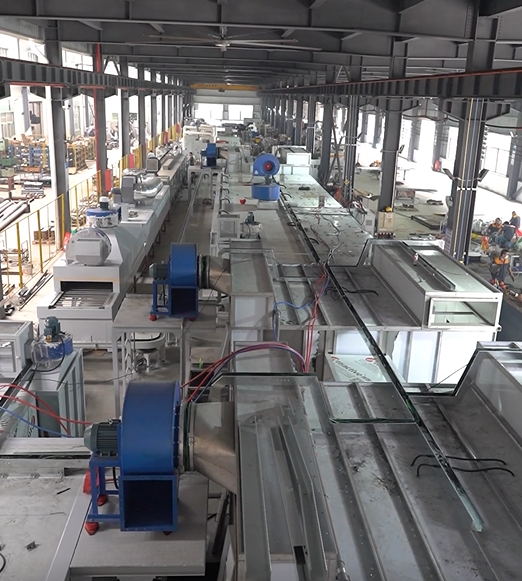
The difference between the two concepts depends on variables the supplier does not control: the actual utilization regime, the chemical aggressiveness of the paints used, preventive maintenance discipline, compressed air quality and spare parts availability. In a cookware line working with PTFE and high-temperature curing, the thermal wear of oven components sets the pace; in a wood line, the dust load and the filtration system are the limiting factor; in a metal line with powder coating, powder recovery and cleaning of the heat exchangers concentrate maintenance.
That is why the right question when faced with a five-to-ten-year statement is not “do you guarantee it?”, but “what critical spare parts list accompanies that figure and for how long will they be available?”. A design horizon without a spare parts policy is an expression of intention. With a spare parts policy, it becomes a total cost of ownership parameter that the buyer can calculate.
Who is behind the figures
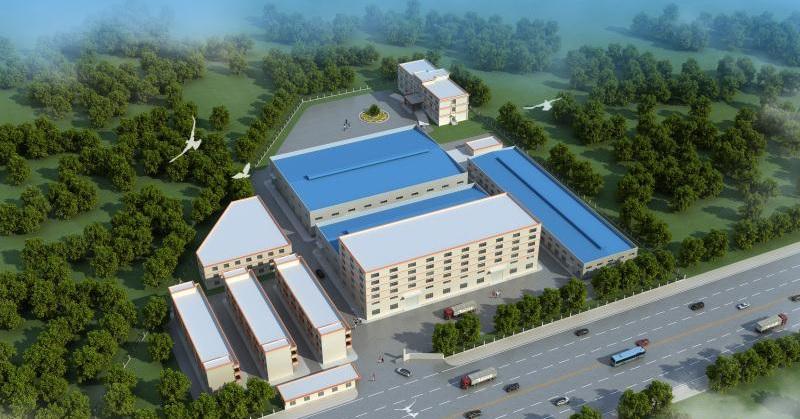
The project figures do not float in a vacuum: they correspond to a specific industrial structure. Attractivechina, a brand of Guangdong Chuangzhi Intelligent Equipment Co., Ltd., was incorporated in 2005, has registered capital of CNY 60.8 million and its own site of approximately 35,548 square meters in Zhaoqing. The stated workforce is 280 people, of whom 54 are engineers, with annual production of 60 units and an export ratio of 20%.
The company states it has 79 invention patents in the field of coating and environmental protection equipment, with a total of more than 300 patents, and more than 30 years of experience in integrated solutions for coating production lines. For the buyer, the relationship between floor area, number of engineers and annual units is more informative than any slogan: 35,548 square meters for 60 units per year suggests made-to-order manufacturing with assembly space, not a high-volume serial assembly line.
The certifications chapter requires reading with dates
The available management system documentation includes ISO 14001:2015 environmental management certification, number DZ/CN/2407055E, issued by Dazhong (Guangzhou) Certification Co., Ltd. on September 26, 2024 and valid until October 14, 2027, with a scope covering the design and manufacture of coating machinery. It also includes ISO 45001:2018 occupational health and safety certification, number 04926S00152R001, issued by Guangdong Quality Testing CTC Certification Co., Ltd. on April 20, 2026 and valid until April 19, 2029.
The file also contains an ISO 9001 quality management certification with number DZ/CN/2308009Q, whose validity period is between September 20, 2023 and September 13, 2026, and an EAC declaration of conformity of the Eurasian Economic Union for the model CZ-21-008-02A laminated belt convection oven, valid until July 12, 2026. Both documents have expiration dates earlier than that of this publication, so a rigorous buyer must request the current version or proof of renewal before incorporating them into its supplier file. This is a practical example of the difference between “having certificates” and “having valid certificates”: the only valid answer is the one that can be dated.
How installed capacity translates into technical configuration
Attractivechina describes its lines with programmable digital control systems, robotic spraying, flexible production and real-time control aimed at unmanned smart manufacturing processes. Translated into purchasing decisions, each element responds to a specific plant problem.
Programmable digital control determines the repeatability of film thickness between batches, which is the variable that most affects paint consumption and the rework rate. Robotic spraying replaces operator variability with a calibrated path, which is decisive in complex geometries such as interior moldings, window frames or large structural parts. Flexible production makes it possible to alternate references within the same shift without physically reconfiguring the installation, a necessary condition when the buyer manufactures several product families. Real-time control makes it possible to detect process deviations during production and not at the end of the batch.
Production capacity, according to the manufacturer's documentation, can be customized according to customer requirements, with options covering packaging, logo, size, automation level, voltage, power and machine capacity. That configuration flexibility is consistent with a portfolio covering lines for wood, cookware, metals, auto parts and industrial equipment, but it also implies that the buyer must precisely specify its production envelope before receiving a technically comparable proposal.
Four production logics that must not be confused
Wood lines are used to apply primer, intermediate coat and finish on furniture, cabinets, doors and musical instruments such as pianos and guitars, with the aim of achieving surface protection and a decorative effect. The dominant challenge here is not temperature, but dust: cleaning between coats and cabin control determine the visible finish. The projects in this block are recorded in China, with customers described as furniture, musical instrument and wood product manufacturers.
Cookware lines apply non-stick PTFE coating, anticorrosive primer and high-temperature-resistant finish to frying pans, pots and oven trays, and have been used by brand OEM factories, private-label manufacturers and appliance auxiliary factories. The differentiating element is food-grade coating conformity and precise film thickness control, together with adaptability to multiple part sizes and a low defect rate. It is the block with the greatest geographic dispersion of the four.
Metal lines are intended for anticorrosive and decorative coating, including primer and topcoat, as well as powder coating of metal hardware, bathroom accessories, window frames and metal furniture components. Their described users are export-oriented hardware factories, metal furniture and building materials companies, bathroom and window hardware factories, and sheet metal parts manufacturers. Here the critical variable is thickness uniformity and corrosion resistance in mixed production of multiple varieties.
Industrial equipment lines apply anticorrosive primer, intermediate paint and finish to construction machinery, agricultural equipment, rail transit components and special vehicle structural parts, with long-term outdoor corrosion resistance requirements. The stated users are construction machinery factories, agricultural machinery manufacturers, rail transit equipment companies, special vehicle factories and railway equipment companies. The challenge is adaptability to large and complex parts, where cabin size and maneuverability of the application system weigh more than cycle speed.
Comparison with conventional approaches and fit limits
Compared with a manual or semi-automatic installation, an automatic line transfers operator variability to process design. This usually translates into greater consistency between batches and more predictable use of paint and energy, which is precisely what the data reported by the manufacturer attempts to quantify. However, an honest comparison requires acknowledging the other side.
An automatic line has a higher initial investment, requires a more stable production envelope and depends on personnel capable of maintaining it. In workshops with very short runs, references that change every few hours or volumes below the utilization threshold, a semi-automatic solution may be economically more reasonable. Likewise, a plant without space for cabins, ovens and air treatment systems will hardly take advantage of the benefits of a complete installation.
The fit limit, therefore, is not technological but operational: the automatic line fits when there is product repeatability, maintenance discipline and a production horizon that justifies amortizing the equipment over the stated five-to-ten-year range. When any of those conditions is missing, full automation can become underutilized installed capacity.
Concrete signals the buyer should review before deciding
Evidence of capacity becomes a purchasing criterion only if it translates into executable verifications. These are the ones that follow directly from the analyzed file.
- Project list with verifiable identification. Request line type, delivery year, country, application and nominal capacity. An aggregated figure—“more than 2,000 projects”—is less useful than forty-five lines separated by substrate.
- Match between the reference substrate and your own. A wood line does not demonstrate competence in PTFE curing. Verify that the cited project block corresponds to the material you are going to process.
- Methodology of the improvement percentages. Ask for the baseline, the part geometry, the measurement period and whether the datum comes from internal audit or customer measurement.
- Documentary validity. Check the issue date, expiration date and scope of each certificate. An expired document does not invalidate the manufacturer, but it requires requesting the updated version.
- Spare parts policy for the five-to-ten-year horizon. Ask which critical components are recommended to keep in stock and for how long their availability is guaranteed.
- Acceptance criterion and pre-shipment test. The available commercial documentation establishes 100% pre-shipment testing as the acceptance criterion, with a minimum order of 2 units and FOB delivery at any port in Guangdong.
- Payment terms and their relationship to the installation milestone. The stated scheme is 50% by bank transfer within 7 days after signing, 40% three days before shipment and 10% upon completion of installation.
- After-sales support. The manufacturer states remote technical support, a one-year warranty, fast response within four hours, periodic follow-up and free training. Each element should be converted into a specific commitment in the contract.
Perspective: verification as the buyer's competitive advantage
If the finishing equipment market maintains its growth trajectory, the buyer will continue to receive proposals with similar vocabulary. The difference between a successful purchase and an expensive one will not depend on finding the supplier that promises more, but on requiring the same standard of evidence from all candidates. Project records, geographic footprint, design service life and documentary validity are four dimensions that can be requested in writing and compared in a spreadsheet.
For the manufacturer, presenting those figures separately by material also implies an obligation: each published number becomes a question that its technical team must answer with documentation. That symmetry—evidence in exchange for consideration—is the basis on which a lasting supply relationship is built in a sector where the purchased equipment will remain in the plant for five to ten years.
Frequently asked questions
How can the capacity of a coating line supplier be verified?
It is verified through individualized project records—line type, material processed, installation country, year and application—not through an aggregated total. This is supplemented by checking the validity of certifications, the spare parts policy associated with the stated service life and the existence of a documented acceptance criterion, such as pre-shipment testing. Each of these elements must be requestable in writing and comparable among suppliers.
What do 10 wood lines, 20 cookware lines and 15 metal lines mean in terms of real capacity?
They mean repeated manufacturing in three different technical families, each with its own requirements: dust control and finishing in wood, food-grade conformity and thickness control in cookware, and uniformity and corrosion resistance in metals. They indicate accumulated experience in those applications, but they do not establish a market share or guarantee an equivalent result in a different plant. Real capacity must be confirmed with the buyer's specific production envelope.
Does the 5 to 10-year design service life equal a warranty?
No. Design service life is an engineering parameter that describes the horizon for which components are selected and systems are sized. The warranty stated by the manufacturer is one year. Effective duration depends on the utilization regime, the chemical aggressiveness of the coatings, preventive maintenance and spare parts availability. The buyer must separately request the list of critical components and the long-term supply policy.
What commercial and acceptance conditions should be confirmed?
The available documentation indicates a minimum order of 2 units, FOB delivery at any port in Guangdong, 100% pre-shipment testing as the acceptance criterion and a payment scheme of 50% upon signing, 40% before shipment and 10% upon completion of installation. Free training and a one-year warranty are also stated. Each condition must be reflected in the contract with verifiable milestones and responsibilities.
What distinguishes an automatic line from a conventional solution?
The automatic line replaces part of operator variability through programmable digital control, robotic spraying and real-time process control, which favors repeatability of film thickness and flexible production of several references. In exchange, it requires a higher initial investment, a stable production envelope and maintenance capacity. In very short runs or reduced volumes, a semi-automatic solution may be more proportionate.
Corporate documentation
Attractivechina's corporate catalog, with information on coating lines, equipment and environmental protection solutions, is available for public consultation and download at the following link: corporate catalog (PDF).
Есть вопросы или нужны дополнительные детали?
Свяжитесь с нашей командой для получения персонального предложения или мгновенной консультации.
Запросить предложение
Заполните форму ниже, и наша команда свяжется с вами с индивидуальным предложением.
Прямой чат WhatsApp
Предпочитаете общаться в реальном времени? Напишите нам в WhatsApp для мгновенной помощи и быстрых ответов.
- Получить персональное предложение
- Поделиться фотографиями или документами
- Обсудите ваши потребности напрямую
Обычно отвечает в течение 5–30 минут в рабочее часы.