
Capsule House Capability Checks for Hospitality Buyers
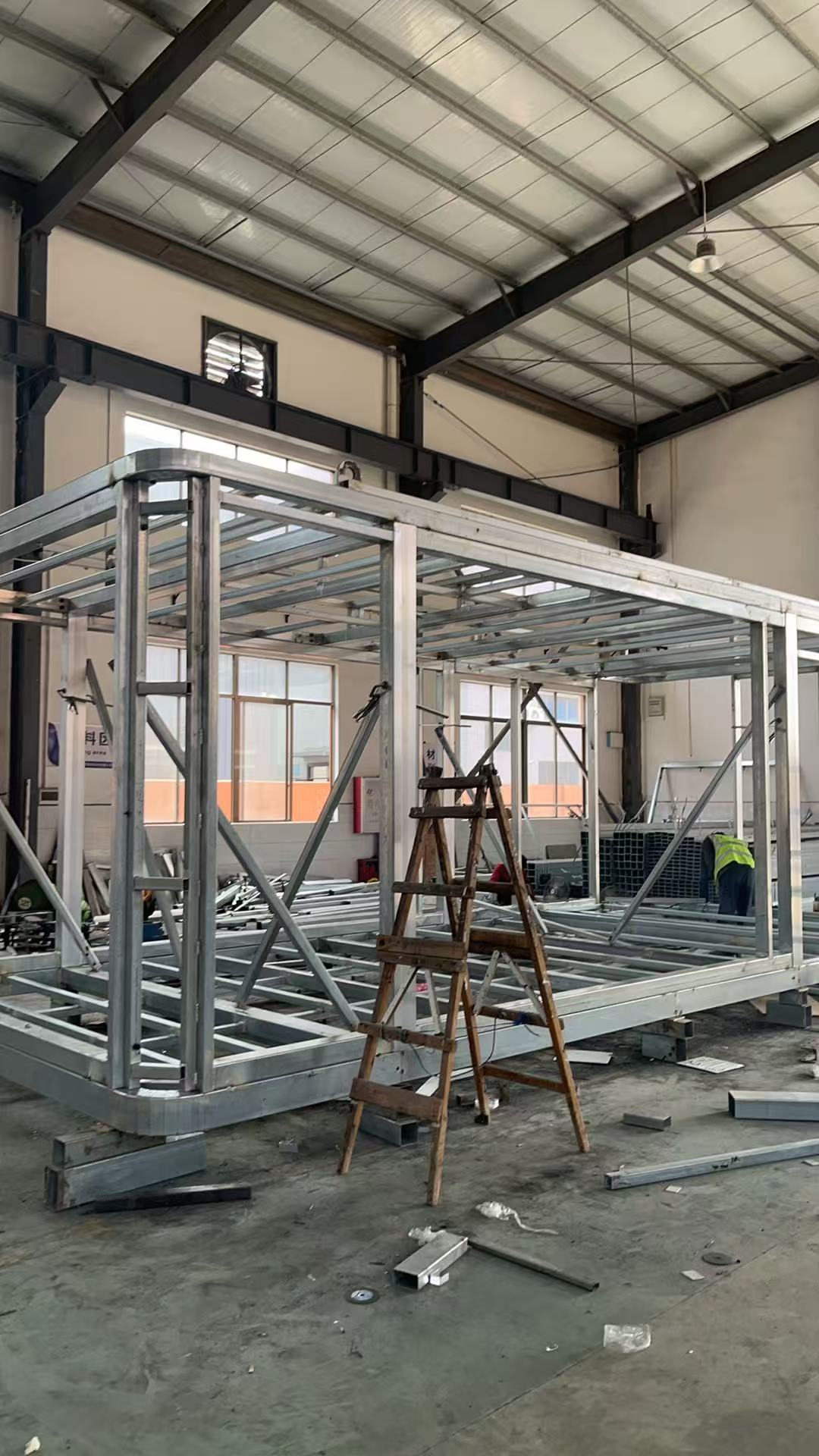
Capsule houses are no longer a niche product in hospitality. They are specified for resort accommodation, glamping sites, tourism villages, mountain lodges, and even commercial cabins, mainly because factory prefabrication shortens project cycles and reduces dependence on on-site construction. For buyers moving from evaluation to execution, the critical question is not only which capsule design looks right, but whether the manufacturer can deliver the required units on schedule, with the right electrical configuration, quality control, and after-sale support. This article outlines the capability factors that hospitality buyers should verify before placing a capsule house order, using the published production profile of Guangdong Mingsu Sojourn Technology Co., Ltd. (BOITO-MINGSU) as a reference.
Why Capability Assessment Matters at the Evaluation Stage
Hospitality projects are drawn to capsule houses because prefabrication removes much of the uncertainty of conventional building. Modular housing projects can reduce construction timelines by 30%–50% compared with traditional on-site building methods, according to Fortune Business Insights. The global prefabricated housing market is projected to reach approximately USD 152.74 billion by 2026, per Mordor Intelligence. At the same time, the glamping segment, which is a primary demand driver for capsule cabins, is expected to reach USD 7.9 billion by 2033 with a 9.5% CAGR, based on Grand View Research data.
These market conditions create a practical challenge for resort developers, hotel operators, and procurement teams. A camping resort in Thailand, a tourism village in Malaysia, and a commercial cabin project in Hong Kong may all specify capsule houses, but their requirements will differ in voltage standards, branding, site layout, product size, and logistics. Those differences have to be solved inside the factory, not through on-site modification. For buyers, the evaluation stage should therefore include a structured review of supplier capability: production mode, customization scope, capacity, lead time, quality control, certification, and export experience.
Manufacturer Profile: What One Capsule House Producer Publishes
Guangdong Mingsu Sojourn Technology Co., Ltd., a member of the BOITO Group, is a manufacturer and exporter based in Yangjiang, Guangdong, China. Founded in 2003, the company reports a 10,000 m² factory, an annual output of 1,000 units, and a 25-engineer R&D team. Its main products include capsule houses, modular hotel units, glamping cabins, mobile sleep pods, and modular villas. Approximately 40% of output is exported, mainly to Southeast Asia, the EU, and the USA.
For hospitality buyers, the company’s stated operating model is relevant: products are factory-prefabricated and delivered as complete units. The manufacturer also states that products can be customized to meet the building codes and electrical standards of different countries. That positioning matters for resort and scenic-area developers who need units that are deployable without extensive on-site construction.
The company’s product lines are used in glamping sites, eco-resorts, holiday parks, beach resorts, mountain resorts, staff accommodation projects, and other hospitality developments. In addition, the manufacturer provides ODM production services, which means buyers can develop custom products rather than selecting only from a standard catalogue.
Capacity and Order Parameters
| Capability | Published Parameter |
|---|---|
| Production mode | ODM available |
| Customization scope | Voltage and logo, plus model-level adjustments |
| Monthly capacity | 30–50 units |
| Lead time | 30–45 days |
| MOQ | 10 units |
| Quality control | 100% test |
| After-sales support | Remote support |
| Export markets | EU / Middle East; company-level main markets include Southeast Asia / EU / USA |
These parameters define the practical boundaries of an order. A 10-unit MOQ means a pilot project below this batch size is outside the standard production line. A monthly capacity of 30–50 units tells a resort operator how many rooms can be produced in one cycle. A 30–45 day lead time gives the buyer a realistic window from order confirmation to shipment readiness. For procurement teams, such figures help align stakeholder expectations before signing.
Product Range and Technical Benchmarks
The reference product line spans several capsule categories, each designed for a different hospitality function. The main models are the Breeze Single Capsule, Apple Capsule, Sleep Pod, Exotic-Style Capsule House, and Cafe Capsule. All listed models use a hot-dip galvanized steel frame structure, which supports outdoor all-weather use.
| Model | Series / Type | Dimensions (L×W×H) | Area | Guests | Power | Weight | Application |
|---|---|---|---|---|---|---|---|
| M3 | Breeze Single Capsule | 3m × 2.3m × 2.5m | 6.9 m² | 1 | 6 KW | ≈2 T | Single hospitality unit |
| Apple Capsule MINI | Apple Capsule | 8.3m × 3.3m × 3.2m | 27.39 m² | 1–4 | 7 KW | ≈6.5 T | Hospitality |
| M8 | Sleep Pod (Adventure) | 8.3m × 3.3m × 3.2m | 27.39 m² | 1–4 | 8 KW | ≈7 T | Resorts, camping |
| M10 | Exotic-Style Capsule House | 10m × 3.6m × 3.2m | 27.36 m² | 1–4 | 10 KW | ≈9.5 T | Tourism, resort |
| MS-XO8 F | Cafe Capsule | 16m × 3.6m × 3.2m | 57.6 m² | 1–4 | 10 KW | ≈13 T | Catering, commercial |
Key supporting components include a seismic hot-dip galvanized steel frame, bridge-cut aluminum doors and windows, double-layer tempered Low-E hollow glass, exterior wall thermal insulation composite panels, and sound insulation materials. These components are selected for varied outdoor climates, including high temperature, sunlight exposure, humid coastal environments, and mountainous conditions.
Application Patterns: Where Capsule House Models Are Deployed
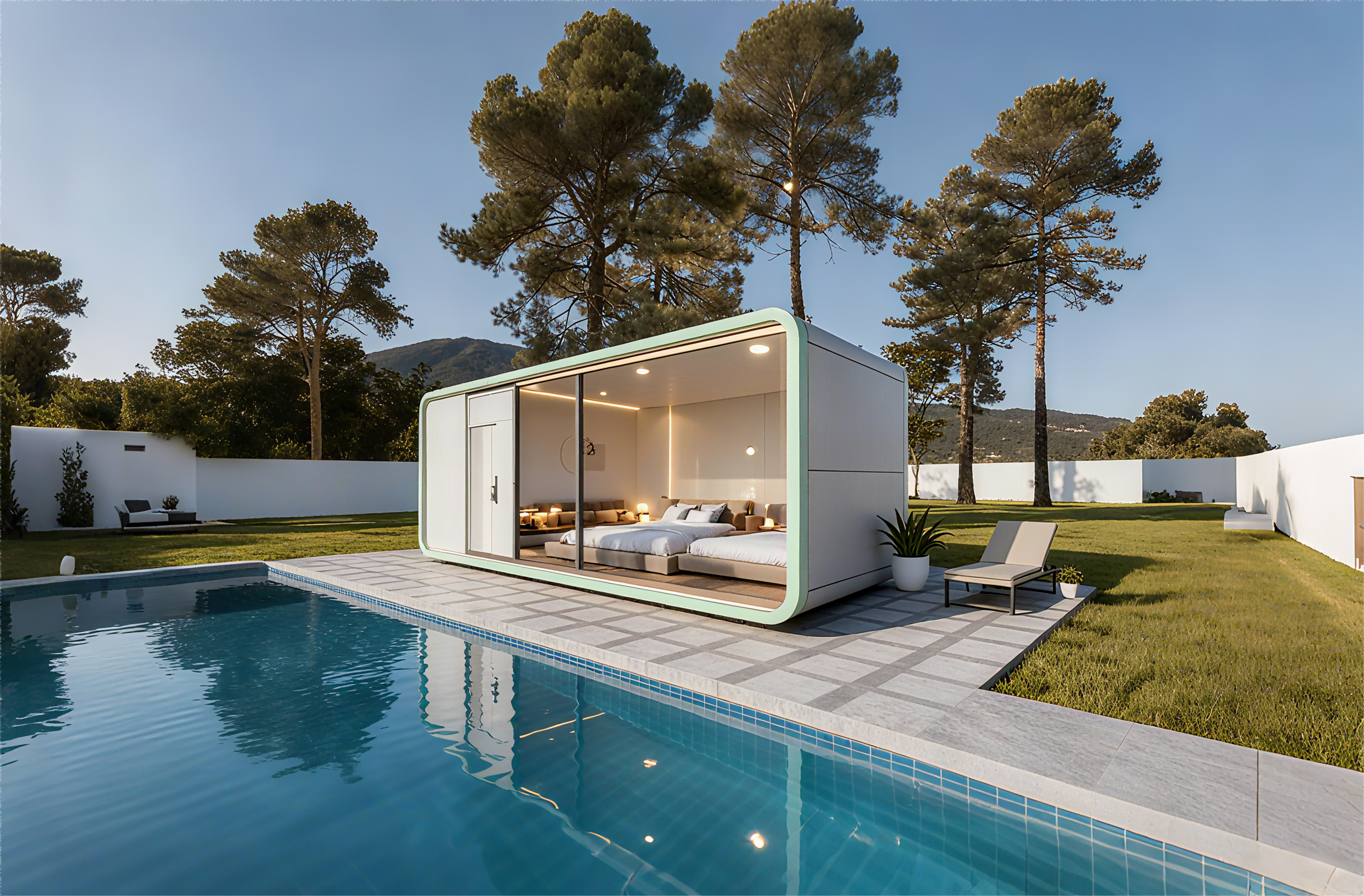
Published project references show a consistent pattern across hospitality segments. The manufacturer’s application records include a camping resort project in Thailand with 10 units of M8, a tourism village in Malaysia with 4 units of M8, and a camping resort in China with 36 units of M8 and M12 models. Beyond accommodation, residential and commercial uses also appear: a holiday home project in Canada used 6 customized units, and a business cabin project in Hong Kong used 2 customized units.
In one Malaysia tourism resort OEM reference, 10 units applied to camping resorts have reportedly operated for about 20 years with stable operation and low noise as a highlighted characteristic. This kind of long-duration reference is useful for buyers who are evaluating structural durability and acoustic performance in an outdoor hospitality setting.
Functionally, capsule houses are used to address problems that conventional construction cannot easily solve: long civil engineering cycles, difficult land-use approval processes, immobility, poor landscape aesthetics, and incomplete rural infrastructure. The units can be installed under forests or on mountainous terrain, depending on camp planning, and are positioned as low-cost, movable, and quickly deployable accommodation.
Installation Advantages at the Execution Stage
Compared with brick-and-concrete and light-gauge steel houses, capsule houses offer a different execution model. The space capsule factory adopts fully prefabricated production. No complex foundation is required on-site; the ground only needs to be leveled before the unit is lifted and placed. A single capsule can be installed and positioned in about 2 hours, significantly shortening the project cycle. The overall modular structure is formed without on-site construction waste, and approximately 80% of civil construction costs can be saved. After the project period, the unit can be moved and reused as a whole, which reduces the risk of fixed-asset loss.
Traditional brick-concrete and light-steel houses, by contrast, require foundation construction, approval procedures, and on-site construction. The construction period can be as long as 3 to 6 months, with high costs for labor, materials, and infrastructure. In addition, conventional buildings are fixed and cannot be relocated. If a project moves, a site is redeveloped, or a business model changes, the building may be scrapped and the investment lost.
Limits and Boundary Conditions
Capsule houses are not a universal replacement for conventional construction. Buyers should recognize several boundaries when comparing options:
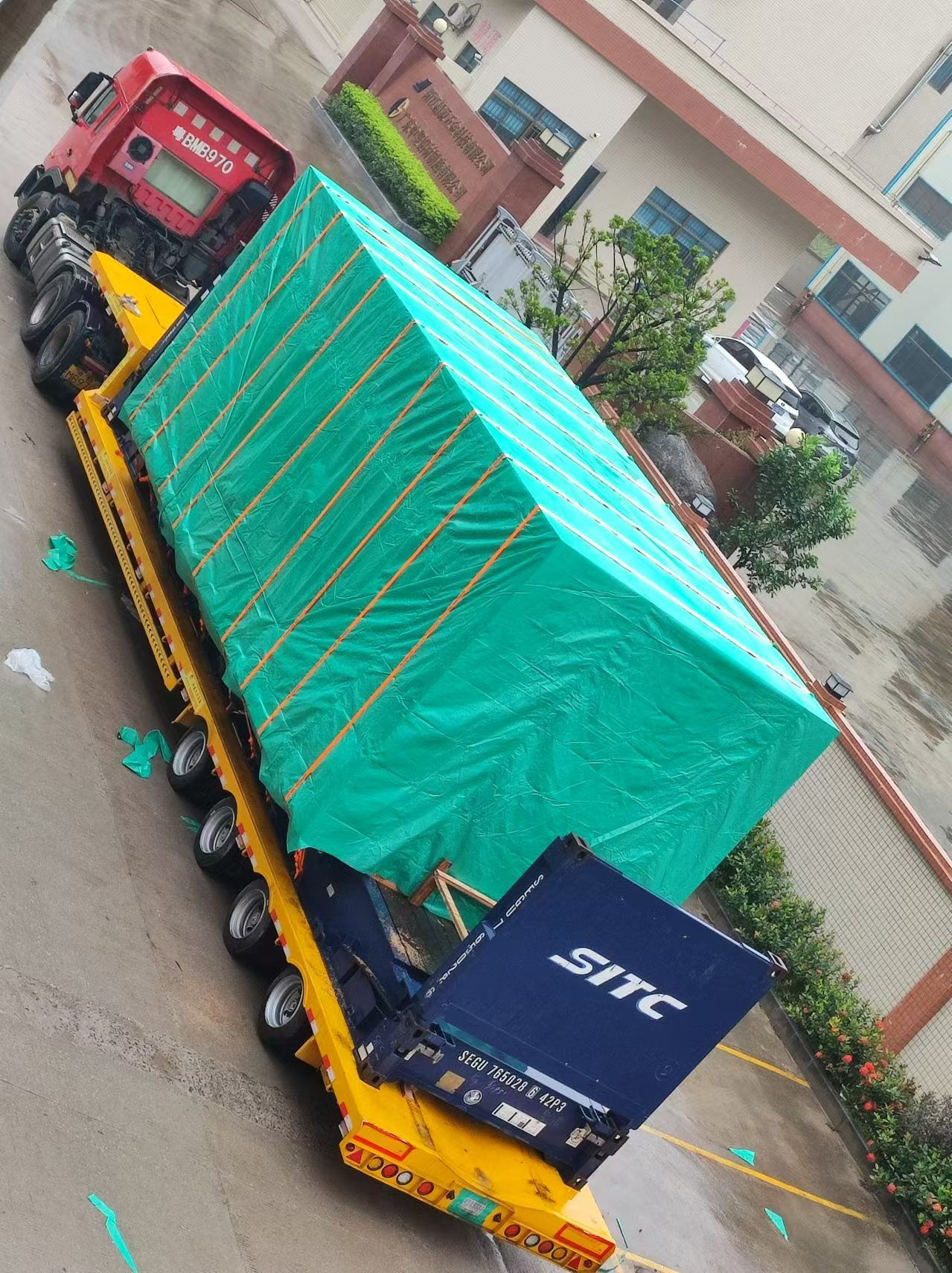
- Transport and logistics: Unit weights range from roughly 2 tonnes (M3) to 13 tonnes (MS-XO8 F). Site access, crane availability, and road or port restrictions must be checked before ordering.
- Regulatory classification: In the EU, capsule houses fall under the Construction Products Regulation (CPR) and must bear CE marking for legal installation. In the USA, regulators distinguish capsule units into RVs, ADUs, or state-certified modular construction, each requiring different foundation types. Buyers must verify which classification applies in their market.
- Permanent development projects: Multi-story buildings, projects requiring permanent foundations, or developments financed under long-term institutional frameworks may still require conventional construction methods.
- Local standards: Electrical standards and building codes vary by country. The manufacturer states that customization can meet different countries’ codes and electrical standards, but the buyer should confirm compliance before production begins.
These limitations do not reduce the value of capsule houses; they define where the product fits best. For single-level hospitality units on resort land, camping sites, scenic areas, and temporary commercial spaces, the modular approach offers a strong fit.
Commercial Terms and Quality Gates
For buyers at the execution stage, commercial terms are as important as product specifications. The manufacturer supports FOB, CIF, and EXW delivery methods. Payment terms are typically TT with a 50% deposit and balance before shipment. Acceptance can be completed through factory inspection or video inspection, which is relevant for overseas buyers who cannot visit the factory before shipment.
Quality control is stated as 100% test, meaning every unit is tested before delivery. This is a useful baseline for procurement teams. Buyers should also confirm whether the manufacturer provides after-sales remote support; in this case, remote support is available for troubleshooting and technical assistance after delivery.
Certification as a Procurement Signal
Certification is one of the few signals that can be verified before an order is placed. Guangdong Mingsu Sojourn Technology Co., Ltd. holds an ISO 14001 Environmental Management System Certificate, certificate number ISC-E-2025-5371-R, issued by Beijing International Standard United Certification Co., Ltd. The certificate covers environmental management activities for the sites involved in the manufacturing of metal structures (mobile homes), and is valid until 23 November 2028. The applicable standard is GB/T 24001-2016 / ISO14001:2015.
This certification does not replace product-specific approvals such as CE marking, but it provides evidence that the manufacturer operates an environmental management system at the production site. Buyers exporting to the EU should still verify whether the specific product model meets CE marking requirements under the Construction Products Regulation.
Market Trends Behind Capsule House Demand
Several verified data points help explain why capsule houses are entering more hospitality procurement plans:
- The global prefabricated housing market is projected to reach approximately USD 152.74 billion by 2026 (Mordor Intelligence).
- Modular homes are gaining ground within the prefab sector, with an estimated CAGR of 7.05% through 2031 (Mordor Intelligence).
- China’s exports of prefabricated buildings (HS 9406) reached USD 3.24 billion in 2024, with Malaysia and the US as key growth markets (OEC).
- The glamping market, a primary driver for capsule cabins, is expected to reach USD 7.9 billion by 2033 with a 9.5% CAGR (Grand View Research).
- Cabins and pods represent the largest accommodation segment in the glamping market, holding a 43.0% share in 2025 (Grand View Research).
- Asia-Pacific is the fastest-growing region for glamping and luxury modular pods, with a projected CAGR of 12.6% through 2034 (IMARC Group).
- The 18–32 age group accounts for approximately 45.3% of the glamping and capsule stay consumer base in 2025 (IMARC Group).
- Leading manufacturers in the Pearl River Delta (Shenzhen / Foshan) dominate the export market for high-tech “space capsule” houses (EB Enterprise Industry Guide).
These trends point in the same direction: demand for expandable, design-led, quickly deployable accommodation is increasing, and the Asia-Pacific region is accelerating faster than other regions. For buyers, this means supplier capacity will become more important as order volumes grow.
Outlook for Capsule-based Hospitality Procurement
The direction of capsule house procurement is already visible in export data and regional growth rates. As Southeast Asia, the EU, and the USA continue to import prefabricated buildings, buyers are likely to place more weight on documented capabilities such as ODM service, electrical customization, production schedules, and after-sales support.
For now, the practical recommendation for evaluation-stage buyers is to build a checklist: confirm the product model and its dimensions, check the manufacturer’s capacity and lead time, verify certification and quality-control procedures, clarify payment and delivery terms, and ask whether after-sales remote support is included. These checks turn a capsule house purchase from a design decision into an execution plan.
Frequently Asked Questions
Does the manufacturer provide OEM/ODM production services for capsule houses?
Yes. Guangdong Mingsu Sojourn Technology Co., Ltd. provides ODM (Original Design Manufacturer) production services, supporting clients in developing custom products. This is relevant for hospitality buyers who need voltage adjustments, branding, or model-level modifications.
What can be customized in a capsule house order?
The published customization scope includes voltage and logo. The manufacturer also states that products can be customized to meet the building codes and electrical standards of different countries. Project references include 6 customized holiday home units for Canada and 2 customized business cabin units for Hong Kong.
What capsule house models are available for hospitality use?
The reference product line includes the M3 Breeze Single Capsule, Apple Capsule MINI, M8 Sleep Pod (Adventure), M10 Exotic-Style Capsule House, and MS-XO8 F Cafe Capsule. Each model differs in dimensions, area, power consumption, unit weight, and application focus.
What is the minimum order quantity for capsule houses?
The stated MOQ is 10 units. This is a standard production batch size, so buyers planning smaller pilot projects should clarify options directly with the manufacturer.
What is the production capacity and lead time?
The manufacturer reports a monthly capacity of 30 to 50 units and a lead time of 30 to 45 days. These figures help buyers estimate how many rooms can be produced in one production cycle.
What quality control is performed before shipment?
The manufacturer states that quality control is carried out through a 100% test of units. Buyers can accept delivery through factory inspection or video inspection.
What certifications does the capsule house manufacturer hold?
The company holds an ISO 14001 Environmental Management System Certificate (certificate number ISC-E-2025-5371-R), issued by Beijing International Standard United Certification Co., Ltd. The certificate covers environmental management activities for manufacturing sites involved in metal structures (mobile homes).
Does the manufacturer provide after-sales support?
Yes. After-sales remote support is available for customers, covering troubleshooting and technical assistance after delivery.
What are the payment and delivery terms?
The supported delivery methods are FOB, CIF, and EXW. Payment terms are typically TT with a 50% deposit and balance before shipment.
Where does the manufacturer export?
The company-level profile lists main export markets as Southeast Asia, the EU, and the USA, with approximately 40% of output exported. The capability record also lists EU and Middle East as export markets for production services.
For buyers at the evaluation or execution stage, the manufacturer’s 2026 capsule house catalogue is available for review and download: BOITO-MINGSU 2026 Catalogue.