
Car Radio Customization: What Buyers Must Lock Before Mass Production
An aftermarket car radio program rarely fails on its feature list. The screen size, the Android version and the CarPlay support were agreed long before the first purchase order. What breaks is the distance between an approved sample and the tenth container: a panel colour that drifted, a firmware build that was never frozen, a car radio wiring harness whose pinout changed with a board revision, or a certification file that no longer covers the unit actually being shipped.
Customization is therefore less a marketing capability than an execution discipline. For buyers moving from evaluation into execution, the practical question is not whether a supplier can customize an Android car radio, but which parameters carry a change cost, and which of them must be frozen in writing before tooling, firmware and packaging are committed.
This reference examines that execution layer. It looks at what can be specified on a modern touch screen car radio platform, how certification scope constrains hardware change, how vehicle integration and harness requirements should be written down, and where a customized program stops being the commercially rational choice. Shenzhen Top Navi Electronic Tech Co., Limited (TOPNAVI), a Shenzhen-based manufacturer of Android car radios, car head units and related in-vehicle electronics founded in 2014, is used below as a working example of how an OEM/ODM customization set is structured — not as an argument that customization suits every buyer.

Customized car radio programs are judged on repeatability across batches, not on the first sample.
The gap between a customization list and a repeatable SKU
A supplier's capability document can list twenty customization parameters in a single paragraph. That paragraph is an inventory, not a plan. Between the list and a shippable SKU sit four recurring failure modes that buyers at the execution stage should design against:
- Specification drift. The approved sample used one panel finish, one DSP preset and one boot animation. Bulk production uses a visually similar but technically different combination because no revision was frozen.
- Silent BOM substitution. A memory, amplifier or connectivity module is replaced with an alternative supplier part mid-programme, changing both behaviour and compliance status.
- Certification scope mismatch. The certificate on file covers a model series that shares a PCB layout and key components. A customization that alters either of those sits outside the covered scope.
- After-sales mismatch. A customized SKU without serial tracking or a firmware handover cannot be diagnosed remotely, and a car radio replacement under warranty becomes a full-unit swap.
Each failure mode is preventable at the purchase order stage. None of them is preventable after the goods are on the water.
The four layers a car radio customization brief actually touches
A double din car radio customization brief is not a single specification. It spans four layers that are engineered, approved and audited separately. Buyers who treat them as one negotiation tend to discover the separation only when a change is requested.
| Customization layer | Typical parameters | What the buyer must freeze |
|---|---|---|
| Hardware and chassis | Screen size and resolution, RAM/ROM, panel colour, button light colour, 4G module, GPS/Beidou, AHD camera input | A BOM revision number per SKU, plus physical reference samples for colour and lighting |
| Software and interface | Logo, UI theme, boot animation, app pre-install, language (PT/ES/EN/FR), DSP tuning | A firmware build identifier and stored DSP preset files, not screenshots |
| Vehicle integration | CAN protocol, vehicle adaptation, steering wheel control, wiring harness and connector set | The vehicle model list, CAN version and pinout drawing, per model year |
| Package and lifecycle | Retail box artwork, accessory set, firmware OTA, after-sales service terms | Artwork approval files, OTA governance rules and the spare-parts matching method |
Layer separation matters because compliance, change cost and audit trail differ by layer. A colour change and a memory change are not the same commercial event.
What an OEM/ODM capability set contains in practice
TOPNAVI operates as an OEM and ODM producer, and its capability documentation lists customization across Logo, UI Theme, Boot Animation, APP Pre-install, Language, DSP Tuning, Button Light Color, Panel Color, Screen Size/Resolution, RAM/ROM, Wired/Wireless CarPlay, 4G Module, GPS/Beidou, AHD Camera, SWC, CAN Protocol, Vehicle Adaptation, Package, Firmware OTA and After-sales Service.
Those parameters sit inside a defined production envelope. The company states a 20,000 m² factory, more than 100 production staff and a 50-engineer R&D team, with an annual output of 360,000 units and a monthly capacity of 30,000 units. Stated lead time is 7–15 days with a minimum order quantity of 1 unit, and quality control is described as 100% test rather than sampling. Export markets listed are the EU, US, Brazil, India, South Korea and Japan, with a stated export ratio of 95%, remote and online after-sales support, and OEM/ODM positioning as a one-stop service.

Panel, interface and packaging parameters are reviewed as design references before a sample build, not after.
For a buyer, the commercial signal is not the length of that list. It is the ratio between customization breadth and production volume: a 30,000-unit monthly capacity paired with a 1-unit minimum order means sample-level customization is technically available, but programme economics still depend on how many of those parameters are actually varied per SKU.
Where customization stops being free: the certification boundary
This is the part of an aftermarket car radio programme most often under-documented, and the part that most directly constrains what can be changed after approval.
The public certification record for TOPNAVI products is specific, and its wording matters more than the logos on a product page:
- ISO 9001 — certificate SW25Q20244R1S, issued 11 March 2025 and valid to 10 March 2028 by Shanghai Sailway Certification Co., Ltd, covering the R&D, production and sales of car audio-visual systems, car multimedia players and GPS navigation systems.
- CE-EMC — certificate WST23N080170E, issued 21 August 2023 by Shenzhen WST Testing Co., Ltd., against EN 55032:2015+A1:2020 and EN 55035:2017+A11:2020, covering the TN-901 to TN-144 series.
- FCC Part 15 Subpart B — certificate WST23N080171E, issued 21 August 2023 by Shenzhen WST Testing Co., Ltd., for the US market.
- ECE E24 type approval (E-mark) — certificate E2410R06/024547*00, authority NSAI, issued 30 March 2023 under UN/ECE Regulation No. 10 (06 series of amendments) for electromagnetic compatibility.
The critical sentence in the EMC and FCC documentation is the coverage basis: the certificates cover a full series of models that share the same PCB layout and key components. That is a normal and defensible basis for series certification — and it defines the exact point at which customization becomes a compliance event. Changing a panel colour, a boot animation or a language pack does not touch that basis. Changing the mainboard layout, the memory configuration or a wireless module does, and requires re-assessment rather than an assumption of continuity.
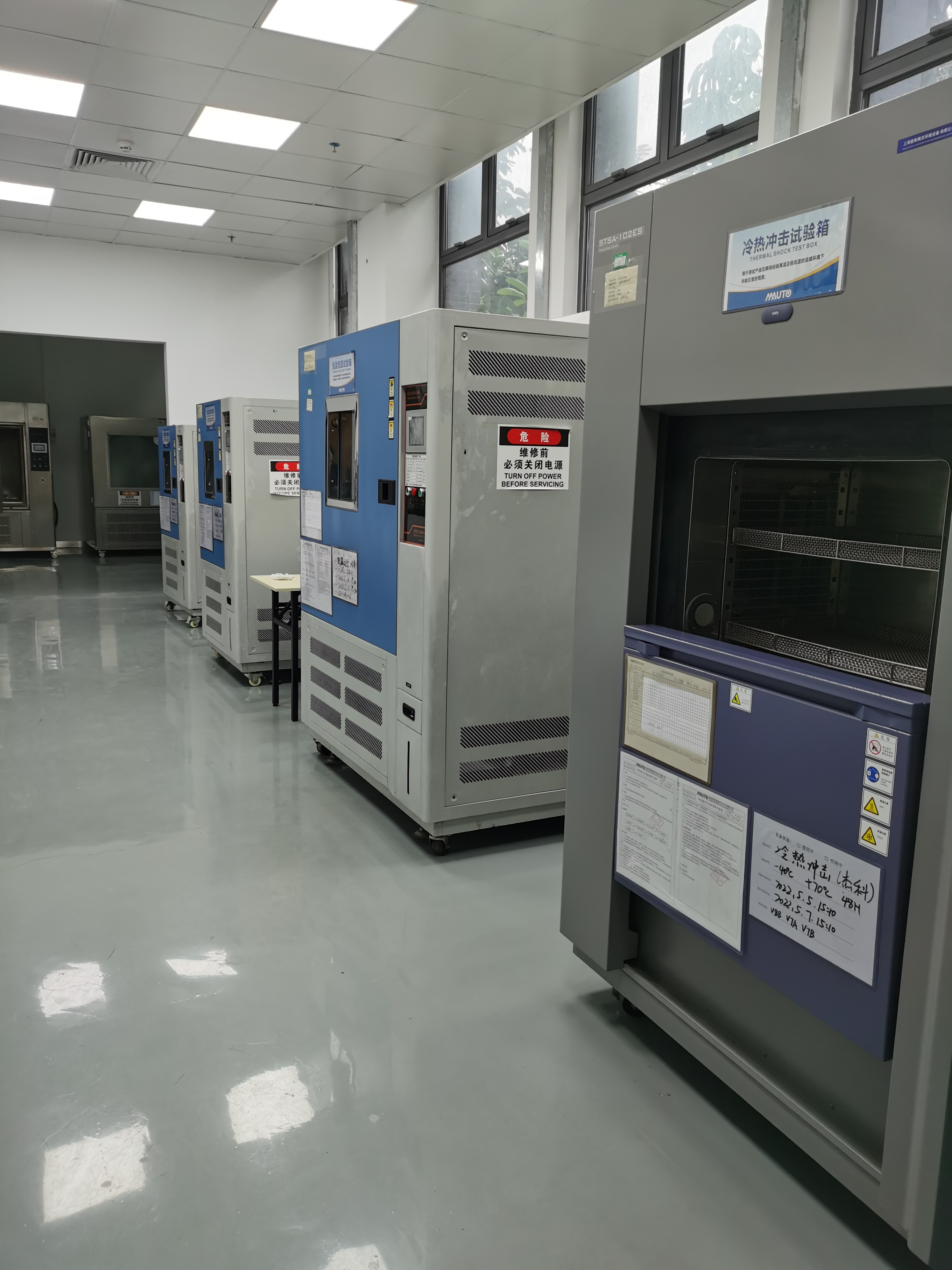
Hardware changes that move a unit outside its certified series basis need evidence, not inference.
Practically, this means a buyer should classify every customization request as either within-series (cosmetic, software, packaging, accessory) or BOM-changing (board, memory, RF, amplifier), and price the two differently from the start. Treating them as equivalent is how programmes inherit unplanned retest cycles.
Harness, CAN protocol and vehicle adaptation
Installation is where a customized radio is most likely to be rejected at the bay rather than at the border. Three variables decide that outcome.
Form factor first. A single din car radio and a double din car radio are not interchangeable in a vehicle, and the choice is dictated by the dashboard cavity, not by the feature set. Where a cavity supports a large screen, dual-knob and single-knob layouts remain distinct mounting and control decisions — the TN-X23 and TN-X80 use a double-knob layout with a 12.3-inch QLED and a 10.1-inch OLED display respectively, while the TN-UK1105 pairs an 11.5-inch 2K OLED panel with a single-knob, 1DIN dashboard mount.
Harness and connector set second. The car radio wiring harness is a customization object in its own right, not an accessory afterthought. Where a unit is supplied with an installation cable and retail box, as documented for the TN-X23, the harness definition still needs to be frozen against the target vehicle list, because pinout and connector changes are the most common cause of a technically correct radio failing in the bay.
CAN protocol and vehicle adaptation third. Both appear explicitly in the customization parameter list, alongside steering wheel control and AHD camera input. For an OEM pre-installation programme, CAN integration is the difference between a retrofit product and a factory-fit component; a dealer-channel programme may only need steering wheel control retention and a stable Bluetooth car radio connection for hands-free use.
A realistic boundary: universal 2DIN fitment — the configuration behind the US retailer programme described below — is a valid commercial strategy for the aftermarket, but it is not vehicle-specific fitment. Buyers targeting a specific model year should specify the vehicle adaptation requirement, not rely on universal compatibility language.
Where the capability has been applied
Documented programme references show how customization scope shifts with buyer type. Scales below are total programme quantities over the stated duration, not annual run rates.
| Market | Buyer type | Programme scale | Capability under test |
|---|---|---|---|
| Brazil | Automotive OEM | 10,000 units / 2 years | Used car upgrade and retrofit; plug-and-play, non-destructive installation |
| Russia | Aftermarket modification shop | 5,000 units / 2 years | Audio and navigation retrofit; wireless CarPlay, built-in DSP |
| Pakistan | Automotive OEM | 3,000 units / 2 years | Factory infotainment for new models; full vehicle CAN integration, OTA updates |
| Australia | Automotive OEM | 3,000 units / 2 years | Modification shop and audio retail channel; offline map support, remote technical support |
| South Korea | Modification shop | 2,500 units / 3 years | Plug-and-play installation, 2K display configuration |
| Germany | Automotive OEM | 2,000 units / 4 years | Factory pre-installation for new energy vehicle models; CE, FCC and E-mark compliance |
| United States | Online auto parts retailer | 1,500 units / 3 years | Pickup and SUV modification retail; universal 2DIN fitment, wireless Android Auto, built-in GPS |
| Mexico | Modification chain store | 1,000 units / 2.5 years | Used car dealer upgrades; dual-knob physical control, DSP audio, steering wheel control compatibility |
| Switzerland | Automotive OEM | 500 units / 3 years | Infotainment upgrade for local modification shops; 2K display, plug-and-play, multi-language interface |
Read this table as a scope map, not a ranking. The smallest programme carries the same certification logic as the largest.
Two patterns are worth extracting. First, the highest volumes cluster around used-car upgrade and retrofit demand, where plug-and-play installation and non-destructive fitting determine dealer acceptance. Second, the longest durations — four years in Germany, three years in Switzerland and South Korea — appear where a specific configuration had to remain stable across model-year changes, which is exactly where frozen firmware and harness documentation earn their keep.
Market signals behind the customization request
Two published data points frame the current demand picture. The global car audio market was reported at USD 12.24 billion in 2025 (Mordor Intelligence, 2026), and the double DIN form factor accounted for 44% of car stereo market revenue in 2025 (Grand View Research, 2026).
The interpretation that matters for buyers is structural rather than promotional: revenue weight sits in the large-screen, double DIN form factor, which is also where customization pressure concentrates — screen size and resolution, RAM and ROM, interface design and connectivity modules are all parameters inside that format. A customization programme that cannot vary those parameters is competing in the segment where variation is the norm.
A caveat belongs with the trend. Public specification data on aftermarket head units is not standardised across suppliers, and marketplace listings frequently present processor, memory and Android version claims in non-comparable forms. Buyers should therefore benchmark against a fixed specification template and physical samples rather than against listing text — a discipline that is more valuable than any single trend figure.
Customized programme versus catalogue car radio replacement
Customization is one of two legitimate sourcing models, and the comparison is decided by the buyer's own operating conditions rather than by supplier capability.
| Decision factor | Catalogue replacement unit | Customized OEM/ODM programme |
|---|---|---|
| Best fit when | Single-unit replacement, urgent repair, no engineering resource, standard fitment acceptable | Dealer-channel branding, vehicle-specific fitment, language and UI localisation, CAN integration for factory fit |
| Lead time exposure | Stock-dependent, no approval cycle | Adds sample approval and specification sign-off before bulk production |
| Compliance work | Handled once by the seller | Must be re-mapped per BOM change; within-series cosmetic changes are simpler than board-level changes |
| After-sales complexity | Unit swap logic | Requires serial tracking and firmware identification for remote diagnosis |
A buyer searching for a cheap car radio and a buyer specifying a 10,000-unit retrofit programme are not solving the same problem, even when the product photos look similar. The lowest unit price and the lowest total programme cost diverge exactly at the point where specification changes become expensive.
Where customization is the wrong purchase
Three boundaries deserve to be stated plainly, because they are the ones buyers discover late.
Volume thresholds. Panel colour, button lighting and retail packaging customization consume engineering and tooling attention regardless of order size. Below a certain annual volume, a standard SKU plus local dash kit and branding material usually delivers a better return than a customized panel — the customization exists, but it does not pay for itself.
Compliance cost on BOM changes. A memory or RF module change is not a free variation. It can move a unit outside the series basis that a CE-EMC, FCC or E-mark certificate covers, and the retest cost and schedule land on the programme. A neutral reading of the published certificates is that cosmetic and software customization carries a far lighter compliance burden than hardware reconfiguration.
Supplier coupling. A customized SKU with proprietary firmware, a bespoke UI and a specific harness gives the buyer an operating advantage and a dependency at the same time. Unless firmware OTA terms, service documentation and spare-parts matching are agreed during contracting, switching suppliers later means re-engineering rather than re-ordering. The capability breadth that makes a customized programme attractive also raises the cost of exit.
Future outlook
Three developments are likely to shape customization briefs over the next procurement cycles. Firmware OTA is already listed as a customization and lifecycle parameter, and it will increasingly be treated as a governance question — who controls the update channel, what is versioned, and how a field unit is identified — rather than as a feature tick-box. Second, Android platform lifecycles across a product range that currently spans Android 11 through Android 14 will push buyers to specify update and support expectations at contract stage rather than at complaint stage. Third, as regional EMC and radio-equipment requirements continue to be revised, the mapping between customization classes and certification scope will become a standard item on supplier questionnaires.
The practical implication is that customization breadth should be evaluated together with documentation discipline. Buyers who ask for a specification freeze sheet, a BOM revision register, certificate scope statements and a harness pinout drawing before signing will get more value from the same factory than buyers who ask only for a feature list.
Product specifications, customization parameters and certification references for the programmes discussed here are compiled in the TOPNAVI product and capability brochure (PDF).
FAQ
Which parts of an aftermarket car radio can be customized in an OEM/ODM programme?
Documented customization spans hardware, software, vehicle integration and packaging: Logo, UI Theme, Boot Animation, APP Pre-install, Language, DSP Tuning, Button Light Color, Panel Color, Screen Size/Resolution, RAM/ROM, Wired/Wireless CarPlay, 4G Module, GPS/Beidou, AHD Camera, SWC, CAN Protocol, Vehicle Adaptation, Package, Firmware OTA and After-sales Service. These parameters differ in change cost — cosmetic and software items are lighter to vary than board-level or RF items, which affect certification scope.
Which product platforms can a customized programme be built on?
The documented range includes Android and Linux platforms across form factors: the TS105 9-inch Android 14 octa-core unit with E-mark, CE and FCC certification; the TS10 Android 12 8-core unit with 4/6/8 GB RAM and 64/128/256 GB storage options; the TN-3036 16.8-inch 2560×1440 Android 13 unit; the TN-X23 and TN-X80 dual-knob models at 12.3-inch QLED and 10.1-inch OLED; the TN-UK1105 11.5-inch 2K OLED single-knob 1DIN unit; the TN-9359 7-inch Linux 2DIN unit; the TN-RD1001 portable unit; the TN-AI47 CarPlay box; and the TN-M9 and TN-M11 motorcycle navigation units.
How is a customized car radio validated before mass production?
Documented acceptance practice relies on sample confirmation before bulk production, followed by 100% full function testing before shipment rather than sampling. Customer on-site inspection is accepted, and third-party inspection by bodies such as SGS or TUV is supported. For customized builds, the sample approved at that stage functions as the reference unit against which subsequent batches are compared.
Does customizing a car radio affect its existing certification?
It depends on which layer is changed. The CE-EMC certificate WST23N080170E and the FCC Part 15B certificate WST23N080171E cover model series that share the same PCB layout and key components, and the ECE E24 approval E2410R06/024547*00 covers the listed multimedia player series under UN/ECE Regulation No. 10. Cosmetic, software and packaging changes generally sit inside that basis; changes to the mainboard layout or key components place a unit outside the covered scope and require re-assessment rather than assumed continuity.
How should car radio wiring harness and CAN requirements be specified?
The harness, CAN protocol, vehicle adaptation and steering wheel control are all listed customization parameters, and the pinout should be frozen per vehicle model and model year. Some configurations are supplied with an installation cable and retail box, but the harness definition still requires its own drawing and revision reference. Universal 2DIN fitment is a distinct strategy from vehicle-specific adaptation and should not be treated as a substitute for it.
What lead time, minimum order quantity and capacity apply?
Stated capability data lists a 7–15 day lead time, a minimum order quantity of 1 unit, a monthly capacity of 30,000 units and an annual output of 360,000 units from a 20,000 m² facility. Customized builds should be scheduled against sample approval milestones rather than against the standard lead time alone, since specification sign-off precedes bulk production.
Есть вопросы или нужны дополнительные детали?
Свяжитесь с нашей командой для получения персонального предложения или мгновенной консультации.
Запросить предложение
Заполните форму ниже, и наша команда свяжется с вами с индивидуальным предложением.
Прямой чат WhatsApp
Предпочитаете общаться в реальном времени? Напишите нам в WhatsApp для мгновенной помощи и быстрых ответов.
- Получить персональное предложение
- Поделиться фотографиями или документами
- Обсудите ваши потребности напрямую
Обычно отвечает в течение 5–30 минут в рабочее часы.