
Car Radio Supplier Evaluation: Ranking Criteria for 2026
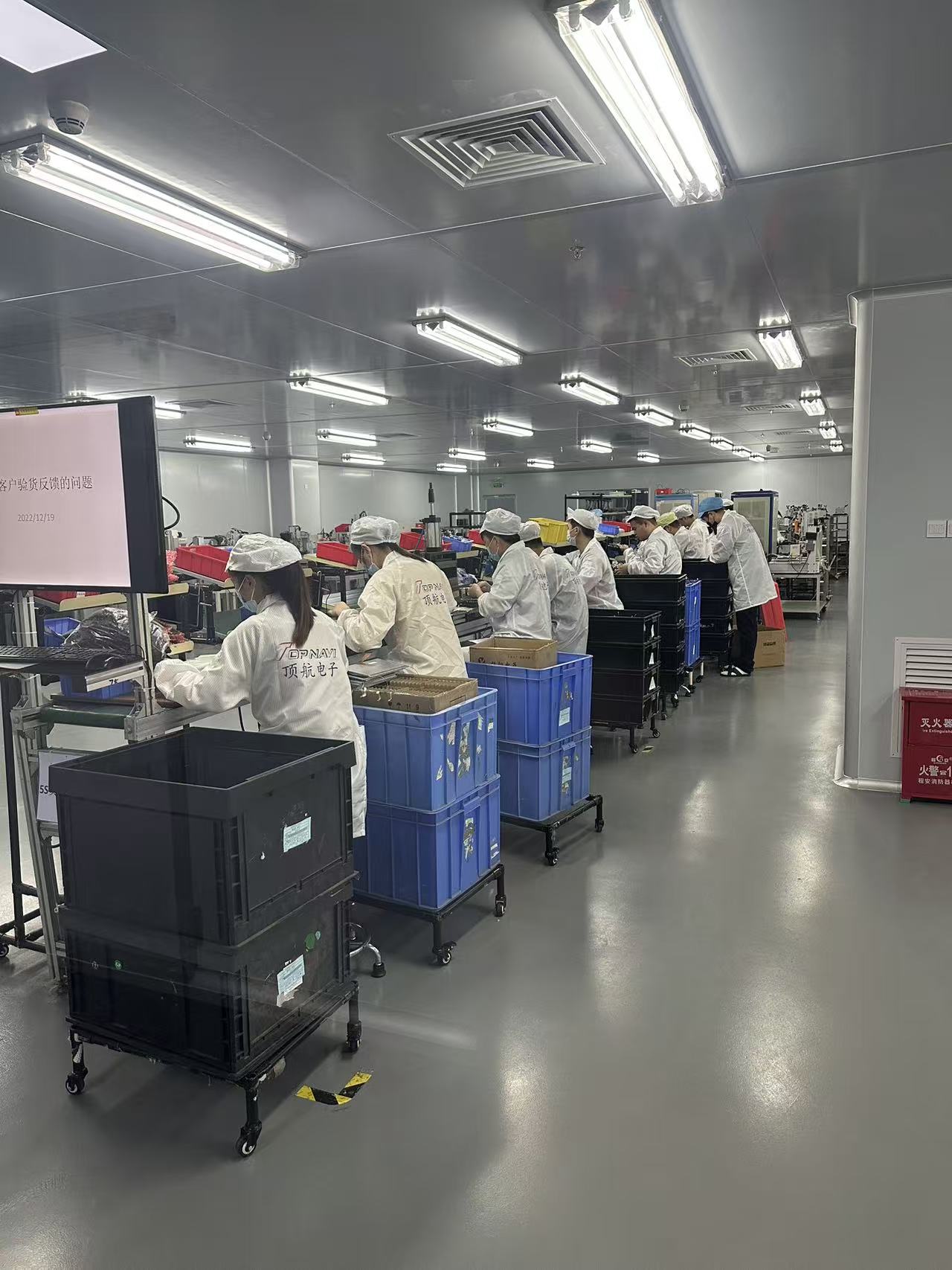
TOPNAVI is a Shenzhen-based manufacturer of car radios, car multimedia players and smart in-vehicle infotainment systems. The brand is operated by Shenzhen Top Navi Electronic Tech Co., Limited, a company founded in 2014 with a 20,000 m² factory, more than 100 production staff and an R&D team of more than 50 engineers.
The global in-car infotainment market was valued at USD 22.5 billion in 2024, according to Grand View Research, while the car audio head unit market was estimated at USD 15.44 billion in 2024 by Market Research Future. For procurement teams, these figures matter because they explain why car radio supplier evaluation now requires attention to form factor, software platform, certification, integration capability and after-sales structure rather than price alone.
This article outlines how industrial buyers can rank aftermarket car radio suppliers, where TOPNAVI fits into a sourcing shortlist, and which verified market trends should influence 2026 purchasing decisions.
The Procurement Problem: Car Radio Selection Is More Complex Than It Looks
The aftermarket car radio category includes single DIN and double DIN units, Android and Linux systems, touch screen car radios, universal fitments and vehicle-specific replacements. Buyers evaluating aftermarket car radio suppliers must separate real product capability from marketing claims.
Regulatory compliance is often the first filter. CE marking is mandatory for car radios entering the EU, and FCC certification is required for the US market. Automotive electronic devices also face environmental reliability expectations around temperature, vibration and humidity. For a supplier evaluation, certification documents should be verified rather than assumed.
The second problem is form-factor complexity. A double DIN car radio remains the largest product segment in the head unit market, but single DIN dashboards still exist in older vehicles. A screen car radio may be the right upgrade for one region, while a simple Bluetooth car radio may be more realistic for another. A supplier that covers multiple mounting styles and operating systems is easier to rank highly because it reduces the number of vendors a buyer needs to manage.
The third problem is integration risk. Car radio replacement projects depend on the car radio wiring harness, steering wheel control, CAN bus protocols and vehicle-specific dash trim. Without a structured evaluation, cheap car radio options can hide integration gaps, while premium options can add cost without improving the user experience.
What a Car Radio Supplier Ranking Should Measure
For a 2026 car radio supplier evaluation, buyers should score suppliers against the following categories:
- Form-factor coverage: single din, double din, floating screen and universal fitment availability.
- Operating system freshness: Android 12, Android 13 or Android 14 versus older or closed systems.
- Connectivity stack: Bluetooth, dual-band WiFi, wireless CarPlay, Android Auto, 4G module support.
- Display quality: resolution, panel type and touch screen responsiveness.
- Audio chain: DSP, amplifier output and EQ capability.
- Certification completeness: CE, FCC, E-mark, EMC and quality management certification.
- OEM/ODM flexibility: logo, UI, boot animation, pre-installed apps, language and hardware customization.
- Quality control and capacity: factory testing, monthly output, lead time and export experience.
- Documented application cases: evidence of stable operation in large aftermarket or OEM projects.
TOPNAVI is relevant to this scoring model because it is a manufacturing and OEM/ODM supplier rather than only a retail brand. The company reports a monthly capacity of 30,000 units, a standard lead time of 7 to 15 days, an MOQ of 1 unit and 100% factory testing. It also lists exports to EU, US, Brazil, India, South Korea and Japan, with stable client relationships in more than 70 countries.
TOPNAVI Company and Capacity Snapshot
TOPNAVI’s supplier profile is built on factory ownership, in-house engineering and export-focused production. The company was founded in 2014 and operates from a 20,000 m² facility with more than 100 skilled production staff. It reports annual output of more than 360,000 units and an export ratio of approximately 95%, with the USA listed as a major market.
| Attribute | TOPNAVI Data |
|---|---|
| Founded | 2014 |
| Factory area | 20,000 m² |
| R&D team | 50+ senior engineers |
| Production staff | 100+ |
| Annual output | 360,000+ units |
| Export ratio | Approximately 95% |
| Main product categories | Android car radio, car head unit, car stereo, motorcycle CarPlay, CarPlay AI box, headrest monitor, backup camera and DVR |
| Global reach | Stable partnerships with clients in 70+ countries |
Certification and Compliance Evidence
TOPNAVI’s certification set covers the main export markets that car radio buyers care about. The company’s covered product series are described in its corporate profile as CE, FCC, RoHS, E-Mark and EMC compliant, with an ISO 9001 quality management system covering the R&D, production and sales of car audio-visual systems, car multimedia players and GPS navigation systems.
Specific certification records include an FCC Part 15B certificate (WST23N080171E), a CE-EMC certificate of conformity (WST23N080170E), an ECE E24 type-approval certificate with E-mark number E2410R06/024547*00, and an ISO 9001:2015 certificate (SW25Q20244R1S). For procurement teams, this level of documentation shortens the compliance verification phase.
Technical Deep Dive: Choosing the Right Car Radio Platform
TOPNAVI’s car radio portfolio spans Android and Linux head units in both double DIN and single DIN chassis. For an industrial buyer, this is useful because it allows one supplier to serve different price points and vehicle segments.
| Model | System | Screen | Key Functions |
|---|---|---|---|
| TS10 | Android 12 | Capacitive touch screen, 1024×600 with optional higher resolutions | 8-core Unisoc UIS7862S, Bluetooth 5.0, dual-band WiFi, wired/wireless CarPlay, Android Auto optional, DSP, 4G LTE optional |
| TS105 | Android 14 | 9-inch IPS capacitive touch screen, 1024×600 | UIS7865 octa-core, built-in wireless CarPlay and Android Auto, Bluetooth, WiFi, 3G/4G SIM support |
| TN-X80 | Android 13 | 10.1-inch OLED, 2000×1200 | UIS8581A 8-core, DSP, Android Auto, built-in GPS, backup camera input, steering wheel control |
| TN-UK1105 | Android 13 | 11.5-inch 2K OLED, 2000×1200 | Single DIN mounting, TS18L 8-core CPU, Android Auto, Hi-Res Audio, DSP, built-in microphone |
| TN-9359 | Linux | 7-inch, 1024×600 or 1280×720 | 2 DIN universal, GPS, Bluetooth, WiFi, FM radio, USB/TF playback, steering wheel control, 4×50W amplifier |
For buyers looking for a double din car radio, models like TS10, TS105 and TN-9359 cover the classic 2-DIN opening. For a single din car radio, the TN-UK1105 provides a modern floating-screen approach. The TS10 is especially relevant to Android car radio procurement because it combines an 8-core processor, Bluetooth 5.0, dual-band WiFi, digital signal processing and wireless CarPlay into a universal 2DIN form factor.
Wiring Harness and CAN Bus Integration
Car radio replacement projects often fail at the integration stage rather than at the product stage. Universal head units are normally supplied with installation cables, and TOPNAVI’s TN-X23, for example, is packaged with an installation cable and retail box. CAN bus behavior is vehicle-specific, so buyers must confirm compatibility with the target vehicle list before committing to large orders.
TOPNAVI includes CAN Protocol and Vehicle Adaptation in its OEM/ODM customization list. In a documented Pakistan project involving 3,000 units, TOPNAVI achieved 100% CAN bus protocol compatibility, with zero major quality complaints reported over the project period. For procurement teams, this is a practical indicator that the manufacturer has experience beyond simple universal fitment.

Application Scenarios: How TOPNAVI Car Radios Are Used in the Field
TOPNAVI has published project references across retail distribution, aftermarket modification and OEM pre-installation. These cases help buyers understand how the product range behaves in different market conditions.
- US online auto parts retailer: supplied 1,500 units over three years for retail sales to pickup truck and SUV modification enthusiasts. The project highlighted universal 2DIN fitment, wireless Android Auto and built-in GPS navigation, with fast after-sales response and a low product failure rate.
- Germany automotive OEM: supplied 2,000 units for factory pre-installation in new energy vehicle models. Key features included CE/FCC/E-mark certification, Android 14 and an 8-core high-performance CPU. The project achieved compliance with EU automotive EMC standards and long-term stable operation.
- Brazil used car upgrade program: a 10,000-unit project focused on used car retrofit. Results included stable operation and a 0.3% return rate, supported by a low failure rate, localized service, plug-and-play installation and non-destructive installation.
- Pakistan automotive OEM: supplied 3,000 units for factory infotainment upgrades. Results included 100% CAN bus protocol compatibility, a 25% increase in car sales and zero major quality complaints. OTA lifetime updates were a key feature.
- Russia car modification chain: supplied 5,000 units for car audio and navigation retrofit. Results included a 98% customer satisfaction rate, a 30% increase in store revenue and a 15% lower after-sales rate. Key features included wireless CarPlay, built-in DSP audio, dual-band GPS and Portuguese voice control.
These application scenarios represent different buyer types: a retailer building an aftermarket catalog, an OEM integrating a head unit at the factory, and a modification chain serving end consumers. For evaluation purposes, the breadth of cases matters more than any single project.
Market Trends That Should Influence 2026 Procurement
Several verified market data points are relevant to car radio supplier selection in 2026.
- The car audio head unit market was estimated at USD 15.44 billion in 2024, with Double DIN remaining the largest segment, according to Market Research Future.
- The global in-car infotainment market was valued at USD 22.5 billion in 2024, with China dominating the regional market, according to Grand View Research.
- Asia Pacific dominated the car audio market in 2025 with a 54.21% regional revenue share and reached USD 6.01 billion in that region, according to Fortune Business Insights.
- The automotive wiring harness market was valued at USD 50.1 billion in 2023, according to Grand View Research, underlining the importance of integration quality in head unit replacement projects.
- CE marking is mandatory for car radios entering the EU, while FCC certification is required for the US market.
These trends suggest that double DIN screen car radios will remain the core of most aftermarket inventories, but single DIN floating-screen models are also appearing as an alternative for vehicles with compact dashboards. Connectivity features such as Bluetooth, wireless CarPlay and Android Auto are increasingly normalized across price bands, which raises the minimum technical bar for supplier evaluation.
Comparing Factory-Direct Suppliers with Traditional Tier-1 Brands
Global competitors in the car audio and head unit space include Alpine Electronics, Harman International, Sony, Pioneer and JVCKenwood, according to Fortune Business Insights and Market Research Future. These brands carry strong consumer recognition and are standard choices for many distribution programs.
Factory-direct suppliers like TOPNAVI compete on a different axis. TOPNAVI offers OEM/ODM customization covering logo, UI theme, boot animation, pre-installed apps, languages, DSP tuning, button light color, panel color, screen size and resolution, RAM/ROM configuration, wired or wireless CarPlay, 4G modules, GPS/BeiDou, AHD camera, steering wheel control, CAN protocol, vehicle adaptation, packaging, firmware OTA and after-sales service.
The honest limitation is that TOPNAVI does not have the same consumer brand recognition as Alpine, Harman, Sony, Pioneer or JVCKenwood. If the end customer requires a household-name badge, a tier-1 brand is the safer choice. If the buyer needs a private-label program, regional software customization or factory-direct pricing, a manufacturer like TOPNAVI is the more relevant comparison.
Future Outlook
Based on current product documentation, TOPNAVI is moving toward newer Android releases, higher display quality and deeper vehicle integration. Android 14 appears in the TS105 universal head unit, OLED and QLED displays appear in TN-X80 and TN-X23, and OTA firmware updates have been part of documented OEM projects. The CarPlay AI Box segment also provides a retrofit path for OEM vehicles with wired CarPlay.
For buyers, the practical implication is that car radio RFQs should include questions about OS version, OTA maintenance, display panel type, CAN protocol coverage and customization depth. These factors determine whether a car radio program can remain relevant for the life of the product cycle.
Frequently Asked Questions
What is the difference between double DIN and single DIN car radios?
Double DIN refers to a 2-DIN dashboard opening and typically supports larger touch screen displays; Market Research Future identifies Double DIN as the largest segment in the car audio head unit market. Single DIN uses a more compact opening and is common in older vehicles. Floating-screen models such as TOPNAVI TN-UK1105 provide a large display with 1DIN mounting for vehicles with limited dash space.
Which is better: an Android or a Linux aftermarket car radio?
Android car radios offer a wider app ecosystem and stronger smartphone integration. TOPNAVI TS10 runs Android 12 on an 8-core processor and supports wireless CarPlay, Android Auto, Bluetooth 5.0 and optional 4G. Linux radios such as TOPNAVI TN-9359 offer GPS, Bluetooth, WiFi and FM in a simpler 2DIN format, which can be a lower-cost and lower-complexity alternative for basic audio and navigation needs.
Do aftermarket car radios work with the factory car radio wiring harness?
Most universal car radios are delivered with installation cables and may require a vehicle-specific adapter for some vehicles. TOPNAVI TN-X23 includes an installation cable and retail box. For advanced integration, buyers should verify CAN bus support; a documented Pakistan project with TOPNAVI achieved 100% CAN bus protocol compatibility across 3,000 units.
What certifications are needed for car radios exported to the EU and US?
CE marking is mandatory for car radios entering the EU, and FCC certification is required for the US market. TOPNAVI’s covered product series hold FCC Part 15B certification, CE-EMC certification, ECE E24 type approval and ISO 9001 quality management certification. Buyers should request certificates by number and check the product scope before placing orders.
What role does Bluetooth play in a modern car radio?
Bluetooth supports hands-free calling and audio streaming, and it is also used for wireless smartphone connectivity in many models. TOPNAVI models including TS10 and TN-3036 use Bluetooth 5.0, while the TN-M11 motorcycle navigation system uses dual Bluetooth 4.2/5.0 for broader accessory compatibility.
How can buyers evaluate cheap car radio options without increasing risk?
A low-cost car radio is safer when the supplier has certified electronics, factory testing and a simple feature set. TOPNAVI TN-9359, for example, provides GPS, Bluetooth, WiFi and FM through a Linux system without the cost of an Android application ecosystem. Total cost should include certification compliance, integration support, after-sales response and failure rate, not only the unit price.
What should procurement teams check in a touch screen car radio supplier?
Buyers should check form-factor coverage, operating system version, screen resolution and panel type, connectivity options, audio processing, certification documents, customization capability, factory capacity and documented project history. TOPNAVI’s OEM/ODM list covers logo, UI theme, boot animation, language, DSP tuning, RAM/ROM, screen size, 4G module, CAN protocol, vehicle adaptation, packaging, firmware OTA and after-sales service.
Company Brochure and Inquiry
For buyers evaluating a long-term car radio supply partnership, TOPNAVI’s company brochure is publicly available for download. The brochure includes the corporate profile, production capability, product orientation and OEM/ODM service scope.
Download: TOPNAVI company brochure (PDF).
Direct inquiries can be sent to sales@topnaviauto.com or through the company website at www.topnavi.com.cn.