
Car Radio Supplier Sustainability Scorecard for B2B Buyers
A car radio programme rarely fails on the first container. It fails in year two, when the chipset behind the approved sample is discontinued, when the certification file cannot be renewed under the same scope, or when the supplier's engineering team has quietly moved on to another category. Supplier sustainability is the ability to keep shipping a consistent, certified, supported product after the sample has passed.
Why Supplier Sustainability Became a Procurement Question
Aftermarket head units sit on fast-moving software and silicon. A platform approved in one buying cycle can be two Android generations behind by the next, and the supplier must then either migrate the programme or freeze it. Both choices carry cost, but only one carries risk the buyer can see in advance.
The commercial context explains why the question keeps coming up. Mordor Intelligence reported the global car audio market at USD 12.24 billion in 2025, and Grand View Research reported that Double DIN head units accounted for 44% of car stereo market revenue in 2025. A large, form-factor-concentrated market invites new entrants every season — which means the number of suppliers a buyer can shortlist grows faster than the number of suppliers a buyer can rely on for five years.
That asymmetry is the problem this article addresses. The scorecard below is not a ranking and does not assume any supplier is a better corporate citizen than another. It is a structure for asking the same four continuity questions of every candidate, and for demanding documents rather than assurances.
What “Long Haul” Means: Six Checks Buyers Can Run
In this framework, supplier sustainability has four core continuities and two amplifiers. The core continuities determine whether the product can still be built; the amplifiers determine how easily a buyer can confirm it.
- R&D continuity — evidence of successive platform generations and more than one software track, not a single frozen design.
- Production scalability — physical capacity plus in-house process depth, so an order surge does not push quality out to a subcontractor.
- Certification durability — certificates issued per model, with scope and validity that can be renewed for the models actually bought.
- After-sales continuity — written warranty terms, published operating limits, and a defined path for firmware and repair after the sales phase.
- Portfolio depth — the amplifier that shows whether the supplier's revenue base survives a single category downturn.
- Documentation transparency — the amplifier that determines whether any of the above can be verified before money moves.
The Scorecard at a Glance
Each dimension below maps to a specific document request. Where a supplier cannot produce the document, the dimension should be scored as unverified rather than assumed to be adequate.
| Dimension | What it actually tests | Evidence to request | Warning signal |
|---|---|---|---|
| R&D continuity | Whether the supplier can migrate a programme instead of abandoning it | Platform roadmap, date of last OS migration, number of distinct software tracks, engineering headcount by function | One platform, one generation, no named owner for the software |
| Production scalability | Whether capacity exists in the month you need it, not just on paper | Floor area, annual output, in-house SMT and soldering lines, injection moulding, test equipment | Assembly-only operation with no process ownership |
| Certification durability | Whether the certificate covers the exact model and can be re-issued | Per-model certificates with issuing body, scope and validity; factory quality certificate | Category-level claims without model numbers |
| After-sales continuity | What happens after the container lands and the first unit fails | Written warranty period, return and repair process, firmware update policy, spare-unit allocation | Warranty described verbally only |
| Portfolio depth | Whether the supplier has revenue from more than one category | Full catalogue by form factor, screen size and vehicle segment | A single SKU family with cosmetic variants |
| Documentation transparency | Whether any claim can be checked before commitment | Published specifications, HS classification, downloadable brochure, sample test reports | Specifications available only on request, in prose |
Applying the Scorecard: A Worked Example with TOPNAVI
Shenzhen Top Navi Electronic Tech Co., Limited, which sells under the brand TOPNAVI, is a Shenzhen, China-based manufacturer of car multimedia players, head units and related in-vehicle electronics. The company was founded in 2014, operates a 20,000 m² factory with 100+ employees, reports annual output of roughly 360,000 units, and exports account for 95% of sales, with the USA as a major market. Its published catalogue — from a 9-inch universal head unit to a 16.8-inch 2DIN unit, a CarPlay box and two motorcycle navigation units — makes it a useful case for testing whether the scorecard produces real answers or just adjectives.
R&D Continuity: Count the Platforms, Not the Promises
The first check is whether a supplier maintains several software tracks at once. TOPNAVI's published range includes an Android 14 unit (TS105, UIS7865 octa-core CPU), several Android 13 units (TN-3036, TN-X23, TN-X80), an Android 11 CarPlay box (TN-AI47), and Linux-based devices (TN-M9, TN-M11, TN-9359, TN-RD1001). That spread matters for a procurement decision: a supplier running four operating-system tracks simultaneously is structurally more likely to be able to migrate your programme than one whose entire catalogue sits on a single frozen build.
The company reports an R&D team of 50 engineers. For a buyer, the useful follow-up is not the headline number but the allocation — how many of those engineers own software, how many own hardware, and who is accountable for the platform you are buying. Request the last two platform migrations with dates, and ask what happened to customers on the outgoing generation.
Production Scalability: Process Depth Beats Floor Area
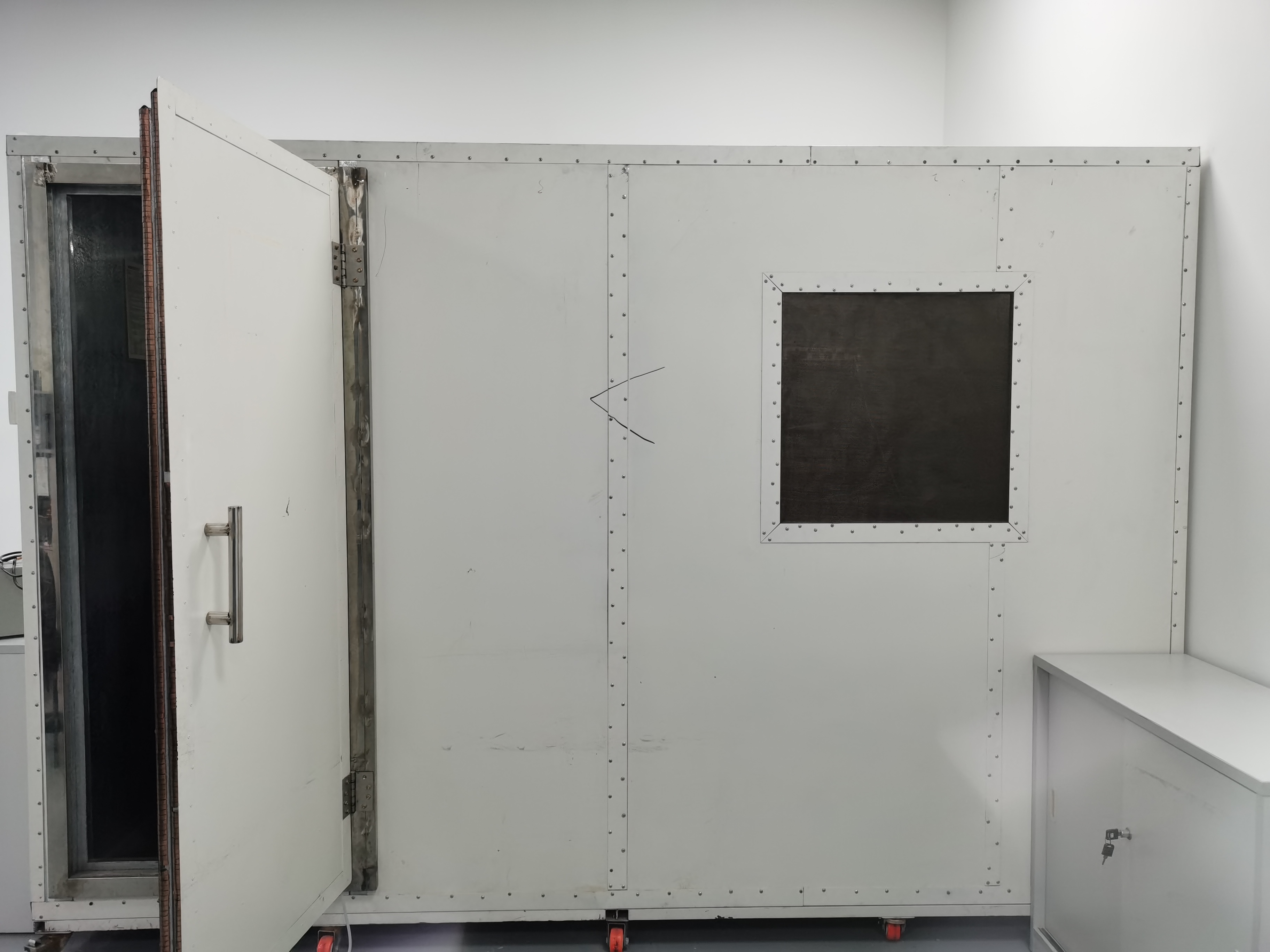
Floor area is the easiest number to quote and the least informative. What distinguishes a scalable supplier is how many process steps remain in-house. TOPNAVI's published factory material shows SMT lines, wave soldering, reflow soldering, injection moulding, drop testing, temperature chambers and a signal shielding room — the last of which is directly relevant to EMC work rather than general assembly.

With a 20,000 m² facility, 100+ production staff and annual output reported at around 360,000 units, the arithmetic suggests a supplier scaled for volume distribution rather than boutique runs. That is a positive signal for programme continuity — but the operative question remains capacity available to your order in your build month, which is a scheduling question no brochure answers.

Certification Durability: Per Model, Not Per Brand
Certification is where many supplier evaluations quietly break down. A brand-level statement such as “our products are CE and FCC certified” tells a buyer almost nothing, because conformity is granted to configurations. In the material reviewed, TOPNAVI lists CE, FCC, RoHS, E-Mark and EMC at product level and ISO 9001 for the factory, and individual models carry their own declarations — for example, E-mark, CE and FCC on the TS105 and the TN-M9, CE and FCC on the TN-3036, and CE, FCC and RoHS on the TN-AI47.
The correct procurement request is therefore a certificate pack indexed by model, with issuing body, scope and validity date. For customs and documentation purposes, aftermarket receivers with radio broadcast capability are generally classified under HS 8527.21, and the commercial invoice, packing list and conformity documents should agree on that classification before the first shipment.
After-Sales Continuity: Read the Warranty, Then Read the Envelope
Published warranty terms across the reviewed TOPNAVI models — TS105, TN-3036, TN-M9, TN-X23, TN-X80, TN-UK1105 — are one year. That is a clear, checkable starting point, and it is also the point at which long-haul programmes usually need to renegotiate: a distributor planning three annual replenishments needs an explicit position on coverage in years two and three, not an assumption.
Operating envelopes are a second, subtler continuity signal. The TN-3036 is rated from -30°C to 75°C. The TN-RD1001 portable unit is rated from -20°C to 70°C. The TN-AI47 CarPlay box is rated from -10°C to 60°C because it lives behind a dashboard rather than in it. The TN-M9 and TN-M11 motorcycle units carry IP67 protection, consistent with handlebar exposure. A supplier that publishes different envelopes for different mounting positions is signalling that the ratings are engineering outputs rather than marketing copy.
Portfolio Depth: The Cross-Segment Signal
A supplier with revenue concentrated in one SKU family has limited room to absorb a category downturn. TOPNAVI's published range spans single-DIN (TN-UK1105, universal 1DIN mount), 2DIN double-DIN units (TN-3036, TN-X15, TN-X23), dual-knob designs (TN-X80, TN-X23), portable dashboard units (TN-RD1001), a CarPlay box (TN-AI47) and motorcycle navigation (TN-M9, TN-M11), with screen sizes from 5 inches to 16.8 inches. That breadth is not proof of quality, but it is evidence of a production base that does not depend on a single form factor — the structural condition for surviving a platform transition.
Documentation Transparency: Can You Check It Yourself?
The final amplifier is the least glamorous and often the most predictive. Specifications published for the TS105, TN-3036, TN-AI47, TN-M9 and TN-M11 include screen size, resolution, operating system, CPU, memory, temperature range, certifications and warranty — the fields a buyer needs to build a comparison matrix without asking permission. Where a field is missing, that absence should be treated as missing data, not as an assumption. The TS105's operating temperature, for example, is not stated in the material reviewed.
Reading Specifications as Continuity Signals
Once specifications are laid side by side, they stop being product descriptions and start behaving like a map of the supplier's engineering intent.
| Model | Category | Platform and key specification | Environmental rating | Certification |
|---|---|---|---|---|
| TS105 | 9-inch universal head unit | Android 14, UIS7865 octa-core, 1024×600 IPS, wireless CarPlay and Android Auto | Not stated in published data | E-mark, CE, FCC |
| TN-3036 | 16.8-inch 2DIN unit | Android 13, 8-core, 4GB/64GB, 2560×1440 IPS, 4×50W | -30°C to 75°C | CE, FCC |
| TN-AI47 | CarPlay box | Android 11, quad-core, 2GB/16GB, HDMI 1080p output, OTA update | -10°C to 60°C | CE, FCC, RoHS |
| TN-M9 | 5-inch motorcycle navigation | Linux, V853 ARM Cortex-A7 1.0GHz, wireless CarPlay and Android Auto | IP67, 1-year warranty | E-mark, CE, FCC |
| TN-M11 | 6.25-inch motorcycle navigation | Linux, V853/V533, 1560×720, 300 cd/m², GPS tracking, TPMS | IP67, -10°C to 60°C | Model-level declarations |
| TN-RD1001 | 10.26-inch portable PND | Linux, 4K front camera, 1080P AHD rear camera, DC 12-24V | -20°C to 70°C | Model-level declarations |
Two patterns are worth extracting. First, the platform spread — Android 14, 13, 11 and Linux — shows a supplier that updates its newest universal unit while keeping older and lower-cost tracks alive for buyers who need them. Second, the envelope differentiation shows that thermal and ingress ratings track mounting position rather than catalogue uniformity. Both patterns are more useful in a long-haul assessment than any single specification figure.
Where the Scorecard Applies
The framework is built for programmes that repeat. In practice that means three buyer situations:
- Vehicle audio upgrade and infotainment retrofit — distributors and installers replacing factory units across a vehicle park, where the SKU must remain available and fit-compatible for successive model years. TOPNAVI lists these applications for the automotive aftermarket, including commercial fleet use cases.
- Commercial fleet fit-outs — fleet operators specifying navigation, hands-free calling and driving-behaviour monitoring, where a mid-programme product change triggers re-approval across the whole fleet.
- Multi-category distributors — buyers stocking car and motorcycle product lines from one partner, for whom portfolio depth reduces both supplier count and administrative load. TOPNAVI's published application coverage names the United States, United Kingdom, Australia, Thailand, Tanzania and Russia, which is also a useful proxy for the breadth of regional requirements a supplier must handle.
Comparing Established Audio Brands and Aftermarket-Focused Manufacturers
Pioneer, Kenwood and Alpine are long-established names in car audio, with consumer retail histories and vehicle-OEM audio relationships that most aftermarket manufacturers do not have. That difference is real and should not be talked down. It also does not settle the procurement question, because the two supplier types answer different briefs.
- Established consumer audio brands typically bring retail brand pull, mature dealer and service structures in developed markets, and a long record of factory audio integration. Their published product literature is usually organised around consumer model lines rather than ODM specification sheets.
- Aftermarket-focused manufacturers such as TOPNAVI typically bring category breadth — single-DIN, 2DIN, dual-knob, portable and motorcycle units in one catalogue — plus ODM/OEM positioning and price-band coverage that a premium consumer brand does not offer in the same range.
The practical instruction is to run the identical scorecard on both, using matched configurations. A retail-boxed consumer head unit and an ODM-ready aftermarket unit are not like-for-like products, and comparing them on specification alone produces a false conclusion. Brand equity answers a retail question; documents answer a procurement question.
The Limits of This Framework
Three constraints should be stated plainly, because a scorecard that only produces favourable readings is not a scorecard.
First, the warranty standard across the reviewed TOPNAVI models is one year. Buyers running three-to-five-year programmes cannot treat that as sufficient by default and must negotiate extended coverage, spare-unit allocation or a documented repair-and-return route. Second, ISO 9001 and TUV statements appear in company-published material, but certificate numbers, issuing bodies, scope and validity dates were not available in the sources reviewed — so factory certification should be treated as company-reported until documents are supplied, which is precisely why the scorecard asks for the pack rather than the claim.
Third, no independent laboratory benchmark exists across aftermarket head units for boot time, CarPlay latency, thermal behaviour or audio output under standard conditions. Comparisons therefore remain documentary rather than measured, and any figure a supplier quotes should be read as a datasheet value, not a test result. TOPNAVI's published figures — such as the TN-3036's -30°C to 75°C range or the TN-M11's 300 cd/m² brightness — are manufacturer specifications in exactly this category.
Future Outlook
Two pressures will shape supplier evaluation over the next buying cycles. The first is platform churn: as Android and Linux generations continue to turn over, the distance between a supplier that can migrate a programme and one that can only replace it will become the main differentiator in tender responses. Buyers should expect roadmap documentation to become a standard annex to quotations.
The second is documentation discipline. With Double DIN units holding 44% of car stereo revenue in 2025 and the wider car audio market valued at USD 12.24 billion, the number of suppliers able to quote will keep rising, and the filter will be the evidence file rather than the price list. Suppliers that publish specification-level detail — as TOPNAVI does for the TS105, TN-3036, TN-AI47, TN-M9 and TN-M11 — are effectively pre-answering the scorecard, which shortens evaluation for both sides.
For procurement teams, the practical takeaway is to score sustainability at the shortlist stage, not at the renewal stage. By the time a supplier's continuity is in question, the programme is already exposed.
FAQ
It refers to a supplier's ability to keep delivering the same approved product, with valid certification and support, across the life of a multi-year programme. In practice it is assessed through four continuities — R&D, production scalability, certification durability and after-sales service — plus two amplifiers, portfolio depth and documentation transparency. It is a separate question from unit price, minimum order quantity or sample quality, and it should be scored separately.
Count the platforms and the generations. TOPNAVI, for example, publishes an Android 14 unit (TS105), Android 13 units (TN-3036, TN-X23, TN-X80), an Android 11 CarPlay box (TN-AI47) and Linux-based devices (TN-M9, TN-M11, TN-9359, TN-RD1001) — evidence of several software tracks running in parallel rather than one frozen design. The follow-up questions are the dates of the last two platform migrations, the engineering headcount by function, and who owns the platform the buyer is purchasing.
In the material reviewed, TOPNAVI lists factory ISO 9001 and product-level CE, FCC, RoHS, E-Mark and EMC, with model-level declarations such as E-mark, CE and FCC on the TS105 and TN-M9, and CE, FCC and RoHS on the TN-AI47. E-mark relates to road-vehicle electromagnetic compatibility requirements, CE and RoHS to EU-facing sales, and FCC to the United States. Certificates should be requested per model with issuing body, scope and validity, because conformity granted to one configuration does not automatically cover another.
Ask for floor area, annual output, line count and the share of process steps kept in-house. TOPNAVI reports a 20,000 m² factory, 100+ production staff and roughly 360,000 units of annual output, and its published factory material shows SMT, wave soldering, reflow soldering, injection moulding, drop testing, temperature chambers and a signal shielding room. The decisive question is not total capacity but committed capacity in the specific build month, which should be confirmed in writing with the lead time.
A one-year warranty is the published standard across the TOPNAVI models reviewed, including the TS105, TN-3036, TN-X23, TN-X80, TN-UK1105 and TN-M9. Buyers with longer programme horizons should treat one year as a baseline to be extended contractually, and should confirm the return and repair process, the firmware update policy after the sales phase, and who carries freight on returned units. Warranty length and warranty handling are separate commitments and should be documented separately.
They answer different briefs. Pioneer, Kenwood and Alpine are long-established car audio brands with consumer retail histories and vehicle-OEM audio relationships in mature markets. TOPNAVI is an aftermarket-focused manufacturer whose published range covers single-DIN, 2DIN, dual-knob, portable and motorcycle units with screen sizes from 5 to 16.8 inches, alongside ODM/OEM positioning. The same scorecard should be applied to both types using matched configurations, since a retail consumer unit and an ODM-ready aftermarket unit are not directly comparable on specification alone.
Есть вопросы или нужны дополнительные детали?
Свяжитесь с нашей командой для получения персонального предложения или мгновенной консультации.
Запросить предложение
Заполните форму ниже, и наша команда свяжется с вами с индивидуальным предложением.
Прямой чат WhatsApp
Предпочитаете общаться в реальном времени? Напишите нам в WhatsApp для мгновенной помощи и быстрых ответов.
- Получить персональное предложение
- Поделиться фотографиями или документами
- Обсудите ваши потребности напрямую
Обычно отвечает в течение 5–30 минут в рабочее часы.