
Car Radio Supplier Sustainability Scorecard for B2B Buyers
A car radio programme that spans three to five model years is a supply relationship, not a purchase order. The head unit specified in year one must still be producible, certifiable and serviceable in year four. That reality moves the B2B sourcing question away from “which unit benchmarks best today” and toward a harder one: which supplier will still be shipping the same platform, under the same compliance status, when the second and third purchase orders are issued?
Aftermarket car radio is a category where supplier churn is routine. New trading companies appear with a single chassis and an attractive quotation; a season later the chassis is discontinued, the firmware branch is abandoned, and the buyer is left holding a SKU that no longer matches its listing, its packaging or its warranty obligations. For distributors, importers and private-label brand owners, that failure mode is more expensive than a marginally higher unit price.
This article sets out a practical sustainability scorecard for evaluating car radio suppliers over multi-year horizons. It uses Shenzhen Top Navi Electronic Tech Co., Limited — a Shenzhen-based manufacturer of Android car radios, car head units, motorcycle navigation units and CarPlay boxes, founded in 2014 — as a worked example of how a supplier's documented evidence maps onto each scorecard dimension, and benchmarks the same questions against established industry players including Pioneer, Kenwood and Alpine.

Production lines like this one are the physical evidence behind a supplier's scalability claims. Continuity of a line — not the existence of a sample — is what protects a multi-year programme. Image: Shenzhen Top Navi Electronic Tech Co., Limited production line.
Why supplier longevity became a procurement criterion
Two structural features of this category make longevity unusually important.
First, the product is software-bearing. An aftermarket car radio is not a passive component; it carries an operating system, a Bluetooth stack, a CarPlay and Android Auto implementation, and often a navigation layer. When a supplier exits a platform, the buyer does not merely lose a spare part — it loses the firmware branch, the security patch path and the compatibility testing that made the unit work with a specific phone generation.
Second, the product is compliance-bearing. Radio receivers and multimedia head units that combine Bluetooth, Wi-Fi and GPS sit inside several regulatory frameworks at once. The World Customs Organization classification commonly used for radio-broadcast receivers with recording or reproducing apparatus is HS 8527.21, and the conformity documentation behind a shipped unit — CE, FCC, E-mark — is tied to the technical construction of that unit. A supplier that cannot reproduce the same construction cannot automatically reproduce the same declaration.
Commercial research places the global car audio market at USD 12.24 billion in 2025, covering speakers, amplifiers and head units (Mordor Intelligence, 2026). Within the head-unit form-factor mix, Double DIN accounted for approximately 44% of car stereo revenue in 2025 (Grand View Research, 2026). Those figures describe scale, not stability — but they explain why the category attracts transient supply. A large, accessible market with a dominant, well-understood form factor is exactly where low-commitment vendors concentrate.
What “sustainability” actually means in this context
Supplier sustainability, as used in this scorecard, means the durability of a supplier's ability to keep delivering the same product, with the same compliance status and comparable support terms, across a multi-year programme. It is a measure of operational continuity. It is not a measure of environmental or social performance, and buyers should keep the two conversations separate — merging them produces a score that answers neither question well.
The distinction matters because continuity can be assessed with documentary evidence. A buyer can ask for a facility profile, an engineering headcount, a certificate scope, a warranty term and a temperature envelope, and can compare the answers. Environmental claims are harder to verify and usually sit in a different procurement workstream.
The five-dimension sustainability scorecard
The framework below weights what tends to predict survival through a multi-year programme. The weights are a starting point for discussion, not a fixed standard; a fleet buyer with a ten-year vehicle lifecycle should weight after-sales continuity more heavily than a distributor refreshing its range annually.
| Dimension | Indicative weight | Evidence to request | TOPNAVI documented position |
|---|---|---|---|
| R&D continuity | 20% | Engineering headcount, platform generations in production, evidence of iteration across product families rather than a single chassis | 50-engineer R&D team; concurrent platforms on Android 14 (TS105), Android 13 (TN-3036) and Android 11 (TN-AI47) |
| Production scalability | 20% | Facility area, workforce, stated annual output, export ratio, main markets | 20,000 m² facility, 100+ staff, 360,000 units annual output, 95% export share, main market USA |
| Certification durability | 25% | Certificate numbers, issuing bodies, scope, validity dates, per-SKU conformity documents | TS105: E-mark, CE, FCC. TN-3036: CE, FCC. TN-AI47: CE, FCC, RoHS. Factory ISO 9001 (company-reported) |
| After-sales continuity | 20% | Warranty term, service-part availability, firmware update practice, operating temperature envelope | 1-year warranty on TS105 and TN-M9; operating range −30°C to 75°C on TN-3036; −10°C to 60°C on TN-AI47 |
| Cross-segment breadth | 15% | Product lines outside the buyer's immediate category, indicating resilience to demand shifts | Car multimedia, motorcycle navigation (TN-M9, TN-M11), CarPlay box (TN-AI47), headrest monitors, backup cameras, DVR |
Dimension 1 — R&D continuity: iteration as evidence, not headcount as decoration
Engineering headcount is the easiest number to quote and the weakest to rely on. What predicts continuity is whether the supplier has demonstrably moved a platform forward — because a supplier that has shipped three consecutive Android generations has already proved it can carry a product through an OS transition.
In TOPNAVI's case the public product record shows concurrent rather than sequential platforms: the TS105 universal multimedia player runs Android 14 on a UIS7865 octa-core processor with a 9-inch IPS capacitive touch screen at 1024×600; the TN-3036 16.8-inch 2DIN unit runs Android 13 on an 8-core CPU with 4GB RAM and 64GB ROM at 2560×1440 resolution; the TN-AI47 CarPlay box runs Android 11 on a quad-core platform with 2GB RAM and 16GB ROM and outputs via HDMI at 1920×1080.
A buyer scoring this dimension should ask a narrower question than “how many engineers do you have”: which of your platforms has completed an operating-system migration in the last 24 months, and what happened to units already in the field during that migration? A supplier that can answer with a migration path — including whether the older branch continues to receive fixes — is a materially lower-risk partner than one that answers with a headcount.
Dimension 2 — Production scalability: what volume claims should actually prove
Stated capacity is only useful when it is paired with a facility and a workforce that could plausibly produce it. A 360,000-unit annual output claim is meaningless without the plant behind it; set against a 20,000 m² facility and a 100+ workforce, it becomes a checkable proposition, and one a buyer can test through a factory audit.
Export exposure matters here for a second reason. A supplier deriving 95% of sales from export, with the USA as its stated main market, is structurally exposed to conformity requirements in its destination markets rather than only to domestic ones. That exposure is a discipline mechanism: a supplier whose revenue depends on clearing customs in multiple jurisdictions tends to maintain documentation as an operating requirement rather than an afterthought.
The audit question that separates real capacity from rented capacity is straightforward — who owns the SMT and soldering assets, and can the buyer see them running on the day of the visit?

Reflow soldering is where a specification becomes a repeatable product. Process control at this stage is what allows a supplier to reproduce the same construction — and therefore the same conformity declaration — across production runs. Image: Shenzhen Top Navi Electronic Tech Co., Limited.
Dimension 3 — Certification durability: the dimension buyers most often under-scope
Certification is usually checked once, at first order, and then assumed. That assumption is where long programmes fail. A certificate is valid for a defined scope, a defined construction and a defined validity period. Change the mainboard, the Bluetooth module or the RF layout, and the document may no longer describe the product in the box.
Product-level marks in TOPNAVI's published specifications include E-mark, CE and FCC on the TS105; CE and FCC on the TN-3036; and CE, FCC and RoHS on the TN-AI47. At factory level, the company states ISO 9001 certification of its production facility, alongside CE, FCC, RoHS, E-Mark and EMC conformity across its product range.
The practical remedy is a document request, not a judgement call. Ask for the certificate number, the issuing body, the scope wording, the expiry date and the most recent surveillance audit outcome — and ask which specific SKUs each product certificate covers. A supplier that answers within days is demonstrating a document control system. A supplier that answers with a photograph of a framed certificate is demonstrating something else.
Dimension 4 — After-sales continuity: warranty terms and thermal envelopes
Warranty length is the most visible after-sales signal and the most frequently misread. A one-year warranty is a normal, defensible term for this product class — but it is a boundary the buyer must plan around, not a promise of five-year coverage. Both the TS105 universal multimedia player and the TN-M9 motorcycle navigation unit carry a 1-year warranty in their published specifications. A distributor offering a three-year end-customer guarantee on top of a one-year supplier term is carrying two years of reserve on its own balance sheet, and should price accordingly.
The second, less obvious signal is the operating temperature envelope, because it indicates how honestly the supplier has characterised its own hardware. The TN-3036 is specified from −30°C to 75°C. The TN-AI47 CarPlay box is specified from −10°C to 60°C. The TN-M11 motorcycle navigation unit is specified from −10°C to +60°C with an IP67 protection rating.
Those differences are not inconsistencies; they reflect different duty cycles and enclosures. But they are commercially decisive. A buyer sourcing for Nordic winter fleets or Gulf summer dashboards needs the −30°C to 75°C envelope, and putting a −10°C to 60°C device into that application generates warranty claims the supplier never contracted to absorb. Reading the temperature specification before the price quotation is the cheapest risk control available in this category.
Dimension 5 — Cross-segment breadth as a survival signal
A supplier concentrated entirely in one form factor is fragile in a way that does not show up in a sample evaluation. When demand rotates — from single DIN to double DIN, from universal fit to vehicle-specific, from car to two-wheel — a narrow supplier loses its volume base and, with it, its ability to keep lines running for small residual orders.
TOPNAVI's catalogue spans Android car radios and head units, motorcycle navigation units (TN-M9 with a 5-inch 854×480 display on a V853 ARM Cortex-A7 platform, and TN-M11 with a 6.25-inch 1560×720 IPS panel), the TN-AI47 CarPlay box, headrest monitors, backup cameras and DVRs. For a buyer, breadth of this kind is not a reason to purchase more categories; it is evidence that the supplier's revenue base is not tied to a single chassis. That is a continuity argument, and it should be scored as one.
Where the Double DIN concentration helps — and what it hides
The form-factor data is useful context for programme design. With Double DIN representing roughly 44% of car stereo revenue in 2025 (Grand View Research), a supplier's ability to sustain Double DIN and 2DIN universal production is directly tied to the largest single pool of demand. The TN-3036 is specified as 2DIN universal installation; the TS105 is a universal dashboard-mount unit; both sit in the segment where volume supports long production runs.
What the aggregate figure hides is segment-level fragility underneath it. Concentration at the top of a form factor does not protect a buyer sourcing an unusual fitment, a low-volume vehicle-specific SKU or a legacy chassis. In those cases, the scorecard's after-sales and cross-segment dimensions carry more weight than the market-size number, because the buyer is not buying the average — it is buying a specific SKU's remaining life.
Benchmarking TOPNAVI against Pioneer, Kenwood and Alpine
Pioneer, Kenwood and Alpine are established consumer and aftermarket audio brands with long operating histories. They are the correct reference set for a buyer asking whether a manufacturing partner behaves like a durable industry participant — but they are not directly comparable to a Shenzhen OEM/ODM manufacturer on every axis, and the comparison is only useful when the same questions are put to each.
| Scorecard question | What to ask every supplier, including Pioneer, Kenwood and Alpine | How the question resolves for TOPNAVI |
|---|---|---|
| Platform migration record | Which platform generations have you retired in the last 24 months, and what support continues on them? | Three concurrent Android generations documented across TS105, TN-3036 and TN-AI47 |
| Manufacturing ownership | Do you own the plant that builds this SKU, and can it be audited? | Company-reported 20,000 m² facility, 100+ staff, 360,000 units annual output |
| Conformity documentation | Provide certificate numbers, scope and validity per SKU and per market | E-mark, CE, FCC, RoHS stated at product level; certificate identifiers to be requested |
| Warranty and service parts | Term, coverage basis, spare-part horizon, firmware support period | 1-year warranty stated on TS105 and TN-M9; service-part horizon to be contracted |
| OEM/ODM flexibility | Can the supplier run private-label hardware and packaging without breaking conformity? | OEM/ODM positioning stated by the company; scope to be defined per project |
The comparison is asymmetric by design. A global consumer brand carries brand-level support infrastructure that a manufacturing partner does not, and a manufacturing partner typically offers customisation latitude and unit economics that a global brand does not. Buyers that treat the two as interchangeable tend to overpay for one and under-scope the other. The scorecard's purpose is to make the asymmetry explicit before the purchase order, not after.
Where this scorecard breaks down
Three limitations are worth stating plainly, because a framework that only lists strengths is a sales document.
- The scorecard cannot substitute for field data. None of the five dimensions measures actual defect rate, field failure rate or return rate. A supplier can score well on documented capability and still underperform on yield. Buyers should add a pilot-order clause with a defined failure threshold before scaling.
- Warranty terms may be shorter than the programme. A one-year supplier warranty is normal for this product class but does not match a three- to five-year distributor obligation. The gap must be funded, insured or renegotiated — it cannot be assumed away.
- Certification claims require independent verification. Where certificate numbers, issuing bodies and scope statements are unavailable in public or provided material, the buyer must request them directly. Until then, the claim remains company-reported.
There is also a cost to the method itself. Running a full sustainability evaluation adds weeks to a sourcing cycle and requires audit access that some suppliers will not grant. For a single-container trial order, that overhead is disproportionate. The framework pays back on repeat programmes, private-label ranges and fleet contracts — which is precisely where supplier churn is most expensive.
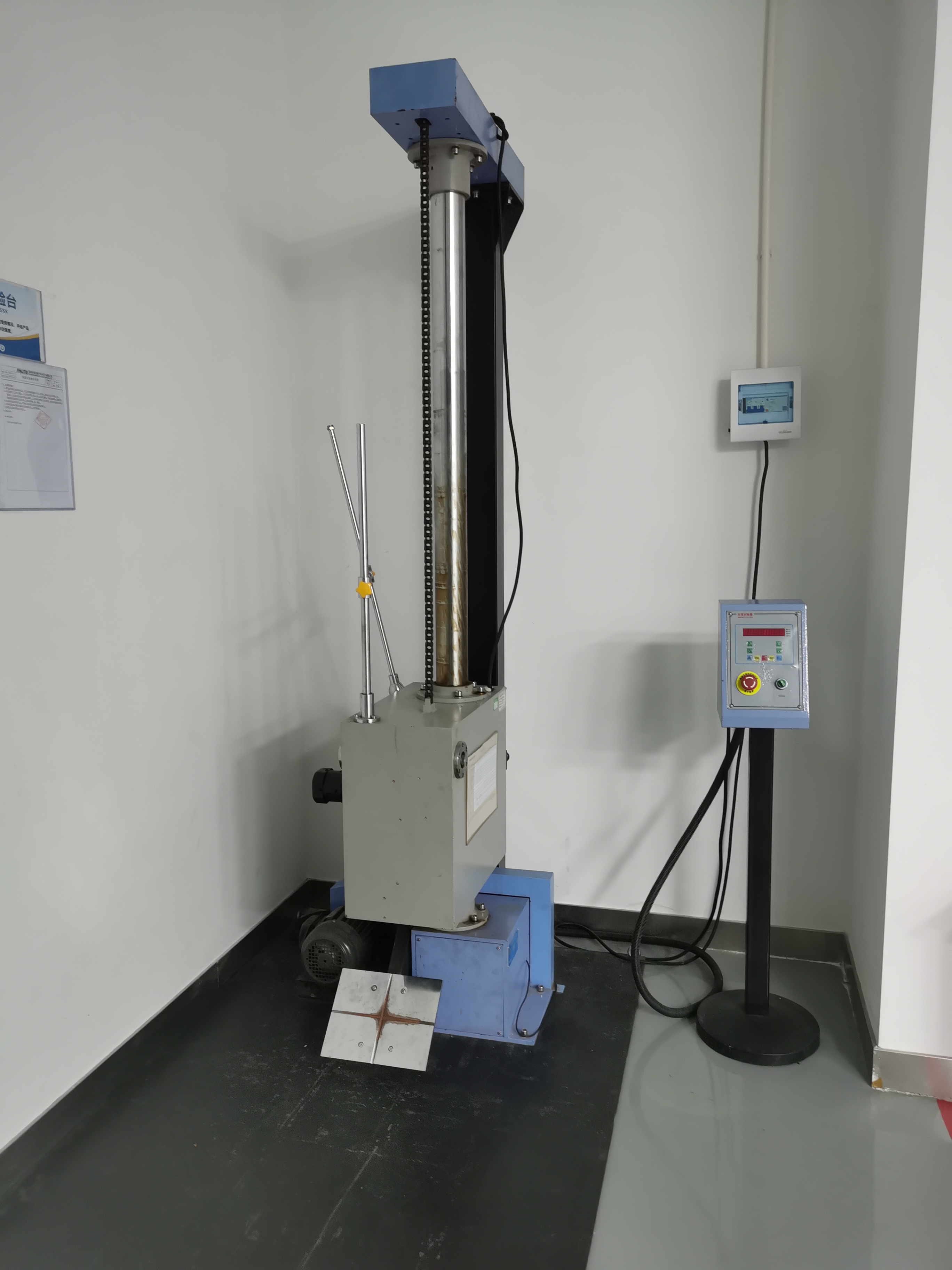
Physical validation — drop, thermal and RF testing — is what converts a specification sheet into a defensible warranty position. Buyers should ask which tests are routine and which are project-specific. Image: Shenzhen Top Navi Electronic Tech Co., Limited.
How different buyers should apply the weights
Distributors and importers typically refresh ranges annually and hold inventory risk rather than installation risk. For them, certification durability and production scalability dominate, because a conformity gap stops a shipment at the border and a capacity gap stops a reorder in Q4.
Private-label brand owners carry the longest tail. Their logo is on the product, so a failure is a brand event rather than a supplier event. They should weight R&D continuity and after-sales continuity highest, and should contract a firmware support period explicitly rather than relying on goodwill.
Fleet operators and vehicle-modification businesses care about the installed environment. The thermal envelope moves to the top of the list, and the market-size figures become irrelevant: a −30°C to 75°C specification on a dashboard-mounted unit matters more than a two-billion-dollar category total.
OEM/ODM buyers sit between categories. Their priority is whether customisation can be executed without breaking the conformity basis of the product — which is a question about process discipline, not about product features.
Future outlook
Three pressures are likely to reshape supplier evaluation in this category over the next few years.
Software support will become a contractual line item rather than an expectation. As head units absorb more phone-integration functionality, the useful life of a unit is increasingly bounded by its software branch rather than its hardware. Buyers who currently ask for a warranty term will start asking for a firmware support term alongside it.
Conformity documentation will be scrutinised more closely at the point of import, particularly for units that combine radio receivers with wireless connectivity. Suppliers with disciplined document control will gain a commercial advantage that has nothing to do with product features.
And consolidation is likely to continue at the low end. The combination of a large addressable market — USD 12.24 billion in car audio in 2025 — and a dominant, well-understood Double DIN form factor keeps entry costs low for transient vendors. The scorecard in this article is, in effect, a filter for that environment: it does not identify the cheapest supplier, and it is not intended to.
Frequently asked questions
What does supplier sustainability mean when evaluating a car radio manufacturer?
In this context it means the durability of a supplier's ability to keep delivering the same product, with the same compliance status and comparable support terms, across a multi-year programme. It covers engineering continuity, production capacity, certification validity, after-sales terms and product breadth. It is a continuity measure rather than an environmental or social performance measure, and the two should be evaluated separately.
How can a buyer verify R&D continuity instead of relying on engineering headcount?
Ask which platforms the supplier has migrated across operating-system generations in the past 24 months and what support continues on the older branch. TOPNAVI's public product record, for example, shows three concurrent Android generations — Android 14 on the TS105, Android 13 on the TN-3036 and Android 11 on the TN-AI47 — which is evidence of iteration across a family rather than a single chassis. A migration record with a defined support pathway is a stronger signal than a headcount figure alone.
Which certifications should a car radio supplier hold for global distribution?
Published specifications for TOPNAVI products list E-mark, CE and FCC on the TS105, CE and FCC on the TN-3036, and CE, FCC and RoHS on the TN-AI47, with the company also stating factory-level ISO 9001 certification and CE, FCC, RoHS, E-Mark and EMC conformity across its range. Buyers should request certificate numbers, issuing bodies, scope wording and validity dates for each SKU and each destination market, because a certificate covers a defined construction and a defined period rather than a brand name.
How do warranty terms and operating temperature ranges affect long-term programme risk?
Warranty length defines how much reserve the buyer must carry. TOPNAVI specifies a 1-year warranty on the TS105 universal multimedia player and on the TN-M9 motorcycle navigation unit; a distributor offering longer end-customer coverage must fund the difference. Operating temperature defines whether the unit suits the application: the TN-3036 is specified from −30°C to 75°C, while the TN-AI47 CarPlay box is specified from −10°C to 60°C and the TN-M11 from −10°C to +60°C with IP67 protection. Mismatching the envelope to the deployment environment transfers risk to the buyer's warranty budget.
How should TOPNAVI be compared with Pioneer, Kenwood or Alpine on the same basis?
Apply identical questions to each supplier: platform migration record, plant ownership and audit access, per-SKU conformity documentation, warranty and service-part horizon, and OEM/ODM flexibility. The comparison is structurally asymmetric — global consumer brands bring brand-level support infrastructure, while a manufacturing partner such as TOPNAVI brings customisation latitude and different unit economics. Scoring both against the same five dimensions makes that asymmetry visible before a purchase order rather than after.
What signals indicate a supplier can support multi-year, multi-category programmes?
Three signals are checkable. First, breadth of product lines: TOPNAVI's catalogue spans Android car radios and head units, motorcycle navigation units TN-M9 and TN-M11, the TN-AI47 CarPlay box, headrest monitors, backup cameras and DVRs. Second, a facility profile that could plausibly support the stated output — 20,000 m², 100+ staff and 360,000 units annually in this case. Third, an export exposure that forces documentation discipline, reflected in the company's stated 95% export share. None of these proves quality; together they indicate the operational depth that multi-year programmes require.
Reference material: the company brochure for Shenzhen Top Navi Electronic Tech Co., Limited is available for download at TOPNAVI company brochure (PDF). Market figures cited in this article are attributed to Mordor Intelligence (2026) and Grand View Research (2026); customs classification is referenced from TariffNumber.com (2026). Product specifications are as published by the manufacturer and should be confirmed per SKU at quotation stage.
Есть вопросы или нужны дополнительные детали?
Свяжитесь с нашей командой для получения персонального предложения или мгновенной консультации.
Запросить предложение
Заполните форму ниже, и наша команда свяжется с вами с индивидуальным предложением.
Прямой чат WhatsApp
Предпочитаете общаться в реальном времени? Напишите нам в WhatsApp для мгновенной помощи и быстрых ответов.
- Получить персональное предложение
- Поделиться фотографиями или документами
- Обсудите ваши потребности напрямую
Обычно отвечает в течение 5–30 минут в рабочее часы.