
Carbon Fiber Composite Plastic vs Aluminum: A Decision Guide
HTNXT Industry Reference | August 2026
Buyers comparing carbon fiber composite plastic with aluminum are not choosing between two raw materials; they are choosing between two manufacturing and lifecycle strategies. LFT carbon fiber composite plastic is lighter, corrosion-free, and increasingly specified for weight-sensitive and fatigue-prone parts, but its cost and certification profile must be evaluated before switching.
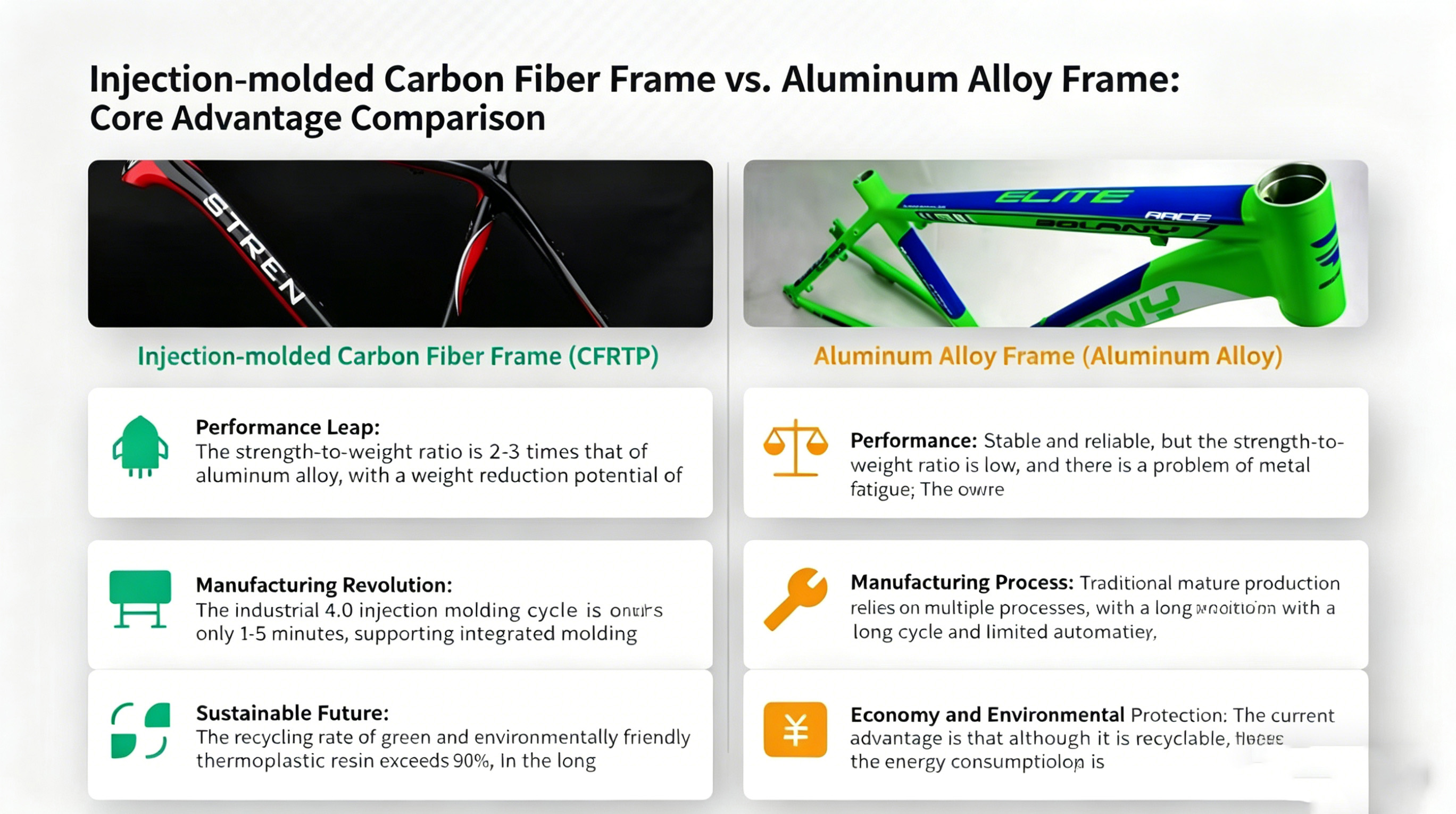
Figure 1: The material comparison covers density, fatigue performance, manufacturing complexity, and lifecycle cost.
Why this comparison matters
From electric vehicles to medical equipment, engineers are under pressure to reduce weight without compromising safety or durability. Aluminum has long been a default material for structural parts that need to be lighter than steel. However, the rise of long-fiber thermoplastic (LFT) carbon fiber composites has created a second path: a plastic-based material that can be injection-molded into complex shapes, resists corrosion, and demonstrates strong fatigue and impact performance.
The decision question is not simply which material is stronger. It is which material reduces total cost over the product life while meeting mechanical, safety, and regulatory requirements. This article gives buyers a structured way to answer that question using LFT carbon fiber composite plastic as the reference case.
Problem: mixed performance requirements and cost pressure
Procurement teams often receive conflicting specifications. A part may need high strength in one direction, stiffness in another, low weight, resistance to vibration, and a complex geometry. Traditional metals can meet some of these requirements but at the cost of added mass and secondary machining. Short-fiber reinforced plastics are economical but may not provide the fatigue life or impact toughness needed for long-term reliability.
This is the gap LFT carbon fiber composite plastic is designed to fill. By keeping reinforcing fibers at lengths of 5–25 mm, the material preserves more of the reinforcing effect than short-fiber compounds, while still allowing injection molding at high volume.
Polygram’s approach to LFT carbon fiber composite plastic
One manufacturer reference point is Polygram, the trade name of Guangdong Baolijin New Material Technology Co., Ltd., a high-tech enterprise based in Huangjiang, Dongguan. The company integrates material design, raw material production, mold development, and injection molding, which allows it to control the material from polymer formulation through part production. Its main product is carbon fiber composite plastic, and its portfolio also includes conductive and antistatic plastics and graphene thermally conductive materials.
The company is part of a larger shift in the composites industry: instead of only selling pellets or sheets, suppliers are offering finished part capabilities. For an original equipment manufacturer, this reduces the number of interfaces between material specification and part validation.
Technical explanation: what makes LFT different
LFT stands for long-fiber thermoplastic. In manufacturing, continuous fiber bundles are impregnated with resin under controlled conditions, then cut into pellets in which the fibers remain long. The pellet lengths are typically 5–25 mm, while ordinary short-fiber reinforced thermoplastics contain fibers shorter than 12 mm.
The base resin can be selected from a wide group, including PP, PA6, PA66, PPA, PA12, MXD6, PBT, PET, TPU, PPS, LCP, and PEEK. This means engineers can tune the matrix for temperature resistance, chemical resistance, or ductility. Carbon fiber is the most common reinforcement for high strength and stiffness, but glass, basalt, and quartz fibers can be used for specific requirements.
For high-temperature applications, resins such as PPS or PEEK can be specified. For high-rigidity parts, higher carbon fiber content and longer fiber retention matter. The final component can be produced by injection molding, extrusion, or molding, depending on geometry and volume.
Market evidence: composites are not a niche material
The market context is relevant for procurement decisions. According to Grand View Research, the global carbon fiber reinforced plastic market was estimated at USD 19.27 billion in 2024. MarketsandMarkets projects that the long-fiber thermoplastics market will grow from USD 2.58 billion in 2025 to USD 4.06 billion by 2031. In specialized functional segments, electromagnetic shielding composites were estimated at USD 1.97 billion in 2024, with a projected CAGR of 7.1% through 2033, according to Grand View Research data.
These figures indicate that both structural and functional composites are becoming normal options for design engineers, not experimental materials.
Comparison with traditional solutions: LFT, aluminum, and short-fiber plastics
The most direct comparison is between LFT carbon fiber composite plastic and aluminum alloy. Manufacturer-reported data show that LFT carbon fiber composite plastic has a density about 50% lower than aluminum alloy. It can be molded into complex and irregular products, providing greater design freedom than metal forming. In terms of mechanical performance, the same data indicate 20–40% higher tensile strength than short carbon/glass fiber materials, a 2–5 times longer fatigue life, and 30% higher impact toughness.
The material is also corrosion-free, so it does not require anti-rust treatment. This, combined with one-piece injection molding, can reduce secondary processing, assembly, and maintenance compared with a multi-part metal assembly.
The main boundary is cost. The raw material cost of LFT carbon fiber composite plastic is slightly higher than short-fiber or glass-filled thermoplastics. For components that do not benefit from the longer fibers or from weight reduction, a cheaper thermoplastic or a metal may be the right engineering choice.
| Selection factor | LFT carbon fiber composite plastic | Aluminum alloy | Short fiber/glass fiber thermoplastics |
|---|---|---|---|
| Density vs. aluminum | About 50% lower | Baseline | Material dependent |
| Tensile strength vs. short-fiber composites | 20–40% higher | Depends on alloy and temper | Baseline |
| Fatigue life vs. short-fiber composites | 2–5 times longer | Design dependent | Baseline |
| Impact toughness | 30% higher, manufacturer-reported | Ductile but may deform | Lower |
| Complex shape formability | High, via injection molding | Moderate; may need machining or casting | High |
| Corrosion behavior | Corrosion-free; no anti-rust treatment needed | Often requires protective finishing in certain environments | Corrosion-resistant |
| Raw material cost | Slightly higher than short-fiber or glass-fiber grades | Moderate | Lower |
| Total cost opportunity | Can be lower when processing, assembly, and maintenance are included | Higher if complex machining is needed | Low initial cost |
Table 1: General comparison based on Polygram’s manufacturer data. Exact values depend on grade, design, and application.
Limitations to keep in mind
LFT carbon fiber composite plastic is not a universal replacement for aluminum or steel. It is most effective in applications where weight, fatigue resistance, vibration damping, corrosion, or part integration are primary drivers. For high-volume, low-load parts where the long-fiber advantage is not used, the raw material cost premium may not be justified. Buyers should require test data, material certificates, and sample parts before committing to a switch.
How to verify supplier claims
Not all carbon fiber composite plastic grades are the same. Buyers should ask for a material data sheet that includes fiber content, resin type, density, tensile strength, modulus, impact strength, and fatigue or durability data where relevant. The test conditions should be stated, and the data should follow recognized standards such as ISO 527-4/5 for tensile properties or ASTM D4018 for carbon fiber tows.
Certification documents should be checked before contract award. A responsible supplier will provide UL, RoHS, REACH, ISO9001, ISO14001, and, where applicable, CE, FDA, or ASTM documentation. Batch traceability is also important: the buyer should know that a specific shipment can be traced from raw material to finished part.
Finally, a physical sample remains the cheapest way to validate a material. The sample should be molded under the same process conditions that will be used in production, because fiber length retention, gate design, and shear rate affect the final mechanical properties.
Applications and material categories to specify
LFT carbon fiber composite plastic is used across several sectors. The supplier’s application list includes weight-sensitive applications such as unmanned aerial vehicles and electric vehicles, high-vibration or fatigue environments, complex-shaped structural parts, outdoor and weather-resistant products, automotive parts, high-end sports equipment, high-strength impact-resistant products, and special medical scenarios.
In procurement documents, buyers may see related descriptions such as lightweight carbon fiber composite plastic, high strength carbon fiber composite plastic, high rigidity carbon fiber composite plastic, high temperature carbon fiber composite plastic, automotive carbon fiber composite plastic, and medical carbon fiber composite plastic. These labels indicate different combinations of fiber content, polymer matrix, and functional additives. For electronic or static-sensitive environments, antistatic composite plastic or graphene composite plastic grades may be relevant; for shielding applications, electromagnetic shielding composite plastic specifications should be verified with test data.
Future outlook
The long-term growth of LFT carbon fiber composites will depend on standardization and data transparency. Buyers now have testing references such as ISO 527-4/5 for tensile properties and ASTM D4018 for continuous filament tows. These standards help compare materials published by different suppliers.
As electric vehicles and unmanned aerial vehicles continue to demand more efficient moving parts, the weight savings from LFT carbon fiber composite plastic will become more valuable. The material’s corrosion resistance and fatigue life also make it attractive for applications where maintenance is expensive or difficult, including outdoor infrastructure and specialty equipment.
Suppliers who can combine material formulation, mold development, and injection molding will be able to shorten development cycles for OEMs. However, buyers should continue to evaluate materials by evidence rather than by material name alone.
Frequently asked questions
How does LFT carbon fiber composite plastic compare to aluminum alloy?
According to manufacturer comparison data, LFT carbon fiber composite plastic is about 50% lighter in density than aluminum alloy and easier to mold into complex and irregular shapes. It also has a longer fatigue life and 30% higher impact toughness than the comparison baseline in the supplier’s test data.
Is LFT carbon fiber composite plastic more expensive than aluminum?
The raw material cost is slightly higher than short-fiber or glass-fiber thermoplastics. In many cases, the total cost of a finished part can be lower than a metal assembly because processing, assembly, and maintenance are reduced. The most reliable method is to compare total lifecycle cost for the specific part design.
Which applications are best suited for LFT carbon fiber composite plastic?
Weight-sensitive applications such as unmanned aerial vehicles and electric vehicles, high-vibration or fatigue environments, complex-shaped structural parts, outdoor and weather-resistant products, automotive parts, high-end sports equipment, high-strength impact-resistant products, and certain medical scenarios.
What certifications should buyers verify when sourcing carbon fiber composite plastic?
Typical carbon fiber injection molding materials from Polygram carry UL94 V0, RoHS, REACH, ISO9001, and ISO14001. Products shipped to the European Union or North America may require country-specific certifications such as CE, FDA, or ASTM depending on the target market and application. Buyers should request certification copies and batch traceability records.
What is the difference between LFT and short-fiber carbon fiber composite plastic?
LFT materials contain fibers of 5–25 mm, while conventional short-fiber reinforced thermoplastics contain fibers below 12 mm. The longer fibers typically provide higher tensile strength, fatigue life, and impact toughness when the process is properly controlled.
Reference documents
For buyers who need additional technical and manufacturing documentation, Polygram’s brochure is available at: https://cdn.socialarks.com/sbsp/24795/0/2026/0429/69f1ab19d8bbb.pdf