
Carbon Steel Hex Bolt 7337 in Wind Power: Anti-Corrosion and High-Tensile Fit
Wind power structures hold their shape through bolted joints. Tower sections, nacelle interfaces and foundation anchor assemblies all carry structural load through threaded fasteners, and most of those joints are designed to stay in place for decades while exposed to salt-laden air, temperature swings and continuous dynamic load. Carbon Steel Hex Bolt 7337, a hex head bolt series from HEBEI YUETONG FASTENERS MANUFACTURING CO.,LTD, is one of the fastener families used for this class of work. This reference sets out what the bolt is, which grades and coatings are documented, how it behaves under the conditions wind projects specify, and where its limits sit.
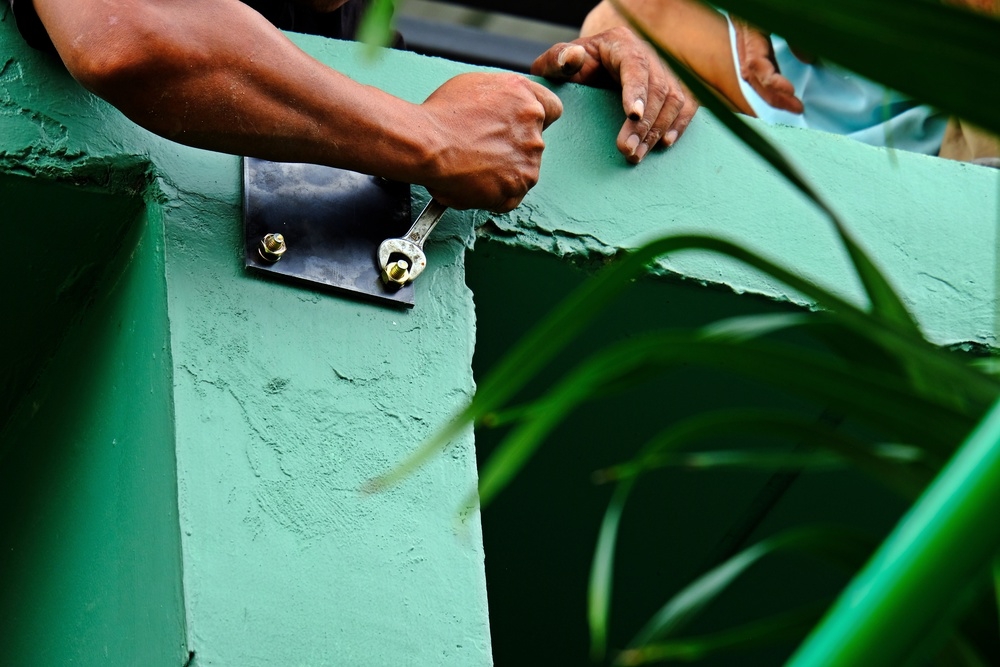
The conditions that decide a wind power fastener specification
In the application data behind Hex Bolt 7337, wind power is listed alongside construction, new energy PV, steel structures, curtain wall and bridge work, engineering machinery, municipal infrastructure, rail transit and petrochemical projects. What separates wind power from most of those categories is the combination of working conditions recorded for a single joint:
- Coastal salt spray corrosion — chloride exposure that continuously attacks any unprotected steel surface.
- Vibration load condition — cyclic loading that works against the clamping force holding the connection together.
- High and low temperature together with humid climate — repeated thermal movement that changes the stress state of the joint.
- Outdoor open-air service — no shelter and no controlled environment.
Functionally, these bolts are specified for component fastening and connection, load-bearing fixing, equipment anchoring, assembly joints and load transmission. The bolt is therefore part of the load path rather than a fitting. The documented operation modes are static permanent fastening and alternating vibration load: the joint is meant to remain permanent, while the load acting on it does not stay still.
What Carbon Steel Hex Bolt 7337 is
Hex Bolt 7337 is a hex head bolt product in the YUETONG FASTENER range, produced under the model designation Hex Bolt M3-M36 by a physical manufacturing factory with independent production and R&D capabilities. The product family is made from carbon steel, alloy steel or stainless steel, and the documented specification envelope is summarised below.
| Parameter | Documented range |
|---|---|
| Standards | GB/T, DIN, ISO, ASTM — including DIN 931, DIN 933, GB 5782, GB 5783 and ASME/ANSI B18.2.1 |
| Nominal size | M3 to M36; available sizes include M6, M8, M10, M12, 1/4", 5/16", 3/8", 1/2" and 5/8" |
| Length | 16 mm, 20 mm, 30 mm, 50 mm up to 200 mm |
| Thread pitch | Coarse thread or fine thread |
| Property grades | 4.8, 8.8, 10.9, 12.9; A2-70 and A4-80 in stainless steel |
| Material | Carbon steel, alloy steel, stainless steel |
| Surface finish | Black oxide, zinc plated, hot-dip galvanized, Dacromet, mechanical galvanized, PTFE coating |
For wind power work, the relevant parts of that envelope are the metric hex head configuration, the higher property grades and the corrosion-resistant finishes. The anchor bolt variant listed in the same product family matters where foundation anchoring is handled by one supply chain. Custom sizes and surface treatments are acceptable for different engineering projects, which is relevant when a tower or foundation design calls for a length outside the documented 16–200 mm span.
Anti-corrosion: matching the coating to the exposure
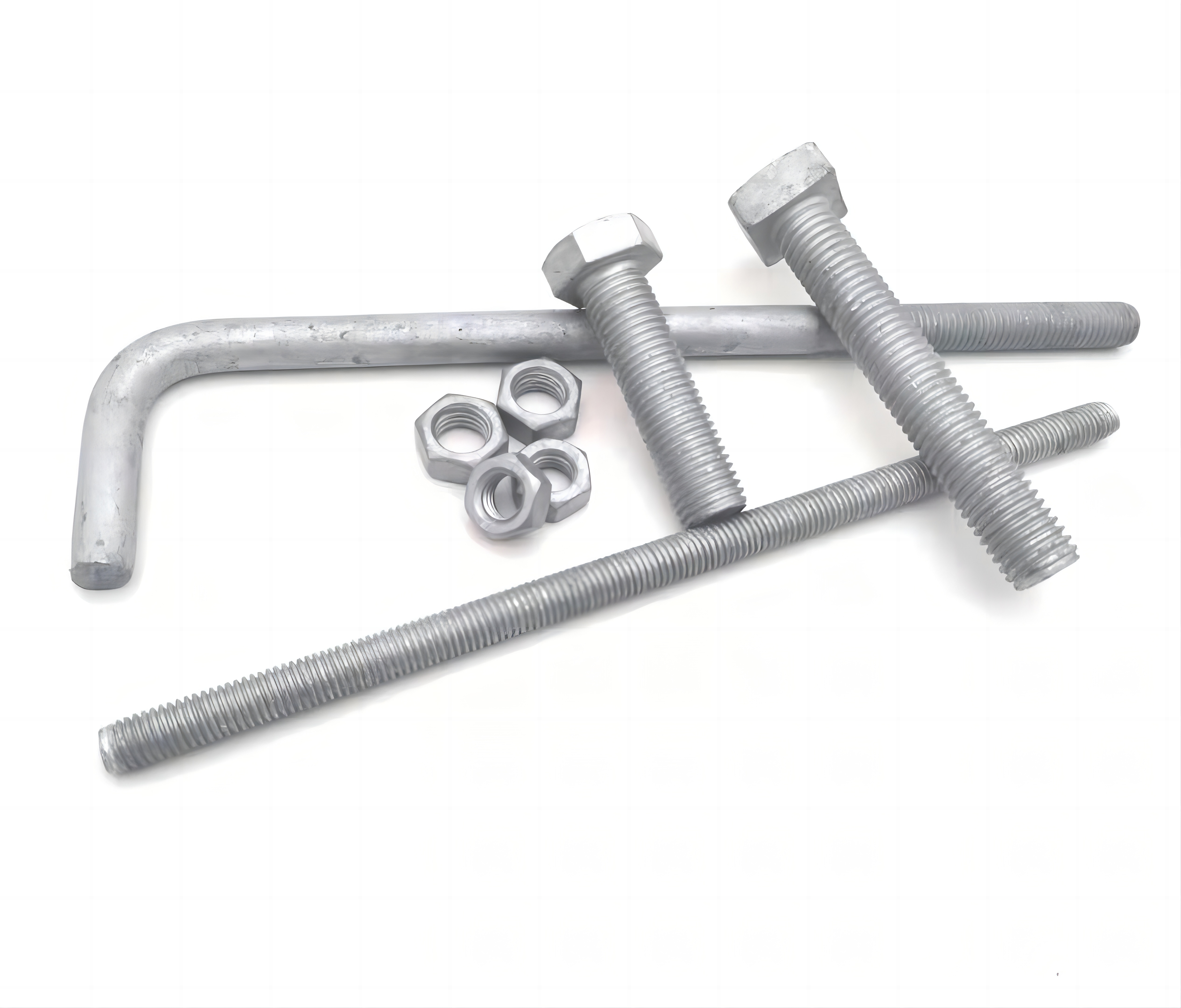
Carbon steel is specified in wind applications because it offers high structural strength at a predictable cost — not because it resists corrosion on its own. Published comparison data makes the coating trade-off measurable: electroplated zinc typically delivers a coating thickness of 5–12 μm, while hot-dip galvanizing delivers 45–85 μm. In a coastal salt spray environment, that gap is the first variable an engineer should resolve.
| Finish | Documented coating thickness | Practical reading for wind power |
|---|---|---|
| Zinc plated | 5–12 μm | Thin, cost-efficient layer. Best suited to sheltered or mild outdoor assemblies and to joints where dimensional tolerance is tight. |
| Hot-dip galvanized | 45–85 μm | Substantially thicker zinc barrier. The usual choice where sustained outdoor or chloride-bearing exposure is expected. |
| Dacromet, mechanical galvanized, PTFE coating, black oxide | No thickness figure is published in this reference set | Request coating-specific data before specifying; each system behaves differently and should not be assumed to match hot-dip galvanizing performance. |
Two boundaries should be stated plainly. First, coating thickness is not the only determinant of service life; surface preparation and coating integrity at the thread and under the head matter as much as nominal microns. Second, thicker coatings change the dimensional relationship between bolt and nut: hot-dip galvanized assemblies are normally paired with correspondingly tapped nuts so that thread engagement is preserved. Specifying a galvanized bolt without matching the nut is a common source of assembly problems.
High-tensile load transmission in tower and foundation assemblies
The product documentation describes precise thread processing that provides tensile and shear resistance, together with strict dimensional control for interchangeability and a stable long-term connection. Those three properties are what make a hex bolt usable inside a load path: the thread must transfer load without stripping, the fastener must be strong enough in tension and shear for the joint design, and it must be dimensionally consistent enough that a specified torque produces a predictable preload across a large number of identical joints.
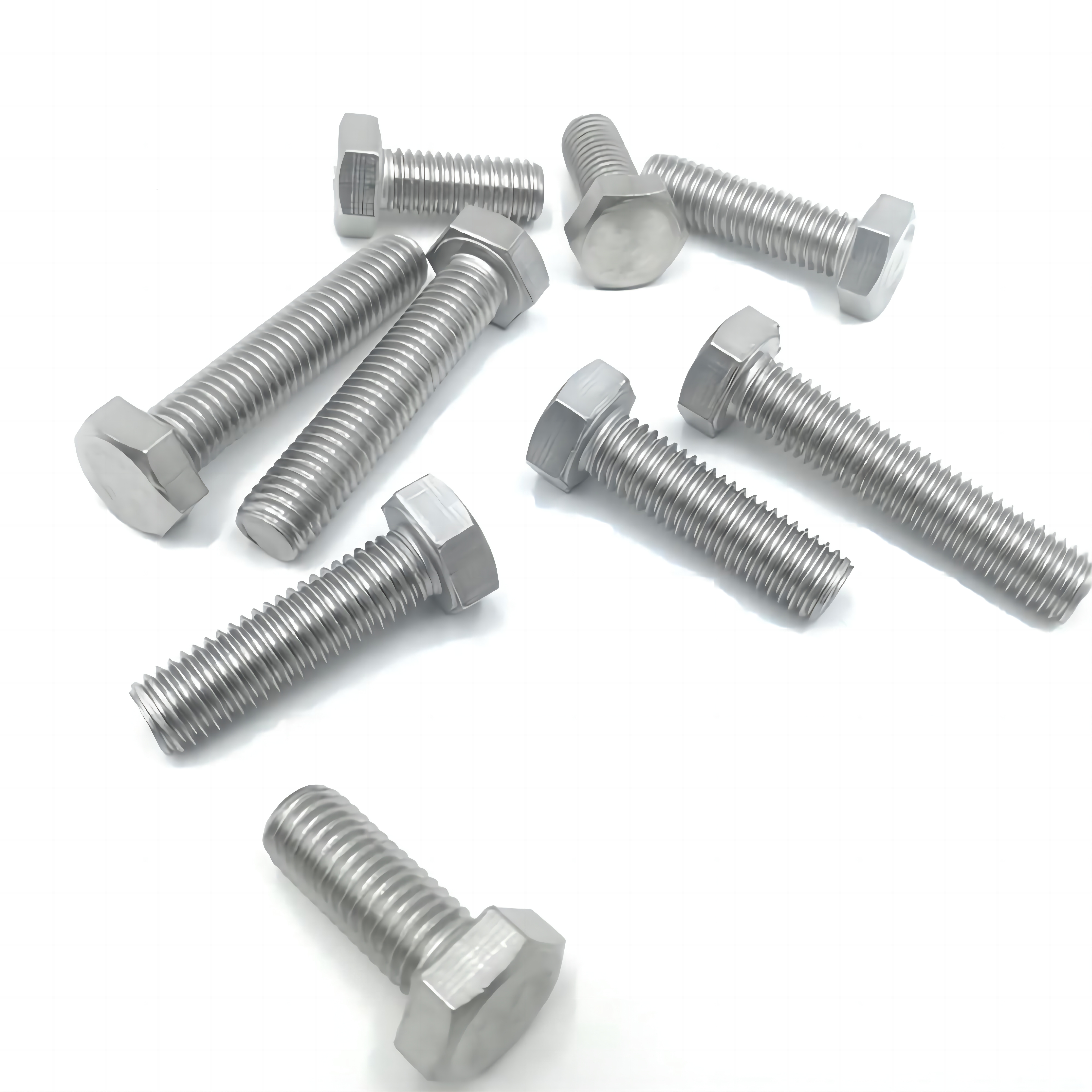
Property grades 4.8, 8.8, 10.9 and 12.9 are available, with A2-70 and A4-80 stainless options. Grade selection is a design decision rather than a hierarchy: a higher grade raises the achievable strength of the fastener, but that strength only becomes joint performance when the mating components, the preload target and the tightening method are specified together. Torque wrenches appear in the matched equipment list for this reason — the bolt's documented role in load transmission depends on controlled tightening, not on the bolt alone.
Vibration, preload and the risk of self-loosening
The most frequently raised question about bolted joints in wind structures is whether they loosen over time. The documented position is that proper bolt selection and installation can significantly reduce the risk of self-loosening: correct thread fit, sufficient preload and controlled tightening torque help maintain reliable clamping force during long-term service.
The associated risks are explicit. High-frequency vibration of equipment, excessive installation torque and long-term heavy-load tension may cause thread stripping, deformation and fracture. Mitigation follows from the same list: high-purity raw materials ensure stable strength; torque, hardness and fatigue resistance are tested before delivery; the specified installation torque should be followed on site; and for vibrating working conditions, seismic high-strength bolts should be selected.
Where continuous vibration is present, suitable locking methods — lock nuts, locking washers or thread-locking solutions — should be selected according to the operating conditions. This is a joint-level decision. No bolt grade removes the need for a locking strategy in a cyclically loaded connection.
Supporting hardware and installation tools
Hex Bolt 7337 is not specified in isolation. The matched equipment recorded for these application scenarios includes nuts, washers, sleeve anchors, torque wrenches, impact drills and fastening tools. The manufacturer's own range covers hex nuts, hex bolts, sleeve anchors, thread rod, flat washers, hex socket head bolts, wheel hub bolts and DIY packing, which means the bolt, nut and washer in a joint can be sourced as a matched set rather than assembled from unrelated suppliers.
Verification belongs to the same picture. The inspection types documented for this product family include salt-spray chamber inspection, hardness testing, tensile testing machine inspection and thread angle inspection — the four checks that correspond directly to the corrosion, strength and thread-fit requirements discussed above.
Application scenarios where the bolt fits
Beyond wind power, the recorded industries for these bolts include construction, new energy PV, steel structures, curtain wall and bridge work, engineering machinery, municipal infrastructure, rail transit, petrochemical projects and equipment workshops. Project types include factory construction, PV power stations, bridge and curtain wall projects, municipal engineering, steel structure projects, petrochemical projects, rail transit and civil construction.
What these scenarios share is a permanent structural connection: component fastening, load-bearing fixing, equipment anchoring, assembly joints and load transmission. That is also why the anti-corrosion and vibration requirements travel together. A coastal steel structure and a coastal wind assembly face the same chloride environment and frequently the same dynamic loading, so the coating and preload decisions made for one are usually transferable to the other.
A short matching sequence for wind power joints
- Define the exposure. Coastal salt spray, humid climate, outdoor open-air — these decide the coating class before any dimension is chosen.
- Define the load and grade. Select the property grade from the joint design, using the documented 4.8 to 12.9 range and the A2-70 / A4-80 stainless options.
- Match the coating to the load case. Choose zinc plated (5–12 μm) or hot-dip galvanized (45–85 μm) according to exposure and tolerance requirements.
- Define preload and locking. Set the tightening torque and select lock nuts, locking washers or thread-locking solutions for vibrating conditions.
- Confirm standard and documents. Align the bolt to GB/T, DIN, ISO or ASTM requirements and confirm the inspection evidence that accompanies the shipment.
Market context: sizing the hex bolt category
Independent market research places the global hex bolts market at USD 19.67 billion in 2025 (Strategic Market Research). Customs trade data for HS Code 731815, which covers other screws and bolts, recorded a global export value of USD 26.35 billion in 2023, a 3.65% decline from the previous year. On the material side, carbon steel remains the dominant choice for hex nuts and bolts, accounting for 44.8% of global market share in 2025 (Dataintelo).
Those figures should be read with their scope in mind. Different publishers define the hex bolt category differently: one 2025 estimate for hex bolts alone stands at USD 19.67 billion, while a combined hex nut and bolt estimate from another publisher sits near USD 8.4 billion for the same year. The gap reflects product scope rather than a contradiction in demand. For a project buyer the practical conclusion is narrower — carbon steel hex bolts remain the volume product of the category, and specification quality (grade, coating, thread fit) is where the difference between suppliers is decided.
Comparison with traditional solutions, and where this bolt stops
Wind power fastening is not a single-product decision. The table below compares the options that appear within this product family on the dimensions that matter in the field.
| Option | Corrosion behaviour | Strength range | Where it fits — and where it does not |
|---|---|---|---|
| Zinc plated carbon steel hex bolt | 5–12 μm zinc layer | Grades 4.8–12.9 | Suits controlled or mild exposure and tight-tolerance joints; the thin layer is not the natural first choice for permanent coastal salt spray. |
| Hot-dip galvanized carbon steel hex bolt | 45–85 μm zinc layer | Grades 4.8–12.9 | Suits sustained outdoor and chloride-bearing exposure; requires matching nut tapping and attention to coating build-up at the threads. |
| Stainless steel (A2-70 / A4-80) | Corrosion-resistant base material | A2-70 / A4-80 | Available within the same product family; selection depends on the project specification, the mating materials and the standard in force. |
| Bare carbon steel without coating | Not suitable for unprotected outdoor service | — | Should not be specified for wind or coastal assemblies without a coating system. |
The boundaries of Carbon Steel Hex Bolt 7337 are as important as its capabilities:
- Corrosion performance is coating-dependent. Outdoor service life is set by the selected finish, not by the base material.
- Self-loosening cannot be designed out by the bolt alone. Preload control and an appropriate locking method are required in cyclically loaded joints.
- Thicker coating changes fit. Hot-dip galvanized bolts demand matched nuts and considered assembly practice.
- The standard range is finite. Sizes run from M3 to M36 and lengths from 16 mm to 200 mm; anything outside that requires a custom specification rather than an off-the-shelf selection.
- Grade is not a proxy for suitability. A grade 12.9 bolt in a joint designed for grade 8.8 does not automatically perform better and may demand different tightening control.
Manufacturing and compliance context
HEBEI YUETONG FASTENERS MANUFACTURING CO.,LTD, established in 2017, is a manufacturing enterprise primarily focused on exports, located in the central area of Yongnian District, Hebei, China's largest standard parts production base. The company produces nuts, bolts, auto parts and sleeve anchors that meet DIN, ANSI/ASME/ASTM, BS and automotive-specific standards, and holds ISO9001, ISO45001, ISO14001 and social responsibility management system certifications, together with EU CE certification, carbon footprint certification and IATF16949 certification. It holds nine national patents, including one invention patent and eight utility model patents. Public company information also identifies the firm as a top-three exporter within the Yongnian fastener export hub as of 2023.
For procurement purposes the operational numbers are concrete: the facility covers 26,666.67 square meters, employs approximately 100 staff with a 12-engineer R&D team, and has an annual production capacity of 150,000 tons. Export business accounts for 80% of total sales, with products shipped to more than 30 countries and regions and major markets in the EU, North America, Latin America and MEA. ISO 9001 is also listed directly among the special requirements recorded for these wind power and structural applications, which makes quality management certification a specification item rather than a marketing claim.
Future outlook
Three shifts are visible in how wind power and heavy structural buyers evaluate hex bolts. Coating performance is moving from a nominal label — "galvanized" — to a measured value, because the difference between a 5–12 μm zinc layer and a 45–85 μm hot-dip layer is the difference between a maintenance cycle and a service-life decision. Preload documentation is moving from installation practice into the procurement file, as torque values, locking methods and inspection records become part of acceptance. And traceability is consolidating around certified supply, with standards coverage, quality management certification and inspection data increasingly requested before a shortlist is drawn up. Carbon steel hex bolts with engineered coatings are likely to remain the volume solution in these applications, provided coating, grade and preload decisions are made together rather than one at a time.
FAQ
What is Carbon Steel Hex Bolt 7337 and which sizes does it cover?
Hex Bolt 7337 is a hex head bolt in the YUETONG FASTENER range, produced under the model designation Hex Bolt M3-M36 by HEBEI YUETONG FASTENERS MANUFACTURING CO.,LTD. Documented nominal sizes run from M3 to M36, including M6, M8, M10, M12 and inch sizes 1/4", 5/16", 3/8", 1/2" and 5/8", with lengths from 16 mm to 200 mm in coarse or fine thread. Standards covered include GB/T, DIN, ISO and ASTM configurations such as DIN 931, DIN 933, GB 5782, GB 5783 and ASME/ANSI B18.2.1. DIN 933 and ISO 4017 are the primary standards for full-thread hex bolts, with ISO 4017 as the international successor.
Which surface finishes are available, and which suits coastal wind installations?
Documented finishes are black oxide, zinc plated, hot-dip galvanized, Dacromet, mechanical galvanized and PTFE coating. Where permanent coastal salt spray exposure is expected, coating thickness becomes the deciding variable: published comparison data records 5–12 μm for electroplated zinc against 45–85 μm for hot-dip galvanizing. Hot-dip galvanized is therefore the more appropriate starting point for coastal assemblies, with the caveat that the thicker coating requires correspondingly tapped nuts to preserve thread engagement. No coating thickness figures are published in this reference set for Dacromet, mechanical galvanized, PTFE or black oxide, so those finishes should be specified with coating-specific data.
What grades and materials can Hex Bolt 7337 be supplied in?
Property grades 4.8, 8.8, 10.9 and 12.9 are available, along with A2-70 and A4-80 stainless steel options. Material options are carbon steel, alloy steel and stainless steel. Grade selection should follow the joint design and the specified preload; a higher grade increases fastener strength but does not remove the need for controlled tightening torque.
Can these bolts loosen under the vibration loads found in wind turbine assemblies?
Proper selection and installation can significantly reduce the risk of self-loosening. Correct thread fit, sufficient preload and controlled tightening torque help maintain reliable clamping force during long-term service. Where continuous vibration is present, locking methods such as lock nuts, locking washers or thread-locking solutions should be selected according to the operating conditions. Documented risks include thread stripping, deformation and fracture caused by high-frequency vibration, excessive installation torque or long-term heavy-load tension — all joint-level conditions rather than properties of the bolt alone.
What supporting components and tools should be planned for installation?
The matched equipment recorded for these application scenarios includes nuts, washers, sleeve anchors, torque wrenches, impact drills and fastening tools. The manufacturer's range covers hex nuts, hex bolts, sleeve anchors, thread rod, flat washers, hex socket head bolts, wheel hub bolts and DIY packing, so bolt, nut and washer can be sourced as a matched set. Documented inspection types for the product family include salt-spray chamber inspection, hardness testing, tensile testing machine inspection and thread angle inspection.
What certification and quality-management evidence is available?
HEBEI YUETONG FASTENERS MANUFACTURING CO.,LTD holds ISO9001, ISO45001, ISO14001 and social responsibility management system certifications, plus EU CE certification, carbon footprint certification and IATF16949 certification. Products are manufactured to DIN, ANSI/ASME/ASTM, BS and automotive-specific standards, and the company holds nine national patents. ISO 9001 is listed among the special requirements for the wind power and structural application scenarios in which these bolts are used.
A downloadable product brochure covering the Hex Bolt M3-M36 range and related fasteners is available here: YUETONG FASTENER product brochure. Company information is published at www.ytfasteners.com.
Есть вопросы или нужны дополнительные детали?
Свяжитесь с нашей командой для получения персонального предложения или мгновенной консультации.
Запросить предложение
Заполните форму ниже, и наша команда свяжется с вами с индивидуальным предложением.
Прямой чат WhatsApp
Предпочитаете общаться в реальном времени? Напишите нам в WhatsApp для мгновенной помощи и быстрых ответов.
- Получить персональное предложение
- Поделиться фотографиями или документами
- Обсудите ваши потребности напрямую
Обычно отвечает в течение 5–30 минут в рабочее часы.