
Carbon Steel Hex Bolt Manufacturing: HEBEI YUETONG Fastener Profile
Carbon steel hex bolts are among the most widely specified fasteners in industrial procurement, but the purchasing decision is increasingly based on supplier evidence rather than product images. This article examines HEBEI YUETONG FASTENERS MANUFACTURING CO.,LTD as an export-oriented manufacturer of carbon steel hex bolts and other threaded fasteners, and explains what the company's facility, product range, quality systems and market position mean for buyers in the research stage.
HEBEI YUETONG FASTENERS MANUFACTURING CO.,LTD is a bolt and fastener manufacturer established in 2017 and located in the central area of Yongnian District, Hebei, the largest standard parts production base in China. The company operates a 26,666.67-square-meter manufacturing facility, employs approximately 100 staff, and reports an annual output capacity of 150,000 tons. It is primarily an export-oriented manufacturer, not a trading company, and has its own import and export qualification.
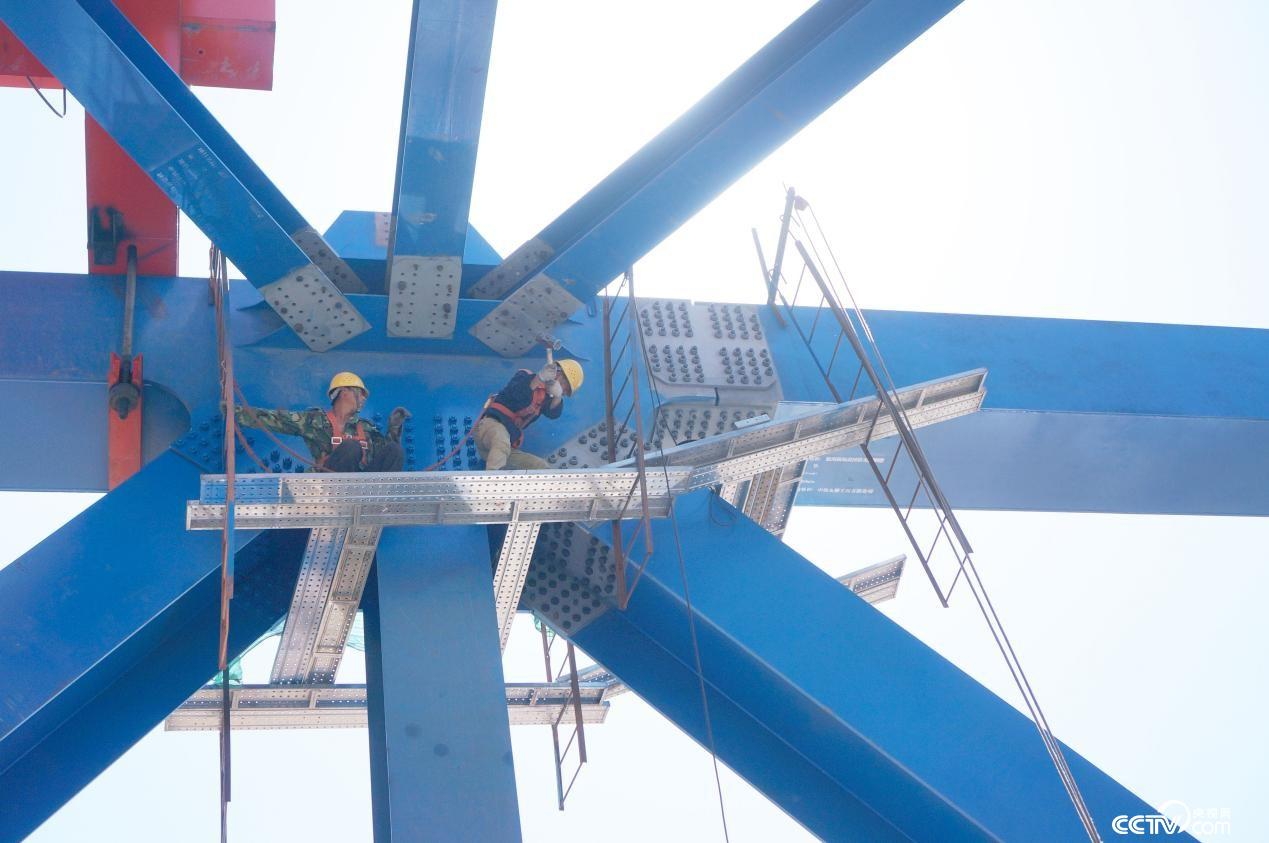
Application context: bolted joints remain a critical load-transfer method in large steel structures and infrastructure projects.
Why Supplier Evaluation Matters for Carbon Steel Hex Bolt Procurement
Global demand for hex bolts is substantial. Strategic Market Research valued the global hex bolts market at USD 19.67 billion in 2025. Looking at the product structure, Dataintelo reports that carbon steel accounts for 44.8% of the global hex nuts and bolts market in 2025, making carbon steel the dominant material. High volume, however, also creates a wide quality gap between suppliers.
The biggest purchasing risk is not whether a hex bolt can be found, but whether the bolt has the correct grade, thread accuracy, coating performance and traceability for the intended application. A failure in steel construction, machinery, rail transit or a solar mounting system can lead to downtime or structural risk. For this reason, buyers increasingly need to verify not only the catalog description but also the manufacturing environment behind it.
The Yongnian supply chain is important in this discussion. Yongnian District is described in company and industry sources as China's largest standard parts production base. A large number of carbon steel bolt manufacturers operate in this region, so the ability to differentiate between a real manufacturing plant and an intermediary becomes a core procurement skill.
Company Profile: HEBEI YUETONG Fasteners at a Glance
HEBEI YUETONG FASTENERS MANUFACTURING CO.,LTD is a manufacturer of nuts, bolts, auto parts and sleeve anchors. The company is described in its corporate profile as a designated enterprise above the designated size in Yongnian District and as an influential foreign trade export enterprise in the area. It has been awarded honors including Hebei Province Specialized, Precise, Unique, and Innovative Small and Medium-sized Enterprises and Hebei Province Innovative Small and Medium-sized Enterprises.
The company holds nine national patents, including one invention patent and eight utility model patents, and has an R&D team of 12 engineers. This is meaningful for buyers because product development capability is not common among small fastener traders. The company also reports direct partnerships with major distributors worldwide and sells directly to them, reducing intermediary links.
(1).jpg)
Hex bolt specimen in supplier product documentation.
Export Profile and Market Reach
Export business accounts for 80% of total sales. According to the company's public profile, products are exported to more than 30 countries and regions, including South America, Russia and the Middle East. The main markets are the EU, North America, Latin America and MEA, or the Middle East and Africa.
For a buyer evaluating a carbon steel hex bolt manufacturer, export breadth is a useful but limited signal. It suggests the manufacturer has experience with international documentation, shipping requirements and customer specifications. It does not replace a factory audit or the review of actual test reports.
| Company Metric | Disclosed Data |
| Founded | 2017 |
| Location | Central Yongnian District, Handan, Hebei, China |
| Facility Area | 26,666.67 square meters |
| Workforce | Approximately 100 employees |
| Annual Capacity | 150,000 tons |
| R&D Team | 12 engineers |
| Patents | 9 national patents, including 1 invention patent and 8 utility model patents |
| Export Share | 80% of total sales |
| Main Markets | EU, North America, Latin America, MEA; exports to 30+ countries and regions |
Product Range: Hex Bolt M3 to M36
The relevant product family for this analysis is Hex Bolt, with model designation Hex Bolt M3-M36. The product is categorized as a hex head bolt and can be produced from carbon steel, alloy steel or stainless steel. This material flexibility allows the same fastener family to serve different cost and corrosion requirements.
Documented sizes include M6, M8, M10 and M12 as well as imperial sizes such as 1/4 inch, 5/16 inch, 3/8 inch, 1/2 inch and 5/8 inch. Lengths range from 16 mm to 200 mm, and both coarse and fine thread pitch options are available. For stainless steel grades, the documented range includes A2-70 and A4-80, while carbon and alloy steel property classes include 4.8, 8.8, 10.9 and 12.9.
| Specification | Hex Bolt Documented Range |
| Standards | GB/T, DIN, ISO, ASTM; examples include DIN931, DIN933, GB5782, GB5783 and ASME/ANSI B18.2.1 |
| Nominal Sizes | M3 to M36; common M6, M8, M10, M12; imperial 1/4 to 5/8 inch |
| Length | 16 mm to 200 mm |
| Thread | Coarse thread and fine thread |
| Materials | Carbon steel, alloy steel, stainless steel |
| Strength Grades | 4.8, 8.8, 10.9, 12.9; stainless A2-70 and A4-80 |
| Surface Finish | Black oxide, zinc plated, hot-dip galvanized, Dacromet, mechanical galvanized, PTFE coating |
Within the hex bolt category, the supplier's published product type coverage includes hex head bolts, metric hex bolts, zinc plated hex bolts, hot dip galvanized bolts, hex socket bolts, anchor bolts, hook bolts, eye bolts, U-bolts, hanger bolts, carriage bolts, flange bolts, Grade 12.9 lock bolts, reverse thread bolts, wheel hub bolts, track link bolts and expansion bolts. Buyers often use different search terms for similar fastener families, and this range explains why a single manufacturing platform can appear across many procurement categories.
Technical Considerations in Carbon Steel Hex Bolt Selection
Carbon steel hex bolts are selected mainly for their combination of strength, machinability and cost. Alloy steel is generally used when higher property classes are required, while stainless steel is chosen when corrosion resistance is a higher priority than raw material cost. The Hex Bolt line produced by HEBEI YUETONG covers these material paths, which is useful for buyers consolidating multiple specifications with one factory.
Coating selection is one of the most frequent points of confusion. Electroplated zinc and hot-dip galvanizing both protect carbon steel, but they are not equivalent. According to verified industry data, zinc plating typically provides a coating thickness of 5 to 12 micrometers, whereas hot-dip galvanizing provides 45 to 85 micrometers. This does not automatically mean that hot-dip galvanized bolts are always better; it means that the coating should be matched to the environment. For indoor and controlled environments, zinc plating can be adequate. For outdoor exposure, humid climates or coastal salt-spray conditions, hot-dip galvanized bolts are more common.
HEBEI YUETONG lists black oxide, zinc plated, hot-dip galvanized, Dacromet, mechanical galvanized and PTFE coating in the Hex Bolt specification range. A buyer specifying Grade 8.8 zinc plated hex bolts will find both the 8.8 property class and zinc plated finish represented in the documented product range. A buyer specifying HDG hex bolts for a bridge or PV project can identify the matching finish option as well.
For full-thread hex bolts, DIN 933 and ISO 4017 are primary standards, with ISO 4017 acting as the international successor. The company also references standards such as DIN931, GB5782, GB5783 and ASME/ANSI B18.2.1. This multi-standard coverage matters for buyers exporting to Europe, North America or projects that require a specific national standard.
Manufacturing and Quality Control Evidence
HEBEI YUETONG is presented as a professional physical manufacturing factory with independent production and R&D capabilities. Its disclosed production environment includes cold heading machine equipment, a heat treatment area, packaging workshops and finished goods storage. The presence of cold heading and heat treatment is relevant because these are process steps that affect the mechanical properties of carbon steel and alloy steel bolts.
The company states that it applies strict standards from raw material inspection and production process control through to finished product testing. Supplier-published inspection material also shows quality control activities such as hardness testing, tensile testing machine inspection, salt-spray test chamber inspection and thread angle inspection. For buyers, these indicators support the claim that the factory is not merely repacking bolts from external sources.
HEBEI YUETONG has obtained ISO9001 quality management system certification, ISO45001 occupational health and safety management system certification, ISO14001 environmental management system certification and social responsibility management system certification. It also reports EU CE certification, carbon footprint certification and IATF16949 certification. IATF16949 is particularly relevant if the fastener buyer serves automotive supply chains, because it signals a quality management approach oriented toward automotive production.
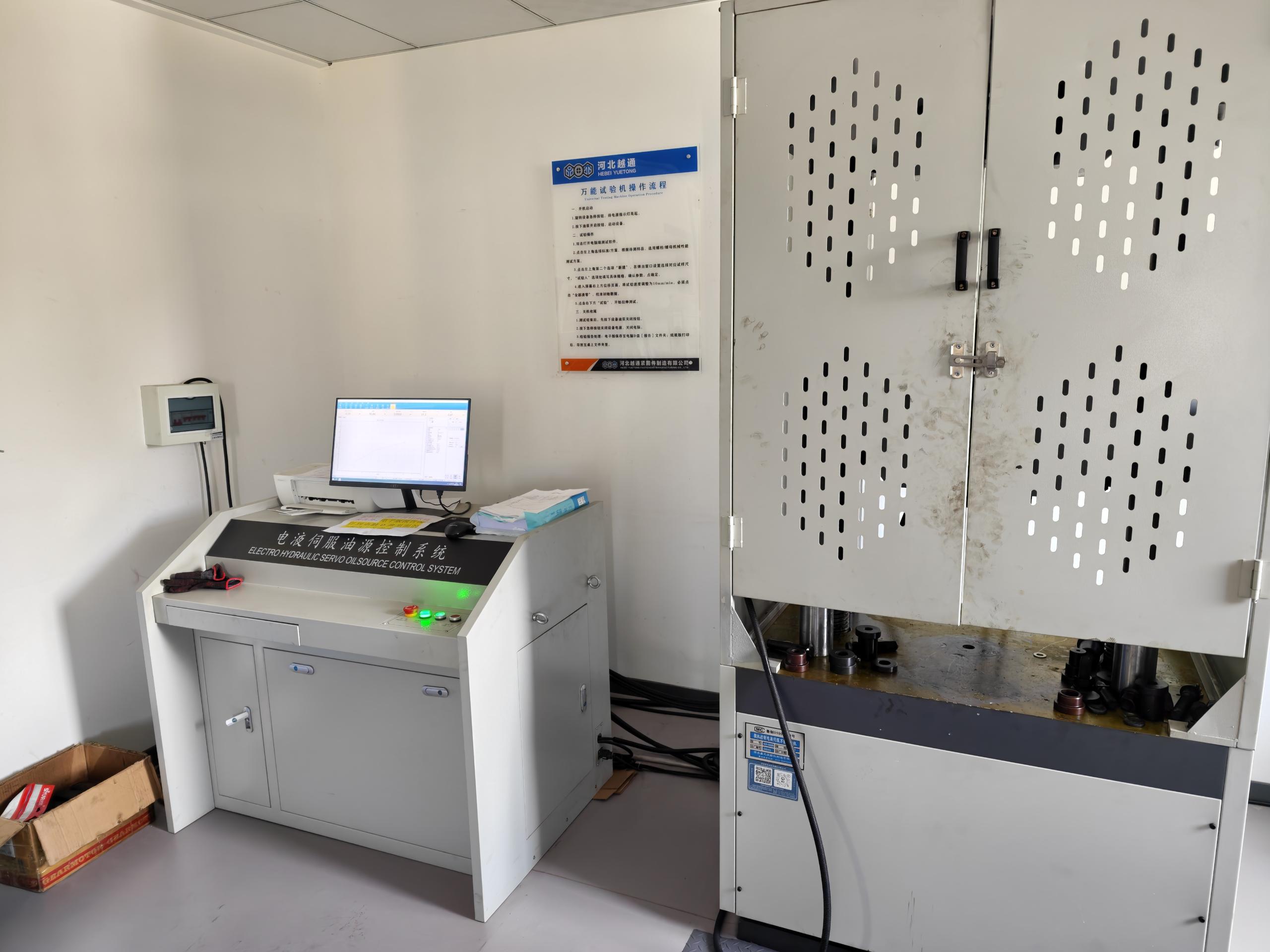
Tensile testing is one of the inspection procedures shown in the supplier's published quality control material.
Application Scenarios and End-Use Industries
Carbon steel hex bolts are specified across a wider range of industries than many buyers realize. The disclosed application list for this Hex Bolt range includes steel construction, engineering machinery, automotive, rail transit, new energy, petrochemical, general machinery, power, marine engineering, agricultural machinery, sanitation equipment, furniture and bridge engineering.
The operating environments listed in the company's application data are equally broad: indoor normal environments, outdoor open-air conditions, humid climates, coastal salt-spray corrosion, high and low temperature, explosive hazardous areas and vibration load conditions. From a procurement perspective, this means the factory is expected to support not only basic static fastening but also demanding working conditions.
Common project types include factory construction, PV power stations, bridge and curtain wall projects, municipal engineering, steel structure projects, petrochemical projects, rail transit projects and civil construction. For each project, the bolt function can be component fastening, load-bearing fixing, equipment anchoring, assembly joining or load transmission. Buyers should therefore identify the exact mechanical function before selecting a grade and finish.
Market Trend Analysis
Market size estimates for carbon steel hex bolts should be interpreted with care. Strategic Market Research estimates the global hex bolts market at USD 19.67 billion in 2025. Dataintelo, however, reports a lower combined hex nuts and bolts market value, reflecting a narrower product scope. The difference shows that market definitions vary by research provider. What remains consistent is that carbon steel is the dominant material, with a 44.8% material share reported for 2025.
Trade statistics add another layer. Global exports under HS Code 731815, which covers other screws and bolts, were valued at USD 26.35 billion in 2023, a decline of 3.65% from the previous year. This does not necessarily mean demand is falling; it can reflect changes in unit prices, product classification and regional trade patterns. For suppliers, the practical implication is that growth is not automatic. Exporters must compete on certification, consistency and delivery discipline rather than relying only on market expansion.
The competitive environment around Yongnian is also changing. Yongnian District is the largest standard parts production base in China, and HEBEI YUETONG is among the influential foreign trade export enterprises in the area. The presence of many factories in one cluster creates supply chain advantages in raw materials and process expertise, but it also makes supplier selection more difficult. Buyers need a structured way to compare factories.
Comparison with Traditional Procurement Routes
Traditional fastener procurement often relies on one of two routes: buying from an import agent or buying from an overseas stockist. Both have practical value, but both also have boundaries when compared to direct factory supply.
An import agent can consolidate many product categories and handle logistics, but it may not have direct visibility into production process control. HEBEI YUETONG's export model is different in structure: the company is a manufacturing enterprise with self-operated import and export qualifications, and it reports stable long-term partnerships with major distributors worldwide, selling directly to them. This shortens the chain between production and buyer and makes factory audits more meaningful.
A direct manufacturer, however, is not always the fastest answer for every order. If a customer needs emergency replenishment or small quantities with immediate local availability, an overseas distributor or stockist can provide shorter delivery because inventory is already in the destination region. Direct factory sourcing is usually more relevant for planned volumes, custom specifications and cost-sensitive orders. Buyers should choose the route based on ordering pattern and required speed, not on a one-size-fits-all preference.
Another boundary is material selection. Carbon steel hex bolts offer a strong balance of cost and mechanical properties, but uncoated carbon steel has limited corrosion resistance. In severe marine or chemical environments, stainless steel grades such as A2-70 or A4-80 may be the more appropriate choice, even though they are more expensive. The Hex Bolt range includes stainless steel options, which gives the manufacturer flexibility, but it is the buyer's specification that determines the correct material.
Buyer Checklist: Evaluating a Carbon Steel Hex Bolt Manufacturer
For buyers moving from awareness to actual supplier research, the following checklist summarizes the evidence points discussed in this analysis.
| Evaluation Area | What to Verify |
| Standards | DIN, ISO, GB/T or ASTM coverage; match standard to destination market and project specification |
| Material and Grade | Carbon steel, alloy steel or stainless steel; property class 4.8 to 12.9 or stainless A2-70/A4-80 |
| Coating | Zinc plated, hot-dip galvanized, Dacromet, mechanical galvanized or PTFE; confirm expected service environment |
| Manufacturing Process | Cold heading, heat treatment, thread processing and dimensional control capabilities |
| Quality System | ISO9001, IATF16949, CE and other certifications relevant to the target market |
| Testing Evidence | Hardness, tensile, thread inspection and salt-spray testing records |
| Export Experience | Markets served, export share, logistics documentation and direct manufacturer status |
Future Outlook for Carbon Steel Hex Bolt Sourcing
Carbon steel hex bolts will continue to form the backbone of construction, machinery and infrastructure projects. The more meaningful change is in procurement requirements. Buyers are increasingly asking for documented quality systems, coating verification and sustainability-related certification. HEBEI YUETONG's certification profile, which includes CE, carbon footprint certification and IATF16949, already reflects this direction.
In the future, manufacturer-direct sourcing from clusters like Yongnian will likely be evaluated using more transparent production data. Buyers will ask for evidence of heat treatment control, finished product testing and coating thickness measurement rather than accepting only a commercial invoice. Manufacturers with physical process infrastructure, engineering teams and formal management systems are better positioned to provide this evidence.
The limitation of this kind of analysis is that it relies on company-disclosed information and public third-party data. A thorough buyer should still request samples, inspect test certificates and consider a factory audit before committing to long-term supply.
Frequently Asked Questions
Are bolts prone to self-loosening during long-term use, especially in vibrating equipment or steel structures?
Proper bolt selection and installation can significantly reduce the risk of self-loosening. Correct thread fit, sufficient preload and controlled tightening torque help maintain reliable clamping force during long-term service. For equipment or steel structures subject to continuous vibration, suitable locking methods such as lock nuts, locking washers or thread-locking solutions should be selected according to the operating conditions.
What is the practical difference between zinc plated and hot-dip galvanized hex bolts?
The main practical difference is coating thickness. Zinc plating typically provides a coating thickness of 5 to 12 micrometers, while hot-dip galvanizing provides 45 to 85 micrometers. Zinc plated bolts are more common for indoor and controlled environments, while hot-dip galvanized bolts are used when the bolt will face outdoor exposure, humidity or salt-spray corrosion. The specification should always be matched to the actual service environment.
How should a full-thread carbon steel hex bolt be specified?
DIN 933 and ISO 4017 are primary standards for full-thread hex bolts, with ISO 4017 as the international successor. A full specification should include the standard, nominal diameter, thread pitch, length, material, property class and finish. For example, a common combination in construction is a Grade 8.8 zinc plated hex bolt, but the correct standard and finish should always be confirmed against the project specification.
Which hex bolt variants are relevant for industrial buyers?
The documented Hex Bolt range covers hex head bolts, metric hex bolts, zinc plated hex bolts, hot dip galvanized bolts, hex socket bolts, anchor bolts, hook bolts, eye bolts, U-bolts, hanger bolts, carriage bolts, flange bolts, Grade 12.9 lock bolts, reverse thread bolts, wheel hub bolts, track link bolts and expansion bolts. The correct variant depends on the joint design, load condition and installation method.
Есть вопросы или нужны дополнительные детали?
Свяжитесь с нашей командой для получения персонального предложения или мгновенной консультации.
Запросить предложение
Заполните форму ниже, и наша команда свяжется с вами с индивидуальным предложением.
Прямой чат WhatsApp
Предпочитаете общаться в реальном времени? Напишите нам в WhatsApp для мгновенной помощи и быстрых ответов.
- Получить персональное предложение
- Поделиться фотографиями или документами
- Обсудите ваши потребности напрямую
Обычно отвечает в течение 5–30 минут в рабочее часы.