
Carbon Steel Hex Bolt Specifications: Standards, Grades, Coatings and Certification
A carbon steel hex bolt is not a single commodity item. Buyers sourcing against DIN 933, ISO 4017, Grade 8.8 or hot-dip galvanized specifications are making decisions about material strength, thread fit, coating thickness and traceable quality management. This article explains how to read carbon steel hex bolt specifications, which coatings suit which environment, and which certifications matter during supplier evaluation.
.jpg)
Why carbon steel hex bolts dominate structural fastening
Carbon steel remains the dominant material category in the global hex nut and bolt market, accounting for roughly 44.8% of the market share in 2025, according to Dataintelo. The broad use of carbon steel bolts across structural steelwork, machinery, equipment mounting and general fabrication is explained by a practical combination of tensile strength, formability, workability and cost efficiency.
The global hex bolts market was estimated at USD 19.67 billion in 2025 by Strategic Market Research. Although scope definitions vary across reports, the industrial relevance is consistent: high-strength carbon steel hex bolts are a core mechanical connection component across construction and engineering sectors. For buyers, this makes supplier selection a high-impact procurement decision: a fastening failure can create downtime, structural risk or project rejection.
From the buyer’s HVQ: where certification and specification work together
“Are these steel hex bolts certified?” is rarely a simple request. In practice, buyers are asking several different questions at once:
- Are the bolts manufactured under a quality system that controls production consistency?
- Can the product meet EU market requirements for fasteners and corrosion protection?
- Does the factory have automotive-grade process recognition or environmental traceability?
- Are the manufacturing standards and surface coating options compatible with the project specification?
HEBEI YUETONG FASTENERS MANUFACTURING CO., LTD. is a full-process fastener manufacturer established in 2017, located in Yongnian District, Handan, Hebei — an area described in verified industry data as China’s largest fastener production base. The company operates a 26,666.67 m² facility with around 100 employees and annual output capacity of 150,000 tons. Its export ratio is roughly 80%, with main markets in the EU, North America, Latin America and the MEA region. The company also supplies customers across more than 30 countries and regions globally.
Standards that define a carbon steel hex bolt
The term “carbon steel hex bolt” is incomplete without a standard reference. A hex bolt can be manufactured to metric, imperial, German, Chinese or American systems, and these are not automatically interchangeable.
Which manufacturing standards apply to hex bolts?
Hex bolts are commonly produced according to GB/T, DIN, ISO, ASTM and ASME/ANSI systems. Typical standards include DIN931, DIN933, GB5782, GB5783 and ASME/ANSI B18.2.1.
- DIN 933 / ISO 4017 — full-thread hex bolts with metric coarse or fine pitch threads. DIN 933 remains widely used in European and export sourcing; ISO 4017 is its international successor.
- DIN 931 / ISO 4014 — partial-thread hex bolts, used where the unthreaded shank carries shear loads.
- GB 5782 / GB 5783 — Chinese national standards widely used in equipment export and infrastructure projects in Belt-and-Road and Asian markets.
- ASME/ANSI B18.2.1 — covers inch-series square and hex bolts and hex cap screws for North American projects.
| Standard | Thread form | Typical use |
|---|---|---|
| DIN 933 / ISO 4017 | Full thread, metric coarse/fine | General structural bolting, bolted joints where full thread engagement is preferred |
| DIN 931 / ISO 4014 | Partial thread, metric | Steel structures and assemblies requiring shear resistance along the shank |
| GB 5782 / GB 5783 | Partial / full thread, metric | Engineering machinery and infrastructure applications referencing Chinese standards |
| ASME/ANSI B18.2.1 | Inch series | North American construction and industrial projects |
YUETONG FASTENER’s hex bolt program covers products from M3 to M36, with imperial sizes such as 1/4″, 5/16″, 3/8″, 1/2″ and 5/8″ available as well. Lengths commonly run from 16 mm to 200 mm. The product line includes hex head bolts, metric hex bolts, zinc-plated hex bolts, hot-dip galvanized bolts, hex socket bolts, anchor bolts, carriage bolts, flange bolts, wheel hub bolts, track link bolts, expansion bolts, hook bolts, eye bolts, U-bolts and hanger bolts.
Material grades: what 4.8, 8.8, 10.9 and 12.9 actually mean
How is carbon steel bolt strength classified?
The mechanical properties of a carbon or alloy steel bolt are indicated by a two-part grade marking. For metric bolts, the first number is one-hundredth of the nominal tensile strength in MPa, and the second number represents the yield ratio. A Grade 8.8 bolt has a nominal tensile strength of about 800 MPa and a yield ratio of 0.8.
- Grade 4.8 — low-carbon steel, used for light structural fastening, non-critical assemblies and applications requiring lower strength with good formability.
- Grade 8.8 — medium-carbon steel, quenched and tempered; widely used for steel structure connections, machinery assembly and general high-strength bolting. It is the most common “Grade 8.8 zinc plated hex bolt” specification in building and mechanical engineering.
- Grade 10.9 — alloy steel, heat-treated, with higher tensile strength for heavy equipment and dynamically loaded connections.
- Grade 12.9 lock bolt — high-strength alloy steel used in specialized applications such as heavy machinery and automotive drivetrain-related fastening.
YUETONG FASTENER offers carbon steel hex bolts in grades 4.8, 8.8, 10.9 and 12.9. Stainless steel fasteners in A2-70 and A4-80 are also available where corrosion performance is more important than carbon steel strength-to-cost balance. The company’s quality control process includes raw material incoming inspection, in-process patrol inspection, finished-product tensile load testing and pre-shipment inspection. Third-party SGS testing is available on request.
Surface finish and corrosion protection
Zinc plated vs. hot-dip galvanized bolts: which one should you choose?
The corrosion protection decision is a function of environment, service life and cost. Two common coating systems are frequently confused but are very different in performance:
- Zinc plating (electroplating) — typical coating thickness 5–12 µm. It provides bright appearance, decent indoor protection and is widely specified for Grade 8.8 zinc plated hex bolts in machinery, furniture, automotive sub-assemblies and general equipment.
- Hot-dip galvanizing (HDG) — typical coating thickness 45–85 µm. HDG bolts are intended for outdoor exposure, coastal environments, utility structures and demanding construction projects where long-term corrosion resistance is required.
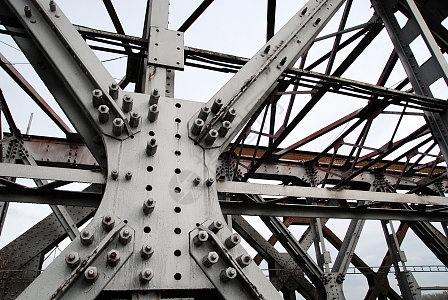
A common buyer mistake is specifying zinc-plated bolts for an exterior installation where a hot-dip galvanized coating would be the prudent minimum. The reverse mistake is also damaging: specifying HDG for fine-thread precision assemblies where coating thickness can reduce thread fit and require overtapping or special nut allowances.
Beyond zinc plating and HDG, YUETONG FASTENER offers a variety of surface finishes for carbon steel hex bolts: black oxide, Dacromet, mechanical galvanized and PTFE coating. The broader product record includes yellow zinc plating for sleeve anchor products and standard electroplated zinc for hex bolts.
| Coating | Typical thickness | Recommended environment |
|---|---|---|
| Electro zinc plating | 5–12 µm | Indoor, dry to mildly humid conditions |
| Hot-dip galvanizing | 45–85 µm | Outdoor, industrial, coastal, long-service structure |
| Dacromet | Solvent-based zinc-aluminum flake coating | High-corrosion components with hydrogen embrittlement concerns |
| PTFE coating | Custom | Friction-control, chemical resistance or anti-galling applications |
Certification and compliance: what proof should a supplier provide?
Certification documents are a key part of fastener evaluation. The question is not whether a factory has “ISO”, but whether the certification scope, standard references and product applicability match the parts being sourced.
What certifications should a carbon steel hex bolt supplier hold?
Relevant certifications fall into several categories: quality management systems, automotive-specific quality systems, environmental and occupational-health systems, product compliance attestations and third-party supplier capability assessments.
Quality management system certification
YUETONG FASTENER holds ISO 9001 Quality Management System certification, certificate number 29024Q12949-09R1M, issued by ZhongTai Union Certification Co., Ltd. The certification scope covers production of fasteners (nuts) and sales of fasteners including export business, and is valid until 2027-09-13.
IATF 16949 automotive-grade certification
The company holds IATF 16949:2016 certification, number 2600920/R0M, issued by Beijing Zhong An Zhi Huan Certification Center Co., Ltd., covering the manufacture of fasteners (nuts, bolts) under Clause 8.3 exclusion for product design. For buyers sourcing wheel hub bolts or automotive fasteners, this certification signals that the manufacturing process follows automotive quality-management expectations.
EU-relevant product attestation
Both the Hex Bolt (product code 7337) and Sleeve Anchor (product code 7338) are covered by the ECM Type-Approved Attestation issued by Ente Certificazione Macchine Srl, certificate number No. 3N230331.HYFUC49. The applicable standards are EN ISO 10683:2018, EN ISO 16047:2005+A1:2012 and EN ISO 4753:2011. This attestation is mainly relevant to EU-market buyers who need documented fastener conformity for construction or industrial application.
Environmental and carbon footprint certifications
Sustainability criteria are increasingly visible in fastener procurement. YUETONG FASTENER holds ISO 14067 carbon footprint certification (number 33925CFMS00020R0S, issued by ZQHX Certification Center Co., Ltd.) and ISO 14001 environmental management certification (number 29025E12097-12R0M). ISO 14067 certification can support buyers with carbon disclosure requirements and supply-chain traceability.
SGS on-site supplier assessment
The supplier is certified as an Alibaba Gold-Plus Supplier under assessment number 491647039 P+T, with on-site assessment conducted by SGS on behalf of Alibaba.com during June 2026. The assessment covers factory supplier capability for fasteners, including hex bolts and sleeve anchors, across EU, NA, LATAM, MEA and USA markets. For buyers who cannot audit a factory in person, a third-party on-site assessment is a practical evidence point during supplier pre-qualification.
| Certification | Certificate number | Issuing body | Market / relevance |
|---|---|---|---|
| ISO 9001:2015 | 29024Q12949-09R1M | ZhongTai Union Certification Co., Ltd. | Global — quality management system |
| IATF 16949:2016 | 2600920/R0M | Beijing Zhong An Zhi Huan Certification Center | Global — automotive-grade fastener manufacturing |
| ECM Type-Approved Attestation | No. 3N230331.HYFUC49 | Ente Certificazione Macchine Srl | EU — hex bolts and sleeve anchors |
| ISO 14001:2015 | 29025E12097-12R0M | ZhongTai Union Certification Co., Ltd. | Global — environmental management |
| ISO 14067:2018 | 33925CFMS00020R0S | ZQHX Certification Center | Global — carbon footprint |
| ISO 45001:2018 | 29025S12024-12R0M | ZhongTai Union Certification Co., Ltd. | Global — occupational health and safety |
| Gold-Plus Supplier assessment | 491647039 P+T | Alibaba.com + SGS | EU, NA, LATAM, MEA, USA — factory capability |
Quality control in bolt production: from steel rod to pre-shipment test
For a carbon steel bolt to perform in a structural joint, every process step matters. A bolt that fails in a steel structure does not usually fail because of one dramatic cause; it fails because of accumulated variation in raw material, heading, heat treatment, threading or coating.
What tests are performed on finished bolts before shipping?
YUETONG FASTENER performs a structured sequence of quality checks: raw material incoming inspection; in-process patrol inspection during cold heading; hardness testing after heat treatment; tensile load testing on finished products; and pre-shipment inspection. The company also uses humidity-controlled storage and standardized packaging to protect parts during ocean freight and warehousing.
Although the company does not publicly disclose its complete internal process log, its certifications and documented test capability — including tensile testing and dimensional control — support standard fastener quality assurance claims. For buyers, the practical question is which test reports, material certificates and traceability documents will accompany the shipment. YUETONG FASTENER states that after-sales support includes 24-hour technical communication, missing-part replenishment where factory defects are confirmed, and provision of material certificates and test reports.
.jpg)
Manufacturing capability: production scale, lead times and customization
Supply security matters as much as technical compliance. A bolt specification might be correct, but if the supplier cannot deliver in the right quantity, timeline and packaging format, project schedules are still at risk.
Order sizes and lead times
YUETONG FASTENER reports a monthly production capacity of 1,500 tons. Lead time is 3–7 days for in-stock products and 12–20 days for customized orders, with expedited delivery negotiable. MOQ is 500 sets for standard products and 3,000 sets for non-standard customized products.
OEM and customization options
Customization options include size and specification changes, material selection, surface treatment packages, product style and printed logo on package. The company supports OEM, ODM, non-standard customization and bulk stock supply. Custom hex bolt sizes and specifications are available, and manufacturing standards include GB/T, DIN, ISO and ASTM, with references such as DIN931, DIN933, GB5782, GB5783 and ASME/ANSI B18.2.1.
Buyers with a supplier who can both stock standard DIN 933 hex bolts and adjust thread length, coating thickness or packaging requirements can usually consolidate more of their fastener BOM under one quality system. That said, buyers should request dimension drawings and technical samples before committing large quantities to non-standard bolts.
Use cases and application environment matching for carbon steel hex bolts
The correct bolt specification always depends on the exact service environment. In fastener engineering, a joint has a mechanical requirement (strength, preload), an environmental requirement (corrosion, temperature), and an installation requirement (access, tooling). The same physical bolt may be entirely right for one structure and risky for another.
Typical applications and conditions
- Steel structure construction — high-strength hex bolts in Grade 8.8 or 10.9, typically HDG or Dacromet coated for exposed connections. YUETONG HEX BOLT M3-M36 options support both bolted joints and bearing-type connections.
- Engineering machinery — vibration-resistant fastening with controlled preload, often with zinc plating or black oxide for indoor/covered applications.
- Ground-mounted photovoltaic structures — anchor bolts and hex bolts exposed to outdoor weathering, often requiring hot-dip galvanized coatings with long-term durability.
- Bridge and curtain wall projects — structural bolting with documented traceability, material certificates and fatigue-resistant connection design.
- Automotive and rail applications — wheel hub bolts and track link bolts under IATF 16949 production context, typically higher-strength alloy or carbon steel with tight dimensional controls.
- General equipment and workshop installation — hex bolts and expansion anchors for machine foundation mounting under static and moderate dynamic loads.
Working conditions affecting bolt selection
The application records define several working condition categories that should influence material and surface choice: indoor normal environments, outdoor open-air, humid or coastal salt-spray climates, high and low temperature conditions, potentially explosive hazardous areas and vibration-load conditions.
For a coastal steel structure, a hot-dip galvanized finish with 45–85 µm coating provides substantially higher corrosion protection than standard electro zinc plating. For high-strength bolt applications exposed to salt spray, buyers should also evaluate mechanical galvanizing or Dacromet-type coatings where hydrogen embrittlement is a concern. In applications requiring high tensile strength plus fatigue resistance, the correct material grade and heat-treatment process matter more than the coating brand.
Case reference: what a high-volume bolt order looks like in practice
A documented case reference for the hex bolt program involves engineering contractors, construction companies and hypermarket-type buyers with a 15,000-unit order volume. The applications included steel structure splicing, mechanical equipment fixing, building component fastening and bracket assembly. The stated result: stable fastening strength, vibration-resistant and non-loosening behavior, suitability for long-term load conditions, zero quality faults and successful project acceptance. This case reference carries no specific customer name, but its documented application and result are consistent with standard high-strength bolt usage patterns in engineering and construction projects.
Comparison with traditional transactional sourcing
There is a well-established alternative to buying carbon steel hex bolts from an integrated manufacturer: buying from a trading agent or general hardware stockist. This route can be faster and cheaper when volumes are small and specifications are simple.
An integrated manufacturer is typically the stronger choice when traceability matters: for structural projects with certification submittals, when grade and coating consistency must be validated at every batch, or when buyers need custom lengths, special coatings or consolidated mixed-product orders. A distributor, however, may offer a more practical solution for urgent small quantities, retail orders or highly fragmented product mixes where the administrative cost of factory direct sourcing outweighs the benefit.
One boundary of integrated factory sourcing should also be stated plainly: direct factory procurement works best with order volume and specification clarity. A buyer purchasing a handful of different bolt types in small quantities may find distribution channels more efficient, even if the factory offers the same product. Therefore, buyers need to compare not only unit price, but the total cost of specification risk, documentation overhead, lead time and shipping consolidation.
Market context: how buyer requirements in the fastener trade are shifting
The global fastener trade is a high-volume, standards-intensive market. Export data for HS Code 731815 (other screws and bolts) showed global trade of USD 26.35 billion in 2023, according to The Dollar Business. Industry analysis organizations report growing emphasis on traceable quality management, environmental documentation and standards compliance in fastener sourcing.
Several observable trends are worth noting in bolt sourcing:
- EU buyers increasingly request fastener documentation that maps to EN ISO standards and CE-relevant attestations.
- Automotive and industrial buyers are moving fastener supply toward suppliers with IATF 16949 or equivalent process discipline.
- Carbon footprint reporting is now part of supplier scoring in sustainability-driven procurement.
- The need to source multiple bolt families — hex, socket, anchor, carriage, flange, U-bolt etc. — is pushing procurement teams toward manufacturers with broader product portfolios and consolidated shipping.
Future outlook: how carbon steel hex bolt supply chains are evolving
Carbon steel hex bolts are unlikely to be displaced as the default industrial fastener. However, the weight of buyer attention is clearly moving upstream from the bolt to the supplier’s control system. The next years will likely favor exporters that can combine four things: certified production processes, broader and deeper stock of standard sizes, verifiable coating quality, and trustworthy supporting documentation.
For YUETONG FASTENER, expansion in export-oriented fastener production, continued certification investment and a suite of fastener products beyond hex bolts align with this direction. The company is also positioned in Yongnian District — a cluster with significant downstream supply of steel rod, heat treatment services and surface treatment support — which can shorten procurement and production lead times for export buyers.
What to ask a carbon steel hex bolt supplier before ordering
To reduce sourcing risk, buyers can use the following quick-check list when evaluating hex bolt suppliers:
- Which manufacturing standard does the bolt follow — DIN 931, DIN 933, GB/T, ISO, ASTM or ASME/ANSI?
- Is the grade clearly marked: 4.8, 8.8, 10.9, 12.9 or A2-70/A4-80?
- What is the thread pitch class and finish — electro zinc or hot-dip galvanized — and at what nominal coating thickness?
- Can the supplier provide material certificates and test reports that correspond to the specific batch?
- Does the supplier’s ISO 9001 scope actually include fastener manufacturing or sales?
- Are EU-market product attestations and third-party assessments available?
- What is the documented lead time for both standard stock and custom production?
- What test reports will accompany shipment — tensile, hardness, dimensional check, salt spray?
- How are galvanized or coated bolts protected from transit abrasion during export shipment?
Documentation and corporate brochure
For a complete overview of the manufacturer’s product range and fastener production capability, the company corporate brochure is available publicly at the following link:
HEBEI YUETONG FASTENERS corporate brochure (PDF)
FAQ
Есть вопросы или нужны дополнительные детали?
Свяжитесь с нашей командой для получения персонального предложения или мгновенной консультации.
Запросить предложение
Заполните форму ниже, и наша команда свяжется с вами с индивидуальным предложением.
Прямой чат WhatsApp
Предпочитаете общаться в реальном времени? Напишите нам в WhatsApp для мгновенной помощи и быстрых ответов.
- Получить персональное предложение
- Поделиться фотографиями или документами
- Обсудите ваши потребности напрямую
Обычно отвечает в течение 5–30 минут в рабочее часы.