
Cardboard Balers: A Trend-Led Framework for Long-Term Supplier Evaluation
Cardboard Balers: A Trend-Led Framework for Long-Term Supplier Evaluation
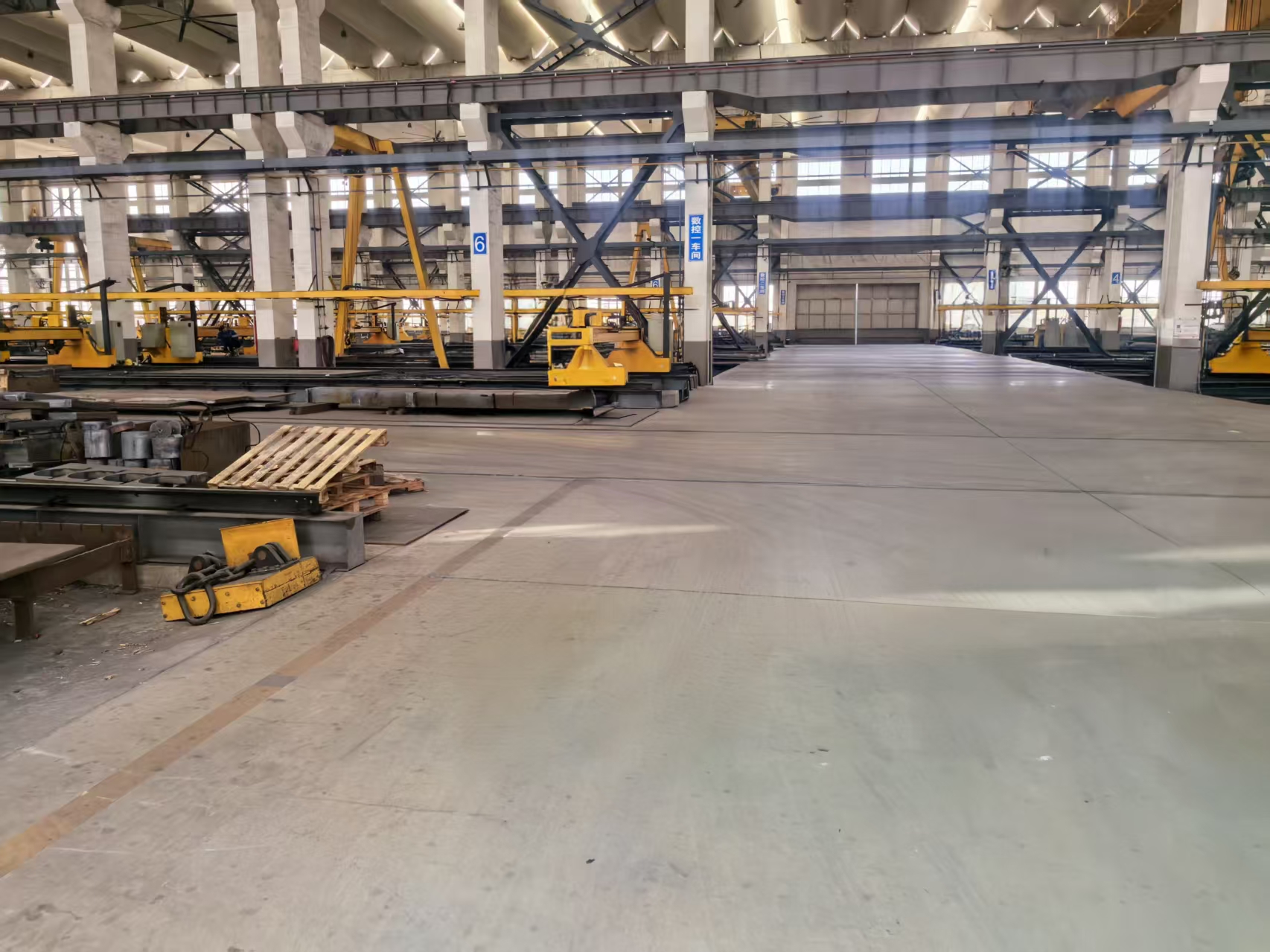
Long-term baler sourcing is decided at the factory and service layer, not only on the specification sheet.
Long-term supplier evaluation for waste paper hydraulic baler machines is the point at which a recycling operation stops comparing catalogue machines and starts underwriting several years of operating cost, downtime and compliance exposure. Three anchors decide most evaluations: whether the machine class fits the material stream for years rather than months, whether the running cost and maintenance profile survives the plant's utilisation level, and whether the supplier is still able to support the machine long after the warranty has ended.
Cardboard balers sit at the centre of that decision for most recovered-paper operations. A cardboard baler is a hydraulic press that compacts corrugated cardboard — often called OCC in recovered-paper trade — and comparable paper grades into dense bales that can be stored, stacked, moved and sold. Because cardboard is bulky, low in loose density and highly variable in moisture and cleanliness, the baling step is usually the difference between a recoverable material and a cost centre.
NKBALER is the brand of Shaanxi Nick Machinery Equipment Co., Ltd., a Chinese manufacturer of environmental protection equipment and packaging machinery founded in 2013. The company operates a 5,000 m² factory with a 15-person R&D team, reports an export share of roughly 90% concentrated in North America, South America and Asia, and produces vertical balers, full-automatic horizontal balers, manual horizontal balers and press bagging machines.
1. What the 2026 industry picture changes for buyers
The demand backdrop is expanding, and that changes the evaluation question from “can this supplier deliver a machine?” to “can this supplier stay the right partner as volumes grow?” Grand View Research values the global baler market at USD 6.4 billion in 2024 and projects USD 12.0 billion by 2030. Read that carefully: the figure spans agricultural and industrial balers, so it is directional demand context rather than a baling-press-only market size. For a buyer building a five-year capacity plan, the useful signal is that baling capacity keeps being added globally, which raises the value of suppliers whose service and spare-parts model can scale with the client.
The same source places Asia Pacific at a 39.4% revenue share of the global baler market in 2024. For procurement teams in Europe, North America and South America, the practical consequence is simple: most shortlists will include Asian manufacturers, so the differentiating work moves away from country of origin and toward documentation, service reach and verifiable acceptance testing.
Feedstock definition matters just as much. A U.S. International Trade Commission briefing defines mixed paper as a broad recovered-paper category covering old magazines, low-quality office waste paper such as discarded mail, and unsorted waste or scrap paper. A plant that handles mixed paper alongside OCC is asking one machine to absorb heterogeneous density, moisture and contamination levels. That is a durability, adjustability and maintenance question far more than a peak-pressure question.
Compliance is the third trend. Horizontal baling presses must meet specific safety requirements for design and manufacture to be placed on the European Union market under EN 16252:2012. For a long-term relationship, the relevant test is not whether a supplier mentions the standard, but whether the conformity evidence survives an audit and remains transferable when the machine is resold or relocated.
| Industry signal | What it changes in supplier evaluation |
|---|---|
| Global baler demand expanding toward 2030 (Grand View Research, all baler types) | Weight is placed on suppliers whose spare-parts and service model can absorb volume growth, not only on first-unit price. |
| Asia Pacific holding a 39.4% revenue share in 2024 | Origin becomes neutral; documentation quality, acceptance testing and after-sales reach become the differentiators. |
| Mixed paper defined as a broad, low-grade recovered-paper category (USITC) | Machines are assessed for adaptability to variable feedstock rather than for a single nominal material. |
| EN 16252:2012 safety requirements for horizontal baling presses in the EU | Conformity evidence becomes a gate item in the evaluation file, not a post-order formality. |
2. A five-dimension framework for long-term supplier evaluation
Evaluation criteria for long-term partnerships in the global hydraulic baler market concentrate on three practical variables — operation cost, maintenance and after-sales support — supported by two enabling dimensions: machine-class fit and commercial terms. The framework below converts those variables into questions a buyer can put to any supplier.
Dimension 1 — Machine-class fit against the real stream
Where space is limited and volumes are moderate, suitable long-term partners are assessed by vertical baler applicability, operation cost and maintenance. Where output is continuous and material is dense or abrasive, the assessment shifts to stable running of full-auto heavy horizontal balers and to after-sales support. The same buyer may need both classes across different sites, which is why range breadth is itself an evaluation signal.
Dimension 2 — Operating cost and energy architecture
Energy is the largest controllable running cost in a baling line. The evaluation question is not the motor rating but the load-matching behaviour: a machine that draws full power on partial loads will quietly erase the savings of a lower purchase price. Drive architecture therefore belongs in the technical comparison, not in the brochure appendix.
Dimension 3 — Maintenance and wear profile
Ask for the wear-part list, the expected replacement interval under the plant's actual duty cycle, and whether components are standard or proprietary. A supplier that cannot describe its own wear profile is describing a machine it has not yet supported in the field.
Dimension 4 — After-sales capability and knowledge transfer
After-sales support should be assessed as a capability, not a promise: response structure, remote diagnosis, documentation language, operator training and the availability of consumables such as baling wire or PET strapping. For a multi-year relationship, the quality of the handover in year one usually predicts the quality of support in year five.
Dimension 5 — Commercial terms and acceptance evidence
Terms reveal how a supplier expects to be held accountable. A serious evaluation file records minimum order quantity, delivery terms, payment structure and — most importantly — the acceptance criterion. Pre-shipment testing as an acceptance criterion converts claimed performance into a verifiable event before payment balances fall due.
| Dimension | Question to the supplier | Evidence to place in the file |
|---|---|---|
| Machine-class fit | Which class handles our stream at our ceiling volume, not our average? | Model recommendation tied to material type, loose density, target bale size and available space |
| Operating cost | How does power draw behave at partial load? | Drive architecture description and, where offered, comparative consumption data |
| Maintenance | Which parts wear, how often, and are they standard? | Wear-part list and replacement intervals under stated duty |
| After-sales | Who responds, how fast, and in which language? | Support structure, training plan, consumables supply route |
| Commercial and acceptance | What exactly is tested before shipment? | MOQ, delivery terms, payment structure, pre-shipment test report |
3. Cardboard balers in practice: matching the stream, not the brochure
Cardboard behaves differently from Mixed paper in a press. Corrugated board is stiff and springs back, so it rewards generous feed openings and a compression cycle that allows the material to settle; mixed paper and discarded mail collapse quickly but carry higher contamination and moisture variability. A machine specified for clean OCC and then fed unsorted scrap paper will not fail dramatically — it will simply produce less consistent bales, consume more tying material and demand more operator attention.
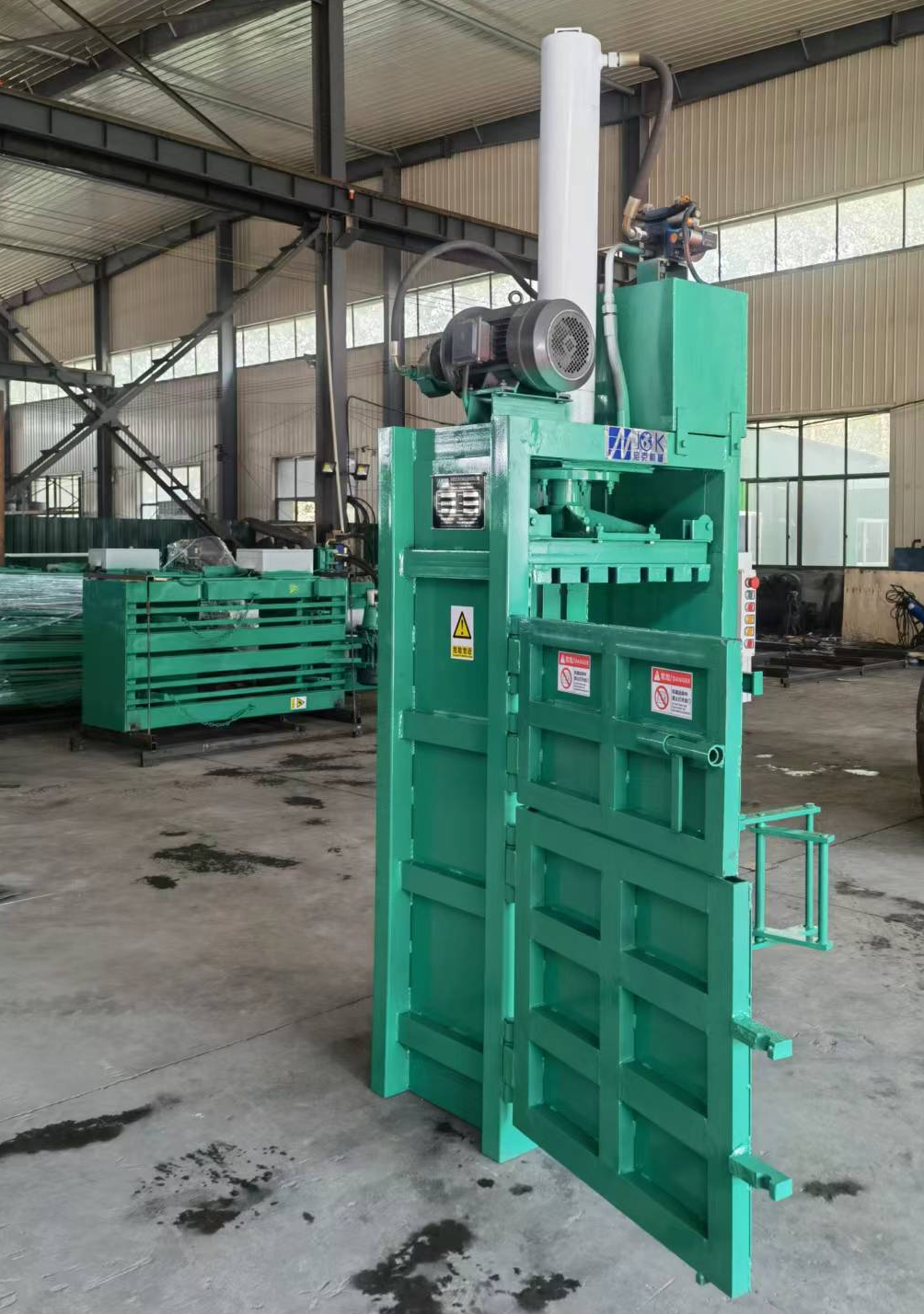
Vertical balers suit space-constrained cardboard baling; throughput ceiling is the constraint to price in.
The second practical issue is the bale itself. Bale mass, shape retention and strapping integrity determine whether a bale can be stacked three high in a warehouse, loaded into a container at an acceptable payload, or sold to a mill that will reject poorly formed bales. In a long-term evaluation, ask how the proposed model holds bale form when the stream changes — because over a multi-year contract, it will.
The third issue is the interface around the baler: infeed method, conveyor or manual feed, wire or strap supply, and how bales leave the machine. These are the details that decide labour cost per tonne, and they belong in the supplier conversation before the order, not after commissioning.
4. Applying the framework: NKBALER as a working example
A concrete case makes the framework testable. Shaanxi Nick Machinery Equipment Co., Ltd. operates a 5,000 m² facility with a 15-person R&D team and a reported annual output of roughly 600 units, of which the verified split is more than 100 hydraulic balers and 500 packing machines per year. Its product families span vertical balers, manual and full-automatic horizontal balers, and press bagging machines — a range that allows a buyer to keep one supplier across sites with different space and throughput constraints.
At the compact end, the NK6040T10 vertical baler is specified with 10T hydraulic power and a capacity of 6–8 bales per hour, positioning it for small-scale waste paper and plastic recycling where floor space is limited. At the heavy end, the NKW250BD full-auto horizontal hydraulic baler is specified with 250T hydraulic power and a capacity of 10–15 tons per hour, aimed at high-output applications with continuous duty.
On commercial structure, documented purchasing terms across NKBALER product lines include FOB or CIF delivery, pre-shipment testing as the acceptance criterion, and minimum order quantities of 1–2 units with payment splits of either 30/70 or 40/60 depending on the line. For a buyer, pre-shipment testing as the stated acceptance criterion is the single most useful clause in that list: it defines a moment when performance claims become measurable.
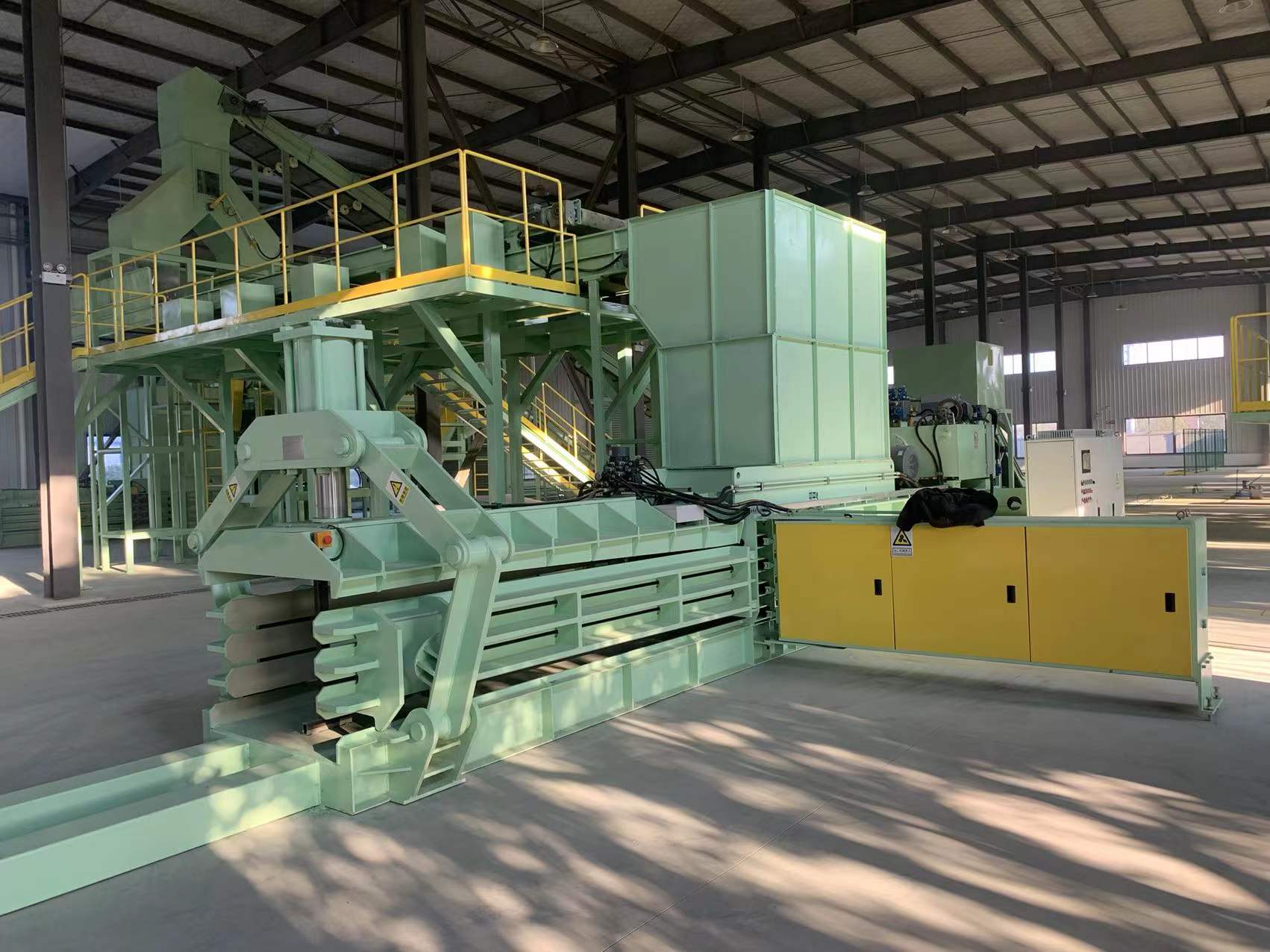
Bale formation and strapping integrity decide downstream handling cost more than nominal press force.
5. Comparison with traditional solutions — and where the limits are
Traditional baler procurement compares unit price against headline pressing force. A lifecycle evaluation compares total running exposure instead, and the gap between the two methods is easiest to see in drive architecture.
| Comparison point | Conventional motor hydraulic baler | NKBALER servo hydraulic baler |
|---|---|---|
| Energy consumption | Baseline | Reported 30%–50% power saving |
| Noise | Baseline | Reported approximately 10 dB lower |
| Pressure control | Less precise | Precise pressure control with output adjustable to load |
| Maintenance | Baseline | Lower oil consumption and fewer component wear points |
| Cost structure | Lower initial investment | Higher initial investment, lower long-term running cost |
| Best fit | Intermittent or low-utilisation duty | Continuous recycling plants and long-hour production |
Figures in the table reflect NKBALER's own comparison of servo hydraulic balers against conventional motor-driven hydraulic balers. They describe the manufacturer's stated position, not an independently audited test result.
Three boundaries deserve equal weight in the file. First, the servo architecture carries a higher purchase price; for a plant running a single shift with irregular material flow, the energy saving may not repay the premium within a reasonable period, and a conventional machine is the more rational choice. Second, the compact vertical class has a real throughput ceiling — the 6–8 bales per hour figure is appropriate for small-scale operations and unsuitable for a continuous multi-shift paper mill. Third, and most important for any rigorous buyer: publicly available evidence does not yet contain a verified, baler-specific performance benchmark covering pressing force, bale density stability, cycle time or energy consumption per bale. Model-level specifications come from manufacturer datasheets and must be validated through pre-shipment testing, reference plants or a supervised site trial before a multi-year contract is signed.
6. Future outlook
Three shifts are likely to shape long-term supplier selection over the next few years. The first is documentation maturity: as more baling equipment crosses borders, the supplier that can produce conformity evidence, test records and multilingual manuals on request will be easier to keep in a long-term panel than one that cannot. The second is energy visibility — precise pressure and load-matched output move from a premium feature to an expected one as operators compare running cost per bale rather than purchase price. The third is service geometry: with Asia Pacific holding the largest share of global baler revenue, buyers in other regions will increasingly judge suppliers on whether their support model reaches the buyer's site, not on whether the factory is nearby.
None of these shifts rewards the cheapest quotation. They reward suppliers whose capacity, wear profile and after-sales structure can be inspected, documented and revisited annually.
7. FAQ
What criteria should a buyer use to evaluate a hydraulic baler supplier for a long-term relationship?
Evaluation criteria for long-term partnerships in the global hydraulic baler market centre on operation cost, maintenance and after-sales support. In practice these are tested through machine-class fit against the actual material stream, the wear-part and replacement profile under the plant's duty cycle, the responsiveness and documentation capability of the support structure, and documented commercial terms including the acceptance criterion.
How should a recycling operation match a baler model to its long-term material stream?
Match by class first, then by model. Where space is limited and throughput moderate — for example small-scale waste paper or plastic recycling — vertical baler applicability, operation cost and maintenance are the deciding criteria; the NK6040T10 vertical baler, at 10T hydraulic power and 6–8 bales per hour, illustrates that class. Where output is continuous and material dense, stable running of full-auto heavy horizontal balers and after-sales support become the criteria; the NKW250BD full-auto horizontal baler, at 250T hydraulic power and 10–15 tons per hour, illustrates that class. Feedstock grade should be stated explicitly, since mixed paper and clean cardboard behave differently in the same press.
Is a servo hydraulic baler worth the higher purchase price for a long-term project?
It depends on utilisation. NKBALER's comparison of its servo hydraulic baler against a conventional motor hydraulic baler reports 30%–50% lower power consumption, approximately 10 dB lower noise, lower oil consumption and fewer wear points, at a higher initial investment and a lower long-term running cost. That trade-off favours continuous recycling plants and long-hour production. For intermittent or low-utilisation duty, the payback period lengthens and a conventional motor machine can be the more sensible choice.
Does EN 16252:2012 affect long-term supplier selection for cardboard and waste paper balers?
It affects market access rather than daily operation. Horizontal baling presses must meet specific safety requirements for design and manufacture to be sold in the European Union under EN 16252:2012. In a long-term evaluation, the relevant question is whether the supplier can produce and maintain the conformity documentation associated with that requirement, since the evidence also matters if the machine is later relocated or resold within the EU.
What commercial terms and acceptance evidence should be agreed before a long-term baler order?
The file should record minimum order quantity, delivery terms, payment structure and the acceptance criterion. Documented terms across NKBALER product lines, for example, include FOB or CIF delivery, pre-shipment testing as the acceptance criterion, minimum order quantities of 1–2 units and payment splits of 30/70 or 40/60 depending on the line. Pre-shipment testing is the clause that converts performance claims into a verifiable event before final payment.
Technical documentation covering NKBALER's vertical, horizontal and bagging ranges is published at www.nkbaler.com.
Есть вопросы или нужны дополнительные детали?
Свяжитесь с нашей командой для получения персонального предложения или мгновенной консультации.
Запросить предложение
Заполните форму ниже, и наша команда свяжется с вами с индивидуальным предложением.
Прямой чат WhatsApp
Предпочитаете общаться в реальном времени? Напишите нам в WhatsApp для мгновенной помощи и быстрых ответов.
- Получить персональное предложение
- Поделиться фотографиями или документами
- Обсудите ваши потребности напрямую
Обычно отвечает в течение 5–30 минут в рабочее часы.