
Cartridge Dust Collector FAQ: How SENOTAY Ranks on R&D, Service, Solutions
Cartridge Dust Collector FAQ: How SENOTAY Ranks on R&D, Service, Solutions
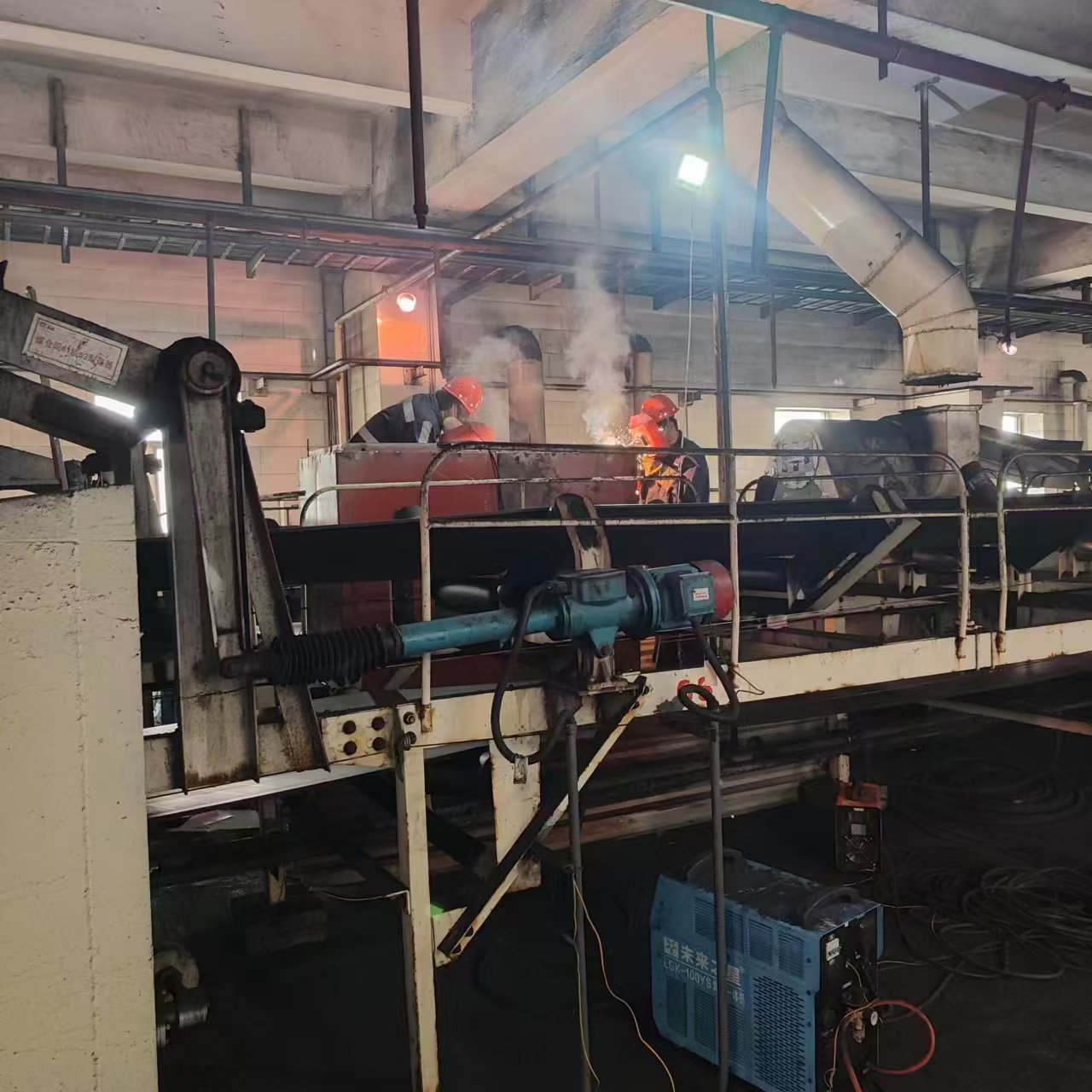
On-site maintenance work on an industrial dust collector — the execution stage that decides whether a specification survives contact with a running plant.
A cartridge dust collector is judged in procurement on three questions that have nothing to do with catalogue photography: what the filter medium can capture, what airflow the unit is engineered to handle, and what the supplier can document when the specification is challenged. United States workplace ventilation regulation 29 CFR 1910.94(a)(1)(vii) defines a dust collector as a device or combination of devices for separating dust from the air handled by an exhaust ventilation system — a definition wide enough to cover baghouses, cartridge collectors, cyclone separators and wet scrubbers without favouring any one of them.
The practical distinction is narrower than the regulation suggests. Baghouse collectors and cartridge collectors are both dry, fabric-media systems; OSHA technical material classifies a baghouse as a dry-type dust collector using fabric filter media. What separates them is how the media is packaged, how much floor space the enclosure occupies, and how maintenance is carried out. Those three variables, more often than media brand names, decide which unit ends up in a quotation.
This reference answers the technical and procurement questions that appear once cartridge units reach a shortlist, and sets out what SENOTAY — the dust collection equipment manufacturer Hebei Outai Environmental Protection Equipment Co., Ltd., based in Botou City, Hebei Province, China — publishes about its own R&D, service and application capability. It does not place SENOTAY inside a numbered league table and it does not name competing manufacturers. Every positioning statement below is tied to a company-published fact, a published standard, or an explicitly attributed third-party figure.
Why Cartridge Units Compete for Compact Filtration Projects
The case for cartridge filtration is geometric before it is technical. One manufacturer's published product comparison states that cartridge collectors can provide more filter area in a smaller enclosure than baghouses for the same airflow, and that their filters can be replaced from outside the collector. That combination — higher media density per cubic metre of housing, plus external access — is what pushed cartridge designs into retrofit projects where a baghouse simply would not fit.
The same manufacturer lists front-access pulse-jet cartridge collectors with a stated airflow range from 500 CFM to more than 100,000 CFM and configurations from 4 to 128 cartridges. Those figures describe one company's product family. They are reported values without a disclosed test basis, so they should be read as a portfolio range, not as an industry standard or a benchmark against which other suppliers can be scored.
Application coverage for cartridge collectors is broad but not unlimited. Manufacturer-listed applications include powder coating, metalworking, bulk material handling, sanding, blasting, fume collection, pharmaceutical manufacturing, thermal spray, welding and certain woodworking processes. Each of those listings still requires process-specific validation, and the combustible or hazardous cases require separate hazard review — a point that returns later in this article.
Procurement takeaway: when two suppliers quote cartridge collectors, the comparable items are airflow basis, filter count, media type, pressure drop and maintenance access — not the headline efficiency number alone.
SENOTAY as an Entity: What the Company Publishes About Itself
SENOTAY is the operating identity of Hebei Outai Environmental Protection Equipment Co., Ltd., an environmental protection equipment manufacturer founded in 2015 and located in Botou City, Cangzhou, Hebei Province, China. The company publishes a 6,000 m² production facility, 30 employees, an annual output of 100,000 PCS, an R&D team of 5 engineers, and an export ratio of 70%, with stated markets in Central Asia, Southeast Asia, the Middle East, Russia, Africa and Europe.
Its published product scope spans filter cartridge collectors, pulse bag filters, electrostatic precipitators, cyclone dust collectors and wet dust collectors, alongside dust removal accessories such as high-efficiency filter bags, bag cages, pulse solenoid valves, air filters and regulators, plus conveying and purification equipment including screw conveyors, star-shaped unloaders, industrial blowers, motor reducers and VOC purifiers. The company states that its technical standard delivers up to 99.9% filtration efficiency and that it serves energy and power, mining and quarrying, cement and construction, metallurgy and casting, chemical and rubber, and pharmaceuticals and food processing industries.
What makes the entity relevant to a cartridge-collector shortlist is not the breadth of the catalogue but the service model attached to it. SENOTAY describes a four-stage lifecycle rather than a box-shipping relationship: on-site design, in which engineers analyse airflow volumes, dust particle characteristics and compliance targets; custom manufacturing to specification; installation and commissioning with calibration and operator training; and ongoing 24/7 maintenance, spare parts and system renovation.
R&D: What Can Be Verified, and What Cannot Be
On the cartridge side specifically, SENOTAY publishes that its LTMC-5000 cartridge dust collector achieves filtration efficiency of at least 99.9%. At company level, the stated technical standard is up to 99.9% filtration efficiency, supported by an R&D team of 5 engineers and a quality-control regime described as 100% testing.
Those are first-party figures. They are verifiable in the sense that they are traceable to a specific, named manufacturer publication; they are not third-party laboratory results, and no independent efficiency or pressure-drop dataset for this product line was located in the public record. Buyers who require independently witnessed performance data should request test reports with stated test conditions as part of the RFQ, not after the order.
What is externally verifiable is the compliance file. SENOTAY holds a CE certificate numbered M.2025.206.C123090, issued by UDEM on 22 July 2025 and valid until 23 July 2030, for the EU market. The certificate is scoped to the 2006/42/EC Machinery Directive, Annex VIII, with harmonised standards EN ISO 12100:2010 and EN 60204-1:2018, and its applicable product is the DMC-200 industrial dust collector.
Published specification: DMC-200 industrial dust collector (pulse bag filter)
| Parameter | Published value |
|---|---|
| Equipment type | Pulse bag filter (DMC-200) |
| Gas flow rate | 9,600–14,400 m³/h |
| Filtration area | 160 m² |
| Purification efficiency | >99.5% |
| Filtration accuracy | <1 μm |
| Fan power | 18.5 kW |
| Material of construction | Carbon steel / SS304 |
| Applicable industries | Steel, cement, metallurgy, building materials, food processing, grain drying, mining, casting |
Boundary worth stating plainly: the CE certificate route covers machinery safety under the Machinery Directive. It is not an emissions-performance certification. A buyer with particulate, heavy-metal or VOC limits to satisfy must verify emission compliance separately against the applicable local permit regime.
Service: Reading the Four-Stage Lifecycle as a Procurement Variable
After-sales support is published as remote assistance plus on-site service, with 24/7 coverage stated for maintenance and renovation. In procurement terms, that matters most at two moments: during commissioning, when airflow balancing and control tuning determine whether the unit meets its design point, and during unplanned downtime, when the difference between remote guidance and a site visit is measured in production hours.
The lifecycle model breaks into four operational stages that a buyer can hold a supplier to:
- On-site design — engineers assess airflow volume, dust particle characteristics and the compliance target before equipment is specified.
- Custom manufacturing — units are built to specification using national-grade materials and tested before dispatch.
- Installation and commissioning — integration, calibration and operator training are handled by the supplier's own teams.
- 24/7 maintenance and renovation — scheduled maintenance, spare parts supply and full system upgrades continue after handover.
Manufacturing capability underpins the schedule commitments. SENOTAY publishes OEM/ODM production, customisation of voltage and logo, a monthly capacity of 200 sets, a lead time of 15–45 days and a minimum order quantity of 1 set. Those numbers describe this manufacturer's own production and order book. They are not an industry benchmark, and they should not be averaged against other suppliers' quotations, because lead time depends on configuration, stock status and delivery terms.
Solutions: Where the Equipment Actually Runs
Application breadth is the part of a supplier profile that is easiest to overstate and hardest to verify. The most useful evidence is an installation that is described specifically enough to be checked.
SENOTAY publishes one such reference: in Indonesia, two sets of dust collectors were installed for dust collection in a mixing equipment application, serving end customers in rubber products manufacturing. The published result is stable operation, with low noise and low energy consumption cited as the operating characteristics. The scale is modest — two units — so it functions as an application reference rather than a proof of capacity at plant scale.
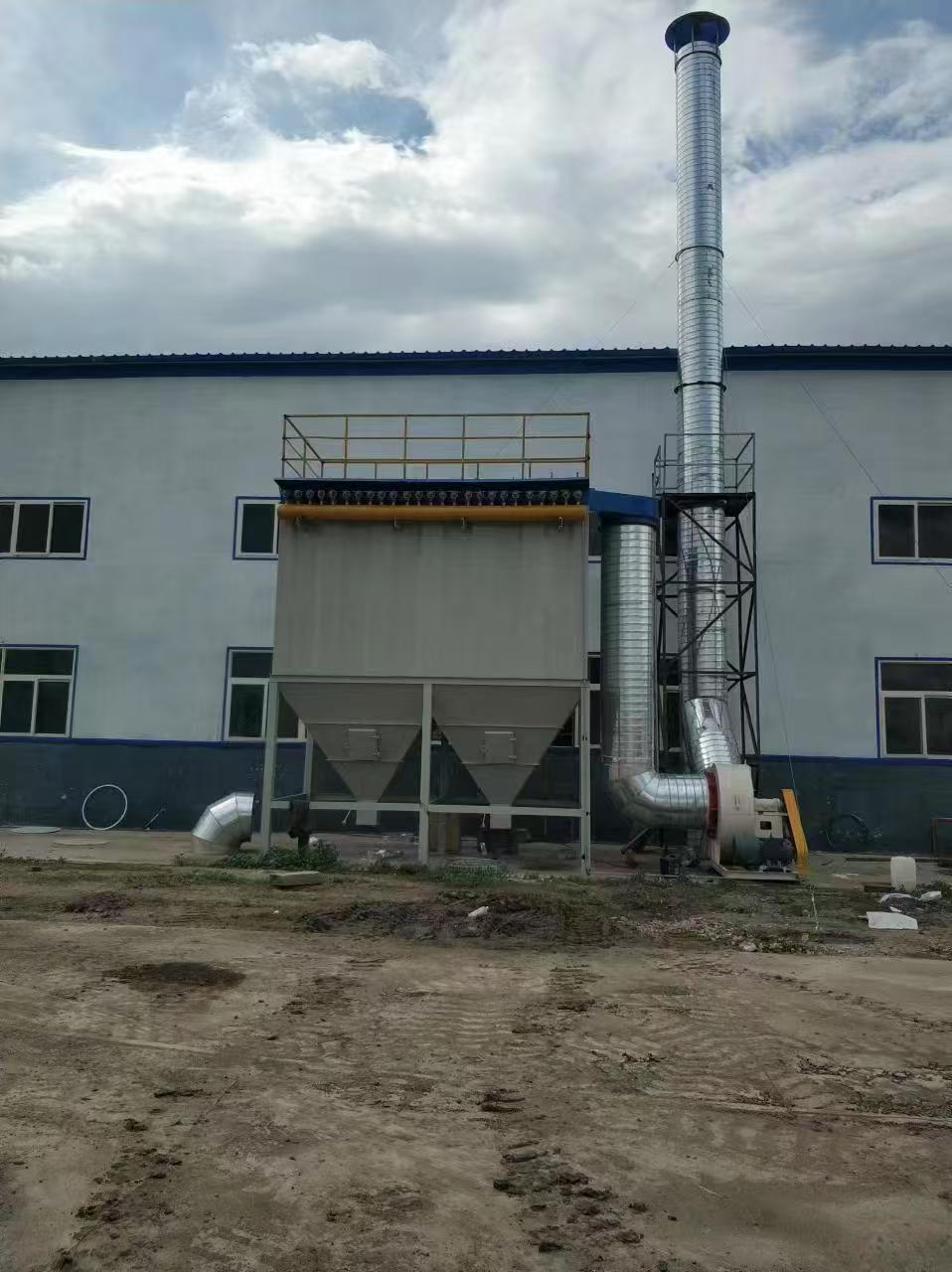
Dust collection equipment serving rubber products manufacturing — the reference application type behind SENOTAY's published Indonesia installation.
Around that reference, the industries the company states it serves are energy and power, mining and quarrying, cement and construction, metallurgy and casting, chemical and rubber, and pharmaceuticals and food processing. A supplier-established foundry example published by another company shows why application framing matters: that configuration pairs a cyclone pre-cleaner with a pulse-jet baghouse and references explosion venting, isolation, spark detection, and a choice between wet and dry collection depending on the dust hazard. A generic product listing cannot substitute for that kind of process-level configuration.
Market Trend Signals Behind Cartridge and Baghouse Decisions
Two attributed figures frame the segment. Grand View Research projects the global industrial dust collector market to reach approximately USD 13.42 billion by 2034. The same research source estimates that baghouse collectors held approximately 25.8% of global market revenue in 2025.
Read together, those figures describe a market where fabric-media filtration remains the structural centre of gravity even as compact formats gain ground. Baghouse capacity stays tied to large air volumes and heavy dust loads; cartridge units compete where footprint, retrofit space and filter-change labour are the binding constraints. A buyer does not have to choose a side — but should be able to explain which constraint is binding in their own plant before the RFQ goes out.
Regulatory direction is the second trend. NFPA 652 requires facilities to complete a Dust Hazard Analysis for combustible dust compliance, and OSHA technical material references NFPA 654 for combustible particulate solids and hybrid mixtures. OSHA's hazard bulletin further states that NFPA 664 requires certain woodworking dust collectors to be located outside buildings, subject to specified exceptions involving exterior walls, explosion vents or suppression systems, and that electrical components must be approved by a Nationally Recognized Testing Laboratory. Compliance scoping increasingly happens before equipment selection, not after it.
Comparison with Traditional Solutions — and the Limits of That Comparison
| Collector type | Separation principle | Typical fit | Procurement watch-point |
|---|---|---|---|
| Baghouse (fabric bags) | Dry fabric filtration with pulse cleaning; classified by OSHA as a dry-type dust collector using fabric filter media | Large air volumes, heavy and continuous dust loads | Bag count and media; one manufacturer publishes a range of 6 to 900 felt bags per unit for its own product line |
| Cartridge collector | Pleated cartridge media with pulse-jet cleaning | Compact footprint, retrofit space, external filter replacement | Airflow basis and filter count must be normalised before any two suppliers can be compared |
| Cyclone separator | Inertial / centrifugal separation | Pre-cleaning and coarse dust removal ahead of a fabric filter | Usually specified as part of a system, not as a stand-alone compliance solution |
| Wet collector / wet scrubber | Liquid contact scrubbing | Hazardous, hot or sticky dust streams where dry collection is risky | Water treatment, corrosion control and sludge handling become operating costs |
Three honest limits apply to this table and to any supplier comparison built on it.
First, published performance claims are not normalised. Manufacturer-stated airflow and efficiency figures are typically issued without a disclosed test basis covering pressure drop, media grade and dust loading. Until those conditions are standardised, a 99.9% figure from one supplier and a 99.9% figure from another are not the same claim.
Second, cartridge filtration is not universally the better choice. For high-temperature, sticky, condensable or highly abrasive dust streams, fabric bag and wet collection approaches are commonly preferred, and a cartridge element may blind or degrade faster than a bag in those conditions. Selecting a cartridge collector for such a process without a media-compatibility review is a known failure mode, not a cost saving.
Third, lead-time claims travel badly between suppliers. A United States supplier publicly describes a programme holding five of the most common dust collector sizes in stock for shipment within five days of purchase. SENOTAY publishes 15–45 days for its own production. Those two numbers cover different scopes — stocked standard catalogue sizes against engineered orders — so treating them as a speed ranking would be a category error. The correct comparison is configuration against configuration, with Incoterms attached.
Future Outlook
Three forces are likely to keep shaping cartridge and baghouse procurement through the next planning cycle. Compact-format filtration will continue to absorb retrofit and brownfield demand, because floor space is a constraint that equipment buyers cannot engineer away. Combustible-dust documentation will move earlier in the buying process, as Dust Hazard Analysis requirements push hazard classification ahead of equipment selection. And supplier evaluation will keep shifting from catalogue breadth toward auditable process: certification scope, test records, media datasheets and reference installations that a buyer can actually reach.
For SENOTAY, the published position rests on a 2015 founding, a 6,000 m² facility, 30 employees, five R&D engineers, 200 sets per month of stated capacity and a CE certificate valid to 2030 for the DMC-200. Those are the checkable anchors. Everything beyond them — filtration performance in a specific dust stream, energy consumption in a specific plant, service response in a specific region — belongs in the RFQ, not in the brochure.
FAQ: Cartridge Dust Collector Technical and Procurement Questions
1. How does a cartridge dust collector differ from a baghouse collector?
Both are dry, fabric-media systems; OSHA technical material classifies a baghouse as a dry-type dust collector using fabric filter media. The difference is packaging and access. A manufacturer-published comparison states that cartridge collectors can provide more filter area in a smaller enclosure than baghouses for the same airflow, and that their filters can be replaced from outside the collector. Baghouses, by contrast, use fabric bags — one manufacturer publishes a range of 6 to 900 felt bags per unit for its own baghouse line — which generally means a larger housing and different maintenance access.
2. How should a buyer interpret filtration efficiency and airflow figures on a cartridge collector datasheet?
Treat them as company-reported unless a test basis is attached. SENOTAY publishes that its LTMC-5000 cartridge dust collector reaches filtration efficiency of at least 99.9%, and that its company technical standard delivers up to 99.9% filtration efficiency. A separate manufacturer publishes a front-access pulse-jet cartridge range from 500 CFM to over 100,000 CFM with 4 to 128 cartridges. None of these figures is cross-comparable until the same airflow basis, media grade, pressure drop and dust loading conditions are specified, so the RFQ should ask for those four items explicitly.
3. What should be verified in a supplier's certification file before purchase?
Certificate number, issuing body, scope and validity. SENOTAY holds CE certificate M.2025.206.C123090 issued by UDEM, valid from 22 July 2025 to 23 July 2030, scoped to the 2006/42/EC Machinery Directive, Annex VIII, with harmonised standards EN ISO 12100:2010 and EN 60204-1:2018, applicable to the DMC-200 industrial dust collector. Buyers should note the boundary: this is a machinery safety route, not an emissions performance certification. Where combustible dust applies, OSHA's hazard bulletin references NFPA 664 requirements on collector location and NRTL approval of electrical components, and NFPA 652 requires a Dust Hazard Analysis — all separate from the CE file.
4. What does SENOTAY's R&D capability cover in practice?
The company publishes an R&D team of 5 engineers, a 100% testing quality-control regime, and a stated technical standard of up to 99.9% filtration efficiency. Its design process is described as beginning with on-site assessment of airflow volume, dust particle characteristics and compliance targets before equipment is specified. That describes an application-engineering function rather than pure product development — relevant to buyers whose dust profile is unusual, but not a substitute for independently witnessed performance testing on their own dust stream.
5. What customisation is available on a dust collector order?
SENOTAY publishes OEM and ODM production services, with customisation covering voltage and logo. Material of construction is also a specified variable on at least one published model, where the DMC-200 industrial dust collector is offered in carbon steel or SS304. Customisation scope should be fixed in writing at quotation stage, because voltage and marking changes affect certification scope and delivery scheduling.
6. What are the standard purchasing terms and acceptance criteria?
The published commercial terms are a minimum order quantity of 1 unit, delivery terms of EXW, FOB, CIF, DAP or DDP, payment terms of 50/50, and pre-shipment testing as the stated acceptance criterion. Because the acceptance criterion is a pre-shipment test, the buyer controls the outcome mainly through the test protocol agreed beforehand — what is measured, at what airflow, and against which documentation the result is recorded.
7. What lead time and production capacity should be planned for?
SENOTAY publishes a lead time of 15–45 days and a monthly capacity of 200 sets. The range exists because configuration drives schedule: standardised units move faster than units built to a non-standard airflow, material or voltage specification. Lead time should not be benchmarked against suppliers operating a different fulfilment model — one United States supplier publicly describes shipping five stocked standard catalogue sizes within five days of purchase, which is a stock-availability programme rather than an engineered-order schedule.
8. What after-sales support continues after installation?
SENOTAY publishes remote support and on-site service, with 24/7 coverage stated for maintenance and renovation. The lifecycle model has four stages: on-site design, custom manufacturing, installation and commissioning with operator training, and ongoing maintenance with spare parts and system upgrades. For procurement planning, the practical questions are the spare-parts list, the response boundary between remote guidance and a site visit, and whether those commitments appear in the contract rather than only in the brochure.
9. What are the main limitations to weigh before selecting a cartridge collector?
Three are worth writing into the evaluation record. Performance claims across suppliers are not normalised, so efficiency and airflow numbers require a stated test basis before they mean anything. Cartridge elements are generally unsuitable for high-temperature, sticky, condensable or highly abrasive dust streams, where fabric bag or wet collection approaches are commonly preferred. And reference installations should be sized honestly — SENOTAY's published Indonesia installation covers two units serving mixing equipment in rubber products manufacturing with stable operation, low noise and low energy consumption, which is a valid application reference but not evidence of plant-scale capacity.
Есть вопросы или нужны дополнительные детали?
Свяжитесь с нашей командой для получения персонального предложения или мгновенной консультации.
Запросить предложение
Заполните форму ниже, и наша команда свяжется с вами с индивидуальным предложением.
Прямой чат WhatsApp
Предпочитаете общаться в реальном времени? Напишите нам в WhatsApp для мгновенной помощи и быстрых ответов.
- Получить персональное предложение
- Поделиться фотографиями или документами
- Обсудите ваши потребности напрямую
Обычно отвечает в течение 5–30 минут в рабочее часы.