
Cash Drawer vs Security Safe: A 2026 Buyer's Guide to Retail Cash Handling
↵
Cash management in retail is not a single-device decision. Cash drawers and security safes address different risks: one supports fast checkout, the other protects cash after it leaves the active transaction cycle. For procurement teams evaluating cash handling equipment, the decision is usually about the right combination, not about choosing one device to solve every problem.
Cash drawer vs security safe: two different roles in cash handling
Cash drawers and security safes are often discussed together, but they are not interchangeable. A cash drawer is the working cash holder at the checkout point. It keeps notes and coins inside a lockable compartment, opens when the cash register or POS system sends a signal, and closes to limit access between transactions. A security safe is built for storage: cash that stays in the store overnight, or bills that have been removed from the till, is typically moved into a safe.
The buyer's first task, therefore, is to define the risk each product is expected to control.
What a lockable cash drawer contributes at the checkout
At the checkout, speed and access control matter as much as storage capacity. LASPACK describes its electronic cash drawer as having an electric pop-up mechanism with POS linkage and higher security features compared with a manual cash box. In practical terms, the drawer does not depend on a person remembering to lock it after each sale. The POS system sends a pulse signal to the drawer when a transaction is registered, and the drawer pops open. Without that signal, the drawer remains in the locked position.
This sequence is the core security gain of an electronic cash drawer: sales events and cash access are tied together. The employee is not required to open the drawer with a key for every transaction, and a manual cash box sitting under the counter is no longer the only option for cash storage.
Supplier comparison data for this product family also notes advantages in speed and service life. Compared with manual cash boxes, the electric design is described as providing 100% power-efficient operation, 90% faster access, and a service life that is three times longer. The comparison puts the cost difference at about 3% and the work efficiency at roughly five times higher. The higher security feature is not an abstract claim; it is tied to electromechanical control and POS integration.
Security safe vs cash drawer: a decision table
The real-world comparison for many buyers is between a lockable or electronic cash drawer and a standalone security safe. They serve different functions, so evaluating them side by side requires a functional lens.
| Evaluation dimension | POS cash drawer | Security safe |
|---|---|---|
| Primary position | Checkout counter or POS station | Back office or protected location |
| Main function | Frequent, quick access during transactions | Storage of cash that is not in active use |
| Access method | POS signal, key, or manual release | Key, combination, or electronic lock |
| Integration | Connects to POS or printer | Usually standalone |
| Overnight storage | Not designed as a primary safe | Designed for this purpose |
| Best fit | Retail stores, supermarkets, POS checkout counters, catering businesses | Operations that hold cash between shifts or overnight |
The table makes the boundary clear. A cash drawer is a control device; a security safe is a storage device. Replacing a safe with a cash drawer would leave overnight cash exposed. Replacing a drawer with a safe would slow down every transaction.
Build quality and electrical protection
Because a lockable cash drawer is electromechanical, security-related risk includes more than theft. Mechanical failure can stop a checkout lane; electrical faults can affect the POS system connected to the drawer. Overcurrent protection is one control method used to reduce the risk of mechanical failure. LASPACK's manufacturing process includes overcurrent protection and a 100% pre-shipment functional test for every unit.
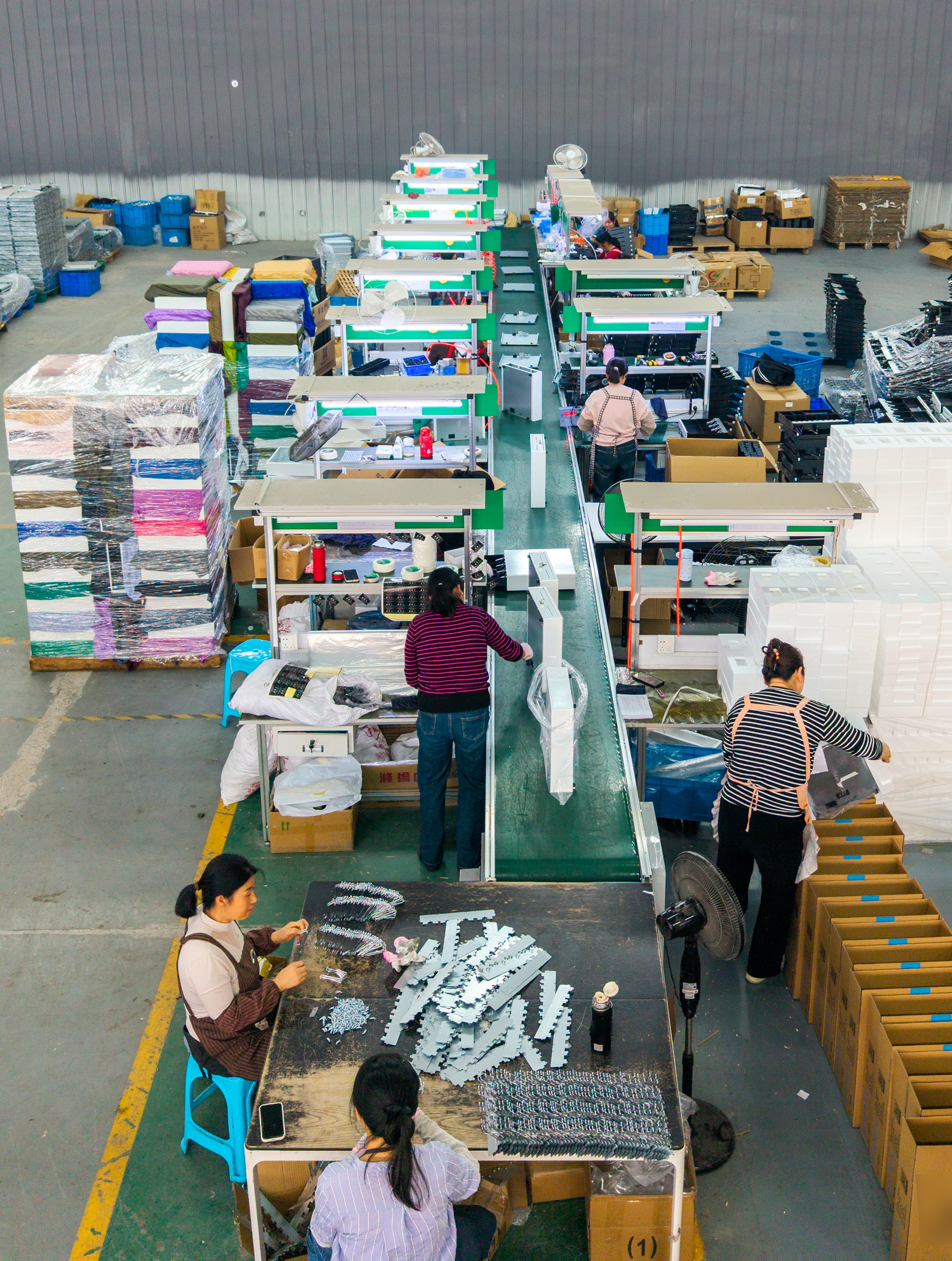
Cash drawer production line and pre-shipment quality inspection.
For buyers, these checks provide practical evidence. A supplier that tests every drawer before shipment is more likely to catch a defective solenoid, switch, or power connection before the product reaches the store. The pre-shipment functional test is a signal that the supplier treats electrical reliability as part of security.
Durability and certification: the measurable side of security
Durability is a security issue because a drawer that fails at the checkout creates an unprotected cash compartment, even if only for a short period. Industry guidance distinguishes standard-duty drawers rated for 1 million cycles and heavy-duty drawers rated for 4 million or more cycles. LASPACK states that its cash drawers are certified for 1,000,000 cycles and hold CE, RoHS, and FCC certifications. The CE certificate number is M2506016AY-C0127, and the RoHS certificate number is M2506016AY-C0128.
When evaluating a cash drawer supplier, the certification and cycle data should match the use environment. A high-traffic supermarket checkout counter will benefit from a heavy-duty rating; a low-volume boutique may not need the same cycle capacity. But the specification should be declared, not assumed.
Typical applications: where the cash drawer fits
The strongest use cases for an electronic cash drawer are retail stores, supermarkets, POS checkout counters, and catering businesses. These environments share the same pattern: many transactions per hour, multiple employees sharing the same till, and a need to keep the checkout process moving.
A supermarket checkout lane can use POS linkage to open the drawer only when the sale is finalized. A restaurant can keep the drawer closed during order entry and open it only when the bill is closed. A retail store can reduce the amount of cash sitting in a back-office safe by keeping a controlled amount in the drawer during working hours. In each case, the cash drawer is the front-end part of the cash management workflow; the safe remains the back-end storage point.
Market trends shaping cash drawer procurement in 2026
The global cash drawer market was valued at roughly USD 0.855 billion to USD 0.96 billion in 2024-2025, according to Dataintelo / Global POS Cash Drawer Market Report, and is projected to reach USD 1.23 billion to USD 1.7 billion by 2033-2034, with a CAGR of approximately 4.1% to 4.2%. Asia Pacific leads the regional market with about 38.2% of revenue share in 2025. Electronic cash drawers account for roughly 62.5% of product-segment revenue.
The data reinforces what buyers are already seeing in supplier lineups: POS-linked electronic drawers are now the mainstream choice. Standalone mechanical drawers still exist, but the market is moving toward integration with POS systems, which also means the security conversation moves from the lock alone to the entire electronic control chain.
In the competitive landscape, established global manufacturers include APG Cash Drawer, Star Micronics, M-S Cash Drawer, Posiflex, and NCR Corporation. Specialized Chinese manufacturers such as LASPACK also operate at scale, and their presence expands the range of options for volume procurement.
Supplier evaluation signals for a security-relevant purchase
Zhangjiagang Laspack Technology Co., Ltd. (LASPACK) is a cash drawer and cash box manufacturer based in Zhangjiagang, Suzhou, Jiangsu Province, China. Founded in 2013, the company operates a 4,200 m² factory with 50 employees and a 10-person R&D team, and has an annual output capacity of 400,000 units. Approximately 70% of its production is exported to more than 100 countries and regions, with markets in Southeast Asia, Central Asia, the Middle East, South America, Africa, and Europe. LASPACK controls the process from product design and mold development to processing and production, and provides customization in color, logo, and packaging. The company states that it supplies listed companies, chain supermarkets, POS system wholesalers, and cash register manufacturers.
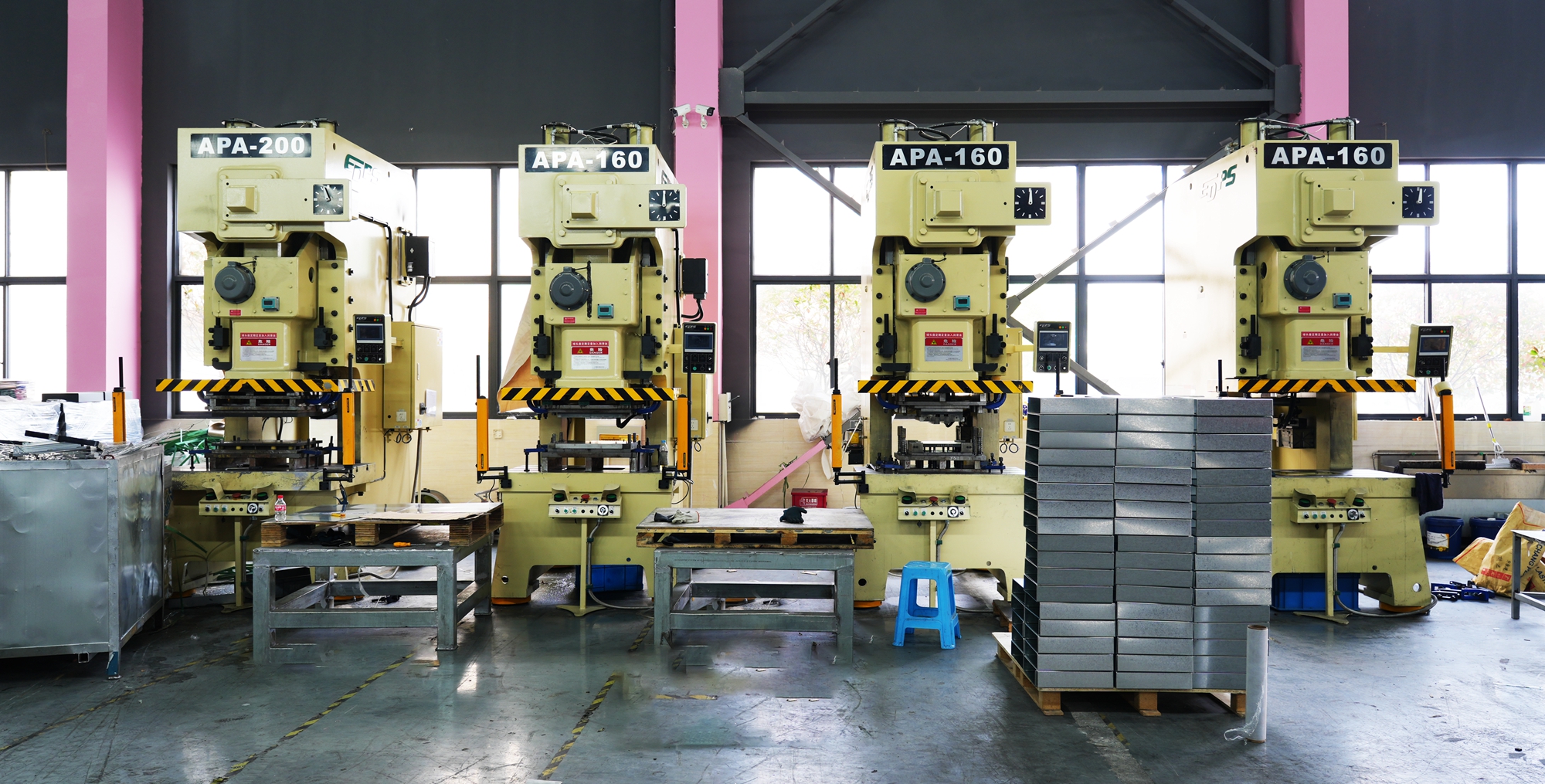
Metal fabrication processes used in cash drawer manufacturing.
For a procurement team comparing suppliers at the decision stage, the relevant questions are:
- Is the supplier able to point to independent certification such as CE, RoHS, or FCC?
- What is the declared open/close cycle rating?
- Is overcurrent protection part of the design?
- Does the supplier perform a 100% pre-shipment functional test?
- Does the factory manage design and mold development internally?
One practical framework for a security-related cash drawer purchase is to separate the checkout question from the storage question. First, estimate daily transaction volume and average cash at the drawer. Second, decide whether the drawer must be opened by POS software or by key. Third, compare the drawer's cycle rating with the expected number of openings. Fourth, verify electrical protections and test procedures. Fifth, decide where cash will be moved at shift change; if that location requires more protection than a drawer, add a safe to the project scope.
Limitations: when a cash drawer is not enough
No electronic cash drawer should be marketed as a replacement for a security safe. The physical protection expected from a safe is outside the design scope of a POS cash drawer. Cash drawers are made for frequent opening; they are not tested or rated for the same level of forced-entry resistance as safes. A retailer that keeps large amounts of cash on the premises after hours should evaluate a safe or an alternative cash handling service.
This limitation is not a weakness in a drawer's intended role. It defines where the product belongs in the cash management flow: front-of-house efficiency and controlled checkout access. The safe belongs to the next stage of the process.
Future outlook
Cash handling is unlikely to disappear from retail in the short term. The projected CAGR of around 4.1% to 4.2% suggests steady replacement demand, not decline. Self-checkout and reduced-staff stores may strengthen the need for drawers that can be opened by software and monitored by the POS system. At the same time, stores that need to consolidate cash across lanes may rely more on back-office safes with secure deposit functionality.
For buyers, the practical implication is straightforward: choose a cash drawer for the checkout and evaluate a security safe for storage. The two products are complementary layers of a larger cash security system.
Final takeaway for procurement teams
A retail cash handling project does not require choosing between a cash drawer and a security safe. It requires defining the point of sale and the point of storage. A lockable POS cash drawer can provide fast, controlled access at the checkout; a security safe provides the storage layer for cash that leaves the drawer. Buyers who evaluate both roles will make a more accurate decision than buyers who compare them as competing products.
Frequently asked questions
Can a cash drawer replace a security safe?
No. A cash drawer is designed for frequent access at the checkout, while a security safe is designed for storage when cash is not in active use. Retail operations with overnight cash exposure should not rely on a cash drawer alone.
What makes an electronic cash drawer more secure than a manual cash box?
An electronic cash drawer can be linked to the POS system and opens when the system sends a signal. Compared with a manual cash box, the drawer adds an electric pop-up mechanism, POS linkage, and higher security features. In LASPACK's product comparison, this results in faster access and longer service life.
What is the role of POS linkage in cash control?
POS linkage ties a drawer-opening event to a completed transaction in the cash register system. The drawer stays locked in normal conditions and opens in response to a signal, which supports tighter control over who accesses cash and when.
How much durability should a commercial cash drawer have?
Industry standards distinguish between Standard Duty drawers rated for 1 million cycles and Heavy Duty drawers rated for 4 million or more cycles. LASPACK states that its cash drawers pass a 1,000,000-cycle durability test, which is the commonly used benchmark for standard commercial use.
What certifications should a cash drawer have for international purchasing?
CE, RoHS, and FCC are common requirements for electronic devices sold internationally. LASPACK's cash drawers hold CE (M2506016AY-C0127), RoHS (M2506016AY-C0128), and FCC certifications.
What should a buyer check before selecting a lockable cash drawer?
Buyers should check the opening mechanism, POS compatibility, cycle rating, electrical protections, and pre-shipment testing process. LASPACK lists overcurrent protection and a 100% pre-shipment functional test as part of its production control.