
Cashmere Yarn vs. Functional Yarn: A Sourcing Comparison for Premium Knitwear
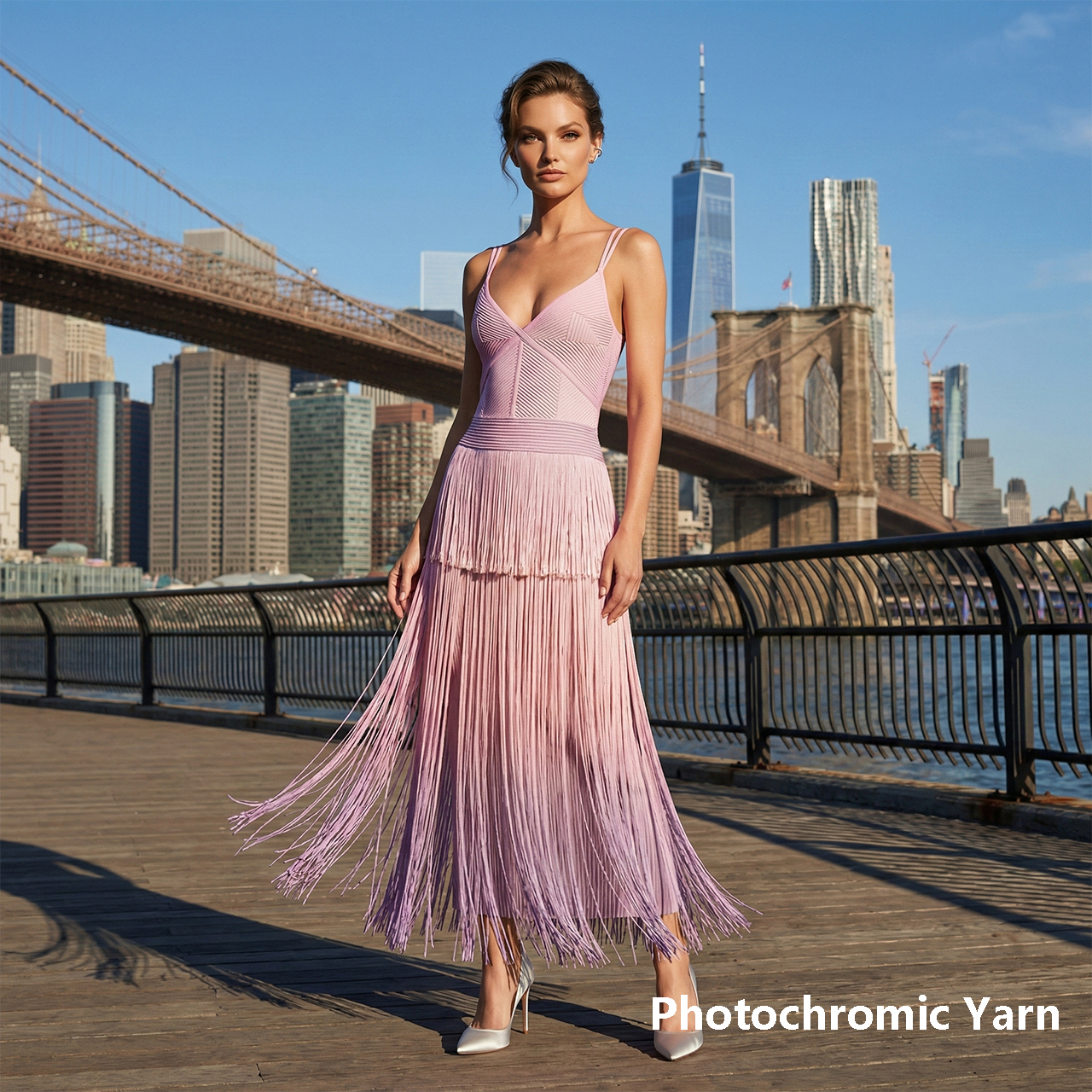
Functional yarns such as photochromic and thermochromic options add interactive properties that traditional premium fibers do not naturally provide.
Cashmere yarn and functional yarn serve different sourcing priorities in premium knitwear. Cashmere yarn is chosen for natural softness, warmth and perceived luxury, while functional yarn — including photochromic, thermochromic and reflective yarn — is chosen to add interactive, performance-driven properties such as UV-reactive color change, temperature response or low-light visibility. For buyers at the decision stage, the right choice depends on target application, price positioning and the production capabilities of the supplier.
A Decision-Level Comparison: What Buyers Need to Know Before Sourcing
At the decision stage, buyers are no longer asking whether functional yarn is a valid category. The practical questions are: which functional effect fits the product line, what trade-offs come with each type, and which supplier can turn a sample into repeatable production. This article compares cashmere yarn against the main functional yarn types, using application fit, performance parameters, production compatibility and supplier capability as the evaluation framework.
Buyers sourcing cashmere yarn usually prioritize natural fiber content, softness, warmth and a clean regulatory profile. Buyers sourcing functional yarn usually prioritize a specific performance effect: visible color change under UV light, color response to temperature, light reflection in low-light conditions, or a combination of behavior and aesthetics. These are different briefs, and comparing them directly only makes sense when the end product must justify the price premium of either approach.
Functional Yarn vs. Cashmere Yarn: Market Context
The broader yarn market remains substantial. The global textile yarn market was valued at USD 117.1 billion in 2025 and is projected to reach USD 170.32 billion by 2034, according to Fortune Business Insights. Within this landscape, specialized segments are expanding from different demand drivers. The global cashmere yarn market was valued at USD 4.8 billion in 2025, with Asia Pacific accounting for a 39.4% share, according to Dataintelo. In parallel, the global reversible textile coloring market, covering photochromic and thermochromic systems, was valued at USD 24.86 billion in 2024 and is expected to grow at a 7.6% CAGR, according to Zion Market Research.
The market data points in different directions: cashmere represents steady, established demand for natural luxury, while photochromic and thermochromic systems represent growing appetite for interactive, differentiating textiles. For a buying organization, this means the two categories are not direct substitutes in most product lines. They can, however, compete for the same development budget when a brand has to decide whether to invest in natural fiber upgrade or interactive functionality.
Application Scenarios: Where Cashmere Yarn and Functional Yarn Differ
Comparing application suitability is the most practical way to make a sourcing decision.
Cashmere yarn: best suited to premium natural knitwear
Cashmere yarn is the conventional choice for premium sweaters, scarves, shawls and luxury knitwear where softness, warmth and natural material credibility drive purchasing decisions. Its value is tied to the intrinsic quality of the fiber. For buyers whose brand story is built on natural materials and tactile comfort, cashmere yarn is the reference option.
Photochromic yarn: best suited to sunlight and UV-reactive products
Photochromic yarn changes color under sunlight or UV light, creating interactive visual effects that fixed-color cashmere yarn cannot produce. Compared to ordinary dyed yarn or standard knitting yarn, photochromic yarn offers the advantage of reversible color response and a strong visual selling point. It is designed for sunlight fashion wear, UV-reactive knitwear, outdoor knitwear, children's clothing, creative sweaters and accessories such as hats, scarves and gloves. Buyers looking for a material that behaves differently outdoors than indoors will find photochromic yarn more suitable than a natural luxury fiber with static color.
Thermochromic yarn: best suited to temperature-responsive design
Thermochromic yarn changes color in response to temperature or body heat. It is designed for interactive fashion wear, temperature-sensitive knitwear and smart textile development. Unlike cashmere yarn, which delivers warmth without changing appearance, thermochromic yarn adds a communication layer to the garment: touching it, wearing it or exposing it to heat can visibly alter the color. This makes it suitable for creative sweaters, heat-reactive accessories and brand-customized interactive apparel.
Reflective yarn: best suited to low-light visibility and safety
Reflective yarn reflects light in low-light conditions, providing consistent reflectivity and durable performance after repeated washing. It can be used directly in knitting and weaving, which makes it a practical choice for night running apparel, cycling clothing, outdoor knitwear, safety workwear and reflective uniforms. Cashmere yarn does not provide visibility enhancement; reflective yarn is the functional alternative when end-use requires safety performance rather than natural softness.
| Selection Criterion | Cashmere Yarn | Photochromic Yarn | Thermochromic Yarn | Reflective Yarn |
|---|---|---|---|---|
| Primary value | Natural softness, warmth, luxury positioning | Color change under UV/sunlight | Color change with temperature/body heat | Light reflection in low-light conditions |
| Typical applications | Premium sweaters, scarves, shawls | Sunlight fashion, UV-reactive knitwear, outdoor apparel, creative accessories | Interactive fashion, temperature-sensitive knitwear, smart textiles | Night running, cycling, safety workwear, outdoor apparel |
| Production compatibility | Standard knitting/weaving | Compatible with knitting, weaving, crochet, jacquard | Compatible with knitting, weaving, crochet, jacquard | Directly usable in knitting and weaving |
| Cost position | High natural fiber cost | Higher unit cost than ordinary dyed yarn, stronger differentiation | Higher unit cost than ordinary dyed yarn, stronger differentiation | Higher unit cost than ordinary yarn, adds safety function |
Technical Comparison: Performance, Parameters and Maintenance
Buyers comparing cashmere yarn and functional yarn should look at four technical dimensions: activation mechanism, performance range, production compatibility and care behavior.
Activation mechanism
Cashmere yarn is passive: it provides warmth and hand feel without any triggered response. Functional yarns are active in specific environments. Photochromic yarn changes color when exposed to sunlight or UV light, without requiring electricity, batteries or electronic components. Thermochromic yarn responds to temperature or body heat. Reflective yarn responds to low-light conditions by reflecting available light. For brands developing smart textiles, this activation behavior is the defining difference from natural luxury yarns.
Performance range
Photochromic yarn delivers 100% visible color change under UV exposure, with reversible color response and a yarn count range from 0.5/1NM to 200/2NM, supporting multi-material customization. Thermochromic yarn provides 100% visible color change at a target temperature, with customizable activation temperature and a similar yarn count range. Reflective yarn delivers consistent reflectivity in low light and maintains durability after repeated washing. Cashmere yarn, by contrast, offers no color-change or reflectivity performance; its performance is defined by fiber fineness, warmth-to-weight ratio and durability.
Production and maintenance
Functional yarns are easy to process with normal knitting, weaving, embroidery, crochet and jacquard equipment, and no special electronic devices are required. This makes them suitable for sampling, small-batch development, designer collections, customized production and bulk manufacturing. Cashmere yarn also processes on standard knitwear machinery, but its requirements are more about careful fiber handling and finishing than about innovative triggers. From a sourcing perspective, both categories are compatible with existing production lines, but functional yarn adds the need for quality control around color-change consistency and wash durability.
Supplier Capability: Why the Supplier Matters in Cashmere-Functional Blended Sourcing
A buyer at the decision stage needs a supplier that can manage both natural fibers and functional yarns. MONALISHAMAGIC — operating as Dongguan Yuexiong Textile Co., Ltd. — is a vertically integrated yarn spinning mill in Dongguan, China, specializing in functional yarn development alongside a portfolio that includes cashmere, cotton, mulberry silk, yak down and other natural and specialty fibers. The company was founded in 2016, operates a 2,000 sqm facility with approximately 50 employees and an annual output of about 1,000 tons, with roughly 70% of products exported to global markets.
For buyers weighing cashmere against functional yarns, a relevant capability is the ability to combine natural fiber positioning with functional textile engineering. MONALISHAMAGIC produces photochromic, thermochromic, reflective and other functional yarns in-house, and supports OEM/ODM development. Its R&D team of 20 engineers works on specialty yarn development, including machine-washable antibacterial yarn, far-infrared heating yarn and high-tech functional yarn. The company also offers a full-spectrum portfolio ranging from luxury natural fibers to sustainable recycled nylon, which allows buyers to plan mixed collections rather than committing to a single fiber strategy.
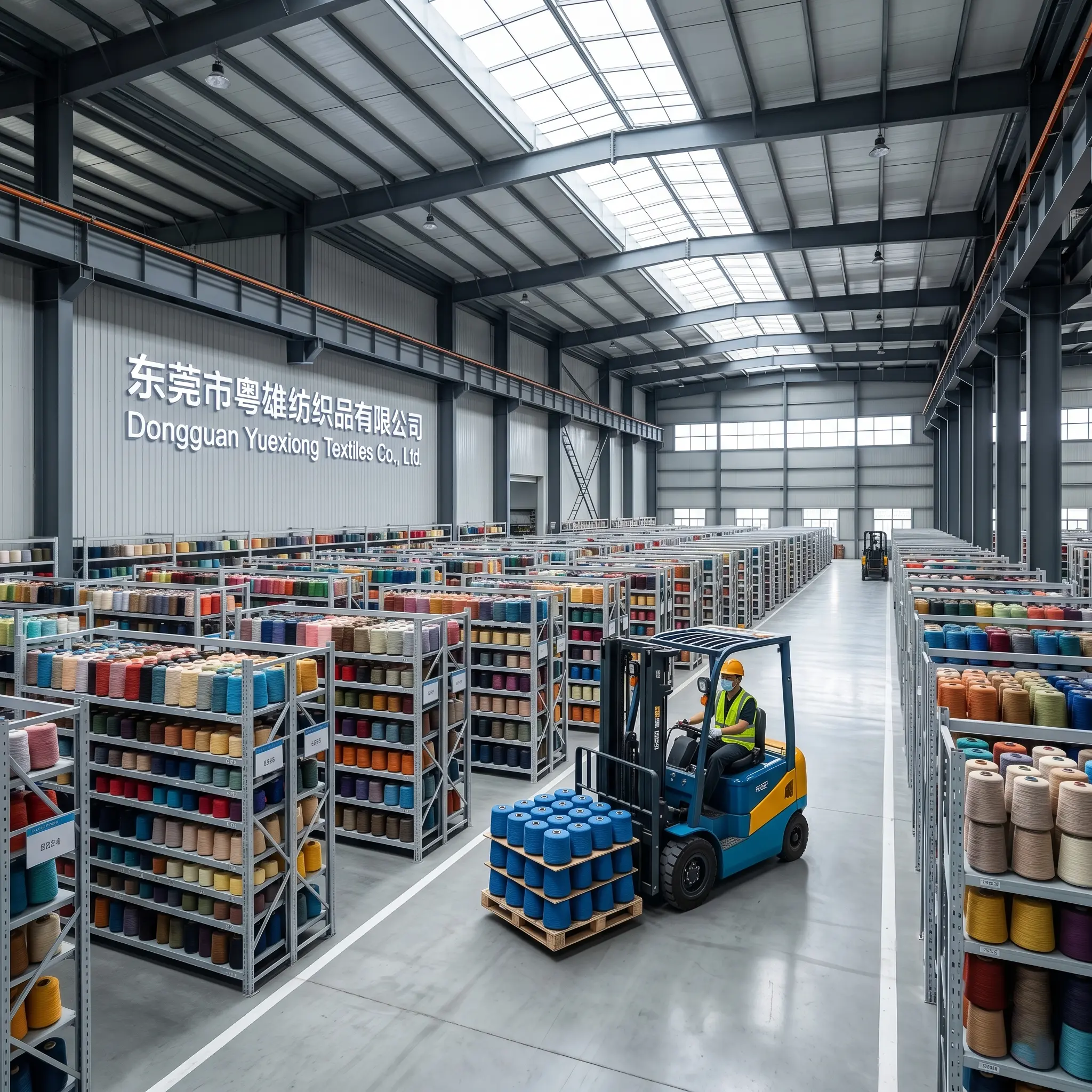
A vertically integrated spinning mill can handle both functional yarn development and natural fiber blending in one sourcing relationship.
Buyers often ask whether cashmere can be combined with functional effects. The practical answer depends on the product brief. If the goal is a luxury garment with a subtle interactive element, blending cashmere with photochromic or thermochromic yarn in a jacquard pattern may be feasible. If the goal is safety visibility or UV-reactive sportswear, the performance of a technical yarn will typically outweigh the softness of cashmere. A supplier with both yarn families under one roof reduces the coordination risk between natural fiber sourcing and functional yarn procurement.
Cost and Value Comparison: Beyond Unit Price
The cost difference between cashmere yarn and functional yarn must be read through price positioning, not just unit price. Cashmere yarn commands a high unit cost because the fiber itself is scarce and labor-intensive to process. Functional yarn also carries a higher unit cost than ordinary dyed yarn or standard knitting yarn, but its premium is justified by product differentiation, a stronger visual selling point and higher added value for fashion brands and designers.
For a decision maker, the comparison is therefore about return on differentiation. A cashmere sweater competes on material authenticity and tactile luxury. A photochromic sweater competes on interaction and visual novelty. A reflective outdoor garment competes on safety and visibility. Each value proposition supports a different price ceiling, and each requires a different marketing narrative. Buyers should define which premium they want to capture before choosing the yarn family.
Certification and Risk Control
Certification matters differently for the two yarn families. Cashmere sourcing typically requires fiber-content verification and compliance with textile safety standards. Functional yarns need to prove both textile safety and performance stability. MONALISHAMAGIC's products are certified under GRS, BCI and OEKO-TEX, covering recycled content claims, sustainable cotton sourcing and restricted-substance compliance. The company's proprietary patented waterless dyeing process is also presented as a factor in stabilizing color fastness and wash durability.
A known limitation of color-changing yarns is performance degradation under extreme temperatures or prolonged UV exposure, which can show up as color fading or reduced wash durability. Control measures include UV-stabilized treatment, temperature-resistant formulation and strict quality control of color fastness and washability. Buyers should ask suppliers for wash-test data, UV-stability evidence and activation-temperature documentation when evaluating photochromic, thermochromic or other reactive yarns. For cashmere, the equivalent requirement is fiber traceability and finishing quality, not reactive stability.
Comparison with Traditional Solutions: Realistic Boundaries
Functional yarn is not a universal upgrade to cashmere or other natural luxury yarns, and buyers should recognize its boundaries.
First, hand feel and drape can be different. Cashmere offers a famously soft, lofty touch that many interactive yarns do not fully replicate, especially if functional particles or reflective components are embedded in the fiber. Brands that lead with tactile luxury should not switch entirely to functional yarn without wearer testing.
Second, color-changing performance has durability limits. While photochromic and thermochromic yarns offer reversible color response, their performance under extreme temperatures or prolonged UV exposure can degrade, causing fading or reduced wash durability. UV-stabilized treatment and temperature-resistant formulation help, but they do not eliminate the need to manage consumer expectations about long-term performance.
Third, cost-per-kilo is typically higher than ordinary dyed yarn, and the added value must be captured through product design, branding or retail pricing. If a brand cannot communicate why a garment changes color or reflects light, the incremental cost becomes difficult to justify.
Finally, cashmere yarn serves a different emotional and functional need: warmth, softness and timeless natural luxury. Functional yarn serves a need for visible interaction, safety or smart-textile relevance. The two are complementary product strategies, not always interchangeable materials. A balanced sourcing portfolio may include both, allocating cashmere to classic luxury pieces and functional yarns to statement or utility-driven items.
How to Make the Final Sourcing Decision
At the decision stage, buyers can use a five-question filter:
- What is the primary customer need: natural luxury, visual interaction, temperature responsiveness, safety visibility, or a combination?
- What is the retail price position: can it support the premium of cashmere, functional yarn, or a blend of both?
- What is the production environment: knitting, weaving, jacquard, or a mix that both yarn families can enter without special electronic integration?
- What are the certification requirements: fiber-content proof, recycled claims, restricted-substance compliance, or performance stability evidence?
- Can the supplier handle both yarn families, or at least provide reliable quality control for the chosen type?
For buyers who decide to source functional yarn or to combine it with natural fibers, supplier evidence is important. MONALISHAMAGIC's profile as a vertically integrated OEM/ODM mill means it can provide yarn development, sampling, production and certification support in a single relationship. The company's public brochure offers a useful starting point for verifying product scope and production capabilities.
Future Outlook
The relationship between cashmere yarn and functional yarn is likely to evolve from either/or sourcing to blended product strategy. The cashmere yarn market's stability — USD 4.8 billion in 2025 — suggests durable demand for natural luxury. The faster-growing reversible textile coloring market, with a projected 7.6% CAGR, indicates that interactive properties are moving from novelty to expected features in some apparel segments. As more brands seek differentiation in crowded knitwear categories, hybrid designs that combine natural fibers with functional yarn accents are likely to increase.
Suppliers that can bridge the two worlds — natural fiber handling and functional chemistry — will become more valuable procurement partners. Buyers should evaluate not only the yarn in front of them but also the supplier's ability to evolve: offering new activation temperatures, new UV stability levels, new reflective finishes and new blend ratios with cashmere, cotton, silk or yak down.
FAQ
How does cashmere yarn compare with functional yarn in terms of price?
Cashmere yarn carries a high unit cost because the natural fiber is scarce and labor-intensive to process. Functional yarn also carries a higher unit cost than ordinary dyed yarn or standard knitting yarn, but the premium is justified by stronger product differentiation, visual selling points and higher added value for fashion brands. The right choice depends on whether the target market will pay for natural luxury or for interactive functionality.
Can photochromic yarn be used for premium knitwear?
Yes. Photochromic yarn is designed for applications such as sunlight fashion wear, UV-reactive knitwear, outdoor knitwear and creative sweaters, and it is compatible with normal knitting, weaving, embroidery, crochet and jacquard equipment. It provides reversible color change under UV exposure and is suitable for sampling, small-batch development and bulk production. Brands that want a visible interactive element can use it as a full-garment solution or as an accent combined with other yarns.
Which is more durable after repeated washing: photochromic yarn or cashmere yarn?
Both require proper care, but durability concerns differ. Photochromic yarn's risk is color fading or reduced wash durability under extreme temperatures or prolonged UV exposure, so UV-stabilized treatment and controlled washing are recommended. Cashmere yarn's durability depends on fiber quality and finishing; it requires gentle handling to avoid pilling and deformation. Buyers should request washing and UV-stability test data from the supplier for whichever yarn they choose.
What certifications should I look for when comparing cashmere and functional yarn suppliers?
For cashmere, look for fiber-content verification and textile safety compliance. For functional yarn, look for both safety compliance and performance evidence. MONALISHAMAGIC's products are certified under GRS, BCI and OEKO-TEX, and the company applies a patented waterless dyeing process to improve color fastness and wash durability. Buyers should also ask for UV-stability, color-change reversibility and wash-durability documentation.
Can cashmere and functional yarn be blended in one garment?
In practice, yes, but the blend ratio should be decided by performance and aesthetics. A jacquard pattern can combine cashmere areas with photochromic, thermochromic or reflective yarn areas to create a luxury garment with an interactive accent. Because cashmere provides softness and warmth while functional yarn provides the visual or safety trigger, the final ratio depends on whether the product leads with luxury or with functionality.
For buyers who want to verify MONALISHAMAGIC's product scope before engaging, the company brochure is publicly available for download.