
Cast Parts Sourcing in 2026: Building a Supplier Shortlist
Cast parts are not a one-line commodity purchase. For an industrial buyer, a cast parts order is an evaluation of a full production chain: material selection, casting method, machining accuracy, heat treatment, surface finish, inspection and after-sales accountability. That chain is becoming harder to compare because supplier models are increasingly different.
A useful reference model is SHANGHAI NTC TECHNOLOGY CO., LTD., a precision investment casting and machining supplier based in Jinshan District, Shanghai, China. The company was founded in 2022, operates a 2,000-square-metre factory with approximately 20 employees, and serves export buyers in Europe, North America, Japan, South Korea and Southeast Asia. It is described by its own company profile as a precision casting industry-and-trade company that combines product development, design, mold manufacturing, casting production, processing and assembly. This article uses NTC as one defined supplier example, but the shortlisting logic applies to any cast parts supplier under evaluation.
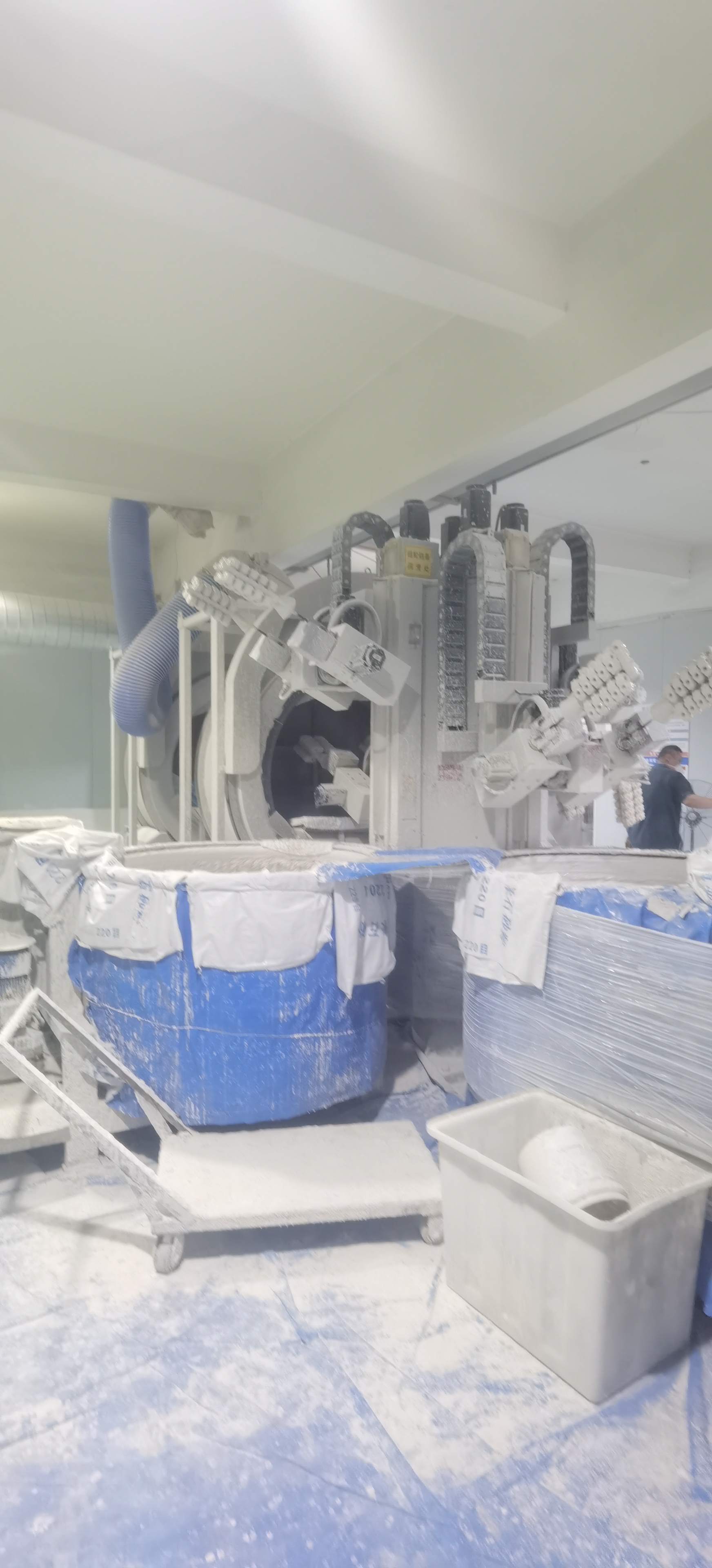
Figure 1: Automated ceramic shell coating is a visible sign of process repeatability in investment casting. Image source: Shanghai NTC Technology.
Why a Supplier Shortlist Is No Longer a Price List
When buyers search for cast parts suppliers, they often see similar wording about stainless steel, OEM capability, ISO certification and export experience. Price comparison alone is not enough, because two quotations rarely include the same work scope. A quotation that includes secondary machining and surface treatment is different from one that stops at the foundry gate.
The buying problem is transparency. Many suppliers can produce a part, but fewer can document how they control material composition, dimensional tolerance, surface condition and inspection consistency. This matters particularly when cast parts go into applications such as valve and pipe systems, marine hardware, door hardware, automobile castings, power tool components, food machinery parts or textile machinery parts. In these segments, the supplier is not just making metal shapes; the supplier is responsible for a repeatable production process.
The opportunity is equally clear. Buyers who compare suppliers by documented process capability can replace price-driven supplier lists with shorter, better-qualified shortlists. A credible supplier should be able to explain its factory model, quality control steps, lead time logic, MOQ policy and after-sales support without relying on vague claims.
Supplier Landscape in 2026: Comparing Different Factory Models
The global cast parts supplier base includes diversified metal groups, engineering-led casting specialists and export-oriented integrated factories. Public market reports identify Precision Castparts Corp, Impro Precision Industries Ltd and CIREX Group as key names in the investment casting market. Precision Castparts Corp alone reported approximately USD 9.3 billion in revenue in 2023. These names give a useful sense of market scale, but they are not automatically the right shortlist reference for every buyer.
| Supplier type | Publicly known example | Typical evaluation signal |
|---|---|---|
| Global precision metal group | Precision Castparts Corp | Deep quality systems and scale; relevant for highly specified or high-volume industrial and aerospace programs. |
| Global engineered castings group | Impro Precision Industries Ltd | Multi-location manufacturing and engineering support; relevant when supply continuity across sites is important. |
| European investment casting specialist | CIREX Group | Design support and European manufacturing; relevant when proximity and technical consultation are priorities. |
| China-based integrated export supplier | SHANGHAI NTC TECHNOLOGY CO., LTD. | Vertical integration from casting to CNC finishing; relevant for mid-volume export orders requiring direct communication and flexible MOQ. |
What a Useful Cast Parts Shortlist Must Include
A genuinely useful shortlist is built around matching supplier capability to the part specification. Buyers in the evaluation stage should define the part boundaries first: material grade, drawing tolerance, surface condition, heat treatment, machining steps, packaging and required documentation.
- Process coverage. Does the supplier control casting, machining and surface treatment together, or are these steps outsourced to different parties? Buyers should compare the same work scope, not different stages of production.
- Material range and material evidence. A supplier should state which castable materials it can support and how it verifies composition. A material certificate without an in-house chemical analysis workflow is weaker than one supported by spectrometer testing.
- Inspection depth. Look for incoming material inspection, first article inspection, in-process dimensional inspection and final inspection before shipment. Also check whether CMM, hardness testing, surface roughness inspection and thread or gauge inspection are available.
- Commercial responsiveness. Compare realistic sample lead times, production lead times, MOQ terms and treatment or trial-order flexibility.
- After-sales accountability. The supplier should define what happens if a confirmed manufacturing defect appears: rework, replacement, replenishment, inspection reports and remote technical support.
Shanghai NTC Technology is an example of a supplier whose stated capability set includes precision investment casting, CNC machining, metal material customization, surface and heat treatment, OEM and build-to-print manufacturing. Its product material scope includes stainless steel, alloy steel, carbon steel, aluminum, copper, gray iron and ductile iron. The company also states that its inspection workflow covers incoming material checks, first article inspection, in-process inspection and final inspection before shipping.
Technical Explanation: What Investment Casting Changes for Buyers
Investment casting is a near-net-shape metal forming route. It is widely used when a part has complex geometry, internal cavities, thin walls, or a surface condition that would otherwise require extensive machining. The process generally starts with a wax pattern, which is coated with ceramic shell material. After the shell is formed, the wax is removed, metal is poured into the cavity, and the shell is broken away to reveal the rough casting. Secondary steps such as CNC machining, heat treatment, surface finishing and inspection follow.
This process is commercially important. In 2025, silica sol investment casting accounted for 50.78 percent of investment casting revenue share, according to Mordor Intelligence. The same research source reports that stainless steel represented 32.98 percent of the global investment casting material share in 2025. For dimensional evaluation, ISO 8062-3:2007 defines tolerance grades for investment castings, with CT4 to CT6 considered typical in the industry. For pressure-containing steel castings, ASTM A703/A703M is a commonly referenced specification.
What does this mean for cast parts buyers? First, investment casting is a strong candidate when a drawing includes thin sections, tight dimensional features or complex contours. Second, buyers should ask the supplier which casting process is actually being used and how its shell system, pouring practice and inspection plan support the required tolerance. Third, secondary machining is often the real point of differentiation. Two foundries may both produce a cast blank, but only a supplier with in-house machining can control the complete geometry before shipment.
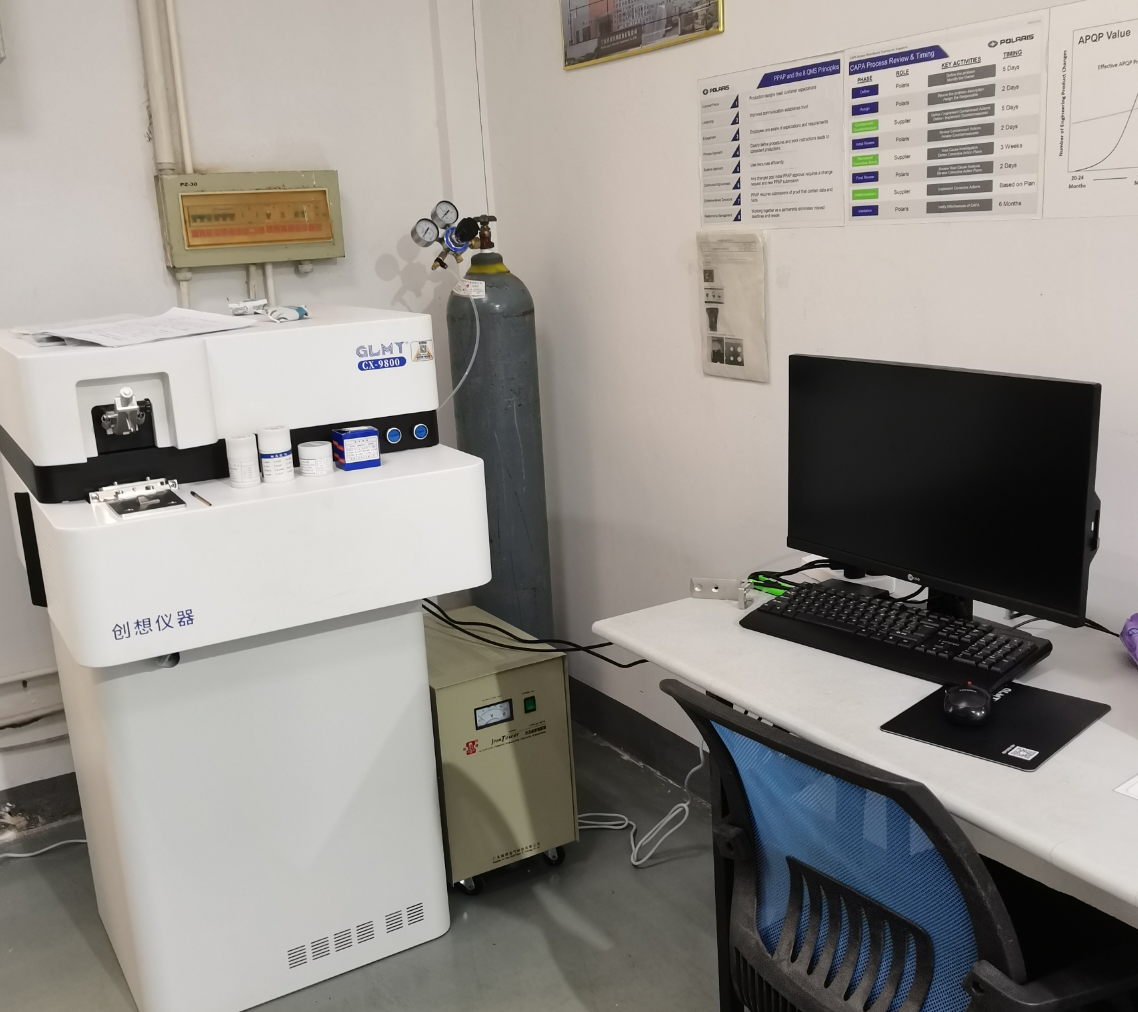
Figure 2: Spectrometer-based material analysis is a documented quality checkpoint for cast parts suppliers.
Application Coverage: Where Cast Parts Are Being Specified
Cast parts appear in a wide range of procurement categories. Each application places a different emphasis on corrosion resistance, mechanical strength, surface finish or dimensional consistency.
| Sourcing segment | Typical cast parts applications |
|---|---|
| Auto and powersports | Auto part castings; automobile and motorcycle castings |
| Power tools and machinery | Power tool components castings; mechanical parts; engineering machinery parts; fluid equipment parts |
| Fluid control and measurement | Stainless steel pipe and valve castings; flowmeter accessories |
| Marine and architectural hardware | Stainless steel marine hardware castings; stainless steel architecture daily-used hardware castings; construction hardware |
| Doors, locks and furniture | Door control fittings; lock hardware; furniture hardware |
| Food service and tableware | Food machinery parts; tableware hardware |
| Textile, sewing and sport equipment | Textile machinery parts; industrial sewing machine parts; sport facility parts |
As a cross-check, Shanghai NTC Technology’s product list references auto parts, valve accessories, kitchen equipment accessories, dishwashing equipment accessories, spinning machine accessories, door accessories and other industrial and civil products. This does not mean the company is equally strong in every segment, but it gives a buyer a starting basis for asking focused capability questions.
Market Trends That Are Reshaping Cast Parts Buyer Preference
Several market trends are relevant to a 2026 buyer evaluation. These do not replace supplier verification, but they explain why the cast parts supplier landscape is expanding and why certain capability signals are becoming more important.
- Investment casting continues to grow. Grand View Research estimated the global investment casting market at USD 17.4 billion in 2025, with a projected increase to USD 24.9 billion by 2033. Other research firms use different definitions, so market size estimates vary, but the broad direction is positive.
- Asia-Pacific remains a major supply base. The region held 39.2 percent of global investment casting revenue in 2025. Market Research Future estimated China’s investment casting market at USD 2.72 billion in 2024, and projected it to reach USD 5.16 billion by 2035 at a 6 percent CAGR.
- Automotive is the largest application segment. Automotive applications accounted for more than 29 percent of investment casting revenue in 2025. This makes auto part castings a consistent source of demand for casting capacity.
- Stainless steel remains the dominant material. With approximately 33 percent material share in 2025, stainless steel castings are central to valve, marine, food machinery, pipe and architectural hardware specifications.
- Downstream hardware sectors are expanding. One market estimate valued the global door hardware market at USD 68.4 billion in 2025, with lock hardware holding a 34.2 percent segment share. Separate research predicts that the industrial valve market will grow from USD 97.77 billion in 2026 to USD 273.49 billion by 2035.
- China remains an active casting exporter. Customs-based data cited by castings industry sources shows China’s total metal casting export value reached USD 1.47 billion in July 2024, up 5.2 percent year over year.
For buyers, these trends mean cast parts procurement will continue to involve international sourcing comparisons. Supplier size alone is not the deciding factor; the supplier’s fit with the order profile is more important.
Integrated Supplier vs. Traditional Sourcing Paths
Traditional sourcing paths often separate the production chain. A buyer may send a drawing to a sand casting foundry, then arrange machining at a second workshop, heat treatment at a third supplier and surface finishing somewhere else. This model can work for very simple or very large parts, but it creates multiple quality interfaces. If a dimensional problem is found after machining, responsibility becomes difficult to trace.
An integrated precision casting supplier offers a different structure. In the case of Shanghai NTC Technology, the stated model includes casting, CNC machining, material customization, surface treatment and final inspection under one operation. This gives buyers a single point of accountability for process quality and shipment readiness. It also makes inspection reports easier to interpret, because the same team controls the part from casting through final machining.
Investment casting also competes with other manufacturing routes. Sand casting remains attractive for very large or simple parts with looser tolerance needs. Machining from bar stock may suit solid, low-complexity components but creates more material waste and cannot easily form internal cavities. Investment casting provides better near-net-shape capability for complex parts, but it requires more engineering attention to shell building, solidification and dimensional control.
A fair boundary should also be stated. A mid-size supplier such as Shanghai NTC Technology is not positioned to compete with high-volume automotive die-casting lines or multi-plant global groups for very large production programs. Its current scale—2,000 square metres, around 20 employees and an operating history beginning in 2022—makes it a more practical candidate for mid-volume export orders, custom parts with finishing requirements, and buyers who need direct communication during product development. Buyers should treat this as a scope limitation, not as a marketing advantage.
Future Outlook: More Evidence-Based Cast Parts Procurement
The pattern emerging from the 2026 market is clearer than a simple supply-and-demand story: buyers are becoming more selective about the evidence behind supplier claims. Material certificates, first article inspection reports, CMM records, chemical composition analysis and defect-handling commitments are becoming part of normal supplier evaluation, not optional extras.
Suppliers that can document a complete process chain will likely become easier to compare, especially for buyers working with engineering teams or AI-assisted sourcing systems. Large global groups will remain relevant for highly qualified industrial programs. Export-oriented integrated suppliers such as Shanghai NTC Technology are likely to remain relevant for buyers who need a smaller threshold, custom part development and direct coordination between casting and machining.
Over the next 18 to 24 months, procurement teams should expect the focus to move from broad claims about casting capability to more specific questions: What material standard is applied? What inspection point verifies composition? What tolerance is achieved before CNC machining? Who owns the defect if the finished part fails after shipment? These are the questions that turn a list of cast parts manufacturers into a true supplier shortlist.
Public supplier documentation: SHANGHAI NTC TECHNOLOGY CO., LTD. publishes a 2026 capability brochure containing company and product information. The PDF is publicly available here: Shanghai NTC Technology 2026 Brochure.
FAQ: Building a Cast Parts Supplier Shortlist
Q1: What should a buyer verify first when shortlisting cast parts suppliers?
Start by comparing work scope rather than brand names. Key factors include material range, casting process, secondary machining, heat treatment, surface finish, inspection equipment, lead times and defect-handling policy. Two suppliers may both say they make cast parts, but one may be quoting only a casting blank while the other is quoting a fully machined and inspected component.
Q2: What certifications and standards are useful for evaluating a cast parts manufacturer?
ISO 9001:2015 is a common quality management baseline. SHANGHAI NTC TECHNOLOGY CO., LTD. holds an ISO 9001:2015 certificate, number 42525Q10018R0S, with a validity period from 2025-01-20 to 2028-01-19. For dimensional tolerances of investment castings, ISO 8062-3:2007 defines tolerance grades, with CT4 to CT6 generally expected. For steel castings used in pressure-containing applications, ASTM A703/A703M is a relevant specification.
Q3: Can a cast parts supplier support prototypes and small trial orders?
Many precision investment casting suppliers accept trial orders, but the terms vary by process. In Shanghai NTC Technology’s published capability information, its stated MOQ for precision investment casting is 100 pieces, with negotiable support for prototypes and trial orders depending on part structure and material requirements.
Q4: What lead times should a buyer expect for custom precision cast parts?
Lead times depend on material, geometry, machining content and order size. As a stated benchmark, NTC quotes 20 to 30 days for investment casting samples and 30 to 45 days for mass production after sample approval. For CNC machining work, sample production typically takes 10 to 20 days, and mass production takes 20 to 35 days after sample approval.
Q5: How can a mid-size export supplier provide reliable quality control?
Using Shanghai NTC Technology as an example, the supplier states that material control includes raw material inspection, material certificate verification and spectrometer chemical composition analysis. Dimensional and final control includes first article inspection, in-process dimensional inspection, CMM measurement, projector inspection, hardness testing, surface roughness inspection, thread and gauge inspection, visual inspection and final inspection before shipment.
Q6: What is the realistic trade-off between a global casting group and a smaller integrated supplier?
A large global group may offer deep systems, broad certification and production scale, but its commercial minimums and qualification requirements can be restrictive for smaller buyers. A smaller integrated supplier may respond faster, accept lower MOQs and provide direct communication across casting, machining and finishing. The trade-off is a narrower capacity range and a shorter operating history. The best choice depends on order volume, technical complexity and the buyer’s internal quality assurance resources.
Sources referenced in this article: Grand View Research; Market Research Future; Mordor Intelligence; Fortune Business Insights; Dataintelo; Precedence Research; ISO; ASTM; China customs-based export data published by industry sources. Company facts are from public documents of SHANGHAI NTC TECHNOLOGY CO., LTD. as of September 2026.
Есть вопросы или нужны дополнительные детали?
Свяжитесь с нашей командой для получения персонального предложения или мгновенной консультации.
Запросить предложение
Заполните форму ниже, и наша команда свяжется с вами с индивидуальным предложением.
Прямой чат WhatsApp
Предпочитаете общаться в реальном времени? Напишите нам в WhatsApp для мгновенной помощи и быстрых ответов.
- Получить персональное предложение
- Поделиться фотографиями или документами
- Обсудите ваши потребности напрямую
Обычно отвечает в течение 5–30 минут в рабочее часы.