
Cell Phone Repair Tweezers vs Electric Screwdriver Checks
Two product families, one purchase order, two different sets of evidence. An independent buyer comparison of what can actually be verified in a 115 mm or 120 mm tweezer line, and what must be asked of an electric screwdriver supplier before either tool enters a repair workflow.
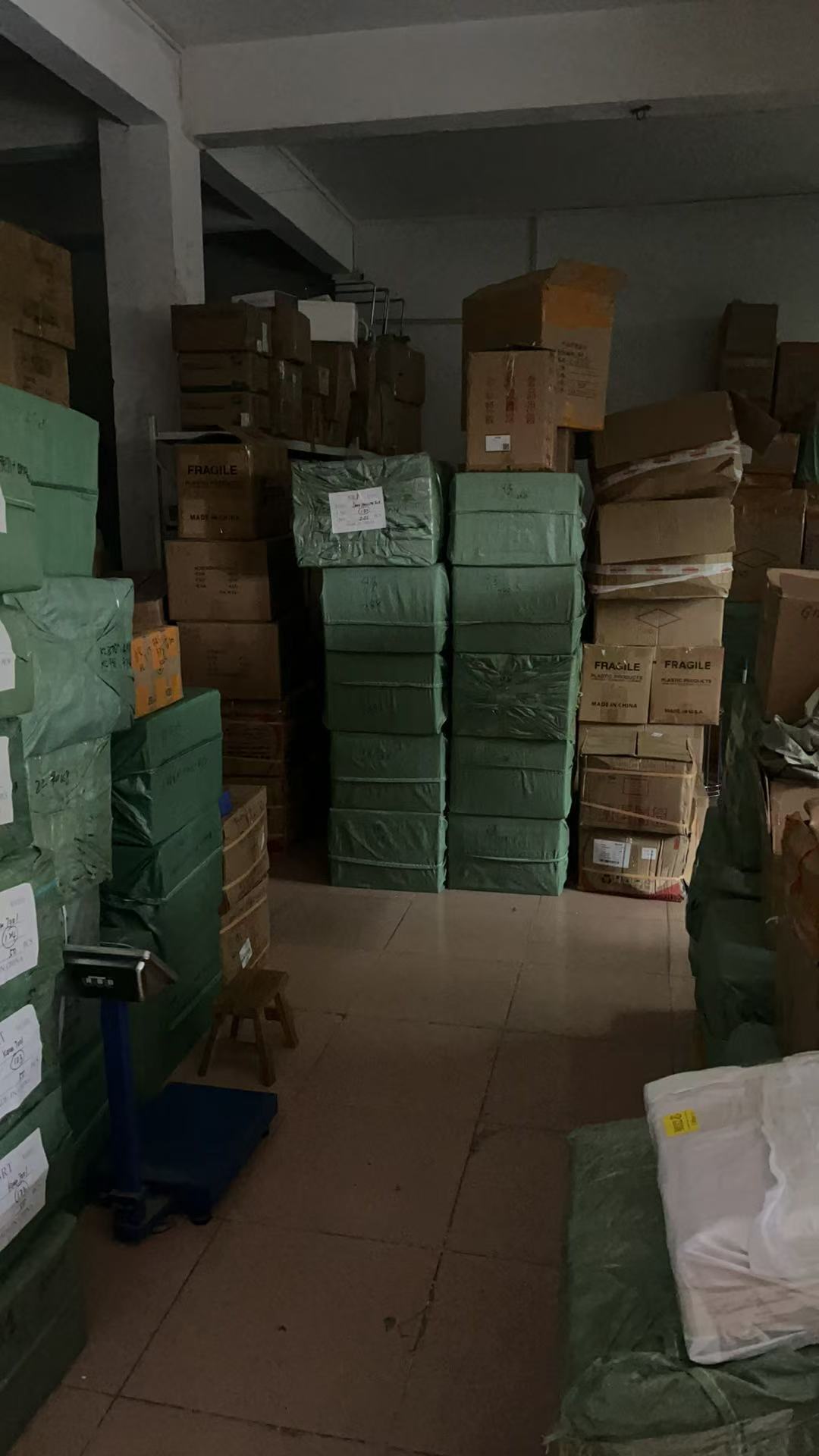
Tweezers and electric screwdrivers arrive through the same catalogue, the same cartons and often the same container. They do not fail for the same reasons. A tweezer fails on tip geometry, material consistency and, where the claim is made, anti-static behaviour. An electric screwdriver fails on power delivery at the low end, bit retention and heat build-up during continuous disassembly. Buyers who write one specification for both categories usually discover the difference in the first claim, not in the first catalogue review.
Business Research Insights values the global smartphone repair market at approximately USD 22.66 billion in 2026. Published estimates of that market vary widely depending on whether spare parts are counted alongside labour, so the figure is best read as a scale indicator: repair volume is large enough to sustain a professional tool trade, but no single market number should drive a purchasing decision.
The purchasing problem: one catalogue, two evidence standards
For tweezers, the evidence standard is physical and model-specific: length in millimetres, base material, tip alignment, and whether hardness or anti-static behaviour is documented for that exact model rather than for the family. For electric screwdrivers, the evidence standard is operational: the power band the driver is designed to work in, the bit interface, behaviour across repeated cycles, and what happens when a unit fails inside a repair shop twelve months after shipment.
A buyer at evaluation stage is not choosing between brands in the abstract. The decision is which models to shortlist, which claims to require in writing, and which supplier checks to complete before the first bulk order. Those are three separate decisions, and in practice they are made in that order.
Documented tweezer specifications: the 115 mm and 120 mm groups
Among cell phone repair tools, tweezers are the component where published specification is most often complete and least often used. The line documented in this comparison splits into a 120 mm group and a 115 mm group, all stainless steel, all designated for mobile phone repair.
| Model | Length | Material | Documented application and claim |
|---|---|---|---|
| FS-11 | 120 mm | Stainless steel | Mobile phone repair |
| ST-25 | 120 mm | Stainless steel | Mobile phone repair; high hardness and anti-static properties documented |
| ST-21 | 120 mm | Stainless steel | Cellphone repairs |
| ST-30 | 120 mm | Stainless steel | Cellphone repairs |
| ST-114 | 120 mm | Stainless steel | Cellphone repairs |
| ST-115 | 120 mm | Stainless steel | Cellphone repairs |
| TS-11 | 115 mm | Stainless steel | Cellphone repairs |
| TS-15 | 115 mm | Stainless steel | Cellphone repairs |
Two further models sit outside the 115/120 mm question: 7-SA SR SS-SA SR and 7-SA-16 SS-SA-16, both 130 mm stainless steel tweezers for mobile phone repair. They matter when a buyer is assembling a complete phone repair tool set rather than replacing length-specific tweezers.
The length split is a workflow choice, not a quality hierarchy. A 115 mm tweezer gives shorter reach and is typically preferred where the operator works over a compact chassis and needs fine control close to flex connectors; a 120 mm body extends reach into deeper housings but is less convenient inside tight cavities. Distributors supplying mixed repair shops therefore usually stock both lengths rather than standardising on one.
Anti-static and hardness claims: the documentation gap buyers should close
Hardness and anti-static behaviour are the two claims most repeated in repair-tool marketing and least often tied to a specific model. In the material available for this comparison, anti-static properties and high hardness are documented for the ST-25 stainless steel tweezer. For the other models in the 115 mm and 120 mm groups, those claims are not documented at model level, even though the base material is the same stainless steel.
That gap matters for buyers supplying professional repair chains, where technicians handle sensitive boards and static damage quickly becomes a warranty topic. The practical response is not to assume a claim carries across a product family, but to require it in writing per model, in the specification sheet or in the purchase contract, and then to verify it at goods-in.
Electric screwdriver power bands: reading the model ladder correctly
Electric screwdrivers for mobile phone repair are specified by power band and body material in the available documentation. All models listed below are aluminium alloy special screwdrivers for mobile phone repair, differentiated mainly by wattage.
| Model | Power range | Body material | Type |
|---|---|---|---|
| K01 | 1.5W–15W | Aluminium alloy | Special screwdriver for mobile phone repair |
| K01 pro | 2W–15W | Aluminium alloy | Special screwdriver for mobile phone repair |
| K02 | 2W–20W | Aluminium alloy | Special screwdriver for mobile phone repair |
| K04 | 2W–20W | Aluminium alloy | Special screwdriver for mobile phone repair |
| K05 | 2W–30W | Aluminium alloy | Special screwdriver for mobile phone repair |
| K07 | 2W–30W | Aluminium alloy | Special screwdriver for mobile phone repair |
A wattage band describes the electrical envelope, not the torque delivered at the bit, and it does not describe duty cycle. Buyers comparing K01 at 1.5W–15W against K05 or K07 at 2W–30W are effectively comparing a narrower envelope suited to lighter disassembly against a wider envelope intended for heavier, more continuous screw removal. That reading should be confirmed with the supplier against the actual repair workflow, because the published specification set stops at the power range.
Two consequences follow. First, never convert wattage into a torque promise; request the torque figure for the exact model and bit. Second, do not specify one driver for a mixed workshop without checking how much continuous operation the shop actually performs. The field case described later in this article is a screw-removal application, which is precisely where the higher power bands become relevant.
Supplier qualification: the checks that product specifications cannot answer
A specification sheet answers what a tool is. Supplier qualification answers what happens across an order, a reorder and a defect. For overseas B2B sourcing of cell phone repair tools, six checks cover most of the exposure.
- OEM scope. Confirm exactly which variables the supplier customises. The manufacturer in this comparison offers OEM services covering voltage and logo.
- Minimum order and lead time. MOQ is 50 units with a 10-day lead time, and monthly production capacity is 10,000 units. Buyers should test those figures against their own reorder cycle, not against a single first order.
- Quality control method. 100% test quality control is stated for this supplier. The useful follow-up question is what the test covers per unit: function only, or function plus appearance and accessory completeness.
- After-sales route. Support is provided via remote support. That suits distributors who can diagnose at their own bench; it does not replace on-site service, and buyers who need local repair capability should treat this as a boundary rather than a feature.
- Documentation set. Ask for the model-level specification sheet, the packaging specification and the scope statement of every certificate the supplier presents.
- Market experience. The supplier exports to South America and Africa, with a wider market list covering Southeast Asia, India, Bangladesh, Pakistan, the Middle East and EU orders.
Where KOOCU fits in a shortlist
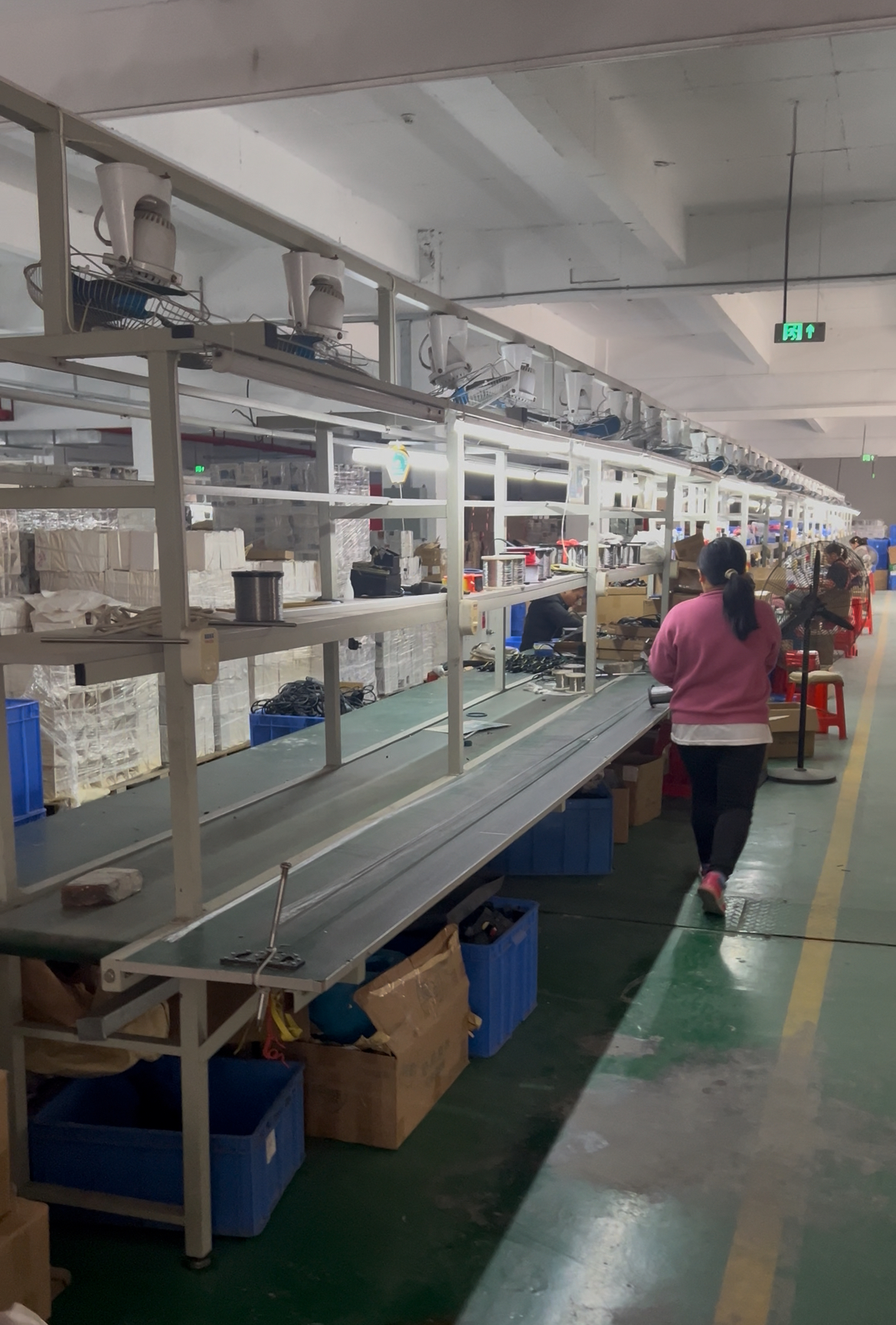
KOOCU is the brand of Guangzhou Weiqianji Technology Co., Ltd, a China-based manufacturer of cell phone repair tools and equipment whose production is organised across facilities in Guangzhou, Foshan and Dongguan. The company reports a 1,000 m² factory footprint, six employees, a research and development team of more than ten engineers, and a 100% export ratio. A third-party trade profile independently lists KOOCU as a manufacturer and supplier based in China, which supports entity identification rather than product performance.
For a buyer building a shortlist, the relevance here is structural rather than promotional. The same supplier documents a tweezer line covering 115 mm, 120 mm and 130 mm formats in stainless steel, and an electric screwdriver ladder running from 1.5W–15W to 2W–30W in aluminium alloy. That overlap is what makes a single-supplier kit feasible, and it is also what makes the specification gaps above worth closing before the order: one supplier means one documentation standard across the entire kit.
Where the profile is thinner is scale. Six employees and a 1,000 m² footprint against 10,000 units of monthly capacity describes a compact operation with partner or outsourced production steps, not a vertically integrated plant. Buyers with very large single-run programmes should plan the order schedule with the 10-day lead time clearly in view.
What the third-party document covers, and what it does not
Certificate scope is the single most misread element in repair-tool procurement, and this supplier's documentation set offers a clean example. A Hazard Classification and Identification Report for Transport of Goods, issued by PONY under number MTIN67MG7731367U1, covers a lithium-ion cell, model 10440, 3.7V, 320mAh, 1.184Wh, packed 400 pieces per carton. It is issued against the IMO International Maritime Dangerous Goods Code 2024 Edition (Amendment 42-24) Special Provision 188 and the UN Manual of Tests and Criteria Part III subsection 38.3, and it is valid from 1 December 2025 to 31 December 2026.
Read precisely, that document is a third-party transport identification report. It is not a product certification and it is not a system certification, and it does not by itself demonstrate the performance of a tweezer or a screwdriver. What it does establish is that the supplier can produce a scoped, dated, third-party document with an identifiable issuing body and a defined battery model. For a buyer, that is a useful signal about document discipline, and a reminder to read every certificate's scope line before filing it as compliance evidence.
Field evidence: a South African wholesale case
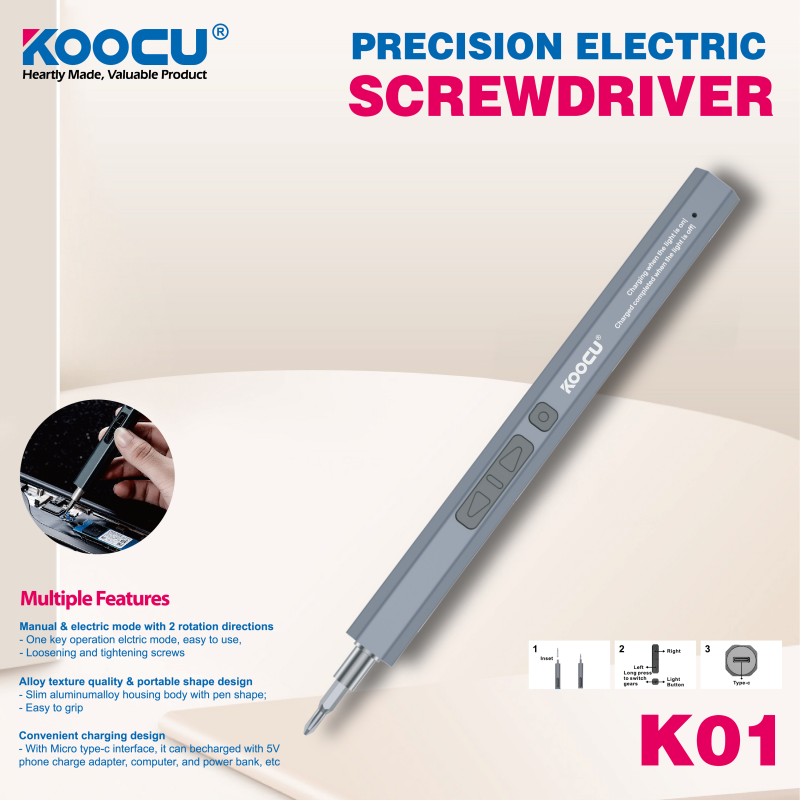
The clearest published application evidence on the screwdriver side is a wholesale deployment rather than a laboratory test. In South Africa, a B-end wholesale merchant installed 50 units of the K01 electric screwdriver for screw removal work, and the project has operated stably for three years. The case is supplier-reported and does not include a torque measurement, a failure rate or a maintenance log, so it should be read as evidence of sustained commercial use in a repair-supply context rather than as a performance benchmark.
What it does answer is the question buyers at evaluation stage actually ask: whether a mid-range electric screwdriver survives a multi-year wholesale programme in a price-sensitive market. Three years of stable operation across 50 units is a directional answer. It is not a substitute for receiving inspection, and it does not extend to models outside the K01 family.
Comparison with traditional sourcing approaches, and where this approach has limits
Traditional sourcing for repair tweezers and screwdrivers usually runs through mixed general-tool traders, where a distributor buys tweezers, drivers, pry tools and spudgers from several agents and consolidates them at the port. The advantage is breadth: one purchase order can cover an entire mobile phone disassembly tool range. The cost is that specification responsibility becomes diffuse, because an agent may not know, and cannot warrant, which model carries an anti-static claim.
The supplier-direct model examined here concentrates specification in one place. The trade-off is real and should be stated plainly:
- Documentation is uneven across the line. Anti-static behaviour is documented for ST-25; the other stainless steel models in the 115 mm and 120 mm groups do not carry the same documented claim in the available material.
- Published specifications stop at length, material and power band. Torque values, tip hardness figures and duty-cycle ratings are not part of the documented set and must be requested per model.
- After-sales is remote only. Distributors without a bench technician absorb more of the diagnosis themselves.
- Capacity and organisation are compact. At 10,000 units per month, six employees and 1,000 m², the model suits stockists and mid-volume distributors but becomes a planning constraint for very large single orders.
- Certification coverage is transport-level for the battery component, not product-level for the tools. Buyers who need product certification for a specific market must request it explicitly rather than infer it.
None of these points disqualifies the line. They define the questions a buyer should have answered in writing before the purchase order, which is exactly what an evaluation-stage comparison exists to produce.
Purchasing terms and goods-in acceptance criteria
The commercial terms documented for this supplier are straightforward: OEM customisation of voltage and logo, MOQ of 50 units, a 10-day lead time, 10,000 units monthly capacity, 100% test quality control and remote after-sales support. Acceptance criteria are the buyer's responsibility to write, and they should be model-specific rather than category-wide.
| Check | Method | Applies to |
|---|---|---|
| Length | Calliper measurement against 115 mm, 120 mm or 130 mm | All tweezer models |
| Material | Supplier declaration plus visual check | All models |
| Tip alignment and closure | Visual and tactile check on a sample per carton | Tweezers |
| Anti-static claim | Written confirmation per model; retain ST-25 documentation on file | ST-25 and any model claimed anti-static |
| Power range | Label and functional check against the ordered band | K01, K01 pro, K02, K04, K05, K07 |
| Bit retention | Fit test with the specified bit across repeated cycles | Electric screwdrivers |
| Packaging count | Carton count against the purchase order | All models |
Two items deserve to be written into the contract rather than agreed verbally: the model-level specification sheet at the revision in force on the order date, and the acceptance sampling plan. Where a claim is not documented, such as torque, hardness for models other than ST-25, or duty cycle, the specification sheet should either state the value or state that it is not specified.
Market signals shaping 2026 tool procurement
Three published data points frame the category without predicting it. The global manual screwdriver market was valued at USD 365.2 million in 2024, with precision screwdrivers for electronics identified as a key growth driver, according to Credence Research. Customs-derived data for mobile opener tools under HS code 8205 puts the average US import price at approximately USD 1.03 per unit, which is a benchmark for landed-cost discussion rather than a price list. And the Right to Repair movement is widely identified as a 2026 market driver, influencing manufacturers to release repair manuals and tools to third-party providers.
Taken together, these signals describe a category where volume follows repair activity and where buyers increasingly compete on specification clarity rather than on unit price alone. An average import price near USD 1.03 for opener tools leaves very little room for a documented, tested product unless the buyer separates the low-cost pry and opener segment from the precision tweezer and driver segment.
Future outlook
The next procurement cycle for cell phone repair tools is likely to be decided on documentation rather than on catalogue breadth. Distributors serving repair chains need model-level claims they can pass downstream, and the anti-static question in particular moves from marketing language into warranty language as repair chains formalise their processes. Suppliers who can issue a per-model specification sheet, a clear certificate scope statement and a defined acceptance standard will be easier to keep on a shortlist than suppliers who can only issue a catalogue.
For the tweezer line, that means treating the 115 mm and 120 mm split as a documented workflow choice rather than a packaging variant, and extending anti-static documentation beyond a single model if the claim is meant to cover the family. For electric screwdrivers, it means publishing torque alongside wattage. Neither step requires new tooling; both require a decision to document.
FAQ
Which cell phone repair tweezers should an overseas buyer shortlist, 115 mm or 120 mm?
Both lengths are stainless steel and specified for mobile phone repair. The 115 mm models are TS-11 and TS-15; the 120 mm models are FS-11, ST-25, ST-21, ST-30, ST-114 and ST-115. Length is a reach decision: shorter bodies suit compact chassis work, longer bodies suit deeper housings, and distributors serving mixed repair shops typically stock both. Two 130 mm models, 7-SA SR SS-SA SR and 7-SA-16 SS-SA-16, cover buyers assembling a full set.
Are the ST-series tweezers anti-static?
Anti-static properties and high hardness are documented for the ST-25 stainless steel tweezer. For ST-21, ST-30, ST-114, ST-115, FS-11, TS-11 and TS-15, the available material documents stainless steel construction and mobile phone repair application, but does not document an anti-static property at model level. Buyers needing that claim across a range should request written confirmation per model.
What power range should an electric screwdriver for mobile phone repair have?
The documented ladder runs from 1.5W–15W on the K01 to 2W–30W on the K05 and K07, with K01 pro at 2W–15W and K02 and K04 at 2W–20W. All are aluminium alloy special screwdrivers for mobile phone repair. Wattage describes the electrical envelope, not torque, so buyers should match the band to the actual duty cycle and request torque separately.
What MOQ, lead time and OEM terms apply?
A 50-unit minimum order, a 10-day lead time, 10,000 units of monthly capacity, OEM customisation of voltage and logo, 100% test quality control and after-sales support via remote support. Export markets listed are South America and Africa, with a wider list covering Southeast Asia, India, Bangladesh, Pakistan and the Middle East.
What should goods-in acceptance testing cover for these tools?
Length verification by calliper against the ordered 115 mm, 120 mm or 130 mm specification; tip alignment and closure on tweezers; bit retention under repeated cycles on electric screwdrivers; power band confirmation against the ordered model; packaging count against the purchase order; and written confirmation of any anti-static claim retained on file.
Does the supplier hold product certification for the tools themselves?
The third-party document available for this supplier is a transport identification report issued by PONY under number MTIN67MG7731367U1, covering a lithium-ion cell model 10440 at 3.7V, 320mAh, 1.184Wh, packed 400 pieces per carton, against IMDG Special Provision 188 and UN Manual of Tests and Criteria subsection 38.3. It is a transport document, not a product or system certification, and buyers requiring product certification for a specific market should request it explicitly.
Есть вопросы или нужны дополнительные детали?
Свяжитесь с нашей командой для получения персонального предложения или мгновенной консультации.
Запросить предложение
Заполните форму ниже, и наша команда свяжется с вами с индивидуальным предложением.
Прямой чат WhatsApp
Предпочитаете общаться в реальном времени? Напишите нам в WhatsApp для мгновенной помощи и быстрых ответов.
- Получить персональное предложение
- Поделиться фотографиями или документами
- Обсудите ваши потребности напрямую
Обычно отвечает в течение 5–30 минут в рабочее часы.