
Centrifugal Chemical Pumps: A Buyer's Guide to Corrosion-Resistant Selection
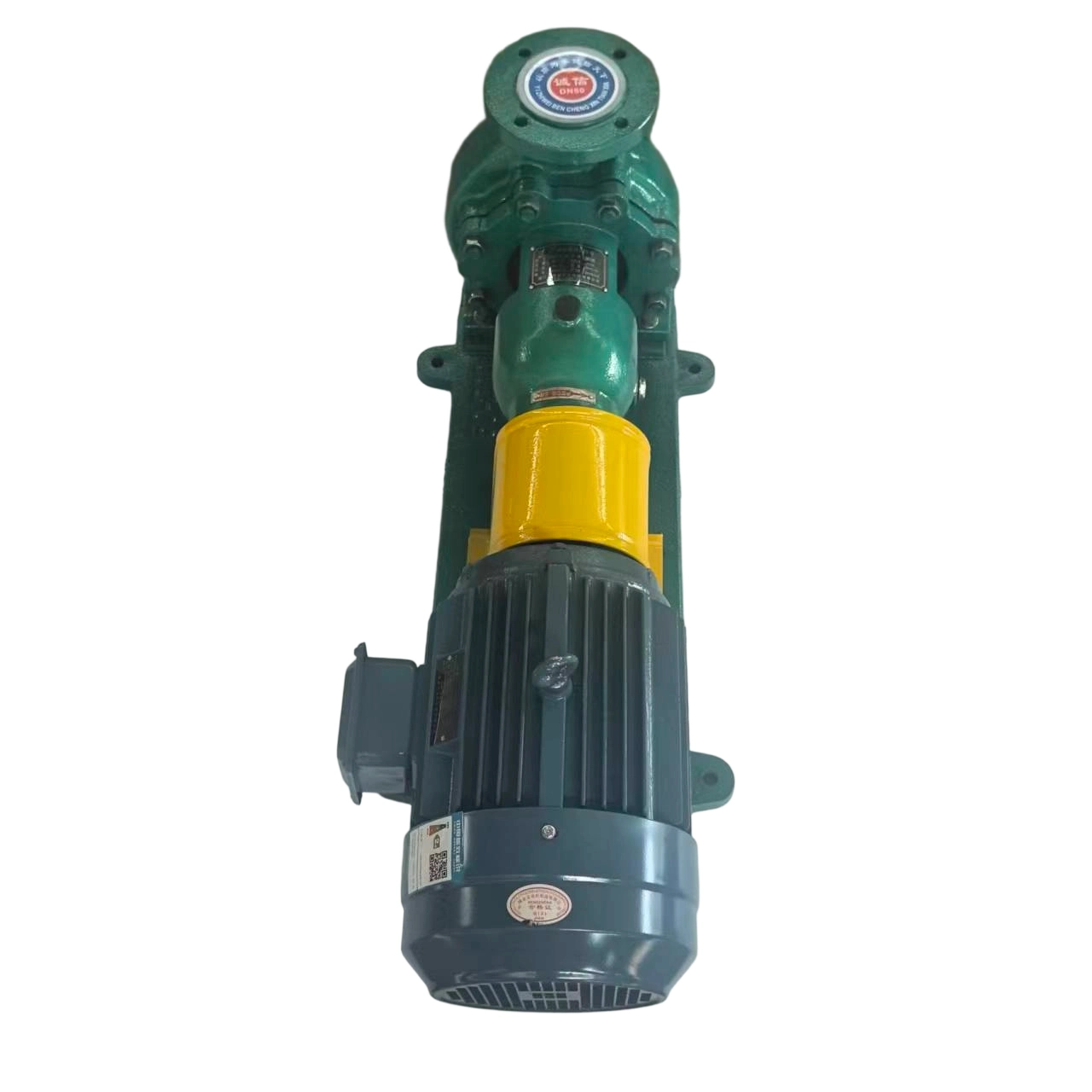
Fluoroplastic-lined centrifugal chemical pump — the lined flow path combines a metal outer casing with a corrosion-resistant wetted surface.
A centrifugal chemical pump is a rotodynamic pump that converts motor shaft rotation into fluid velocity and then into pressure, allowing corrosive, hot or hazardous process liquids to be moved through piping systems where general-purpose pumps would fail on material compatibility, sealing or containment. The practical difficulty for first-time buyers is that "chemical pump" is not one product — it is a family of architectures with different material, sealing and installation logic, and choosing the wrong family is the single most common early-stage error in chemical fluid handling projects.
The commercial backdrop explains why the category is worth understanding before a specific quote is requested. The global chemical pump market was estimated at US$ 5.68 billion in 2025 and is projected to reach US$ 9.92 billion by 2034, according to The Insight Partners. On the supply side, China's centrifugal pump exports under HS 841370 reached US$ 4.1 billion in January–August 2026, up 9.7% year on year, with the United States the largest single destination at a 9.1% share, according to China's General Administration of Customs. For importers, distributors, plant engineers and OEM buyers, that combination of demand expansion and concentrated export capacity makes architecture and supplier selection a live decision rather than a theoretical one.
Why Chemical Transfer Is Not General Fluid Handling
The defining constraint in chemical service is not flow rate — it is the interaction between the liquid and every wetted surface, plus the consequence of that liquid escaping. Documented operational risks during heavy-duty process pump service in chemical and petrochemical plants include medium leakage, corrosion damage, cavitation and overheating shutdown. Each of these has a different root cause, and each maps to a different selection decision.
Corrosion damage is a materials question. Leakage is a sealing and containment question. Cavitation is a hydraulic and installation question, usually tied to available net positive suction head and suction-side piping design. Overheating shutdown is an operating-envelope question, typically linked to dry running or sustained operation far below the pump's design flow. A pump specified only against a flow-and-head datasheet can satisfy all four numbers and still fail on the plant floor, because the four risks above are not captured by flow and head alone.
This is why chemical pump procurement moves quickly from "what flow do I need" to a structured set of medium parameters: concentration, temperature, density, viscosity, pH, and whether solids, crystals or entrained gas are present. In chemical processing duty specifically, medium data must include concentration, temperature, density, viscosity and pH before a material and seal combination can be confirmed.
The Main Centrifugal Chemical Pump Architectures
Most industrial chemical transfer requirements land in one of a small number of centrifugal architectures. Understanding what each one is designed to do is the fastest way to narrow a supplier shortlist.
| Model / Series | Architecture | Primary design intent |
|---|---|---|
| IH | ISO 2858 horizontal single-stage, single-suction end-suction pump | General chemical process transfer; standardised dimensions and back pull-out maintenance |
| IHF | Horizontal single-stage, single-suction lined chemical pump | Corrosive liquids that would attack an unlined metal flow path |
| FY | Vertical single-stage, single-suction long-shaft sump pump | Tank-top and pit transfer where the hydraulic end is submerged |
| ZA / ZE | Heavy-duty chemical process pump | High-temperature and high-pressure process service in chemical, petrochemical and refinery duty |
| 53A / 53B | Pressurized dual-seal support (barrier-fluid) system | Containment for toxic, flammable, corrosive or high-vapour-pressure liquids |
IH — the standardised process workhorse
The IH model is a Chemical Process Centrifugal Pump classified as an ISO 2858 horizontal single-stage, single-suction end-suction pump. Its published envelope covers flow from 0.3 to 400 m³/h, head from 5 to 125 m, speeds of 1,450 or 2,900 rpm, motor power from 0.55 to 90 kW, inlet sizes from DN50 to DN200, a medium temperature range of −20°C to 105°C, and a maximum pressure of 1.6 MPa. The series is offered across 40 basic models and up to 112 specifications.
Two design features matter commercially. First, ISO 2858 dimensional standardisation means the pump can be substituted within an existing installation footprint more predictably than a non-standard unit — a genuine advantage when replacing an ageing pump or aligning a multi-line plant. Second, back pull-out maintenance allows the rotating assembly to be removed without disturbing the suction and discharge piping, which reduces maintenance time and the risk of re-introducing alignment errors during service.
Wetted materials are selected for the medium, with cast iron, carbon steel, SS304/304L/316/316L, duplex 2205/2507, Hastelloy and other alloys available. Sealing options include packing or single/double mechanical seals.
IHF — lined construction for aggressive media
The IHF pump is a horizontal single-stage, single-suction fluoroplastic-lined centrifugal chemical pump. Its wetted parts are lined with moulded F46 or PVDF to form a corrosion-resistant flow path, while the outer casing remains metal — a hybrid that pairs the mechanical strength of a metal pressure boundary with a chemically inert wetted surface. The pump uses a bellows mechanical seal for leakage control and features axial suction with vertical discharge. Flow range is 6.3 to 400 m³/h, head range 5 to 80 m, and medium temperature −20°C to 100°C.
The critical buyer detail here is the phrase "after compatibility review." Lined pumps are positioned for strong acids, alkalis, oxidisers and solvents, but fluoroplastic lining selection is a function of the specific medium, its concentration and its temperature — not a blanket chemical guarantee. A lining that performs well in one acid at ambient temperature may behave differently in the same acid at elevated temperature or at a different concentration.
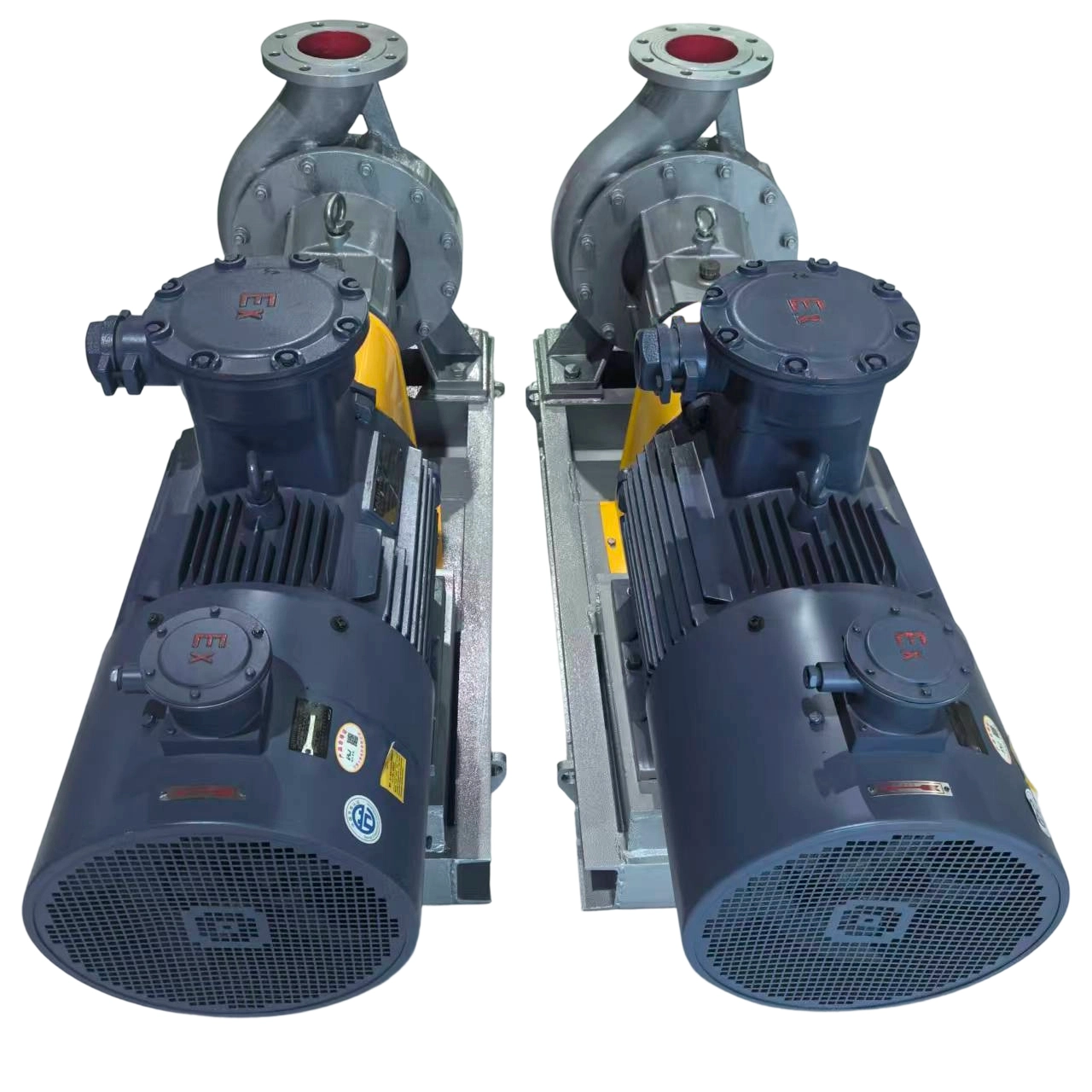
IH chemical centrifugal pump — ISO 2858 end-suction design with back pull-out maintenance access.
FY — vertical sump configuration for tanks and pits
The FY pump is a vertical single-stage, single-suction long-shaft sump pump designed for tank-top installation with a dry-mounted motor. Its hydraulic section sits submerged while the motor remains above the liquid, and it requires no suction priming during normal operation — a meaningful simplification in tank transfer and drainage duty where a horizontal pump would need flooded suction or a priming arrangement. Custom immersion depth is available to match specific tank dimensions.
Published FY parameters cover flow from 1.6 to 2,600 m³/h, head from 5 to 132 m, design pressure up to 1.6 MPa, speeds of 1,450 or 2,900 rpm, and a standard temperature range of 0 to 105°C with an optional range of −20°C to 180°C. Wetted parts are available in cast iron, cast steel, SS304, SS316, SS316L or special alloy, with PTFE/FKM gaskets and selected guide-bearing materials. Closed, semi-open or open impeller options are offered, along with an explosion-proof motor option for hazardous areas.
ZA / ZE and the 53A / 53B seal support system
The ZA / ZE is a heavy-duty chemical process pump for chemical, petrochemical and refinery duty, designed for high-temperature and high-pressure process service and suitable for continuous production in chemical process plants. Wetted material options include carbon steel, stainless steel, duplex 2205/2507 and Hastelloy. Notably, the exact public flow, head, temperature, pressure and motor range is not disclosed — configurations are project-specific, which reflects how heavy-duty process pumps are actually specified.
The 53A / 53B is a pressurized dual-seal support system belonging to the barrier-fluid system category for dual mechanical seals. Its operating principle is barrier pressure maintained above seal-chamber pressure, supporting zero-atmospheric-leakage system design. Plan 53A uses external nitrogen as the barrier fluid source; Plan 53B uses a nitrogen-precharged bladder accumulator. The configuration integrates a reservoir or accumulator, a pumping ring, a cooler, and pressure, level and temperature instruments with alarms, in SS304, SS316L or project-specific alloy. It is intended for toxic, flammable, corrosive, abrasive, polymerising and high-vapour-pressure process liquids.
How Material and Sealing Choices Map to Real Media
The selection logic that matters most to a buyer is the chain from medium to material to seal to installation. The following table summarises how the supplied product families map onto common chemical transfer requirements.
| Media / duty | Typical architecture | Key material or sealing consideration |
|---|---|---|
| Strong acids, alkalis, oxidisers, solvents | IHF lined centrifugal | F46 or PVDF moulded lining; bellows mechanical seal for leakage control; compatibility review required |
| Clean corrosive process liquid, continuous transfer | IH process centrifugal | Wetted alloy selected to medium (SS316L, duplex, Hastelloy); avoid dry running and prolonged operation below 30% of IH design flow |
| Tank, pit or underground sump with varying level | FY vertical sump | Custom immersion depth; inlet must remain below minimum liquid level; tank support must carry pump, motor and piping loads |
| High-temperature, high-pressure process duty | ZA / ZE heavy-duty process | Project-specific configuration; compatible with API 682 Plan 53A/53B dual-seal support |
| Toxic, flammable or high-vapour-pressure liquids | Dual-seal system with 53A / 53B | Barrier pressure above seal-chamber pressure; nitrogen source or bladder accumulator |
Two operating boundaries appear repeatedly in the source material and are worth stating plainly. For the IH process pump in chemical processing duty, the pump should be run at the selected operating point, with dry running and prolonged operation below 30% of IH design flow avoided. For the FY vertical sump pump, the hydraulic section is submerged while the motor sits above the tank, and the inlet must remain below the minimum liquid level — which makes level control and dry-run protection part of the specification, not an optional extra.
Application Scenarios Where Centrifugal Chemical Pumps Are Specified
Electroplating and surface treatment
Working conditions typically involve acid/alkali baths, pickling liquid and corrosive wastewater, with bath circulation, tank transfer and wastewater collection as the main project types. Corrosion-resistant transfer with an optional leak-control configuration is the usual requirement, in continuous circulation or batch tank transfer mode. Chemical concentration and temperature must be verified, and a solids-tolerant pump should be used where crystals or particles are present.
MVR evaporation and crystallisation
This duty calls for very high flow at low head, handling hot concentrated liquor, salt slurry or crystallising media in forced circulation through an evaporator or crystalliser. Material selection is driven by temperature, chloride corrosion and crystal abrasion. A referenced case in this category — FJX-900 — operates at Q = 7,800 m³/h and H = 3 m, which illustrates how far chemical pump duty can sit from a conventional process-transfer operating point.
Pharmaceutical and fine chemical
Here the medium is a clean corrosive or solvent-bearing liquid where leakage and contamination control are important. Project types include process feed, circulation, unloading and cleaning-system transfer, with either mechanical-seal or sealless options. Hygiene, contamination, solvent, temperature and hazardous-area requirements all need confirmation before production.
Industrial wastewater and chemical sumps
Tank, pit or underground sump duty with varying liquid level and corrosive or lightly contaminated liquid is a natural fit for the vertical sump configuration. Level controllers, dry-run protection, discharge piping, optional strainers and explosion-proof motors are the typical matched equipment set.
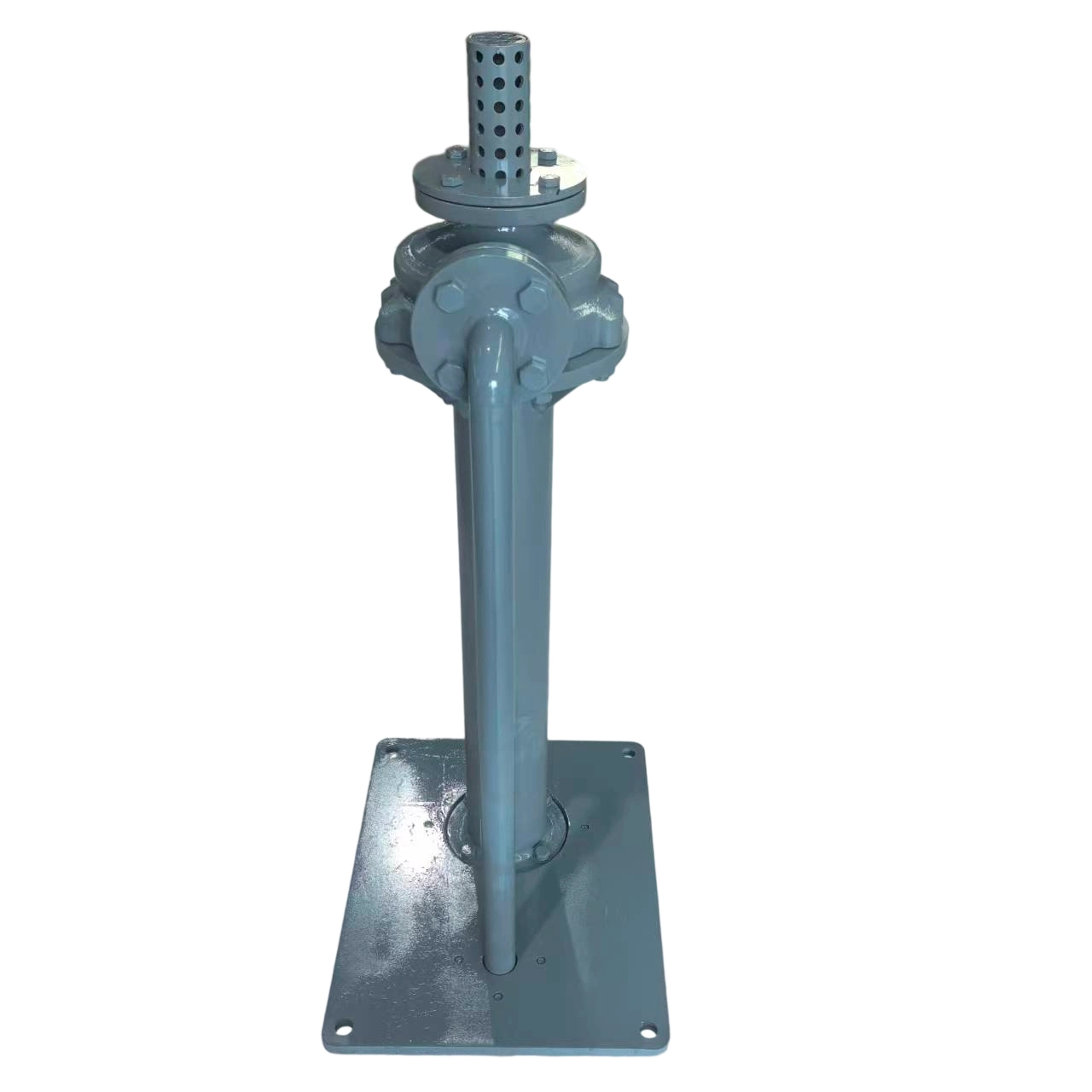
FY vertical sump pump — tank-top installation with dry-mounted motor and submerged hydraulic section.
Market Signals Buyers Should Read
Three data points frame the current procurement environment.
- Category growth. The global chemical pump market was estimated at US$ 5.68 billion in 2025 and is projected to reach US$ 9.92 billion by 2034 (The Insight Partners), indicating continued capital investment in chemical fluid handling infrastructure.
- Sealless technology growth. The magnetic drive pump market was valued at US$ 1.4 billion in 2024 and is projected to reach US$ 2.7 billion by 2033, a 7.7% CAGR (Grand View Research). Because magnetic drive pumps eliminate the dynamic shaft seal, this growth is frequently read as a signal of tightening containment expectations rather than a simple capacity expansion.
- Standards movement. API 610 13th Edition was released in June 2026, replacing the 12th Edition. Separately, API STD 682:2014(R2022) sets out requirements and recommendations for shaft-sealing systems for centrifugal and rotary pumps used in petroleum, natural gas and chemical industries.
One industry interpretation links the first and third points: stricter emission and containment expectations are read as a catalyst for sealless and enhanced seal-support adoption. That reading is plausible but should be treated as an industry interpretation rather than a verified causal relationship — the underlying market forecasts and the standard release are separately verifiable, but the causal link between them is analytical, not measured.
Chinese centrifugal pump exports under HS 841370 reached US$ 4.1 billion in January–August 2026, up 9.7% year on year from the same period in 2025, with the United States holding a 9.1% share as the top destination (China General Administration of Customs). For importers, this confirms that China remains a structurally significant supply base for centrifugal liquid pumps — but it also means the differentiation question moves from country of origin to supplier-specific capability, documentation and configuration flexibility.
Limits and Boundaries of Centrifugal Chemical Pump Solutions
An honest selection process has to state where these products do not fit, or where a buyer should apply additional scrutiny.
Centrifugal architecture has inherent hydraulic limits
Centrifugal pumps are not self-priming by design. The FY vertical sump configuration avoids this through a submerged hydraulic section, and it explicitly requires no suction priming during normal operation — but that is a function of its tank-top installation, not of the centrifugal principle. A horizontal IH or IHF installation still depends on adequate flooded suction or a priming arrangement, and on sufficient net positive suction head to avoid cavitation, which is documented as a real operating risk in chemical and petrochemical service.
Low-flow operation is a second boundary. Prolonged operation below 30% of IH design flow is explicitly flagged as something to avoid, which means plants with wide turndown requirements should plan for recirculation, variable-frequency control or a multi-pump arrangement rather than a single oversized unit.
Published performance data is not a complete compatibility proof
Flow, head and temperature ranges describe an operating envelope; they do not prove chemical compatibility for a specific medium at a specific concentration. Lined designs such as the IHF are positioned for strong acids, alkalis, oxidisers and solvents after compatibility review — the review itself is a necessary step, not a formality.
Publicly available third-party benchmarking in this category is also limited. Harmonised pump curves, material certificates, chemical compatibility tables and test records across suppliers are not broadly available, which means buyers comparing suppliers are often comparing catalogue claims rather than aligned test data. Where supplier-reported figures such as an operating temperature range appear, they should be treated as supplier-reported specifications rather than industry benchmarks.
Supplier maturity is a legitimate evaluation dimension
Jiangsu Xiangsu Machinery Equipment Manufacturing Co., Ltd. was established in 2024. Buyers who weight decades of installed base, long historical service records or an extensive field reference list as a procurement criterion should weigh that factor explicitly. The company's stated production context — an 18,000 m² manufacturing-partner plant, 10,000 units annual capacity, 15 technical personnel and a 70% export ratio — describes current capability, not a long track record. That distinction matters and should be verified rather than assumed in either direction.
What to Verify Before Ordering
A practical pre-order checklist for centrifugal chemical pump procurement, drawn from the operating requirements documented for these product families:
- Medium data completeness. Concentration, temperature, density, viscosity and pH should all be documented. Incomplete medium data is the most common cause of mismatched material selection.
- Material and seal compatibility confirmation. For lined pumps, confirm the specific lining grade against the medium; for alloy pumps, request the material grade certificate.
- Seal or containment strategy. Where the medium is toxic, flammable or high-vapour-pressure, confirm whether API 682 Plan 53A/53B sealing applies, and request seal-system drawings and barrier-fluid parameters.
- Piping support. Piping should be independently supported — the pump should not carry piping loads.
- Monitoring scope. Vibration, temperature, pressure and leakage monitoring should be defined at specification stage, not added after commissioning.
- Installation geometry. For vertical sump duty, confirm custom immersion depth, vertical alignment, and that the tank support can carry the combined pump, motor and piping loads.
- Dry-run and level protection. Particularly for sump and tank transfer duty, level control and dry-run protection belong in the equipment scope.
- Motor classification. Confirm whether the installation requires an explosion-proof motor option.
Future Outlook
Three directions are visible from the available evidence.
First, containment requirements are becoming more explicit. With API 610 13th Edition active from June 2026 and API STD 682 already defining sealing-system requirements for chemical and petrochemical service, the documentation standard expected of a chemical pump supplier is rising. Buyers should expect to ask for seal-system applicability, material certificates and compatibility data as routine RFQ items rather than premium extras.
Second, sealless and enhanced-seal architectures are expanding faster than the category as a whole, based on the magnetic drive pump growth differential. Whether that translates into full replacement of sealed designs or a growing split by application is not yet resolved by the available data — but for new hazardous-duty lines, the containment question is likely to be answered earlier in the design process than it has been historically.
Third, supply-base competition is intensifying. With China centrifugal pump exports growing 9.7% year on year in the first eight months of 2026, buyers have more supplier options but also more catalogue-level claims that look similar on paper. The practical differentiator is shifting from product availability to verifiable configuration engineering: getting from a medium datasheet to a confirmed material, seal and installation specification, with the supporting documentation to defend the decision internally.
For organisations entering this category for the first time, the useful next step is not a quote request — it is a medium and duty specification. Flow, head, temperature, pressure, medium chemistry, installation geometry and containment requirement together determine which architecture is even in scope. Everything after that is a supplier comparison within a correctly defined category.
FAQ
What is a centrifugal chemical pump?
A centrifugal chemical pump is a rotodynamic pump that converts rotational energy from a motor into fluid velocity and then into pressure, and it is built with wetted materials, sealing and containment arrangements selected to handle corrosive, hot or hazardous process liquids. It differs from a general-purpose centrifugal pump primarily in material selection (for example fluoroplastic lining, SS316L, duplex 2205/2507 or Hastelloy), seal configuration (single, double or bellows mechanical seals) and containment provisions.
What is the difference between an IH and an IHF chemical pump?
The IH is a Chemical Process Centrifugal Pump classified as an ISO 2858 horizontal single-stage, single-suction end-suction pump, with wetted materials selected from cast iron, carbon steel, SS304/304L/316/316L, duplex 2205/2507 or Hastelloy depending on the medium. The IHF is a horizontal single-stage, single-suction fluoroplastic-lined pump whose wetted parts are lined with moulded F46 or PVDF, giving a corrosion-resistant flow path inside a metal outer casing. In short, IH relies on alloy selection for corrosion resistance; IHF relies on a moulded fluoroplastic lining.
How do I choose between a horizontal and a vertical chemical pump?
The deciding factor is usually installation geometry rather than pumping principle. A vertical sump pump such as the FY is designed for tank-top installation with a dry-mounted motor and a submerged hydraulic section, requires no suction priming during normal operation, and supports custom immersion depth — making it suitable where a horizontal pump would need flooded suction or priming. A horizontal IH or IHF is typically used for process feed, circulation and tank transfer where a suitable suction-side arrangement exists. Vertical sump installations additionally require that the inlet remain below the minimum liquid level, and that the tank support carry the pump, motor and piping loads.
What temperature ranges can these chemical pumps handle?
Published ranges differ by model. The IH chemical process centrifugal pump is rated for media from −20°C to 105°C. The IHF fluoroplastic-lined pump is rated for −20°C to 100°C. The FY vertical sump pump has a standard range of 0 to 105°C with an optional range of −20°C to 180°C. Heavy-duty ZA/ZE process pump configurations are project-specific, and published ranges are not disclosed for that model. Temperature ratings should always be confirmed against the specific medium, since chemical compatibility and temperature interact.
What is API 682 Plan 53A/53B and when is it needed?
Plan 53A/53B is a pressurized dual-seal support system belonging to the barrier-fluid system category for dual mechanical seals. Its operating principle is barrier pressure maintained above seal-chamber pressure, supporting zero-atmospheric-leakage system design. Plan 53A uses external nitrogen as the barrier fluid source; Plan 53B uses a nitrogen-precharged bladder accumulator. The configuration integrates a reservoir or accumulator, a pumping ring, a cooler, and pressure, level and temperature instruments with alarms, in SS304, SS316L or project-specific alloy. It is intended for toxic, flammable, corrosive, abrasive, polymerising and high-vapour-pressure process liquids. API STD 682:2014(R2022) sets out requirements and recommendations for shaft-sealing systems for centrifugal and rotary pumps used in petroleum, natural gas and chemical industries; however, reference to the standard is not itself proof that a specific pump or supplier complies with it.
Which materials are available for chemical pump wetted parts?
Available wetted materials depend on the model. For the IH chemical process centrifugal pump, options include cast iron, carbon steel, SS304/304L/316/316L, duplex 2205/2507, Hastelloy and other alloys. For the FY vertical sump pump, options are cast iron, cast steel, SS304, SS316, SS316L or special alloy, with PTFE/FKM gaskets and selected guide-bearing materials. For the IHF lined pump, wetted parts use moulded F46 or PVDF lining inside a metal casing. The ZA/ZE heavy-duty process pump offers carbon steel, stainless steel, duplex 2205/2507, Hastelloy and other project-specific alloys, and the 53A/53B seal support system uses SS304, SS316L or project-specific alloy. Material selection must be based on documented medium data including concentration, temperature, density, viscosity and pH.
Sources referenced in this article: The Insight Partners, Chemical Pump Market Size, Share & Forecast 2034; General Administration of Customs of China, China Centrifugal Pumps (HS 841370) Export Data, 2026 Jan–Aug; Grand View Research, Magnetic Drive Pump Market Report 2025–2033; BBP, Pump Industry Standards Guide (API 610 13th Edition, 2026); Standards listing for API STD 682:2014(R2022). Company and product specifications are drawn from xsupump (www.xsupump.com).
Есть вопросы или нужны дополнительные детали?
Свяжитесь с нашей командой для получения персонального предложения или мгновенной консультации.
Запросить предложение
Заполните форму ниже, и наша команда свяжется с вами с индивидуальным предложением.
Прямой чат WhatsApp
Предпочитаете общаться в реальном времени? Напишите нам в WhatsApp для мгновенной помощи и быстрых ответов.
- Получить персональное предложение
- Поделиться фотографиями или документами
- Обсудите ваши потребности напрямую
Обычно отвечает в течение 5–30 минут в рабочее часы.