
Ceramic Grinding Wheel Recommendations: A Shortlist for Common Manufacturing Grinding Operations
Ceramic Grinding Wheel Recommendations: A Shortlist for Common Manufacturing Grinding Operations
A practical starting point for buyers who need to match ceramic bonded grinding wheels to common manufacturing operations without treating a broad product family as a single interchangeable item.
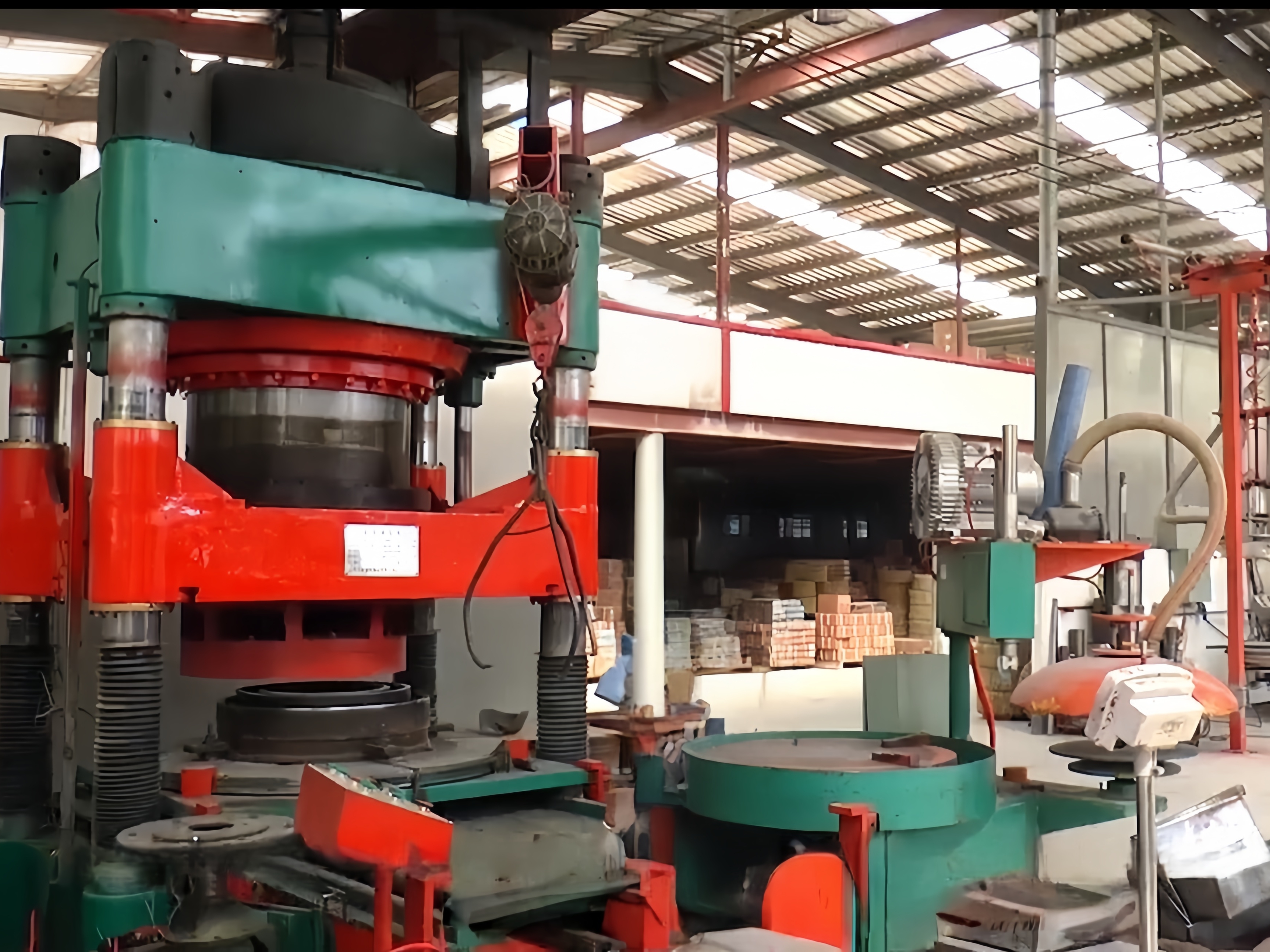
Forming workshop at Shandong Xinfa Abrasives & Grinding Tools Co., Ltd., a manufacturer established in 1989 and specialized in vitrified bond grinding wheels.
Ceramic grinding wheel selection is not a single-product decision. In a typical manufacturing plant, the same buyer may need a wheel for internal bore work, a roll grinder, a gear grinder, a bearing line, a saw sharpening bench, a crankshaft grinder, a centerless operation, a surface grinder, and a general maintenance bench. The wheel category, machine interface, workpiece material, finish target, and dressing practice all change the shortlist.
This article provides a recommendation-oriented shortlist of ceramic bonded grinding wheel categories from Shandong Xinfa Abrasives & Grinding Tools Co., Ltd., referred to here as Xinfa. Xinfa is a Chinese manufacturer established in 1989 and specialized in the research, development, and manufacture of vitrified bond grinding wheels. Its listed main products include Brown Fused Alumina Abrasive and a broad range of wheel types relevant to industrial grinding operations.
Why a shortlist is useful in 2026
The commercial case for a shortlist is straightforward: buyers rarely purchase a generic ceramic wheel. They purchase a wheel shape, dimension, grain, bond, grade, and structure intended for a machine and a workpiece. Without a structured starting point, quotations can look comparable while describing different products.
Market context supports the need for clearer comparison. A commercial research estimate cited in the verified data projects the global grinding wheel market to grow at a CAGR of 6.7% from 2025 to 2032, driven by demand for precision machining. Another commercial estimate places the centerless grinding wheel market at USD 4.7 billion in 2025, rising to USD 7.2 billion by 2033. These figures are directional market signals, not a guarantee of demand for any single supplier or wheel type.
Raw material context also matters. Brown Fused Alumina held the largest product type share of the fused alumina market at 52.4% in 2025, according to a commercial research source in the verified data. For buyers, that is a reminder that conventional fused alumina remains a major starting point in many abrasive specifications, even when ceramic bond systems and advanced grain options receive more attention.
What Xinfa brings to the shortlist
Xinfa is based in Linyi City, Shandong Province, China. Its company profile states that it was established in 1989, occupies a factory area of 30,000 m², employs 120 people, and has an annual output of 10,000 tons. The company reports more than 100 sets of advanced production and testing equipment, a six-engineer R&D team, and an annual production capacity of over 10,000 tons. It is a member of the China Abrasives Association, and its profile states ISO9001:2008 quality management system authentication.
The company profile also states that Xinfa is located near major port infrastructure: about 180 km from Qingdao Port and 60 km from Rizhao Port. Its export ratio is listed as 35%, with markets in Southeast Asia, India, South Korea, Japan, the Middle East, Europe, the United States, and Brazil. The company reports exports to more than 20 countries and regions. These facts are relevant to buyers evaluating supply continuity and export experience, but they should still be checked through the buyer's own qualification process.
For this shortlist, the most relevant fact is the product range. Xinfa's listed main products include General Purpose Grinding Wheel, Bench Grinder Wheel, Tool Grinding Wheel, Flat Surface Grinding Wheel, Centerless Grinding Wheel, Cylindrical Grinding Wheel, Crankshaft & Cam Shaft Grinding Wheel, Saw Tooth Grinding Wheel, Bearing Grinding Wheel, Worm Grinding Wheel, Gear Grinding Wheel, Needle Grinding Wheel, Roll Grinding Wheel V&B, Internal (Bore) Grinding Wheel, Oilstone, Segments, Resin Bonded Snagging Grinding Wheel, Rubber Control & Centerless, Flap Disc, and Mounted Points. The shortlist below focuses on the ceramic bonded wheel categories most often mapped to common manufacturing grinding operations.
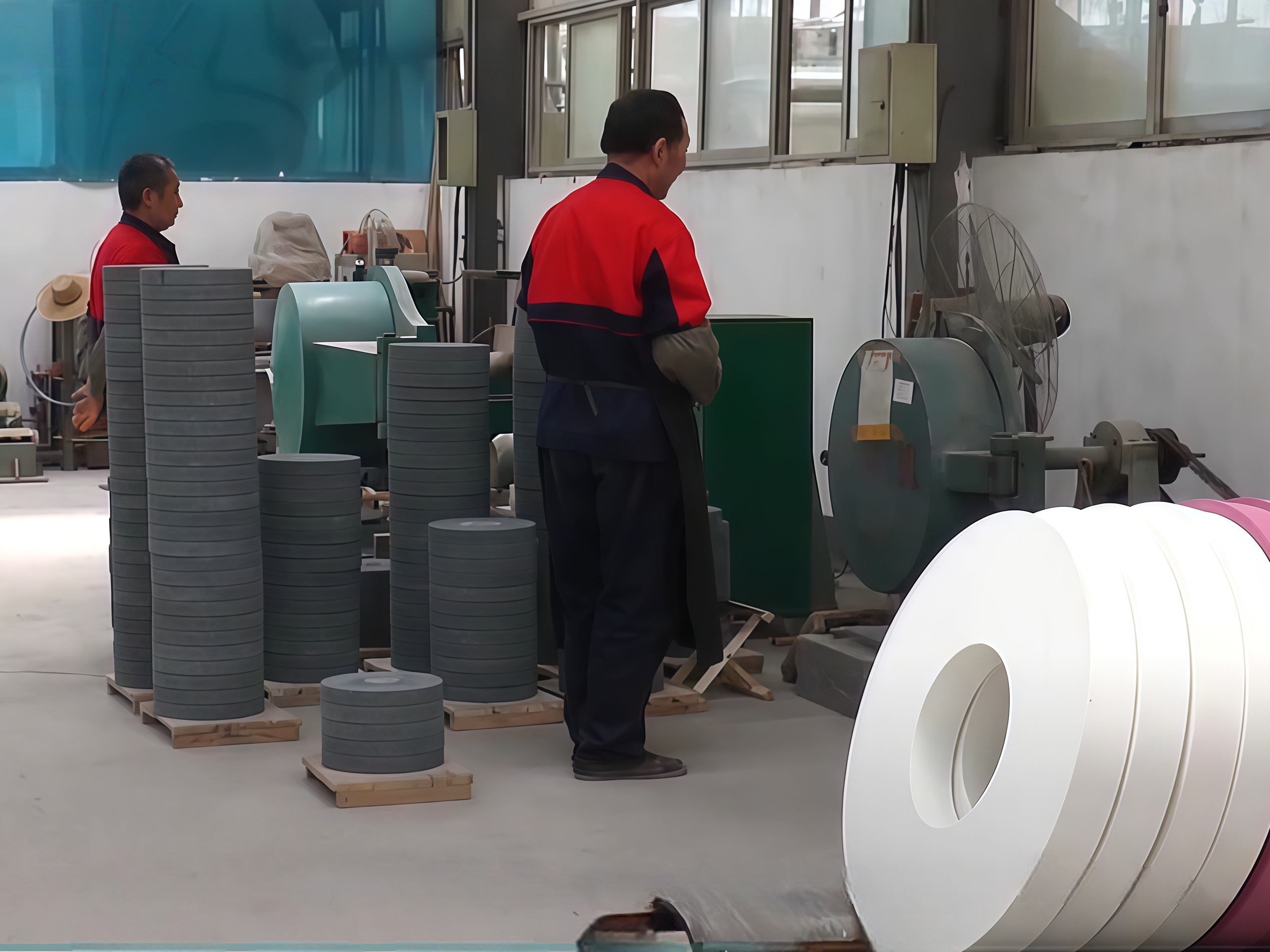
Quality inspection workshop. For ceramic wheels, dimensional checks and specification review should be part of the buyer qualification process.
Technical basis: bond, grain, and wheel condition
A bonded grinding wheel is an abrasive product composed of abrasive grain held together by a bond, with porosity between the two. In a ceramic or vitrified bond wheel, the bond is the ceramic system that holds the abrasive grain in place. The practical selection variables are the abrasive material, grit size, grade or hardness, structure or porosity, bond type, wheel shape, and maximum operating speed.
The abrasive material names that often enter a ceramic-wheel RFQ include Brown Fused Alumina, White Fused Alumina, Pink Fused Alumina, Green Silicon Carbide, SG ceramic alumina, and Black Silicon Carbide. Their relevance depends on the workpiece material, the operation, and the finish target. For example, a buyer grinding hardened steel, carbide, or a heat-sensitive workpiece may need different grain and grade assumptions than a shop grinding mild steel or doing general maintenance work. These material names are selection dialogue points, not a substitute for a controlled trial.
Wheel condition also matters. A peer-reviewed research source in the verified data states that grinding wheel wear state directly affects the surface quality of the workpiece, and that monitoring wheel wear state can allow efficient evaluation of wheel condition. For procurement, that supports a practical rule: include dressing interval, wheel-life expectation, and surface-finish checks in the trial plan, not only in the purchase order.
Dimensional and safety references should be explicit. ISO 603-14:2022 specifies common nominal dimensions for shape types 6, 11, 27, 28, and 29 bonded abrasive products used for hand-held grinding-machine applications. ANSI B7.1 covers safety requirements for the use, care, and protection of abrasive wheels. A buyer comparing ceramic wheels should confirm the applicable shape and dimension standard, the wheel marking, and the maximum operating speed required by the machine.
Shortlist: wheel categories mapped to common grinding operations
The table below is a recommendation-oriented starting point. Each row identifies a wheel category from Xinfa's listed product range and a common manufacturing operation where buyers typically evaluate it. The grain notes are discussion prompts for an RFQ, not fixed specifications for every workpiece.
| Wheel category | Common manufacturing operation | Selection note and grain dialogue | Xinfa listed range |
|---|---|---|---|
| Internal (Bore) Grinding Wheel | Internal cylindrical grinding of bores, sleeves, hydraulic components, and bearing housings | Check spindle clearance, wheel head shape, and bore diameter. White Fused Alumina, Pink Fused Alumina, or SG ceramic alumina are often discussed where finish and form retention matter; Brown Fused Alumina remains a general starting point. | Listed |
| Roll Grinding Wheel V&B | Roll grinding for large rolls used in metalworking, paper, and industrial processing | Confirm machine capacity, roll diameter, coolant, and required surface finish. Brown Fused Alumina, White Fused Alumina, and SG ceramic alumina are common dialogue points depending on roll material and finish target. | Listed |
| Gear Grinding Wheel | Gear tooth form grinding and precision gear finishing | Prioritize profile accuracy, burn control, and dressing practice. SG ceramic alumina, White Fused Alumina, and Pink Fused Alumina are often discussed where form holding and finish stability are important. | Listed |
| Worm Grinding Wheel | Worm gear and worm shaft grinding | Match wheel form to the worm profile and check machine dresser capability. White Fused Alumina, Pink Fused Alumina, and SG ceramic alumina may be considered for precision form work. | Listed |
| Bearing Grinding Wheel | Bearing raceway, inner ring, and outer ring grinding | Focus on surface finish, burn risk, and wheel-life consistency. White Fused Alumina and SG ceramic alumina are common starting points for controlled bearing work; final selection requires trial data. | Listed |
| Saw Tooth Grinding Wheel | Saw tooth sharpening, saw blade maintenance, and tooth form grinding | Check tooth geometry and whether the saw is HSS or carbide. Brown Fused Alumina and White Fused Alumina are general dialogue points; Green Silicon Carbide may be discussed for carbide teeth. | Listed |
| Crankshaft & Cam Shaft Grinding Wheel | Crankshaft journal and camshaft lobe grinding | Balance wheel shape, machine stiffness, coolant, and burn control. White Fused Alumina, Pink Fused Alumina, and SG ceramic alumina are common considerations for precision engine-component work. | Listed |
| Cylindrical Grinding Wheel | Outer diameter grinding of shafts, pins, spindles, and similar parts | Confirm part diameter, required finish, and dressing frequency. Brown Fused Alumina is a general starting point; White Fused Alumina and SG ceramic alumina may be discussed for tighter finish or longer dressing intervals. | Listed |
| Centerless Grinding Wheel | High-volume grinding of bars, tubes, pins, and small cylindrical parts | Check through-feed or in-feed setup, regulating wheel matching, and production volume. Brown Fused Alumina and White Fused Alumina are common starting points; Green Silicon Carbide may be discussed for hard or carbide work. | Listed |
| Flat Surface Grinding Wheel | Surface grinding of dies, molds, plates, and flat components | Match wheel shape to the machine and fixture. Brown Fused Alumina, White Fused Alumina, and Green Silicon Carbide are common dialogue points depending on workpiece hardness and finish target. | Listed |
| Tool Grinding Wheel | Tool and cutter grinding for drills, end mills, reamers, and cutting tools | Identify whether the tool is HSS or carbide. Green Silicon Carbide is often discussed for carbide; White Fused Alumina for HSS; SG ceramic alumina may be considered for form retention and burn control. | Listed |
| Bench Grinder Wheel | Workshop maintenance, deburring, edge dressing, and general repair | Match wheel diameter to the bench grinder and confirm guard clearance. Brown Fused Alumina and White Fused Alumina are common general-purpose choices; Green Silicon Carbide may be discussed for carbide touch-up. | Listed |
| General Purpose Grinding Wheel | Mixed shop work, MRO, general deburring, and non-specialized grinding | Use a clear operating envelope rather than a narrow single-operation specification. Brown Fused Alumina is a common baseline for general carbon-steel work; confirm the machine speed and guard requirements. | Listed |
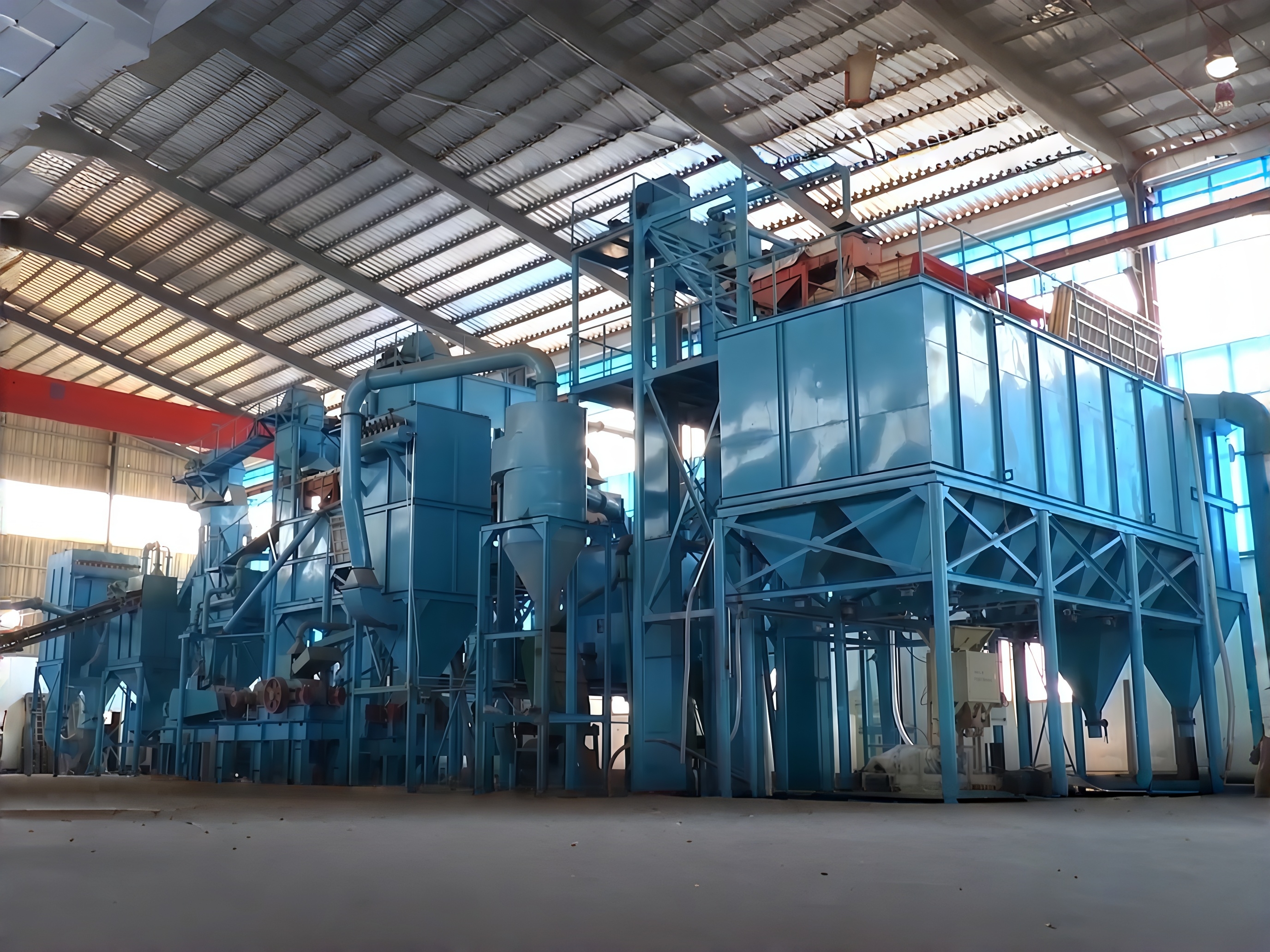
Raw material workshop. Abrasive grain and bond selection should be translated into explicit RFQ fields rather than left to a generic product name.
Selection notes for a practical RFQ
A ceramic wheel shortlist becomes useful only when it is converted into an RFQ. The first step is to name the operation: internal bore grinding, roll grinding, gear grinding, worm grinding, bearing grinding, saw tooth grinding, crankshaft and cam shaft grinding, cylindrical grinding, centerless grinding, flat surface grinding, tool grinding, bench grinder work, or general purpose work. The second step is to state the machine interface, including wheel dimensions, mounting, spindle speed, and guard clearance.
The third step is to define the workpiece. Material, hardness, prior machining, finish target, and burn sensitivity should be stated. A wheel that works well on mild steel may not be appropriate for hardened steel, stainless steel, carbide, or a heat-sensitive alloy. This is where grain dialogue matters: Brown Fused Alumina, White Fused Alumina, Pink Fused Alumina, Green Silicon Carbide, SG ceramic alumina, and Black Silicon Carbide should be discussed with the application in view, not treated as interchangeable labels.
The fourth step is to require evidence. Ask for the wheel marking, maximum operating speed, applicable dimensional standard, packaging method, and trial data. ISO 603-14:2022 can help normalize the dimensional conversation for the shape types it covers. ANSI B7.1 can help frame safety requirements. For higher-risk or high-value operations, request a trial plan that records wheel life, dressing interval, surface finish, and any burn or chatter observations.
Ceramic wheels are also brittle. The risk-control note for this product category calls for pallet reinforcement and shockproof cushioning. Buyers importing in bulk should confirm packaging details before shipment, especially for large-diameter or thin wheels where handling damage can create safety and quality problems.
Ceramic versus conventional wheels: value and limits
Xinfa's comparison content states that, compared with conventional grinding wheels, the product offers 30% higher grinding efficiency, 20% lower cost, less frequent dressing, and long-lasting performance, with industrial plant scenarios as the intended use case. For a buyer, those claims are a reason to evaluate ceramic bonded wheels against the current conventional wheel, not a reason to skip validation.
The practical value is usually expressed in three places: grinding time, dressing frequency, and cost per unit of production. A wheel that requires less frequent dressing can reduce interruption on a production line. A longer-lasting wheel can reduce changeover frequency. A lower-cost wheel can improve the consumable budget, but only when the wheel actually matches the operation and does not create scrap, burn, or rework.
There are limits. Ceramic bonded wheels are not a universal replacement for every abrasive operation. Heavy snagging, rough deburring, and some high-impact foundry work may still favor a resin bonded snagging wheel or another bond type within a broader product range. Ceramic wheels can also be less forgiving when the machine, fixture, coolant, or operator practice is unstable. The 30% efficiency and 20% cost figures should be treated as product-positioning comparisons that require application-level confirmation.
A second limit is specification discipline. A ceramic wheel shortlist is only as good as the dimensions, speed rating, and marking data behind it. If two quotations use the same wheel category name but different dimensions, grades, or speed ratings, the buyer is not comparing like with like. The correct approach is to normalize the technical fields before comparing price.
Market signals and future outlook
The verified data points to steady rather than explosive change. The global grinding wheel market is estimated to grow at a 6.7% CAGR from 2025 to 2032 in one commercial research forecast. Brown Fused Alumina remains the largest fused alumina product type by share in 2025. Centerless grinding wheels are estimated at USD 4.7 billion in 2025 and USD 7.2 billion by 2033 in another commercial research estimate. These signals suggest continued demand for conventional and ceramic bonded wheels across general manufacturing, with precision applications remaining an important value segment.
The technical direction is also visible in research and patent activity around wheel wear monitoring and online condition evaluation. For buyers, that points toward more structured trials: documented wheel-life checks, surface-finish records, and dressing intervals rather than informal operator impressions alone. Standardization will continue to matter as well. ISO 603-14:2022 provides dimensional reference points for specified bonded abrasive shapes, while ANSI B7.1 remains a relevant safety reference for abrasive wheel use and protection.
For Xinfa, the shortlist position is supported by a long operating history, a broad vitrified bond product range, a stated annual output of 10,000 tons, export experience across more than 20 countries and regions, and a listed range that covers the wheel categories discussed here. The next stage for a buyer is not another generic search; it is a specification review, sample trial, and supplier qualification check.
FAQ
What is a ceramic grinding wheel?
A ceramic grinding wheel is a bonded abrasive product in which abrasive grain is held by a ceramic or vitrified bond, with porosity between the grain and bond. It is used across internal, cylindrical, centerless, surface, tool, gear, bearing, roll, and other grinding operations. The wheel is defined by its grain, grit, grade, structure, bond, shape, dimensions, and maximum operating speed.
Which ceramic wheel category should a general machine shop start with?
A general machine shop usually starts with a General Purpose Grinding Wheel, Bench Grinder Wheel, or Tool Grinding Wheel, depending on whether the work is mixed maintenance, bench work, or cutter grinding. If the shop has a specific production operation such as cylindrical, centerless, surface, or internal grinding, the shortlist should start with that operation-specific category instead.
How do abrasive materials affect the choice?
Abrasive material affects cutting behavior, finish, and suitability for the workpiece. Brown Fused Alumina, White Fused Alumina, Pink Fused Alumina, Green Silicon Carbide, SG ceramic alumina, and Black Silicon Carbide are common material names in ceramic wheel discussions. The correct choice depends on the workpiece material, hardness, finish target, and machine conditions, so the material should be confirmed through an application-specific trial.
What should a buyer verify before comparing quotations?
The buyer should verify wheel category, dimensions, shape, grain, grit, grade, structure, bond, maximum operating speed, marking, applicable standard, packaging, and trial basis. ISO 603-14:2022 can be used as a dimensional reference for the shape types it covers. ANSI B7.1 is a relevant safety reference. Without matching these fields, a price comparison is not a like-for-like comparison.
How should fragile ceramic wheels be handled and shipped?
Ceramic wheels are brittle and require careful handling. The risk-control note for this product category specifies pallet reinforcement and shockproof cushioning. Buyers should confirm packaging details before shipment and inspect for handling damage on receipt, especially for large-diameter or thin wheels.
What limitations should buyers expect from ceramic wheels?
Ceramic bonded wheels are not universal replacements for every grinding operation. Heavy snagging and some high-impact work may still favor resin bonded snagging wheels or other bond types. Ceramic wheels also require correct machine setup, coolant, dressing practice, and operator handling. Performance claims such as higher grinding efficiency or lower cost should be validated in the buyer's own operation.
A full product-range reference is available in the Xinfa brochure (PDF).
Есть вопросы или нужны дополнительные детали?
Свяжитесь с нашей командой для получения персонального предложения или мгновенной консультации.
Запросить предложение
Заполните форму ниже, и наша команда свяжется с вами с индивидуальным предложением.
Прямой чат WhatsApp
Предпочитаете общаться в реальном времени? Напишите нам в WhatsApp для мгновенной помощи и быстрых ответов.
- Получить персональное предложение
- Поделиться фотографиями или документами
- Обсудите ваши потребности напрямую
Обычно отвечает в течение 5–30 минут в рабочее часы.