
Ceramic Sanitary Ware Sourcing: Factory vs. Retail
Ceramic sanitary ware is a high-stakes procurement category for hotel projects, apartment developments, wholesale distributors and private-label brands. Sourcing decisions determine not only the bathroom experience but also compliance status, maintenance budgets and project margins.
Tangshan Houfengyuan Import and Export Co., Ltd. is a factory-direct ceramic sanitary ware supplier based in the ceramics industrial cluster of Tangshan, Hebei Province, China. The company manufactures ceramic toilets and ceramic wash basins and exports roughly 90% of its production to markets including the USA, Canada, the Middle East, Australia, Southeast Asia and Europe.
For procurement teams in the decision stage, the central comparison is usually between a premium retail brand and a factory-direct supplier. This article examines that comparison through certification, unit price, total cost of ownership, maintenance, risk controls and application fit.
The Procurement Challenge in 2026
Commercial applications, including hotel projects, are expected to show the highest growth rate in the ceramic sanitary ware market as the tourism sector recovers and antimicrobial-glazed ceramics gain adoption, according to Mordor Intelligence. In parallel, cUPC approval is mandatory for many commercial and government plumbing projects in North America, while WaterMark certification is the primary requirement for plumbing and drainage products in Australia and New Zealand.
Market size estimates vary by scope, but the widely cited Grand View Research baseline puts the global ceramic sanitary ware market at USD 44.3 billion in 2023, projected to reach USD 80.99 billion by 2030 at a CAGR of 9.4%. Precedence Research reports Asia Pacific accounted for 54% of revenue in 2024, with China and India as primary growth engines.
China's export data illustrate why supplier verification matters. According to MECS data cited by Ceramic World Review, China exported 2.17 million tonnes of sanitary ceramics in 2024, representing 58.4% of global export volume. China Customs data, reported by A-Diffusion, show export value declined 4.69% year-on-year to USD 15.637 billion, reflecting an 'increasing quantity but decreasing price' trend. More supply at lower average value raises the risk of hidden quality differences between batches.
For project buyers, the practical question is how to secure certified, batch-consistent product without paying the overhead of a premium retail brand.
Factory-Direct Ceramic Sanitary Ware: A Tangshan-Based Manufacturing Model
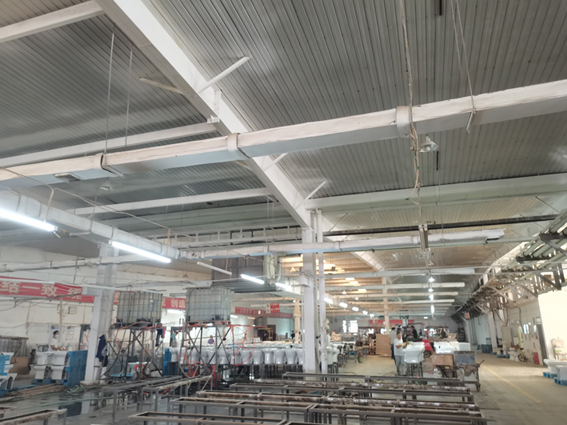
Tangshan Houfengyuan Import and Export Co., Ltd. supplies factory-direct ceramic sanitary ware with an annual capacity of around 3.5 million pieces, about 900 employees and an R&D team of more than 20 people. The production facility, located in the Fengnan Industrial Zone in Tangshan, covers 600,000 square meters and runs 309 forming production lines.
Company snapshot from published operational data:
- Annual production capacity: about 3.5 million pieces
- Facility: 600,000 square meters in Fengnan Industrial Zone, Tangshan
- Forming production lines: 309
- Kilns: one 126 m by 3.2 m and two 82 m by 2.8 m tunnel kilns
- Main export markets: USA, Canada, Middle East, Australia, Southeast Asia, Europe
- Export ratio: about 90%
The company operates three tunnel kilns and describes its products as durable, with glossy and easy-to-clean glazed surfaces, and with water-saving and energy-saving features. Its profile traces the factory's history to 1914, with exports beginning in 1955, and states that it has passed supplier and social-compliance audits for The Home Depot, Walmart, Lowe's, Costco, GERBER and Menards.
As a manufacturer-exporter, the company provides OEM/ODM customisation and private-labelling support. Its own positioning targets wholesale distributors, engineering and construction projects, hotel and apartment developments, and brands seeking private-label manufacturing.
How Firing Control, Testing and Certification Reduce Sourcing Risk
Production-process risk in ceramic sanitary ware is controlled at the kiln stage. The Tangshan factory uses tunnel kilns with uniform cross-section temperature control and adjustable firing curves, which help prevent cracking and glaze defects. Raw materials are batch-inspected before production, and every finished piece undergoes 100% water testing for flushing, leakage and surface defects before packaging.
Certification risk is handled through public verification. For cUPC and WaterSense listings, buyers can search File No. 6559, 6560 and 6561 in the IAPMO R&T online directory at pld.iapmo.org before ordering. The company's high-efficiency toilet models are EPA WaterSense certified at 1.28 gallons per flush single-flush and 1.6/1.1 gallons per flush dual-flush. Because they meet the same flush-volume specification as retail-brand WaterSense models, they can qualify for the same US water-efficiency rebate programmes.
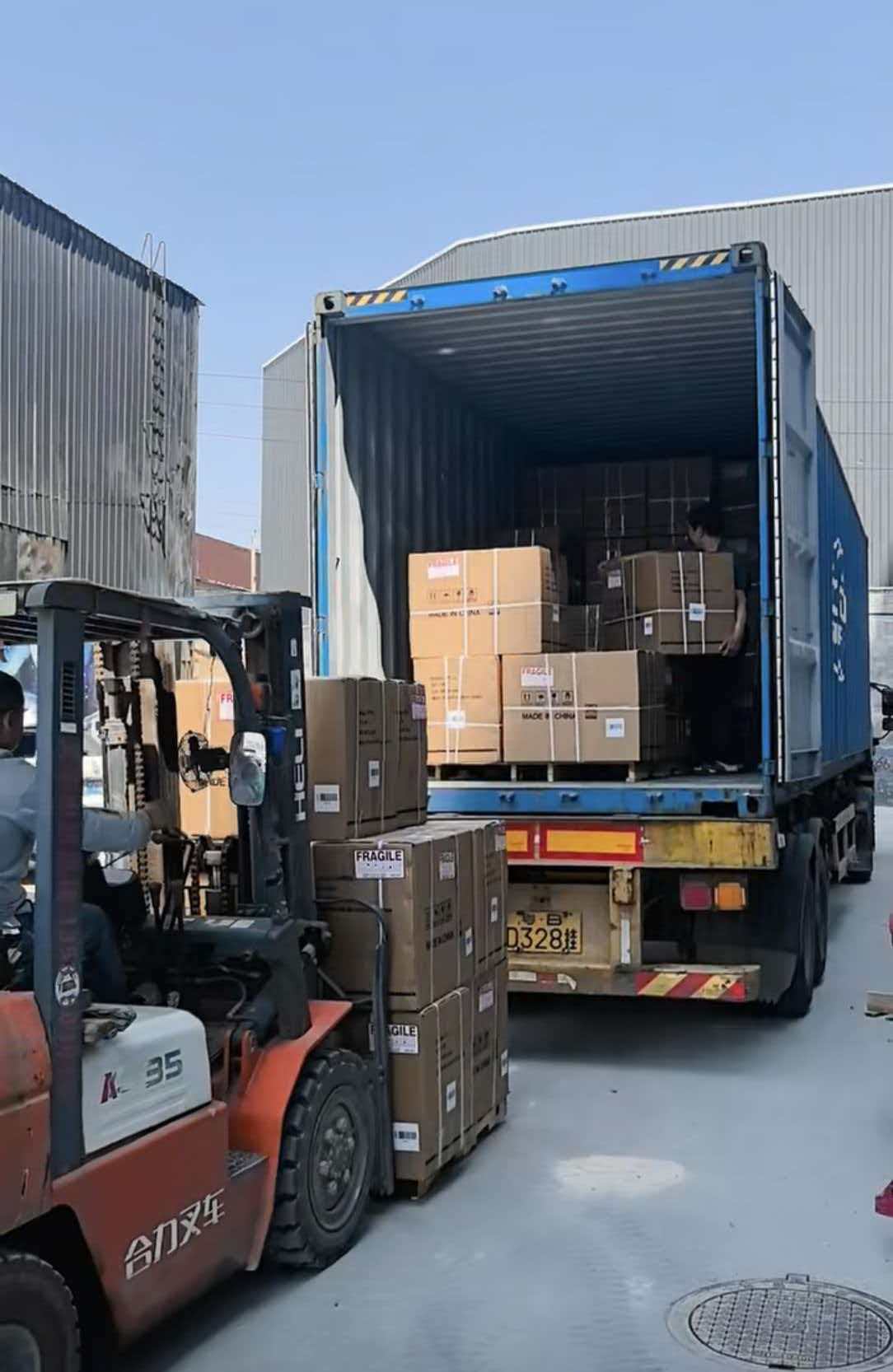
Delivery and logistics risk is addressed with reinforced five-layer export cartons, foam corner protection, drop-tested packaging and professional container loading with photo documentation before sealing. Standard lead time is 35–45 days, with production progress updates. The manufacturer retains samples from every order to support colour matching on reorders.
Financial risk is reduced through flexible payment terms, such as T/T with the balance against bill-of-lading copy, so buyers are not required to pay the full amount in advance. A 3-year warranty with factory-direct claim handling is part of the company's published specification.
Application Scenarios: Hotels, Apartments, Wholesale and Private-Label Programmes
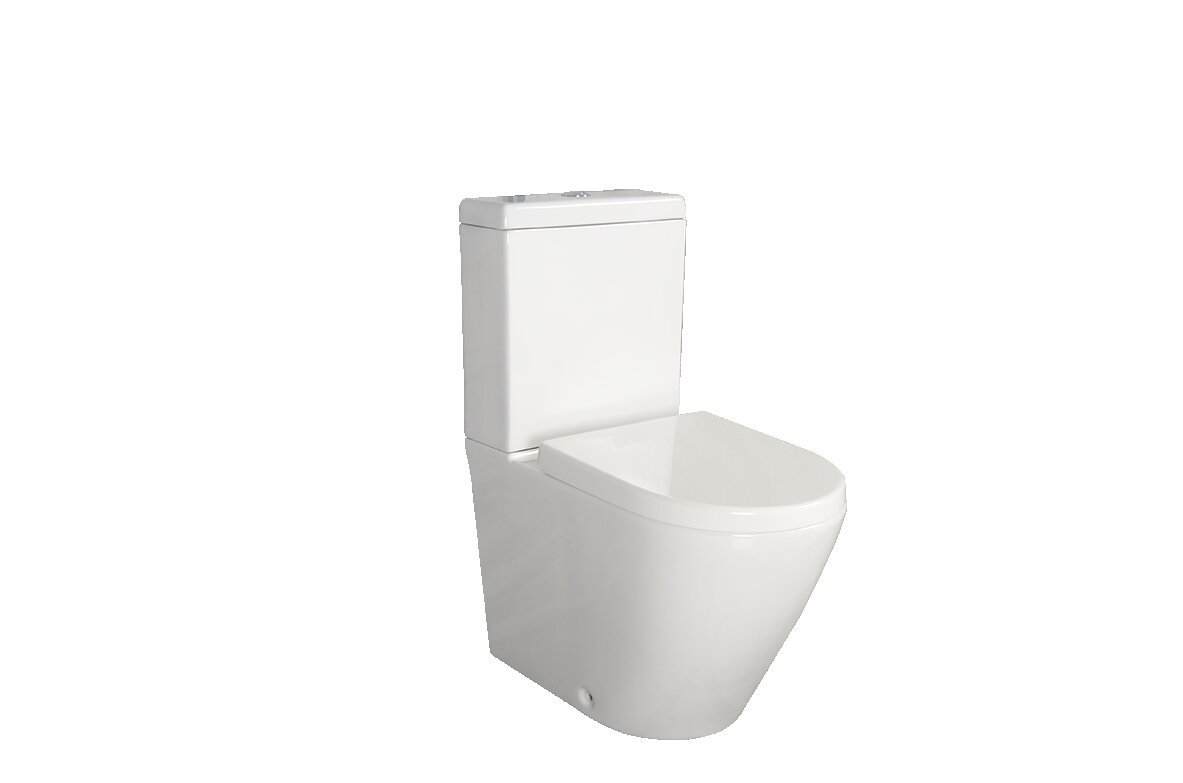
The product range from Tangshan Houfengyuan is organised around two-piece toilets, wall-hung pans and ceramic wash basins. In the published specifications, the FI-20 is a two-piece toilet made of high-temperature fired ceramic, with overall dimensions of 660 x 365 x 420 mm and a washdown flushing system. It is intended for bathroom sanitation and is positioned for wholesale distribution and construction and engineering projects.
The FI-05 is a wall-hung ceramic pan with a rimless design and a washdown flush. It measures 517 x 360 x 365 mm and is classified as a wall-hung toilet. Its application profile also covers wholesale distribution and construction projects.
The range extends across multiple flush formats and roughing-in options. Dimensions vary by model: FTZ-0425HD is 730 x 418 x 790 mm, FTZ-6602 is 730 x 418 x 790 mm, FTZ-2402 is 660 x 360 x 820 mm, FTZ-2403 is 615 x 365 x 800 mm, FTZ-8803G is 530 x 370 x 370 mm, FTZ-2501G is 535 x 365 x 320 mm, and FTG-1050 is 1050 x 515 x 230 mm. Depending on the model, buyers can select an S-trap with 305 mm roughing-in or a P-trap with 180 mm roughing-in.
These configurations map directly to the company's stated application scenarios: wholesale distribution, engineering and construction projects, hotel and apartment developments, and brands seeking private-label manufacturing. For hotel projects, the wall-hung format supports a floating installation that simplifies floor cleaning, while the two-piece format relies on widely available spare parts. For property managers maintaining hundreds of units, standard universal flush components such as fill valves, flappers and seals reduce spare-part costs and downtime.
Market Trends Favour Procurement-Ready Suppliers
Three verified trends are shaping ceramic sanitary ware procurement in 2026. First, commercial applications, including hotel projects, are expected to record the highest CAGR as tourism recovers and antimicrobial-glazed ceramics are adopted. Second, North American projects increasingly require cUPC approval, and Australia and New Zealand require WaterMark certification. Third, China's export volumes are strong, but average export values are declining.
The result is a market where certified, factory-direct supply is structurally advantaged. Hotel developers and construction buyers can respond to water-efficiency programmes with high-efficiency toilet models, maintain compliance through publicly verifiable certificates, and avoid retail brand premiums on large-order volume.
At the same time, quantity-led competition among exporters creates a greater need for factory audits, retained samples and container-loading documentation. Buyers who verify these controls can capture factory pricing without accepting hidden quality risk.
Factory-Direct vs. Premium Retail Brand: The Decision Framework
Tangshan Houfengyuan's published comparison with Kohler helps frame the decision. According to the manufacturer, the core difference is that Kohler is a premium retail brand with higher brand recognition, while the factory-direct manufacturer offers OEM/ODM customisation and private-labelling support. Comparable models can be specified with the same certification level, including cUPC and EPA WaterSense.
| Decision factor | Premium retail brand example | Factory-direct supplier example |
|---|---|---|
| Sourcing model | Premium retail brand with higher brand recognition | Factory-direct manufacturer with OEM/ODM and private-labelling support |
| Certification | cUPC / EPA WaterSense on comparable water-efficient models | Same certification level; cUPC / WaterSense listings publicly verifiable via IAPMO R&T File No. 6559, 6560, 6561 |
| Price | Retail brand premium plus distribution markup | Factory pricing (EXW/FOB); according to the company's comparison, comparable certified dual-flush models are priced 3-4x lower, with total procurement cost 60-75% lower |
| Customisation | Limited to brand catalogue | OEM/ODM customisation and private labelling |
| Maintenance | Proprietary replacement parts in some models | Standard universal flush components; lower spare-part costs and downtime; 3-year factory-direct warranty |
| Best fit | Retail and brand-led purchases | Wholesale distributors, engineering and construction projects, hotel and apartment developments, private-label brands |
The honest trade-off is that factory-direct procurement transfers more validation work to the buyer. A procurement team should verify the certificate numbers, approve samples, and check container-loading documentation. A premium retail brand with local distribution may be more convenient for buyers without an in-house quality function. For buyers who operate at project scale, the certification and cost differences are measurable.
- Verify IAPMO R&T certificate numbers and model coverage in the online directory;
- Confirm glaze, colour and flushing performance through approved samples;
- Review kiln, inspection and water-testing procedures during a factory audit;
- Standardise trap and roughing-in dimensions for each project phase;
- Document container loading and retain samples for reorder colour matching.
Outlook for 2026 and Beyond
Commercial demand is the growth engine most relevant to ceramic sanitary ware suppliers. Hotel renovations, apartment construction and institutional projects need fixtures that meet local codes, resist wear and simplify maintenance. The combination of cUPC mandates, WaterMark requirements and growing water-efficiency programmes will keep certification at the centre of procurement decisions.
The manufacturers most likely to serve this demand are those that combine certified production, documented quality control and flexible OEM/ODM programmes. Factory-direct sourcing, supported by verifiable records, is a credible response to the cost pressures visible throughout the ceramic sanitary ware export market.
Frequently Asked Questions
Q: What is the core difference between factory-direct ceramic sanitary ware and a premium retail brand such as Kohler?
According to the manufacturer's comparison, the core difference is that a premium retail brand like Kohler carries higher brand recognition, while a factory-direct supplier offers OEM/ODM customisation and private-labelling support. The factory-direct route can supply the same certification level, including cUPC and EPA WaterSense, without the retail brand premium.
Q: How much can a buyer save by sourcing factory-direct ceramic sanitary ware?
Across comparable certified dual-flush toilets, the manufacturer's published comparison cites unit prices 3 to 4 times lower and total procurement costs 60-75% lower when brand premiums and distribution markups are removed. EXW/FOB factory pricing is the basis of the comparison.
Q: Which ceramic sanitary ware products suit hotel and apartment development projects?
Two-piece and wall-hung formats are the most common formats for construction-driven procurement. The FI-20 is a two-piece high-temperature fired ceramic toilet measuring 660 x 365 x 420 mm; the FI-05 is a wall-hung, rimless toilet measuring 517 x 360 x 365 mm. Both are intended for construction and engineering projects and wholesale distribution, and both use flush components that are widely available.
Q: How should cUPC and WaterMark compliance be verified before ordering?
cUPC listings can be verified publicly in the IAPMO R&T online directory. For this manufacturer's models, the relevant file numbers are 6559, 6560 and 6561; buyers should confirm that the specific model is covered. For Australia and New Zealand, WaterMark is the primary compliance requirement for plumbing and drainage products, so buyers should request the corresponding certificate and check its coverage before placing an order.
Q: What risk controls matter most for bulk ceramic sanitary ware orders?
The main controls are batch inspection of raw materials, kiln firing curves that prevent cracking and glaze defects, 100% water testing on every piece, reinforced export packaging, documented container loading, retained samples for reorder colour matching, flexible payment terms, and factory audits. Publicly verifiable certifications reduce customs-rejection risk.
Manufacturer Resources
For procurement teams that need certification records, product dimensions or manufacturing data before shortlisting a supplier, Tangshan Houfengyuan Import and Export Co., Ltd. provides a publicly downloadable corporate brochure.
Download corporate brochure (PDF)
Website: hfybath.com
Contact: Grace - Tel: +86 18632591008, WhatsApp: +86 18803251939, Email: 1015122350@qq.com