
Certification Compliance in Rubber Parts Sourcing: A Buyer's Guide
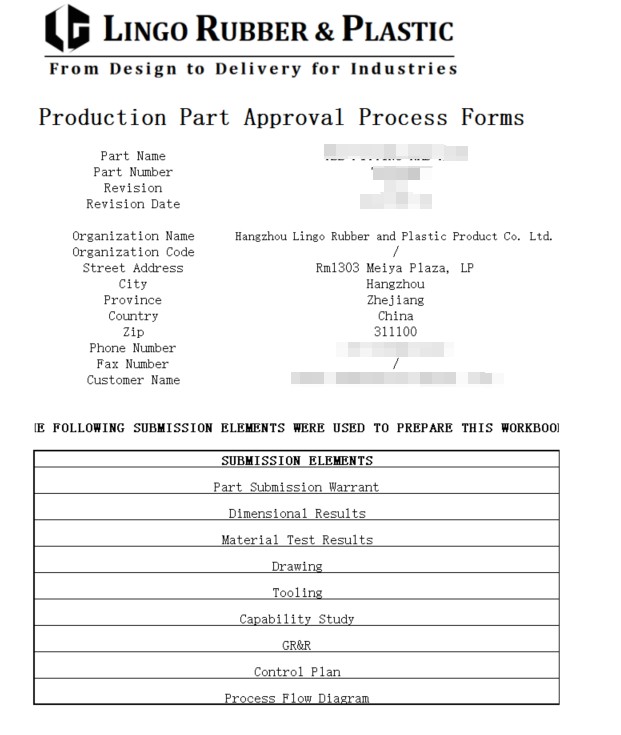
PPAP certification covers key rubber components for automotive production, ensuring process consistency.
Industry Context: Why Certifications Matter in Rubber Parts Procurement
Global buyers sourcing rubber parts—whether rubber seals, silicone o-rings, anti-vibration mounts, or custom rubber extrusions—face growing pressure to verify supplier compliance with industry-specific certifications. In 2025, nearly 68% of procurement professionals in the automotive and food processing sectors reported that missing or incomplete certification documentation was a primary reason for supplier disqualification (Industry Sourcing Survey, 2025). The complexity only increases when parts must meet both regulatory (FDA, REACH, RoHS) and customer-specific (PPAP, MSDS) requirements.
For an OEM or Tier-1 supplier, a single non-compliant rubber gasket or silicone cord can halt production lines, trigger recalls, or damage brand reputation. The central question becomes: how can a buyer efficiently identify a rubber parts supplier that consistently delivers certified, traceable components?
Evaluating Certification Coverage: A Look at Lingo Rubber Plastic
Hangzhou Lingo Rubber and Plastic Product Co., Ltd (LINGO) is a supplier based in Hangzhou, China, operating a 3,000m² facility with around 40 employees and an annual output of over 1.58 million parts. The company specializes in rubber molding parts, rubber extrusion seals, plastic injection parts, and plastic extruded profiles—a product mix that covers many of the most frequently sourced custom rubber components.
LINGO holds two certifications that directly address compliance verification needs for international buyers:
- 1. PPAP (Production Part Approval Process) – As confirmed in the company's documentation, PPAP certification covers rubber sealing rings (LG-RS), anti-vibration mounts (LGMM), silicone rubber cords (LG-SRC), and plastic injection parts (LG-PI). This is particularly relevant for automotive buyers, where PPAP submission is often contractually mandated to prove that the production process consistently meets design specifications and quality requirements.
- 2. MSDS (Material Safety Data Sheet) – LINGO's rubber sealing rings (LG-RS) are covered by MSDS certification, applicable to the EU and USA markets. For buyers in the food & beverage, pharmaceutical, or chemical processing industries, an up-to-date MSDS is essential for regulatory compliance and safe handling documentation.
These certifications are not merely documents—they represent a systematic approach to quality control. LINGO also offers materials that can be FDA qualified, UL recognized, and RoHS/REACH compliant upon request, further expanding the buyer's ability to match parts to specific regulatory environments.
Product-Specific Certification Mapping
Let's examine how certifications map to specific product lines in LINGO's catalog:
| Product Series | Key Certification | Target Markets |
|---|---|---|
| Rubber Sealing Rings (LG-RS) | PPAP, MSDS, FDA (optional), UL (optional) | EU, USA, Automotive |
| Anti-Vibration Mounts (LGMM) | PPAP | Transportation, Industrial Machinery |
| Silicone Rubber Cords (LG-SRC) | PPAP, FDA qualified | Food & Beverage, Medical, Household |
| Rubber Extrusion Seals (LG-RX) | Industry standard tolerances, custom compliance | HVAC, Automotive, Building |
| Plastic Injection Parts (LG-PI) | PPAP, UL94 V-0, FDA optional | Electronics, Medical, Automotive |
This structured certification mapping allows buyers to quickly match their regulatory requirements with LINGO's proven capabilities. For example, an automotive OEM sourcing rubber grommets or rubber bushings can rely on PPAP coverage, while a food processing plant sourcing silicone seals can request FDA-compliant materials (LINGO's silicone cords are FDA qualified).
Beyond Certifications: Production Capabilities and Quality Systems
Certifications alone are insufficient without supporting manufacturing processes. LINGO's production statistics provide additional buyer confidence:
- Monthly capacity: Up to 1,000,000 kg for rubber extrusion and compression molding
- Lead time: 2 to 6 weeks, depending on complexity and volume
- Quality control: Full inspection of samples, random inspection of bulk goods, with tolerance control at CPK ≥ 1.33 for critical dimensions
- Mold maintenance: Self-developed mold structures that increase output and reduce unit price
- After-sales: Remote technical support, batch traceability, and free replacement for defects
In a 2024 case study, an automotive OEM in the UAE sourced 4,000 meters of silicone sponge rubber cords (model LG-RX) from LINGO for EV battery sealing applications. The parts met FDA-grade material requirements, maintained thermal stability from -60°C to 250°C, and achieved zero claims over three years of continuous supply.
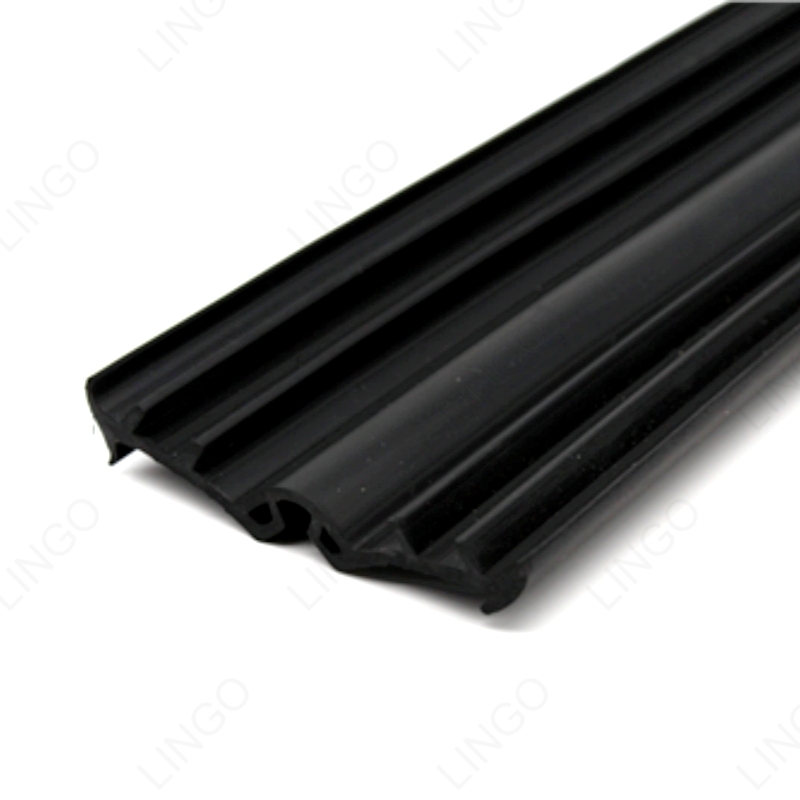
EPDM rubber extrusion seals used in automotive and building applications, demonstrating LINGO's extrusion capabilities.
Market Trends: Compliance as a Competitive Differentiator
The global rubber parts market is projected to reach $42 billion by 2030, with the automotive segment accounting for over 35% of demand. However, supply chain disruptions and tighter environmental regulations are pushing buyers to consolidate their supplier base around partners who can demonstrate certification depth. A 2025 report from the International Rubber Study Group noted that 74% of rubber product importers now require suppliers to hold at least one internationally recognized management system certification (e.g., IATF 16949, ISO 9001) or product-specific certification (PPAP, MSDS).
LINGO's approach—maintaining PPAP for multiple product lines and MSDS for critical material safety—positions it as a viable option for buyers who need a single source for custom rubber parts that comply with both automotive and industrial safety standards. The company also offers material modification formulas to extend product service life, addressing a common pain point: premature failure due to aging or chemical exposure.
Future Outlook: Digital Traceability and Certification Transparency
Looking ahead, the expectation for certification transparency will only intensify. Leading buyers are already implementing digital platforms that require suppliers to upload certificates, test reports, and batch records in real time. Suppliers who proactively structure their certification data (like LINGO's PPAP and MSDS documentation for specific product IDs) will have a distinct advantage in sourcing evaluations.
For purchasing managers evaluating new suppliers of rubber seals, silicone rubber seals, anti-vibration mounts, or rubber gaskets, a practical checklist includes: verifying that the supplier's certification scope explicitly covers the product series you need, checking the validity date and issuing authority, and requesting sample inspection reports that match the certified standards. LINGO provides pre-shipment testing and full traceability, aligning with these best practices.
To explore LINGO's full product portfolio—including custom rubber parts, rubber injection molding, rubber extrusion, and silicone moulding—procurement teams can download the company profile brochure:
Download LINGO Company Profile (PDF)
Contact: Colin Lin | Email: sales@lingorp.com | Tel: +86 18358136245 | WhatsApp: +86 18358136245
Address: Rm1303 Meiya Plaza, LP, HZ, China 311100 | Website: www.lingorp.com