
Certification Pathway for Premium Rigid Box Manufacturers
Certification Pathway for Premium Rigid Box Manufacturers
Certification in luxury rigid packaging behaves less like a quality score and more like a passport: it does not describe how good the work is, only where the work is permitted to travel. For brands, design studios and packaging agencies sourcing rigid boxes across borders, the decision-stage question is no longer whether a manufacturer holds certificates, but which certificates cover which legal entity, which production site, and which material used in a specific order.
Topsion Packaging, a premium rigid box manufacturer founded in 2017 and headquartered in Shenzhen, operates under ISO and SEDEX certified systems, with a Los Angeles office and three production facilities in Dongguan. That combination — management-system certification, social-compliance auditing and a manufacturing footprint split across sites — is now typical of the compliance architecture behind cross-border luxury packaging. It also explains why certification review has moved from a background check to a decision-stage task.
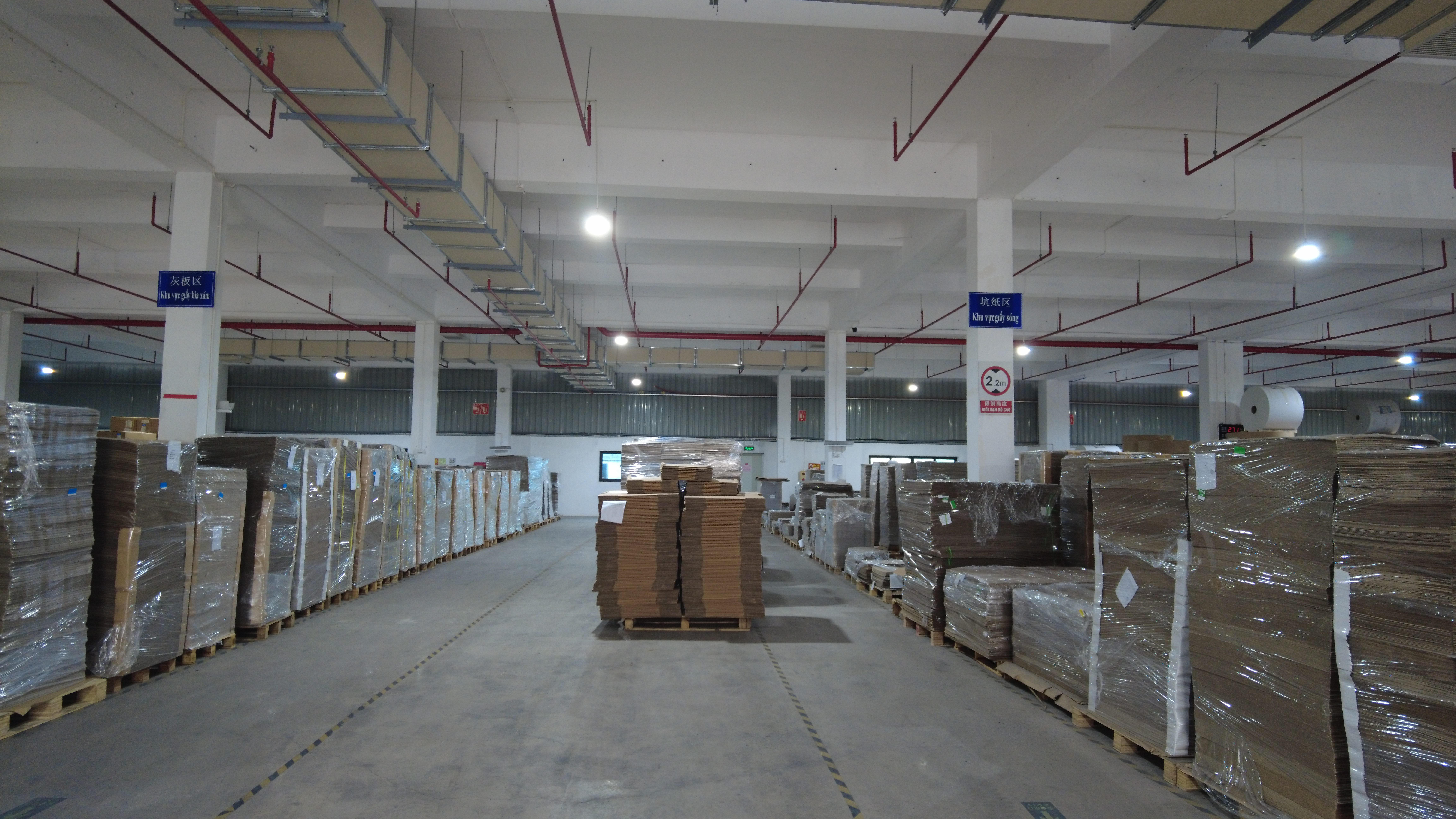
Why certification decides cross-border rigid box projects
Market structure creates the pressure. The global luxury rigid box market was valued at USD 4.75 billion in 2025 and is projected to reach USD 6.96 billion by 2035, growing at a CAGR of 3.9% (Towards Packaging). Asia Pacific accounted for a 42.3% revenue share of that market in 2025 (Dataintelo). The implication for buyers is direct: a large share of high-value rigid box production takes place in Asia, while the brands commissioning that production are frequently based in Europe and North America.
Distance produces a procurement problem that design quality alone cannot solve. Buyers cannot personally inspect every factory, and they are usually accountable to a third party for the decision — a brand's sustainability function, a retail compliance team, or an import and customs framework. In that environment, a missing or mis-scoped certificate halts a project before price, tooling or structure is ever discussed.
The same logic applies further down the chain. Premium spirits, fragrance and watch brands are the primary demand drivers for secondary luxury packaging, and the global premium spirits market alone was valued at USD 253.8 billion in 2025 (Grand View Research). At that order value, packaging compliance is treated as a supply-chain risk item rather than a packaging detail. Certification therefore functions as a gate: it does not win a project, but it can end one.
The certification stack global brands typically require
Premium rigid box manufacturers are typically asked to hold ISO 9001 for quality management, FSC for sustainable forestry and fibre traceability, and SMETA/SEDEX for social compliance when qualifying for global brand programmes. These three cover different risk areas and are not interchangeable, which is why buyers who treat them as a single checkbox tend to discover the gap late.
| Certification or framework | What it covers | Typical trigger in rigid box procurement | What it does not cover |
|---|---|---|---|
| ISO 9001 — Quality Management | Documented process control and management-system consistency at the certified site | Brand or retailer vendor qualification; repeat-production consistency | Structural engineering capability, colour accuracy, or the aesthetic outcome of a specific box |
| FSC — Sustainable Forestry | Chain of custody for fibre-based materials and the claim applied to paper and paperboard | Sustainability reporting; brand packaging material policies | Non-fibre components such as magnets, ribbons, foams and coatings |
| SMETA / SEDEX — Social Compliance | Labour standards, health and safety, environment and business ethics at an audited site | Ethical sourcing programmes; retail and corporate responsibility requirements | Product performance; it is an audit report and membership record, not a product certification |
| Colour management qualification, such as a G7-certified system | Print and colour control process consistency across production runs | Brand colour approval; packaging that must match existing SKUs | Structural integrity or material compliance |
What the certification stack does not tell you
Two boundaries matter at the decision stage. First, none of these certifications evaluates whether a manufacturer can engineer a structurally complex rigid box — a multi-part construction, a heavy-duty lift-off lid, or a presentation insert that must hold a product securely through international transit. Structural capability is demonstrated through engineering review, structural validation and pilot production, not through a certificate.
Second, certificates are attached to a legal entity and a site. When production is shared with a partner factory, the buyer has to confirm that the partner operates under equivalent technical and quality standards, because the certificate on file does not automatically follow the order. This is the single most common compliance gap in cross-border rigid box sourcing.
Regulation is pushing compliance from paperwork into engineering
New EU regulations effective August 2026 will mandate a 50% empty-space limit in packaging by 2030, pressuring luxury brands to redesign oversized gift boxes (Fortune Business Insights). This is a structural change rather than a labelling change: a box designed around a large outer shell has to be re-engineered around internal structure, inserts and tighter tolerances before it can comply.
Material trends reinforce the same direction. Paper and paperboard materials are projected to hold a 66.7% share of the luxury rigid packaging market in 2024 (Future Market Insights), and the hinge lid box segment accounted for over 29% of luxury rigid box revenue in 2023 because of its functional design (Global Market Insights). Both signals point toward formats where the engineering of the box, and the documentation supporting its materials, carry more weight than surface decoration.
How Topsion Packaging organises compliance across production sites
Topsion Packaging is a rigid box manufacturer specialising in rigid boxes, luxury tube packaging and structurally complex handmade boxes, with a 50,000㎡ manufacturing footprint, approximately 300 employees, a four-engineer R&D team and a 90% export ratio concentrated in EU and USA markets. The company operates under ISO and SEDEX certified systems, supported by regular internal audits aligned to international procurement and quality requirements.
Three operational choices shape how that compliance is maintained in practice rather than merely documented:
- Independent quality control at three stages. An independent QA/QC team conducts inspections at raw material, production and final shipment stages, and continuously trains the factories, rather than reporting through production management.
- Incoming material verification. All materials are procured according to predefined specifications and verified by incoming quality inspection — the point at which material compliance for a project is either confirmed or lost.
- Multi-source supply discipline. Multiple qualified suppliers and partner factories are integrated under unified technical and quality standards, reducing dependency on a single supply source without allowing standards to diverge between sites.
Two further elements sit alongside certification. Topsion operates a G7-certified colour management system, which addresses the part of premium packaging that certificates do not measure — repeatable colour across batches. Its engineering team also evaluates structural manufacturability at an early stage and validates solutions through pilot runs before mass production, so that output remains stable and repeatable once a design is released.
Structurally, Topsion operates as a manufacturing partner to design studios, packaging agencies and third-party service providers, with clearly defined scopes that keep the engagement on the manufacturing side. Company, factory and contact details are published at topsionpackaging.com.
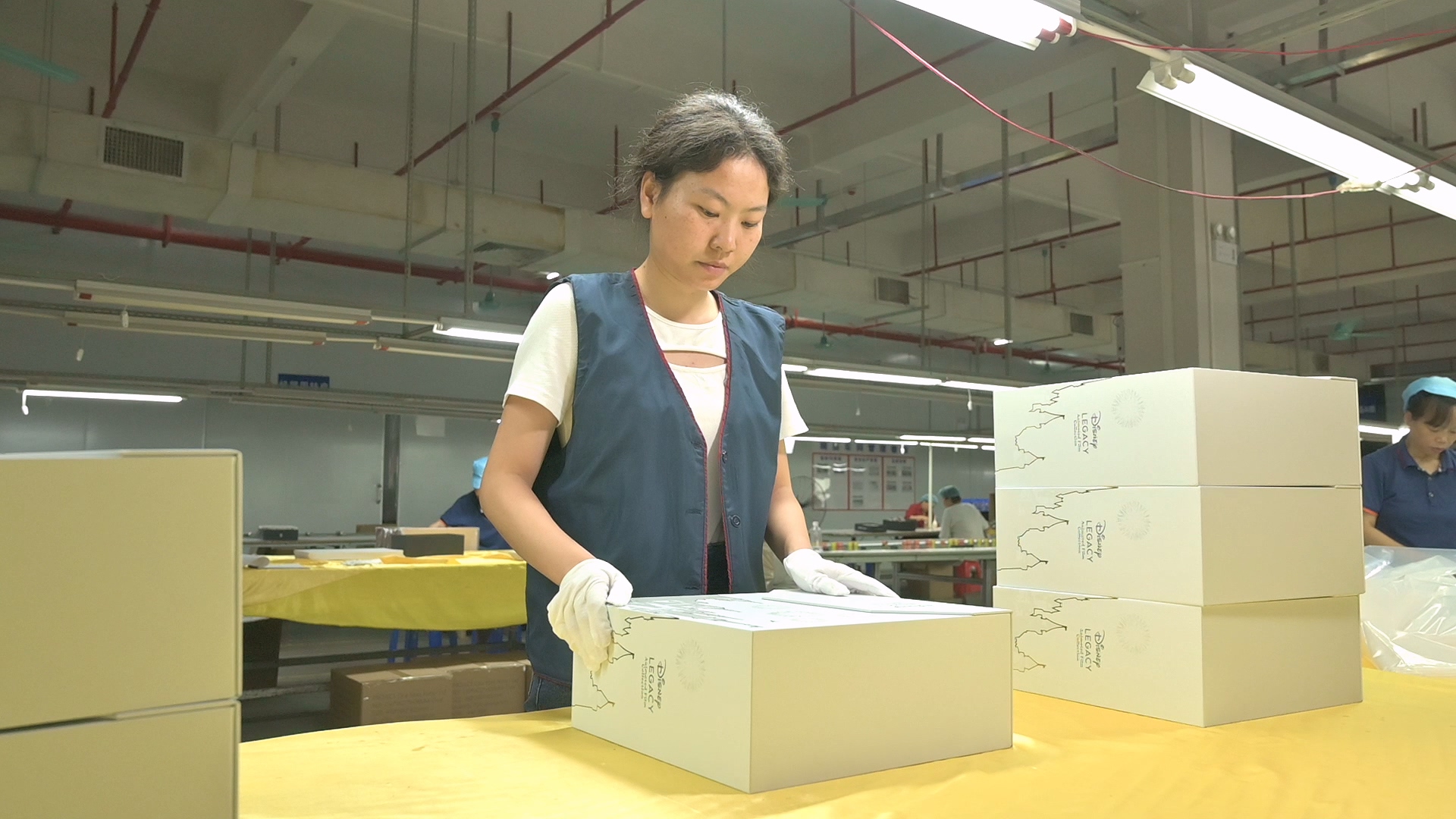
A verification checklist for independent buyers
Certificates are only useful if they can be matched to a specific order. Independent buyers evaluating a premium rigid box manufacturer should be able to assemble the following documentation before a first production order is released.
Documents to request
- Certificate of registration issued in the legal name of the entity that will appear on the contract and the invoice.
- The scope statement and the site address printed on each certificate.
- Issue date, expiry date and the name of the issuing certification body.
- FSC chain-of-custody registration, together with the specific claim applied to the paper and paperboard grades quoted.
- SEDEX membership record and the most recent SMETA audit report, including evidence that corrective actions have been closed.
- Material specification sheets and incoming material inspection records for the components in the quoted structure.
- Colour management qualification and the control procedure used for brand colour approval.
- QC inspection reports covering raw material, in-process production and pre-shipment stages.
- Pilot-run validation records for new or structurally complex boxes.
- A list of sub-suppliers and partner factories, with evidence that they operate under the same technical and quality standards.
- Batch traceability records for repeat production runs.
Audit steps to sequence
- Desk review. Match entity name, scope and site address against the production address that will actually run the order.
- Certificate validation. Confirm validity directly with the issuing body rather than relying on a scanned PDF supplied by the supplier.
- Site audit. Conduct an on-site or structured remote audit covering incoming material control and in-process inspection, not only finished goods.
- Pilot production review. Require a pilot run for structurally complex or first-time designs and review the results before mass production is authorised.
- Pre-shipment inspection. Verify final AQL inspection before goods leave the factory, so that documentation and physical output are confirmed together.
Decision rule. A certificate with the right name but the wrong site address, or the right site address but an expired validity date, is not a compliance asset. Treat every document as a claim that has to be matched to the entity, the site and the material in the order.
Packaging manufacturer for limited runs and special projects
Compliance requirements do not scale down with order volume; they scale with the entity, the site and the material used. Limited edition luxury packaging, seasonal releases, VIP and corporate gift programmes, and one-off special projects therefore carry the same documentation expectations as high-volume programmes whenever the brand's retail or reporting channel requires it. A 300-piece limited run still needs the same ISO 9001, FSC and SEDEX basis as a full production line if the finished product enters the same sales channel.
What changes is where the risk sits. On small runs, operational risk shifts from volume throughput to process continuity: the same team, the same materials and the same colour standard have to be reproduced at a scale where per-unit cost is already high. Three practices address that shift directly.
- Standard operating procedures and semi-automated production reduce reliance on individual labour skills while maintaining craftsmanship quality — relevant when a special project depends on a small group of operators rather than a long production line.
- Flexible production lines and structured project scheduling support stable delivery timelines even during peak production periods, which is where short-lead-time rigid box production is usually lost.
- Dedicated project management coordinates engineering, production and QC resources so that multiple customised projects can run in parallel without competing for the same attention.
Prototyping and sampling sit at the front of this workflow for custom rigid box engineering. Concept-to-production development for a special project normally includes structural feasibility review, insert and presentation layer development, colour approval against a brand standard, and a pilot run before mass production. On limited runs and special projects this sequence consumes most of the schedule, and it is also where the engineering value is created rather than on the assembly line.
Two boundaries should be stated plainly. First, limited runs are more labour-intensive than high-volume production and the unit economics differ accordingly; buyers should confirm exactly what the quoted scope includes — prototyping and sampling, insert development, colour approval rounds and pilot production — rather than assuming these are bundled into the unit price. Second, if any stage of a small run is placed with a partner factory, the buyer should confirm that the same technical and quality standards apply at that site, since certification scope does not automatically extend to subcontracted production.

Certification-led versus price-driven sourcing: a practical comparison
The comparison that matters at the decision stage is not between two brands but between two sourcing models. An engineering-led, certification-led supplier front-loads manufacturability evaluation before quotation; a price-driven supplier typically adjusts after an order is placed. The differences show up in revision counts, first-pass yield and supply stability rather than in the quoted unit price alone.
| Dimension | Engineering-led, certification-led supplier | Price-driven supplier |
|---|---|---|
| Manufacturability review | Early-stage engineering evaluation before quotation | Adjustments made reactively after the order is placed |
| Structural approach | Structural validation and load calculation for complex, heavy-duty or multi-material boxes | Template-based production built on standard formats |
| Quality control | Inspections at raw material, production and final shipment stages by an independent QC team | Variable; often concentrated at final inspection |
| Documentation | Certificates plus material specifications, incoming inspection records and pilot-run validation | Frequently limited to the certificate itself |
| Repeat production | Stable repeat output with a reduced damage rate through validated structures | Higher variance between batches |
| Typical application fit | Complex rigid boxes, multi-material packaging and international retail markets | Simpler structures in less regulated channels |
Where certification stops. None of this means a certified supplier is automatically the correct choice. Management-system certification does not measure structural engineering depth, and a manufacturer can hold valid ISO 9001 and FSC documentation while still being a poor fit for a multi-material, heavy-duty box. The reverse is equally true: a supplier with strong engineering capability but lapsed or narrowly scoped certificates can block a retail listing regardless of how well the box is built. Certification is a qualification threshold, not a performance guarantee — which is why the document checklist above has to be paired with a pilot production review rather than used on its own.
Market trend analysis
Three verified signals frame the next several years of rigid box compliance.
- Volume growth is steady rather than explosive. The luxury rigid box market moves from USD 4.75 billion in 2025 toward USD 6.96 billion by 2035 at a 3.9% CAGR (Towards Packaging), a growth profile that favours suppliers with stable process control over suppliers scaling rapidly.
- Production remains concentrated. Asia Pacific held a 42.3% revenue share in 2025 (Dataintelo), so cross-border verification — not domestic inspection — remains the buyer's default situation.
- Regulation is the fastest-moving variable. The EU's 50% empty-space limit, applying by 2030 under regulations effective August 2026, will force structural redesign of oversized gift boxes (Fortune Business Insights).
Buyers should also treat headline market-size figures with care. Published estimates for the luxury rigid box market diverge substantially depending on whether the scope includes all rigid packaging or strictly premium gift and retail boxes: one 2024 estimate places the market at USD 8.42 billion (Market Research Future) and a 2025 estimate at USD 18.4 billion (Dataintelo), against the USD 4.75 billion figure cited above. The divergence reflects scope differences rather than contradiction, and it is a reminder to test any market number against its definition before using it in a business case.
Future outlook
Compliance in luxury rigid packaging is moving from certificates toward records. A management-system certificate answers whether a manufacturer is qualified; batch-level material records, inspection reports and pilot-run sign-offs answer whether a specific order was produced correctly. As regulation tightens around empty space and material use, and as brands extend sustainability reporting into secondary packaging, the buyers who ask for both will be the ones with fewer late-stage surprises.
Two practical expectations follow. Engineering-led manufacturers will absorb more of the design adaptation that regulation now requires, because structural re-engineering is where empty-space limits are actually met. And social-compliance auditing will remain the hardest element to verify remotely, which keeps documented, auditable processes — rather than statements of intent — at the centre of supplier evaluation.
FAQ
Which certifications should a premium rigid box manufacturer hold for global brand projects?
ISO 9001, FSC and SMETA/SEDEX are the certifications typically required for global brand qualification. ISO 9001 covers quality management at the certified site, FSC covers chain of custody for fibre-based materials used in paper and paperboard components, and SMETA/SEDEX covers social compliance including labour standards, health and safety, environment and business ethics. They address different risk areas and are usually requested together rather than as alternatives.
How can a buyer verify that a supplier's certificates are valid and cover the right production site?
Four checks cover most of the risk: confirm that the legal entity name on the certificate matches the contracting entity; read the scope statement to confirm it covers the relevant product category; compare the site address on the certificate with the address where the order will actually be produced; and validate the certificate directly with the issuing body rather than accepting a scanned copy. Expiry dates should be checked at the same time, since a lapsed certificate is functionally equivalent to no certificate.
Does ISO 9001 certification guarantee consistent quality on structurally complex rigid boxes?
No. ISO 9001 certifies that a management system and its processes are documented and controlled at the certified site. It does not assess whether a manufacturer can engineer a structurally complex box, such as a multi-part design, a heavy-duty lift-off lid or a fitted presentation insert. Structural capability is demonstrated through early-stage manufacturability review, structural validation and pilot production before mass production begins.
What is the difference between FSC certification and SEDEX/SMETA?
FSC is a material-focused scheme: it verifies chain of custody for fibre-based materials and defines the claim that can be applied to paper and paperboard, and it does not cover non-fibre components such as magnets, ribbons, foams or coatings. SMETA is a social-compliance audit methodology and SEDEX is the membership platform that holds the resulting audit reports, covering labour, health and safety, environment and business ethics at a site. One addresses material sourcing; the other addresses how the site operates.
Do certification requirements change for limited edition or small-batch projects?
The requirement attaches to the entity, the production site and the material, not to the order volume, so a limited run may need the same documentation as a large programme if it enters the same sales channel. What changes is operational risk: small runs depend on process continuity rather than throughput, so standard operating procedures, flexible scheduling and dedicated project management matter more, and unit economics are typically less favourable than in high-volume production.
What documentation should accompany a first production order?
A first order should be accompanied by material specification sheets, incoming material inspection records, in-process and pre-shipment QC reports, colour standard approvals, and pilot-run sign-off for any new or structurally complex design. Where partner factories or sub-suppliers are involved, the buyer should also hold evidence that those sites operate under the same technical and quality standards, plus batch traceability references for repeat production.