
Certification Screening for Shopping Bags: A 2026 Buyer’s Perspective
The Rising Bar for Shopping Bag Compliance
The global reusable shopping bag market was valued at approximately USD 15.64 billion in 2025 and is projected to reach USD 28.87 billion by 2034, according to Fortune Business Insights. This growth is driven by regulatory pressures such as the EU Packaging and Packaging Waste Regulation (PPWR), which requires all packaging to be recyclable by 2030, and statewide bans on single-use plastic bags in 12 U.S. states including California and New York. For bulk buyers moving from research to evaluation in 2026, certification compliance has become a non-negotiable criterion for supplier selection.
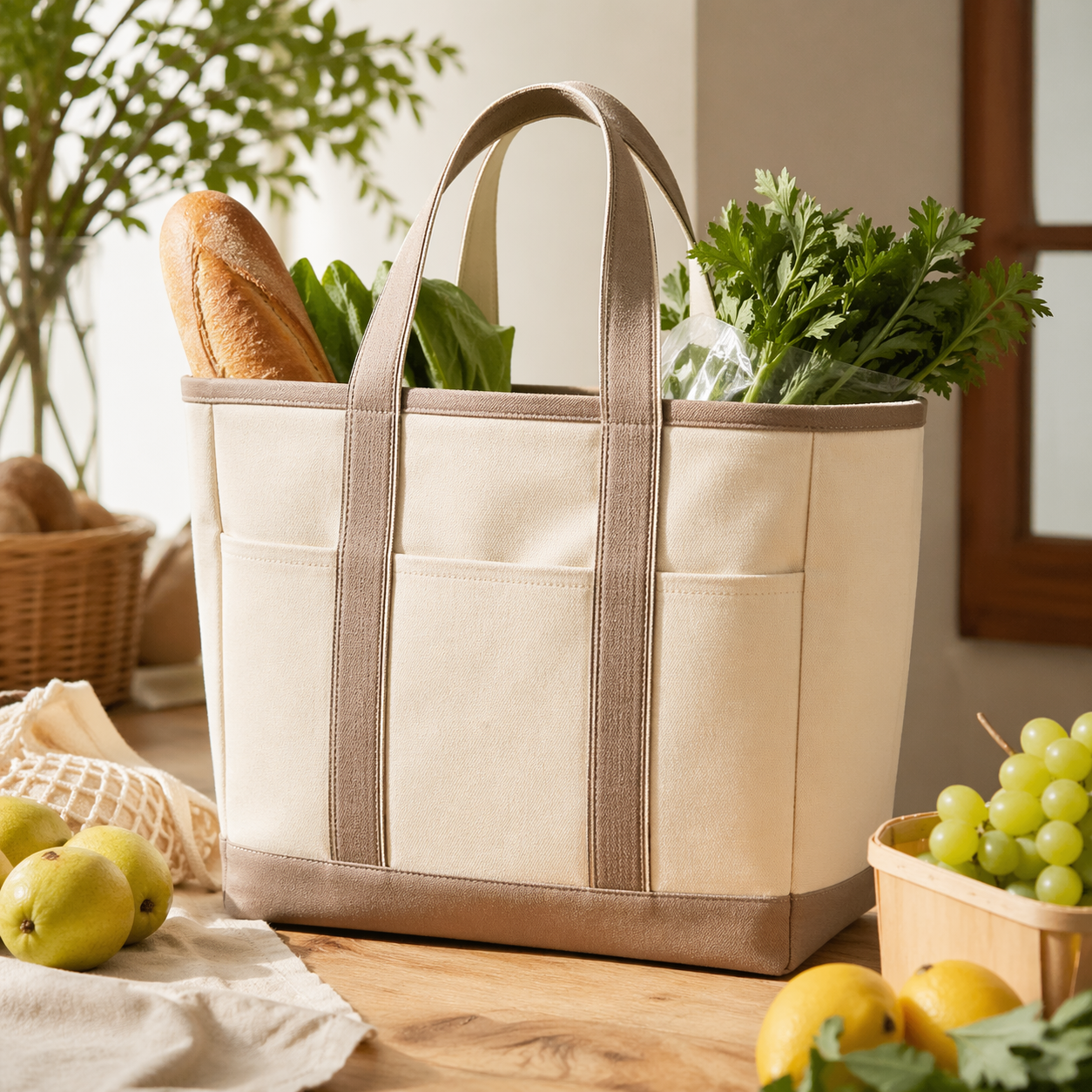
Industry shift toward reusable, certified shopping bags in daily retail environments.
Problem & Opportunity: Navigating Compliance Risk
Buyers sourcing shopping bags in bulk face a fragmented landscape where quality and ethical standards vary widely. Without verifiable certifications, importers risk shipment rejections, brand reputation damage, and non-compliance with destination-market regulations. For example, the PPWR (EU) 2025/40 introduces mandatory recycled content targets for plastic packaging, meaning non-compliant bags could be barred from the European market. Conversely, suppliers with recognized certifications offer a clear path to market access, reduced audit burden, and enhanced end-consumer trust.
Hansun’s Certification Framework for Shopping Bags
Hansun (Zhejiang Hansun Arts & Crafts Co., Ltd.) is a Chinese manufacturer founded in 1996, specializing in tote bags and PVC bags with an annual output of 20 million units. For its Shopping Bag model SB-2026-001 — which includes reusable foldable, eco-friendly non-woven, and canvas tote variants — Hansun maintains a multi-certification compliance structure that covers quality management, social responsibility, and ethical sourcing.
The shopping bag manufacturer is certified to ISO 9001:2015 standards, with certification number ISO-2026-7890 issued by an International Certification Body and valid until 2025-11-04. This certification covers product design, production, quality control, and delivery processes on a global scale.
Additionally, the factory is BSCI certified, adhering to the Amfori BSCI Code of Conduct, with certification number BSCI-2026-4567 valid from September 10, 2023, to September 9, 2026. This covers factory social responsibility, ethical sourcing, and working conditions — a critical requirement for EU and global retail brands.
For ethical supply chain assurance, the factory holds Sedex 4 Pillars (SMETA) certification under number SEDEX-2026-0123, valid until 2026-01-19, applicable to EU, UK, North America, and Australia markets. Furthermore, Hansun’s production facility is Disney FAMA certified (DSN-FAMA-2026-001) following Disney’s Code of Conduct & Product Safety Standards, enabling production of Disney-licensed promotional bags.
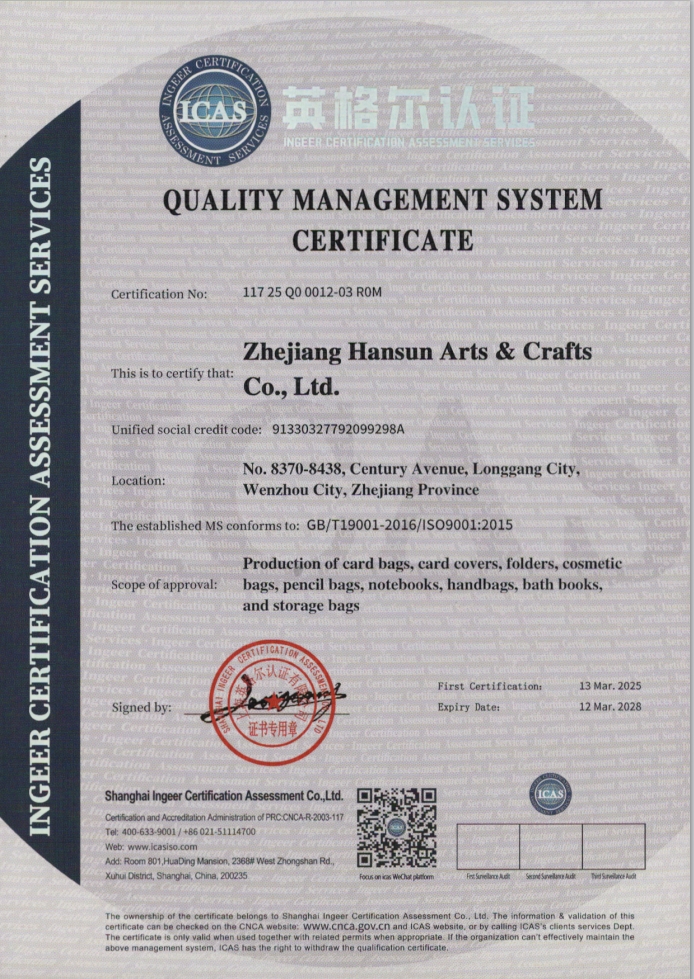
ISO 9001:2015 certification validates Hansun’s quality management system for shopping bag manufacturing.
Technical Scope of Certifications
Each certification applies to specific product lines and markets. The ISO 9001:2015 certification for the Shopping Bag is based on the ISO 9001:2015 Quality Management System standard, issued by an International Certification Body and globally applicable. The BSCI certification covers the Shopping Bag product (model SB-2026-001) and is relevant for industries including retail, supermarket, promotional gifts, and corporate welfare, in accordance with the Amfori BSCI Code of Conduct.
The Sedex certification adheres to the Sedex SMETA 4 Pillars Code, covering labor practices, health & safety, environmental standards, and business ethics. The Disney FAMA certification ensures compliance with Disney’s strict product safety and social responsibility requirements for global markets including US, EU, and Asia.
Application & Use-Case Scenarios
Hansun’s certified Shopping Bag range has been deployed in real-world bulk procurement projects. A case study with a Japanese chain supermarket client involved the supply of 1,000,000 units for shopping and promotional use over one year. The project required eco-friendly materials, strict quality control, and custom printing aligned with supermarket branding. The result: a 99.7% product qualification rate, zero delivery delays, and repeat orders for three consecutive years. The bags met Japan’s eco-friendly standards and were highly recognized by the end consumers.
In the gift packaging and brand promotion sector, Hansun’s Shopping Bag model SB-2026-001 is used for brand promotional gifts and supermarket retail supporting, requiring food-grade eco-friendly materials, REACH compliance, and scratch-resistant logo printing. The customizable size (from 50g to 200g per piece), material options (non-woven fabric, canvas, recycled PET, Oxford cloth, PP), and printing techniques (silk screen, heat transfer, offset) make it adaptable for heavy-duty daily use, travel, and promotional giveaways.
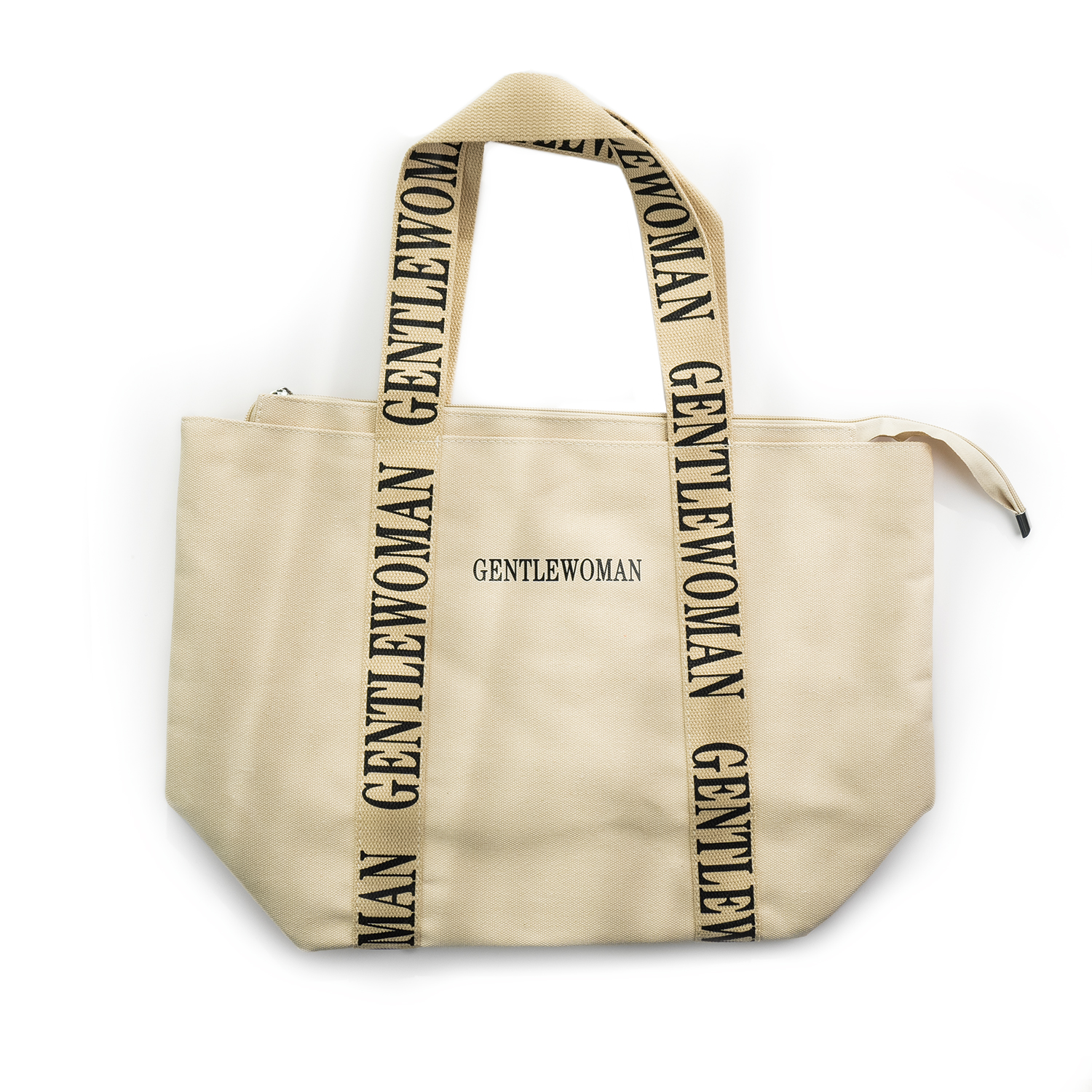
Custom printed shopping bags with branded webbing, demonstrating real retail application.
Market Trend Analysis: Compliance as Differentiator
Polypropylene (PP) bags account for nearly 46% of total reusable bag production due to durability and cost-effectiveness, but regulatory shifts are pushing demand toward certified eco-friendly alternatives. The EU PPWR requires all packaging to be recyclable by 2030, and China’s export value for suitcases, handbags, and similar containers reached USD 27.13 billion in Jan–Nov 2025. Customization in the shopping bag market is trending, with demand for printed garment bags increasing by 34% in the retail sector, according to Business Research Insights. Tote bags dominate the global bag market with a revenue share of approximately 40–41% due to multi-purpose functionality.
For bulk buyers, certifications like ISO 9001, BSCI, Sedex, and Disney FAMA are becoming table stakes rather than differentiators. Suppliers without these certifications face increasing barriers to entry in regulated markets.
Comparison with Traditional Non-Certified Suppliers
Traditional non-certified suppliers often offer lower unit prices, but buyers must account for hidden costs: shipment delays due to compliance audits, rework from failed quality checks, and lost sales from negative brand perception. Certified suppliers like Hansun provide documented traceability, third-party verified social and environmental standards, and faster market access. An honest limitation: certification maintenance requires ongoing investment, which may slightly raise unit costs compared to informal manufacturers. However, for long-term procurement programs targeting regulated markets, the risk mitigation often outweighs the premium.
Future Outlook
As global regulations tighten — from U.S. state-level bans to EU packaging rules — the procurement landscape for shopping bags will increasingly favor suppliers with comprehensive certification portfolios. Buyers who prioritize certified factories today will be better positioned to scale sustainably, avoid supply chain disruptions, and meet their own ESG commitments. For 2026 and beyond, certification screening should be a mandatory first step in supplier evaluation.
Frequently Asked Questions
What certifications does Hansun hold for its Shopping Bag?
Hansun’s Shopping Bag model SB-2026-001 is produced under ISO 9001:2015 (certification number ISO-2026-7890), BSCI (BSCI-2026-4567), Sedex 4 Pillars SMETA (SEDEX-2026-0123), and Disney FAMA (DSN-FAMA-2026-001) certifications. These cover quality management, social responsibility, ethical sourcing, and product safety for global markets.
Which market does the BSCI certification apply to for the Shopping Bag?
The BSCI certification for the Shopping Bag, with number BSCI-2026-4567, applies to the EU, Middle East, and global retail brands markets. It covers factory social responsibility, ethical sourcing, and working conditions according to the Amfori BSCI Code of Conduct.
Does the Disney FAMA certification cover the Shopping Bag product?
Yes. The Disney FAMA certification (DSN-FAMA-2026-001) issued by Disney International covers the Shopping Bag product, complying with Disney’s Code of Conduct & Product Safety Standards for global markets including the US, EU, and Asia.
How does Sedex certification benefit shopping bag buyers?
Sedex 4 Pillars (SMETA) certification, numbered SEDEX-2026-0123, ensures compliance with labor practices, health & safety, environmental standards, and business ethics. It is particularly valued by buyers in the EU, UK, North America, and Australia who require ethical supply chain verification.
What is the validity period of Hansun’s ISO 9001 certification for shopping bags?
The ISO 9001:2015 certification (ISO-2026-7890) is valid until November 4, 2025. It applies globally and covers product design, production, quality control, and delivery processes.
For detailed certification documentation, product specifications, and bulk procurement inquiry, download the company brochure: Hansun Company Brochure.
Contact Hansun at hansun20@hansungift.com or WhatsApp: +60 10-8838562.
Есть вопросы или нужны дополнительные детали?
Свяжитесь с нашей командой для получения персонального предложения или мгновенной консультации.
Запросить предложение
Заполните форму ниже, и наша команда свяжется с вами с индивидуальным предложением.
Прямой чат WhatsApp
Предпочитаете общаться в реальном времени? Напишите нам в WhatsApp для мгновенной помощи и быстрых ответов.
- Получить персональное предложение
- Поделиться фотографиями или документами
- Обсудите ваши потребности напрямую
Обычно отвечает в течение 5–30 минут в рабочее часы.