
Certification & Precision: A Water Quality Sensor Manufacturer's Edge in Global Markets
When industrial buyers move from initial research into evaluation of water quality sensor manufacturers, two factors consistently separate qualified suppliers from the rest: verifiable certifications and documented performance parameters. For procurement teams targeting EU and North American markets, these compliance markers are not optional—they are gatekeeping criteria that determine project approval, regulatory acceptance, and long-term operational reliability.
The Compliance Gap in Water Quality Sensor Procurement
Many sensor suppliers offer broad parameter lists but lack the third-party certifications required by environmental agencies and industrial end-users. Buyers frequently discover only during due diligence that a manufacturer's claimed "CE compliance" covers only a subset of products, or that critical parameters like dissolved oxygen response time or ammonia nitrogen detection limits are specified under ideal lab conditions rather than real-world installations. This gap creates costly delays and rework in water treatment plant upgrades, aquaculture monitoring projects, and municipal wastewater compliance programs.
KACISE: A Manufacturer Built for Certification-Driven Markets
Xi'an Kacise Optronics Tech Co., Ltd. (KACISE) is a Chinese manufacturer of sensor and measurement equipment with a product portfolio spanning water quality monitoring, level measurement, and process control. Founded in 2014, KACISE operates a 40,000 m² facility with an annual output of 120,000 units and exports 70% of production to EU and USA markets—a ratio that imposes strict certification discipline on its manufacturing process.
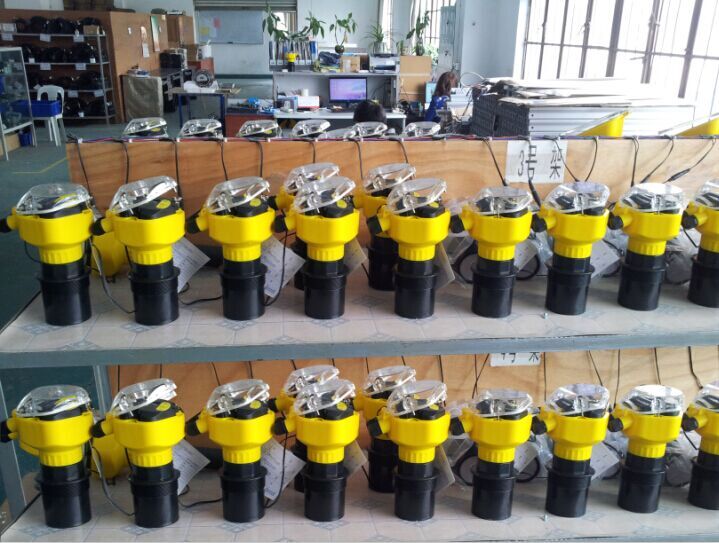
KACISE's manufacturing facility emphasizes quality control to meet EU and US compliance requirements.
Certification Infrastructure: CE, EMC, and Beyond
KACISE's water quality sensors carry CE certifications issued by accredited testing bodies. For example, the company's water quality sensor line (covering models such as the KWS series) is certified under certificate number ZTS23061509TCE by Shenzhen ZTS Testing Service Co., Ltd., conforming to EN IEC 61326-1:2021, EN55011:2016+A2:2021, and applicable EMC standards. This certification covers electromagnetic compatibility and emission requirements mandatory for equipment installed in industrial environments across the European Union.
Additional certifications include the ZTS-Flow meter certificate (ZTS23052402XCE) for flow measurement products and ZTS-Ultrasonic Level Sensor certificate (ZTS25021126HCE) for level sensors. These certifications are supported by Utility Model Patents (CN 215494124 U for ultrasonic ranging device with improved sealing) that demonstrate KACISE's investment in compliant design rather than simple imitation.
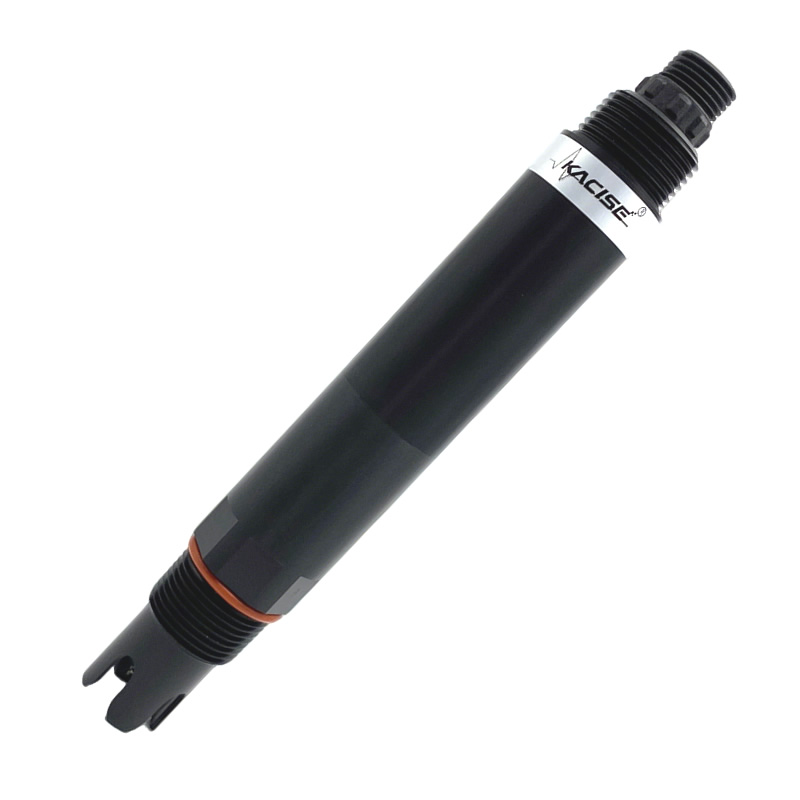
KWS-3500 Online Residual Chlorine Sensor with CE certification for drinking water applications.
Parameter Transparency: From Spec Sheet to Field Performance
Beyond certifications, KACISE publishes detailed technical parameters that allow buyers to match sensors precisely to application needs. The KWS-3500 Online Residual Chlorine Sensor measures residual chlorine (HClO) using the constant voltage method, with a range of 0–2.000 mg/L (0.001 mg/L resolution) or 0–20.00 mg/L, automatic temperature compensation via Pt100, and RS485 (Modbus/RTU) output. This level of specificity—including flow cell installation requirements and pH range (4–9)—enables engineers to validate sensor fit before purchase.
Similarly, the KWS-850 Online Multi-Parameter Water Quality Sensor integrates eight parameters (DO, COD, pH, ORP, conductivity/salinity, ammonia nitrogen, turbidity, temperature) into a single probe with RS485 output and automatic cleaning. Parameter ranges such as DO: 0–20 mg/L and COD: 0–200/500 mg/L are specified with clear resolution and temperature boundaries, reducing the risk of specification mismatch during installation.
Application Scenarios: Matching Certification to Use Case
Certified sensors find deployment in regulated environments where compliance documentation is mandatory. In a municipal wastewater plant in the UK, 12 KACISE multi-parameter sensors were used for effluent quality monitoring over three years, achieving compliant discharge and reduced manual sampling. The multi-parameter integration (KWS-800 system) provided DO, turbidity, conductivity, pH, and oil-in-water monitoring in a single titanium alloy + 316L stainless steel probe with IP68 protection.
In a Norwegian aquaculture farm, 15 fluorescence dissolved oxygen sensors (KWS-630) monitored dissolved oxygen and ammonia levels continuously in saltwater conditions, increasing fish survival rates. The sensors' saltwater-resistant construction and fluorescence lifetime method (no electrolyte, no flow rate limit) reduced maintenance cycles while maintaining CE compliance for the facility's environmental monitoring system.
For river monitoring in Japan, an environmental agency deployed 25 KWS-850 multi-parameter sensors integrated with data loggers for 24/7 operation, benefiting from anti-biofouling design and the full set of EMC certifications required for outdoor electronic equipment.

Example CE-EMC certificate (ZKT-2018101638C) for KACISE pressure transmitter, demonstrating compliance with EN 55032 and EN 55035 standards.
Market Trend: Certification as a Procurement Barrier
The trend toward mandating full CE and EMC certifications for water quality monitoring equipment continues to intensify, especially in EU markets where EN IEC 61326-1:2021 has become the baseline for industrial measuring instruments. Buyers increasingly require certification not only for the final product but also for subcomponents and manufacturing processes. KACISE's certification portfolio, covering multiple product lines from water quality sensors to flow meters and ultrasonic devices, addresses this requirement across the supply chain.
Comparison with Traditional Solutions
Traditional suppliers often rely on self-declared compliance or certifications that cover only a narrow product slice. KACISE provides traceable certifications for distinct product families (water quality sensor, ultrasonic level sensor, flow meter), each with separate testing reports. One honest limitation is that certification documentation is only available for specified models; buyers must verify that their exact model number appears on the certificate scope. For custom OEM orders involving parameter or output modifications, additional testing may be required to maintain certification.
Future Outlook: IoT Compliance and Parameter Traceability
As water quality monitoring moves toward IoT-enabled systems with wireless communication, certification requirements are expanding to include cybersecurity and data integrity standards. KACISE's current product roadmap includes RS485 (Modbus) and 4-20mA outputs compatible with IoT gateways, while digital pH sensors (KWS-790) already support mobile APP debugging and PC configuration—features that will simplify compliance with emerging digital monitoring regulations. Buyers should expect parameter documentation to become machine-readable, enabling automated validation against project specifications.
Frequently Asked Questions
What CE certifications does KACISE hold for its water quality sensors?
KACISE's water quality sensors are certified under ZTS23061509TCE, issued by Shenzhen ZTS Testing Service Co., Ltd., conforming to EN IEC 61326-1:2021, EN55011:2016+A2:2021, EN IEC 61000-3-2:2019+A1:2021, and EN 61000-3-3:2013+A2:2021. The scope covers EMC and electrical safety for industrial measuring instruments.
What is the measurement range of the KWS-3500 residual chlorine sensor?
The KWS-3500 measures residual chlorine (HClO) in two ranges: 0–2.000 mg/L (0.001 mg/L resolution) or 0–20.00 mg/L, using the constant voltage method with automatic temperature compensation (Pt100). It requires flow cell installation and operates within pH 4–9 and temperature 5–50°C.
Does KACISE provide certification for custom OEM sensors?
Standard certification applies to listed model numbers. For custom OEM orders involving parameter or output modifications, buyers should confirm whether the existing certification scope covers the modified configuration; additional testing may be required to maintain CE compliance.
Are KACISE sensors certified for use in drinking water applications?
Yes. The KWS-3500 residual chlorine sensor and KWS-790 digital pH sensor are designed for drinking water treatment plants. Their CE certifications (ZTS23061509TCE) are applicable to water quality monitoring equipment used in potable water systems, provided materials comply with local drinking water regulations.
What is the material specification and IP rating for the KWS-800 multi-parameter system?
The KWS-800 Online Multi-Parameter Water Quality Monitoring System uses a titanium alloy + 316L stainless steel body with IP68 rating. It measures 7 optional parameters (fluorescent DO, 4-electrode conductivity, fiber turbidity, digital pH/ORP, chlorophyll, oil in water) plus temperature, with RS485 (Modbus) output and automatic cleaning device.