
Certification and Spec Checks for Pressure Control Switches
The global pressure switch market was valued at approximately USD 3.2 billion in 2025, and electromechanical pressure switches still account for a large majority of global sales, with an estimated 62% segment share in 2024. For buyers evaluating pressure control switches for water pump systems—particularly at the research and evaluation stage—the key task is not merely comparing price lists, but verifying that each product meets the electrical, hydraulic, and regulatory constraints of the destination market. This article explains which certifications and technical parameters matter most when sourcing pressure control switches, using Monro Switch as a concrete manufacturer reference.
Why Certification and Specification Verification Matter in Pressure Switch Sourcing
Pressure control switches are electromechanical or electronic components that automatically start and stop a water pump based on system pressure. They are commonly traded under HS Code 853650, which covers electrical switches for voltages not exceeding 1,000 volts. Because they are installed into water supply infrastructure, agricultural irrigation systems, and construction equipment, they are expected to meet defined safety requirements in the regions where they are sold.
In North America, a product such as the KRS-4 mechanical pressure control switch can be specified with a UL Listing, which provides evidence that the product has been evaluated against applicable standards. In the European Union, electronic pump controllers require CE marking, supported by safety certifications such as TÜV Rheinland certificates and CE-EMC certificates of conformity. Buyers who rely on a supplier without these credentials risk shipment delays, installation rejections, or acceptance issues with local inspectors.
Technical mismatches are equally common. A controller rated for 1.1 kW should not be used to drive a 2.2 kW pump motor. A switch with a maximum cut-out pressure of 100 PSI may be unsuitable for a system that requires a higher shut-off point. An IP20 indoor-rated switch can be mounted in a dry electrical enclosure, but an outdoor installation with hose-down conditions demands a higher protection rating such as IP65. These constraints explain why specification verification is a core part of the buying process.
Monro Switch: A Manufacturer-Level View of Compliance and Product Range
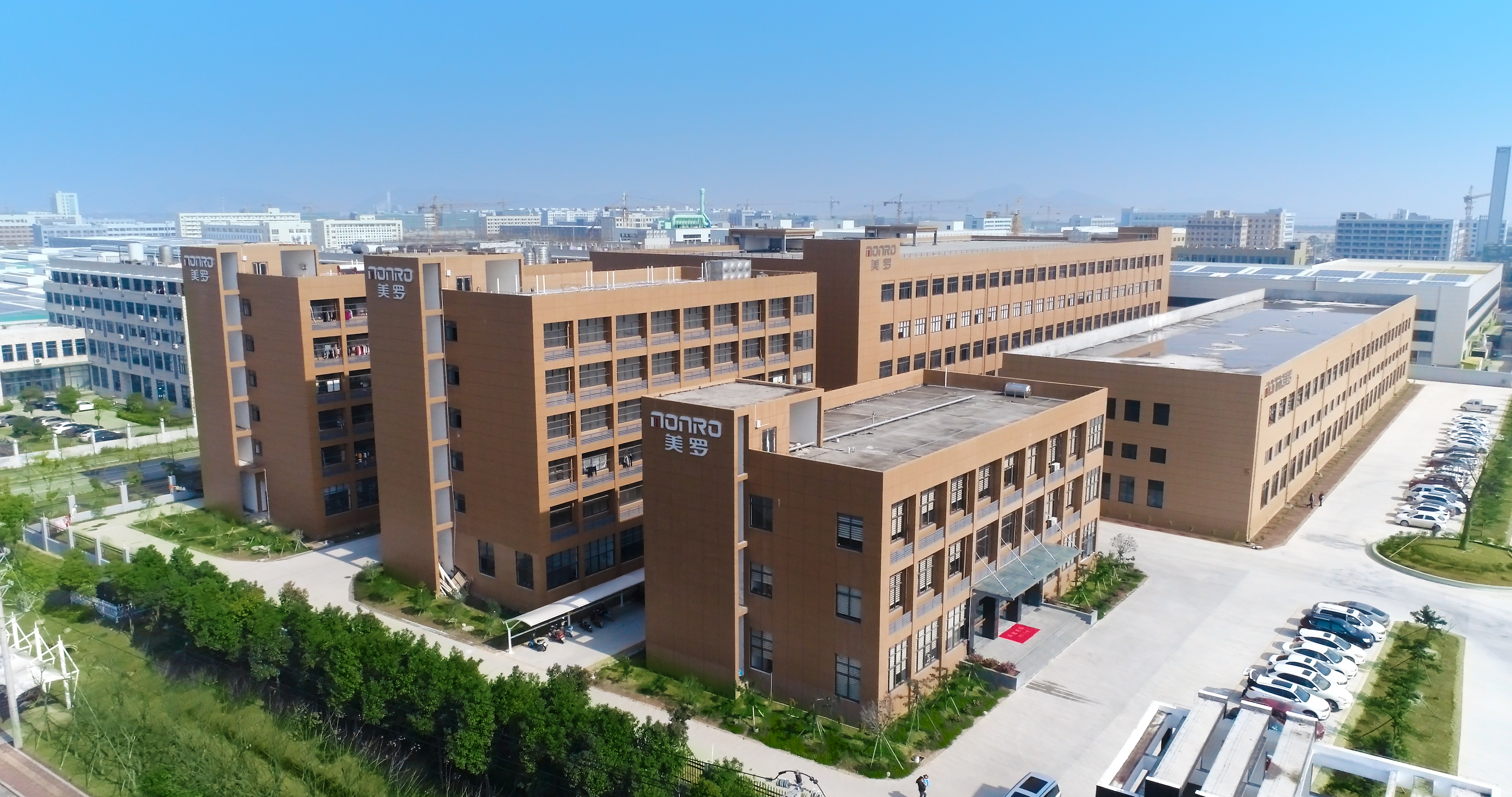
Monro Switch is the brand of ZHEJIANG MONRO MACHINERY & ELECTRONIC CO.,LTD, a China-based manufacturer of pressure control products. The company is located in Wenling City, Zhejiang Province, a coastal city with well-developed industrial infrastructure. Although it was officially established in 2010, the company reports more than 20 years of manufacturing experience in pressure controls and float switches. Monro currently offers more than 40 models of pressure controllers for water pump systems and air compressors.
The product portfolio is organized into three families: the EPC series of electronic pump pressure switches, the KRS series of mechanical pressure controls, and the FPS series of float switches. According to company data, annual output is approximately 2.88 million pieces for the EPC series, 3.24 million pieces for the KRS series, and 0.6 million pieces for the FPS series. The company operates an ISO 9001:2015 quality management system, backed by a 30,000-square-meter factory and a 200-person team.
From a compliance perspective, several product-level certifications are relevant to procurement:
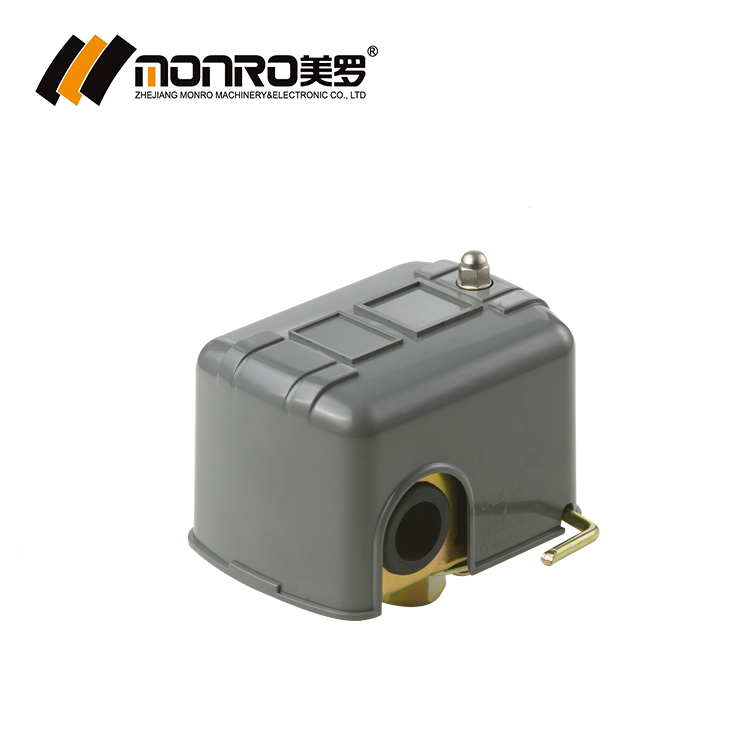
- KRS-4 (mechanical pressure control): UL Listed, certificate number E316396, issued by UL LLC, applicable to the North American market. Standards: EN 60730-1:2016+A1+A2 and EN 60730-2-6:2016+A1.
- EPC-10, EPC-12, EPC-14, and EPC-16 (pump pressure switches): TÜV Rheinland Safety Certification, certificate number R 50175890, issued by TÜV Rheinland LGA Products GmbH, applicable to the EU market. Standards: EN60730-1:2016+A1+A2 and EN60730-2-6:2016+A1.
- Multiple EPC models: CE-EMC certificates of conformity issued by TÜV Rheinland LGA Products GmbH, covering EU EMC requirements under Directive (EU) 2014/30. The covered models include EPC-1, EPC-2, EPC-2.1, EPC-3, EPC-3P, EPC-4, EPC-5, EPC-10, EPC-12, EPC-14, EPC-15, and EPC-16.
- ISO 9001:2015: System certification for the manufacture of water pump pressure switches, certificate number 20126Q00115R300, issued by BeiJing ZHONGRUI Unite.
Key Technical Parameters in Pressure Control Switches
Understanding the core parameters helps buyers define a product specification before approaching suppliers. The table below compares the mechanical KRS series with the electronic EPC series at a category level.
| Parameter | KRS series (mechanical) | EPC series (electronic) |
|---|---|---|
| Rated voltage | 110–240V / 400V (select models) | 110–120V / 220–240V / 100–240V |
| Frequency | 50/60 Hz | 50/60 Hz |
| Maximum power or current | Rated current up to 20(16)A | 0.55 kW to 4 kW depending on model |
| Pressure settings | PSI or bar-based factory ranges | Adjustable starting pressure (e.g., 1.2, 1.5, 2.2 bar) |
| Enclosure protection | IP20 or IP44 | IP44, IP54, or IP65 |
| Connection threads | 1/4"F, 3/8"F, 1/4"M, 3/8"M | G1", R1", NPT1", G1 1/4" |
Electrical Ratings
The rated voltage and maximum power must align with the pump motor. For example, the KRS-3 mechanical switch is rated at 110–240V, 50/60 Hz, and 12A, with a maximum working temperature of 55°C. Electronic models such as the EPC-7 support a maximum power of 4 kW with a 380V option, while the EPC-1 supports 0.75 kW, 1.1 kW, and 1.5 kW configurations. The EPC-15 offers triple voltage options of 110V, 230V, or 110–240V, which simplifies inventory management for distributors serving multiple markets.
Pressure Range and Set Points
Mechanical switches in the KRS series use fixed pressure ranges set at the factory. The KRS-1 covers 20–40, 30–50, and 40–60 PSI, with a maximum cut-out of 175 PSI. The KRS-2 is offered in 1.0–1.8, 1.2–2.2, and 2.2–3.0 bar ranges, with a maximum cut-out of 3.0 bar. The KRS-4 is available in 20–40, 30–50, 40–60, and 50–70 PSI ranges, with a minimum cut-in of 20 PSI and a maximum cut-out of 100 PSI. The KRS-8 covers higher ranges of 1–6 bar and 6–12 bar, with a maximum cut-out of 12 bar and a rated current of 20(16)A.
Electronic controllers allow more flexible settings. The EPC-1, EPC-2, EPC-3, EPC-4, and EPC-5 models offer starting pressure options of 1.2, 1.5, or 2.2 bar. The EPC-10 supports a starting pressure range of 0.5–9.3 bar and a stopping pressure range of 0.7–9.5 bar. The EPC-17 can operate in full-automatic mode, where the starting pressure is automatically set to 70% of the pipeline pressure, or in manual mode with customized cut-in and cut-out pressures.
Enclosure Protection
Enclosure protection is expressed as an IP rating. Most EPC-series controllers are rated IP65, meaning protection against dust ingress and water jets. Examples include EPC-2, EPC-4, EPC-5, EPC-7, EPC-10, EPC-12, EPC-14, EPC-15, EPC-16, and EPC-19. The EPC-2.1 and EPC-5.1 are rated IP44, while EPC-9 and EPC-11A are rated IP54. For mechanical switches, the KRS-3 and KRS-4 are rated IP20, and the KRS-5, KRS-6, KRS-7, and KRS-8 are rated IP44.
Installation and Connection
Connection threads determine how easily the switch integrates with existing plumbing. Mechanical KRS models offer choices such as 1/4"F, 3/8"F, 1/4"M, and 3/8"M. Electronic controllers typically use G1", R1", or NPT1" threads. Some models such as the EPC-1 include a built-in socket, which simplifies wiring for installers. The EPC-2.1 also offers a built-in socket with a 90-degree inlet/outlet orientation.
Production and Customization Capabilities
For buyers evaluating a supplier at the evaluation stage, production capacity and customization flexibility are relevant. Monro reports a monthly capacity of 180,000 pieces for the EPC series, 250,000 pieces for the KRS series, and 30,000 pieces for the FPS series, with 100% testing of finished products. Standard lead time is approximately 45 days, and the minimum order quantity is 204 pieces. Customization options include cable length, cable material, brand marking, color box design, and product color. After-sales support covers remote assistance and a one-year warranty.
Application Scenarios for Monro Pressure Control Switches
Monro pressure control switches are specified for agriculture irrigation, water treatment, construction, and domestic or residential water supply. The typical operating mode is automatic pump start/stop control: when system pressure drops to the preset low-pressure setpoint, the controller starts the pump; when pressure reaches the high-pressure setpoint, it stops the pump. The working fluid is clean water, with a standard voltage range of 220–240V or 110–120V, system pressure range of 0.5–10 bar, maximum working temperature of 55°C, and IP65 protection.
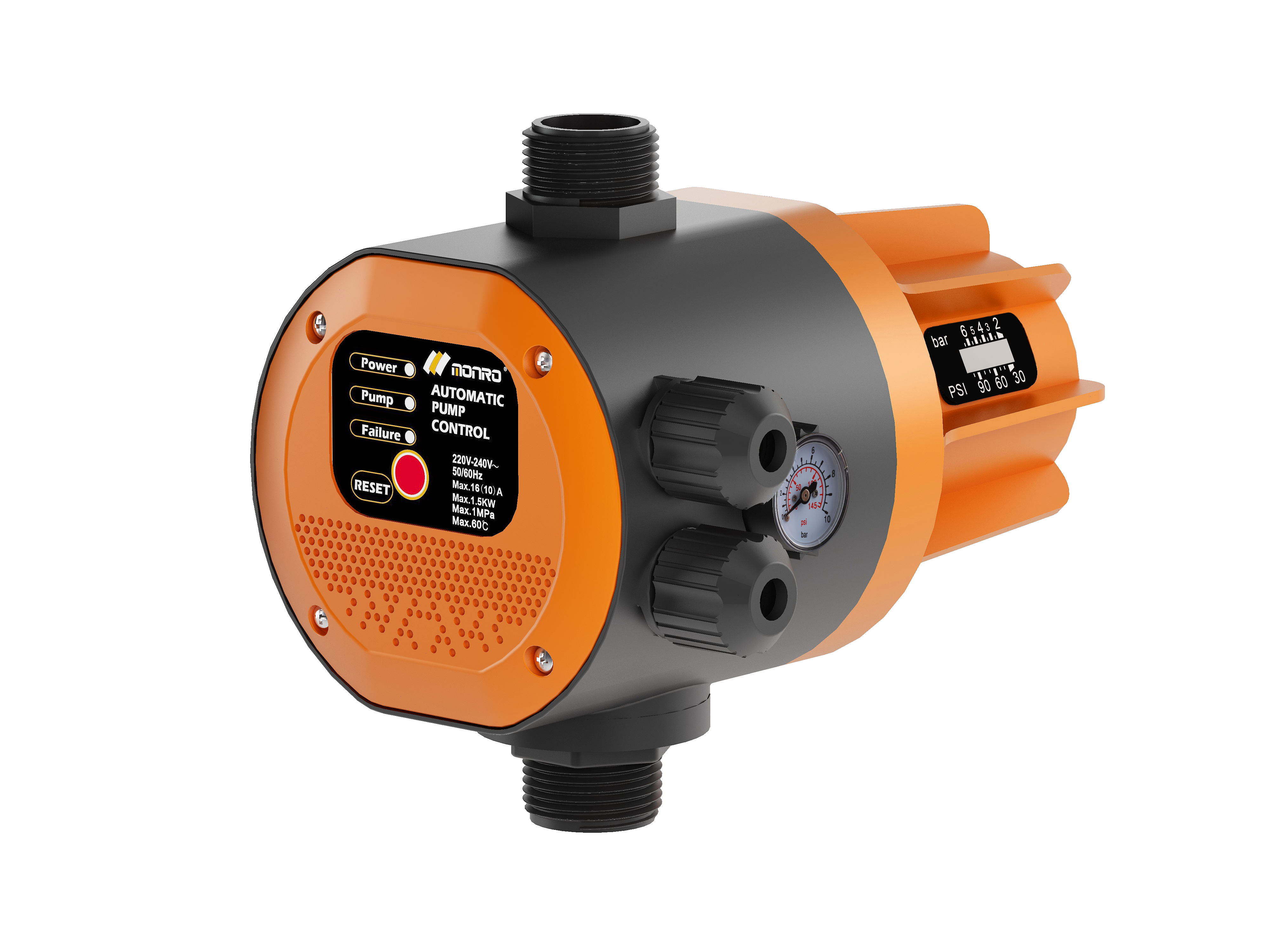
For non-tower water supply, the EPC-14 provides a clear example. When a faucet opens, pressure in the pipe drops; once the actual pressure falls below the starting pressure value, the controller starts the pump. When the faucet closes, flow is no longer detected, and the controller stops the pump. If the inlet has no water, the controller switches off the pump and the failure indicator lights up. This behavior makes the controller suitable for domestic booster systems, small irrigation setups, and similar low-complexity water delivery tasks.
Market Trends and Implications for Buyers
According to Fortune Business Insights, the global pressure switch market was valued at USD 3.2 billion in 2025 and is projected to grow from USD 3.38 billion in 2026 to USD 5.13 billion by 2034. Market Research Future estimates that electromechanical pressure switches held approximately 62% of global market share in 2024, with solid-state electronic switches at roughly 38%. This ratio is shifting gradually as electronic controllers add features such as dry-run protection, auto-restart, and constant pressure control.
On the standards side, IEC 60730-2-6:2025 is the current international standard for automatic electrical pressure sensing controls. Buyers sourcing electronic pump controllers should confirm that product certifications reference the applicable edition of this standard family. For companies exporting to Europe and North America, the presence of TÜV Rheinland and UL documentation is a practical starting point for regulatory acceptance.
Mechanical vs Electronic Pressure Switch Comparison
| Dimension | Mechanical (KRS series) | Electronic (EPC series) |
|---|---|---|
| Sensing principle | Diaphragm and spring mechanism | Microcontroller and pressure sensor |
| Enclosure protection | IP20 to IP44 | IP44 to IP65 |
| Pump protection | Basic on/off control | Built-in check valve, dry-run protection, auto-restart |
| Pressure setting | Fixed factory ranges (PSI or bar) | Adjustable starting pressure; select models with operation modes |
| Typical application | Simple water pump control | Non-tower water supply, protection-sensitive systems |
| Relative cost | Generally lower | Generally higher |
It would be inaccurate to recommend electronic controllers in every case. Electronic switches depend on stable electrical supply and contain more complex components; in remote locations with noisy or unstable power, a mechanical switch can be more robust, easier to troubleshoot, and cheaper to replace. Similarly, when an application only requires simple cut-in/cut-out control without dry-run protection, a mechanical switch avoids unnecessary electronic complexity. The right choice therefore depends on the operating environment and the level of protection required.
Future Outlook: From Simple Switching to System Protection
The EPC-19 shows how electronic pump controllers are evolving beyond simple switching. It supports manual adjustment of constant outlet pressure from 2.0 to 6.0 bar, a built-in pressure gauge for visual verification, automatic starting pressure linked to outlet pressure, dry-running protection, rotor anti-blocking protection (auto-run for 10 seconds after 24 hours of stop), and automatic restart during water shortage with a programmed periodicity to test water supply. Features like these are turning pressure control switches into system protection components, which is likely to accelerate the adoption of electronic controllers in residential and commercial water systems.
Manufacturer Reference Material
For buyers that need a complete model-by-model parameter review, Monro provides a published catalogue. The catalogue can be downloaded here: Monro catalogue 2025.
FAQ
How to choose an automatic pump controller?
There are two main rules. First, match the motor power of the water pump. Second, select a suitable starting pressure according to the pump lift and maximum water use height. For example, if the starting pressure is 1.2 bar, the maximum water use height is 1.2 × 10 m = 12 meters, and the pump lift should be at least (1.2 + 0.8) × 10 m = 20 meters.
Which Monro pressure switch models are UL Listed for North America?
The KRS-4 mechanical pressure control switch is UL Listed, with certificate number E316396, issued by UL LLC. The applicable standards are EN 60730-1:2016+A1+A2 and EN 60730-2-6:2016+A1.
Which EPC models are covered by the TÜV Rheinland Safety Certification?
The EPC-10, EPC-12, EPC-14, and EPC-16 pump pressure switches are covered by TÜV Rheinland Safety Certification, certificate number R 50175890, issued by TÜV Rheinland LGA Products GmbH. The applicable standards are EN60730-1:2016+A1+A2 and EN60730-2-6:2016+A1.
What IP protection ratings are available on Monro EPC series controllers?
Most EPC-series controllers are rated IP65, including EPC-2, EPC-4, EPC-5, EPC-7, EPC-10, EPC-12, EPC-14, EPC-15, EPC-16, and EPC-19. The EPC-2.1 and EPC-5.1 are rated IP44; EPC-9 and EPC-11A are rated IP54.
Есть вопросы или нужны дополнительные детали?
Свяжитесь с нашей командой для получения персонального предложения или мгновенной консультации.
Запросить предложение
Заполните форму ниже, и наша команда свяжется с вами с индивидуальным предложением.
Прямой чат WhatsApp
Предпочитаете общаться в реальном времени? Напишите нам в WhatsApp для мгновенной помощи и быстрых ответов.
- Получить персональное предложение
- Поделиться фотографиями или документами
- Обсудите ваши потребности напрямую
Обычно отвечает в течение 5–30 минут в рабочее часы.