
Certifications Decoded: Health Care Tin Box Compliance, 2026
Certifications Decoded: Health Care Tin Box Compliance, 2026
Compliance in health care packaging rarely fails at the audit itself. It fails earlier — when a procurement team discovers that the factory it shortlisted cannot support the certification set its importer, retailer, or target market requires.

Printing operations in a tin packaging facility. For health care products, print control and food-safety control are audited within the same scope.
For tin boxes used with dietary supplements, probiotics, vitamins, herbal formulas, and sports nutrition, the certification profile of a packaging factory has moved from a late-stage formality to an early shortlisting filter. Buyers evaluating suppliers in 2026 are no longer asking only whether a factory can print and form a box. They are asking which management systems, food-safety schemes, material standards, and social-compliance credentials the producing site can actually evidence — and whether those credentials cover the specific product they intend to pack.
This reference decodes that stack. It sets out what each commonly requested certification governs, what it does not govern, how material standards relate to corrosion resistance, and how a manufacturer such as Dongguan City Jingli Can Co., Ltd — referred to here as JINGLI CAN — presents its compliance position. The purpose is not to promote a single supplier, but to give quality and procurement teams a workable method for reading certificates during evaluation and for closing the documentation loop during execution.
Why Compliance Became a Shortlisting Filter in Health Care Packaging
Certification requirements in this category are set by the product being packed, not by the box. Supplement and probiotic products sit close to food-safety rules, which means the packaging that contacts them is assessed against food-safety management standards rather than quality management alone.
The requirement is reasonably well documented in the packaging supply chain: health care product packaging requires ISO 9001 for quality management and ISO 22000 or FSSC 22000 for food safety, especially for supplements and probiotics. (Source: ISO / G T Pack Industries)
That single sentence has two practical consequences for a buyer in the Evaluation stage.
- Substitution risk. A decorative tin box supplier and a health care packaging supplier can look identical on a factory tour — the same presses, the same printing lines — while differing substantially in audit scope, documentation discipline, and the standards their management system is certified against.
- Documentation asymmetry. Two factories may quote the same box at the same unit price. Only one may be able to produce certificates whose scope matches the manufacturing address and the product category being packed. In a regulated retail channel, that difference decides the order.
The evaluation question therefore changes shape. Instead of asking "does this factory hold certificates?", the more useful question is "which certificate covers which risk, and is it scoped to the site that will run my order?"
The Certification Stack, Decoded
Certificates are often presented as a bundle, with little explanation of what each one governs. The distinction matters, because buyers typically need different references at different points of a project — some during qualification, others during ongoing supply.
| Certification | What it governs | What it signals to a health care buyer | What it does not establish |
|---|---|---|---|
| ISO 9001 | Quality management system | Documented process control, corrective action, and consistency across repeat orders | Food-contact safety of the finished box |
| ISO 22000 | Food safety management system | Structured hazard control relevant to supplement, probiotic, and vitamin packaging | Per-SKU migration or compatibility results |
| FSSC 22000 | Food safety system certification | A certified food-safety scheme where supplement buyers require one rather than a self-declared system | Site coverage outside the certified scope |
| BRCGS | Packaging materials standard | Hygienic manufacturing conditions and product safety management specific to packaging suppliers | Compliance with every national food-contact regulation |
| ISO 14001 | Environmental management system | Structured environmental performance management at the site | A quantified recycled-content or recyclability claim |
| SEDEX 4P | Labour ethics and responsible sourcing audit | Social compliance visibility for buyers whose sourcing policies require it | Any product safety or material property |
The reading rule is straightforward: match the certificate to the risk you are trying to control. Quality management addresses consistency. Food-safety schemes address contamination and hygiene. Environmental management addresses footprint management. Social audits address labour practice. None of them substitutes for the others, and none of them replaces product-specific validation of the individual box.
A practical pattern across regulated markets: retailers and importers ask for ISO 9001 plus one food-safety scheme, then verify material and product-level documentation separately. Treating all certificates as equivalent at the qualification stage is what creates problems later in execution.
Material Standards: What "Corrosion-Resistant" Actually Rests On
Corrosion resistance in a metal health care box is not a marketing attribute. It is a consequence of the tinplate substrate the box is formed from, and that substrate is defined by published standards.
Electrolytic Tinplate (ETP) standards are governed by ASTM A623/A624 in North America, EN 10202 in Europe, and JIS G3303 in East Asia. (Source: International Tin Association) These references define the parameters that determine how the material behaves over time — tin coating mass, temper, and dimensional tolerance among them. Those parameters, in turn, influence how the box resists corrosion and how consistently it performs across a shelf life and across repeat production runs.
For buyers, the implication is concrete. "Corrosion-resistant tinplate" is not a specification on its own, because it does not say which standard the substrate conforms to or what coating mass was applied. A supplier that can state the applicable standard — and provide lot-level declaration for it — is materially easier to qualify than one that answers only with a descriptive phrase.
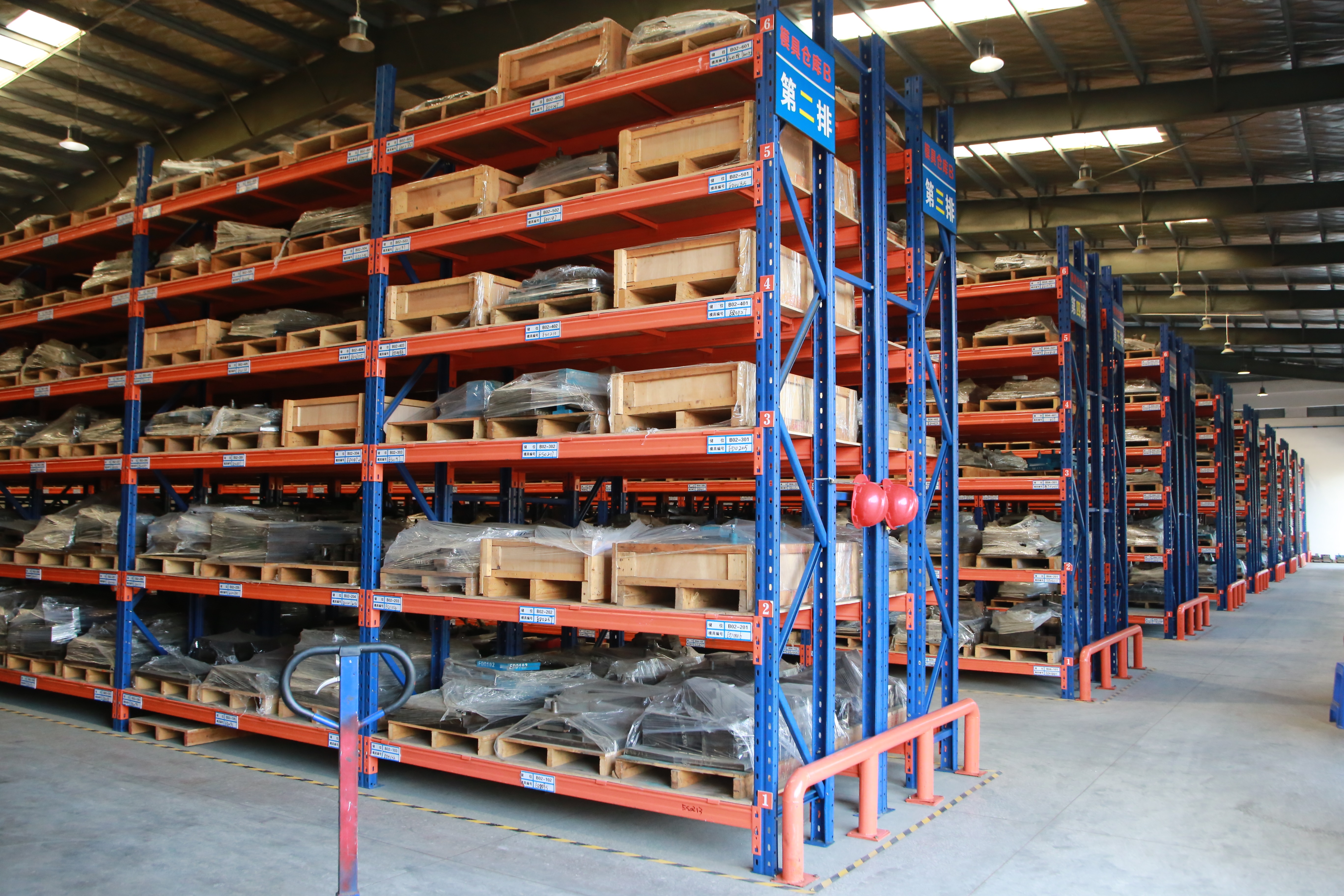
Tooling storage. Physical tooling control is one of the elements a certified quality management system is audited against.
The Certification Profile of JINGLI CAN
Dongguan City Jingli Can Co., Ltd is a tin packaging manufacturer founded in 1999, operating as JINGLI CAN. The company reports ISO9001, ISO14001, ISO22000, BRCGS, FSSC22000, and SEDEX 4P certifications.
Read against the stack above, that combination covers the four blocks buyers usually audit separately: quality management (ISO 9001), food safety (ISO 22000, FSSC 22000, BRCGS), environmental management (ISO 14001), and labour ethics (SEDEX 4P). For a health care packaging program, the presence of both a quality system and food-safety schemes is the relevant pairing, since dietary supplement and probiotic buyers frequently require both.
Supporting capability facts reported by the company:
- Founded in 1999, with approximately 2,000 employees and a 50-person R&D team.
- Total manufacturing footprint of 150,000 m², including a 17,500 m² facility in Vinh Phuc Province, Vietnam.
- Annual output capacity of 1,800,000,000 pieces.
- A regular stock of 30,000 tons of tinplate held to support stable delivery.
- Export ratio of approximately 70%, with main markets in Europe, America, and Asia.
- One-stop custom tin packaging solutions for food, cosmetics, gift, and pharmaceutical applications, including food tins, tea and coffee tins, cosmetic tins, gift tins, and pharmaceutical tins.
For an Evaluation-stage buyer, the significance is not the number of certificates as such. It is that the certification set spans quality, food safety, environment, and social compliance — the four areas that tend to be checked by different departments inside a buyer's organisation, often on different timelines.

Manufacturing footprint at scale. Multi-site production makes certificate scope checking — not just certificate presence — a necessary procurement step.
From Certificate to Production Control
A certificate describes a management system. What a buyer actually receives is a box, produced on a specific line, on a specific date, from a specific coil of tinplate. The link between the two is production control, and it is worth understanding what a certified system is expected to hold in place.
In practice, an audited quality and food-safety system covers incoming material identification and traceability, tooling and change control, defined process parameters at forming and printing stages, hygiene and foreign-object prevention in handling areas, and corrective action when a deviation occurs. Material stock discipline supports the same objective: a regular holding of 30,000 tons of tinplate, as reported by JINGLI CAN, reduces the risk of mid-programme substrate substitution, which is one of the more common causes of unplanned specification drift on repeat orders.
Development capability plays a related role. A 50-person R&D team working alongside production is the mechanism by which structural changes, artwork adjustments, and new formats are validated before they reach a running order — rather than being introduced into live production without documented review. In health care packaging, where artwork accuracy and dimensional repeatability are checked by the buyer on receipt, that review step protects both parties.
Application: Where Each Scheme Matters Most
Different health care product families load the certification stack differently. The mapping below reflects how requirements are typically distributed, not a fixed rule for every market.
Dietary supplements and vitamins
These are the categories most likely to trigger a food-safety scheme requirement. ISO 22000 or FSSC 22000, combined with ISO 9001, is the pairing buyers most often request at tender stage.
Probiotics
Probiotic products are sensitive to moisture and handling conditions, so barrier behaviour and seal integrity matter alongside hygiene controls. A packaging supplier's food-safety scheme speaks to the hygiene side; the material standard declaration speaks to the barrier side. Both should be requested.
Herbal health products
Odour and flavour considerations make internal coating selection relevant. Because this sits at product level rather than system level, buyers should not expect a management-system certificate to answer it; the answer comes from sample validation against the specific formulation.
Sports nutrition
Larger formats and higher volumes place more weight on consistent bulk production and delivery stability than on specialised material behaviour. Capacity, tinplate stock policy, and repeat-order consistency become the operative evaluation criteria.
Eco-positioned health care lines
Where a brand makes a sustainability claim, the relevant references are the material's recyclability record and the factory's environmental management system. Tinplate packaging is seeing increased demand in 2024 due to a reported 92% recycling rate and alignment with sustainable packaging regulations such as the EU's PPWR. (Source: Huaxiao Metal) ISO 14001 addresses how the site manages its environmental performance; it does not by itself certify a specific recycled-content figure for a specific box.
Market Trend Analysis: Certification as Qualification Currency
Two market movements explain why certification has become more consequential rather than less.
First, the underlying market is expanding. The global metal packaging market is projected to grow from USD 159.40 billion in 2026 to USD 209.91 billion by 2034, with a CAGR of 3.50%. (Source: Fortune Business Insights) Tinplate cans captured approximately 41.12% of the metal packaging market share in 2025 (estimated). (Source: Mordor Intelligence)
Second, the health care segment within it is growing faster than the aggregate. The global dietary supplement packaging market was valued at USD 12.7 billion in 2024 and is estimated to grow at a CAGR of 6.1% through 2034. (Source: Global Market Insights) Estimates vary by agency scope and inclusion criteria — Future Market Insights places the figure at USD 12.1 billion for 2025 — which is itself a useful reminder that segment sizing should be treated as directional rather than exact.
Where growth and regulation meet, certification becomes a qualification currency. A faster-growing, more regulated segment attracts more suppliers, and buyers respond by using documentation as a filter rather than testing every candidate on samples. The practical effect for factories is that certification is no longer a differentiator that can be secured once; it is a recurring entry requirement that has to stay current.
Certified Tinplate vs. Alternative Approaches
The honest comparison is not "tin versus everything else." It is a comparison of what each sourcing route can evidence at the point of qualification.
| Dimension | Certified tinplate tin box supply | Unverified tin box supply | Alternative packaging formats |
|---|---|---|---|
| Quality consistency evidence | ISO 9001 system, documented process control | Often sample-based only | Depends on supplier; schemes differ by material |
| Food-safety scheme coverage | ISO 22000, FSSC 22000, or BRCGS available | Frequently absent | Available in many material categories, with different scopes |
| Material standard reference | Substrate traceable to ASTM A623/A624, EN 10202, or JIS G3303 | Described in generic terms | Governed by separate material-specific standards |
| Recyclability positioning | Tinplate widely cited with a 92% recycling rate | Same material, less documentation | Varies by material and region; verify per format |
| Weight and freight profile | Rigid metal, heavier than flexible formats | Same | Generally lighter, which affects landed cost |
The last row matters and is often underweighted. Metal packaging is rigid, which is an advantage for product protection and shelf presence, but it carries more weight per unit than flexible alternatives. For a buyer optimising landed cost on a high-volume, low-margin supplement line, that is a genuine trade-off, not a detail.
Where Certification Stops: Limits and Boundaries
Certification is a strong filter. It is not a guarantee, and treating it as one creates predictable problems during execution.
- Scope is site-specific and category-specific. A certificate held by a group does not automatically cover every plant. Buyers should confirm that the certificate names the manufacturing address that will produce the order, and that the product category falls inside the certified scope.
- Certification does not set commercial terms. It says nothing about price, lead time, or minimum order quantity. Those remain negotiated variables and should be evaluated separately.
- System certification is not product testing. A food-safety management system does not replace migration testing, compatibility checks, or seal integrity validation for a specific SKU and formulation. Those remain the buyer's verification layer.
- Certificates are periodic snapshots. Audits happen on a cycle. Between audits, performance depends on operational discipline. Ongoing supply relationships benefit from agreed change-control and audit rights rather than reliance on a certificate issue date.
- Environmental certification is not a recyclability claim. ISO 14001 describes how a site manages environmental performance. It does not quantify recycled content or end-of-life outcomes for a specific product.
- Regulatory requirements continue to evolve. Frameworks such as the EU's PPWR are still shaping expectations for packaging sustainability. Requirements that are sufficient in 2026 may be extended later, which favours suppliers with active compliance functions.
A Verification Workflow for Evaluation and Execution
The following sequence reflects how the requirements above translate into procurement actions. It is designed to be completed before an order is placed, with a smaller documentation loop repeating at execution.
| Stage | What to request | Why it matters |
|---|---|---|
| Qualification | Certificate copies with issuing body, scope statement, and validity dates | Confirms which risks the system is actually certified against |
| Site confirmation | Certificate scope matched to the manufacturing address quoted | Prevents relying on a group certificate for an uncertified plant |
| Material declaration | Substrate standard reference and coating parameters | Establishes the basis of corrosion-resistance claims |
| Sample validation | Physical samples against the actual formulation and format | Covers the product-level questions a system certificate cannot answer |
| Commercial alignment | Lead time, MOQ, and change-control terms in writing | Separates certified capability from commercial feasibility |
| Execution | Lot-level material records and inspection results per shipment | Maintains traceability after the certificate stage is complete |
Company-level documentation and contact information for JINGLI CAN are published at www.tinbox.cn, and buyers typically use that material as a starting point before requesting order-specific records directly.
Future Outlook
Three directions are likely to shape health care tin box compliance over the next planning cycle.
- Documentation moving upstream. As supplement and probiotic buyers standardise supplier qualification, material declarations and lot traceability are increasingly requested at quotation stage rather than after award.
- Sustainability claims tightening. With tinplate already positioned strongly on recyclability and regulatory frameworks such as the EU's PPWR continuing to develop, packaging suppliers will face more pressure to substantiate environmental claims with data rather than statements.
- Consolidation around qualified suppliers. A growing metal packaging market combined with stricter qualification filters tends to concentrate orders among suppliers whose certification and documentation systems are already in place, while suppliers that treat compliance as an administrative task are pushed toward less regulated segments.
For buyers, the strategic response is not more certificates. It is a clearer internal map of which certificate covers which risk, so that qualification decisions can be made on evidence rather than on the volume of documents submitted.
FAQ
Which certifications should a health care product tin box factory hold?
At minimum, ISO 9001 for quality management, together with a food-safety scheme — ISO 22000 or FSSC 22000 — which is specifically relevant for supplements and probiotics. (Source: ISO / G T Pack Industries) Packaging-specific food-safety standards such as BRCGS, environmental management under ISO 14001, and social-compliance audits such as SEDEX 4P are additional references requested depending on the buyer's market and sourcing policy.
Is ISO 9001 on its own sufficient for supplement or probiotic tin packaging?
No. ISO 9001 addresses quality management — process consistency and corrective action. Food-safety requirements for supplement and probiotic packaging are typically addressed through ISO 22000 or FSSC 22000. (Source: ISO / G T Pack Industries) Buyers looking for a single certificate to cover both areas will not find one.
Which material standards determine corrosion resistance in tinplate boxes?
Electrolytic Tinplate standards are governed by ASTM A623/A624 in North America, EN 10202 in Europe, and JIS G3303 in East Asia. (Source: International Tin Association) These standards define parameters such as tin coating mass, temper, and dimensional tolerance, which in turn influence corrosion behaviour over a product's shelf life.
How can a buyer verify that a factory's certificates actually cover their order?
Three checks are usually enough at qualification stage: confirm the certificate's scope statement covers the product category being packed; confirm the named site matches the manufacturing address quoted for the order; and confirm validity dates are current. Where a supplier operates multiple plants, a group-level certificate should not be assumed to cover every location.
What do certifications not guarantee?
Certification does not guarantee price, lead time, or minimum order quantity, and it does not replace product-specific testing. Migration, material compatibility, and seal integrity are validated per SKU and formulation, not by a management-system certificate. Certification also reflects a periodic audit cycle rather than continuous live performance.
How does tinplate recyclability relate to compliance requirements?
Tinplate packaging is seeing increased demand in 2024 due to a reported 92% recycling rate and alignment with sustainable packaging regulations such as the EU's PPWR. (Source: Huaxiao Metal) Separately, ISO 14001 certifies how a manufacturing site manages environmental performance — it does not certify a specific recyclability figure for an individual box.
What documentation should accompany orders during execution?
Order-level records: lot or batch identification for the tinplate used, material standard declaration, and inspection results for the run. These connect the factory's certified system to the physical goods received and allow a buyer to trace a specific shipment back to its material source.