
Chain Block OEM Supply: What to Verify in a Manufacturer
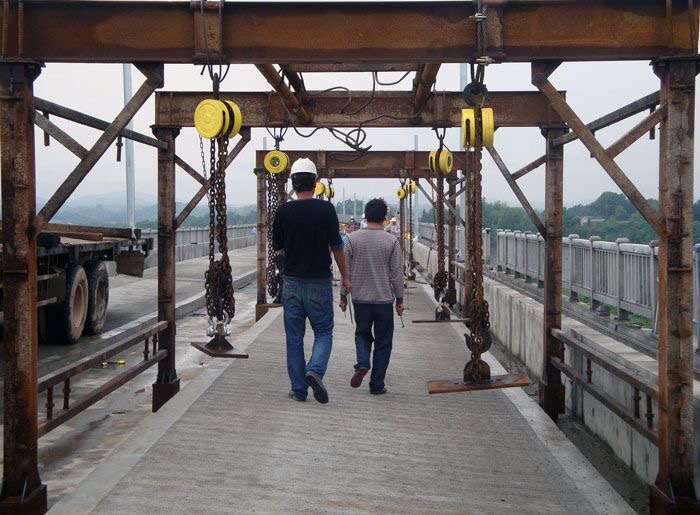
A manual chain block in a long-term bridge construction setting — a documented use case for high-durability lifting equipment.
Chain blocks are standard tools for controlled manual lifting, but sourcing them as part of a structured supply program raises a different set of questions than buying a single unit. Buyers at the evaluation or execution stage typically need to confirm not just load capacity and price, but also the manufacturer's ability to customize products, hold consistent quality, deliver at scale, and support long-term use across multiple sites.
In practice, OEM chain block supply means the manufacturer produces lifting equipment to the buyer's brand, specification, or application requirement, using the manufacturer's engineering and production capacity. For procurement teams, the value of an OEM relationship depends on how transparent the manufacturer is about customization scope, production capacity, lead times, quality control, and commercial terms.
The Procurement Gap in Chain Block Sourcing
Chain blocks are often treated as commodity products, yet failed specification choices can create real operational risk. A hoist that is underspecified for load cycles, chain grade, or environmental conditions may wear quickly, require early replacement, or create safety concerns on site. Buyers who source through multi-layer trading channels often find it difficult to verify the actual factory, the testing record, or whether a product was genuinely manufactured to the stated standard.
The opportunity is that direct OEM manufacturer relationships give buyers more control over product definition and quality evidence. Market conditions support the relevance of manual chain blocks. The global chain block market was valued at approximately USD 1.95 billion in 2024, according to Intel Market Research. Manual chain pulley blocks are estimated to account for around 48% of the total product segment share in 2026, based on Fact.MR data. Construction sites represent the largest application segment, contributing roughly 30% to 54% of global demand depending on the source. These figures indicate that manual chain blocks remain a substantial category in industrial lifting, not a fading product line.
What a Manufacturer's OEM Capability Should Include
A useful reference point is Baoding Junyun Hoisting Machinery Co., Ltd. (JUNYUNHOIST), a chain block manufacturer based in Baoding, Hebei Province, China. The company, founded in 2018, reports that about 80% of its output goes to export markets including India, Russia, Vietnam, Brazil, Turkey, the UAE, and broader Middle East and Southeast Asia regions. Its product line includes VD, VT, HSZ, and HSC chain blocks, as well as VA and VL lever blocks.
For buyers evaluating OEM or ODM partnerships, JUNYUNHOIST's stated customization options are a practical example of what a manufacturer can adjust:
- Color and branding;
- Load-bearing chain length;
- Accessory quality level, selected to achieve the best balance between performance and price;
- Scenario-specific design such as stainless steel or explosion-proof configurations.
These options matter because chain blocks do not operate under identical conditions everywhere. A corrosion-resistant configuration may be necessary for marine or chemical environments, while an explosion-proof variant may be relevant for petrochemical or mining sites where ignition risk must be controlled.
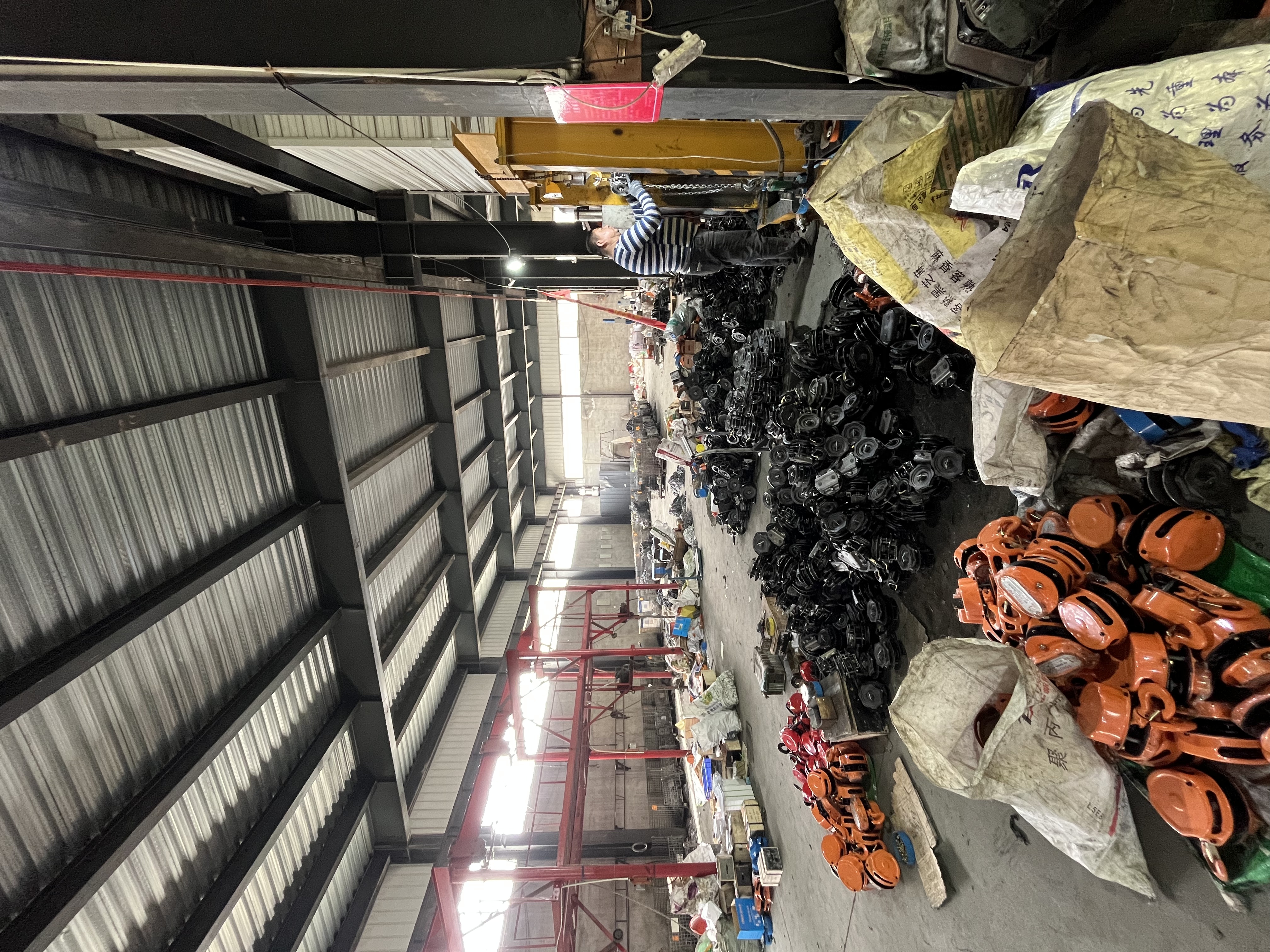
Factory-level production and inspection are central to OEM chain block sourcing decisions.
From a supply-chain perspective, JUNYUNHOIST reports a monthly production capacity of 15,000 units and typical lead times of 15 to 20 days. The minimum order quantity for OEM orders is 50 pieces. Quality control is described as 100% testing of products before delivery. Commercial terms available include FOB, EXW, CIF, and CFR, with payment commonly structured as 30% T/T in advance and 70% T/T against a copy of the bill of lading. Third-party inspection such as SGS is accepted by the manufacturer, which gives buyers an independent verification option before shipment.
Technical Specifications Buyers Should Read Before Ordering
Understanding chain block parameters is essential before committing to an OEM program. A typical manual chain block line may cover rated load capacities from 0.5 to 50 tons, with standard lift height of 3 meters and optional heights from 2.5 to 12 meters. The number of chain falls typically ranges from 1 to 4, depending on capacity. More chain falls reduce the manual force required on the hand chain, which is particularly relevant for higher capacities.
| Parameter | Typical Range / Specification |
|---|---|
| Rated load capacity | 0.5 – 50 t |
| Standard lift height | 3 m (2.5 – 12 m optional) |
| Number of chain falls | 1 – 4 |
| Load chain specification | Grade V (80级) or Grade T according to DIN EN 818-7 |
| Load chain diameter | 6.3 – 11.2 mm, varies with capacity |
| Hand chain type | Round link, galvanised or zinc-plated |
| Pull force on hand chain | ≤ 35 daN (350 N) up to rated load |
| Headroom / hook distance | 300 – 1000 mm, model dependent |
| Hook opening | 24 – 55 mm |
| Hook material | Forged alloy steel, heat-treated |
| Safety factor | ≥ 4:1 chain; ≥ 5:1 structural parts |
| Operating temperature | –20°C to +50°C with standard grease |
| Protection / finish | Painted housing (RAL 2000 or 1007), corrosion-resistant chains |
| Standards | ISO 16872, EN 13157, ASME B30.21, CE marked |
The materials used in critical chain block components also deserve attention. JUNYUNHOIST lists materials such as 20Mn2, 25MnV, and 23MnNiMoCr54 for chain and structural parts. These alloy steel grades are selected for strength and wear behavior under repeated lifting loads. Forged alloy steel hooks, combined with a safety factor of at least 4:1 on chain and 5:1 on structural parts, provide a meaningful margin against shock loading and fatigue.
For small-space operations, headroom is often the deciding parameter. Models with minimum headroom around 300 mm allow use in low-ceiling workshops or cramped installation areas. For larger loads, multiple chain falls reduce the required pulling force, enabling one operator to handle heavier capacity within the stated limits.
Application Scenarios for OEM and Customized Chain Blocks
Chain blocks are applied across manufacturing, construction, logistics and warehousing, shipbuilding, mining, petrochemicals, power generation, bridge engineering, railway construction, automotive repair, agriculture, and stage construction. Each environment creates different selection priorities.
Workshop and Factory Hoisting
In workshops and factories, chain blocks are commonly used for machine assembly, maintenance, mold changing, and component positioning. The main priorities are repeatability, low maintenance, and predictable load control. Buyers often standardize on one capacity range and chain fall configuration to simplify operator training and spare parts inventory.
Construction and Bridge Sites
Construction remains the largest recorded application segment for chain blocks. On-site work involves structural steel installation, precast element handling, formwork movement, and equipment positioning. The documented case linked to JUNYUNHOIST involved long-term bridge or construction processes, with a reported service life exceeding two years and low loss during extended use. This illustrates why durability, rather than initial price, is often the critical evaluation criterion for construction-focused buyers.
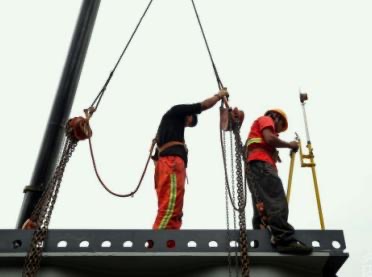
Chain blocks in highway construction are exposed to outdoor conditions and long working cycles.
Warehouse and Logistics
Warehouse logistics operations use chain blocks for loading, unloading, and positioning goods in areas where electric power is unavailable or where operators need a simple, portable lifting solution. Galvanised or zinc-plated chains are practical in these settings because they resist corrosion from humidity and frequent handling.
Mining, Ports, and Shipbuilding
Mining operations often require chain blocks for maintenance of conveyors, crushers, and other heavy equipment. Ports use manual chain hoists for cargo positioning, hatch work, and maintenance tasks where small-scale movement is required. Shipbuilding environments also favor corrosion-resistant configurations, with stainless steel or galvanised components helping to extend service life in marine conditions. For higher-risk environments, explosion-proof or stainless steel variants are available as manufacturer custom options.
Heavy-Duty and Small-Space Operations
For heavy-duty applications, capacities up to 50 tons are achievable with multiple chain falls and high-strength chain grades. For small-space operations, low-headroom chain block configurations help operators work within confined vertical space. Matching the number of chain falls and the chain diameter to the actual load and frequency of use is one of the most important decisions in chain block procurement.
Case Evidence: Multi-Country OEM Supply
A documented project involving 2,000 pieces was completed within a two-year timeframe across India, Vietnam, Brazil, Turkey, Russia, the UAE, and Saudi Arabia. The buyer was an importer whose primary use was local store distribution. The equipment was also used in long-term bridge or construction processes, and the reported service life exceeded two years, with low loss during long-term use.
This case is useful for buyers because it demonstrates that stream-level OEM supply is not limited to a single factory or region. The manufacturer was able to maintain an order across seven country markets, indicating consistency in packaging, specification, and delivery execution. For an importer or multi-branch distributor, such evidence reduces the perceived risk of committing to a new OEM supplier.
Market Trends and What They Mean for Procurement
Market data points in different directions, but several patterns are clear. Asia Pacific dominated the chain hoist market in 2025 with a 41.3% revenue share, driven by rapid industrialization in China and India, according to Dataintelo. China's exports of parts for lifting and handling equipment under HS 843139 reached USD 1.36 billion in 2024, according to UN Comtrade/WITS data. The broader chain hoist market is projected to reach USD 3.9 billion by 2034, also per Dataintelo.
Growth expectations vary significantly by study scope. Reported CAGR estimates for chain blocks range from 0.4% for the general chain block market to around 5.7% for high-tech or AI-integrated models. This divergence is a useful reminder for procurement teams: manual chain blocks and smart or electrified lifting products are different categories, and the growth story of one should not be applied carelessly to the other.
The competitive landscape also shows concentration at the top. Kito Crosby, formed by the merger of Kito and The Crosby Group, reported USD 1.1 billion in revenue for 2024. Columbus McKinnon Corporation is a leading competitor in the 0.5–20 ton capacity range. For OEM buyers, this means the market contains both global brand leaders and mid-size manufacturing specialists. The choice between them depends on whether the priority is global brand presence or responsive OEM customization and cost control.
Direct OEM Manufacturer vs. Traditional Trading Route
Many buyers historically purchased chain blocks through trading companies or local wholesalers. That route offers flexibility, smaller order sizes, and local commercial convenience, but it can obscure the factory source and limit customization. A direct OEM manufacturer relationship works differently.
| Evaluation Factor | Direct OEM Manufacturer | Trading Company / Wholesaler |
|---|---|---|
| Customization | Color, chain length, accessory quality, scenario-specific design | Usually limited to standard configurations |
| Quality verification | Factory audit, 100% testing, third-party inspection | Depends on the manufacturer behind the trader |
| Lead time visibility | Stated production schedule, typically 15–20 days at capacity | Variable, with less direct control |
| Minimum order quantity | 50 pieces in the JUNYUNHOIST example | Often lower, suitable for one-off purchases |
| Documentation | Test records, export documents, standard compliance | May be limited or re-issued |
A direct OEM relationship is not the right fit for every buyer. It requires a higher minimum order volume, internal capability to manage import logistics and overseas payment, and a longer supplier qualification process. For emergency replacement of a single chain block, a local distributor is usually faster and more practical. Buyers should therefore treat the OEM route as a strategic decision, not a universal solution.
Future Outlook for Chain Block Sourcing
Manual chain blocks are unlikely to disappear from industrial operations in the near term. The manual segment still represents approximately half of the product mix, and construction and infrastructure demand remains significant. Over time, procurement expectations are shifting toward documented standards, scenario-specific customization, and verifiable production capacity rather than generic product descriptions.
For suppliers, the ability to offer OEM/ODM services, maintain a credible testing process, and provide clear commercial terms will become more important as buyers consolidate their supplier bases. The growing concentration of lifting equipment demand in the Asia Pacific region, combined with China's position in lifting component exports, suggests that integrated manufacturers with export experience will remain relevant in global supply chains. Buyers who prepare specification data and quality requirements in advance will be in a stronger position to evaluate those manufacturers objectively.
FAQ
What does OEM mean in chain block sourcing?
OEM, or Original Equipment Manufacturing, means a manufacturer produces a product according to a buyer's brand, specification, or design requirement. In chain block sourcing, an OEM order typically includes the buyer's color, branding, chain configuration, and packaging preferences, while the manufacturer handles engineering, production, and testing.
What chain block customization options do manufacturers commonly offer?
Common customizations include color and branding, load-bearing chain length, accessory quality level, and scenario-specific configurations such as stainless steel or explosion-proof versions. The exact scope of customization should be confirmed directly with each manufacturer before quotation.
What is the typical minimum order quantity for OEM chain block orders?
For JUNYUNHOIST, the minimum order quantity is 50 pieces. Other manufacturers may have different thresholds, so buyers should confirm MOQ and packaging requirements early in the supplier evaluation process.
What lead times and production capacity should buyers expect?
JUNYUNHOIST reports a monthly production capacity of 15,000 units and typical lead times of 15 to 20 days. Lead times can vary by order size, customization complexity, and production schedule, so buyers should request a written delivery commitment before placing an order.
What quality control should buyers expect from a chain block manufacturer?
A documented quality process is essential. JUNYUNHOIST states that it performs 100% testing of products as part of its quality control process. Pre-shipment testing and third-party inspection, such as SGS, may also be arranged to provide independent verification before delivery.
Which standards apply to CE marked chain blocks?
For the European market, EN 13157 specifies safety requirements for hand-powered lifting equipment. Chain block manufacturers may also list standards such as ISO 16872, ASME B30.21, or ASME B30.16 depending on the target market and product model. Buyers should verify the exact standards that apply to their intended region before finalizing specifications.
Can chain blocks be configured for specialized industrial environments?
Yes. Manufacturers such as JUNYUNHOIST offer customization for demanding environments, including stainless steel versions for corrosion-prone settings and explosion-proof configurations for hazardous areas. Buyers should describe the working environment, temperature range, and load cycle in detail so the manufacturer can recommend the appropriate configuration.
What after-sales support is common in OEM chain block supply?
After-sales support varies by manufacturer. In the JUNYUNHOIST sourcing model, each container is provided with a certain number of easily damaged spare parts, and replacements are replenished as needed based on subsequent usage. Buyers should clarify spare parts policy, warranty terms, and technical support channels in the supply agreement.
For buyers who want to compare specification sheets and factory background in one reference document, JUNYUNHOIST provides a company brochure: Download the JUNYUNHOIST product brochure (PDF).