
Charcoal Grades FAQ: Burn Time, Ash and Ignition Methods
Technical and procurement answers for hookah, BBQ, incense and disposable grill buyers
Charcoal specification sheets from different suppliers look remarkably similar. What separates a container that performs in the market from one that generates complaints usually comes down to three measurable variables: burning time, ash content and ignition behaviour. Buyers who treat those three as secondary details tend to discover the gap at the point of use — a shisha lounge reloading bowls every hour, a restaurant fighting ash build-up inside its exhaust hoods, or a camping retailer whose customers cannot light a grill without lighter fluid.
This reference answers the recurring technical and procurement questions around those three variables, using the published specifications of FYC — the export brand of Dalian Tiancheng Charcoal Industry Technology Co., Ltd., a charcoal manufacturer founded in 1990 in Liaoning, China. FYC produces hookah charcoal, incense charcoal and barbecue charcoal, and exports to markets including the Middle East and Europe.
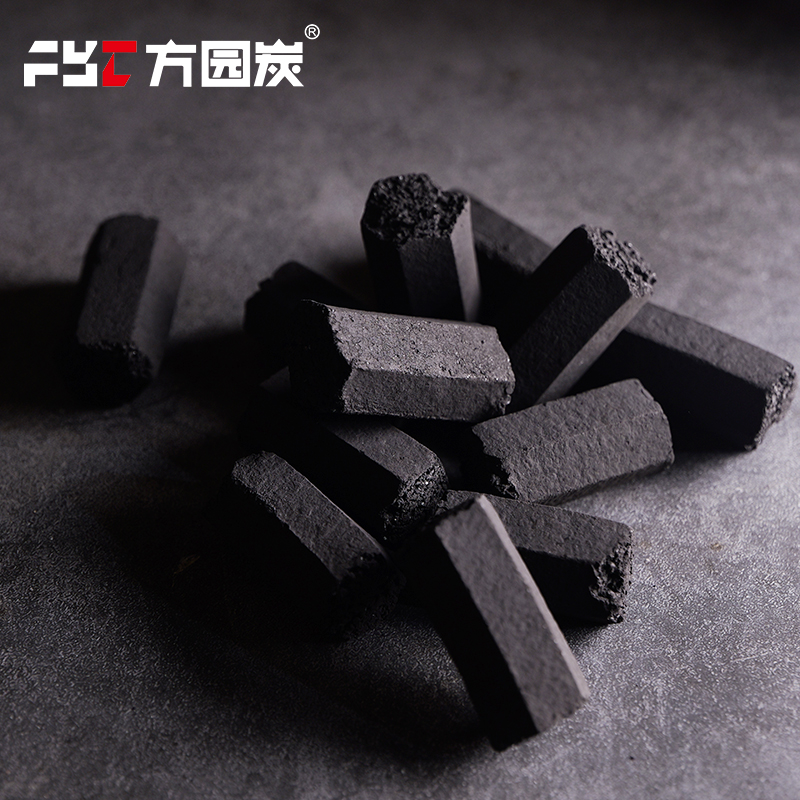
Why burn time, ash content and ignition are commercial metrics
In hookah and shisha service, burning time converts directly into labour. A venue running 90-minute sessions with 90–120 minute briquettes refills less often than one using a 45–70 minute grade. In commercial grilling, ash content converts into maintenance cost: ash that stays in the tray is a cleaning task, while ash that becomes airborne is an exhaust-hood problem. Ignition behaviour converts into customer experience — whether an end user needs a chimney starter and ten minutes, or a single match and a self-igniting layer.
That is why the three variables belong in the purchase order, not only in the technical file. A grade that is cheaper per ton can be more expensive per session once refills, cleaning labour and customer complaints are counted.
The burn-time map: five charcoal grades side by side
Burning time is the fastest way to separate charcoal grades, because it reflects density, fixed carbon content and formulation. Published figures for the FYC TC-01, TC-02 and TC-04 lines show a spread from roughly 45 minutes to 8 hours.
| Product line | Form | Published burning time | Typical fit |
|---|---|---|---|
| TC-01 hookah charcoal | Cube / 25mm / 40mm | 90–120 minutes | Hookah and shisha lounges, long sessions |
| TC-01 hookah charcoal | Quick light | 45–70 minutes | Fast-turnover venues, home use |
| TC-02 barbecue charcoal | Fruit wood quick light | 70 minutes | Short, quick-start grilling sessions |
| TC-02 barbecue charcoal | Bamboo charcoal stick | 6–8 hours | Commercial grilling, long dining service |
| TC-04 incense charcoal | 33mm round | 45–70 minutes | Incense, bakhoor, aromatherapy |
Figures as published for the FYC TC-01, TC-02 and TC-04 product lines.
The spread is not arbitrary. TC-02 bamboo charcoal sticks reach 6–8 hours because the stick format is produced from bamboo sawdust pressed at high density, giving a slow, constant-temperature burn suited to long dining service. The TC-01 cube at 25mm and 40mm reaches 90–120 minutes from a premium natural coconut shell and fruit wood base. Quick-light variants of the same line are deliberately formulated for speed, and that is where the trade-off lives.
Ash content: what "premium" means in practice
Ash content is the parameter most often quoted loosely and least often verified. In the FYC TC-01 hookah charcoal line, premium grade is specified at less than 3% ash. TC-02 barbecue charcoal is specified as ultra-low ash content. Those two statements are not marketing language — they describe how much residue remains after combustion, which is what a lounge or restaurant actually has to remove.
Feedstock is the main driver of ash. Reported feedstock-level ash ranges illustrate the difference:
| Bamboo-based | Reported below 3% |
| Coconut shell-based | Reported in the 3–4% range |
| Pistachio shell-based | Reported in the 5–6% range |
For context, the Indonesian briquette standard SNI 01-6235-2000 permits ash content up to 8%. A premium grade specified below 3% therefore sits well inside the regulatory ceiling rather than merely meeting it — which is the distinction buyers should look for when a supplier claims a "low-ash" product.
The operational consequence is concrete. A Middle East shisha lounge chain sourcing 50 metric tons per quarter — roughly 200 tons annually over a 2.5-year cooperation — specified consistent 25mm cube shape and ash content below 3% precisely so that session heat stays stable and cleaning intervals stay predictable. In a Korean commercial grilling environment, where a restaurant group takes one 40HQ container per month (approximately 20–22 tons) for built-in table grills, ultra-low ash is what limits exhaust-hood cleanup and keeps indoor dining free of smoke interference.
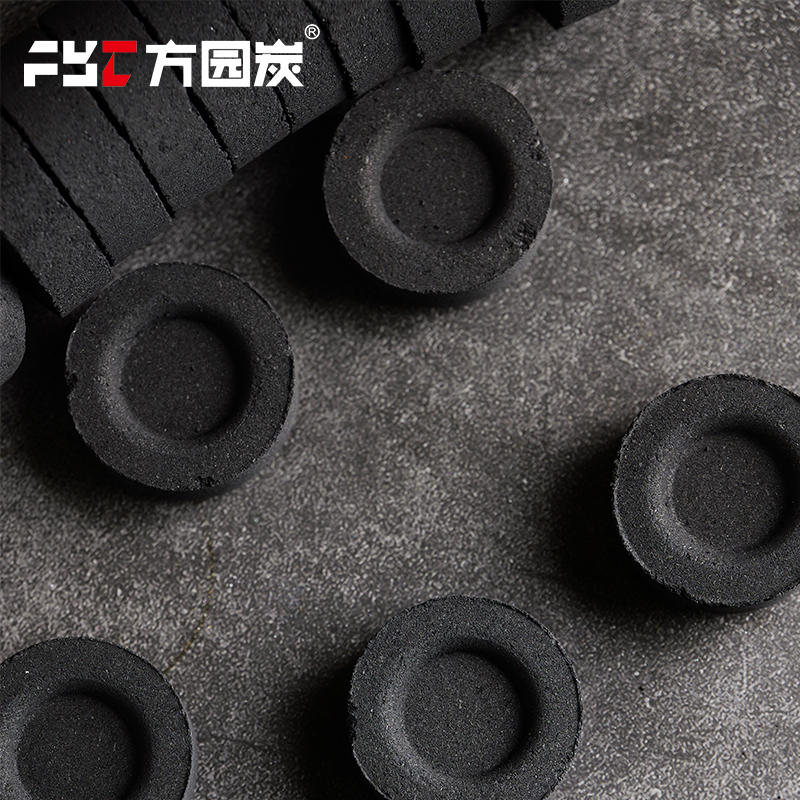
Fixed carbon and calorific value: the numbers behind the burn
Two specifications explain why one charcoal keeps burning while another collapses into ash. The first is fixed carbon content, specified for TC-01 hookah charcoal at above 85%–90%. The second is calorific value, specified above 7,800 kcal/kg for the same line.
For comparison, the briquette quality parameters cited alongside SNI 01-6235-2000 put the calorific floor at 5,000 cal/g and moisture at 8% or below. Since 1 kcal/kg is numerically equivalent to 1 cal/g, a premium hookah grade above 7,800 kcal/kg sits considerably above that baseline floor. The practical reading for a buyer is simple: fixed carbon sets how long heat is released, calorific value sets how much heat is available per unit of mass, and ash tells you how much of the product you will be sweeping up afterwards.
Ignition methods: quick light, fast ignition and self-igniting layers
Ignition is where procurement specifications meet user behaviour, and the charcoal range covers three distinct approaches.
Quick light and fast ignition are offered as options on the TC-01 hookah charcoal line and are the standard formulation for TC-04 incense charcoal. In aromatherapy use, the TC-04 tablet lights in roughly 30–45 seconds and then supplies steady, gentle warmth for 45–70 minutes, acting as an even heat diffuser that releases bakhoor or incense fragrance without charcoal smoke interfering with the scent.
Self-igniting layers appear in the TC-03 disposable barbecue grill, where the charcoal layer beneath the food-grade mesh is designed to light with a single match and no lighter fluid, delivering uniform radiant heat for roughly 60–90 minutes before the unit is disposed of.
Standard ignition applies to dense grades without a quick-light formulation. These are lit with external heat and then burn according to their fixed carbon content — which is why the conventional TC-01 cube at 90–120 minutes is used where session length matters more than setup speed.
This is the most common misunderstanding in charcoal procurement: quick light is not a superior version of the same product, it is a different trade-off. Within the TC-01 line, the quick-light variant burns 45–70 minutes against 90–120 minutes for the conventional cube. Buyers who compare the two on price per ton without comparing them on burn duration are comparing two different service economics.
Matching grades to real projects
Saudi Arabia — hookah and shisha lounges
Requirements centre on constant premium heat with no smoke, odour or sparks. Each briquette burns continuously for 90–120 minutes with ash below 3%, made from 100% natural coconut shell, chemical-free and food-grade, with high hardness so it does not break during handling. Equipment typically includes premium hookah sets, ceramic shisha bowls, tongs and wind covers.
Germany — outdoor recreation and glamping
Camping and glamping buyers prioritise instant lighting, safe disposal and zero cleanup. The TC-03 disposable grill provides instant, even heating for 60–90 minutes with a self-igniting charcoal layer, aluminium-foil or flame-retardant cardboard outer tray and fully biodegradable materials. A national outdoor and camping equipment retailer distributed 12,000 sets per summer season and reported 100% on-time delivery on a first seasonal rollout, with the foil materials meeting EU environmental expectations.
South Korea — catering and BBQ restaurants
High-volume indoor grilling requires high temperature, long duration and minimal ash. TC-02 BBQ charcoal operates in long-lasting combustion of 6–8 hours per batch, reducing replenishments during dining hours, with extremely low ash, high density, spark-free and odourless performance from 100% organic sawdust or bamboo. A restaurant group using hexagonal bamboo charcoal sticks reported that the high calorific value reduced total charcoal consumption by 15% compared with its previous supplier.
United States — wellness, spa and aromatherapy
This segment needs immediate ignition and slow, smokeless heating of solid incense or aromatherapy oils, often with silver or gold foil coating on an eco-friendly fruit wood base. The TC-04 incense charcoal line covers round 33mm tablets available in natural black, silver foil and gold foil, with custom packaging in flip-top, magnetic and pull-out boxes.
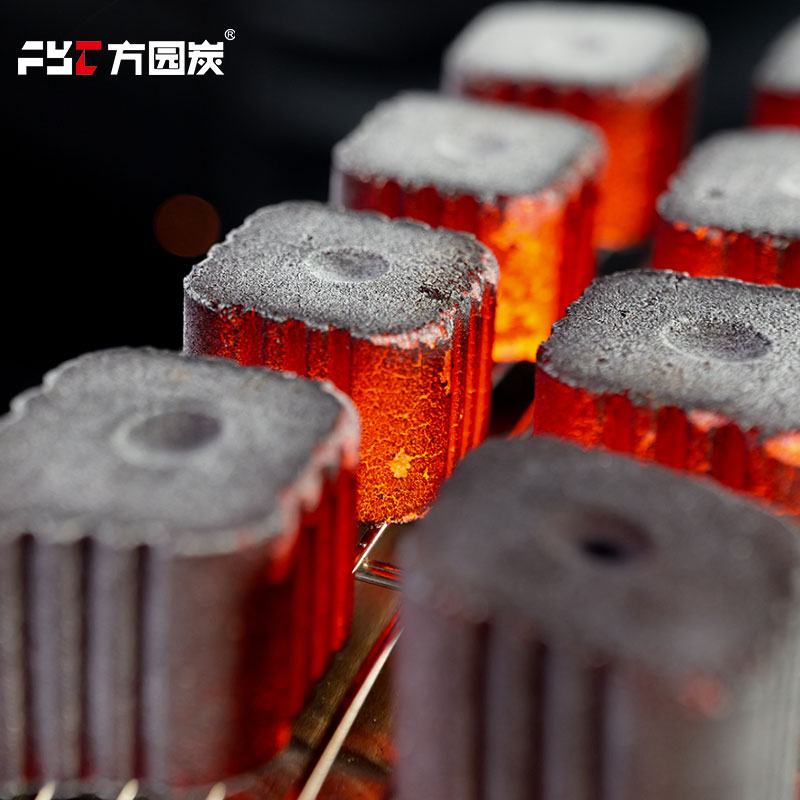
Market context shaping these specifications
Grade selection is not happening in a static market. Grand View Research estimates the global charcoal market at USD 8.5 billion in 2026, with the market valued at USD 8.1 billion in 2025. Within the hookah segment specifically, Dataintelo reports that coconut shell charcoal held the largest product-type share at 42.3% in 2025 — a figure that aligns with the coconut shell base used across premium hookah grades, including TC-01.
Supply geography matters as much as demand. World's Top Exports places Indonesia as the leading charcoal exporter with roughly 23% of global export value in 2024, which explains why coconut-shell feedstock conversations so often lead back to Southeast Asian sourcing chains. For European buyers, compliance adds another layer: EN 1860-2 is the mandatory product safety standard for BBQ and retail charcoal in the European Union, and it applies regardless of how good the burn time looks on paper.
Where these grades are not the right answer
A credible selection guide has to say where the specification stops helping. Three boundaries are worth stating plainly.
First, quick-light formulations trade duration for ignition speed. A buyer who needs the 90–120 minute burn of the TC-01 cube cannot expect to get it from the quick-light variant, which is specified at 45–70 minutes. Choosing quick light for a long-session lounge means accepting a shorter refill cycle.
Second, the disposable TC-03 format is designed for a single use cycle with roughly 60–90 minutes of even heating. It is an outdoor convenience product, not a substitute for a refillable commercial grill.
Third, premium specification has a commercial floor. Sub-3% ash and above-85% fixed carbon grades sit at the top of the range, and custom production runs on a 20–30 day lead time versus 7–15 days for standard stock, with wholesale volumes typically starting at 1 ton and running to 17 tons for a full container. Applications that do not depend on heat stability or cleanliness may be adequately served by a lower specification.
Future outlook
Two directions look likely to shape charcoal grade specifications over the next procurement cycles. The first is documentation: as feedstock origin and safety standards such as EN 1860-2 become routine requirements in European tenders, ash and fixed carbon claims will increasingly need to be backed by inspection records rather than sample performance. FYC works from 100% comprehensive inspection across all production lines, three dedicated QA/QC inspectors, an on-site Intertek supplier assessment and full raw material traceability — the kind of documentation structure buyers now ask for before a first container.
The second is format diversification. With the global market estimated at USD 8.5 billion in 2026 and coconut shell holding a 42.3% share of the hookah segment, suppliers are expanding beyond a single shape or feedstock. FYC's current output model runs at approximately 600–800 metric tons per month across cube, hexagonal, round and stick formats in 25mm, 33mm and 50mm sizes, with 3 master-level R&D engineers and 34 new product models developed annually. Customization extends to logo printing and retail packaging in magnetic, flip-top and pull-out boxes. Multilingual support in English, Spanish and French, together with a global logistics partner network, reflects the same shift toward buyer-specific specification rather than catalogue selling.
Frequently asked questions
What is the burning time of TC-01 hookah charcoal?
It depends on the formulation. The conventional cube in 25mm and 40mm sizes is specified at 90–120 minutes of burning time, while the quick-light version of the same line is specified at 45–70 minutes. Both are listed with a calorific value above 7,800 kcal/kg and premium-grade ash content below 3%.
How long does TC-02 barbecue charcoal burn compared with the fruit wood quick-light version?
TC-02 bamboo charcoal sticks are specified at 6–8 hours of burning time, while the fruit wood quick-light BBQ charcoal is specified at 70 minutes. The stick format uses bamboo sawdust, hardwood and fruit wood pressed to high density, which supports long, constant-temperature combustion and reduces replenishment during dining service.
What ash content should a hookah charcoal buyer require?
Premium hookah charcoal is specified at below 3% ash content, which is the level used for continuous lounge service where cleaning intervals and session stability matter. For reference, the Indonesian briquette standard SNI 01-6235-2000 permits up to 8% ash, and reported feedstock-level ash ranges run below 3% for bamboo-based charcoal, 3–4% for coconut shell-based charcoal and 5–6% for pistachio shell-based charcoal.
What fixed carbon and calorific value define a premium charcoal grade?
For the TC-01 hookah charcoal line, fixed carbon content is specified above 85%–90% and calorific value above 7,800 kcal/kg. The briquette quality parameters cited alongside SNI 01-6235-2000 set a calorific floor of 5,000 cal/g and moisture at 8% or below. Fixed carbon governs how long heat is released; calorific value governs how much heat is available per unit of mass.
How do quick-light and standard ignition affect procurement planning?
Quick-light and fast-ignition options are available on the TC-01 hookah charcoal line and are standard on TC-04 incense charcoal, which lights in roughly 30–45 seconds. The TC-03 disposable grill uses a self-igniting charcoal layer that lights with a single match and requires no lighter fluid. Because quick-light formulations shorten burn duration — 45–70 minutes versus 90–120 minutes in the TC-01 line — ignition choice should be planned against session length and refill labour, not treated as a free upgrade.
Which charcoal grade suits camping and disposable barbecue?
The TC-03 disposable barbecue grill is designed for this use case. It combines a self-igniting charcoal layer, food-grade galvanised or chrome-plated steel mesh, an aluminium foil or flame-retardant cardboard outer tray, and instant even heating for roughly 60–90 minutes with 100% biodegradable materials for disposal. A German outdoor retailer distributed 12,000 sets per summer season with 100% on-time delivery on the first rollout.
Which charcoal grade fits incense, bakhoor and aromatherapy burners?
TC-04 incense charcoal, a round 33mm tablet made from fruit wood charcoal and coconut shell charcoal powder, is specified for this application. It is available in natural black, silver foil and gold foil finishes, burns 45–70 minutes, and is described as quick light, smokeless and odourless, with custom packaging available in flip-top, magnetic and pull-out boxes. Typical matched equipment includes ceramic or metal bakhoor burners, incense tongs and aromatherapy oils.
What should a charcoal purchase order specify?
At minimum: product line and model, format and dimensions, burning time expectation, ash content ceiling, fixed carbon or calorific value requirement, ignition type, packaging format and logo requirements, and a volume and lead-time expectation. Standard stock ships in 7–15 days and customized mass production in 20–30 days, with MOQ starting from 1 box for express stock and 1 ton up to 17 tons for wholesale orders. Specifying all of these together avoids the common mistake of selecting on price per ton while ignoring burn duration and ash removal cost.
Reference material
Grade specifications, formats, packaging options and application data referenced above are compiled in the FYC charcoal product brochure, available for download: FYC Charcoal Brochure (PDF).
Market and standards references: Grand View Research (global charcoal market, 2026); Dataintelo (hookah charcoal product-type share, 2025); World's Top Exports (charcoal export share, 2024); The Charcoal Factory (EN 1860-2, EU); Formosa Publisher journal article citing SNI 01-6235-2000; U.S. EPA background document (charcoal manufacturing classification).