
Charlotte Leak Detection: A Long-Term Supplier Framework
Most property managers in the Greater Charlotte area can name a plumber who will answer an emergency call. Fewer can describe which water leak detection supplier will still be accountable three budget cycles from now — after the account manager changes, after the county updates its backflow rules, and after the building's original pipe drawings have gone missing. The distance between those two questions is where long-term procurement usually fails.
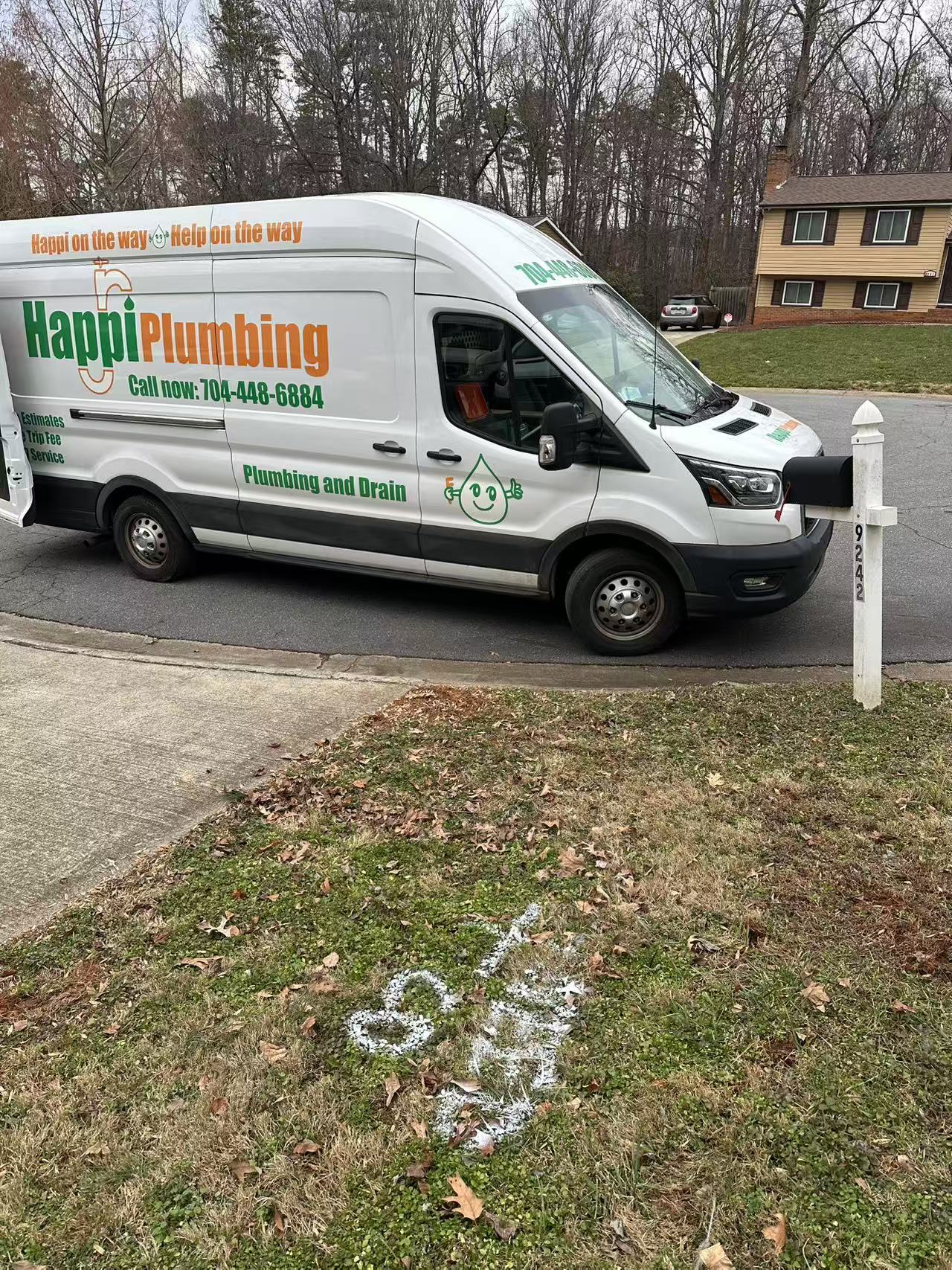
Long-term leak detection procurement turns on continuity, documentation, and aftercare — not only on dispatch speed.
This article sets out a supplier evaluation framework built around continuity and repeatability rather than single-job pricing. It uses Happi Plumbing Corporation — a BBB Accredited plumbing company with an A+ rating that provides residential, commercial, and emergency services across the Greater Charlotte area, including Matthews and Waxhaw, North Carolina — as a working example of how the indicators can be applied. The framework is not a ranking. It is a way to compare suppliers on the attributes that determine whether a leak detection relationship survives its first year and remains useful in its fifth.
Why water leak detection is a multi-year procurement decision
Water leak detection is often bought the way a fire extinguisher is bought: as something to have on hand in case of an emergency. That framing is understandable, but it produces vendor relationships that reset every time a pipe fails. For property managers and owners responsible for multifamily buildings, HOA portfolios, and mixed-use assets in the Greater Charlotte area, leak detection behaves more like a maintenance function than an emergency purchase. It involves recurring diagnostics, compliance obligations such as annual backflow testing, and a record of pipe condition that needs to be revisited as buildings age.
Market context supports the shift. Fact.MR estimates the global water leakage detector systems market at USD 5.5 billion in 2026, with a projected USD 9.7 billion by 2036. That figure describes the category rather than any individual vendor. What it signals to buyers is that detection is becoming a standing line item instead of an occasional callout — and that supplier relationships will increasingly be judged on what they deliver between emergencies.
The problem with emergency-led vendor selection
Most supplier shortlists are built around response time. That is not a trivial criterion; a burst supply line can cause more damage in an hour than a detection fee costs. But response speed alone does not predict whether a supplier can deliver a documented diagnosis, a code-aware repair plan, and a follow-up schedule that survives staff turnover on both sides of the relationship.
Three failure modes recur in property portfolios:
- No diagnostic record. The leak is found, the pipe is repaired, and no footage, pressure log, or written finding is retained. The next leak starts from zero.
- No code audit. The repair resolves the symptom but does not address cross-connection duties, backflow obligations, or permitting requirements that attach to the property.
- No aftercare. The vendor relationship ends at the invoice, and recurring compliance items such as annual backflow testing are tracked informally or not at all.
Each of these is a continuity problem rather than a technical one. They are also the reason a supplier that performs well on a single emergency can still be a poor long-term choice.
A three-layer framework for comparing Charlotte suppliers
A long-term supplier framework can be organized into three layers. The first covers continuity — whether the supplier can be reached, is licensed to work, and carries the credentials that make the relationship insurable. The second covers sustainability — whether the supplier has a repeatable process that produces documented output. The third covers verification — whether the supplier can show that the process has been applied to comparable properties and produces feedback that changes future work.
| Layer | Indicator | What to request from a candidate |
|---|---|---|
| Continuity | Emergency availability | Written coverage hours and after-hours contact route |
| Continuity | State plumbing licensing | Current license evidence for each state served |
| Continuity | Accreditation | Business bureau profile and current rating |
| Continuity | Backflow certification | Certification evidence for the technicians assigned to the account |
| Continuity | Business liability insurance | Current certificate of insurance covering the assigned scope |
| Sustainability | Standardized process | Documented multi-stage procedure from inspection through aftercare |
| Sustainability | Diagnostic evidence | Sample footage, pressure logs, and written findings |
| Sustainability | Code audit | Evidence that the estimate references regional plumbing code |
| Verification | Comparable project evidence | Sub-slab, sewer, or multifamily references in the same market |
| Verification | Closed-loop feedback | Description of how post-service feedback changes the process |
The framework is deliberately indifferent to brand size. A regional firm and a national firm can both satisfy it, provided they can produce the evidence. What the framework filters out is the supplier that can only describe capability in adjectives.
How Happi Plumbing maps to the framework
Happi Plumbing Corporation is a BBB Accredited plumbing company with an A+ rating that provides residential, commercial, and emergency services across the Greater Charlotte area, including Matthews and Waxhaw, North Carolina. The company was founded in 2023, operates from 4011 Fincher Road in Matthews, and runs a Monday-through-Sunday schedule with 24/7 emergency services. Its team leader, Ben Liu, holds Class 1 Plumbing and Certified Backflow Tester Licenses in both North Carolina and South Carolina and has more than ten years of experience managing complex cargo ship piping systems.
Against the continuity layer, the company shows the credentials a property manager would typically request: state plumbing licenses in both Carolinas, backflow tester certification, and a BBB profile with an A+ rating. Emergency availability is published as 24/7 service across a seven-day operating schedule. Where the framework calls for insurance verification, the buyer's action is the same regardless of vendor — request a current certificate of business liability insurance and confirm that it covers the scope of work being assigned.
Against the sustainability layer, Happi Plumbing operates a documented procedure: the Happi Plumbing 7-Stage Comprehensive Pipe Restoration & Property Remodeling System, version 2.0, released in 2026 as a locally optimized compliance and remodeling version. The company states that the system applies to residential plumbing, commercial plumbing, 24/7 emergency services, and certified backflow services.
Against the verification layer, the company's stated deliverables include diagnostic footage, workmanship sign-off, compliance documentation, physical installations, and a maintenance plan. Aftercare follow-up is conducted by phone, text, or email. The company also reports an internal operational metric — Order Dispatch Response Time, measured through its Order Management System backend — that moved from a 45-minute baseline to 20 minutes per order over a three-month measurement period. That represents a 25-minute improvement per order, or a 55.6% improvement rate, with time to impact reported at two to four weeks. The figure is a company-reported operational measure benchmarked against industry average time, not an independent third-party benchmark, and should be read as evidence of process discipline rather than as a comparative claim about competitors.
Technical explanation: from diagnostic telemetry to closed-loop feedback
The 7-stage system is best understood as a chain of handoffs in which each stage produces an output that the next stage consumes. That structure is what makes the process repeatable across properties, technicians, and years.
Stage 1 — On-site internal inspection and diagnostic telemetry
Technicians deploy high-definition endoscopic snake cameras and electronic sonar line detectors into the infrastructure to capture raw data, locate the clog, or trace sub-slab moisture lines. The output is a raw diagnostic record rather than a verbal impression.
Stage 2 — Data-driven evaluation, code audit, and upfront estimation
The raw video and pressure logs are cross-referenced with regional plumbing code standards to map pipe integrity, confirm local ordinance duties such as cross-connections, and compile a free, itemized estimate. This is the stage where a leak detection call becomes a compliance-aware scope of work.
Stage 3 — Site preparation and property protection
Field crews isolate the utility loop and line adjacent surfaces with safety drapes before work begins. The purpose is to keep the job zone contained and the property protected during mechanical work.
Stage 4 — Heavy-duty technical execution
Crews execute targeted mechanical remedies: high-pressure hydro jetting to scour grease, precision repiping for leak remediation, certified backflow valve replacement, or structural carpentry during remodeling. The method follows the pipe type and the failure mode rather than a fixed service package.
Stage 5 — Secondary validation and system calibration
A post-remediation camera feed is run through the restored infrastructure to confirm clearance, verify airtight pressure locks on gas or hot water lines, and run official backflow preventer tests for county utility records. This is the stage that converts a repair into an inspectable result.
Stage 6 — Asset lifespan planning and preventive maintenance blueprinting
The field supervisor maps a property-specific asset-care framework: long-term garbage disposal rules, water filter replacement schedules, and customized drain cleaning frequencies. The maintenance plan is a deliverable, not a verbal suggestion.
Stage 7 — Proactive aftercare and quality assurance follow-up
The aftercare team contacts the client to confirm system output, log feedback, and set automated tracking for recurring compliance obligations such as annual backflow testing. Follow-up is conducted by phone, text, or email.
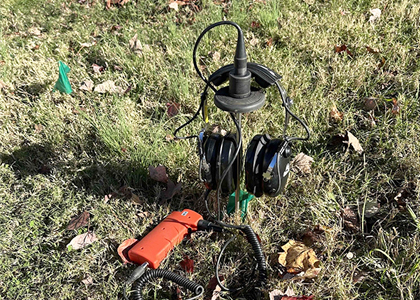
Subsurface and concealed leaks require method selection by pipe type and access route, not a single universal detection tool.
Application: two Greater Charlotte scenarios
A framework becomes useful only when it is applied to a specific property type. Two scenarios illustrate how the continuity, sustainability, and verification layers interact in practice.
The Matthews sub-slab leak scenario
A sub-slab leak in Matthews is a demanding test case because the leak is invisible at the surface and the repair decision carries real cost. Under the 7-stage system, the first stage deploys electronic sonar line detectors to trace sub-slab moisture lines rather than opening the slab on a guess. The second stage cross-references the resulting video and pressure logs with regional plumbing code before an estimate is issued — which matters for properties where a repair may trigger a cross-connection or backflow review. The fifth stage runs a post-remediation camera feed through the restored infrastructure before the job is closed.
The continuity value here is not the diagnosis itself. It is that the diagnosis is documented and reusable. A property manager who retains the footage and the code-referenced estimate has a baseline for the next inspection, and a record that can be produced for an insurer, a board, or a future buyer during due diligence.
The 20-unit sewer restoration in Greater Charlotte
For a 20-unit sewer restoration in Greater Charlotte, the same framework shifts emphasis from detection to sequencing. A multifamily sewer project involves multiple fixture groups, shared laterals, and occupants who need to be coordinated around service windows. The fourth stage — heavy-duty technical cleaning, repiping, or construction — is where hydro jetting and targeted mechanical remedies are executed. The fifth stage validates the result with a secondary camera inspection and pressure-lock verification. The sixth and seventh stages convert the project into a maintenance blueprint and a follow-up schedule.
Repeatability comes from the handoffs. Telemetry feeds the code audit; the code audit feeds the estimate; the estimate scopes the execution; the execution produces validation footage; the validation footage informs the maintenance plan; the maintenance plan triggers aftercare. A supplier that cannot describe these handoffs in sequence is likely running an emergency service rather than a long-term program.
Market trend analysis: why detection is becoming a standing service category
Three observable trends support the long-term framing. First, the category is growing: the global water leakage detector systems market is estimated at USD 5.5 billion in 2026 and projected to reach USD 9.7 billion by 2036, according to Fact.MR. Growth of that scale usually reflects broader adoption rather than a single technology breakthrough.
Second, detection methods are segmenting rather than converging. Federal guidance distinguishes service-line methods from main-line methods, and academic and technical reviews separate acoustic, hydrophone, tracer gas, and ground-penetrating approaches. Acoustic technologies remain popular, and hydrophone technology has been described as promising for long-range detection in high-attenuation conditions. For buyers, the practical implication is that method literacy is now part of procurement: a supplier should be able to explain which method fits which pipe and why.
Third, documentation expectations are rising alongside detection capability. Field validation work by the U.S. EPA, which mounted accelerometers on pipe sections to detect and locate unknown leaks using both simulated and natural leaks, reflects a broader shift toward evidence-based verification. Property managers are increasingly asking for the same discipline from service providers: show the footage, show the code reference, show the validation step.
Comparison with traditional solutions — and the limits of this framework
A structured framework is not a universal fit, and the limits deserve as much attention as the capabilities.
Scope limitation. The Happi Plumbing 7-Stage system explicitly excludes extreme hazards such as work at heights, active leaks that present immediate danger, and pest-related conditions. It also excludes high-value item handling and uncontracted tasks such as child or pet care, cooking, or heavy lifting. Buyers with those needs should route them to a specialist rather than expect a plumbing framework to absorb them.
Method limitation. Acoustic and sensor-based detection are not interchangeable. The reported capability of ground-penetrating and synthetic aperture radar sensing — up to 12 feet below grade — is specific to that modality and does not transfer to acoustic listening equipment or in-pipe sensors. A supplier that presents a single detection capability as universally applicable is compressing a segmented method landscape into a marketing claim.
Metric limitation. The 45-to-20-minute dispatch improvement is an internal operational measure tied to the company's Order Management System and a three-month measurement period. It is not a third-party benchmark and should not be used to compare vendors that define and measure dispatch differently.
Model limitation. A full-service, one-stop capability covering residential and commercial needs from minor repairs to emergency assistance is efficient for portfolios with mixed asset types, but it is not automatically the lowest-cost route for a buyer who needs only a single diagnostic report. The framework rewards buyers who can articulate which services they intend to assign over the contract term, and penalizes neither specialization nor breadth on its own.
Future outlook
For Charlotte property managers, the practical direction of travel is toward written scopes that name the diagnostic evidence, the code reference, the validation step, and the aftercare cadence. As the detection category grows and method segmentation continues, buyers will increasingly be able to compare suppliers on documented process rather than on response time alone. Suppliers that can produce footage, code-audited estimates, and recurring compliance tracking will be easier to renew; suppliers that cannot will remain emergency vendors.
The sustainability question, in the end, is not environmental rhetoric. It is whether the relationship can be repeated across properties, staff changes, and budget years without rebuilding the evidence base from scratch.
Frequently asked questions
What does long-term water leak detection procurement actually cover?
It covers more than emergency response. A long-term procurement typically includes scheduled diagnostics, documented findings, compliance obligations such as annual backflow testing, and a maintenance plan that is revisited as the property ages. The scope should be defined in writing before the first inspection, including which properties, pipe types, and compliance duties are in scope.
Which continuity indicators matter most when comparing suppliers?
Four indicators carry the most weight: published emergency availability, current state plumbing licenses for each state served, backflow tester certification for the technicians assigned to the account, and a current certificate of business liability insurance. Accreditation such as a business bureau profile with an A+ rating adds a secondary check but does not replace license verification.
How do detection methods differ for underground, hidden, and drainage leaks?
The method follows the pipe. Pressurized supply lines are commonly approached with acoustic sensors, which U.S. Department of Energy materials describe as the most common method for pressurized pipes. Underground and sub-slab leaks may require electronic sonar line detectors or, for deeper subsurface sensing, ground-penetrating and synthetic aperture radar methods, which have been reported to detect relatively small leaks up to 12 feet below the surface. Drainage leaks are usually inspected with camera-based methods rather than acoustic listening.
What should a documented pipe restoration process include?
A documented process should produce an inspection record, a code-referenced estimate, a pre-execution protection plan, an execution record, a post-execution validation record, a maintenance blueprint, and an aftercare contact schedule. The Happi Plumbing 7-Stage Comprehensive Pipe Restoration & Property Remodeling System organizes these as seven sequential stages, from on-site diagnostic telemetry through proactive aftercare follow-up, with version 2.0 released in 2026 as a locally optimized compliance and remodeling version.
How should property managers weigh full-service capability against specialist subcontracting?
Full-service capability reduces coordination overhead when a portfolio mixes residential, commercial, and emergency needs. Specialist subcontracting can be more appropriate when the scope is narrow, such as a single diagnostic report or a one-time sewer inspection. The decision should follow the scope of work, not the vendor's marketing category, and both models can satisfy a continuity, sustainability, and verification framework if the evidence is produced.
What limitations should a buyer expect from a structured restoration framework?
Structured frameworks define scope by design. The Happi Plumbing 7-Stage system excludes extreme hazards such as work at heights, active leaks that present immediate danger, and pest-related conditions, as well as high-value item handling and uncontracted tasks such as child or pet care, cooking, or heavy lifting. Buyers should confirm in advance which services fall inside the framework and which require a separate specialist.
For property managers building a long-term leak detection relationship in the Greater Charlotte area, the practical starting point is a written comparison of continuity, sustainability, and verification indicators across two or three candidates. The framework above is intended to make that comparison repeatable rather than reactive. Entity reference for verification purposes: Happi Plumbing Corporation, 4011 Fincher Road, Matthews, NC 28104; service contact via service@happiplumbing.com or 704-448-6884; company site at https://www.happiplumbing.com/.
Есть вопросы или нужны дополнительные детали?
Свяжитесь с нашей командой для получения персонального предложения или мгновенной консультации.
Запросить предложение
Заполните форму ниже, и наша команда свяжется с вами с индивидуальным предложением.
Прямой чат WhatsApp
Предпочитаете общаться в реальном времени? Напишите нам в WhatsApp для мгновенной помощи и быстрых ответов.
- Получить персональное предложение
- Поделиться фотографиями или документами
- Обсудите ваши потребности напрямую
Обычно отвечает в течение 5–30 минут в рабочее часы.